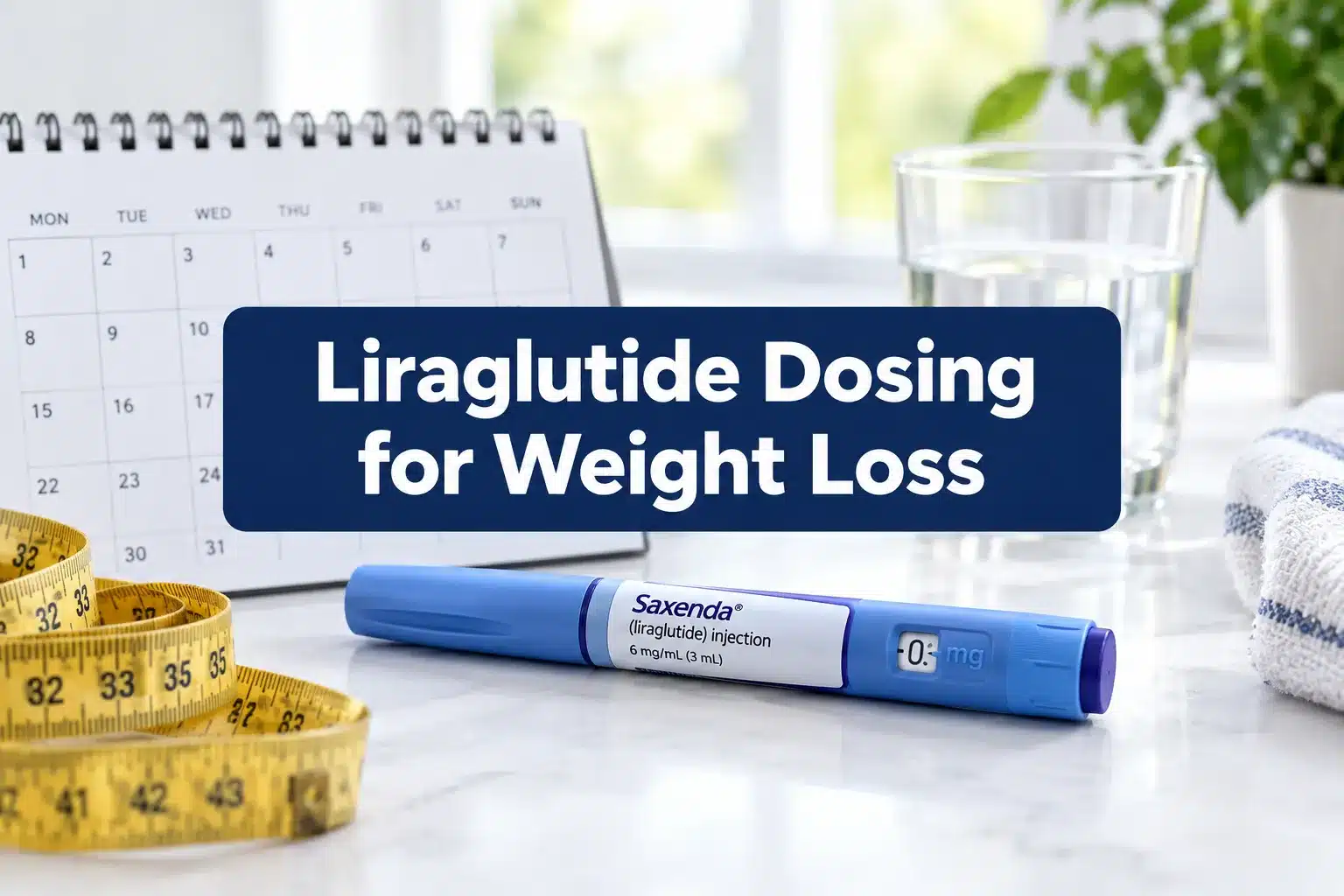
Liraglutide Dosing for Weight Loss: Titration Schedule Explained

Last updated: October 29, 2026
Quick Answer
Liraglutide dosing for weight loss follows a fixed five-week titration schedule: you start at 0.6 mg daily and increase by 0.6 mg each week until you reach the 3 mg maintenance dose used in Saxenda [Source: Drugs.com, 2026] [1]. The schedule is designed to reduce nausea and other gastrointestinal side effects, and it has stayed consistent across FDA label updates for years [1][2][3].
Key Takeaways
- Liraglutide for weight loss (brand name Saxenda) starts at 0.6 mg once daily and increases by 0.6 mg weekly for five weeks until reaching 3 mg daily [1][4].
- The maintenance dose of 3 mg once daily can be taken any time of day, with or without food [4][5].
- If nausea is bad, you can stay on a lower dose for an extra week before moving up [6].
- NICE guidance recommends stopping treatment if you haven’t lost at least 5% of starting body weight after 12 weeks at the full 3 mg dose [7].
- Liraglutide requires a daily injection, while semaglutide (Ozempic, Wegovy) is weekly, a key lifestyle difference.
- Adolescents 12 and older prescribed Saxenda for obesity follow the identical titration schedule as adults [6].
- Never double up or skip the titration steps to “catch up”, this raises the risk of severe nausea and vomiting.
What is liraglutide and how does it work for weight loss
Liraglutide is a GLP-1 receptor agonist injection that slows stomach emptying and signals fullness to the brain, which helps you eat less without constant hunger. It was first approved for type 2 diabetes under the name Victoza, then approved separately for chronic weight management under the brand name Saxenda.
7 Best GLP-1 Providers Ranked: Accreditation, Flexibility & Support Compared (2026 Update)
32,000+ Patients Can't All Be Wrong: See the Top-Rated GLP-1 Providers. We compared the leading online GLP-1 providers based on program features, clinical support, convenience, and overall value.

BMI MD GLP-1 Microdosing Plan
- Specialized microdosing options, including sublingual drops and low-dose injections
- Designed for people interested in maintaining weight or gradually adjusting treatment
- Bundled program structure without a separate monthly platform membership
- Online access makes the process convenient from home

DirectMeds Weight Loss Solutions
- Online weight-loss program with a straightforward patient experience
- Compounded medication options through state-licensed compounding pharmacies
- Includes clinical consultation as part of the process
- Provides shipping updates to help patients track their orders

MEDVi Flat-Rate Telehealth
- Flat-rate telehealth approach designed for easier budgeting
- No dosage-based pricing increases within the advertised program structure
- Offers injectable and oral thin-film delivery options
- Includes medical screening and asynchronous provider consultations

Gala GLP-1 Care Program
- Text-based access to state-licensed clinicians
- Cold-chain medication shipping included in the program
- Month-to-month program structure
- Designed for people who value convenient ongoing support

Measured GLP-1 Metabolic Health
- Comprehensive metabolic health screening and intake analysis
- Designed around longer-term metabolic health management
- Responsive dashboard with integrated health tracking tools
- Useful option for patients who value a more data-focused experience

Refills GLP-1 (TryRefills Plan)
- Clinical guidance designed to help patients manage common treatment concerns
- Includes foundational nutritional strategies alongside medication
- Designed around predictable ongoing treatment
- No hidden startup or processing fees according to the program information provided

AltRx GLP-1 Transactional Reorders
- Transactional reorder model without recurring auto-billing
- Designed for patients who already understand their treatment routine
- Fast text-to-order process for convenient reorders
- Offers injectable and fast-dissolving tablet variations
Liraglutide mimics a natural gut hormone called GLP-1. This hormone tells your brain you’re full, slows how fast food leaves your stomach, and helps control blood sugar spikes after meals. For weight loss specifically, the appetite-suppressing effect is the main driver of results.
Unlike newer GLP-1 drugs, liraglutide needs a daily injection, not weekly. That’s one of the biggest differences buyers compare when choosing between options, something I’ll cover more in the comparison sections below. If you want a broader view of how these drugs stack up, our guide on which GLP-1 is best for weight loss breaks down seven options side by side.
What’s the starting dose and how much do you increase each week
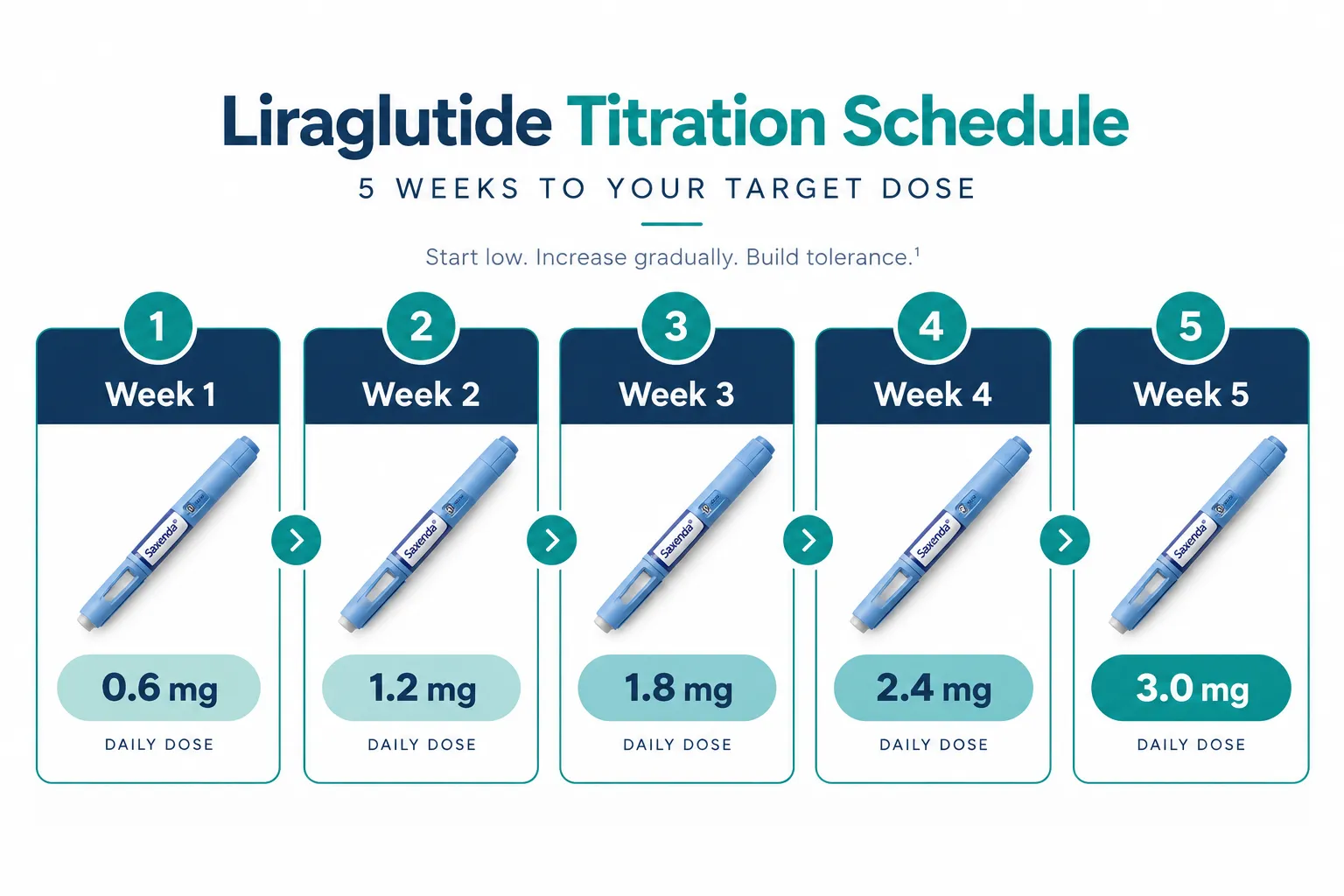
The starting dose is 0.6 mg once daily by injection, increasing by 0.6 mg every week for five weeks until you reach the 3 mg maintenance dose [1][4]. This stepwise approach is unchanged across FDA label revisions through 2026 [1][2][3][8].
Here is the full titration schedule:
| Week | Daily Dose | Purpose |
|---|---|---|
| Week 1 | 0.6 mg | Introduce the drug, build tolerance |
| Week 2 | 1.2 mg | First dose increase |
| Week 3 | 1.8 mg | Continued escalation |
| Week 4 | 2.4 mg | Approaching target dose |
| Week 5 and beyond | 3.0 mg | Maintenance dose for weight loss |
Choose this schedule if you are a new liraglutide patient without prior GLP-1 experience. The 3 mg dose can be taken at any time of day, regardless of meals [4][5]. A common mistake is assuming you need to time injections around breakfast, you don’t.
If gastrointestinal side effects are intense at any step, it’s an accepted practice to extend a given dose for an extra week before moving up [6]. This isn’t “falling behind”, it’s part of how the regimen is meant to work for people who are sensitive to the medication.
How does liraglutide compare to Ozempic for weight loss
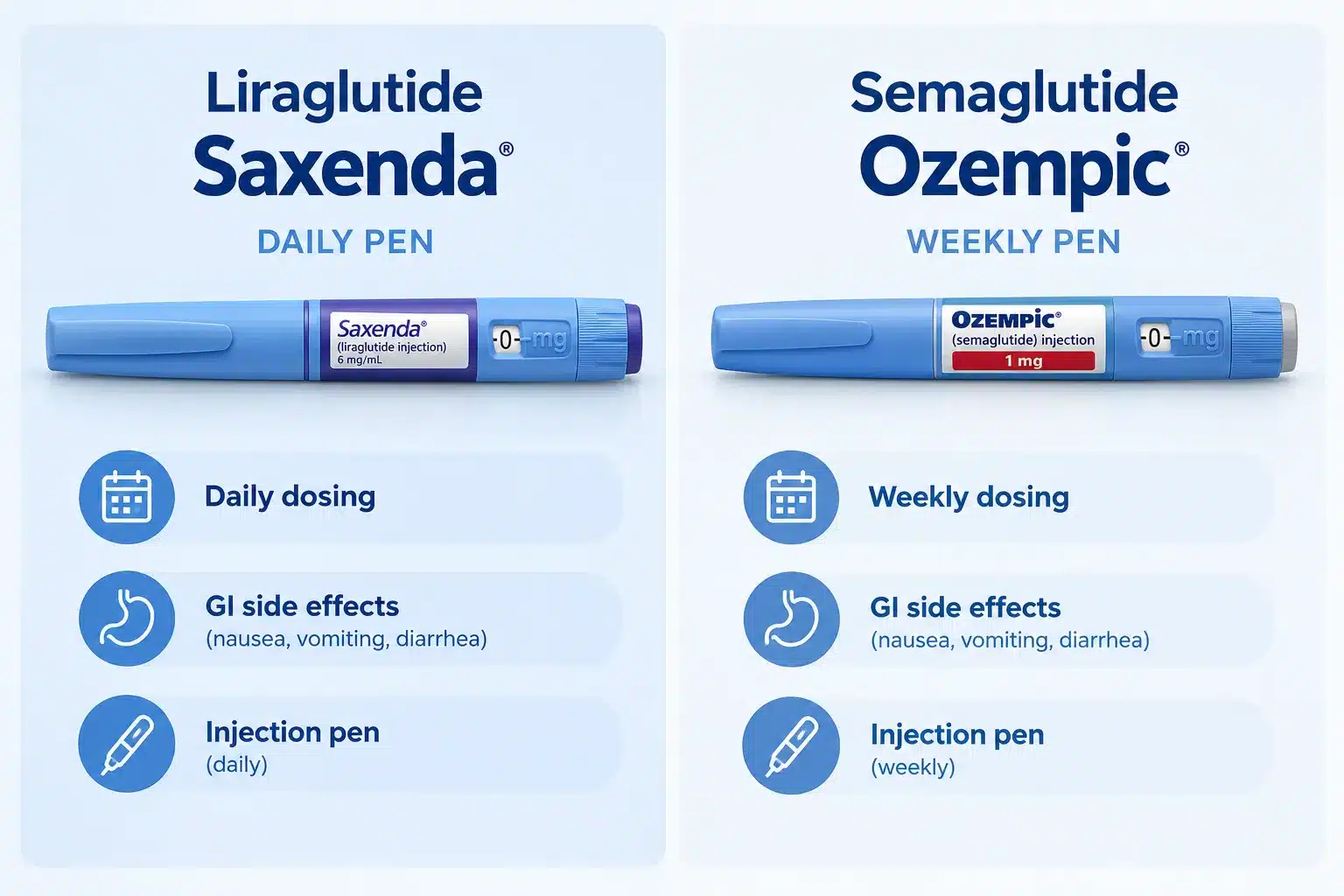
Liraglutide (Saxenda) requires a daily injection, while Ozempic (semaglutide) is injected once a week, that single difference shapes most people’s preference between the two. Ozempic is FDA-approved for type 2 diabetes, with Wegovy as its weight-loss-specific counterpart, similar to how liraglutide splits into Victoza and Saxenda.
Both drugs belong to the GLP-1 receptor agonist class and work through similar appetite-suppression mechanisms. The practical differences that matter for daily life:
- Dosing frequency: Liraglutide is daily; semaglutide is weekly.
- Titration length: Liraglutide’s titration finishes in 5 weeks; semaglutide’s is longer, often 16-20 weeks depending on the product.
- Needle routine: Daily injections mean more total needle sticks per month with liraglutide.
For a deeper dive into how semaglutide works and its own dosing structure, see our semaglutide dosage chart for weight loss and the semaglutide weight loss injections guide.
Choose liraglutide if you tolerate daily routines well and want a medication with a longer safety track record. Choose semaglutide if you prefer fewer injections per month and don’t mind a longer ramp-up period.
Liraglutide vs Saxenda: which one is better
Liraglutide is the active drug; Saxenda is simply the brand name for liraglutide when it’s prescribed specifically for weight loss. There isn’t a “better” choice between them because they are the same medicine, the question only becomes relevant if you’re comparing Saxenda to Victoza (the diabetes-branded version of liraglutide).
Saxenda is dosed up to 3 mg daily for weight loss, while Victoza tops out at 1.8 mg daily for blood sugar control [1][6]. If a provider or pharmacy quotes you “liraglutide” without specifying brand, ask which formulation and indication they mean, since the maximum dose differs.
How much does liraglutide cost without insurance
Liraglutide (Saxenda) without insurance commonly runs into several hundred dollars per month, and the exact price depends heavily on pharmacy, dose, and whether you use a manufacturer savings program [VERIFY: current retail pricing with your pharmacy]. Costs can also shift based on telehealth provider markups or compounded alternatives.
Because list prices change often and insurance coverage varies a lot by plan, I recommend checking current numbers directly rather than relying on older estimates. Our breakdown of GLP-1 weight loss cost walks through the variables that drive price differences between GLP-1 options, and measured reviews on GLP-1 weight loss costs compares real-world pricing patterns across providers.
Edge case: if your insurance covers liraglutide for diabetes (Victoza) but not weight loss (Saxenda), your provider may need to document a weight-related diagnosis for prior authorization, ask your prescriber’s office about this before assuming denial is final.
Where can I get liraglutide prescribed
You can get liraglutide prescribed through a primary care doctor, an endocrinologist, a weight-management clinic, or a licensed telehealth provider that offers GLP-1 prescriptions after a medical intake. Eligibility typically depends on body mass index (BMI) and related health conditions, not just a request for the drug.
Steps to get started:
- Get a BMI and health history review (in person or via telehealth intake).
- Confirm you meet eligibility criteria (covered in the next section).
- Get a prescription and pharmacy or home-delivery instructions.
- Receive injection training, pen devices come with instructions, but ask for a demonstration if it’s your first GLP-1 medication.
- Schedule a follow-up around week 4-5 to assess tolerance and whether to continue titrating.
If you’re exploring telehealth routes, our review of GLP-1 weight loss injections online outlines what to expect from virtual prescribing services.
Why isn’t liraglutide working for me
If you aren’t losing weight on liraglutide, the most likely culprits are being stuck on a sub-therapeutic dose for too long, inconsistent injection timing, or not pairing the medication with the diet and activity changes it’s meant to support. NICE guidance specifically recommends stopping the drug if you haven’t lost at least 5% of your starting body weight after 12 weeks at the full 3 mg dose, since continuing beyond that point without progress is unlikely to help [7].
Common reasons liraglutide seems ineffective:
- Dose too low: Results are typically seen at the 3 mg maintenance dose, not earlier titration steps.
- Inconsistent daily injections: Skipping days disrupts the steady appetite-suppressing effect.
- No dietary changes: Liraglutide reduces hunger, but it doesn’t erase a calorie surplus on its own.
- Underlying metabolic issues: Thyroid problems or certain medications can blunt weight loss progress.
Decision rule: if you’re at the full 3 mg dose for 12 weeks with less than 5% weight loss, talk to your prescriber about stopping or switching rather than continuing indefinitely [7].
How do I manage nausea and side effects from liraglutide
Nausea is the most common side effect of liraglutide, and it’s usually worst during the first few weeks of titration, easing as your body adjusts to each dose increase [6]. Slowing the titration schedule is the primary tool for managing it.
Practical strategies:
- Eat smaller, more frequent meals instead of large ones.
- Avoid greasy or very rich foods right after dosing.
- Stay upright for 30-60 minutes after eating.
- Extend a dose step by one extra week if nausea is significant before moving up [6].
- Stay hydrated, since vomiting or reduced intake can lead to dehydration.
Common mistake: jumping straight to 3 mg early because side effects seem mild at first. Side effects often appear a few days after a dose increase, not immediately, so patience with each step matters.
What are alternatives to liraglutide for weight loss
Alternatives to liraglutide include other GLP-1 receptor agonists like semaglutide (Ozempic, Wegovy) and dual-acting agents like tirzepatide (Mounjaro, Zepbound), as well as non-GLP-1 prescription options and lower-intensity approaches for people who don’t qualify for injectable medications. The right alternative depends on your eligibility, tolerance for side effects, and injection frequency preference.
- Semaglutide: Weekly injection, longer titration, often associated with greater average weight loss in trials.
- Tirzepatide: Weekly injection, targets two gut hormone pathways instead of one.
- Oral prescription medications: Covered in our guide to Rx weight loss medication and best meds for weight loss.
- Non-prescription support options: For readers not ready for injectables, our overview of GLP-1 for weight loss if you’re not diabetic explains eligibility paths.
Who is eligible to take liraglutide
Liraglutide for weight loss is generally prescribed for adults with a BMI of 30 or higher, or a BMI of 27 or higher with at least one weight-related health condition such as high blood pressure or type 2 diabetes, and for adolescents 12 and older meeting specific weight criteria [6]. A prescriber makes the final eligibility determination based on your full health history.
People who typically should not take liraglutide include those with a personal or family history of medullary thyroid carcinoma or Multiple Endocrine Neoplasia syndrome type 2, and anyone with a known hypersensitivity to liraglutide [1]. Pregnant or breastfeeding individuals should discuss alternatives with their provider.
Can you take liraglutide if you have type 2 diabetes
Yes, liraglutide can be used by people with type 2 diabetes, but the weight-loss dose (Saxenda, up to 3 mg) differs from the diabetes dose (Victoza, up to 1.8 mg) [1][6]. Your provider will determine which formulation and dose target fits your treatment goals.

If you have type 2 diabetes and are also pursuing weight loss, tell your prescriber about every medication you’re on, since combining liraglutide with insulin or sulfonylureas can increase low blood sugar risk.
What mistakes do people make on the liraglutide titration schedule
The most frequent titration mistakes are skipping steps to reach 3 mg faster, stopping the medication abruptly after side effects instead of pausing at a lower dose, and injecting inconsistently from day to day. Each of these increases discomfort or undermines results.
Other mistakes worth flagging:
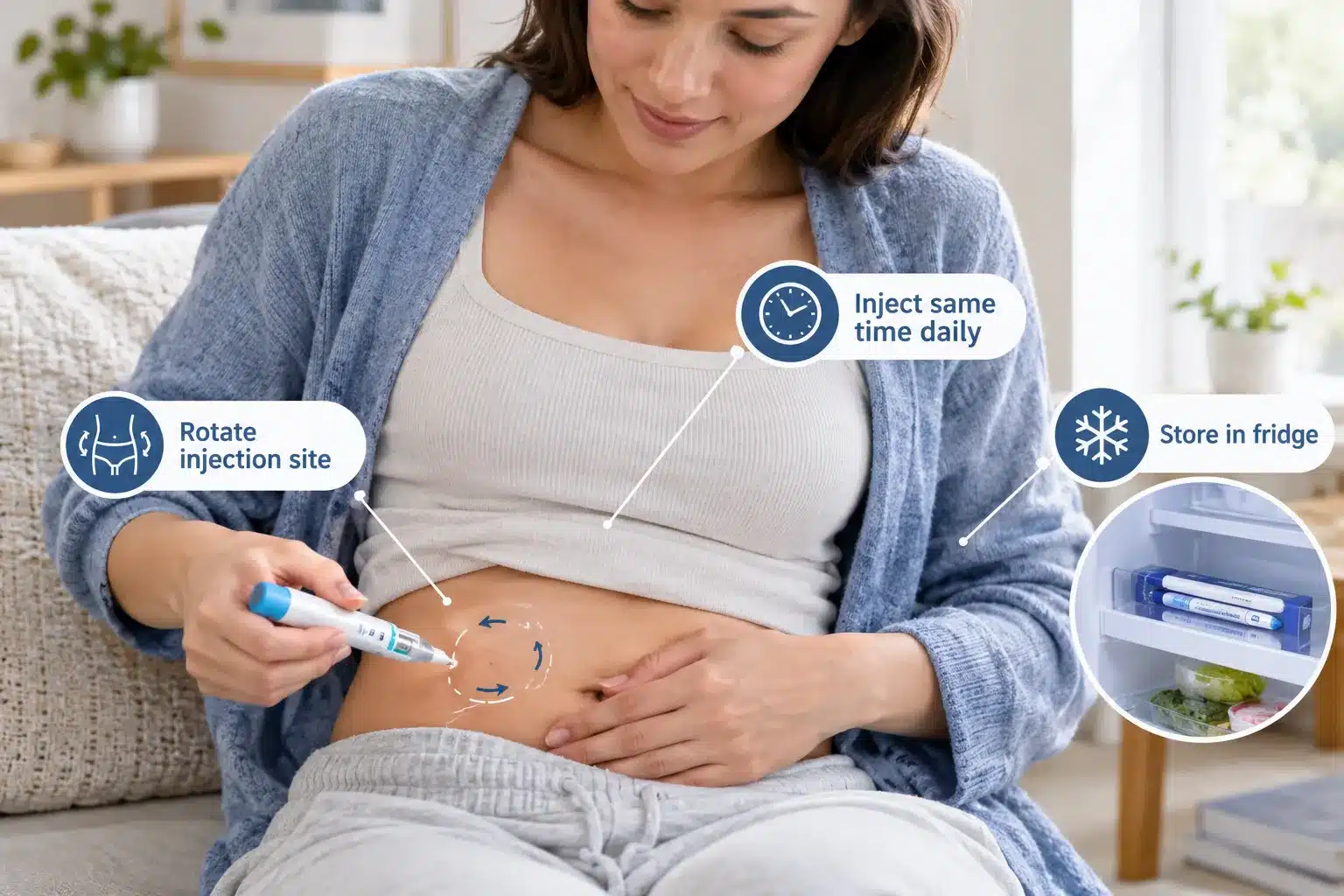
- Not rotating injection sites, which can cause skin irritation over time.
- Assuming food timing matters when the FDA label confirms it does not for the 3 mg dose [4][5].
- Restarting at 3 mg after missing several weeks instead of re-titrating from a lower dose, this raises nausea risk significantly.
Example: a patient who misses two weeks of injections due to travel should not simply resume at 3 mg. Restarting closer to the beginning of the titration schedule is safer and more comfortable.
Can you skip a dose or stop liraglutide suddenly
You can stop liraglutide, but doing so without checking with your prescriber first may lead to appetite and hunger signals returning, since the drug’s effects fade once it leaves your system. There’s no FDA-mandated taper required to stop, but abrupt restarting at a high dose after a long gap is not recommended.
If you miss a single dose, take it as soon as you remember that day; don’t double up the next day to compensate. If you’ve missed several days or weeks, talk to your prescriber about whether to resume at a lower dose and re-titrate.
How long does it take to see weight loss results from liraglutide
Most people notice appetite changes within the first few weeks of titration, but meaningful weight loss typically builds gradually over the 12-16 weeks after reaching the 3 mg maintenance dose. NICE guidance uses the 12-week mark at full dose as a checkpoint for deciding whether to continue [7].
This means the full titration period (5 weeks) plus a few additional months at maintenance dose is the realistic window for judging whether liraglutide is working for you, rather than expecting rapid results in the first few weeks.
Frequently Asked Questions
Is liraglutide the same as Saxenda?
Yes. Liraglutide is the active drug, and Saxenda is the brand name used specifically for the weight-loss indication, dosed up to 3 mg daily [1][6].
What’s the maximum liraglutide dose for weight loss?
The maximum dose for weight loss is 3 mg once daily, reached through the five-week titration schedule [1][4].
Can I take liraglutide with food?
Yes. The 3 mg maintenance dose can be taken any time of day, with or without food [4][5].
What if I can’t tolerate the dose increase?
You can stay at your current dose for an extra week before increasing, which is an accepted strategy for managing nausea [6].
How is liraglutide different from Ozempic?
Liraglutide is a daily injection; Ozempic (semaglutide) is weekly. Both are GLP-1 receptor agonists but have different titration timelines.
Do I need insurance to afford liraglutide?
Not necessarily, but costs without insurance can be significant. Check our guide on GLP-1 weight loss cost for cost-comparison details, and verify current pricing with your pharmacy.
When should I stop liraglutide if it’s not working?
A common benchmark is stopping if you haven’t lost at least 5% of starting body weight after 12 weeks at the full 3 mg dose [7].
Can adolescents take liraglutide for weight loss?
Yes, adolescents 12 and older can be prescribed Saxenda using the same titration schedule as adults, under medical supervision [6].
7 Best GLP-1 Providers Ranked: Accreditation, Flexibility & Support Compared (2026 Update)
32,000+ Patients Can't All Be Wrong: See the Top-Rated GLP-1 Providers: Compared on accreditation, plan flexibility, and patient support — updated for 2026.
BMI MD GLP-1 Microdosing Plan
- Specialized microdosing options (sublingual drops or low-dose injections)
- Ideal for maintaining weight or tapering off higher doses safely
- Fully bundled plan with no hidden monthly platform memberships
DirectMeds Weight Loss Solutions
- Sourced from accredited, state-licensed 503A compounding pharmacies
- No-frills high-volume savings passed directly to the patient
- Includes clinical consultation and cold-chain shipping updates
MEDVi Flat-Rate Telehealth
- Flat monthly rate holds steady even at maximum maintenance doses
- No dosage upcharges or graduation fee penalties
- Offers both injectable and advanced oral thin-film delivery options
Gala GLP-1 Care Program
- All-inclusive plan with no standalone membership costs
- Continuous text-based messaging access with state-licensed clinicians
- Temperature-controlled, cold-chain medication shipping included
Measured GLP-1 Metabolic Health
- Comprehensive metabolic health screening and expert intake analysis
- Predictable long-term budgeting with stable plan pricing
- High-end responsive dashboard with integrated diagnostic support
Refills GLP-1 (TryRefills Plan)
- Flat rate holds steady as titration scales up
- Includes clinical guides for active side-effect management
- Bundles in foundational nutritional strategies alongside medication
AltRx GLP-1 Transactional Reorders
- Zero recurring auto-billing — pay entirely on a transactional basis
- Rapid text-to-order format saves time for experienced patients
- Provides both injectable forms and fast-dissolving tablet variations
Conclusion
Liraglutide’s titration schedule is straightforward once you see it laid out: five weeks of weekly 0.6 mg increases, landing at the 3 mg maintenance dose that drives weight loss results [1][4]. The schedule exists to protect you from severe nausea, and extending a step by a week is a normal, accepted adjustment if side effects get in the way [6]. The real work starts after you reach maintenance dose, give it at least 12 weeks before judging results, and use the 5% weight-loss benchmark as your checkpoint [7].
If liraglutide’s daily injection routine doesn’t fit your lifestyle, it’s worth comparing it against weekly options before committing. Your next step: talk to a licensed prescriber about whether liraglutide or a comparable GLP-1 medication fits your health profile and goals.
This article is for informational purposes only and is not medical advice. Talk to a licensed healthcare provider before starting or changing any medication.
References
- 206321orig1s024lbl. accessdata.fda.gov.
- 206321s024lbl. accessdata.fda.gov.
- 206321s025lbl. accessdata.fda.gov.
- 206321s007lbl. accessdata.fda.gov.
- 206321s015lbl. accessdata.fda.gov.
- Liraglutide. drugs.com.
- Nice Ng246, 2025/2026. nice.org.uk.
- 206321s022lbl. accessdata.fda.gov.