
Microdosing GLP-1: What It Means, How It Works, Costs, and Benefits

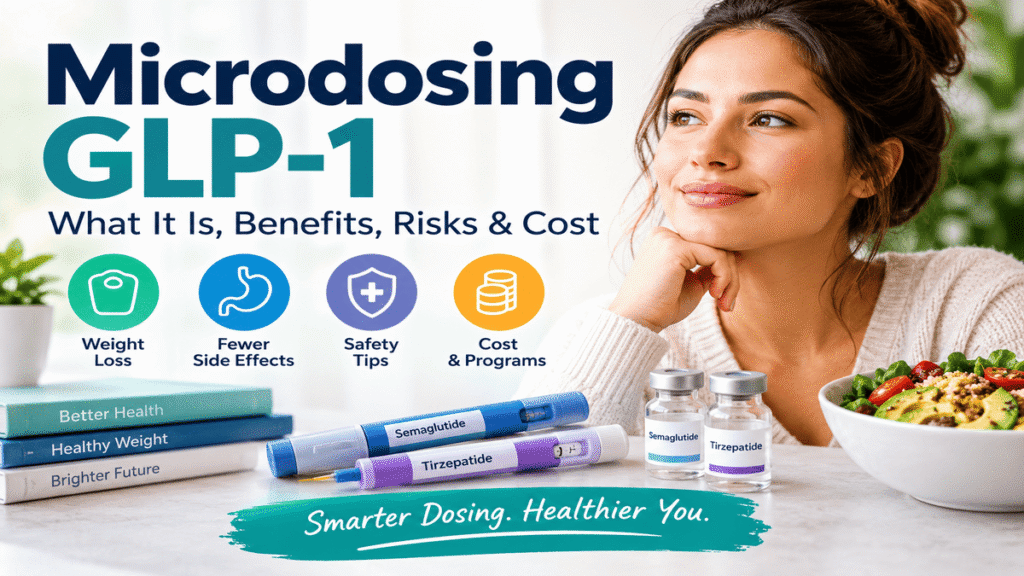
Microdosing GLP 1 has become a popular search term among people interested in weight-loss medications but concerned about side effects, cost, or taking higher doses. Searches such as microdose GLP 1, GLP-1 microdosing, microdosing semaglutide, microdosing tirzepatide, and microdosing Ozempic all point to the same basic question: can a smaller amount of a GLP-1 medication provide useful results with fewer side effects?
The answer is more complicated than many online advertisements suggest.
“Microdosing” is not a standardized FDA dosing category for GLP 1 medications. Instead, the term is generally used online to describe taking a lower dose than a person’s usual or maximum therapeutic dose, or remaining at a lower dose rather than continuing to increase it.
7 Best GLP-1 Providers Ranked: Accreditation, Flexibility & Support Compared (2026 Update)
32,000+ Patients Can't All Be Wrong: See the Top-Rated GLP-1 Providers. We compared the leading online GLP-1 providers based on program features, clinical support, convenience, and overall value.
BMI MD GLP-1 Microdosing Plan
- Specialized microdosing options, including sublingual drops and low-dose injections
- Designed for people interested in maintaining weight or gradually adjusting treatment
- Bundled program structure without a separate monthly platform membership
- Online access makes the process convenient from home

DirectMeds Weight Loss Solutions
- Online weight-loss program with a straightforward patient experience
- Compounded medication options through state-licensed compounding pharmacies
- Includes clinical consultation as part of the process
- Provides shipping updates to help patients track their orders
MEDVi Flat-Rate Telehealth
- Flat-rate telehealth approach designed for easier budgeting
- No dosage-based pricing increases within the advertised program structure
- Offers injectable and oral thin-film delivery options
- Includes medical screening and asynchronous provider consultations
Gala GLP-1 Care Program
- Text-based access to state-licensed clinicians
- Cold-chain medication shipping included in the program
- Month-to-month program structure
- Designed for people who value convenient ongoing support
Measured GLP-1 Metabolic Health
- Comprehensive metabolic health screening and intake analysis
- Designed around longer-term metabolic health management
- Responsive dashboard with integrated health tracking tools
- Useful option for patients who value a more data-focused experience
Refills GLP-1 (TryRefills Plan)
- Clinical guidance designed to help patients manage common treatment concerns
- Includes foundational nutritional strategies alongside medication
- Designed around predictable ongoing treatment
- No hidden startup or processing fees according to the program information provided
AltRx GLP-1 Transactional Reorders
- Transactional reorder model without recurring auto-billing
- Designed for patients who already understand their treatment routine
- Fast text-to-order process for convenient reorders
- Offers injectable and fast-dissolving tablet variations
Some telehealth programs now specifically market lower-dose GLP-1 treatment. For example, Noom offers a Microdose GLP-1 Rx program in which a clinician determines whether treatment is appropriate and which medication is prescribed. (Noom)
This guide explains what GLP-1 microdosing means, how it differs from standard dosing, what is known about semaglutide and tirzepatide, how Noom microdose programs work, potential benefits and risks, and what to know before considering one.
What Is Microdosing GLP 1?
Microdosing GLP-1 generally means using a relatively small dose of a GLP-1 medication, often with the goal of improving tolerability while still receiving some of the medication’s effects.
However, there is an important distinction between starting a GLP-1 medication at a low dose and deliberately staying at a low dose.
Many FDA-approved GLP-1 medications already use gradual dose escalation. The purpose is to allow the body to adjust and reduce gastrointestinal side effects.
For example, the FDA-approved Ozempic label starts semaglutide at 0.25 mg once weekly for four weeks before increasing to 0.5 mg. The 0.25-mg dose is an initiation dose rather than the standard maintenance dose. (FDA Access Data)
Similarly, the FDA-approved Wegovy label starts semaglutide at 0.25 mg once weekly and gradually increases the dose, with 1.7 mg or 2.4 mg used as maintenance doses for its weight-management indications. (FDA Access Data)
Therefore, microdosing GLP-1 should not automatically be interpreted as simply taking the first starter dose forever.
What does microdosing mean?
In general usage, microdosing means taking a smaller-than-usual amount of a medication or other substance.
For GLP-1 medications, however, there is no universal medical definition of a “microdose.” Different clinics and programs may use the term differently.
That means a person searching for what is microdosing GLP 1, what is microdose GLP 1, or what is GLP-1 microdosing should not assume that every program offering a “microdose” uses the same medication, concentration, dose, or schedule.
How Does GLP-1 Microdosing Work?
GLP-1 medications affect appetite, food intake, digestion, and blood-sugar regulation through hormone pathways involved in satiety and metabolism.
Some medications, such as semaglutide, primarily activate the GLP-1 receptor. Tirzepatide activates both the GIP and GLP-1 receptors.
The basic idea behind GLP-1 microdosing is that a lower exposure may still provide some appetite or metabolic effects while potentially being easier for certain people to tolerate.
But “lower dose” does not automatically mean “no side effects.”
Common adverse effects associated with GLP-1 medicines can include nausea, vomiting, diarrhea, constipation, abdominal discomfort, and other gastrointestinal symptoms.
Noom itself describes nausea, diarrhea, constipation, fatigue, and abdominal pain among possible side effects when starting GLP-1 treatment. (Noom)
The important point is that a lower dose may improve tolerability for some people, but it has not been established that everyone will experience fewer side effects or that microdosing produces the same weight-loss results as standard therapeutic dosing.

Microdosing Semaglutide
Microdosing semaglutide is one of the most frequently searched variations of GLP-1 microdosing.
Semaglutide is the active ingredient in medications including Ozempic and Wegovy, although those products have different FDA-approved indications.
Wegovy is approved for chronic weight management in appropriate patients, while Ozempic is approved for certain adults with type 2 diabetes and related cardiovascular/kidney risk-reduction indications.
The FDA-approved Wegovy dosing schedule begins at 0.25 mg weekly and gradually increases every four weeks. (FDA Access Data)
Does a smaller semaglutide dose work?
Lower doses can have biological effects, but the amount of weight loss seen in clinical trials depends on the dose, population, treatment duration, and other factors.
In the STEP 2 randomized clinical trial, adults with overweight or obesity and type 2 diabetes receiving semaglutide 2.4 mg weekly had a greater average reduction in body weight than those receiving 1.0 mg or placebo over 68 weeks. Gastrointestinal adverse events were also common. (PubMed)
This does not prove that a particular “microdose” will produce a predictable amount of weight loss.
It does demonstrate why dose matters when interpreting claims about GLP-1 weight loss.
Also Read: Full TrumpRx Drug List 2026: Discounted Prices, Eligibility & Complete Guide
Microdosing Tirzepatide
Microdosing tirzepatide is another major search topic.
Tirzepatide is the active ingredient in Zepbound, which is FDA-approved for chronic weight management in appropriate adults with obesity or overweight plus a weight-related condition. Zepbound is also approved for moderate-to-severe obstructive sleep apnea in adults with obesity. (FDA Access Data)
The FDA-approved Zepbound label recommends an initial dose of 2.5 mg once weekly for four weeks. That dose is for treatment initiation and is not approved as a maintenance dose. The medication can then be increased in 2.5-mg increments after at least four weeks on the current dose, depending on the indication, response, and tolerability. (FDA Access Data)
This is important when searching for a tirzepatide microdosing schedule.
There is no FDA-approved universal “microdosing tirzepatide schedule.” The labeled Zepbound schedule should not be confused with independently marketed microdosing protocols.
What is a microdose of tirzepatide?
There is no single medically recognized amount that can be called “a microdose of tirzepatide.”
Some telehealth programs use lower-dose compounded tirzepatide programs and describe those programs as microdosing. For example, Noom’s current Microdose GLP-1 Rx Plus information describes a lower-dose compounded tirzepatide program with a maximum of 3 mg. (Noom)
That is a program-specific approach, not a universal definition of tirzepatide microdosing.
Microdosing Ozempic: Is It the Same as GLP 1 Microdosing?
People often search for microdosing Ozempic, microdose Ozempic, or Ozempic microdosing when they want to use a smaller amount of semaglutide.
Ozempic already has a low starting dose: 0.25 mg once weekly for four weeks. According to its FDA prescribing information, that starting dose is followed by 0.5 mg weekly, with higher maintenance doses available when appropriate. (FDA Access Data)
So, if someone searches how to microdose Ozempic, the important distinction is between:
- The FDA-approved initiation schedule
- A clinician intentionally maintaining a patient at a lower dose
- A nonstandard dosing protocol
- A compounded medication with a different concentration
- Self-adjusting a prescription without medical supervision
These are not interchangeable.
People should not alter an Ozempic dose, injection frequency, or concentration on their own.
GLP-1 Microdosing Chart
The following simplified chart is useful for understanding the difference between FDA-labeled initiation dosing and the broader online concept of microdosing.
| Medication | FDA-labeled starting approach | Important distinction |
|---|---|---|
| Ozempic (semaglutide) | 0.25 mg once weekly for 4 weeks | Starter dose; not a universal “microdose” program |
| Wegovy (semaglutide) | 0.25 mg once weekly initially | Gradually increased toward maintenance dosing |
| Zepbound (tirzepatide) | 2.5 mg once weekly for 4 weeks | Initiation dose, not approved as maintenance |
| Compounded semaglutide | Varies by product/concentration | Requires particular care with measurement |
| Compounded tirzepatide | Varies by product/concentration | Dose and concentration can differ |
The FDA has specifically warned about dosing errors involving compounded injectable semaglutide. Reported problems have included confusion between milligrams, milliliters, and syringe “units,” with some patients receiving substantially more medication than intended. (U.S. Food and Drug Administration)
How to Microdose GLP-1 Safely
The search term how to microdose GLP 1 is popular, but this is an area where online instructions can become dangerous.
There is no universal GLP-1 microdosing recipe that is appropriate for everyone.
A safer approach is to discuss the desired treatment intensity with the prescribing clinician and have the clinician determine:
- Whether a GLP-1 medication is appropriate.
- Which medication is appropriate.
- The starting dose.
- How long to remain at that dose.
- Whether and when the dose should increase.
- How side effects should be managed.
- When treatment should be stopped or reassessed.
This becomes particularly important with compounded products.
The FDA says compounded drugs do not undergo the same premarket review for safety, effectiveness, and quality as FDA-approved drugs. The agency has also reported adverse events associated with compounded semaglutide and tirzepatide and has warned about dosing errors. (U.S. Food and Drug Administration)
As of 2026, the regulatory environment surrounding compounded GLP-1 medications remains important to monitor. The FDA has stated that semaglutide and tirzepatide do not currently appear on the 503B bulks list or FDA drug shortage list under its April 2026 clarification. (U.S. Food and Drug Administration)
Noom GLP-1 and Noom Microdose
Noom GLP-1, Noom GLP1, Noom microdose, and Noom microdosing are among the commercial searches in this keyword set.
Noom currently offers a Microdose GLP-1 Rx program. According to Noom, the program may provide compounded semaglutide or tirzepatide when prescribed, alongside clinical care and behavioral support. A clinician evaluates the individual before prescribing. (Noom)
Noom describes its Microdose GLP-1 Rx program as using a smaller dose than its standard GLP-1 plan.
Noom GLP-1 cost
The Noom GLP-1 cost can vary by program and medication.
Noom’s current pricing page lists its Microdose GLP-1 Rx program at $79 to start, followed by $199 per month after the initial four-week supply, although pricing, taxes, program selection, and availability can change. (Noom)
Noom also offers other GLP-1 programs, including options involving branded medications.
Because prices can change, anyone researching how much is Noom should verify the current price directly before enrolling.
Noom Microdose Reviews: What Should You Look For?
Searches for Noom microdose reviews are commercial-intent searches, but reviews should be interpreted carefully.
A useful review should answer questions such as:
- What medication is actually prescribed?
- Is it FDA-approved or compounded?
- What dose is used?
- Who determines eligibility?
- What clinical support is included?
- How much does the program cost after the introductory period?
- Is medication included?
- What happens if side effects occur?
- Is the program available in the patient’s state?
- What happens if treatment needs to be changed?
Noom states that compounded semaglutide supplied through its program has not been reviewed by the FDA for safety, efficacy, or quality. (Noom)
That distinction should remain clear in any comparison between compounded medication and FDA-approved products.
Benefits of GLP-1 Microdosing
Potential reasons someone may discuss lower-dose GLP-1 treatment with a clinician include:
1. Tolerability
Gastrointestinal side effects are among the most common problems with GLP-1 medications. A gradual approach may help some patients tolerate treatment.
2. Individualized dosing
Not everyone responds identically to medication. A clinician may consider treatment response and tolerability when deciding whether a patient should remain at a particular dose or increase it.
3. Lower medication exposure
Some people may prefer a lower-intensity treatment approach, particularly if their goals are modest.
However, these potential advantages should not be confused with proven superiority.
There is not enough evidence to conclude that GLP-1 microdosing is universally better than standard treatment.
GLP-1 Microdosing Side Effects and Risks
Taking a smaller dose does not eliminate the potential risks of GLP-1 medications.
Possible adverse effects include:
- Nausea
- Vomiting
- Diarrhea
- Constipation
- Abdominal pain
- Dehydration
- Fatigue
- Gallbladder problems
- Pancreatitis and other less common but serious complications
The FDA has reported adverse events associated with compounded semaglutide dosing errors, including severe gastrointestinal symptoms, dehydration, pancreatitis, and gallstones. (U.S. Food and Drug Administration)
There is also a specific risk when people attempt to calculate their own doses from compounded vials.
A lower number of “units” on an insulin syringe does not necessarily represent the same amount of medication across different concentrations.
For that reason, patients should never assume that a syringe measurement used by one compounder is equivalent to a measurement used by another.

Is Microdosing GLP-1 Effective for Weight Loss?
It can be tempting to assume that a smaller dose automatically produces the same weight loss with fewer side effects.
The evidence does not justify that conclusion.
Clinical trials have demonstrated substantial weight loss with therapeutic doses of medications such as semaglutide and tirzepatide, but those results cannot simply be transferred to an undefined “microdose.”
For example, the STEP 2 trial found a greater average weight reduction with semaglutide 2.4 mg than with 1.0 mg over 68 weeks in adults with overweight or obesity and type 2 diabetes. (PubMed)
Therefore, microdosing GLP-1 may be a reasonable treatment concept for some patients under medical supervision, but the lower dose itself should not be marketed as a guarantee of comparable weight loss.
Microdosing GLP-1 Reddit Discussions
People searching microdosing GLP 1 Reddit will find personal experiences from users discussing appetite changes, nausea, weight loss, dosing, and different telehealth providers.
These discussions can provide insight into what people experience, but Reddit posts are anecdotal.
One person’s response to semaglutide or tirzepatide does not establish the correct dose for another person.
When evaluating Reddit discussions, distinguish:
Personal experience: “This dose worked for me.”
from:
Medical evidence: “A controlled clinical study found this result in a defined population.”
Both can be interesting, but they answer different questions.
What Does GLP-1 Mean?
For anyone searching GLP-1 mean, GLP-1 stands for glucagon-like peptide-1.
It is a hormone involved in regulating blood glucose and appetite. GLP-1 receptor agonist medications mimic some of the actions of naturally occurring GLP-1.
Tirzepatide is somewhat different because it activates both GIP and GLP-1 receptors.
Understanding this distinction is useful when comparing semaglutide and tirzepatide.
What About “GOP1” or “GLP”?
Some keyword databases contain misspellings or abbreviated searches such as gop1 or microdosing GLP.
If you searched for “gop1” while looking for information about GLP-1 medications, you may simply have encountered a spelling variation.
The standard abbreviation is GLP-1.
Is GLP-1 Microdosing Right for Everyone?
No single dosing strategy is appropriate for everyone.
A clinician may need to consider medical history, current medications, weight-management goals, diabetes status when relevant, gastrointestinal conditions, previous reactions to medications, and other factors before prescribing a GLP-1 drug.
People should be particularly cautious about self-directed dosing, buying medications from questionable sources, or converting compounded-vial measurements without professional instructions.
The FDA has warned that fraudulent compounded semaglutide and tirzepatide products have also been identified, adding another reason to verify the source of any compounded medication. (U.S. Food and Drug Administration)
7 Best GLP-1 Providers Ranked: Accreditation, Flexibility & Support Compared (2026 Update)
32,000+ Patients Can't All Be Wrong: See the Top-Rated GLP-1 Providers: Compared on accreditation, plan flexibility, and patient support — updated for 2026.
BMI MD GLP-1 Microdosing Plan
- Specialized microdosing options (sublingual drops or low-dose injections)
- Ideal for maintaining weight or tapering off higher doses safely
- Fully bundled plan with no hidden monthly platform memberships
DirectMeds Weight Loss Solutions
- Sourced from accredited, state-licensed 503A compounding pharmacies
- No-frills high-volume savings passed directly to the patient
- Includes clinical consultation and cold-chain shipping updates
MEDVi Flat-Rate Telehealth
- Flat monthly rate holds steady even at maximum maintenance doses
- No dosage upcharges or graduation fee penalties
- Offers both injectable and advanced oral thin-film delivery options
Gala GLP-1 Care Program
- All-inclusive plan with no standalone membership costs
- Continuous text-based messaging access with state-licensed clinicians
- Temperature-controlled, cold-chain medication shipping included
Measured GLP-1 Metabolic Health
- Comprehensive metabolic health screening and expert intake analysis
- Predictable long-term budgeting with stable plan pricing
- High-end responsive dashboard with integrated diagnostic support
Refills GLP-1 (TryRefills Plan)
- Flat rate holds steady as titration scales up
- Includes clinical guides for active side-effect management
- Bundles in foundational nutritional strategies alongside medication
AltRx GLP-1 Transactional Reorders
- Zero recurring auto-billing — pay entirely on a transactional basis
- Rapid text-to-order format saves time for experienced patients
- Provides both injectable forms and fast-dissolving tablet variations
The Bottom Line on Microdosing GLP-1
Microdosing GLP-1 generally refers to using a lower dose of a GLP-1 medication or maintaining treatment at a lower level than conventional therapeutic dosing.
It is an increasingly visible approach, particularly among people concerned about side effects or interested in a gradual treatment strategy.
But there is no single FDA-defined GLP-1 “microdose.”
Semaglutide and tirzepatide already have carefully defined initiation and escalation schedules for their FDA-approved products. The starting doses should not automatically be confused with a permanent microdosing strategy. (FDA Access Data)
Programs such as Noom now specifically offer lower-dose GLP-1 options, including programs involving compounded semaglutide or tirzepatide when prescribed. (Noom)
The most important question is therefore not simply, “What is the smallest dose I can take?”
A better question is:
What medication and dosing strategy has been prescribed for my specific situation, and how will my clinician monitor whether it is effective and tolerated?
Anyone considering GLP-1 microdosing should discuss the approach with a qualified healthcare professional rather than modifying a prescription independently.
“`htmlReferences & Sources
Medical disclaimer: This article is for educational purposes only and is not medical advice. GLP-1 medications require individualized medical evaluation and, where appropriate, a prescription. FDA approval status and compounding regulations can change, so verify current information with the FDA, the medication manufacturer, and a qualified healthcare professional.

With over 13 years of experience in holistic health blogging, I aim to help you navigate your wellness journey with honest insights, expert-backed advice, and a sprinkle of real-world practicality.
Certified Wellness Writer | Herbal Nutrition Advocate | Wellness Research Enthusiast


