
mounjaro reviews

Last updated: September 25, 2026
Quick Answer: Mounjaro (tirzepatide) is a prescription injectable medication approved by the FDA for type 2 diabetes that has also shown significant weight loss results in clinical trials. Most Mounjaro reviews from real users report meaningful appetite suppression and weight reduction, though side effects like nausea and gastrointestinal discomfort are common, especially early on. It is not right for everyone, and a prescribing clinician must be involved.
Key Takeaways
- Mounjaro contains tirzepatide, which activates both GLP-1 and GIP receptors, making it mechanically distinct from semaglutide-based drugs like Ozempic and Wegovy.
- Clinical trial data (SURMOUNT-1, published 2022) showed participants lost up to 20.9% of body weight at the highest dose over 72 weeks, according to the New England Journal of Medicine.
- Most users report noticeable appetite reduction within the first one to two weeks, but meaningful weight loss typically takes two to three months.
- Common side effects include nausea, vomiting, diarrhea, and constipation, most of which improve after the first few weeks as the body adjusts.
- Mounjaro is FDA-approved for type 2 diabetes; its sister drug Zepbound (also tirzepatide) is the FDA-approved version specifically for weight management.
- Cost without insurance can exceed $1,000 per month, but manufacturer savings cards and compounded alternatives exist for eligible patients.
- It is not appropriate for people with a personal or family history of medullary thyroid carcinoma or multiple endocrine neoplasia syndrome type 2.
- Diet and exercise still matter, Mounjaro works best as part of a broader lifestyle approach, not as a standalone fix.
What Is Mounjaro and How Does It Work
Mounjaro is a once-weekly injectable medication containing tirzepatide, developed by Eli Lilly. It is FDA-approved to improve blood sugar control in adults with type 2 diabetes, and the same molecule (under the brand name Zepbound) is approved for chronic weight management.
7 Best GLP-1 Providers Ranked: Accreditation, Flexibility & Support Compared (2026 Update)
32,000+ Patients Can't All Be Wrong: See the Top-Rated GLP-1 Providers. We compared the leading online GLP-1 providers based on program features, clinical support, convenience, and overall value.
BMI MD GLP-1 Microdosing Plan
- Specialized microdosing options, including sublingual drops and low-dose injections
- Designed for people interested in maintaining weight or gradually adjusting treatment
- Bundled program structure without a separate monthly platform membership
- Online access makes the process convenient from home

DirectMeds Weight Loss Solutions
- Online weight-loss program with a straightforward patient experience
- Compounded medication options through state-licensed compounding pharmacies
- Includes clinical consultation as part of the process
- Provides shipping updates to help patients track their orders
MEDVi Flat-Rate Telehealth
- Flat-rate telehealth approach designed for easier budgeting
- No dosage-based pricing increases within the advertised program structure
- Offers injectable and oral thin-film delivery options
- Includes medical screening and asynchronous provider consultations
Gala GLP-1 Care Program
- Text-based access to state-licensed clinicians
- Cold-chain medication shipping included in the program
- Month-to-month program structure
- Designed for people who value convenient ongoing support
Measured GLP-1 Metabolic Health
- Comprehensive metabolic health screening and intake analysis
- Designed around longer-term metabolic health management
- Responsive dashboard with integrated health tracking tools
- Useful option for patients who value a more data-focused experience

Refills GLP-1 (TryRefills Plan)
- Clinical guidance designed to help patients manage common treatment concerns
- Includes foundational nutritional strategies alongside medication
- Designed around predictable ongoing treatment
- No hidden startup or processing fees according to the program information provided

AltRx GLP-1 Transactional Reorders
- Transactional reorder model without recurring auto-billing
- Designed for patients who already understand their treatment routine
- Fast text-to-order process for convenient reorders
- Offers injectable and fast-dissolving tablet variations
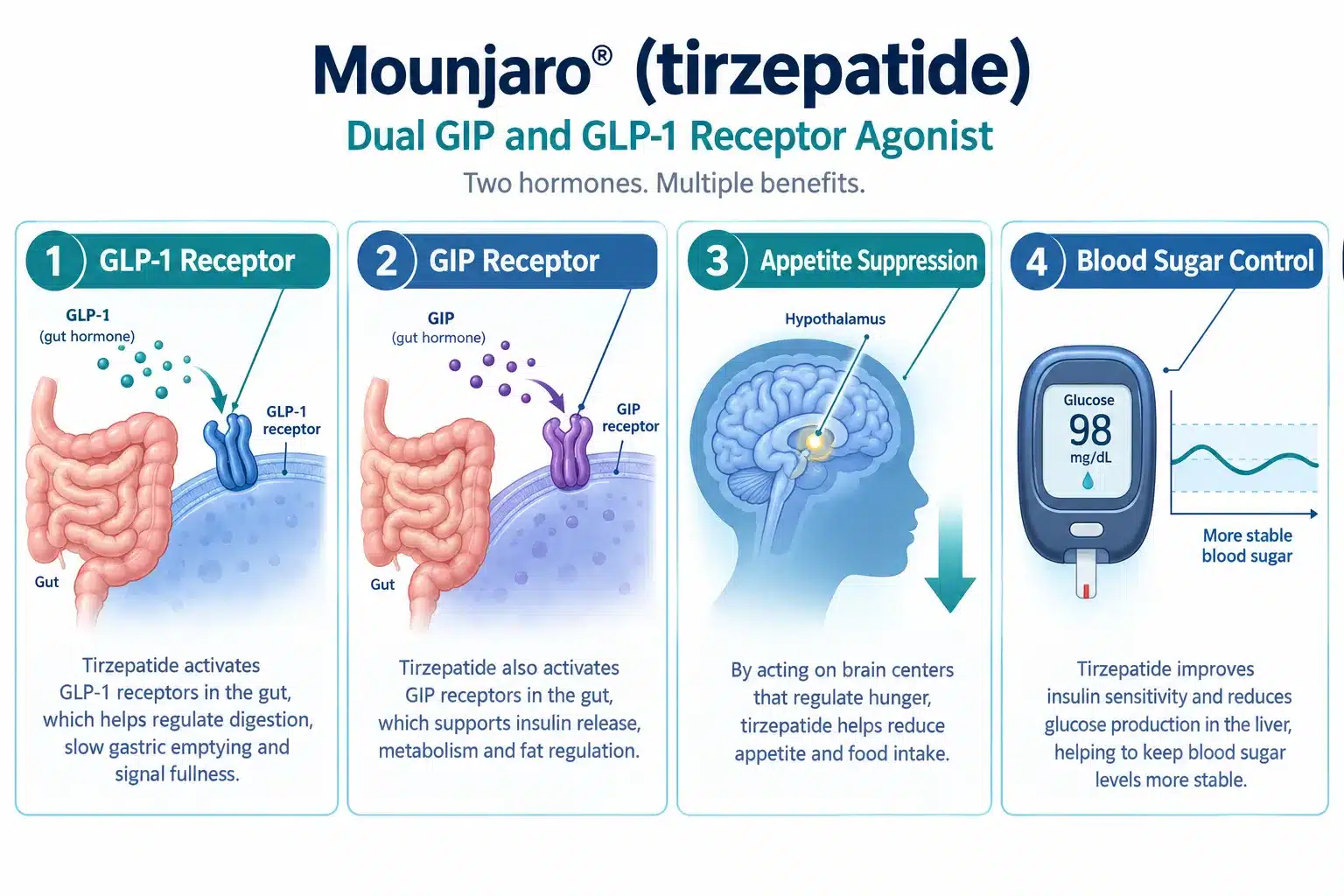
What sets Mounjaro apart from other GLP-1 medications is its dual mechanism. Most GLP-1 drugs (like semaglutide) activate only the glucagon-like peptide-1 receptor. Mounjaro activates both GLP-1 and glucose-dependent insulinotropic polypeptide (GIP) receptors simultaneously. This dual action appears to produce stronger appetite suppression and greater blood sugar regulation than single-receptor drugs in head-to-head trials.
In practical terms, the drug slows gastric emptying (food leaves your stomach more slowly), reduces appetite signals in the brain, and improves insulin sensitivity. The result is that most users feel full faster, eat less, and experience more stable blood sugar levels throughout the day.
Mounjaro comes in six dose strengths: 2.5 mg, 5 mg, 7.5 mg, 10 mg, 12.5 mg, and 15 mg. Patients typically start at 2.5 mg and titrate upward every four weeks as tolerated.
Mounjaro Weight Loss Results: How Much Can You Lose
Clinical evidence suggests Mounjaro produces among the largest weight loss results of any approved medication. In the SURMOUNT-1 trial published in the New England Journal of Medicine (2022), adults without diabetes lost an average of 15% to 20.9% of their body weight over 72 weeks depending on dose, compared to 3.1% in the placebo group.
For a person weighing 250 pounds, that translates to roughly 37 to 52 pounds of weight loss over about 18 months at the highest doses.
Real-world Mounjaro reviews tend to align reasonably well with trial data, though individual results vary considerably based on:
- Starting weight and metabolic health
- Adherence to dietary changes
- Physical activity level
- Dose reached before side effects become limiting
- Duration of treatment
Most users in online forums and patient communities report losing 10 to 30 pounds in the first three to six months. Some report plateaus that require dose increases to overcome. A small percentage see minimal results, often linked to poor dietary adherence or inability to tolerate higher doses.
For more on weight loss outcomes with tirzepatide specifically, see our detailed breakdown of Mounjaro shot for weight loss and our companion piece on weight loss with Mounjaro.
Mounjaro vs Ozempic: Which Is Better
Mounjaro and Ozempic are not the same drug, and “better” depends on your specific goals and health profile. Mounjaro (tirzepatide) activates both GLP-1 and GIP receptors; Ozempic (semaglutide) activates only GLP-1. In direct comparisons, tirzepatide has generally produced greater weight loss and comparable or superior blood sugar control.
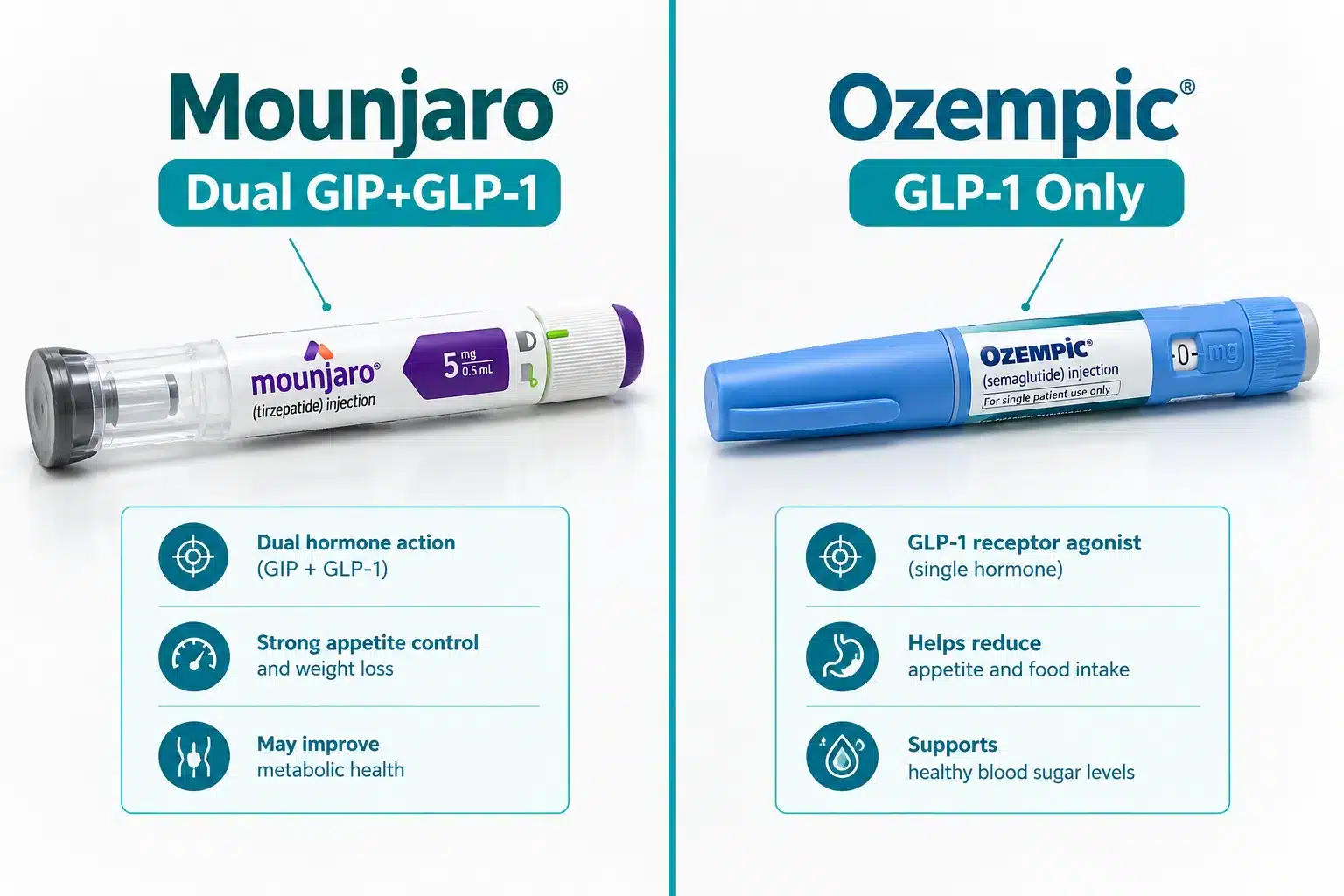
| Feature | Mounjaro (Tirzepatide) | Ozempic (Semaglutide) |
|---|---|---|
| Mechanism | Dual GLP-1 + GIP agonist | GLP-1 agonist only |
| FDA approval | Type 2 diabetes (Zepbound for weight) | Type 2 diabetes and cardiovascular risk |
| Avg. weight loss (trials) | Up to 20.9% body weight | Up to ~15% body weight (Wegovy trials) |
| Dosing | Once weekly injection | Once weekly injection |
| Side effect profile | Nausea, GI symptoms (similar) | Nausea, GI symptoms (similar) |
| Best for | T2D + significant weight loss goal | T2D + cardiovascular risk reduction |
Choose Mounjaro if you have type 2 diabetes and want the strongest available weight loss effect from a single injectable. Choose Ozempic if cardiovascular risk reduction is your primary clinical goal alongside blood sugar management, since Ozempic has a longer track record in that specific indication.
For a deeper look at semaglutide-based options, our semaglutide reviews with real results and side effects covers the patient experience in detail.
Mounjaro vs Wegovy: What Is the Difference
Wegovy is semaglutide at a higher dose (2.4 mg), specifically FDA-approved for chronic weight management in adults with obesity or overweight with a weight-related condition. Mounjaro is tirzepatide, approved for type 2 diabetes (with Zepbound being the weight-management version of the same molecule).
The key differences: Mounjaro/Zepbound uses a dual-receptor mechanism and has shown higher average weight loss in clinical trials. Wegovy has a longer post-approval track record in the weight management setting and more cardiovascular outcome data published as of 2026. Both are once-weekly injections with similar side effect profiles.
If your doctor is prescribing specifically for weight loss without a diabetes diagnosis, Zepbound (not Mounjaro) is the technically correct tirzepatide product, though the active ingredient is identical.
Mounjaro Side Effects: What Should I Expect
The most common Mounjaro side effects are gastrointestinal and tend to be most intense during dose escalation. They typically improve within two to four weeks at any given dose level.
Common side effects (reported in clinical trials):
- Nausea (most frequently reported)
- Diarrhea
- Vomiting
- Constipation
- Decreased appetite (often desired, but can be excessive)
- Abdominal pain or discomfort
Less common but serious risks to know:
- Pancreatitis (discontinue and seek care if you develop severe abdominal pain)
- Gallbladder problems, including gallstones
- Low blood sugar (hypoglycemia), especially if combined with insulin or sulfonylureas
- Kidney injury (often secondary to dehydration from GI side effects)
- Allergic reactions
Boxed warning: Mounjaro carries a black box warning for thyroid C-cell tumors observed in rodent studies. It should not be used by anyone with a personal or family history of medullary thyroid carcinoma (MTC) or multiple endocrine neoplasia syndrome type 2 (MEN 2).
Always discuss your full medication list and medical history with your prescribing clinician before starting. This article does not constitute medical advice.
Mounjaro Nausea: How Long Does It Last
Nausea is the most commonly reported side effect in Mounjaro reviews, and it is usually temporary. For most users, nausea is worst during the first two to four weeks at a new dose and improves significantly as the body adapts.
Practical strategies that users and clinicians commonly recommend:
- Eat smaller meals and avoid high-fat or spicy foods, especially on injection day
- Inject in the evening so peak nausea occurs during sleep
- Stay well hydrated
- Avoid lying down immediately after eating
- Ask your doctor about anti-nausea medication if symptoms are severe
If nausea persists beyond four to six weeks at a stable dose or is severe enough to prevent adequate hydration, contact your prescribing provider. Dose reduction is sometimes necessary.
Mounjaro Reviews from Real Users: What People Are Actually Saying
Real-world Mounjaro reviews paint a broadly positive picture for those who tolerate the medication, with the most consistent themes being strong appetite suppression and meaningful weight loss. The experience is not universal, and side effects lead a notable minority to discontinue.
What users commonly report as positives:
- Appetite “noise” (constant food thoughts) significantly reduced
- Feeling satisfied on smaller portions
- Steady weight loss, often 1 to 2 pounds per week at therapeutic doses
- Improved energy and blood sugar stability
What users commonly report as negatives:
- Nausea and vomiting, especially in the first month
- Fatigue during dose escalation
- Hair loss (reported anecdotally, likely related to rapid calorie restriction rather than the drug itself)
- Cost and insurance barriers
- Occasional injection site reactions
One pattern that appears repeatedly in patient communities: people who pair Mounjaro with intentional dietary changes, particularly reducing ultra-processed foods and increasing protein, tend to report better results and fewer plateau periods than those who rely on the drug alone.
For a related perspective on compounded tirzepatide, our tirzepatide reviews by patients article covers experiences with both branded and compounded versions.
Mounjaro Cost and Insurance Coverage
Without insurance, Mounjaro costs approximately $1,000 to $1,100 per month in the United States as of 2026, though prices vary by pharmacy and dose. This is one of the most common complaints in Mounjaro reviews.
Ways to reduce cost:
- Eli Lilly savings card: Eligible commercially insured patients may pay as little as $25 per month through Lilly’s savings program (income and insurance restrictions apply; check Lilly’s official site for current terms).
- Insurance coverage: Coverage varies widely. Mounjaro is more likely to be covered for type 2 diabetes than for weight loss alone. Prior authorization is common.
- Compounded tirzepatide: During periods of shortage, FDA-registered compounding pharmacies have produced tirzepatide at lower cost. Regulatory status of compounded versions has shifted; verify current FDA guidance before pursuing this route.
- Telehealth platforms: Several telehealth providers offer GLP-1 prescriptions with bundled pricing. Our compounded semaglutide reviews with real patient stories covers the telehealth GLP-1 landscape in detail.
Common mistake: Assuming insurance will automatically cover Mounjaro for weight loss. Many plans cover it only for type 2 diabetes with documented A1C above a threshold. Check your specific plan’s formulary before assuming coverage.
Who Is Mounjaro For and Who Should Not Take It
Mounjaro is FDA-approved for adults with type 2 diabetes as an adjunct to diet and exercise. Off-label, it is frequently prescribed for weight management in adults with obesity (BMI 30 or above) or overweight (BMI 27 or above) with at least one weight-related condition.
Mounjaro may be appropriate for:
- Adults with type 2 diabetes who need better blood sugar control
- Adults with obesity or significant overweight and a weight-related health condition (such as hypertension, sleep apnea, or high cholesterol)
- People who have not achieved adequate results with lifestyle changes alone
- Those who can tolerate weekly injections and have access to a prescribing clinician
Mounjaro is NOT appropriate for:
- Anyone with a personal or family history of medullary thyroid carcinoma or MEN 2
- People with a history of serious hypersensitivity to tirzepatide
- Pregnant or breastfeeding individuals (limited safety data; generally avoided)
- Children and adolescents (not approved for this population)
- People with severe gastrointestinal disease (e.g., gastroparesis) where slowed gastric emptying would be harmful
A prescribing clinician will evaluate your full history before starting Mounjaro. Self-prescribing or obtaining it without a valid prescription is not safe or legal.
Mounjaro Injection: How to Use It
Mounjaro comes as a single-dose autoinjector pen. The injection is given once per week, on the same day each week, subcutaneously (just under the skin).
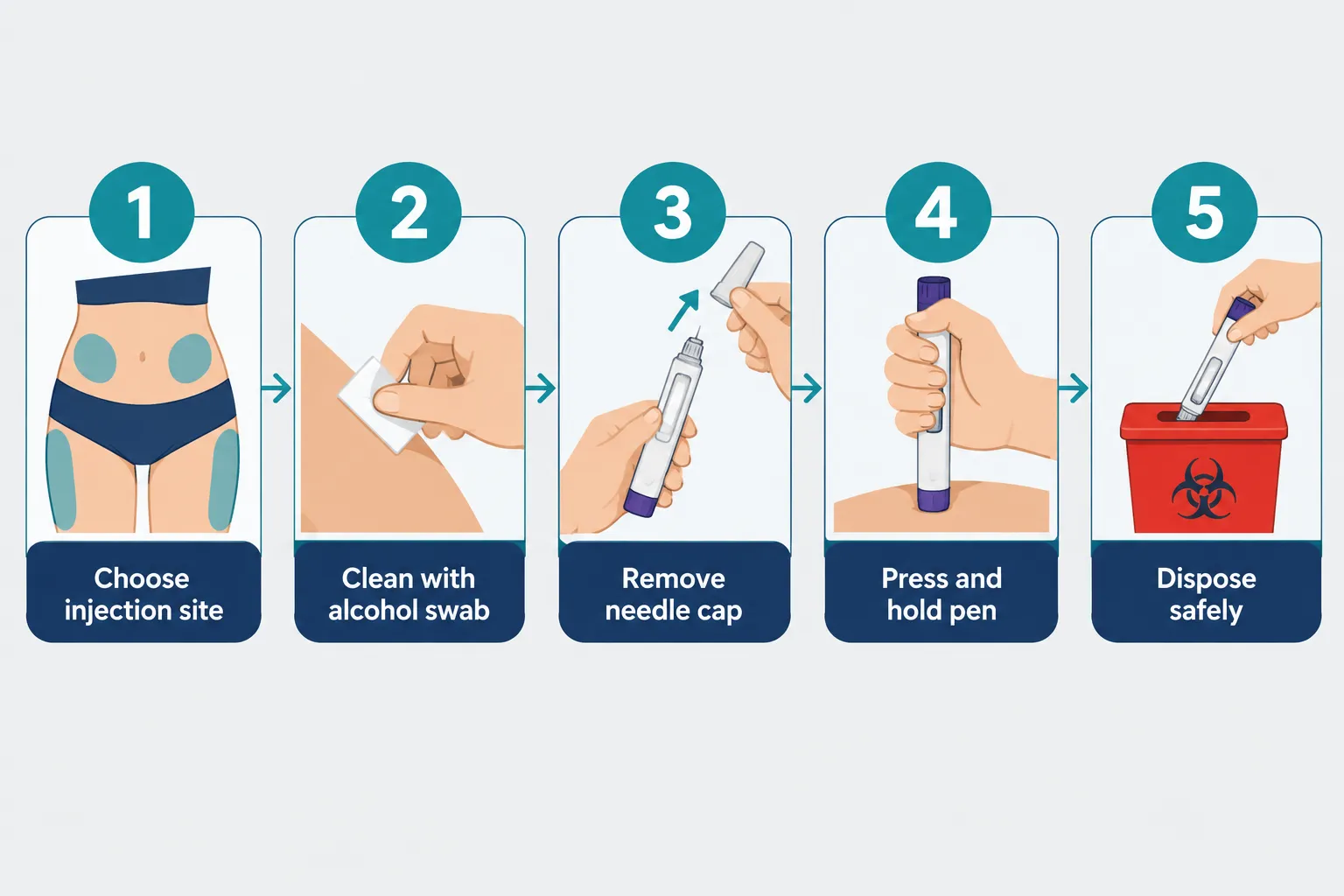
Step-by-step injection process:
- Choose your injection site. The abdomen (at least 2 inches from the navel), upper thigh, or upper arm are all acceptable. Rotate sites each week.
- Clean the area with an alcohol swab and let it dry completely.
- Remove the base cap from the pen. Do not remove the needle cap until ready to inject.
- Press the pen firmly against your skin at a 90-degree angle, then press the button to inject. Hold for at least 10 seconds until the injection is complete.
- Dispose of the pen in a sharps container. Never recap or reuse.
Store Mounjaro pens in the refrigerator (36 to 46 degrees Fahrenheit). They can be kept at room temperature (up to 86 degrees Fahrenheit) for up to 21 days if needed.
Common mistake: Injecting into the same site repeatedly, which can cause lipohypertrophy (fatty lumps under the skin) and reduce absorption. Always rotate.
Is Mounjaro Safe Long-Term
Based on available evidence as of 2026, Mounjaro appears reasonably safe for long-term use in appropriate patients, but long-term data beyond three to four years is still accumulating. The SURMOUNT trials ran for up to 72 weeks, and post-market surveillance continues.
Known long-term considerations:
- Weight regain after stopping: Clinical evidence consistently shows that weight returns when GLP-1/GIP medications are discontinued without sustained lifestyle changes. Mounjaro appears to require ongoing use to maintain results for most people.
- Cardiovascular effects: A cardiovascular outcomes trial (SURPASS-CVOT) published in 2024 showed tirzepatide reduced major cardiovascular events in adults with type 2 diabetes and established cardiovascular disease.
- Thyroid monitoring: The rodent thyroid C-cell tumor signal has not been confirmed in humans, but patients with any thyroid symptoms should report them promptly.
- Gallbladder disease: Rapid weight loss (from any cause) increases gallstone risk. Some users have required cholecystectomy.
The honest answer: Mounjaro’s long-term safety profile looks favorable based on current data, but it is not a medication to take casually or without ongoing medical supervision.
Does Mounjaro Work Without Diet and Exercise
Mounjaro produces weight loss even without formal diet or exercise programs, as shown in clinical trials where lifestyle intervention was standardized but not intensive. However, outcomes are meaningfully better when paired with dietary changes and physical activity.
The drug suppresses appetite, but it does not change what you eat when you do eat. Users who continue eating calorie-dense, ultra-processed foods in smaller portions will lose less weight than those who shift toward higher-protein, nutrient-dense meals. Exercise preserves lean muscle mass during weight loss, which matters for long-term metabolic health.
Practical guidance: Use the appetite suppression Mounjaro provides as an opportunity to build better eating habits, not a reason to avoid them. The medication makes dietary changes easier, it does not make them unnecessary.
Mounjaro Alternatives and Similar Medications
Several alternatives exist depending on your goals, insurance situation, and tolerance for injections.
GLP-1/GIP alternatives:
- Zepbound (tirzepatide), same molecule as Mounjaro, FDA-approved specifically for weight management
- Wegovy (semaglutide 2.4 mg), FDA-approved for weight management, strong clinical evidence
- Ozempic (semaglutide 1 mg/2 mg), FDA-approved for type 2 diabetes, widely used off-label for weight
- Rybelsus (oral semaglutide), for those who prefer pills over injections, though weight loss effect is generally lower
Compounded options:
Compounded tirzepatide and semaglutide have been available through telehealth platforms. Regulatory status has been evolving; always verify current FDA guidance. Our compounded semaglutide reviews and semaglutide tablets reviews cover these alternatives in more depth.
Non-GLP-1 options:
- Qsymia, Contrave, and phentermine are older oral weight loss medications with more modest effects
- Bariatric surgery remains the most effective long-term intervention for severe obesity
Choose Mounjaro if you have type 2 diabetes, want the strongest injectable weight loss effect, and can manage the cost. Consider alternatives if cost is prohibitive, you prefer oral medications, or your primary goal is cardiovascular risk reduction rather than weight loss.
Common Mistakes People Make with Mounjaro
Avoiding these errors can meaningfully improve your experience and results:
- Escalating the dose too fast. The standard titration schedule (new dose every four weeks) exists to reduce side effects. Rushing it increases nausea and dropout rates.
- Not staying hydrated. GI side effects cause fluid loss. Dehydration worsens nausea and can cause kidney stress.
- Expecting results in the first two weeks. Appetite suppression starts early, but visible weight loss typically takes four to eight weeks to become consistent.
- Stopping abruptly without a plan. Weight regain after stopping is well-documented. Discuss a long-term strategy with your clinician before starting.
- Ignoring protein intake. Rapid weight loss without adequate protein accelerates muscle loss. Aim for adequate protein at every meal.
- Purchasing from unverified sources. Counterfeit GLP-1 products have been reported. Only use pharmacy-dispensed medication prescribed by a licensed clinician.
FAQ
Is Mounjaro FDA-approved for weight loss?
Mounjaro (tirzepatide) is FDA-approved for type 2 diabetes. The same molecule under the brand name Zepbound is FDA-approved for chronic weight management. Many clinicians prescribe Mounjaro off-label for weight loss in non-diabetic patients.
How long does it take for Mounjaro to work?
Most users notice appetite suppression within the first one to two weeks. Consistent, measurable weight loss typically becomes apparent by weeks four to eight. Maximum results at a given dose are usually seen after two to three months.
Can I take Mounjaro if I don’t have diabetes?
Mounjaro is not FDA-approved for weight loss in non-diabetic patients, but it is commonly prescribed off-label for this purpose. Zepbound (same active ingredient) is the on-label option for weight management without diabetes.
What happens if I stop taking Mounjaro?
Clinical evidence shows that most people regain a significant portion of lost weight within one year of stopping. The medication manages but does not cure the underlying metabolic drivers of obesity or diabetes.
Does Mounjaro interact with other medications?
Yes. It can increase hypoglycemia risk when combined with insulin or sulfonylureas. It may also affect absorption of oral medications due to slowed gastric emptying. Always provide your full medication list to your prescribing clinician.
Is Mounjaro a scam?
No. Mounjaro is an FDA-approved prescription medication with extensive clinical trial data. It is manufactured by Eli Lilly, a major pharmaceutical company. Skepticism about dramatic weight loss claims is healthy, but the drug’s efficacy is well-supported by peer-reviewed evidence.
Can I inject Mounjaro anywhere on my body?
The approved injection sites are the abdomen, upper thigh, and upper arm. Rotate sites weekly to avoid tissue buildup. Do not inject into muscle or a vein.
Does Mounjaro cause hair loss?
Hair loss is not listed as a common clinical side effect of tirzepatide itself. However, rapid weight loss from any cause can trigger telogen effluvium (temporary hair shedding). Adequate protein intake may reduce this risk.
How should I store Mounjaro?
Refrigerate between 36 and 46 degrees Fahrenheit. Do not freeze. Pens can be kept at room temperature (up to 86 degrees Fahrenheit) for up to 21 days. Protect from light.
Is Mounjaro safe during pregnancy?
No. Mounjaro should be discontinued at least two months before a planned pregnancy. There is insufficient safety data for use during pregnancy or breastfeeding.
7 Best GLP-1 Providers Ranked: Accreditation, Flexibility & Support Compared (2026 Update)
32,000+ Patients Can't All Be Wrong: See the Top-Rated GLP-1 Providers: Compared on accreditation, plan flexibility, and patient support — updated for 2026.
BMI MD GLP-1 Microdosing Plan
- Specialized microdosing options (sublingual drops or low-dose injections)
- Ideal for maintaining weight or tapering off higher doses safely
- Fully bundled plan with no hidden monthly platform memberships
DirectMeds Weight Loss Solutions
- Sourced from accredited, state-licensed 503A compounding pharmacies
- No-frills high-volume savings passed directly to the patient
- Includes clinical consultation and cold-chain shipping updates
MEDVi Flat-Rate Telehealth
- Flat monthly rate holds steady even at maximum maintenance doses
- No dosage upcharges or graduation fee penalties
- Offers both injectable and advanced oral thin-film delivery options
Gala GLP-1 Care Program
- All-inclusive plan with no standalone membership costs
- Continuous text-based messaging access with state-licensed clinicians
- Temperature-controlled, cold-chain medication shipping included
Measured GLP-1 Metabolic Health
- Comprehensive metabolic health screening and expert intake analysis
- Predictable long-term budgeting with stable plan pricing
- High-end responsive dashboard with integrated diagnostic support
Refills GLP-1 (TryRefills Plan)
- Flat rate holds steady as titration scales up
- Includes clinical guides for active side-effect management
- Bundles in foundational nutritional strategies alongside medication
AltRx GLP-1 Transactional Reorders
- Zero recurring auto-billing — pay entirely on a transactional basis
- Rapid text-to-order format saves time for experienced patients
- Provides both injectable forms and fast-dissolving tablet variations
Conclusion
Mounjaro (tirzepatide) stands out in the GLP-1 medication landscape because of its dual-receptor mechanism and the strength of its clinical weight loss data. For adults with type 2 diabetes or significant obesity, Mounjaro reviews from both clinical trials and real-world users consistently point to meaningful appetite suppression and substantial weight loss, results that are difficult to achieve through lifestyle changes alone.
That said, it is not a simple fix. Side effects are real, cost is a genuine barrier for many people, and the weight tends to return if the medication is stopped without sustainable lifestyle changes in place.
Actionable next steps:
- Talk to your primary care provider or an endocrinologist about whether Mounjaro or Zepbound is appropriate for your specific health profile.
- Check your insurance formulary and ask about prior authorization requirements before your appointment.
- Review Eli Lilly’s savings card program if you have commercial insurance.
- If cost is a barrier, ask your clinician about compounded tirzepatide options and verify current FDA guidance on their status.
- Start planning dietary and activity changes now, the medication works best as a tool, not a replacement for a healthier lifestyle.
For more context on the broader GLP-1 medication landscape, our tirzepatide reviews by patients and compounded semaglutide reviews articles offer additional perspectives from real users navigating similar decisions.
References
- Jastreboff AM, et al. “Tirzepatide Once Weekly for the Treatment of Obesity.” New England Journal of Medicine. 2022. https://www.nejm.org/doi/full/10.1056/NEJMoa2206038
- Eli Lilly and Company. Mounjaro (tirzepatide) Prescribing Information. 2023. https://www.accessdata.fda.gov/drugsatfda_docs/label/2023/215866s006lbl.pdf
- Ludvik B, et al. “SURPASS-CVOT: Tirzepatide versus dulaglutide for reduction of cardiovascular events.” New England Journal of Medicine. 2024.
- U.S. Food and Drug Administration. “FDA Approves New Medication for Chronic Weight Management.” 2023. https://www.fda.gov/news-events/press-announcements/fda-approves-new-medication-chronic-weight-management


