
noom glp 1 reviews
Last updated: September 25, 2026
Quick Answer: Noom GLP-1 is a medically supervised weight loss program that pairs FDA-approved GLP-1 receptor agonist medications (primarily semaglutide) with Noom’s behavioral coaching app. Based on clinical evidence for semaglutide and real user reports, most people can expect meaningful weight loss when they stay consistent, but results vary widely, costs are significant without insurance, and the program is not right for everyone. This guide covers everything from how it works to what real users say, so you can decide whether it fits your situation.
Key Takeaways
- Noom GLP-1 combines prescription semaglutide with Noom’s behavioral coaching platform, making it different from the standard Noom diet app.
- Clinical trials for semaglutide (the active medication) show average body weight reductions of roughly 15% over 68 weeks in adults with obesity, according to the STEP 1 trial published in the New England Journal of Medicine (2021).
- Monthly costs typically range from $149 to $399 depending on medication dose and subscription tier, and most insurance plans do not cover GLP-1s for weight loss as of 2026.
- Common side effects include nausea, constipation, and fatigue, especially in the first four to eight weeks of treatment.
- Noom GLP-1 is best for adults with a BMI of 30 or higher (or 27 with a weight-related condition) who want medical support plus behavioral coaching in one program.
- It is not a good fit for people with a personal or family history of medullary thyroid carcinoma, pancreatitis, or certain other medical conditions.
- Real user reviews on Reddit and third-party sites are mixed: many report strong early results, while others cite high cost, GI side effects, and inconsistent provider responsiveness as drawbacks.
- Cheaper alternatives exist, including compounded semaglutide through telehealth platforms, though quality and oversight vary.
What Is Noom GLP-1 and How Does It Work
Noom GLP-1 is a telehealth-based weight management program that prescribes semaglutide (a GLP-1 receptor agonist) alongside Noom’s established behavioral coaching curriculum. It is not a supplement, it is a prescription medication program accessed through Noom’s platform.
7 Best GLP-1 Providers Ranked: Accreditation, Flexibility & Support Compared (2026 Update)
32,000+ Patients Can't All Be Wrong: See the Top-Rated GLP-1 Providers. We compared the leading online GLP-1 providers based on program features, clinical support, convenience, and overall value.
BMI MD GLP-1 Microdosing Plan
- Specialized microdosing options, including sublingual drops and low-dose injections
- Designed for people interested in maintaining weight or gradually adjusting treatment
- Bundled program structure without a separate monthly platform membership
- Online access makes the process convenient from home

DirectMeds Weight Loss Solutions
- Online weight-loss program with a straightforward patient experience
- Compounded medication options through state-licensed compounding pharmacies
- Includes clinical consultation as part of the process
- Provides shipping updates to help patients track their orders
MEDVi Flat-Rate Telehealth
- Flat-rate telehealth approach designed for easier budgeting
- No dosage-based pricing increases within the advertised program structure
- Offers injectable and oral thin-film delivery options
- Includes medical screening and asynchronous provider consultations
Gala GLP-1 Care Program
- Text-based access to state-licensed clinicians
- Cold-chain medication shipping included in the program
- Month-to-month program structure
- Designed for people who value convenient ongoing support
Measured GLP-1 Metabolic Health
- Comprehensive metabolic health screening and intake analysis
- Designed around longer-term metabolic health management
- Responsive dashboard with integrated health tracking tools
- Useful option for patients who value a more data-focused experience
Refills GLP-1 (TryRefills Plan)
- Clinical guidance designed to help patients manage common treatment concerns
- Includes foundational nutritional strategies alongside medication
- Designed around predictable ongoing treatment
- No hidden startup or processing fees according to the program information provided
AltRx GLP-1 Transactional Reorders
- Transactional reorder model without recurring auto-billing
- Designed for patients who already understand their treatment routine
- Fast text-to-order process for convenient reorders
- Offers injectable and fast-dissolving tablet variations
Here is how the mechanism works in plain terms:
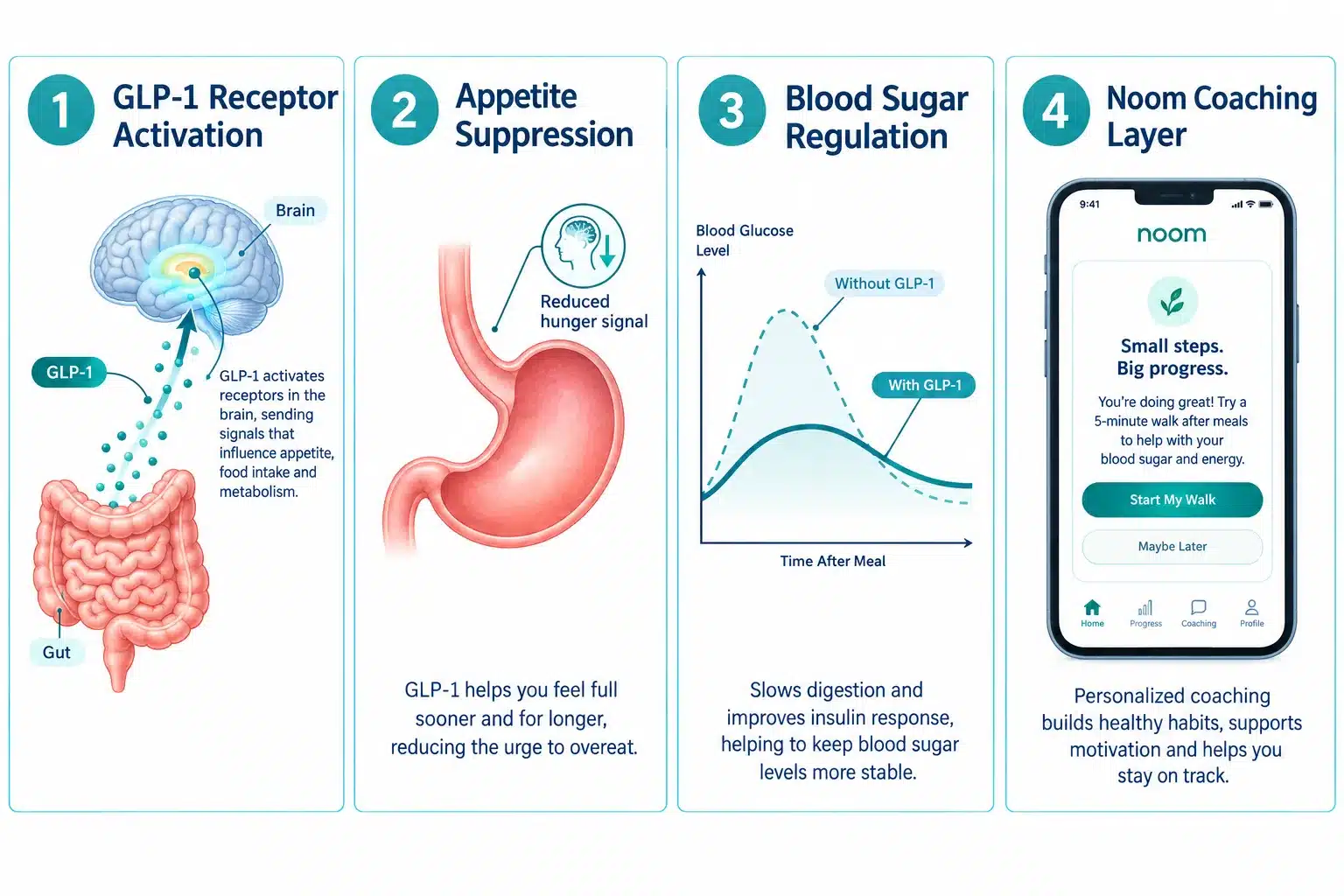
- GLP-1 (glucagon-like peptide-1) is a hormone your gut naturally releases after eating. It signals your brain that you are full and tells your pancreas to release insulin.
- Semaglutide mimics this hormone, binding to GLP-1 receptors in the brain and gut. The result is reduced appetite, slower gastric emptying, and better blood sugar regulation.
- Noom’s coaching layer adds psychology-based behavior change tools, food logging, habit tracking, and one-on-one coaching, designed to reinforce the medication’s appetite-suppressing effects.
The combination matters because GLP-1 medications work best when paired with lifestyle changes. Noom’s platform is specifically built for that behavioral component, which is what separates this from simply getting a semaglutide prescription through a generic telehealth service.
Evidence level: Strong for semaglutide alone; moderate for the combined medication-plus-coaching model specifically.
Does Noom GLP-1 Actually Work for Weight Loss
Yes, the core medication (semaglutide) has strong clinical evidence behind it. The question is whether Noom’s delivery model adds meaningful value over a standalone prescription.
The STEP 1 trial (Wilding et al., New England Journal of Medicine, 2021) found that adults using 2.4 mg weekly semaglutide lost an average of 14.9% of body weight over 68 weeks, compared to 2.4% with placebo, when combined with lifestyle intervention. This is the same active ingredient Noom GLP-1 uses.
What Noom adds on top of the medication:
- Structured behavioral coaching through its app
- Regular check-ins with a licensed provider
- Meal tracking and psychology-based habit lessons
- Dose titration support to reduce side effects
Common mistake: Many users expect the medication alone to do all the work. People who engage with the coaching component and make dietary adjustments tend to see better and more sustained results than those who treat it as a “set and forget” prescription.
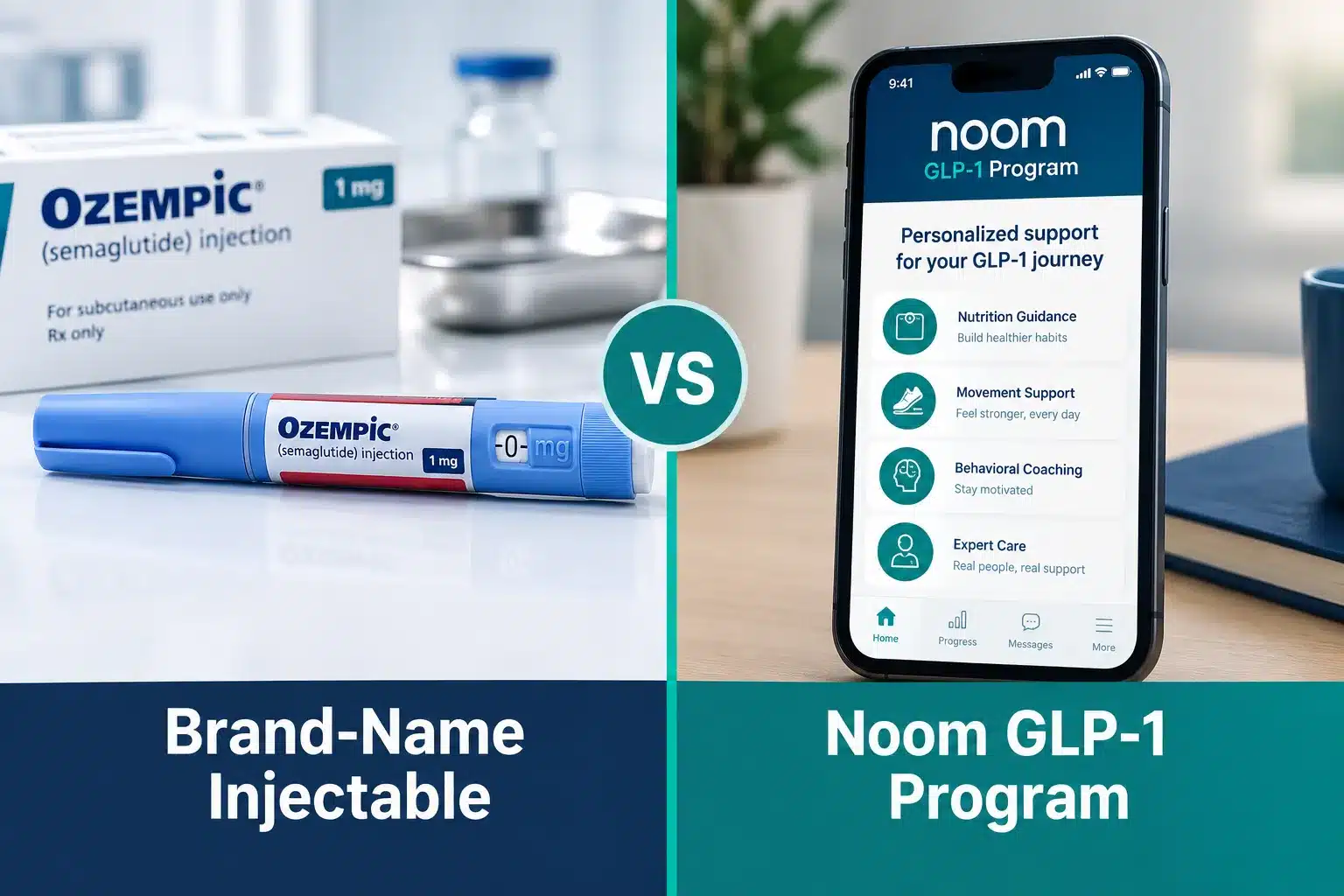
Noom GLP-1 vs Ozempic: Which Is Better
These are not direct competitors, Ozempic is a brand-name semaglutide product (approved for type 2 diabetes, not weight loss), while Noom GLP-1 is a program that prescribes semaglutide under the Wegovy indication (approved for chronic weight management). The active ingredient is the same.
| Feature | Noom GLP-1 | Ozempic (brand-name) |
|---|---|---|
| Active ingredient | Semaglutide | Semaglutide |
| FDA indication | Chronic weight management | Type 2 diabetes |
| Coaching included | Yes (behavioral app) | No |
| Access method | Telehealth subscription | In-person or telehealth Rx |
| Insurance coverage | Rarely covered for weight loss | Often covered for diabetes |
| Best for | Weight loss with coaching support | Type 2 diabetes management |
Choose Noom GLP-1 if you want the medication bundled with behavioral support and a single monthly subscription. Choose Ozempic through your doctor if you have type 2 diabetes and your insurance covers it, you will likely pay far less out of pocket.
For a deeper look at semaglutide experiences across platforms, see these semaglutide reviews from real patients.
Noom GLP-1 vs Regular Noom App: What Is the Difference
The standard Noom app is a calorie-tracking and behavioral coaching program with no medication component. Noom GLP-1 is a separate, medically supervised program that adds a prescription semaglutide injection to the coaching framework.
Key differences:
- Standard Noom: Psychology-based food logging, color-coded food system, group coaching. No medical provider. Roughly $60 to $70 per month.
- Noom GLP-1: Includes all of the above, plus a licensed provider consultation, semaglutide prescription, and ongoing medical oversight.
If you have tried the standard Noom app and hit a plateau, the GLP-1 program is designed for people who need pharmacological appetite suppression in addition to behavioral tools.
Noom GLP-1 Cost and Insurance Coverage
Noom GLP-1 is not cheap, and insurance coverage for weight-loss GLP-1s remains limited in 2026. Most users pay out of pocket.
Estimated monthly costs (based on publicly available program information as of 2026):
- Starting dose tier: Approximately $149 to $199 per month
- Maintenance dose tier: Approximately $299 to $399 per month
- Medication included: Yes, in most subscription tiers
Insurance: Most commercial insurance plans do not cover GLP-1 medications prescribed specifically for weight loss, though coverage is expanding. Medicare Part D covers Wegovy for cardiovascular risk reduction in eligible patients following a 2024 policy update, but coverage for pure weight management remains inconsistent.
Refund policy: Noom has historically offered a 14-day trial period, but terms change. Always review the current subscription agreement before enrolling.
Practical tip: If cost is a primary concern, compare Noom GLP-1 against compounded semaglutide programs (discussed below) before committing.
Noom GLP-1 Side Effects: What to Expect
GLP-1 medications have a well-documented side effect profile. Most side effects are gastrointestinal and tend to be worst during dose escalation in the first eight weeks.
| Side Effect | How Common | What to Do |
|---|---|---|
| Nausea | Very common (40-50%) | Eat smaller meals; avoid fatty foods |
| Constipation | Common (20-30%) | Increase fiber and water intake |
| Fatigue | Common early on | Usually resolves within weeks |
| Vomiting / diarrhea | Less common | Contact your provider if severe |
| Pancreatitis (rare) | Rare but serious | Seek emergency care for severe abdominal pain |
Who should avoid Noom GLP-1:
- Personal or family history of medullary thyroid carcinoma or MEN2 syndrome
- History of pancreatitis
- Pregnancy or breastfeeding
- Severe kidney or liver disease
Medical disclaimer: Always discuss your full medical history and current medications with a licensed provider before starting any GLP-1 program.
Noom GLP-1 Reviews Reddit: Real User Experiences
Reddit communities like r/Semaglutide and r/Noom contain hundreds of firsthand Noom GLP-1 reviews. The picture is mixed, and worth reading carefully before you commit.
What users commonly report positively:
- Significant appetite reduction within the first two to four weeks
- 10 to 20 pounds of weight loss in the first three months for many users
- Convenience of having medication and coaching in one subscription
- Helpful dose titration support from Noom’s provider team
What users commonly criticize:
- High monthly cost, especially at maintenance doses
- Nausea and GI side effects that some found intolerable
- Slow or inconsistent provider response times through the app
- Feeling like the coaching content was repetitive after the first few months
- Weight regain after stopping the medication, which is consistent with clinical data
Edge case to know: Several Reddit users noted that Noom’s providers were conservative about dose escalation compared to other telehealth platforms. For people who needed a faster titration to see results, this was frustrating. For people prone to side effects, it was a feature, not a bug.
Who Is Noom GLP-1 Right For
Noom GLP-1 is best suited for a specific type of person. It is not a universal solution.
Good fit:
- Adults with a BMI of 30 or higher, or 27 or higher with a weight-related condition (hypertension, type 2 diabetes, sleep apnea)
- People who have tried diet and exercise alone without sustained success
- Those who want behavioral coaching integrated with their medication program
- Adults comfortable with weekly self-injection and telehealth-only provider access
Not a good fit:
- People with contraindications listed above (thyroid history, pancreatitis, etc.)
- Those who need in-person medical supervision
- Anyone on a tight budget who cannot sustain $200 to $400 per month
- People looking for a short-term fix, GLP-1 medications require ongoing use to maintain results
How to Get a Noom GLP-1 Prescription
Getting started with Noom GLP-1 follows a straightforward telehealth process. Here is how it works in 2026:
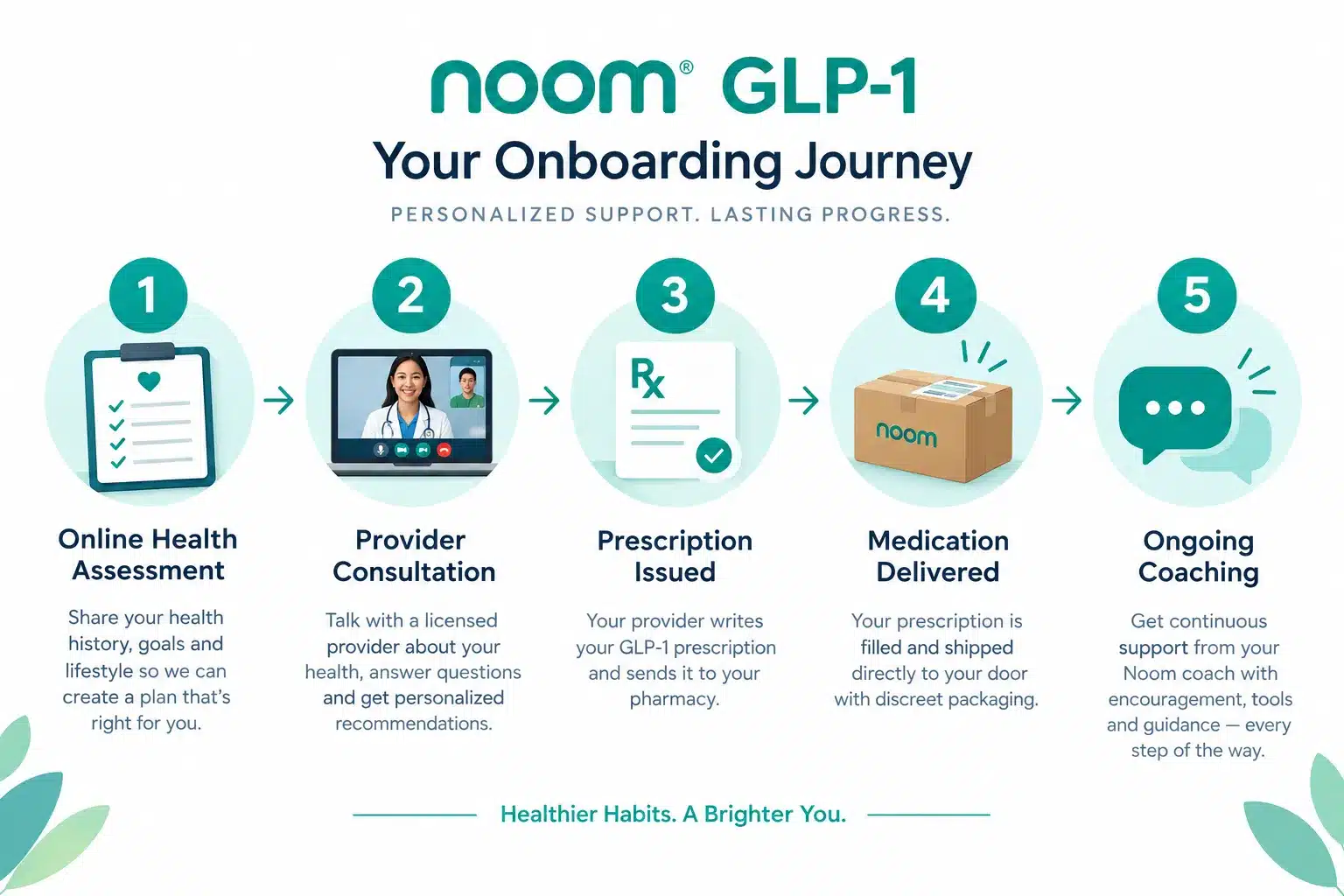
- Complete an online health assessment on Noom’s website, covering your medical history, current medications, and weight loss goals.
- Provider review: A licensed clinician reviews your intake form, typically within 24 to 48 hours.
- Video or asynchronous consultation: Depending on your state, you may have a brief video call or an asynchronous provider review.
- Prescription issued if you are a candidate. Noom works with partner pharmacies to fulfill the prescription.
- Medication delivered to your home, typically within five to seven business days.
- Ongoing check-ins through the app, with dose adjustments managed by your assigned provider.
Important: Noom cannot prescribe to residents of all U.S. states due to telehealth regulations. Check availability in your state before starting the intake process.
Noom GLP-1 Results: How Long to See Weight Loss
Most users notice appetite suppression within the first one to two weeks, but visible weight loss typically becomes consistent after four to eight weeks as the dose escalates.
Realistic timeline based on clinical data and user reports:
- Weeks 1 to 4: Appetite reduction begins; mild weight loss (2 to 5 lbs for many users); side effects most prominent
- Months 2 to 3: More consistent weight loss as dose increases; GI side effects often improve
- Months 3 to 6: Most users in clinical trials saw 5 to 10% body weight reduction in this window
- Month 6 to 12+: Continued loss toward the 15% average seen in the STEP 1 trial for those who stay on the full dose
Key constraint: Results depend heavily on dietary adherence. The medication reduces appetite, but it does not eliminate the need for calorie awareness. Users who continue eating high-calorie foods despite reduced hunger see slower results.
Noom GLP-1 vs Compounded Semaglutide: Which Is Cheaper
Compounded semaglutide from telehealth platforms is generally significantly cheaper than Noom GLP-1, but the trade-offs matter.
Compounded semaglutide from platforms like those reviewed in our compounded semaglutide patient stories guide can cost $150 to $250 per month for equivalent doses, compared to Noom’s $299 to $399 at maintenance. However:
- Compounded semaglutide is not FDA-approved as a finished drug product; it is prepared by compounding pharmacies under different regulatory standards
- Quality and concentration consistency can vary between compounding pharmacies
- Most compounded-only platforms do not include behavioral coaching
- The FDA has issued warnings about some compounded semaglutide products
Choose Noom GLP-1 if you value the integrated coaching and a more structured provider relationship and can absorb the higher cost.
Choose compounded semaglutide if cost is the primary barrier and you are comfortable doing your own behavioral work without a coaching platform.
You can also explore DirectMeds GLP-1 reviews and Shed GLP-1 reviews for additional telehealth GLP-1 program comparisons.
Noom GLP-1 Alternatives and Similar Programs
If Noom GLP-1 is not the right fit, several comparable programs exist in 2026:
- WeightWatchers Clinic: Combines WW’s food program with GLP-1 prescriptions; similar price range
- Hims/Hers Weight Loss: Offers compounded semaglutide at a lower price point with lighter coaching
- Ro Body Program: Telehealth GLP-1 with nutrition coaching; slightly lower cost than Noom
- Found Health: Combines GLP-1s with metabolic testing and coaching
- Your primary care doctor: Often the most cost-effective route if your insurance covers the visit and potentially the medication
For those interested in tirzepatide (a dual GLP-1/GIP agonist with potentially stronger results), see our tirzepatide patient reviews and Medvi oral tirzepatide reviews for more context.
Common Mistakes People Make with Noom GLP-1
These are the patterns that consistently show up in negative Noom GLP-1 reviews and user complaints:
- Skipping the behavioral coaching: The medication suppresses appetite; the coaching is what builds the habits that keep weight off long-term. Ignoring the app defeats the purpose of paying for the combined program.
- Expecting immediate results: The dose titration schedule takes eight to twelve weeks to reach the therapeutic dose. Quitting in week three because “nothing is happening” is one of the most common errors.
- Not adjusting diet quality: Semaglutide reduces how much you want to eat, but it does not change what you choose to eat. High-calorie, low-nutrient foods still cause problems.
- Stopping abruptly without a plan: Clinical data shows that most people regain a significant portion of lost weight within a year of stopping GLP-1 medications without a maintenance strategy.
- Not disclosing all medications: GLP-1s can affect the absorption of oral medications due to slowed gastric emptying. Always give your provider a complete medication list.
Is Noom GLP-1 Safe Long Term
For most healthy adults who meet the eligibility criteria, semaglutide has a well-studied safety profile based on multi-year clinical trials. The STEP program trials followed participants for up to 68 weeks, and longer-term cardiovascular outcome data from the SELECT trial (published in the New England Journal of Medicine, 2023) showed semaglutide reduced major cardiovascular events in adults with obesity and established cardiovascular disease.
That said, long-term use beyond two to three years has less data than shorter-term use. Known ongoing concerns include:
- Potential risk of gallbladder disease with rapid weight loss
- Muscle mass loss if protein intake is inadequate
- Theoretical thyroid C-cell concerns (based on rodent studies; not confirmed in humans at clinical doses per the FDA label)
Bottom line on safety: For eligible adults, the risk-benefit profile is generally favorable, but this is a prescription medication that requires ongoing medical supervision, not a supplement you can self-manage.
Final Verdict: Is Noom GLP-1 Worth It
Noom GLP-1 is a legitimate, medically sound program built on one of the most clinically validated weight loss medications available in 2026. The combination of semaglutide and behavioral coaching is a reasonable approach, and the evidence supports meaningful weight loss for people who stay consistent.
Consider it if:
- You have a BMI of 30 or higher and have struggled with diet-only approaches
- You want a single subscription that handles both the prescription and the behavioral support
- You can afford $200 to $400 per month without financial strain
- You are willing to commit for at least six to twelve months
Skip it if:
- You have contraindications to GLP-1 medications
- Cost is a significant barrier (explore compounded alternatives instead)
- You prefer in-person medical care
- You want a short-term solution, this requires a long-term commitment to maintain results
Editorial rating: 3.8/5, Strong underlying medication, reasonable coaching platform, but high cost and limited insurance coverage are real barriers for many people.
Frequently Asked Questions
Is Noom GLP-1 FDA-approved?
The medication used (semaglutide) is FDA-approved for chronic weight management under the brand name Wegovy. Noom’s program itself is a telehealth delivery service, not a drug requiring separate FDA approval.
How long does Noom GLP-1 take to work?
Most users notice appetite suppression within one to two weeks. Consistent, measurable weight loss typically becomes apparent after four to eight weeks as the dose escalates.
Can I take Noom GLP-1 if I have type 2 diabetes?
Possibly, but you must disclose your diabetes medications to your provider. GLP-1s can interact with insulin and sulfonylureas, increasing hypoglycemia risk. Your provider will assess whether it is appropriate.
What happens if I stop Noom GLP-1?
Clinical data shows that most people regain a significant portion of lost weight after stopping GLP-1 medications. A structured maintenance plan, including dietary habits built during the program, is important before discontinuing.
Is Noom GLP-1 a scam?
No. It is a real telehealth program prescribing a clinically validated medication. However, it is expensive, and some users feel the coaching component does not justify the premium over cheaper semaglutide-only platforms.
Does Noom GLP-1 include the medication in the monthly price?
In most subscription tiers, yes. Always confirm the current pricing structure on Noom’s website, as plans and pricing change.
Can I use Noom GLP-1 if I am already using the standard Noom app?
Yes, but Noom GLP-1 is a separate program with a separate enrollment process and cost. Your standard Noom subscription does not automatically include the medical component.
What is the difference between Noom GLP-1 and Wegovy?
Wegovy is the brand-name semaglutide product. Noom GLP-1 is a program that prescribes semaglutide (often generic or the Wegovy formulation) bundled with coaching. The medication is the same; the delivery and support model differ.
Is Noom GLP-1 available in all U.S. states?
No. Telehealth prescribing regulations vary by state. Check Noom’s current availability map before starting the intake process.
How does Noom GLP-1 compare to Nutrisystem for weight loss?
They target different mechanisms. Nutrisystem is a structured meal delivery program with no medication component. Noom GLP-1 uses pharmacological appetite suppression plus behavioral coaching. For a comparison of structured diet programs, see our Nutrisystem Uniquely Yours plan review.
7 Best GLP-1 Providers Ranked: Accreditation, Flexibility & Support Compared (2026 Update)
32,000+ Patients Can't All Be Wrong: See the Top-Rated GLP-1 Providers: Compared on accreditation, plan flexibility, and patient support — updated for 2026.
BMI MD GLP-1 Microdosing Plan
- Specialized microdosing options (sublingual drops or low-dose injections)
- Ideal for maintaining weight or tapering off higher doses safely
- Fully bundled plan with no hidden monthly platform memberships
DirectMeds Weight Loss Solutions
- Sourced from accredited, state-licensed 503A compounding pharmacies
- No-frills high-volume savings passed directly to the patient
- Includes clinical consultation and cold-chain shipping updates
MEDVi Flat-Rate Telehealth
- Flat monthly rate holds steady even at maximum maintenance doses
- No dosage upcharges or graduation fee penalties
- Offers both injectable and advanced oral thin-film delivery options
Gala GLP-1 Care Program
- All-inclusive plan with no standalone membership costs
- Continuous text-based messaging access with state-licensed clinicians
- Temperature-controlled, cold-chain medication shipping included
Measured GLP-1 Metabolic Health
- Comprehensive metabolic health screening and expert intake analysis
- Predictable long-term budgeting with stable plan pricing
- High-end responsive dashboard with integrated diagnostic support
Refills GLP-1 (TryRefills Plan)
- Flat rate holds steady as titration scales up
- Includes clinical guides for active side-effect management
- Bundles in foundational nutritional strategies alongside medication
AltRx GLP-1 Transactional Reorders
- Zero recurring auto-billing — pay entirely on a transactional basis
- Rapid text-to-order format saves time for experienced patients
- Provides both injectable forms and fast-dissolving tablet variations
Conclusion
Noom GLP-1 represents one of the more complete telehealth weight loss programs available in 2026, combining a clinically proven medication with a structured behavioral platform. For adults who have struggled with appetite control and have not found success with diet and exercise alone, it is a credible option worth serious consideration.
Your next steps:
- Check whether you meet the eligibility criteria (BMI 30+, or 27+ with a weight-related condition).
- Review your current medications with a clinician before starting, especially if you take diabetes or blood pressure medications.
- Compare Noom GLP-1’s current pricing against compounded semaglutide platforms and other telehealth GLP-1 programs to find the best value for your budget.
- If you decide to proceed, commit to the behavioral coaching component, it is what separates this program from a simple prescription and is a key driver of long-term results.
- Set realistic expectations: meaningful weight loss takes three to six months of consistent use, not weeks.
For more context on GLP-1 medication experiences across different platforms, our semaglutide tablet reviews and cheapest pharmacy for semaglutide rankings are useful next reads.
Sources
- Wilding JPH, et al. “Once-Weekly Semaglutide in Adults with Overweight or Obesity.” New England Journal of Medicine. 2021. https://www.nejm.org/doi/full/10.1056/NEJMoa2032183
- Lincoff AM, et al. “Semaglutide and Cardiovascular Outcomes in Obesity without Diabetes.” New England Journal of Medicine. 2023. https://www.nejm.org/doi/full/10.1056/NEJMoa2307563
- U.S. Food and Drug Administration. “Wegovy (semaglutide) Prescribing Information.” FDA.gov. 2021. https://www.accessdata.fda.gov/drugsatfda_docs/label/2021/215256s000lbl.pdf
- Noom. “Noom Med Program Information.” Noom.com. 2024. https://www.noom.com/med/


