
Weight Loss Mounjaro Review: Why Tirzepatide Is Transforming Obesity Treatment
Last updated: May 28, 2026

Quick Answer: Mounjaro (tirzepatide) is a dual-action GLP-1 and GIP receptor agonist that produces clinically significant weight loss, with many users losing 15–22% of their body weight over 72 weeks in clinical trials. It works by suppressing appetite, slowing digestion, and improving insulin sensitivity. It requires a prescription, is not right for everyone, and costs vary widely depending on insurance and the provider you choose.
Key Takeaways
- Mounjaro contains tirzepatide, which targets two hormonal pathways (GLP-1 and GIP) — making it more potent for weight loss than single-action GLP-1 drugs like Ozempic
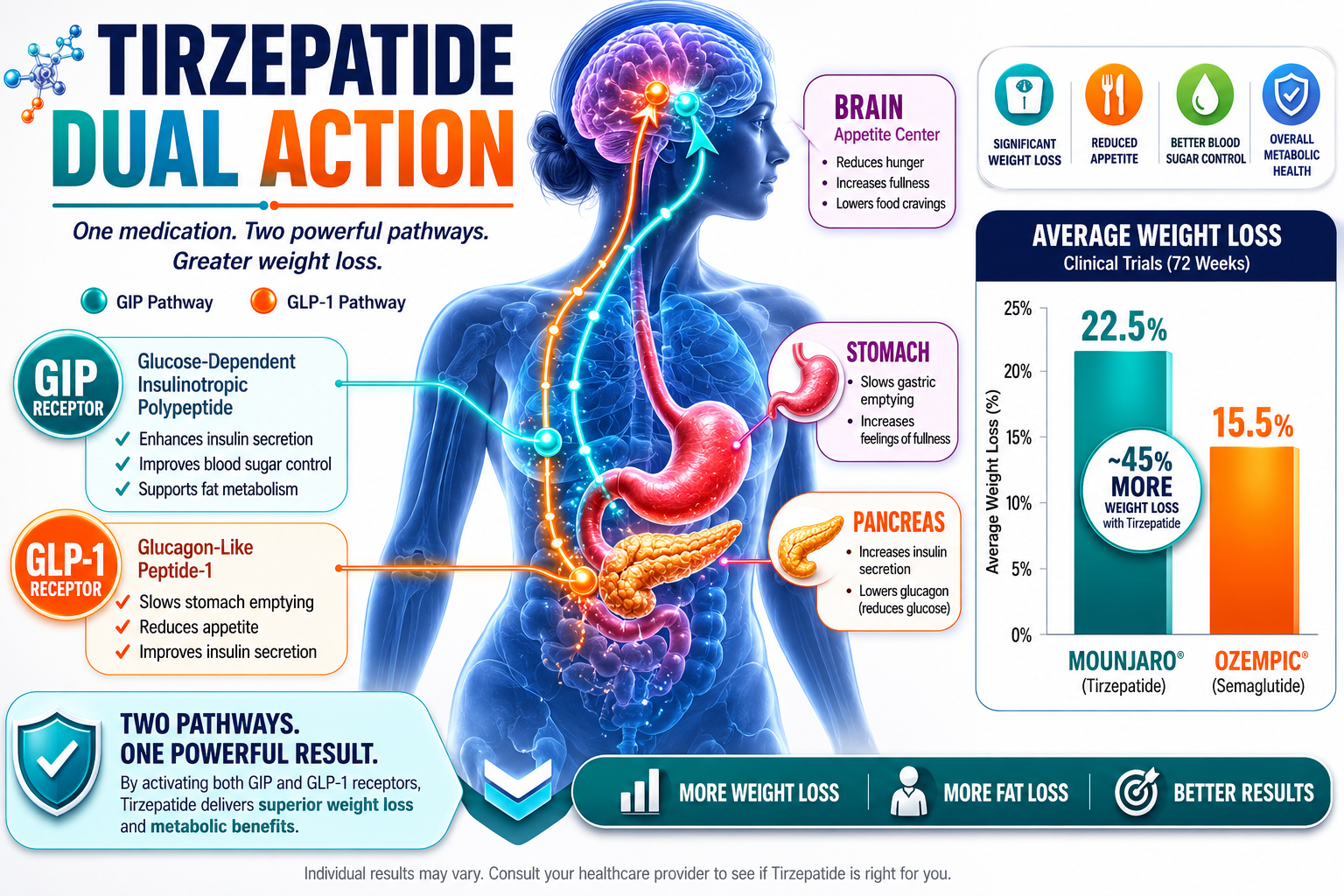
- Clinical trial data shows average weight loss of up to 22.5% of body weight at the highest dose over 72 weeks
- Mounjaro is FDA-approved for type 2 diabetes; Zepbound (same molecule) is FDA-approved specifically for obesity
- Without insurance, brand-name Mounjaro can cost $900–$1,100/month; compounded tirzepatide through telehealth platforms can cost significantly less
- Common side effects include nausea, vomiting, diarrhea, and constipation — most are mild and improve with time
- Not everyone qualifies: contraindications include personal or family history of medullary thyroid cancer or MEN2
- Stopping Mounjaro often leads to weight regain unless lifestyle changes are firmly in place
- Both men and women respond well to tirzepatide for weight loss
- Diet quality and moderate exercise significantly improve results on Mounjaro
- Affordable access is available through telehealth providers offering compounded tirzepatide
What Exactly Does Mounjaro Do for Weight Loss?
Mounjaro (tirzepatide) drives weight loss by activating two gut hormone receptors — GLP-1 (glucagon-like peptide-1) and GIP (glucose-dependent insulinotropic polypeptide) — simultaneously. No other approved weight-loss medication currently targets both pathways at once.
7 Best GLP-1 Providers Ranked: Accreditation, Flexibility & Support Compared (2026 Update)
32,000+ Patients Can't All Be Wrong: See the Top-Rated GLP-1 Providers. We compared the leading online GLP-1 providers based on program features, clinical support, convenience, and overall value.
BMI MD GLP-1 Microdosing Plan
- Specialized microdosing options, including sublingual drops and low-dose injections
- Designed for people interested in maintaining weight or gradually adjusting treatment
- Bundled program structure without a separate monthly platform membership
- Online access makes the process convenient from home

DirectMeds Weight Loss Solutions
- Online weight-loss program with a straightforward patient experience
- Compounded medication options through state-licensed compounding pharmacies
- Includes clinical consultation as part of the process
- Provides shipping updates to help patients track their orders
MEDVi Flat-Rate Telehealth
- Flat-rate telehealth approach designed for easier budgeting
- No dosage-based pricing increases within the advertised program structure
- Offers injectable and oral thin-film delivery options
- Includes medical screening and asynchronous provider consultations
Gala GLP-1 Care Program
- Text-based access to state-licensed clinicians
- Cold-chain medication shipping included in the program
- Month-to-month program structure
- Designed for people who value convenient ongoing support
Measured GLP-1 Metabolic Health
- Comprehensive metabolic health screening and intake analysis
- Designed around longer-term metabolic health management
- Responsive dashboard with integrated health tracking tools
- Useful option for patients who value a more data-focused experience
Refills GLP-1 (TryRefills Plan)
- Clinical guidance designed to help patients manage common treatment concerns
- Includes foundational nutritional strategies alongside medication
- Designed around predictable ongoing treatment
- No hidden startup or processing fees according to the program information provided
AltRx GLP-1 Transactional Reorders
- Transactional reorder model without recurring auto-billing
- Designed for patients who already understand their treatment routine
- Fast text-to-order process for convenient reorders
- Offers injectable and fast-dissolving tablet variations
Here’s what that dual action actually does in your body:
- Suppresses appetite by signaling the brain’s hunger centers to reduce food cravings and caloric intake
- Slows gastric emptying, meaning food stays in your stomach longer so you feel full faster and for longer
- Improves insulin sensitivity, which helps regulate blood sugar and reduces fat storage
- Reduces fat mass preferentially over lean muscle mass compared to calorie restriction alone
“Tirzepatide’s dual receptor action is what separates it from earlier GLP-1 drugs — it essentially sends two satiety signals instead of one.”
For a deeper look at how GLP-1 medications work at the hormonal level, see our complete guide to GLP-1 medications for weight loss and diabetes.
How Much Weight Can I Lose With Mounjaro?
Most people using Mounjaro for weight loss see meaningful results within the first 12 weeks, with the greatest losses occurring between weeks 36 and 72. Clinical trial data (SURMOUNT-1, published in the New England Journal of Medicine) showed:
| Dose | Average Body Weight Lost (72 weeks) |
|---|---|
| 5 mg/week | ~15% |
| 10 mg/week | ~19.5% |
| 15 mg/week | ~22.5% |
| Placebo | ~2.4% |
Real-world results vary. Factors that affect how much weight you lose include:
- Starting weight and BMI
- Consistency with dosing schedule
- Diet quality (high-protein, lower-calorie diets amplify results)
- Physical activity level
- Whether you have insulin resistance or type 2 diabetes (these groups may lose slightly less fat initially)
Common mistake: Expecting linear weight loss. Most people hit plateaus around weeks 8–12. This is normal and usually resolves as the dose increases.
Is Mounjaro Better Than Ozempic for Losing Weight?
For most people, yes — Mounjaro produces greater average weight loss than Ozempic (semaglutide). Head-to-head trial data (SURPASS-CVOT and indirect comparisons) consistently shows tirzepatide outperforming semaglutide 1 mg for weight reduction.
Key differences:
| Feature | Mounjaro (Tirzepatide) | Ozempic (Semaglutide) |
|---|---|---|
| Receptor targets | GLP-1 + GIP (dual) | GLP-1 only |
| Avg. weight loss | 15–22.5% | 10–15% |
| FDA weight-loss approval | Zepbound (same drug) | Wegovy (higher dose) |
| Weekly injection | Yes | Yes |
| Nausea profile | Similar | Similar |
Choose Mounjaro if you want maximum weight loss potential and your provider agrees you’re a good candidate. Choose semaglutide if cost is a primary concern or if Mounjaro is not covered by your insurance and compounded options aren’t available to you.
For a cost-focused comparison, our guide to the least expensive GLP-1 medications in 2026 breaks down pricing across all major options.
How Much Does Mounjaro Cost Without Insurance?
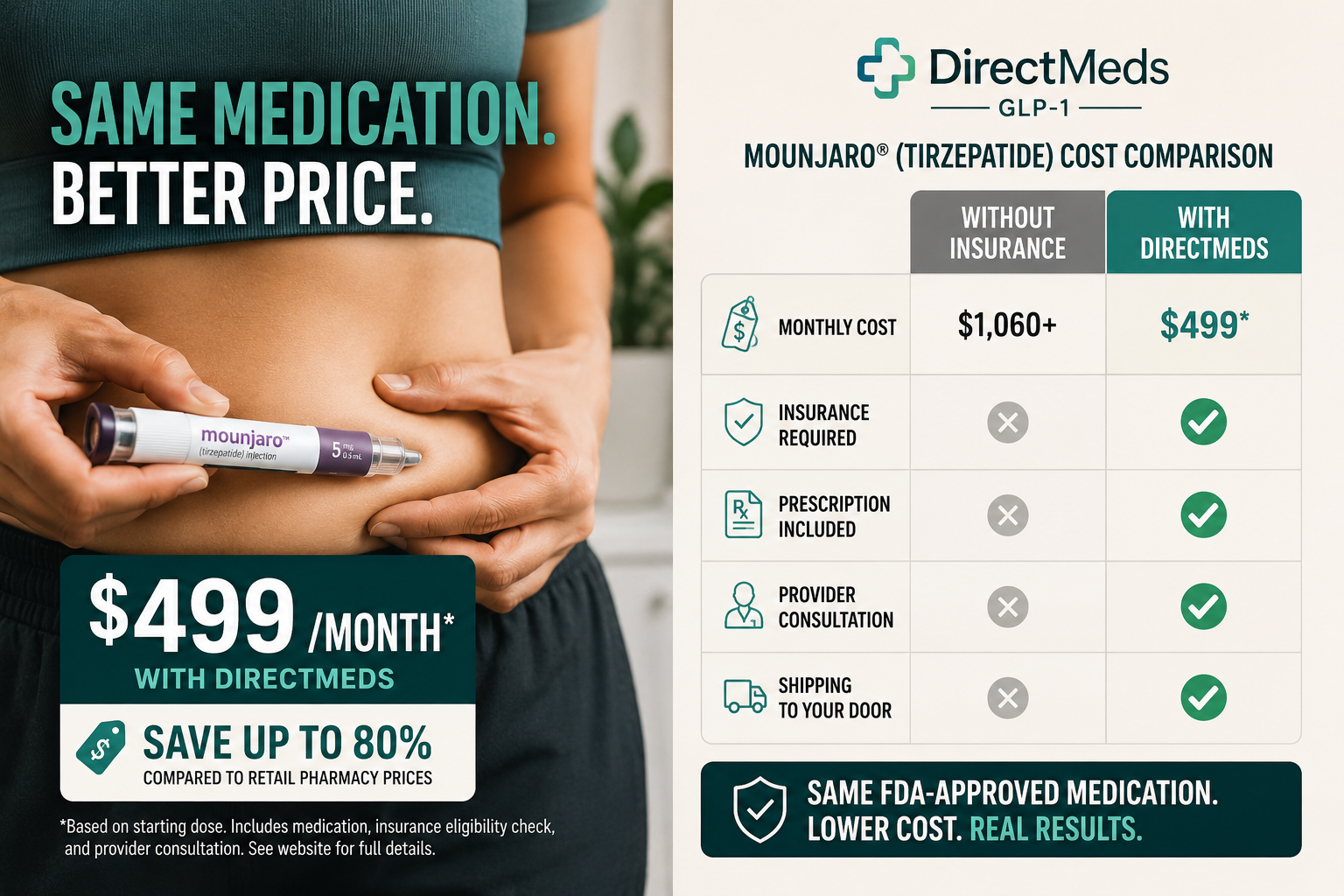
Without insurance, brand-name Mounjaro costs approximately $900–$1,100 per month at retail pharmacies in 2026. That’s a significant barrier for most people paying out of pocket.
More affordable options exist:
- Eli Lilly savings card: Eligible commercially insured patients may pay as little as $25/month, but this does not apply to Medicare or Medicaid
- Compounded tirzepatide via telehealth: Compounding pharmacies can produce tirzepatide at a fraction of the brand-name cost — often $200–$500/month depending on dose and provider
- GoodRx and discount coupons: Can reduce retail cost modestly, but rarely below $700/month for brand-name
If you’re paying without insurance, compounded tirzepatide through a licensed telehealth provider is currently the most practical route. See our full weight loss injections cost breakdown for 2026 for a side-by-side comparison.
👉 Start with DirectMeds GLP-1 Semaglutide — one of the most affordable tirzepatide and semaglutide options available through telehealth in 2026, with licensed providers and transparent pricing.
Why Am I Not Losing Weight on Mounjaro?
Weight loss on Mounjaro can stall for several reasons, and it doesn’t mean the medication isn’t working.
Most common reasons for a plateau:
- Dose is too low — Many people don’t see significant results until they reach 10 mg or 15 mg. The titration schedule takes 12–20 weeks to reach therapeutic doses
- Caloric compensation — Some users unconsciously replace lost appetite with higher-calorie foods or alcohol
- Insufficient protein intake — Low protein accelerates muscle loss and slows metabolism during caloric restriction
- Metabolic adaptation — Your body adjusts its resting metabolic rate as you lose weight; this is normal physiology
- Medication storage or administration error — Tirzepatide must be refrigerated and injected correctly to remain effective
- Underlying conditions — Hypothyroidism, PCOS, or certain medications (steroids, antidepressants) can blunt weight loss
Edge case: A small percentage of people are non-responders to tirzepatide. If you’ve been on 15 mg for 12+ weeks with no meaningful loss, discuss switching agents with your provider.

Can Anyone Take Mounjaro, or Are There Restrictions?
No — Mounjaro is not appropriate for everyone. It requires a prescription and a medical evaluation.
Who typically qualifies:
- Adults with BMI ≥30 (obesity)
- Adults with BMI ≥27 plus at least one weight-related condition (type 2 diabetes, hypertension, sleep apnea, dyslipidemia)
- Adults with type 2 diabetes seeking better glycemic control
Who should NOT take Mounjaro:
- Personal or family history of medullary thyroid carcinoma (MTC)
- Multiple Endocrine Neoplasia syndrome type 2 (MEN2)
- Pregnancy or breastfeeding
- Severe gastroparesis or history of pancreatitis (use with caution)
- Known hypersensitivity to tirzepatide
Decision rule: If you meet BMI criteria and have no contraindications, you’re likely a candidate. A telehealth consultation takes 15–20 minutes and can confirm eligibility quickly.
What Side Effects Should I Watch Out for With Mounjaro?
Most side effects from weight loss Mounjaro therapy are gastrointestinal and tend to be worst during dose escalation. They typically improve within 2–4 weeks at each new dose level.
Common (affect 10–40% of users):
- Nausea
- Diarrhea
- Constipation
- Vomiting
- Reduced appetite (this is also the desired effect)
- Mild injection site reactions
Less common but serious — seek medical attention if you experience:
- Severe abdominal pain (possible pancreatitis)
- Vision changes (rare, related to rapid glucose changes in diabetics)
- Rapid heart rate at rest
- Signs of allergic reaction (swelling, difficulty breathing)
- Symptoms of thyroid tumor (neck lump, hoarseness, difficulty swallowing)
Practical tip: Eating smaller meals, avoiding high-fat or spicy foods during dose escalation, and staying well-hydrated reduces nausea significantly for most people.
Is Mounjaro Safe for People With Diabetes?
Yes — Mounjaro was originally FDA-approved specifically for type 2 diabetes management before its weight-loss benefits became widely recognized. It is generally considered safe and effective for people with type 2 diabetes.
For diabetic users, Mounjaro offers a dual benefit: meaningful weight reduction AND improved HbA1c levels. Clinical trials showed HbA1c reductions of 1.8–2.4 percentage points depending on dose.
Important considerations for diabetic users:
- If you’re also taking insulin or sulfonylureas, your provider may need to reduce those doses to prevent hypoglycemia
- Monitor blood glucose more closely during the first 8–12 weeks
- Mounjaro is not approved for type 1 diabetes
What Happens If I Stop Taking Mounjaro?
Stopping Mounjaro typically leads to gradual weight regain within 6–12 months for most people. This is not a personal failure — it reflects the chronic nature of obesity as a metabolic condition.
A 2023 study (SURMOUNT-4) found that participants who stopped tirzepatide after 36 weeks regained approximately two-thirds of their lost weight within the following year, while those who continued lost an additional 5.5% of body weight.
What this means practically:
- Mounjaro is most effective as a long-term treatment, not a short-term fix
- Building sustainable dietary habits while on the medication reduces regain risk
- Some people successfully maintain results at lower maintenance doses
For those concerned about long-term costs, exploring affordable semaglutide telehealth options can make continued treatment financially sustainable.
👉 Explore DirectMeds GLP-1 Semaglutide for affordable, ongoing GLP-1 therapy with licensed medical oversight — no surprise fees.
How Long Do I Need to Be on Mounjaro to See Results?
Most people notice appetite suppression and early weight changes within the first 2–4 weeks. Meaningful, visible weight loss (5%+ of body weight) typically occurs by weeks 8–16, depending on starting dose and individual response.
General timeline:
- Weeks 1–4: Appetite reduction, possible GI adjustment, 1–3 lbs loss
- Weeks 4–12: Dose escalation begins; 5–8% body weight loss common
- Weeks 12–36: Continued loss; most people reach 10–15% reduction
- Weeks 36–72: Maximum effect at full dose; up to 22.5% loss in clinical trials
Patience matters. The full therapeutic effect of tirzepatide isn’t reached until you’ve been on the maximum tolerated dose for at least 12 weeks.
Can Men and Women Both Use Mounjaro for Weight Loss?
Yes — both men and women respond well to Mounjaro for weight loss. Clinical trials enrolled both sexes, and tirzepatide showed significant efficacy across genders.
Some differences to note:
- Women may experience more pronounced nausea during dose escalation
- Men tend to lose a higher proportion of visceral (abdominal) fat initially
- Hormonal factors in women (menopause, PCOS) can affect the rate of loss but not the overall effectiveness of the medication
Neither sex has a contraindication to tirzepatide based on gender alone.

What Diet and Exercise Work Best With Mounjaro?
Mounjaro amplifies results from a healthy diet and moderate exercise — it doesn’t replace them. The medication reduces hunger, but what you eat with that reduced appetite still matters.
Diet approach that works best:
- High protein (1.2–1.6g per kg of body weight): Preserves muscle mass during caloric restriction
- Whole foods, lower in ultra-processed carbs: Reduces GI side effects and supports fat loss
- Smaller, more frequent meals: Easier to tolerate given slowed gastric emptying
- Adequate hydration: Reduces constipation and supports kidney function
Exercise recommendations:
- Resistance training 2–3x per week to preserve lean muscle
- 150+ minutes of moderate cardio per week (walking counts)
- Avoid intense exercise during the first 2–4 weeks while adjusting to the medication
For a structured eating plan to pair with GLP-1 therapy, our personalized weight loss meal plan guide offers practical, easy-to-follow options.
Are There Natural Alternatives to Mounjaro for Weight Loss?
No supplement or natural product replicates tirzepatide’s clinical results. However, for people who don’t qualify for or can’t afford GLP-1 medications, some evidence-backed options exist.
Options with some supporting evidence:
- Berberine: May modestly improve insulin sensitivity and support weight management (often called “nature’s metformin,” though effects are far weaker)
- High-fiber diets: Slow gastric emptying naturally and support satiety
- Protein-forward meal plans: Reduce overall caloric intake through satiety
- Resistance training: Builds metabolically active muscle tissue
What doesn’t work as a Mounjaro alternative: Weight loss gummies, “fat-burning” supplements, and detox teas lack clinical evidence for meaningful weight loss. For an honest look at supplement claims, see our weight loss gummies reviews.
👉 Ready to start with a clinically backed option? Try DirectMeds GLP-1 Semaglutide — affordable compounded GLP-1 therapy with real medical supervision.
Frequently Asked Questions
Is Mounjaro the same as Zepbound?
Yes. Both contain tirzepatide. Mounjaro is FDA-approved for type 2 diabetes; Zepbound is the same molecule approved specifically for chronic weight management. The active ingredient, dosing, and mechanism are identical.
How is Mounjaro injected?
Mounjaro is a once-weekly subcutaneous injection, typically into the abdomen, thigh, or upper arm. It comes in a prefilled auto-injector pen. Most people find it easy to self-administer after a brief tutorial from their provider.
Can I get Mounjaro through telehealth?
Yes. Many telehealth platforms prescribe compounded tirzepatide (same active ingredient) at lower cost than brand-name Mounjaro. A licensed provider conducts an online consultation to assess eligibility. DirectMeds GLP-1 Semaglutide is one of the most cost-accessible options currently available.
Does Mounjaro cause hair loss?
Some users report temporary hair thinning (telogen effluvium) during rapid weight loss. This is related to the caloric deficit and physical stress on the body, not a direct effect of tirzepatide. It typically resolves within 3–6 months.
How do I store Mounjaro?
Mounjaro pens must be stored in the refrigerator (36–46°F / 2–8°C). They can be kept at room temperature (up to 86°F) for up to 21 days. Never freeze the medication.
Will insurance cover Mounjaro for weight loss?
Coverage varies significantly. Many plans cover Mounjaro for type 2 diabetes but not for obesity alone. Zepbound (the obesity-specific version) has broader but still inconsistent coverage. Always verify with your insurer before starting.
What’s the starting dose of Mounjaro?
The standard starting dose is 2.5 mg once weekly for the first 4 weeks, then increased to 5 mg. Doses escalate every 4 weeks as tolerated, up to a maximum of 15 mg/week.
Can Mounjaro be used long-term?
Yes. Current evidence supports long-term use for people who respond well and tolerate the medication. Stopping treatment typically leads to weight regain, so most providers treat it as an ongoing therapy similar to blood pressure medication.
Is compounded tirzepatide as effective as brand-name Mounjaro?
Compounded tirzepatide contains the same active ingredient at equivalent doses. Quality depends on the compounding pharmacy’s standards. Always verify that your provider uses an FDA-registered, licensed compounding pharmacy.
How quickly does Mounjaro start working?
Appetite suppression often begins within the first week. Measurable weight loss (1–3 lbs) typically occurs in the first 2–4 weeks. Significant results (5%+ body weight) usually appear by weeks 8–16.
7 Best GLP-1 Providers Ranked: Accreditation, Flexibility & Support Compared (2026 Update)
32,000+ Patients Can't All Be Wrong: See the Top-Rated GLP-1 Providers: Compared on accreditation, plan flexibility, and patient support — updated for 2026.
BMI MD GLP-1 Microdosing Plan
- Specialized microdosing options (sublingual drops or low-dose injections)
- Ideal for maintaining weight or tapering off higher doses safely
- Fully bundled plan with no hidden monthly platform memberships
DirectMeds Weight Loss Solutions
- Sourced from accredited, state-licensed 503A compounding pharmacies
- No-frills high-volume savings passed directly to the patient
- Includes clinical consultation and cold-chain shipping updates
MEDVi Flat-Rate Telehealth
- Flat monthly rate holds steady even at maximum maintenance doses
- No dosage upcharges or graduation fee penalties
- Offers both injectable and advanced oral thin-film delivery options
Gala GLP-1 Care Program
- All-inclusive plan with no standalone membership costs
- Continuous text-based messaging access with state-licensed clinicians
- Temperature-controlled, cold-chain medication shipping included
Measured GLP-1 Metabolic Health
- Comprehensive metabolic health screening and expert intake analysis
- Predictable long-term budgeting with stable plan pricing
- High-end responsive dashboard with integrated diagnostic support
Refills GLP-1 (TryRefills Plan)
- Flat rate holds steady as titration scales up
- Includes clinical guides for active side-effect management
- Bundles in foundational nutritional strategies alongside medication
AltRx GLP-1 Transactional Reorders
- Zero recurring auto-billing — pay entirely on a transactional basis
- Rapid text-to-order format saves time for experienced patients
- Provides both injectable forms and fast-dissolving tablet variations
Conclusion
Weight loss Mounjaro therapy — using tirzepatide’s dual GLP-1 and GIP action — represents one of the most effective pharmacological tools available for obesity management in 2026. Clinical data consistently shows 15–22% body weight reduction over 72 weeks, outperforming single-action GLP-1 drugs like Ozempic. It works best when paired with a high-protein diet, regular resistance training, and consistent dosing.
The main barriers are cost and access. Brand-name Mounjaro can exceed $1,000/month without insurance, but compounded tirzepatide through licensed telehealth platforms brings that cost down to a range that’s manageable for many more people.
Your next steps:
- Check eligibility: BMI ≥30, or ≥27 with a weight-related condition
- Consult a licensed provider: Telehealth makes this fast and convenient
- Compare costs: Compounded options through telehealth are significantly cheaper than retail
- Commit to lifestyle support: Diet and exercise multiply your results on Mounjaro
- Plan for the long term: Mounjaro works best as ongoing therapy, not a short-term fix
👉 Get started with DirectMeds GLP-1 Semaglutide — affordable, medically supervised GLP-1 therapy with transparent pricing and licensed providers. No surprise costs, no long waits.
For more on comparing GLP-1 providers and costs, explore our guides on Henry Meds semaglutide and the cheapest semaglutide online in 2026.
👉 Start your Mounjaro weight loss journey with DirectMeds GLP-1 Semaglutide today — because the most effective treatment is the one you can actually afford to stay on.
Medical References
For readers who want to review the clinical evidence behind tirzepatide and GLP-1 therapy, the following peer-reviewed sources provide foundational data:
Jastreboff AM et al. (2022). Tirzepatide Once Weekly for the Treatment of Obesity — published in the New England Journal of Medicine (SURMOUNT-1 trial).
Ludvik B et al. (2021). Tirzepatide versus Semaglutide Once Weekly in Patients with Type 2 Diabetes — published in the New England Journal of Medicine (SURPASS-2 trial).
Frías JP et al. (2021). Tirzepatide versus Insulin Degludec in Patients with Type 2 Diabetes — published in The Lancet (SURPASS-3 trial).
Garvey WT et al. (2023). Tirzepatide once weekly for the treatment of obesity in people with type 2 diabetes — published in Nature Medicine (SURMOUNT-2 trial).
U.S. Food and Drug Administration. (2022). FDA approves novel, dual-targeted treatment for type 2 diabetes — FDA.gov official announcement.

With over 13 years of experience in holistic health blogging, I aim to help you navigate your wellness journey with honest insights, expert-backed advice, and a sprinkle of real-world practicality.
Certified Wellness Writer | Herbal Nutrition Advocate | Wellness Research Enthusiast


