
Natural Remedies for Prostate Issues: What Actually Works in 2026
}
Last updated: July 23, 2026
Quick Answer: Several natural remedies for prostate issues have meaningful scientific support, including saw palmetto, beta-sitosterol, pumpkin seed oil, and dietary changes such as increasing lycopene-rich foods. These approaches can reduce symptoms of benign prostatic hyperplasia (BPH) and mild prostatitis in many men, but they work best as complements to medical care, not replacements. Results typically take 4 to 12 weeks, and any persistent or worsening symptoms should be evaluated by a doctor.
Key Takeaways
- Saw palmetto is the most studied herbal remedy for BPH, with several clinical trials showing modest improvements in urinary flow and nighttime urination.
- Beta-sitosterol, found in pumpkin seeds and certain supplements, has stronger clinical evidence for symptom relief than saw palmetto alone.
- Diet matters significantly: a Mediterranean-style diet rich in tomatoes, cruciferous vegetables, and healthy fats is consistently linked to better prostate health.
- Natural remedies generally take 4 to 12 weeks to show measurable effects, so patience and consistency are essential.
- BPH and prostatitis are different conditions requiring different approaches; what works for one may not work for the other.
- Older men and those on blood thinners or hormone-related medications should consult a doctor before starting herbal supplements.
- Exercise, particularly aerobic activity and pelvic floor work, can reduce BPH symptoms by a clinically meaningful margin.
- See a doctor immediately if you experience blood in urine, complete urinary blockage, severe pelvic pain, or unexplained weight loss.
- Not all prostate supplements on the market have solid evidence; look for products with standardized extracts and third-party testing.
- Natural remedies and prescription medications can often be used together, but always disclose all supplements to your prescribing physician.
What Causes Prostate Problems in Men
Prostate problems stem from three main conditions: benign prostatic hyperplasia (BPH), prostatitis, and prostate cancer. BPH is by far the most common, affecting an estimated 50% of men by age 60 and over 80% by age 80, according to the National Institute of Diabetes and Digestive and Kidney Diseases (NIDDK). Prostatitis, which is inflammation of the prostate, affects men of all ages and can be bacterial or non-bacterial in origin.
The main drivers of prostate problems include:
- Hormonal changes: As men age, testosterone levels fall and dihydrotestosterone (DHT) and estrogen levels shift, stimulating prostate cell growth.
- Chronic inflammation: Linked to diet, infection, and metabolic conditions like obesity and high blood sugar.
- Genetics: A family history of BPH or prostate cancer significantly raises risk.
- Sedentary lifestyle: Physical inactivity is consistently associated with higher rates of BPH symptoms.
- Diet: High intake of red meat, saturated fat, and low fiber intake correlates with worse prostate outcomes in population studies.
Understanding the cause matters because natural remedies for prostate issues work differently depending on whether you’re dealing with BPH, prostatitis, or elevated cancer risk. A man with bacterial prostatitis, for example, needs antibiotics first, not just herbal supplements.
What Are the Best Natural Remedies for Prostate Health
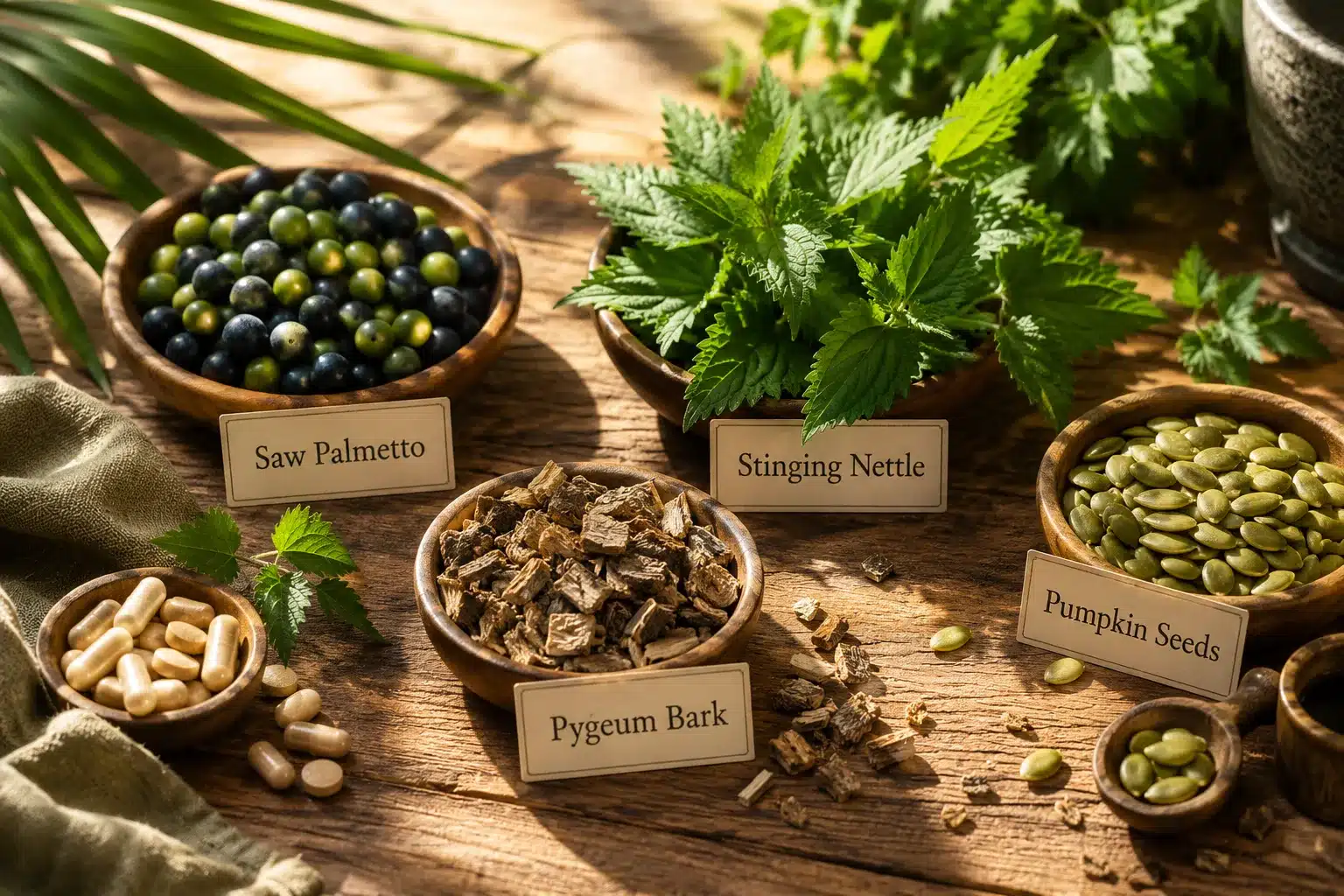
The best-supported natural remedies for prostate health are saw palmetto, beta-sitosterol, pygeum africanum, pumpkin seed oil, and zinc. These have been studied in randomized controlled trials and show consistent, if modest, benefits for BPH symptoms. Dietary changes and exercise add meaningful additional benefit.
Here is a summary of the top evidence-based options:
| Remedy | Primary Benefit | Evidence Level | Typical Dose |
|---|---|---|---|
| Saw Palmetto | Reduces urinary frequency, improves flow | Moderate | 320 mg/day (standardized extract) |
| Beta-sitosterol | Improves urinary flow rate | Moderate-Strong | 60-130 mg/day |
| Pygeum Africanum | Reduces nocturia, improves bladder emptying | Moderate | 100-200 mg/day |
| Pumpkin Seed Oil | Reduces BPH symptom score | Moderate | 320-640 mg/day |
| Zinc | Supports prostate tissue health | Preliminary | 11-30 mg/day from food or supplement |
| Lycopene (from tomatoes) | Reduces oxidative stress in prostate tissue | Preliminary-Moderate | 10-30 mg/day from cooked tomatoes |
For a deeper look at formulas that combine several of these ingredients, see this review of food supplements for prostate health that breaks down what’s inside popular products and what the research says.
How Does Saw Palmetto Work for Prostate Problems
Saw palmetto works primarily by inhibiting 5-alpha reductase, the enzyme that converts testosterone into dihydrotestosterone (DHT). DHT is a key driver of prostate cell growth in BPH. By reducing DHT activity, saw palmetto may slow or partially reverse prostate enlargement and ease urinary symptoms.
What the research shows:
A 2012 Cochrane review analyzed 32 randomized trials involving more than 5,000 men and found that saw palmetto produced modest but consistent improvements in urinary flow and symptom scores compared to placebo. A later large NIH-funded trial (the STEP study) found less impressive results with a specific extract, which researchers attributed to variability in product quality and standardization.
The key takeaway: product quality matters enormously with saw palmetto. A supplement labeled “saw palmetto” but using a non-standardized extract at a low dose is unlikely to produce the same results seen in clinical trials. Look for products standardized to contain 85-95% fatty acids and sterols, at a dose of 320 mg per day.
Saw palmetto is generally well tolerated. The most common side effects are mild gastrointestinal upset and, rarely, headache. It does not appear to affect PSA levels, which is clinically important because some prescription DHT inhibitors (like finasteride) can lower PSA and mask early prostate cancer detection.
Which Herbs Are Most Effective for Enlarged Prostate
For an enlarged prostate (BPH), the herbs with the strongest clinical backing are pygeum africanum, stinging nettle root, and saw palmetto, often used in combination. Beta-sitosterol, technically a plant sterol rather than an herb, has some of the best clinical evidence for improving urinary flow rate.
Pygeum africanum is extracted from the bark of an African plum tree. A meta-analysis published in the American Journal of Medicine (2000) covering 18 randomized trials found that men taking pygeum were more than twice as likely to report improvement in overall symptoms compared to placebo. It appears to work through anti-inflammatory mechanisms and by reducing bladder neck tension.
Stinging nettle root is often combined with saw palmetto in European formulations. Some trials suggest the combination outperforms either ingredient alone, likely because they act through complementary pathways (DHT inhibition plus anti-inflammatory effects).
Rye pollen extract (Cernilton) is less well known but has been studied specifically for prostatitis and BPH. A 2000 Cochrane review found it improved self-reported urinary symptoms and reduced nocturia compared to placebo, though the evidence base is smaller than for pygeum or saw palmetto.
If you’re evaluating a multi-ingredient prostate supplement, our Prosta Surge X review examines one popular formula that combines several of these herbs and assesses whether the ingredient doses match what clinical trials actually used.
Does Pumpkin Seed Oil Really Help Prostate Health
Yes, pumpkin seed oil has meaningful evidence for BPH symptom relief. A randomized, double-blind trial published in Nutrition Research and Practice (2009) found that men taking pumpkin seed oil extract for 12 months had a significantly lower International Prostate Symptom Score (IPSS) and better quality of life scores compared to placebo.
Why it works:
- Pumpkin seeds are rich in beta-sitosterol, the plant sterol with the strongest clinical evidence for improving urinary flow in BPH.
- They contain zinc, which is found in high concentrations in healthy prostate tissue and tends to be depleted in men with prostate disease.
- Phytosterols in pumpkin seed oil may inhibit DHT binding to prostate tissue receptors.
Practical note: Whole pumpkin seeds provide some benefit but at lower concentrations than standardized oil extracts. For therapeutic effect, a concentrated extract (320-640 mg/day) is more reliable than simply eating a handful of seeds daily, though adding seeds to your diet is still a worthwhile dietary habit.

Can Diet Help With Prostate Issues
Diet is one of the most modifiable factors in prostate health, and the evidence is consistent: a Mediterranean-style diet reduces BPH symptom severity and is associated with lower prostate cancer risk. The dietary changes that matter most are increasing vegetables, reducing red and processed meat, and cutting back on refined carbohydrates.
Foods with the strongest evidence for prostate benefit:
- Cooked tomatoes: Lycopene is more bioavailable from cooked or processed tomatoes (tomato sauce, paste) than raw. Population studies consistently link higher lycopene intake to lower prostate cancer risk.
- Cruciferous vegetables: Broccoli, cauliflower, Brussels sprouts, and kale contain sulforaphane, which has shown anti-cancer activity in prostate cell studies.
- Fatty fish: Omega-3 fatty acids from salmon, sardines, and mackerel reduce systemic inflammation, which is a driver of both BPH and prostatitis.
- Green tea: Epigallocatechin gallate (EGCG) in green tea has shown anti-proliferative effects on prostate cells in laboratory studies. Observational data from Japanese populations with high green tea consumption suggests a protective effect.
- Soy foods: Isoflavones in tofu, edamame, and tempeh may modestly reduce prostate-specific antigen (PSA) levels, though the evidence is mixed.
Foods to reduce or avoid:
- Red and processed meat (linked to higher BPH and prostate cancer risk in multiple cohort studies)
- High-fat dairy products
- Alcohol, especially beer (which can increase prolactin levels and worsen BPH)
- Refined sugars and white carbohydrates (worsen inflammation)
For a comprehensive guide on dietary approaches, see our article on how to clean your prostate naturally which covers food-based protocols in more detail.
What Supplements Actually Have Scientific Evidence for Prostate Health
The supplements with the most credible clinical evidence are beta-sitosterol, pygeum africanum, and pumpkin seed oil extract. Saw palmetto has moderate evidence but results depend heavily on product quality. Zinc and lycopene have preliminary evidence, primarily from observational studies.
Supplements to approach with caution:
- Selenium: Earlier studies suggested a protective effect against prostate cancer, but the large SELECT trial (2009) found no benefit and possible harm at high doses. Avoid supplementing above the recommended dietary allowance (55 mcg/day for adult men) unless deficient.
- Vitamin E: The SELECT trial also found that high-dose vitamin E supplementation (400 IU/day) was associated with a small but statistically significant increase in prostate cancer risk. Do not supplement at high doses.
- Testosterone boosters: Many marketed “prostate health” products contain ingredients that claim to raise testosterone. This is counterproductive for BPH, where reducing DHT is the goal.
What to look for on a supplement label:
- Standardized extract percentage (e.g., “standardized to 85% fatty acids” for saw palmetto)
- Third-party testing certification (USP, NSF International, or ConsumerLab)
- Doses matching clinical trial levels, not token amounts
- No proprietary blends that hide individual ingredient doses
Our Prostadine review evaluates one liquid supplement formula against these criteria, which is useful if you’re comparing product options.
Can Exercise Improve Prostate Symptoms Naturally
Yes, exercise is one of the most underused natural remedies for prostate issues, and the evidence is solid. A 2011 study published in the Journal of Urology found that men who walked briskly for 2 to 3 hours per week had a 25% lower risk of BPH requiring treatment compared to sedentary men.
How exercise helps the prostate:
- Reduces systemic inflammation (a driver of BPH and prostatitis)
- Lowers insulin resistance and metabolic syndrome markers, both linked to worse prostate outcomes
- Reduces sympathetic nervous system tone, which relaxes the bladder neck and reduces urinary urgency
- Helps maintain healthy body weight (obesity is independently associated with larger prostate volume)
Best exercise types for prostate health:
- Aerobic exercise: Brisk walking, cycling, swimming, or jogging for 30-45 minutes, 4-5 days per week
- Pelvic floor exercises (Kegels): Strengthen the muscles controlling urination and can reduce urinary leakage and urgency
- Yoga: Some evidence suggests yoga reduces chronic pelvic pain associated with non-bacterial prostatitis
What to avoid: High-intensity cycling on a narrow saddle for extended periods can compress the perineum and worsen prostatitis symptoms. If cycling is your main exercise, use a wide, padded seat with a center cutout.

What’s the Difference Between BPH and Prostatitis Treatments
BPH and prostatitis are distinct conditions that require different natural treatment approaches. BPH involves physical enlargement of the prostate gland, while prostatitis involves inflammation (with or without infection) and can occur in men of any age.
BPH natural remedies focus on:
- Reducing DHT-driven prostate growth (saw palmetto, pygeum, beta-sitosterol)
- Improving urinary flow and reducing bladder outlet obstruction
- Long-term dietary and lifestyle changes
Prostatitis natural remedies focus on:
- Reducing inflammation (quercetin, omega-3 fatty acids, anti-inflammatory diet)
- Pelvic floor relaxation (not strengthening, which can worsen chronic pelvic pain syndrome)
- Stress reduction (chronic non-bacterial prostatitis has a strong stress-related component)
- Sitz baths and heat therapy for symptom relief
Quercetin for prostatitis: A randomized trial published in Urology (1999) found that quercetin (500 mg twice daily) significantly improved symptom scores in men with chronic non-bacterial prostatitis compared to placebo. This is one of the better-studied natural interventions specifically for prostatitis.
Common mistake: Men with prostatitis sometimes take the same BPH supplements (saw palmetto, pygeum) without effect because those herbs target prostate enlargement mechanisms, not the inflammatory pathways driving prostatitis. Matching the remedy to the condition is essential.
If you’re unsure of your prostate size or want to track changes over time, the prostate volume calculator can help you interpret ultrasound measurements and understand what your numbers mean.
How Long Does It Take for Natural Remedies to Work on the Prostate
Most natural remedies for prostate issues require 4 to 12 weeks of consistent use before noticeable improvement. This is longer than prescription medications like alpha-blockers (which can work within days) but is consistent with the gradual mechanisms through which herbs and dietary changes act.
Realistic timelines by intervention:
- Dietary changes: Symptom improvements (reduced urgency, better flow) may appear in 4-6 weeks with consistent adherence
- Saw palmetto: Most clinical trials show measurable effects at 4-8 weeks, with maximum benefit at 3-6 months
- Pygeum africanum: Symptom improvement typically noted at 6-8 weeks
- Beta-sitosterol: Some trials show improvement in urinary flow rate within 4 weeks
- Exercise: Urinary symptom improvement typically observed after 6-12 weeks of regular aerobic activity
- Pelvic floor exercises: 8-12 weeks for meaningful reduction in urinary urgency and leakage
Managing expectations: Natural remedies rarely produce the dramatic, rapid symptom relief that prescription alpha-blockers (like tamsulosin) or 5-alpha reductase inhibitors (like finasteride) can provide. Their advantage is a generally lower side-effect burden and the added benefit of supporting overall metabolic health.
For men with moderate-to-severe BPH symptoms, natural remedies are best used alongside medical treatment, not instead of it. Our guide on how to shrink the prostate naturally covers realistic expectations for size reduction with natural protocols.
Are There Any Side Effects From Natural Prostate Remedies
Most natural prostate remedies have mild side-effect profiles, but they are not risk-free, particularly for older men or those on medications. The most important interactions and risks are summarized below.
Saw palmetto: Mild GI upset is the most common complaint. Rare reports of liver toxicity exist but are not well established. May interact with anticoagulants (warfarin, aspirin) due to anti-platelet activity.
Pygeum africanum: Generally well tolerated. GI side effects (nausea, constipation) occur in a small percentage of users.
Beta-sitosterol: Well tolerated at standard doses. High doses may reduce absorption of fat-soluble vitamins.
Pumpkin seed oil: Very safe. Occasional mild GI upset. No significant drug interactions reported.
Zinc supplementation: Safe at doses up to 40 mg/day (the tolerable upper intake level for adults). Chronic high-dose zinc (above 50 mg/day) can cause copper deficiency, immune suppression, and reduced HDL cholesterol.
Stinging nettle: Can interact with diuretics, blood pressure medications, and blood thinners. Men on antihypertensive drugs should use with caution.
Who should be most careful:
- Men taking blood thinners (warfarin, clopidogrel)
- Men on hormone therapy for prostate cancer
- Men with liver disease
- Men taking immunosuppressant medications
Always disclose all supplements to your doctor. Many men assume “natural” means “safe to combine with anything,” which is not accurate.
Natural Remedies vs Prescription Drugs for Prostate
Natural remedies and prescription medications are not mutually exclusive, and for many men, a combined approach produces the best results. Prescription drugs work faster and more reliably for moderate-to-severe symptoms, while natural remedies offer a lower side-effect burden and broader health benefits.
Head-to-head comparison:
- Alpha-blockers (tamsulosin, alfuzosin): Work within days to relax prostate smooth muscle and improve urine flow. Side effects include dizziness, retrograde ejaculation, and low blood pressure. Natural alternatives (stinging nettle, pumpkin seed) work through similar but weaker mechanisms.
- 5-alpha reductase inhibitors (finasteride, dutasteride): Reduce prostate size by 20-30% over 6-12 months by blocking DHT. Side effects include sexual dysfunction (reduced libido, erectile dysfunction) in 5-10% of users. Saw palmetto works through a similar pathway but with weaker potency and fewer sexual side effects.
- Antibiotics (for bacterial prostatitis): Essential and irreplaceable for bacterial infection. Natural remedies cannot treat bacterial prostatitis alone.
When natural remedies are a reasonable first choice:
- Mild BPH symptoms (IPSS score under 8)
- Men who want to avoid medication side effects, particularly sexual dysfunction
- Men using natural remedies as preventive maintenance before symptoms become severe
When to use prescription medication:
- Moderate-to-severe BPH symptoms (IPSS score 8 or above)
- Acute urinary retention or complete inability to urinate
- Confirmed bacterial prostatitis
- Rapidly worsening symptoms
For men exploring treatment options for related conditions, our article on how to shrink a swollen prostate covers both medical and natural treatment pathways side by side.
Are Natural Prostate Remedies Safe for Older Men
For most older men, standard natural prostate remedies are safe when used at recommended doses and with physician awareness. The main concerns for older men are drug interactions (since many take multiple medications) and the risk of delaying necessary medical treatment.
Specific considerations for men over 65:
- Fall risk: Some herbal supplements with mild blood pressure-lowering effects (stinging nettle, certain adaptogenic herbs) could add to fall risk in men already on antihypertensive medications.
- PSA monitoring: Natural remedies do not lower PSA, which is actually an advantage. Finasteride and dutasteride halve PSA values, complicating cancer screening. Men using natural remedies can continue standard PSA monitoring without adjustment.
- Polypharmacy: Older men taking 5 or more medications face higher risks from herb-drug interactions. A pharmacist review of all supplements and medications is strongly recommended before starting any new natural remedy.
- Cognitive effects: Some herbal products marketed for prostate health contain ingredients (like valerian or certain adaptogens) that may affect cognition or cause sedation in older adults.
The bottom line: natural prostate remedies are generally safer than prescription medications for older men in terms of systemic side effects, but they require the same level of medical disclosure and monitoring.
When Should I See a Doctor Instead of Trying Natural Remedies
See a doctor before trying natural remedies if you have any of the following symptoms, because they can indicate serious conditions that require prompt medical evaluation.
Go to a doctor or emergency room immediately for:
- Complete inability to urinate (acute urinary retention)
- Blood in urine or semen
- Severe pelvic or lower back pain
- High fever with urinary symptoms (possible acute bacterial prostatitis or sepsis)
- Unexplained weight loss with urinary changes
See a doctor within days to weeks for:
- PSA level above age-appropriate norms on a recent blood test
- Urinary symptoms that have worsened significantly over 4-6 weeks
- Pain during urination that persists beyond a few days
- Erectile dysfunction that develops alongside urinary symptoms
- A family history of prostate cancer and new urinary symptoms
Natural remedies are reasonable to try first when:
- Symptoms are mild and stable (IPSS score under 8)
- You have already had a prostate evaluation within the past 12 months
- Your PSA is within normal range for your age
- You have no blood in urine, no fever, and no acute pain
The general rule: get a baseline medical evaluation first, then use natural remedies as part of your management plan with your doctor’s knowledge. Never use natural remedies to avoid or delay a PSA test or prostate exam.

Frequently Asked Questions
Q: Can natural remedies actually shrink an enlarged prostate? A: Some natural remedies may modestly reduce prostate volume over time. Beta-sitosterol and pygeum africanum have shown small reductions in prostate size in some trials, but the effect is much smaller than what 5-alpha reductase inhibitors like finasteride produce. Most natural remedies improve symptoms more reliably than they reduce actual prostate size.
Q: Is green tea good for the prostate? A: Green tea contains EGCG, a polyphenol with anti-inflammatory and anti-proliferative properties shown in laboratory studies. Observational data from Japan suggests regular green tea consumption is associated with lower prostate cancer risk. Drinking 2-3 cups per day is a low-risk, potentially beneficial habit, though it is not a substitute for medical treatment.
Q: Does masturbation or sexual activity affect prostate health? A: Some research suggests regular ejaculation may reduce the risk of prostate cancer, possibly by clearing inflammatory secretions from the gland. A 2016 study in European Urology found that men who ejaculated 21 or more times per month had a lower risk of prostate cancer. This is not a proven treatment for BPH or prostatitis, but it is not harmful.
Q: Can I take saw palmetto and finasteride together? A: There is no strong evidence of a dangerous interaction, but combining two DHT-inhibiting agents without medical supervision is not recommended. Discuss with your urologist, who may prefer to optimize one treatment at a time to accurately assess what is working.
Q: Does caffeine worsen prostate symptoms? A: Caffeine is a diuretic and bladder irritant. Men with BPH or prostatitis often report that coffee and caffeinated drinks worsen urinary urgency and frequency. Reducing caffeine intake is a simple, free intervention worth trying for 2-3 weeks to see if symptoms improve.
Q: Is there a connection between blood sugar and prostate health? A: Yes. Insulin resistance and high blood sugar are independently associated with larger prostate volume and worse BPH symptoms. Managing blood sugar through diet and exercise is a meaningful component of prostate health. For more on this connection, see our guide on natural approaches to blood sugar management.
Q: How do I know if my prostate supplement is high quality? A: Look for third-party testing seals (USP, NSF, or ConsumerLab), standardized extract percentages on the label, doses that match clinical trial levels, and a manufacturer that publishes a certificate of analysis. Avoid products with proprietary blends that hide individual ingredient amounts.
Q: Can prostatitis be treated naturally? A: Chronic non-bacterial prostatitis (Category III) responds to some natural interventions, particularly quercetin, anti-inflammatory diet, pelvic floor physical therapy, and stress reduction. Bacterial prostatitis requires antibiotics and cannot be treated with natural remedies alone.
Q: Does sitting for long periods worsen prostate symptoms? A: Yes, prolonged sitting increases pressure on the perineum and can worsen both BPH symptoms and chronic prostatitis. Men with desk jobs should take standing or walking breaks every 45-60 minutes and use a cushioned seat with pressure relief at the perineum.
Q: Are prostate supplements safe to take indefinitely? A: Most well-studied supplements (saw palmetto, pygeum, beta-sitosterol, pumpkin seed oil) appear safe for long-term use at recommended doses. However, annual review with your doctor is sensible, particularly to reassess whether symptoms have changed and whether continued supplementation is still appropriate.
Conclusion
Natural remedies for prostate issues offer real, evidence-based benefits for millions of men dealing with BPH, prostatitis, and general prostate health concerns. The strongest options, including beta-sitosterol, pygeum africanum, pumpkin seed oil, and dietary changes toward a Mediterranean pattern, have clinical trial support and a favorable safety profile for most men.
Actionable next steps:
- Get a baseline evaluation. Before starting any supplement protocol, confirm your diagnosis with a PSA test, digital rectal exam, and a symptom score (IPSS). Know what you’re treating.
- Start with diet and exercise. These have the broadest evidence base, cost nothing, and improve overall health beyond the prostate. Add brisk walking 30 minutes a day and increase tomatoes, cruciferous vegetables, and fatty fish in your diet.
- Choose one well-studied supplement. Start with beta-sitosterol or a standardized pygeum extract at clinical trial doses. Give it 8-12 weeks before evaluating results.
- Track your symptoms. Use the IPSS questionnaire monthly to objectively measure whether your symptoms are improving, stable, or worsening.
- Disclose everything to your doctor. Natural remedies work best as part of a coordinated care plan, not as a secret alternative to medical care.
- Know your red flags. Blood in urine, complete urinary blockage, fever with urinary symptoms, or rapidly worsening symptoms require medical evaluation, not more supplements.
Natural prostate care is not about choosing between herbs and medicine. It is about using every evidence-based tool available, in the right combination, for your specific situation.
References
- Dedhia RC, McVary KT. Phytotherapy for lower urinary tract symptoms secondary to benign prostatic hyperplasia. Journal of Urology. 2008.
- Wilt T, Ishani A, MacDonald R, et al. Pygeum africanum for benign prostatic hyperplasia. Cochrane Database of Systematic Reviews. 2002.
- Wilt TJ, Ishani A, Stark G, et al. Saw palmetto extracts for treatment of benign prostatic hyperplasia. JAMA. 1998.
- Barry MJ, Meleth S, Lee JY, et al. Effect of increasing doses of saw palmetto extract on lower urinary tract symptoms: a randomized trial. JAMA. 2011.
- Loch EG, Selle H, Boblitz N. Treatment of benign prostatic hyperplasia with Phytodrug Prostagutt forte. Phytomedicine. 2000.
- Cho YH, Kim SC, Park SJ, et al. Effect of pumpkin seed oil on lower urinary tract symptoms due to benign prostatic hyperplasia. Nutrition Research and Practice. 2009.
- Shoskes DA, Zeitlin SI, Shahed A, Rajfer J. Quercetin in men with category III chronic prostatitis. Urology. 1999.
- Kristal AR, Arnold KB, Schenk JM, et al. Dietary patterns, supplement use, and the risk of symptomatic benign prostatic hyperplasia. American Journal of Epidemiology. 2008.
- Giovannucci E, Rimm EB, Liu Y, et al. A prospective study of tomato products, lycopene, and prostate cancer risk. Journal of the National Cancer Institute. 2002.
- Lippman SM, Klein EA, Goodman PJ, et al. Effect of selenium and vitamin E on risk of prostate cancer (SELECT). JAMA. 2009.
- Platz EA, Kawachi I, Rimm EB, et al. Physical activity and benign prostatic hyperplasia. Archives of Internal Medicine. 1998.
- Rider JR, Wilson KM, Sinnott JA, et al. Ejaculation frequency and risk of prostate cancer. European Urology. 2016.

With over 13 years of experience in holistic health blogging, I aim to help you navigate your wellness journey with honest insights, expert-backed advice, and a sprinkle of real-world practicality.
Certified Wellness Writer | Herbal Nutrition Advocate | Wellness Research Enthusiast