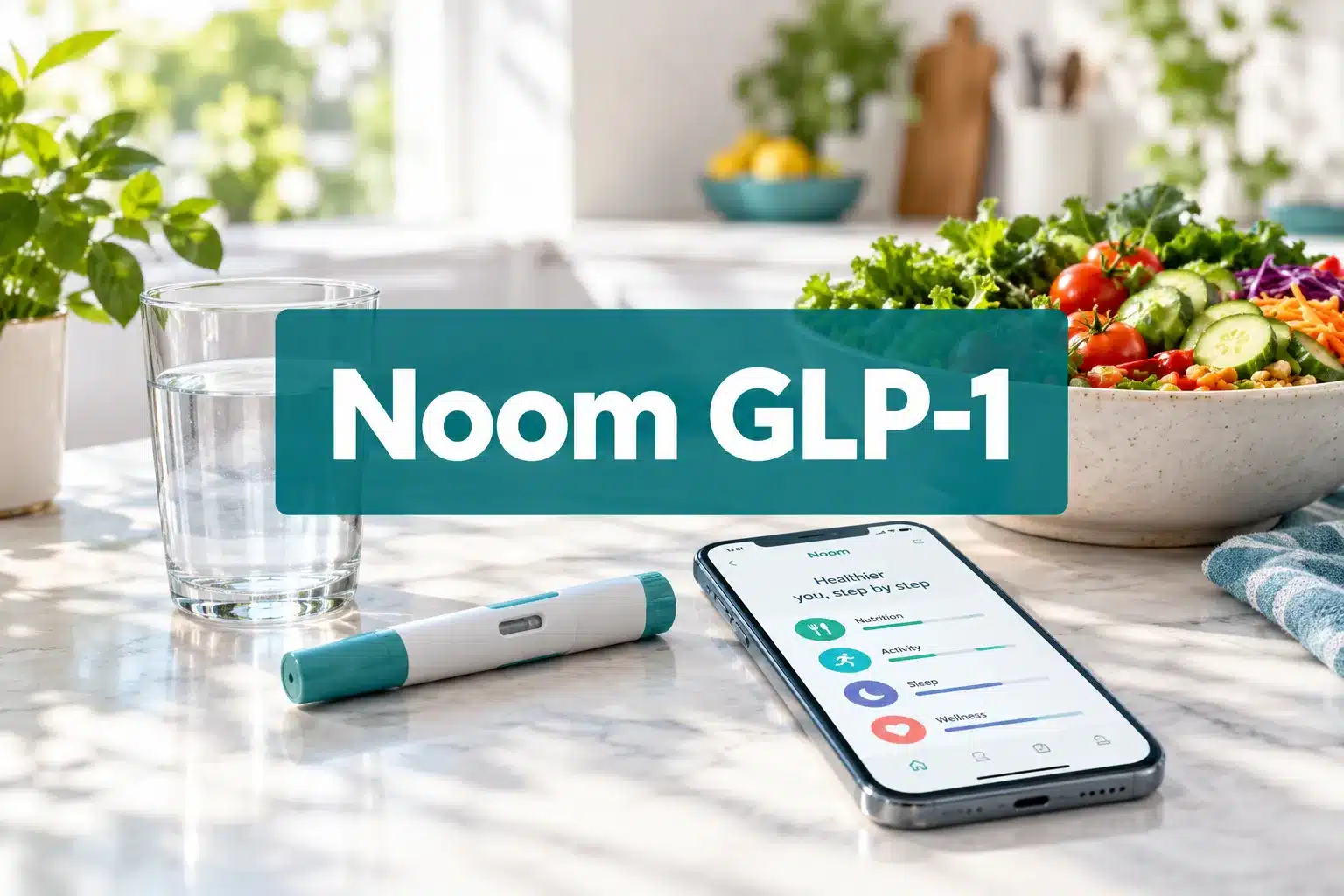
noom glp-1

Last updated: October 4, 2026
Quick Answer: Noom GLP-1 refers to Noom Med’s clinical weight-loss platform that pairs prescription GLP-1 medications (such as semaglutide or tirzepatide) with Noom’s behavior-change coaching and digital tools. Eligible adults with a BMI of 25 or higher can access multiple program tiers, including a microdose option, starting at $49 for the first month. The combination of medication and habit-building support is what distinguishes Noom from standalone prescription services.
Key Takeaways
- Noom Med is Noom’s clinical arm that provides access to GLP-1 medications including Wegovy, Zepbound, Ozempic, and oral options, bundled with psychology-based coaching [10]
- Three main program tiers exist: Microdose GLP-1Rx, GLP-1Rx, and GLP-1Rx Plus, with different dosing levels and outcome targets [7]
- Noom’s internal data shows the most-engaged members lost 25.2% more weight by week 40 compared to the least-engaged group [1]
- A free version of the Noom GLP-1 Companion app launched in June 2026, broadening access beyond paid members [6]
- Insurance coverage varies; Noom Med does not guarantee coverage, and many users pay out of pocket
- GLP-1 medications including semaglutide and tirzepatide are not recommended while breastfeeding; Noom’s eligibility screening accounts for this
- Noom’s approach is designed to preserve weight-loss results after stopping medication through sustained habit formation [8]
- Compounded GLP-1 alternatives exist and may cost less, but carry different quality and regulatory considerations
- Stopping GLP-1 medication without a behavioral foundation often leads to weight regain; Noom’s program aims to reduce that risk
What Is Noom GLP-1 and How Does It Work
Noom GLP-1 is the medication-integrated layer of Noom Med, designed to combine prescription GLP-1 drugs with Noom’s established behavior-change curriculum. Rather than treating medication as a standalone fix, the program wraps clinical support, coaching, and habit-tracking around the prescription itself.
7 Best GLP-1 Providers Ranked: Accreditation, Flexibility & Support Compared (2026 Update)
32,000+ Patients Can't All Be Wrong: See the Top-Rated GLP-1 Providers. We compared the leading online GLP-1 providers based on program features, clinical support, convenience, and overall value.
BMI MD GLP-1 Microdosing Plan
- Specialized microdosing options, including sublingual drops and low-dose injections
- Designed for people interested in maintaining weight or gradually adjusting treatment
- Bundled program structure without a separate monthly platform membership
- Online access makes the process convenient from home

DirectMeds Weight Loss Solutions
- Online weight-loss program with a straightforward patient experience
- Compounded medication options through state-licensed compounding pharmacies
- Includes clinical consultation as part of the process
- Provides shipping updates to help patients track their orders
MEDVi Flat-Rate Telehealth
- Flat-rate telehealth approach designed for easier budgeting
- No dosage-based pricing increases within the advertised program structure
- Offers injectable and oral thin-film delivery options
- Includes medical screening and asynchronous provider consultations
Gala GLP-1 Care Program
- Text-based access to state-licensed clinicians
- Cold-chain medication shipping included in the program
- Month-to-month program structure
- Designed for people who value convenient ongoing support
Measured GLP-1 Metabolic Health
- Comprehensive metabolic health screening and intake analysis
- Designed around longer-term metabolic health management
- Responsive dashboard with integrated health tracking tools
- Useful option for patients who value a more data-focused experience
Refills GLP-1 (TryRefills Plan)
- Clinical guidance designed to help patients manage common treatment concerns
- Includes foundational nutritional strategies alongside medication
- Designed around predictable ongoing treatment
- No hidden startup or processing fees according to the program information provided
AltRx GLP-1 Transactional Reorders
- Transactional reorder model without recurring auto-billing
- Designed for patients who already understand their treatment routine
- Fast text-to-order process for convenient reorders
- Offers injectable and fast-dissolving tablet variations
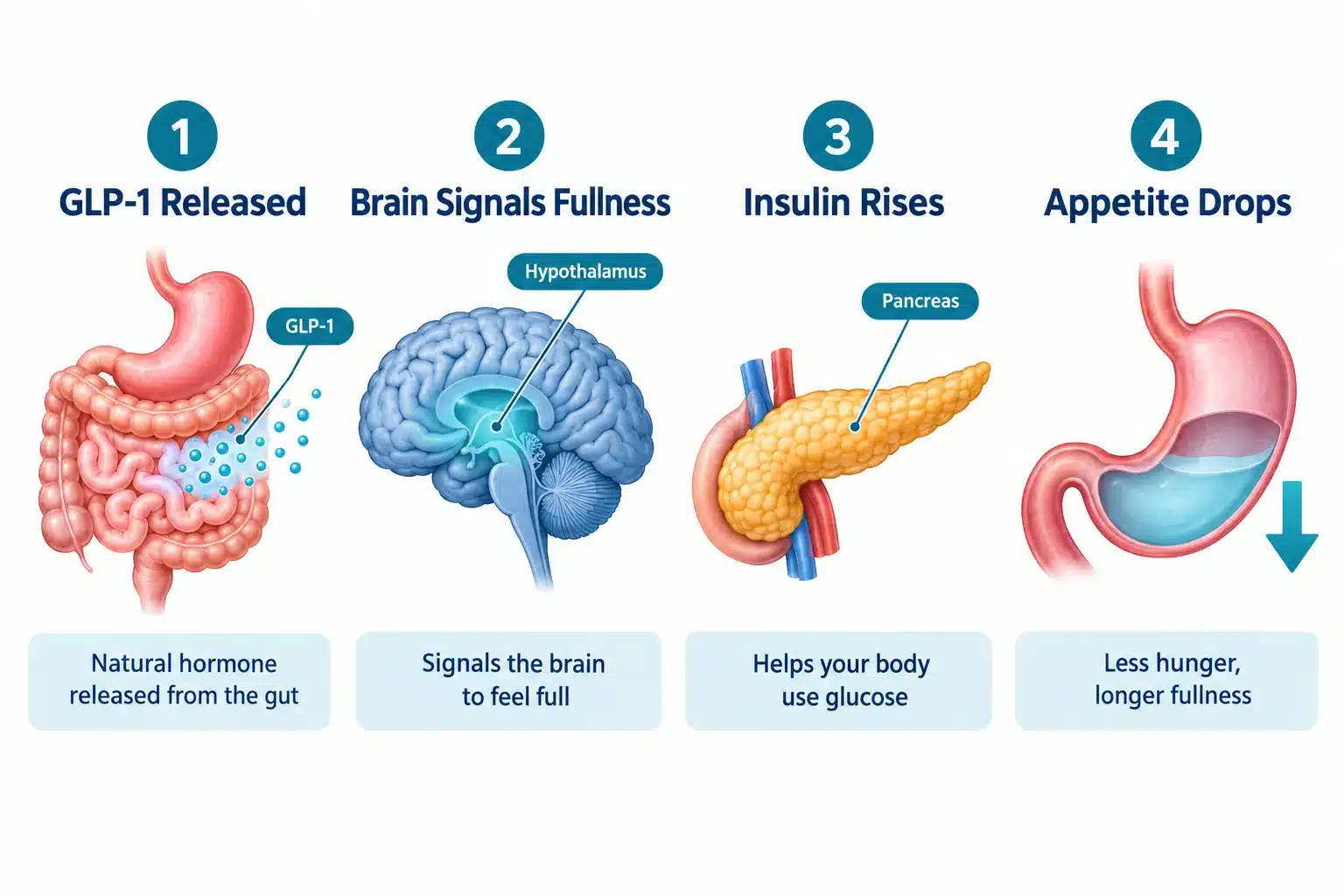
GLP-1 stands for glucagon-like peptide-1, a hormone your gut naturally releases after eating. It signals the brain to reduce appetite, slows stomach emptying, and prompts the pancreas to release insulin when blood sugar rises. Prescription GLP-1 receptor agonists mimic this hormone at much higher concentrations than your body produces naturally. For a deeper explanation of the underlying biology, see this overview of what GLP-1 medications are and how they work for weight loss and diabetes.
Noom adds a layer on top of the medication: a psychology-based curriculum, 1:1 coaching, food logging, and weight tracking. The idea is that the medication reduces appetite enough for patients to build new habits, and those habits sustain the results after the drug is tapered or stopped. Internal Noom data from 2026 supports this thesis: members who engaged most frequently with the platform lost 25.2% more weight by week 40 than the least-engaged group, and stayed on their medication program 2.2 times longer [1].
Does Noom Prescribe GLP-1 Medications Like Ozempic
Yes, Noom Med can prescribe GLP-1 medications including Wegovy, Zepbound, Ozempic, and oral semaglutide options, subject to a clinical evaluation by a licensed provider [10]. Prescriptions are issued through Noom’s telehealth network, not a traditional clinic visit.
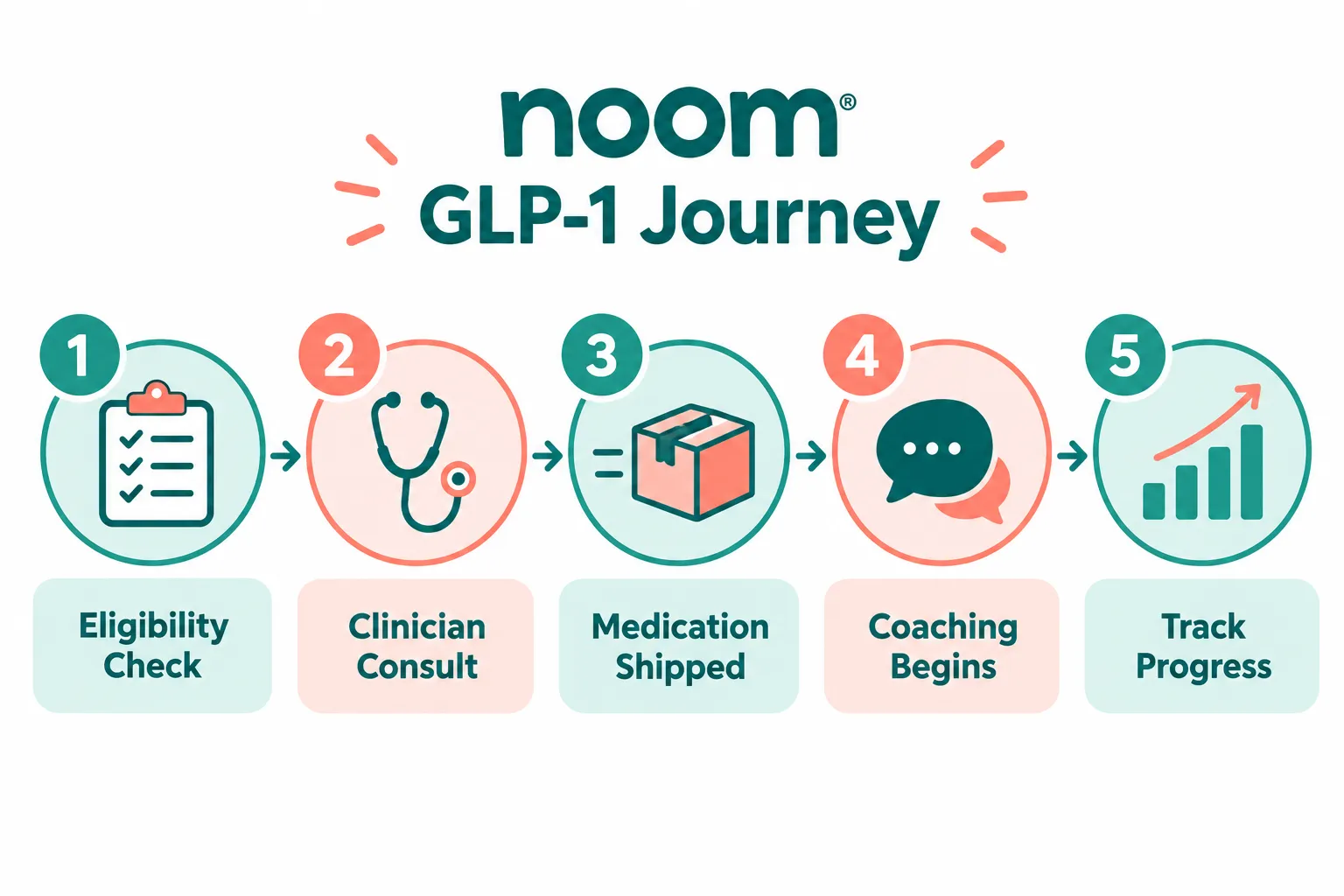
The process works like this:
- You complete an online health assessment
- A licensed clinician reviews your information
- If eligible, a prescription is issued and medication is shipped to your home (typically within 7 days when in stock) [9]
- You gain access to the GLP-1 Companion app, coaching, and curriculum
As of mid-2026, Noom also covers oral GLP-1 options, including two semaglutide-based pills and one using the newer active ingredient orforglipron, for patients who prefer not to inject [10]. This makes Noom one of the few platforms offering both injectable and oral GLP-1 pathways within the same program.
Noom GLP-1 Program Cost and Pricing
Noom GLP-1 programs are priced by tier, and costs vary depending on which product you qualify for and choose. Based on current Noom Med pricing [7]:
| Program Tier | Typical Outcome (Internal Data) | Starting Cost |
|---|---|---|
| Microdose GLP-1Rx | Up to 11 lbs in 60 days | $49 first 4 weeks, then $179/month |
| GLP-1Rx | Up to 21 lbs in 90 days | Varies by plan |
| GLP-1Rx Plus | Up to 25 lbs in 90 days | Varies by plan |
| Proactive Health Microdose | Broader cardiometabolic focus | $149/month (BMI 21+) |
The Proactive Health Microdose GLP-1Rx Program, launched in December 2025, adds at-home biomarker testing and is aimed at a broader audience with a BMI of 21 or higher, not just those in the overweight or obese range [5]. This positions it as a preventive health tool, not purely a weight-loss product.
For context on how these costs compare to branded medications purchased separately, see this GLP-1 price per month comparison for Wegovy, Zepbound, and oral options.
Important note: Outcome figures above come from Noom’s internal program data [7], not independent randomized trials. Individual results will vary based on adherence, metabolism, and starting weight.
Noom GLP-1 vs Other Weight Loss Programs
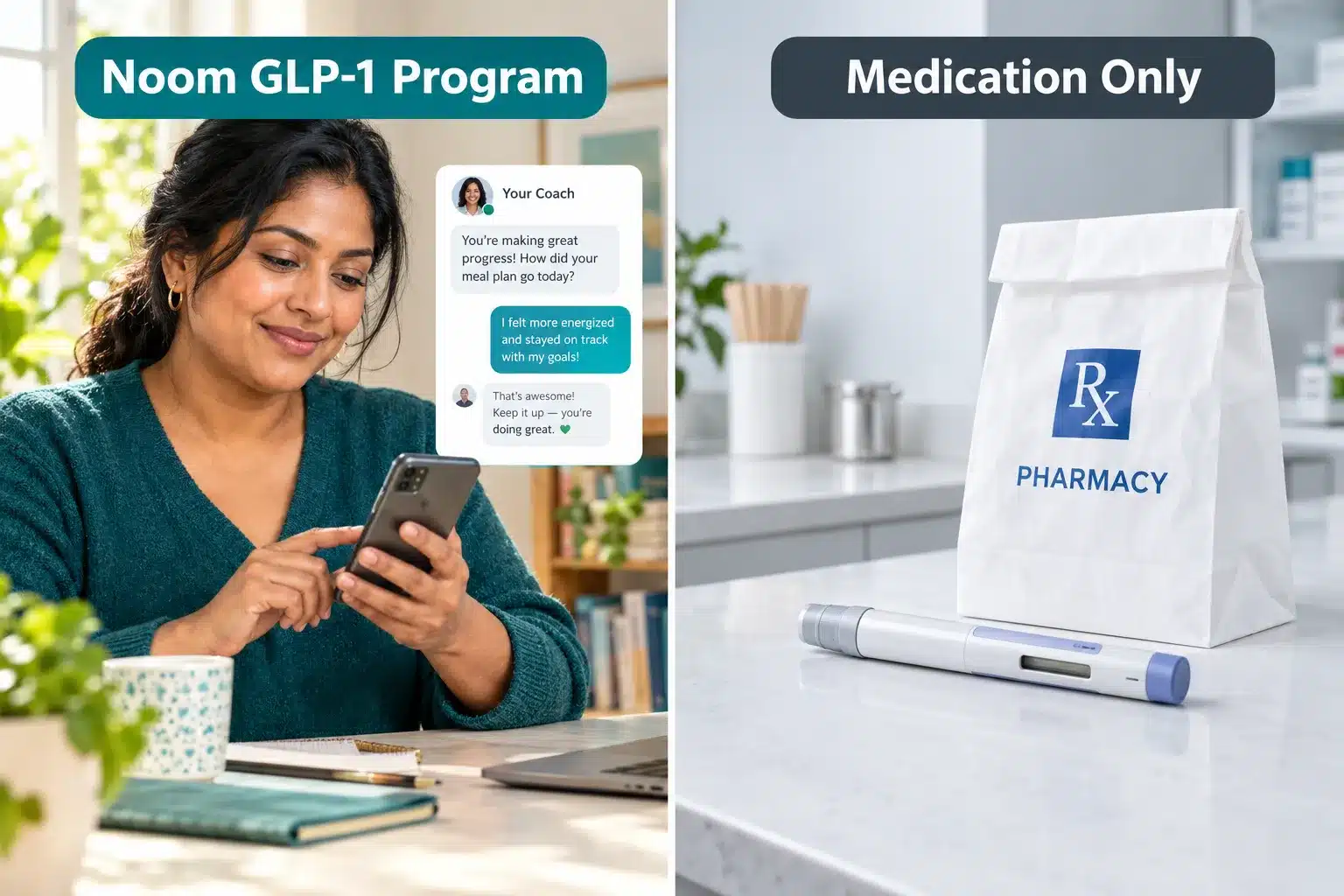
Noom GLP-1 stands out from most competitors because it bundles medication access with structured behavioral support rather than treating the two as separate products. Compared to platforms that simply connect patients with a prescriber and ship medication, Noom adds coaching, a psychology curriculum, food logging, and engagement tracking.
Choose Noom GLP-1 if:
- You want medication and habit coaching in one subscription
- You prefer a lower starting dose (microdose tier) to minimize side effects
- You value data-driven engagement tracking alongside your prescription
Consider alternatives if:
- You only want the medication and have your own support system
- Cost is the primary concern (compounded GLP-1 options may be cheaper)
- You already have a behavioral program you trust and just need a prescriber
For a detailed look at another integrated GLP-1 platform, the Measured GLP-1 review for 2026 covers how a competing service structures its program and pricing.
Is Noom GLP-1 Covered by Insurance
Insurance coverage for Noom GLP-1 programs is not guaranteed, and most members currently pay out of pocket. Whether your plan covers GLP-1 medications depends on your specific insurer, your employer’s benefits design, and the diagnosis code used.
A few practical points:
- Branded medications like Wegovy or Zepbound may be covered under some commercial plans when prescribed for obesity (BMI 30+, or 27+ with a comorbidity), but coverage is inconsistent
- Noom’s program fee (the coaching and app component) is generally not covered by insurance
- Employer-sponsored plans are increasingly adding GLP-1 coverage; Noom’s SmartRx product is specifically designed to help employers manage GLP-1 costs, with early 2026 data suggesting it can reduce employer GLP-1 spend by nearly 80% [2]
- If you’re uninsured or underinsured, GoodRx and manufacturer savings programs may help with branded medication costs
If cost is a barrier, it’s worth asking Noom’s clinical team about which medication tier fits your budget and whether any savings programs apply.
Noom GLP-1 Side Effects and Safety
GLP-1 medications are generally well-tolerated but do carry known side effects, particularly in the early weeks of treatment. Noom’s microdose tier was specifically designed to reduce side effect severity by starting at lower doses [3].
Common side effects across GLP-1 medications:
- Nausea (most common, especially in the first 4-8 weeks)
- Vomiting or diarrhea
- Constipation
- Fatigue
- Reduced appetite (intended effect, but can be pronounced)
Less common but serious concerns:
- Pancreatitis (rare; stop medication and contact a provider if severe abdominal pain occurs)
- Gallbladder issues
- Muscle mass loss during rapid weight reduction (Noom’s companion app addresses this by emphasizing protein intake and resistance activity) [6]
GLP-1 and breastfeeding safety: This is a critical point that Noom’s eligibility screening covers. GLP-1 medications including semaglutide and tirzepatide are not recommended while breastfeeding. There is insufficient safety data on whether semaglutide while breastfeeding or tirzepatide while breastfeeding poses risks to a nursing infant, and most clinical guidelines advise against GLP-1 use during this period. Women seeking GLP-1 postpartum weight loss should wait until they have finished breastfeeding before starting any GLP-1 medication, including through Noom Med. If you are currently breastfeeding and struggling with appetite control, speak with your OB or primary care provider about safe alternatives.
How Long Does Noom GLP-1 Take to Work
Most people notice reduced appetite within the first 1-2 weeks of starting a GLP-1 medication. Meaningful weight loss typically becomes visible by weeks 4-8, with more significant results accumulating over 3-6 months.
Noom’s internal program data suggests:
- Up to 11 lbs in 60 days on the Microdose tier
- Up to 21 lbs in 90 days on the standard GLP-1Rx tier
- Up to 25 lbs in 90 days on GLP-1Rx Plus [7]
These figures represent outcomes for engaged program participants, not averages across all users. The engagement data is telling: members who use Noom’s tools most consistently see significantly better results [1]. The medication opens a window of reduced appetite; the behavioral work determines how much of that window you use productively.
Noom GLP-1 Reviews and Results
Noom GLP-1 user experiences tend to cluster around a few consistent themes. Positive reviews highlight the convenience of having medication, coaching, and tracking in one place. Critical reviews often cite cost, medication availability during shortage periods, or frustration when insurance doesn’t cover the program.
From Noom’s own published data [8]:
- Members on GLP-1s who used Noom’s program regained three times less weight after stopping medication compared to typical post-medication patterns
- A large randomized clinical trial showed participants continued losing weight for a full year after the program ended
These are meaningful results if they hold up in independent research, but it’s worth noting that Noom publishes its own outcome data. Independent peer-reviewed studies on Noom Med specifically are still limited as of 2026.
Common user feedback themes:
- Positive: Reduced cravings, structured support, convenient home delivery
- Mixed: App engagement feels mandatory; some find the curriculum repetitive
- Negative: Out-of-pocket cost is high without insurance; medication availability can vary
Noom GLP-1 Eligibility and Who Qualifies
Noom GLP-1 programs have different BMI thresholds depending on the tier. Standard GLP-1Rx programs require a BMI of 25 or higher. The Proactive Health Microdose program accepts a BMI as low as 21 [5].
You likely qualify if:
- BMI is 25+ (or 21+ for the Proactive Health tier)
- You do not have contraindications such as a personal or family history of medullary thyroid carcinoma or MEN2 syndrome
- You are not pregnant or breastfeeding (GLP-1 medications are contraindicated during pregnancy and not recommended while breastfeeding)
- You are not currently taking medications with significant interactions
You likely do not qualify if:
- You are pregnant or nursing (GLP-1 and breastfeeding is a firm contraindication)
- You have a history of certain thyroid cancers or pancreatitis
- Your BMI falls below the program threshold
The eligibility check is completed during the initial online assessment, and a licensed clinician makes the final determination.
Noom GLP-1 vs Compounded GLP-1
Compounded GLP-1 medications are versions of semaglutide or tirzepatide produced by compounding pharmacies rather than brand-name manufacturers. They often cost significantly less than branded options like Wegovy or Zepbound, but they come with important trade-offs.
Key differences:
- Regulatory status: Branded GLP-1s (Wegovy, Zepbound) are FDA-approved. Compounded versions are not FDA-approved and were permitted during shortage periods; regulatory status has been evolving through 2025-2026
- Quality assurance: Compounded medications vary in quality depending on the pharmacy. Knowing how pharmaceutical compounding works for GLP-1 drugs helps you evaluate your options
- Cost: Compounded semaglutide can cost substantially less per month than branded versions
- Program support: Noom Med uses branded medications and wraps them in clinical and behavioral support; compounded-only services typically offer less coaching infrastructure
If you are considering a compounded option, it is worth learning how to verify a legitimate compounding pharmacy before ordering. Not all compounding pharmacies meet the same standards, and the source matters significantly for safety.
Choose Noom GLP-1 over compounded if: you want an integrated program with clinical oversight, behavioral coaching, and branded medications.
Consider compounded GLP-1 if: cost is the primary barrier and you have a trusted prescriber and pharmacy relationship already in place.
What Happens When You Stop Noom GLP-1
Stopping GLP-1 medication without a behavioral foundation in place typically leads to weight regain, because the appetite-suppressing effect of the drug disappears. This is one of the most well-documented challenges in GLP-1 therapy.
Noom’s thesis is that habit formation during the medication period can buffer this effect. Their published data from 2026 shows members who used the full Noom program regained three times less weight after stopping medication compared to typical patterns [8]. A randomized clinical trial they reference showed continued weight loss for a full year after the program ended [8].
Practical steps when tapering or stopping:
- Work with your clinician to taper gradually rather than stopping abruptly
- Maintain the food logging and coaching habits built during the program
- Prioritize protein intake and resistance training to preserve muscle mass
- Monitor weight weekly and re-engage with your provider if regain accelerates
The free Noom GLP-1 Companion app, launched in June 2026 [6], is designed to support exactly this transition period, giving patients tools to manage the post-medication phase even without a paid subscription.
Noom GLP-1 Common Mistakes to Avoid
Even with a well-designed program, certain patterns consistently undermine results. Here are the most common mistakes Noom GLP-1 users make:
- Treating the medication as the only intervention. The drug reduces appetite; it doesn’t change food choices or eating patterns on its own. Skipping the coaching curriculum wastes the behavioral window the medication opens.
- Stopping too soon. GLP-1 medications take several weeks to reach therapeutic effect. Discontinuing after 2-3 weeks due to mild nausea misses the benefit window.
- Ignoring protein intake. Rapid weight loss on GLP-1s can include muscle loss. Prioritizing protein (roughly 1.2-1.6g per kg of body weight daily, per general clinical guidance) helps preserve lean mass.
- Not logging food. Noom’s engagement data is clear: members who use the app’s tracking features lose more weight [1]. Skipping logging removes the feedback loop.
- Assuming insurance covers everything. Many users are surprised by out-of-pocket costs. Clarify coverage before starting, not after.
- Starting GLP-1 while breastfeeding. GLP-1 weight loss while breastfeeding is not a safe approach. Semaglutide while breastfeeding and tirzepatide while breastfeeding both lack adequate safety data for nursing infants. Wait until breastfeeding has ended.
Is Noom GLP-1 Right for Me
Noom GLP-1 is a strong fit for adults who want medical support for weight loss and recognize that medication alone isn’t a complete solution. It’s particularly well-suited to people who have tried diet and exercise without lasting results and are ready to combine pharmacological appetite control with structured habit change.
Noom GLP-1 is likely right for you if:
- Your BMI is 25 or higher (21+ for the Proactive Health tier)
- You want coaching and clinical oversight bundled with your prescription
- You prefer a lower starting dose to ease into GLP-1 therapy
- You are not pregnant or currently breastfeeding (GLP-1 and breastfeeding is contraindicated)
- You can commit to the app engagement that drives better outcomes
It may not be the best fit if:
- You only want a prescription with no program attached
- Cost is prohibitive and compounded alternatives are more accessible
- You have contraindications that make GLP-1 medications unsafe
For those who are perpetually hungry and struggling to understand why appetite control feels impossible, this resource on why you’re hungry all the time and what to do about it can provide useful context before starting any GLP-1 program.
7 Best GLP-1 Providers Ranked: Accreditation, Flexibility & Support Compared (2026 Update)
32,000+ Patients Can't All Be Wrong: See the Top-Rated GLP-1 Providers: Compared on accreditation, plan flexibility, and patient support — updated for 2026.
BMI MD GLP-1 Microdosing Plan
- Specialized microdosing options (sublingual drops or low-dose injections)
- Ideal for maintaining weight or tapering off higher doses safely
- Fully bundled plan with no hidden monthly platform memberships
DirectMeds Weight Loss Solutions
- Sourced from accredited, state-licensed 503A compounding pharmacies
- No-frills high-volume savings passed directly to the patient
- Includes clinical consultation and cold-chain shipping updates
MEDVi Flat-Rate Telehealth
- Flat monthly rate holds steady even at maximum maintenance doses
- No dosage upcharges or graduation fee penalties
- Offers both injectable and advanced oral thin-film delivery options
Gala GLP-1 Care Program
- All-inclusive plan with no standalone membership costs
- Continuous text-based messaging access with state-licensed clinicians
- Temperature-controlled, cold-chain medication shipping included
Measured GLP-1 Metabolic Health
- Comprehensive metabolic health screening and expert intake analysis
- Predictable long-term budgeting with stable plan pricing
- High-end responsive dashboard with integrated diagnostic support
Refills GLP-1 (TryRefills Plan)
- Flat rate holds steady as titration scales up
- Includes clinical guides for active side-effect management
- Bundles in foundational nutritional strategies alongside medication
AltRx GLP-1 Transactional Reorders
- Zero recurring auto-billing — pay entirely on a transactional basis
- Rapid text-to-order format saves time for experienced patients
- Provides both injectable forms and fast-dissolving tablet variations
Conclusion
Noom GLP-1 represents a meaningful shift in how weight-loss medication is delivered. Rather than simply connecting patients with a prescriber and shipping medication, Noom Med wraps GLP-1 therapy in behavioral coaching, clinical monitoring, and digital engagement tools designed to make the results last beyond the prescription.
The evidence Noom has published is encouraging: higher engagement correlates with better outcomes [1], and members appear to maintain more of their weight loss after stopping medication compared to typical patterns [8]. Independent long-term trials are still needed to fully validate these claims, but the program’s structure is grounded in sound behavioral science.
Actionable next steps:
- Check your BMI against Noom’s eligibility thresholds (25+ for standard programs, 21+ for the Proactive Health tier)
- Complete Noom’s online health assessment to confirm clinical eligibility
- Review the program tiers and choose the dose level that fits your risk tolerance and goals
- If cost is a concern, ask about the microdose tier or explore whether your employer’s plan covers GLP-1 through SmartRx
- If you are breastfeeding, wait until you have finished before starting any GLP-1 medication, and discuss postpartum weight loss options with your provider
- Download the free Noom GLP-1 Companion app [6] to familiarize yourself with the tools before committing to a paid tier
The medication opens the door. The habits you build while taking it determine whether the results stay when the door closes.
FAQ
What medications does Noom GLP-1 prescribe?
Noom Med can prescribe Wegovy, Zepbound, Ozempic, oral semaglutide, and orforglipron-based options, depending on clinical eligibility and availability [10].
What is the cheapest Noom GLP-1 option?
The Microdose GLP-1Rx program starts at $49 for the first 4-week supply, then moves to $179 per month on a 12-week recurring plan for eligible patients with a BMI of 25 or higher [7].
Can I use Noom’s app without a prescription?
Yes. As of June 2026, Noom offers a free version of its GLP-1 Companion app for patients already on GLP-1 medications prescribed elsewhere [6].
Is semaglutide safe while breastfeeding?
No. Semaglutide while breastfeeding is not recommended due to insufficient safety data on effects in nursing infants. The same applies to tirzepatide while breastfeeding. Wait until breastfeeding has ended before starting any GLP-1 medication.
How is Noom GLP-1 different from just getting an Ozempic prescription?
A standalone Ozempic prescription gives you the medication. Noom GLP-1 adds psychology-based coaching, food logging, 1:1 support, and habit-change curriculum designed to sustain results beyond the medication period.
Does Noom GLP-1 work without insurance?
Yes, but you pay out of pocket. The microdose tier is the most affordable entry point. Manufacturer savings programs and GoodRx may reduce the cost of branded medications separately.
How quickly will I lose weight on Noom GLP-1?
Most users notice appetite reduction within 1-2 weeks. Noom’s internal data shows up to 11 lbs in 60 days on the microdose tier and up to 21-25 lbs in 90 days on higher tiers, for engaged members [7].
What happens if I stop taking GLP-1 medication?
Appetite typically returns to pre-medication levels, which often leads to weight regain. Noom’s program is designed to build habits during the medication period to reduce this effect. Their data suggests members regain three times less weight than typical post-medication patterns [8].
Can men use Noom GLP-1?
Yes. Noom GLP-1 programs are available to all eligible adults regardless of gender, subject to clinical eligibility criteria.
Is Noom GLP-1 the same as Noom’s regular weight-loss app?
No. The original Noom app is a behavior-change program without medication. Noom Med (which includes the GLP-1 programs) is a separate clinical platform that adds prescription access and medical oversight [10].
References
[1] People Who Use Noom The Most Also Lose The Most Weight – https://www.noom.com/in-the-news/people-who-use-noom-the-most-also-lose-the-most-weight/
[2] Smartrx Glp1 Employer Savings – https://www.noom.com/in-the-news/smartrx-glp1-employer-savings/
[3] Noom Launches Microdose Glp 1 Program Enabling Weight Loss Without The Side Effects And Priced At 119 To Start Including Medication And Microhabits Program – https://www.noom.com/in-the-news/noom-launches-microdose-glp-1-program-enabling-weight-loss-without-the-side-effects-and-priced-at-119-to-start-including-medication-and-microhabits-program/
[5] Proactive Health Starts Here – https://www.noom.com/in-the-news/proactive-health-starts-here/
[6] Noom Launches Free Version Of Its Powerful Glp 1 Companion – https://www.noom.com/in-the-news/noom-launches-free-version-of-its-powerful-glp-1-companion/
[7] Pricing – https://www.noom.com/med/pricing/
[8] Press And Media – https://www.noom.com/press-and-media/
[9] 2025 Was The Breakout Year For Nooms Glp1 Companion – https://www.noom.com/blog/weight-management/2025-was-the-breakout-year-for-nooms-glp1-companion/
[10] Noom Med – https://www.noom.com/med/