noom microdose

Last updated: October 4, 2026
Quick Answer
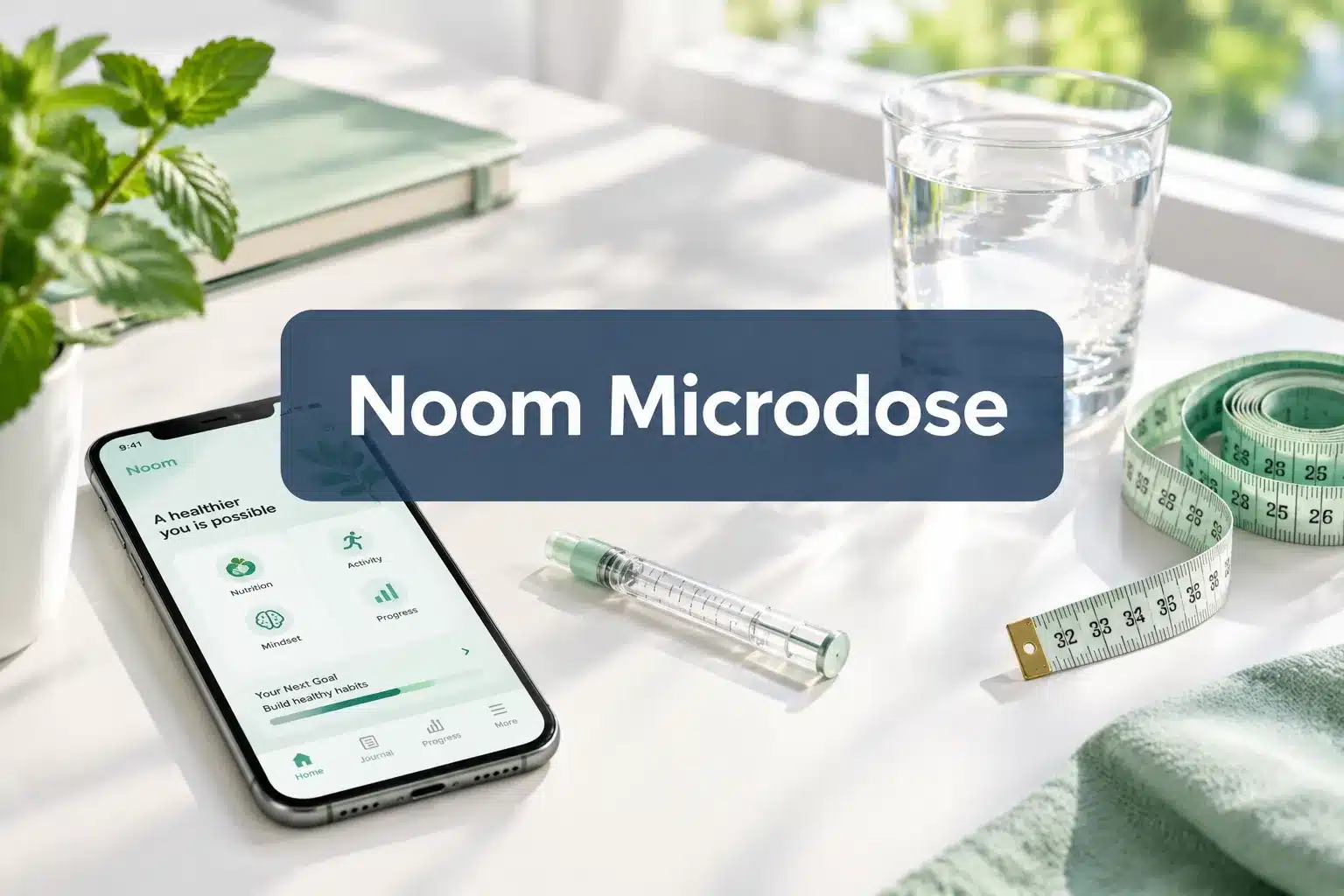
Noom Microdose is a physician-supervised weight-loss program that uses low doses of compounded semaglutide or tirzepatide, capped at 25% of standard GLP-1 maintenance doses, combined with Noom’s behavioral coaching app. It costs roughly $179 per month for the semaglutide plan after an introductory first month, and it’s designed for adults with a BMI of 25 or higher who want GLP-1 benefits with fewer side effects.
Key Takeaways
- Noom Microdose uses compounded semaglutide starting at 0.2 mg per week, topping out at 0.6 mg, well below the 2.4 mg standard Wegovy maintenance dose.
- The program defines a “microdose” as 25% or less of the typical GLP-1 maintenance dose, using a “low and slow” titration protocol called SmartDose.
- Noom reports members losing up to 17 pounds in 60 days on the weight-loss Microdose plan, though these are internal program figures, not randomized trial data.
- Pricing starts at $79 for the first 4-week supply of the semaglutide plan, then roughly $179 per month ongoing, all-inclusive with medication, clinical care, and app access.
- A tirzepatide version (Microdose GLP-1Rx Plus) is also available, starting at $99 for the first month and about $199 per month after.
- A separate Proactive Health Microdose variant exists for people with lower BMI who want preventive metabolic support, capped at just 0.2 mg per week.
- The program is not a standalone app feature, it requires a prescription and clinical oversight through Noom Med.
- GLP-1 medications including semaglutide and tirzepatide are generally not recommended while breastfeeding; anyone postpartum should discuss timing with their physician before starting.
- Noom Microdose works best when paired consistently with the app’s daily coaching lessons and habit-building tools.
- People who have not seen results after 8 to 12 weeks should contact Noom’s care team for a dose review rather than stopping the program outright.
What Is Noom Microdose and How Does It Work
Noom Microdose GLP-1Rx is a medically supervised weight-loss program that delivers compounded GLP-1 medications at intentionally low doses, paired with Noom’s digital behavior-change platform. The core idea is that a smaller dose, titrated carefully, can produce meaningful weight loss with a gentler side-effect profile than standard GLP-1 regimens. [1]
7 Best GLP-1 Providers Ranked: Accreditation, Flexibility & Support Compared (2026 Update)
32,000+ Patients Can't All Be Wrong: See the Top-Rated GLP-1 Providers. We compared the leading online GLP-1 providers based on program features, clinical support, convenience, and overall value.
BMI MD GLP-1 Microdosing Plan
- Specialized microdosing options, including sublingual drops and low-dose injections
- Designed for people interested in maintaining weight or gradually adjusting treatment
- Bundled program structure without a separate monthly platform membership
- Online access makes the process convenient from home

DirectMeds Weight Loss Solutions
- Online weight-loss program with a straightforward patient experience
- Compounded medication options through state-licensed compounding pharmacies
- Includes clinical consultation as part of the process
- Provides shipping updates to help patients track their orders
MEDVi Flat-Rate Telehealth
- Flat-rate telehealth approach designed for easier budgeting
- No dosage-based pricing increases within the advertised program structure
- Offers injectable and oral thin-film delivery options
- Includes medical screening and asynchronous provider consultations
Gala GLP-1 Care Program
- Text-based access to state-licensed clinicians
- Cold-chain medication shipping included in the program
- Month-to-month program structure
- Designed for people who value convenient ongoing support
Measured GLP-1 Metabolic Health
- Comprehensive metabolic health screening and intake analysis
- Designed around longer-term metabolic health management
- Responsive dashboard with integrated health tracking tools
- Useful option for patients who value a more data-focused experience
Refills GLP-1 (TryRefills Plan)
- Clinical guidance designed to help patients manage common treatment concerns
- Includes foundational nutritional strategies alongside medication
- Designed around predictable ongoing treatment
- No hidden startup or processing fees according to the program information provided
AltRx GLP-1 Transactional Reorders
- Transactional reorder model without recurring auto-billing
- Designed for patients who already understand their treatment routine
- Fast text-to-order process for convenient reorders
- Offers injectable and fast-dissolving tablet variations
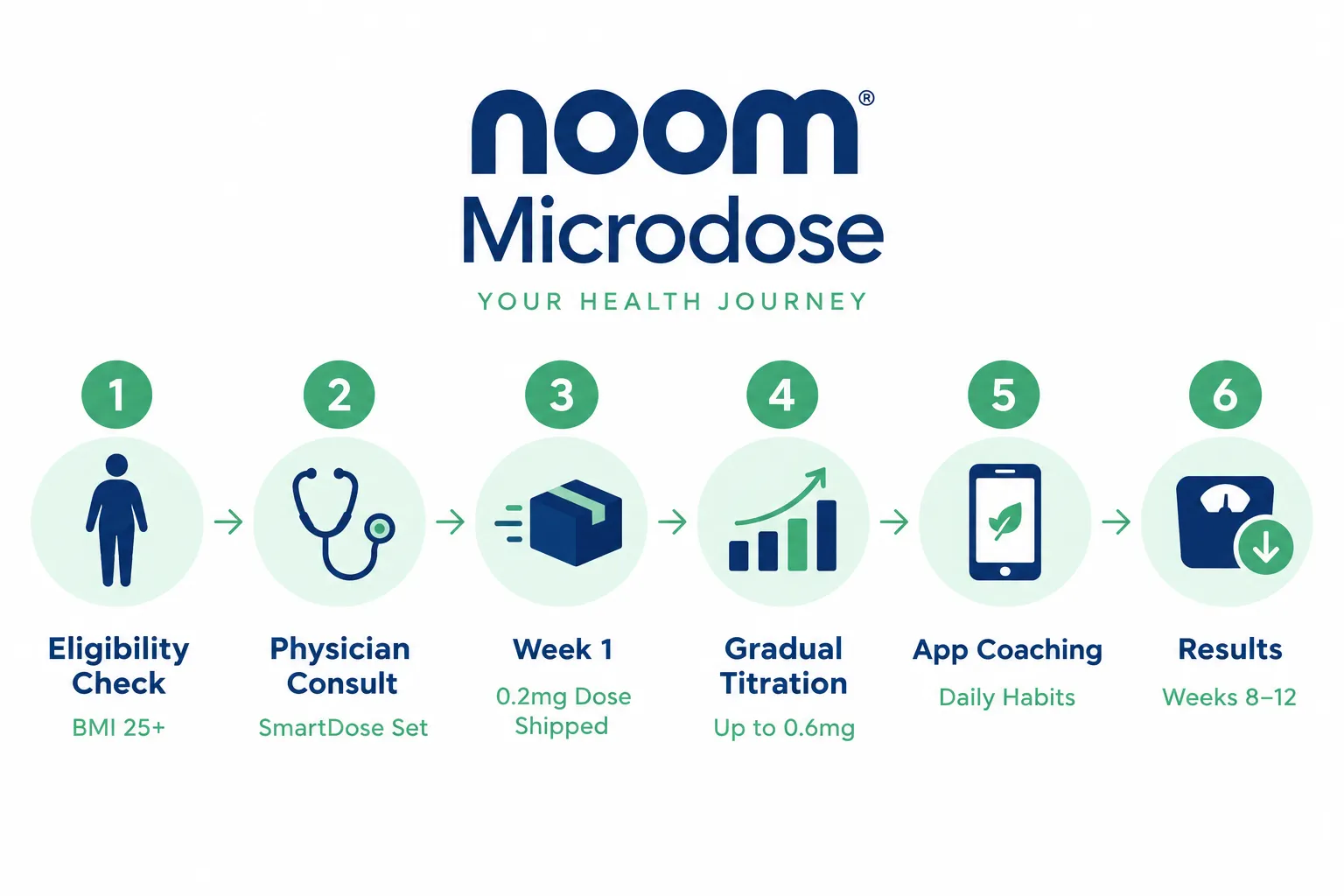
Noom defines a microdose as any dose at or below 25% of the typical GLP-1 maintenance dose used in conventional treatment. Rather than following a standard titration ladder, Noom uses its proprietary SmartDose protocol, which adjusts dose increases based on individual response, weight change, side effects, and check-in data, rather than a fixed calendar schedule. [5][8]
Here is how the program works in practice:
- Medication: Compounded semaglutide (Microdose GLP-1Rx) or compounded tirzepatide (Microdose GLP-1Rx Plus) is shipped directly to your home.
- Starting dose: Semaglutide begins at approximately 0.2 mg per week and can increase up to a maximum of 0.6 mg per week. Tirzepatide tops out at 3 mg per week. [7][10]
- Titration: Doses step up gradually based on your response, not on a rigid weekly schedule.
- Clinical oversight: A Noom Med care team is available 24/7 via messaging and reviews each dose change.
- App integration: Daily lessons, habit coaching, and food psychology tools run alongside the medication through the Noom app. [4]
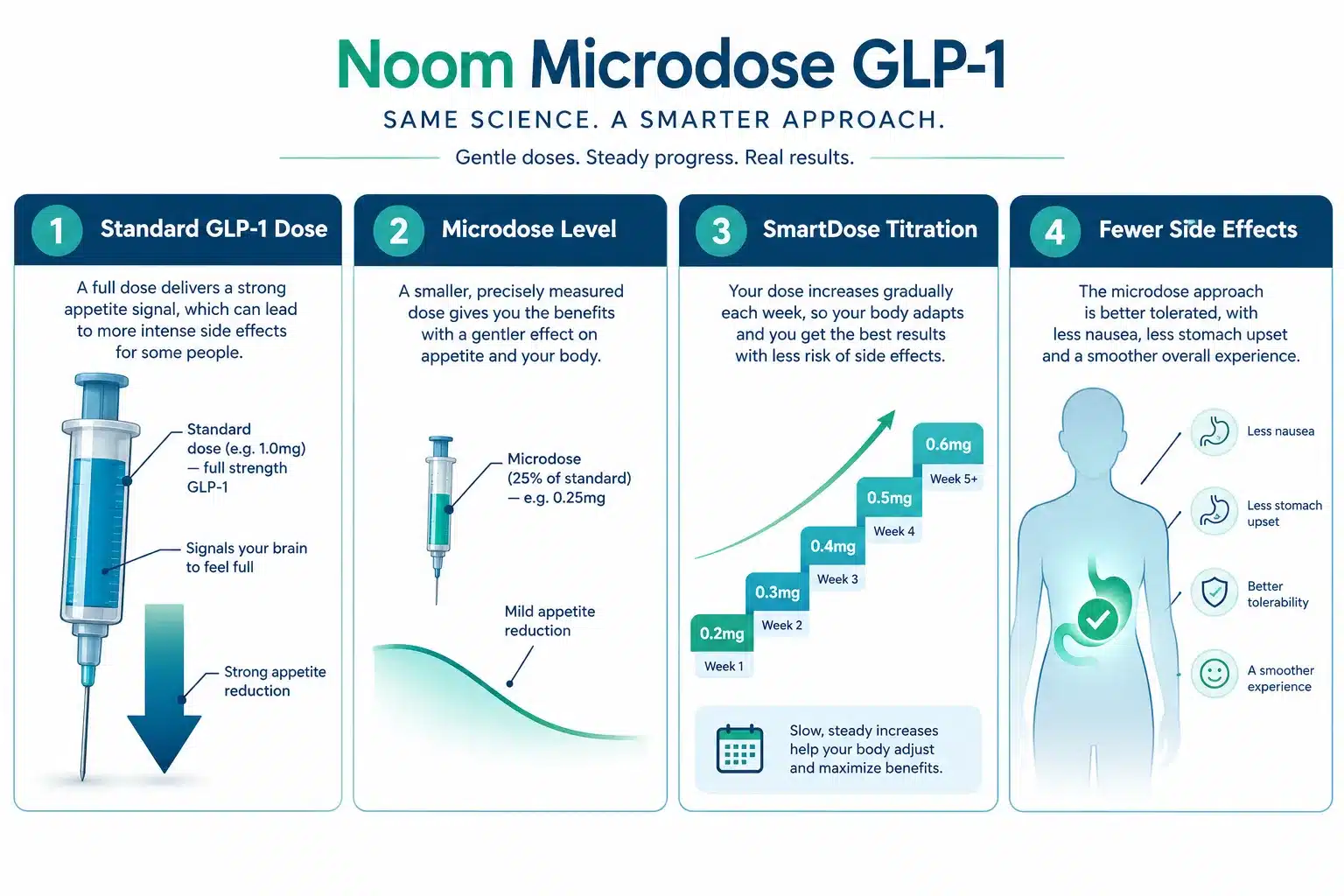
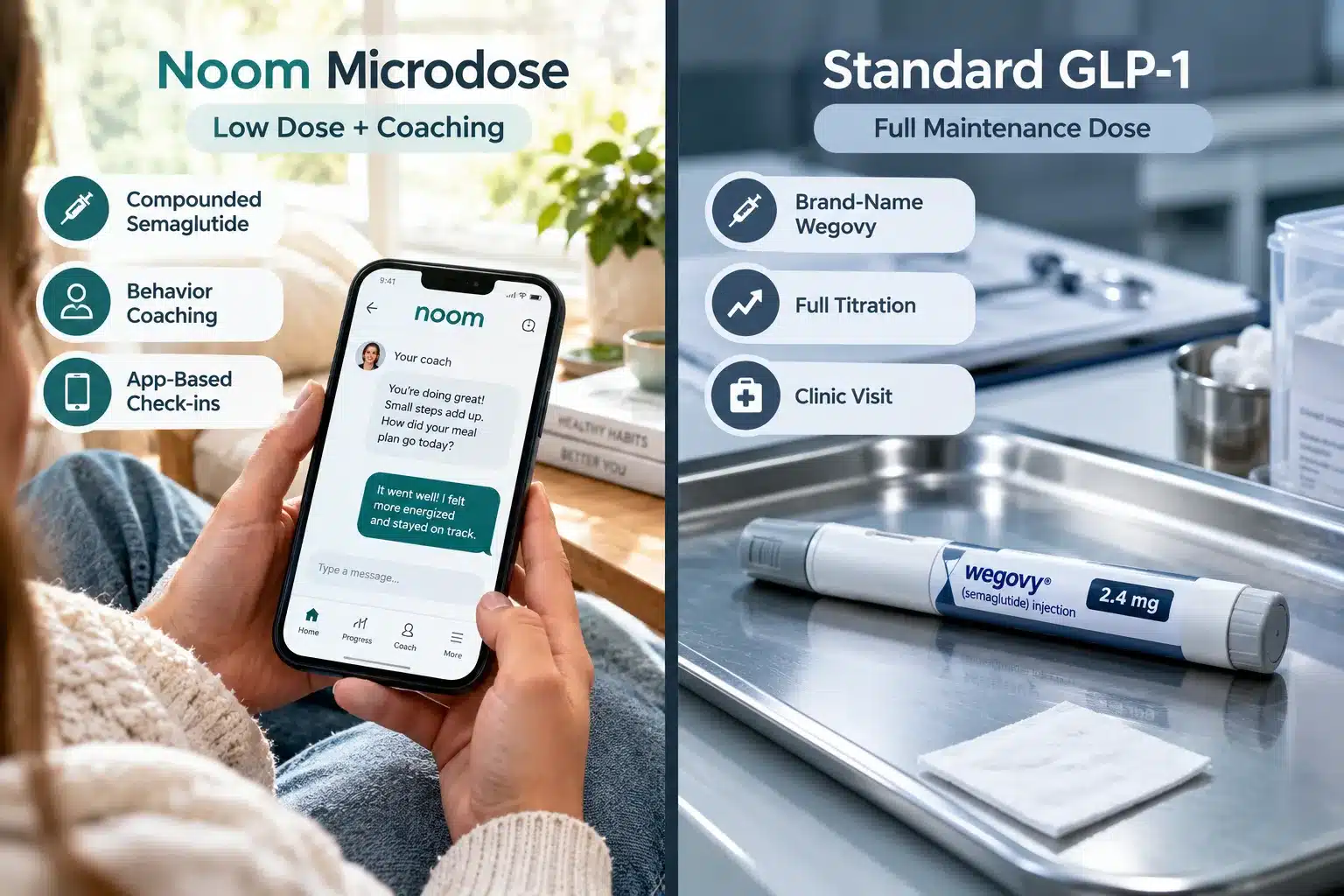
The key distinction from standard GLP-1 therapy: A standard Wegovy (semaglutide) maintenance dose is 2.4 mg per week. Noom’s maximum microdose of 0.6 mg is roughly one-quarter of that. For tirzepatide, the standard Zepbound maintenance dose reaches 15 mg; Noom’s 3 mg cap is similarly reduced. [10]
For context on how standard GLP-1 medications work before microdosing, see this overview of GLP-1 shots explained for weight loss and diabetes.
Noom Microdose vs Regular Noom App: Key Differences
Noom Microdose is not simply an add-on to the standard Noom app, it is a separate, medically supervised program under Noom Med that includes a prescription medication component. The regular Noom app focuses exclusively on psychology-based behavior change and food logging, with no medication involved.
| Feature | Standard Noom App | Noom Microdose GLP-1Rx |
|---|---|---|
| Prescription medication | No | Yes, compounded semaglutide or tirzepatide |
| Clinical oversight | No | Yes, 24/7 care team messaging |
| Behavioral coaching | Yes | Yes, included |
| BMI requirement | None | BMI 25+ for weight-loss plan |
| Medication dose | N/A | Up to 25% of standard maintenance dose |
| Cost structure | Monthly subscription | Intro month + quarterly billing, all-inclusive |
The standard Noom app can be used alongside Noom Microdose, but the medication program itself is managed through Noom Med and requires a separate enrollment and physician evaluation. [4][8]
Noom Microdose Cost and Pricing Plans
As of late 2026, Noom Microdose pricing is structured as an introductory first month followed by quarterly billing. All plans are marketed as all-inclusive, covering medication, clinical care, and app access. [6]
Microdose GLP-1Rx (compounded semaglutide):
- First 4-week supply: $79
- Ongoing: $537 every 12 weeks (approximately $179 per month)
Microdose GLP-1Rx Plus (compounded tirzepatide):
- First 4-week supply: $99
- Ongoing: $597 every 12 weeks (approximately $199 per month)
Proactive Health Microdose GLP-1Rx (preventive, lowest dose):
- Targets users with lower BMI and preventive health goals
- Maximum dose capped at 0.2 mg per week
- Pricing details are available through Noom Med’s pricing page [6]
For comparison, brand-name Wegovy and Zepbound typically cost significantly more out of pocket. If you want to understand how compounded semaglutide costs stack up more broadly, this compounding pharmacy semaglutide cost breakdown is worth reviewing.
Common mistake: Some users assume the introductory price is the ongoing rate. It is not. Budget for the quarterly rate from month two onward to avoid surprises.
Is Noom Microdose Worth It? Reddit Reviews and Real User Feedback
Reddit feedback on Noom Microdose is mixed but generally cautiously positive, with most users praising the lower side-effect burden while some express skepticism about whether a microdose is enough to drive meaningful weight loss. [2]
Recurring themes from user discussions include:
- Positive: Fewer nausea and GI side effects compared to standard GLP-1 doses
- Positive: Appreciation for the integrated coaching and daily lessons
- Mixed: Some users report slower initial weight loss than expected
- Negative: A few users felt the dose was too low to suppress appetite noticeably
- Negative: Concerns about the quarterly billing structure and cancellation process [2]
One user on the r/Noom subreddit described starting at 0.2 mg and noticing reduced cravings within two weeks without any nausea, a common report among those who had previously struggled with side effects on standard GLP-1 doses. Others noted that results picked up after the dose was adjusted upward during the second month.
The honest takeaway: Noom Microdose appears to work best for people who prioritize tolerability and are willing to accept a potentially slower initial pace of weight loss in exchange for fewer side effects. If your primary goal is maximum speed of weight loss and you have no history of GLP-1 side effects, a standard-dose program may deliver faster results.
Noom Microdose for Weight Loss: Does It Actually Work
Noom reports that members in its Microdose GLP-1Rx weight-loss program have lost up to 17 pounds in 60 days, with a separate figure of up to 11 pounds in 60 days cited on the Med pricing page. Both numbers come from Noom’s internal program data, not from published randomized clinical trials. [1][4][6]
These figures are plausible given what the clinical literature says about low-dose GLP-1 therapy. Experts quoted in medical media have noted that even sub-therapeutic doses of semaglutide can reduce appetite and caloric intake in some individuals, though the magnitude of effect is generally smaller than at full maintenance doses. [3]
What drives results on this program:
- The GLP-1 medication reduces appetite signals, making it easier to eat less without constant willpower effort
- The Noom app’s behavioral coaching addresses emotional eating, food psychology, and habit formation
- Clinical check-ins allow dose adjustments if initial results are insufficient
Who sees the best results:
- People who consistently engage with the app’s daily lessons (not just the medication)
- Those who have struggled with side effects on standard GLP-1 programs in the past
- Adults who are moderately overweight (BMI 25 to 35) rather than those with severe obesity who may need higher doses
For a broader look at which GLP-1 options tend to produce the strongest weight-loss outcomes, see this comparison of which GLP-1 medication works best for weight loss.
Who Should Use Noom Microdose, and Who Should Not
Noom Microdose is best suited for adults with a BMI of 25 or higher who want GLP-1-assisted weight loss but are concerned about tolerability, cost, or the commitment required by full-dose programs. The Proactive Health variant extends eligibility to people with lower BMI who want preventive metabolic support. [7]
Choose Noom Microdose if:
- You have a BMI of 25 or higher and want to lose weight with medical support
- You previously stopped a GLP-1 program due to nausea, vomiting, or GI side effects
- You want an all-inclusive program (medication + coaching + clinical care) under $200 per month
- You prefer gradual, sustainable weight loss over rapid loss
- You want behavioral coaching alongside medication
Noom Microdose is probably not the right fit if:
- You have a BMI over 40 and need more aggressive intervention
- You have a history of medullary thyroid carcinoma or multiple endocrine neoplasia type 2 (contraindications for all GLP-1 medications)
- You are currently pregnant or breastfeeding
A note on GLP-1 medications while breastfeeding: Semaglutide and tirzepatide are not currently recommended for use during breastfeeding. There is limited safety data on GLP-1 medications while breastfeeding, and the potential for these compounds to pass into breast milk has not been fully characterized. Anyone asking about GLP-1 weight loss while breastfeeding, including postpartum weight loss goals, should speak with their OB or primary care physician before starting any GLP-1 program, including Noom Microdose. GLP-1 breastfeeding safety is an evolving area, and the current guidance leans toward waiting until after weaning.
How Long Does Noom Microdose Take to See Results
Most users begin noticing reduced appetite within the first two to four weeks at the starting 0.2 mg dose. Visible weight loss typically becomes consistent between weeks four and eight, with more significant changes appearing at the eight-to-twelve-week mark as doses are adjusted upward. [7][8]
Noom’s own data references results within 60 days, which aligns with the general timeline for low-dose GLP-1 therapy. [1][4]
Realistic timeline:
- Weeks 1 to 2: Appetite may begin to decrease; some users notice fewer food cravings
- Weeks 3 to 4: Early weight changes (1 to 4 pounds is typical at this stage)
- Weeks 5 to 8: More consistent weekly losses as the dose is titrated upward
- Weeks 9 to 12: The clearest signal of whether the program is working for you
If you see no change after 12 weeks, that is the time to contact the care team for a dose review, not to quit. The SmartDose protocol is designed to adjust based on your response.
Noom Microdose vs Weight Watchers: Which Is Better
Noom Microdose and Weight Watchers (now WW) serve overlapping audiences but take fundamentally different approaches. Noom Microdose includes a prescription GLP-1 medication; Weight Watchers does not (though WW has a separate clinical weight-loss program called WeightWatchers Clinic that includes medication at higher prices).
Noom Microdose advantages:
- Prescription GLP-1 medication included in the monthly cost
- Clinical oversight and 24/7 care team access
- Lower side-effect profile than standard GLP-1 programs
- All-in pricing with no separate medication cost
Weight Watchers advantages:
- Larger peer community and in-person meeting options
- No prescription required
- May suit people who prefer a social accountability model
- Lower cost if no medication is needed
Choose Noom Microdose if you want medically assisted weight loss with a GLP-1 medication and behavioral coaching in one program. Choose Weight Watchers if you prefer a community-driven, food-points-based approach without medication.
Noom Microdose Not Working: Troubleshooting Tips
If Noom Microdose is not producing results after four to six weeks, the most common reasons are insufficient dose, inconsistent app engagement, or unrealistic expectations about the pace of microdose weight loss.
Steps to take before giving up:
- Contact the care team. Request a dose review. The SmartDose protocol allows upward adjustments, if you are tolerating 0.2 mg well with no side effects, you may be a candidate for a dose increase sooner than expected.
- Audit your app engagement. The medication alone is not the full program. Users who skip the daily lessons consistently tend to see weaker results than those who complete them.
- Check your food logging accuracy. GLP-1 medications reduce appetite, but they do not eliminate the impact of calorie-dense foods. Logging honestly for one week often reveals patterns.
- Review your sleep and stress levels. Chronic poor sleep and high cortisol can blunt GLP-1 response in some individuals.
- Give it the full 12 weeks. Microdose titration is intentionally slow. Judging the program at week three is premature.
When to escalate: If you have been at the maximum 0.6 mg dose for four or more weeks with minimal weight change and full app compliance, discuss whether a standard-dose GLP-1 program would be more appropriate for your situation. For uninsured patients exploring GLP-1 options, this guide on how to get GLP-1 if you’re uninsured covers several affordable pathways.
Can You Do Noom Microdose Without a Subscription
No. Noom Microdose requires enrollment in Noom Med, which is a subscription-based medical program. The medication, clinical oversight, and app coaching are bundled together, you cannot purchase the compounded semaglutide or tirzepatide separately through Noom without the program subscription. [6][9]
This is by design. Noom’s clinical model requires ongoing physician oversight for dose adjustments, which is built into the subscription cost. Attempting to source compounded semaglutide independently through a compounding pharmacy is possible but removes the clinical monitoring layer. If you are considering that route, understanding the difference between 503A and 503B compounding pharmacies matters for safety and quality assurance.
Noom Microdose for Busy People: Time Commitment
The Noom Microdose program is designed to fit into a busy schedule. The medication component requires a weekly self-injection (roughly two minutes). The app component asks for approximately 10 minutes per day for lessons and logging. [4][7]
Weekly time estimate:
- Medication injection: 2 to 5 minutes, once per week
- Daily app lessons: 5 to 10 minutes per day
- Care team check-ins: As needed, typically a few minutes via messaging
- Total weekly time: Approximately 45 to 75 minutes spread across the week
The asynchronous messaging model with the care team means you do not need to schedule phone or video appointments, which makes this program more accessible for people with unpredictable schedules than traditional telehealth weight-loss programs.
Does Noom Microdose Work Without Exercise
Yes, Noom Microdose can produce weight loss without a formal exercise program, because GLP-1 medications reduce appetite and caloric intake regardless of physical activity level. However, Noom’s own materials and the broader clinical evidence on GLP-1 therapy consistently show that adding even moderate movement improves outcomes and helps preserve muscle mass during weight loss. [7][8]
Practical guidance:
- If you are sedentary, even 20 to 30 minutes of walking three to four times per week meaningfully supports the program
- Exercise is not required to see results, but it reduces the risk of losing lean muscle mass alongside fat
- The Noom app includes movement-related habit content that can help you build activity gradually without requiring a gym membership
Common Noom Microdose Mistakes to Avoid
Most people who struggle with Noom Microdose make one of a handful of predictable errors.
- Expecting full-dose GLP-1 speed. Microdosing is intentionally slower. If you expect to lose weight at the same rate as someone on 2.4 mg of semaglutide, you will be disappointed.
- Skipping the app. The behavioral coaching component is not optional decoration, it is half the program. Users who treat Noom Microdose as “just a medication subscription” consistently report weaker results.
- Stopping at the first plateau. Weight loss is rarely linear. A two-week plateau in week five does not mean the program has failed.
- Not reporting side effects. Even mild nausea or fatigue should be reported to the care team. These signals inform dose decisions.
- Ignoring the quarterly billing cycle. The program bills every 12 weeks after the intro month. Set a calendar reminder before renewal to evaluate whether you want to continue.
For anyone comparing this program to other GLP-1 telehealth options, this review of Shed GLP-1 reviews and this look at Hims weight loss cost offer useful reference points.
Noom Microdose Alternatives and Similar Programs
If Noom Microdose does not fit your needs, several comparable programs exist in 2026.
- Hims/Hers Weight Loss: Offers compounded semaglutide with telehealth support, typically at a lower monthly cost but with less integrated behavioral coaching.
- Henry Meds: A telehealth GLP-1 program with competitive pricing; see this Henry Meds monthly cost breakdown for details.
- Ro Body: Compounded semaglutide with physician oversight, no app-based coaching component.
- Standard-dose Noom Med: For users who want Noom’s platform but need a higher GLP-1 dose than the microdose protocol allows.
- Compounding pharmacy direct: Lower cost but requires sourcing your own physician supervision. This guide to ordering from a compounding pharmacy online explains the process.
Choose Noom Microdose over alternatives if the combination of lower side effects, behavioral coaching, and all-inclusive pricing is your priority. Choose a competitor if you want the lowest possible monthly cost and are comfortable managing the clinical relationship separately.
Frequently Asked Questions
What exactly is a “microdose” of semaglutide in Noom’s program?
Noom defines a microdose as a dose at or below 25% of the standard GLP-1 maintenance dose. For semaglutide, this means a maximum of 0.6 mg per week, compared to the 2.4 mg standard Wegovy maintenance dose. [5]
Is Noom Microdose FDA-approved?
No GLP-1 microdosing protocol is FDA-approved as a distinct treatment. The program uses compounded semaglutide or tirzepatide, which are legal under physician supervision but are not FDA-approved brand-name products. The FDA has approved semaglutide (Wegovy, Ozempic) and tirzepatide (Zepbound, Mounjaro) as drugs, but not Noom’s specific microdose protocol.
Can I take GLP-1 medications while breastfeeding?
Current guidance does not recommend semaglutide while breastfeeding or tirzepatide while breastfeeding. GLP-1 breastfeeding safety data is limited, and most physicians advise waiting until after weaning before starting any GLP-1 medication, including Noom Microdose. Always consult your doctor.
How is Noom Microdose different from the Proactive Health Microdose plan?
The weight-loss Microdose plan allows doses up to 0.6 mg of semaglutide and targets adults with BMI 25+. The Proactive Health variant caps doses at 0.2 mg, includes at-home biomarker testing, and is designed for preventive health goals including users with lower BMI.
Does Noom Microdose use brand-name Ozempic or Wegovy?
No. Noom Microdose uses compounded semaglutide, not brand-name Ozempic or Wegovy. Compounded semaglutide is produced by licensed compounding pharmacies and is generally less expensive than brand-name options.
What happens if I want to stop the program?
You can cancel your Noom Med subscription. Because the program bills quarterly after the intro month, timing your cancellation before the next billing cycle is important to avoid an unwanted charge.
Can men use Noom Microdose?
Yes. The program is available to any adult with a qualifying BMI, regardless of gender.
Is the tirzepatide version (Microdose GLP-1Rx Plus) better than the semaglutide version?
Not necessarily better, different. Tirzepatide acts on both GIP and GLP-1 receptors, which some research suggests may produce greater weight loss at equivalent doses. However, the tirzepatide plan costs slightly more. For a detailed look at tirzepatide costs, see this tirzepatide monthly cost comparison.
How does Noom Microdose compare to doing nothing?
For most adults with a BMI over 25, adding a low-dose GLP-1 medication with behavioral coaching will produce more weight loss than diet and exercise alone, based on the general evidence base for GLP-1 therapy. The microdose approach is more modest than full-dose GLP-1 programs but substantially more supported than willpower-only approaches.
Is there a free trial for Noom Microdose?
Noom does not currently offer a free trial for the Microdose program. The introductory first-month pricing ($79 or $99) serves as the entry point. [6]
7 Best GLP-1 Providers Ranked: Accreditation, Flexibility & Support Compared (2026 Update)
32,000+ Patients Can't All Be Wrong: See the Top-Rated GLP-1 Providers: Compared on accreditation, plan flexibility, and patient support — updated for 2026.
BMI MD GLP-1 Microdosing Plan
- Specialized microdosing options (sublingual drops or low-dose injections)
- Ideal for maintaining weight or tapering off higher doses safely
- Fully bundled plan with no hidden monthly platform memberships
DirectMeds Weight Loss Solutions
- Sourced from accredited, state-licensed 503A compounding pharmacies
- No-frills high-volume savings passed directly to the patient
- Includes clinical consultation and cold-chain shipping updates
MEDVi Flat-Rate Telehealth
- Flat monthly rate holds steady even at maximum maintenance doses
- No dosage upcharges or graduation fee penalties
- Offers both injectable and advanced oral thin-film delivery options
Gala GLP-1 Care Program
- All-inclusive plan with no standalone membership costs
- Continuous text-based messaging access with state-licensed clinicians
- Temperature-controlled, cold-chain medication shipping included
Measured GLP-1 Metabolic Health
- Comprehensive metabolic health screening and expert intake analysis
- Predictable long-term budgeting with stable plan pricing
- High-end responsive dashboard with integrated diagnostic support
Refills GLP-1 (TryRefills Plan)
- Flat rate holds steady as titration scales up
- Includes clinical guides for active side-effect management
- Bundles in foundational nutritional strategies alongside medication
AltRx GLP-1 Transactional Reorders
- Zero recurring auto-billing — pay entirely on a transactional basis
- Rapid text-to-order format saves time for experienced patients
- Provides both injectable forms and fast-dissolving tablet variations
Conclusion
Noom Microdose GLP-1Rx is a genuinely distinct approach to medically assisted weight loss, not just a lower-cost GLP-1 program, but a deliberate clinical strategy built around tolerability, gradual titration, and behavioral change. For adults who have been put off by the side effects of standard GLP-1 doses, or who want an all-inclusive program under $200 per month, it represents one of the more accessible options available in 2026.
The evidence base is primarily internal program data rather than published clinical trials, which is worth acknowledging. But the underlying pharmacology of low-dose GLP-1 therapy is sound, and the integration of behavioral coaching addresses the habit layer that medication alone cannot fix.
Actionable next steps:
- Check your BMI. If it is 25 or higher, you likely meet the basic eligibility threshold.
- Visit Noom Med’s website and complete the intake questionnaire to confirm eligibility and get a physician evaluation.
- If you are postpartum or currently breastfeeding, speak with your OB before starting, GLP-1 medications while breastfeeding are not currently recommended.
- Budget realistically: plan for the quarterly rate ($179 to $199 per month), not the intro rate.
- Commit to the app. The medication and the coaching work together, one without the other consistently underperforms.
If you want to compare your options before committing, this guide to RX medications for weight loss in 2026 covers the full landscape of GLP-1 programs currently available.
References
[1] Glp1 Microdose – https://www.noom.com/med/glp1-microdose/
[2] Noom Glp1 Microdose – https://www.reddit.com/r/Noom/comments/1mjn5g5/noom_glp1_microdose/
[3] Glp 1 Microdosing For Weight Loss Experts Weigh The Pros And Cons – https://www.medicalnewstoday.com/articles/glp-1-microdosing-for-weight-loss-experts-weigh-the-pros-and-cons
[4] Microdose Glp1 Rx – https://www.noom.com/med/microdose-glp1-rx/
[5] Noom Launches Microdose Glp 1 Program Enabling Weight Loss Without The Side Effects And Priced At 119 To Start Including Medication And Microhabits Program – https://www.noom.com/in-the-news/noom-launches-microdose-glp-1-program-enabling-weight-loss-without-the-side-effects-and-priced-at-119-to-start-including-medication-and-microhabits-program/
[6] Pricing – https://www.noom.com/med/pricing/
[7] Microdosing Glp 1 For Weight Loss – https://www.noom.com/blog/weight-management/microdosing-glp-1-for-weight-loss/
[8] Why We Launched Noom Microdose Glp 1rx – https://www.noom.com/blog/weight-management/why-we-launched-noom-microdose-glp-1rx/
[9] Noom Cost 2 – https://www.noom.com/blog/weight-management/noom-cost-2/
[10] Noom Microdose Glp 1rx Plus Program – https://www.noom.com/support/2026/07/noom-microdose-glp-1rx-plus-program/