noom microdose reviews

Last updated: October 4, 2026
Quick Answer: Noom Microdose GLP-1 is a telehealth weight loss program that pairs low-dose semaglutide with Noom’s cognitive behavioral therapy (CBT) app and coaching. Real user reviews are sharply divided: many Trustpilot reviewers report meaningful weight loss and mild side effects, while BBB complaints highlight billing problems, medication delays, and limited results for some. Whether it works depends heavily on your expectations, your tolerance for the program’s cost structure, and how well the behavioral coaching component fits your lifestyle.
Key Takeaways
- Noom Microdose GLP-1 starts at approximately 0.2 mg semaglutide and increases in 0.1 mg increments, capping around 0.6 mg, which is well below standard clinical doses [9]
- Noom’s own data suggests members can lose up to 11 pounds in 30 days and up to 17 pounds in 60 days, though individual results vary significantly
- Trustpilot reviews trend positive, with users praising the app, coaching, and convenience; BBB reviews average 1.1/5 stars, with complaints about billing and medication access [1][2]
- Pricing typically starts around $99 for the first month, then rises to approximately $199 per month billed quarterly
- Medical experts caution that GLP-1 microdosing is not yet evidence-based and lacks formal clinical trial data
- The program bundles medication, CBT-based app access, and care team support into one subscription
- Side effects reported include fatigue, headaches, and nausea, though many users report milder symptoms than with standard GLP-1 doses [2][9]
- Noom Microdose is not recommended for people who are pregnant, breastfeeding, or planning to become pregnant; GLP-1 medications while breastfeeding carry unresolved safety concerns
- The behavioral coaching layer is consistently cited as a key differentiator from standalone GLP-1 prescriptions
- If medication delivery or billing transparency is a priority, review the BBB complaints carefully before subscribing [2]
What Is Noom Microdose and How Does It Work
Noom Microdose GLP-1 is a program offered through Noom Med that prescribes low-dose compounded semaglutide alongside the Noom app’s behavioral coaching tools. The core idea is that a smaller dose reduces common GLP-1 side effects while still producing appetite suppression and gradual weight loss.
7 Best GLP-1 Providers Ranked: Accreditation, Flexibility & Support Compared (2026 Update)
32,000+ Patients Can't All Be Wrong: See the Top-Rated GLP-1 Providers. We compared the leading online GLP-1 providers based on program features, clinical support, convenience, and overall value.
BMI MD GLP-1 Microdosing Plan
- Specialized microdosing options, including sublingual drops and low-dose injections
- Designed for people interested in maintaining weight or gradually adjusting treatment
- Bundled program structure without a separate monthly platform membership
- Online access makes the process convenient from home

DirectMeds Weight Loss Solutions
- Online weight-loss program with a straightforward patient experience
- Compounded medication options through state-licensed compounding pharmacies
- Includes clinical consultation as part of the process
- Provides shipping updates to help patients track their orders
MEDVi Flat-Rate Telehealth
- Flat-rate telehealth approach designed for easier budgeting
- No dosage-based pricing increases within the advertised program structure
- Offers injectable and oral thin-film delivery options
- Includes medical screening and asynchronous provider consultations
Gala GLP-1 Care Program
- Text-based access to state-licensed clinicians
- Cold-chain medication shipping included in the program
- Month-to-month program structure
- Designed for people who value convenient ongoing support
Measured GLP-1 Metabolic Health
- Comprehensive metabolic health screening and intake analysis
- Designed around longer-term metabolic health management
- Responsive dashboard with integrated health tracking tools
- Useful option for patients who value a more data-focused experience
Refills GLP-1 (TryRefills Plan)
- Clinical guidance designed to help patients manage common treatment concerns
- Includes foundational nutritional strategies alongside medication
- Designed around predictable ongoing treatment
- No hidden startup or processing fees according to the program information provided
AltRx GLP-1 Transactional Reorders
- Transactional reorder model without recurring auto-billing
- Designed for patients who already understand their treatment routine
- Fast text-to-order process for convenient reorders
- Offers injectable and fast-dissolving tablet variations
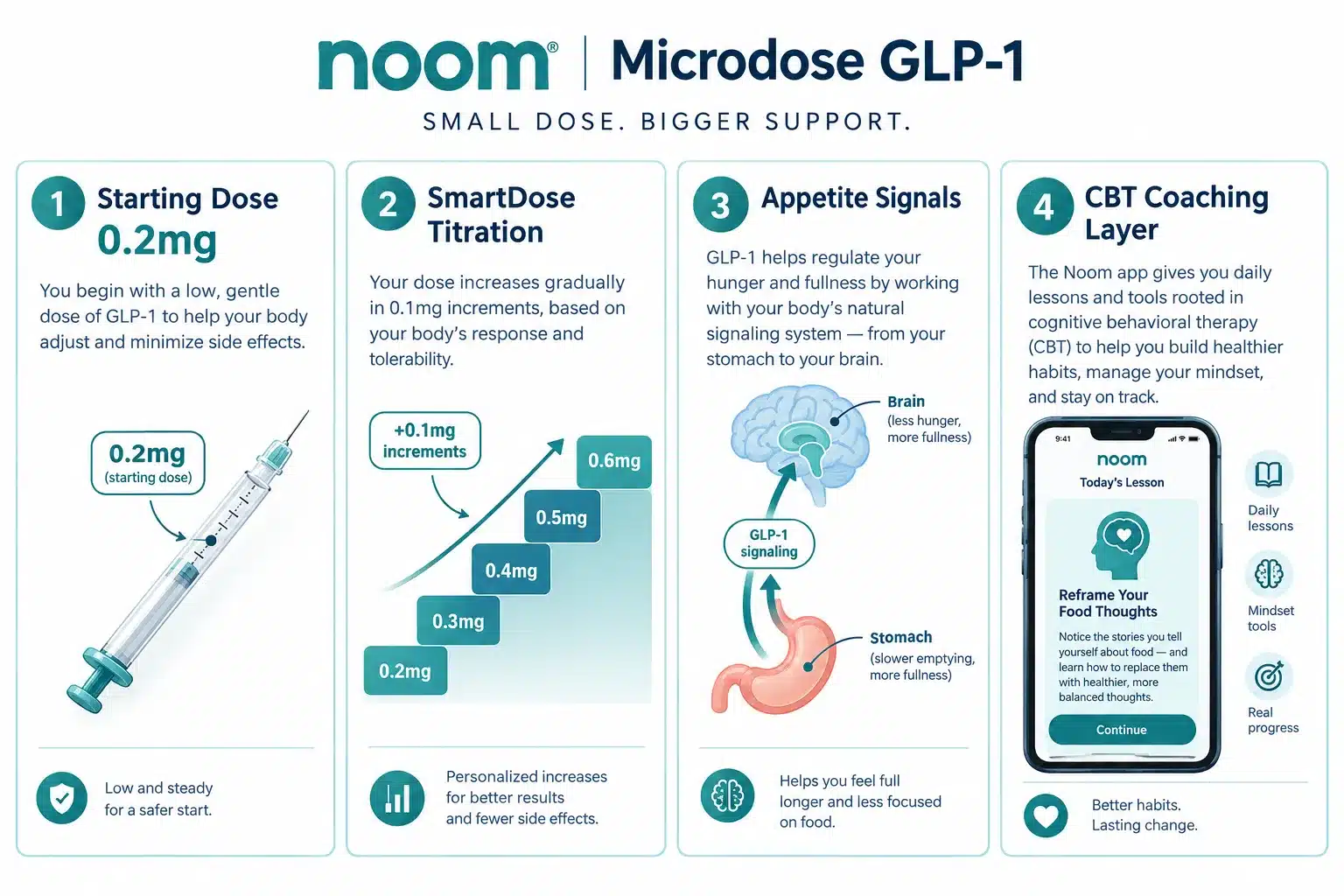
The program uses what Noom calls a “SmartDose” titration protocol. Here is how the dosing structure works:
- Starting dose: approximately 0.2 mg semaglutide per week
- Increments: doses increase by 0.1 mg at a time
- Maximum dose: approximately 0.6 mg, which is far below the 2.4 mg used in clinical obesity trials [9]
- Delivery: subcutaneous injection, typically self-administered weekly
Alongside the medication, subscribers get access to Noom’s app, which delivers short daily CBT-based lessons on eating habits, emotional triggers, and behavior change. A care team, including coaches and clinicians, is available through the app.
The theory behind microdosing is that even sub-clinical doses of GLP-1 receptor agonists can reduce appetite and improve metabolic signaling. However, obesity specialist Dr. Christopher McGowan has publicly described GLP-1 microdosing programs as “murky” and a “complete Wild West,” noting that this approach has not been tested in formal clinical trials and relies on extrapolation from higher-dose research. That is an important caveat to keep in mind when reading any noom microdose reviews.
For a broader look at how semaglutide works at various doses, see these semaglutide reviews covering real results and side effects.
Noom Microdose Reviews Reddit and Real User Experiences
Across Reddit threads and third-party review platforms, noom microdose reviews reflect a genuinely mixed picture, with meaningful success stories alongside real frustrations.
What positive reviewers say:
- Appetite reduction begins within the first one to two weeks for many users
- Several Reddit users report losing around 20 pounds over three months with few side effects
- Users frequently credit the bundled CBT coaching for helping them sustain habits beyond the medication’s direct effects
- Trustpilot reviewers describe the microdose option as “convenient and cost effective,” particularly for those who experienced harsh side effects on standard GLP-1 doses [1][3]
- One featured Noom success story describes Kelsey losing 18 pounds in 11 weeks and saying she “wished she had started sooner” [5]
What negative reviewers say:
- BBB complaints average just 1.1 out of 5 stars across 315 reviews as of late September 2026 [2]
- Some users report being routed to external pharmacies charging over $300 for medication, with costs not clearly disclosed upfront [2]
- One BBB reviewer discontinued after three weeks due to severe fatigue, reporting only about 3 pounds of weight loss; a second attempt led to constant headaches at higher titration levels [2]
- Multiple Trustpilot users report paying for GLP-1 medication but never receiving it, with the care team eventually going silent and no refund issued [3]
- Price increases after the trial period surprised some users, with costs reportedly jumping roughly 2.5 times within three weeks of the initial trial pricing [3]
The pattern: Users who receive their medication on time and engage consistently with the app tend to report positive outcomes. Those who encounter fulfillment or billing problems often have very poor experiences that overshadow any clinical benefit.
Is Noom Microdose Effective for Weight Loss
Noom Microdose can produce real weight loss for many users, but results are more modest than what standard-dose GLP-1 programs typically deliver. The evidence base is also thinner.
Noom’s chief medical officer Andreas Egler has stated that members in the microdosing program can lose up to 11 pounds in 30 days and up to 17 pounds in 60 days. Noom’s own success stories include members losing 16 pounds in 4 weeks and 32 pounds in 15 weeks, with users reporting reduced sugar cravings and better control over overeating [5][7].
Those figures come from Noom’s marketing materials, so independent corroboration matters. Anecdotal reports from Reddit and Trustpilot are broadly consistent with modest but real weight loss, particularly in the first 60 to 90 days [1].
Factors that influence effectiveness:
- Consistency with the CBT app lessons (users who skip the behavioral content report worse outcomes)
- Adherence to the titration schedule
- Diet and activity habits outside the program
- Individual metabolic response to low-dose semaglutide
Important note on the evidence gap: Because Noom Microdose uses doses well below those studied in clinical trials, there is no peer-reviewed data directly validating this specific dosing approach for weight loss. Results observed in users may reflect the behavioral coaching as much as the medication itself.
For comparison, see how tirzepatide reviews by patients describe outcomes at standard clinical doses, which tend to be more dramatic but also come with more pronounced side effects.
Noom Microdose vs Regular Noom App: Key Differences
Noom Microdose and the standard Noom app share the same behavioral coaching platform but differ in one fundamental way: the microdose program adds prescription GLP-1 medication.
| Feature | Standard Noom App | Noom Microdose GLP-1 |
|---|---|---|
| Medication included | No | Yes (compounded semaglutide) |
| CBT-based daily lessons | Yes | Yes |
| Food logging | Yes | Yes |
| Clinician access | No | Yes (via care team) |
| Dose titration support | N/A | Yes (SmartDose protocol) |
| Monthly cost (approx.) | Lower (app only) | Higher (medication bundled) |
The standard Noom app is suitable for people who want structured behavioral coaching without medication. Noom Microdose is designed for people who have struggled to lose weight through behavioral changes alone and want a pharmacological assist at a lower dose than standard GLP-1 programs.
Choose the standard app if: You want to build habits without medication, or if your BMI and health profile do not qualify you for GLP-1 therapy.
Choose Noom Microdose if: You want the behavioral framework plus appetite suppression, and you prefer a gentler titration than standard semaglutide programs offer.
For a direct comparison with another major competitor, Noom’s own analysis of Noom vs. Weight Watchers outlines how the behavioral approach differs from points-based diet programs [8].
Noom Microdose Cost and Pricing: Is It Worth the Money
Noom Microdose typically starts at around $99 for the first month, then increases to approximately $199 per month billed quarterly ($597 every three months), covering medication, coaching, and app access. Some users report being routed to external pharmacies for medication at costs exceeding $300, which was not clearly disclosed at signup [2].
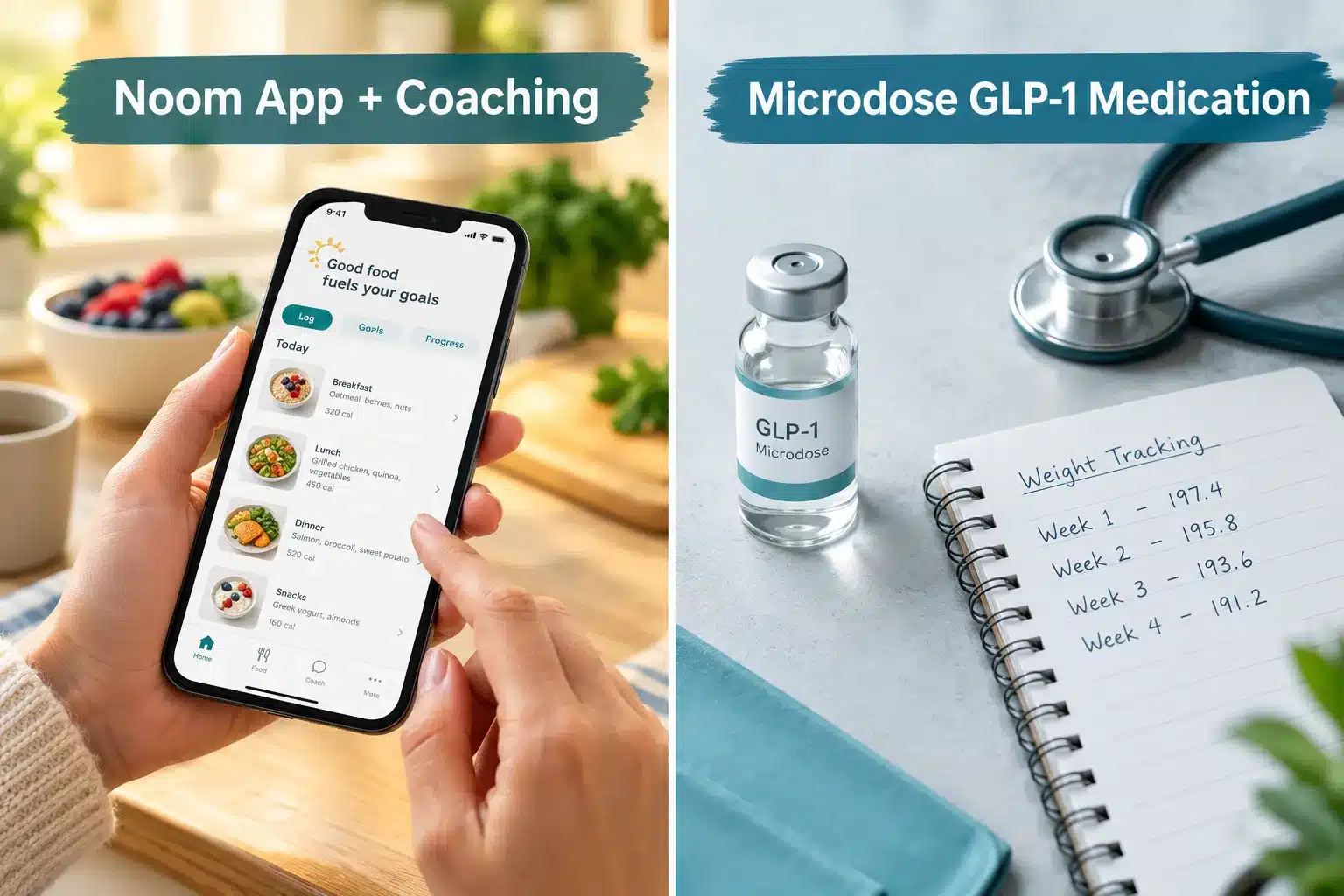
What the cost includes:
- Compounded semaglutide (in most cases)
- Access to the Noom CBT app with daily lessons
- Food logging and tracking tools
- Care team access (coaches and clinicians)
- Dose titration guidance
Is it worth the money? Forbes Health describes Noom Med as “helpful and supportive” but acknowledges it is relatively expensive compared with some alternatives [6]. For users who receive their medication reliably and engage with the coaching, the bundled value is reasonable. For users who hit fulfillment problems or billing surprises, the cost feels unjustifiable.
Comparison point: Standard-dose compounded semaglutide programs from other telehealth providers can cost less per month, though they typically do not include the same behavioral coaching layer. See our breakdown of the cheapest pharmacy options for semaglutide if cost is your primary concern.
A sharp price jump after the trial period is a recurring complaint in noom microdose reviews. Always read the billing terms before enrolling.
Noom Microdose Side Effects: What to Expect
Most users on the microdose protocol report milder side effects than those experienced with standard GLP-1 doses, but side effects are not absent. The slow titration protocol is specifically designed to reduce nausea, diarrhea, and fatigue [9].
Commonly reported side effects:
- Nausea (usually mild, especially in the first two to four weeks)
- Fatigue (one BBB reviewer discontinued after three weeks due to severe fatigue) [2]
- Headaches (reported at higher titration levels by some users) [2]
- Reduced appetite (intended effect, but can feel uncomfortable initially)
- Occasional digestive discomfort
Less common but reported:
- Dizziness
- Injection site reactions
- Mood changes
Side effects that warrant stopping: Severe fatigue, persistent headaches that do not resolve after dose adjustment, or any signs of pancreatitis (severe upper abdominal pain) should prompt a call to the care team or a primary care provider.
A note on GLP-1 medications while breastfeeding: Noom Microdose, like all GLP-1 medications, is not appropriate for people who are pregnant or breastfeeding. The safety of semaglutide while breastfeeding has not been established in clinical studies, and GLP-1 breastfeeding safety remains an open question in the medical literature. If you are postpartum and considering GLP-1 weight loss while breastfeeding, speak with your OB or primary care provider before starting any GLP-1 program, including microdose options. Tirzepatide while breastfeeding carries the same unresolved safety concerns.
Does Noom Microdose Actually Work: Noom Microdose Reviews Verdict
For many users, yes, Noom Microdose produces real results. For others, logistical and billing problems prevent them from ever finding out. The honest answer is that the clinical mechanism is plausible but not yet proven at microdose levels, and real-world outcomes depend heavily on execution.
Evidence in favor:
- Noom’s internal data shows up to 11 pounds lost in 30 days and 17 pounds in 60 days
- Multiple Trustpilot reviewers describe consistent weight loss, reduced cravings, and improved health markers [1][4]
- The slow titration protocol does appear to reduce the severity of side effects compared with standard dosing [9]
- The CBT coaching component has independent support in behavioral science literature for sustaining weight loss
Evidence against (or reasons for caution):
- No formal clinical trial data exists for GLP-1 microdosing at these specific doses
- BBB complaints are numerous and serious, particularly around medication access and billing [2]
- Some users report minimal weight loss even after completing multiple titration cycles [2]
- Results from Noom’s success stories are self-selected and may not reflect average outcomes
Bottom line: Noom Microdose works for a meaningful subset of users, particularly those who engage with the behavioral coaching and receive their medication without issues. It is not a guaranteed outcome, and the lack of clinical trial data for microdosing specifically is a legitimate limitation.
Noom Microdose Results Timeline: What to Expect Week by Week
Most users who respond to Noom Microdose begin noticing appetite changes within the first two weeks. Visible weight loss typically starts in weeks three to four.
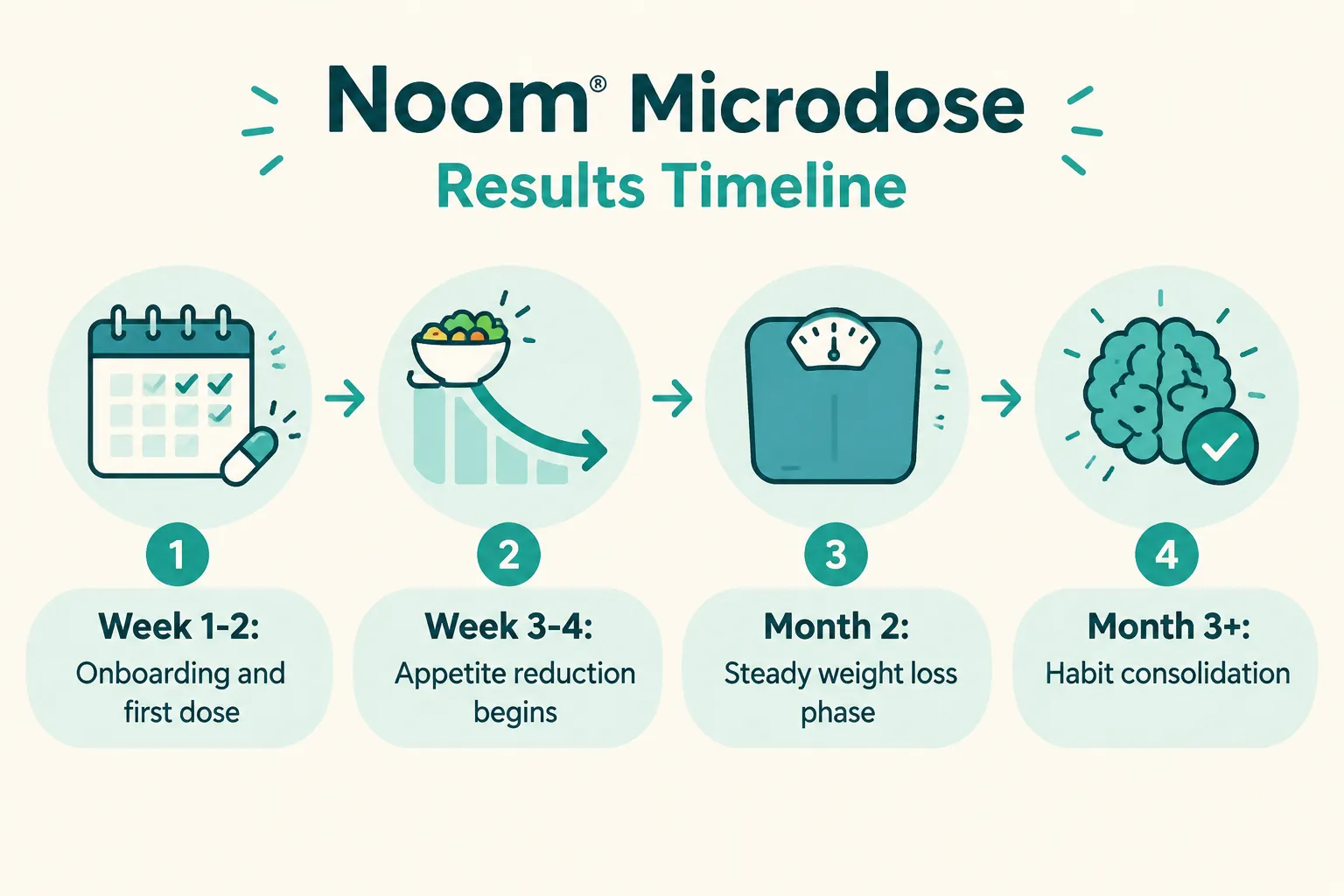
Typical progression:
- Weeks 1-2: Onboarding, first dose at 0.2 mg, mild side effects possible, appetite begins to shift for some users
- Weeks 3-4: Appetite suppression more consistent, food logging habits forming, early weight loss of 2 to 4 pounds reported by some users
- Month 2: Dose may increase to 0.3-0.4 mg, steady weight loss phase, CBT lessons reinforcing habit change
- Month 3 and beyond: Continued titration up to 0.6 mg if tolerated, cumulative weight loss of 10 to 20 pounds reported by engaged users
Noom’s own data frames 30 days as a meaningful milestone (up to 11 pounds) and 60 days as a point where results become more pronounced (up to 17 pounds). These are upper-range figures, not averages.
Realistic expectation: A loss of 1 to 2 pounds per week is a reasonable target for users who are also following the app’s dietary guidance. Users who treat the medication as the only intervention and ignore the coaching tend to see slower progress.
Who Should Use Noom Microdose
Noom Microdose is best suited for adults with a BMI of 27 or higher who have struggled to lose weight through diet and exercise alone, particularly those who found standard GLP-1 doses too harsh.
Good candidates:
- Adults with a BMI of 27 or above, especially with weight-related health conditions
- People who experienced significant nausea or fatigue on standard semaglutide doses
- Those who want a structured behavioral program alongside medication, not just a prescription
- People comfortable with a telehealth-only model and digital coaching
Not a good fit for:
- People who are pregnant, planning pregnancy, or breastfeeding (GLP-1 medications while breastfeeding are not considered safe)
- Those with a personal or family history of medullary thyroid carcinoma or MEN2 syndrome
- People who need in-person clinical oversight
- Those with a history of pancreatitis
- Anyone primarily motivated by cost, since cheaper standalone GLP-1 programs exist
For those interested in how compounded GLP-1 programs compare more broadly, our compounded semaglutide reviews from real patients provide useful context.
Noom Microdose Common Mistakes and What to Do If It Is Not Working
The most common reason Noom Microdose underperforms is that users treat it as a medication-only solution and skip the behavioral coaching. The CBT app is not optional decoration; it is the mechanism through which many users sustain weight loss beyond the medication phase.
Common mistakes:
- Skipping daily lessons and using only the food log
- Not reporting side effects to the care team (dose adjustments can help)
- Expecting dramatic weight loss in the first two weeks
- Ignoring the titration schedule or pushing for faster dose increases
- Not reading billing terms before the trial period ends
If Noom Microdose is not working for you:
- Check whether you are completing the CBT lessons consistently, not just logging food
- Contact the care team about a dose adjustment if side effects are limiting your adherence
- Reassess your dietary habits alongside the program, since medication alone rarely produces optimal results
- If medication has not arrived within the expected window, escalate in writing through the app and document your communications
- If billing issues arise, file a complaint with the BBB and contact your credit card company if charges are unauthorized
When to consider an alternative: If you have been on the program for 60 days with minimal weight loss and no side effects (meaning the medication is being tolerated but not producing results), a higher-dose standard GLP-1 program may be more appropriate. See our Hims weight loss review for one alternative, or explore Ivy Rx GLP-1 compounded options for another telehealth approach.
Noom Microdose vs Other Weight Loss Apps and Programs
Noom Microdose occupies a specific niche: it is more medically involved than pure behavior-change apps but uses lower doses than most telehealth GLP-1 prescribers.
Compared with standard GLP-1 telehealth programs (e.g., Ro, Hims):
- Noom Microdose uses significantly lower doses (0.2-0.6 mg vs. 0.5-2.4 mg for standard semaglutide programs) [9]
- The behavioral coaching layer is more developed and structured than most competitors
- Pricing is comparable but can be higher when external pharmacy costs are factored in [2][6]
- Standard programs may produce faster weight loss but with more pronounced side effects
Compared with behavior-only apps (e.g., Weight Watchers, MyFitnessPal):
- Noom Microdose adds a pharmacological component that behavior-only apps cannot offer
- The CBT framework in Noom is more clinically grounded than points-based or calorie-counting systems
- Cost is substantially higher than app-only subscriptions
Compared with standard-dose Noom Med:
- Microdose is the gentler entry point; standard Noom Med uses higher semaglutide doses for faster results
- Users who tolerate the microdose well may eventually transition to standard dosing if needed
For those exploring semaglutide tablet formulations as an alternative to injections, our semaglutide tablets reviews cover that emerging option in detail.
7 Best GLP-1 Providers Ranked: Accreditation, Flexibility & Support Compared (2026 Update)
32,000+ Patients Can't All Be Wrong: See the Top-Rated GLP-1 Providers: Compared on accreditation, plan flexibility, and patient support — updated for 2026.
BMI MD GLP-1 Microdosing Plan
- Specialized microdosing options (sublingual drops or low-dose injections)
- Ideal for maintaining weight or tapering off higher doses safely
- Fully bundled plan with no hidden monthly platform memberships
DirectMeds Weight Loss Solutions
- Sourced from accredited, state-licensed 503A compounding pharmacies
- No-frills high-volume savings passed directly to the patient
- Includes clinical consultation and cold-chain shipping updates
MEDVi Flat-Rate Telehealth
- Flat monthly rate holds steady even at maximum maintenance doses
- No dosage upcharges or graduation fee penalties
- Offers both injectable and advanced oral thin-film delivery options
Gala GLP-1 Care Program
- All-inclusive plan with no standalone membership costs
- Continuous text-based messaging access with state-licensed clinicians
- Temperature-controlled, cold-chain medication shipping included
Measured GLP-1 Metabolic Health
- Comprehensive metabolic health screening and expert intake analysis
- Predictable long-term budgeting with stable plan pricing
- High-end responsive dashboard with integrated diagnostic support
Refills GLP-1 (TryRefills Plan)
- Flat rate holds steady as titration scales up
- Includes clinical guides for active side-effect management
- Bundles in foundational nutritional strategies alongside medication
AltRx GLP-1 Transactional Reorders
- Zero recurring auto-billing — pay entirely on a transactional basis
- Rapid text-to-order format saves time for experienced patients
- Provides both injectable forms and fast-dissolving tablet variations
Conclusion: Should You Try Noom Microdose in 2026
Noom Microdose GLP-1 is a legitimate, structured program that combines low-dose compounded semaglutide with one of the most developed behavioral coaching platforms in the telehealth weight loss space. For users who receive their medication reliably and engage with the CBT content, real weight loss is achievable, with many reporting 10 to 20 pounds lost over two to three months.
That said, the program has real weaknesses. The lack of clinical trial data for microdosing specifically is a genuine scientific gap, not just a marketing footnote. BBB complaints about billing surprises and medication fulfillment failures are too numerous to dismiss. And the cost, once past the trial period, is meaningful.
Actionable next steps:
- Read the billing terms in full before starting the trial, paying particular attention to what happens after month one
- Set a 30-day checkpoint: if your medication has not arrived or the care team is unresponsive, escalate immediately
- Commit to the CBT lessons, not just the medication, for the first 60 days before judging whether the program works
- If you are postpartum or breastfeeding, do not start any GLP-1 program, including microdose options, without explicit clearance from your OB or primary care provider
- Compare total costs against alternatives before committing to a quarterly billing cycle
Noom Microdose reviews in 2026 tell a story of real potential alongside real execution risk. Go in with clear expectations, read the fine print, and treat the behavioral coaching as non-negotiable.
Frequently Asked Questions
What is Noom Microdose GLP-1?
Noom Microdose GLP-1 is a telehealth program that prescribes low-dose compounded semaglutide (starting at 0.2 mg) alongside Noom’s CBT-based weight loss app and care team coaching. It is designed to produce appetite suppression with fewer side effects than standard GLP-1 doses.
How much does Noom Microdose cost?
The program typically starts at around $99 for the first month, then rises to approximately $199 per month billed quarterly. Some users have reported additional pharmacy costs exceeding $300 that were not clearly disclosed upfront [2].
Is Noom Microdose safe?
For most healthy adults who qualify, the program is considered safe. However, GLP-1 microdosing lacks formal clinical trial data at these specific doses. Side effects including fatigue, headaches, and nausea have been reported [2][9]. It is not safe for people who are pregnant, breastfeeding, or have certain thyroid or pancreatic conditions.
Can you take semaglutide while breastfeeding?
No. Semaglutide while breastfeeding is not recommended. GLP-1 breastfeeding safety has not been established, and both semaglutide and tirzepatide while breastfeeding should be avoided until more safety data exists. Consult your doctor before starting any GLP-1 program postpartum.
How long does it take to see results with Noom Microdose?
Most users begin noticing appetite changes within one to two weeks. Visible weight loss typically starts in weeks three to four. Noom’s data suggests up to 11 pounds in 30 days and up to 17 pounds in 60 days, though these are upper-range figures.
What do Reddit users say about Noom Microdose?
Reddit discussions generally reflect meaningful appetite reduction and gradual weight loss, with some users reporting around 20 pounds lost over three months. Side effects are described as milder than standard GLP-1 programs. Cost and billing transparency are the most common criticisms.
Is Noom Microdose worth it?
It depends on your priorities. If you value a structured behavioral program alongside medication and can afford the ongoing cost, many users find it worthwhile. If cost is your primary concern or you need faster results, a standard-dose GLP-1 program may be a better fit.
What happens if Noom Microdose stops working?
First, check whether you are engaging with the CBT coaching consistently. If side effects are limiting adherence, contact the care team about a dose adjustment. If results plateau after 60 to 90 days, discuss transitioning to a higher dose or a different program with your clinician.
How does Noom Microdose compare to standard semaglutide?
Noom Microdose uses doses of 0.2 to 0.6 mg, far below the 0.5 to 2.4 mg used in standard clinical programs. This means milder side effects for most users but also potentially slower or less pronounced weight loss [9].
Who is Noom Microdose not for?
It is not appropriate for people who are pregnant, breastfeeding, or planning pregnancy; those with a history of medullary thyroid carcinoma or MEN2 syndrome; people with pancreatitis; or those who need in-person medical supervision.
References
[1] Noom – https://www.trustpilot.com/review/noom.com
[2] Customer Reviews – https://www.bbb.org/us/ny/new-york/profile/health-and-wellness/noom-inc-0121-150555/customer-reviews
[3] Noom – https://nz.trustpilot.com/review/noom.com?page=10
[4] Noom – https://au.trustpilot.com/review/noom.com?page=2
[5] Noom Microdose GLP1RX Review – https://www.noom.com/blog/weight-management/noom-microdose-glp1rx-review/
[6] Noom Med Review – https://www.forbes.com/health/weight-loss/noom-med-review/
[7] GLP1 Microdose – https://www.noom.com/med/glp1-microdose/
[8] Noom vs Weight Watchers – https://www.noom.com/blog/weight-management/noom-vs-weight-watchers/
[9] Ro vs Noom – https://www.giftfromwithin.org/ro-vs-noom/
[10] Noom Cost – https://www.noom.com/blog/weight-management/noom-cost-2/