tirzepatide without insurance
Last updated: October 1, 2026
Quick Answer
Getting tirzepatide without insurance is possible, but it requires knowing where to look. Branded Zepbound (tirzepatide for weight loss) can cost over $1,000 per month at standard retail pharmacies, but Lilly’s self-pay program through LillyDirect brings that down to roughly $299 to $449 per month for uninsured patients. Compounded tirzepatide from licensed pharmacies typically runs $119 to $299 per month and is the most affordable option for many people.
Key Takeaways
- Tirzepatide without insurance costs over $1,000 per month at most retail pharmacies at list price.
- LillyDirect’s self-pay program for Zepbound offers structured cash pricing starting around $299 to $449 per month for uninsured patients.
- The $25 Zepbound Savings Card is not available to uninsured patients; it is only for commercially insured individuals.
- Compounded tirzepatide typically costs $119 to $299 per month and is the most budget-friendly path for those without coverage.
- GoodRx can show discounts on tirzepatide, but prices vary widely and may not beat LillyDirect’s self-pay rates.
- Mounjaro (tirzepatide for diabetes) has no current manufacturer patient assistance program for uninsured patients, making it harder to afford.
- A tiered strategy works best: start with LillyDirect self-pay, then compare compounding pharmacies, then check GoodRx.
- Telehealth platforms can reduce prescription costs by eliminating traditional office visit fees.
- Insurance coverage for Zepbound remains inconsistent in 2026, and many plans still exclude it.
- Compounded tirzepatide carries regulatory caveats; always use an FDA-registered compounding pharmacy.
What Is Tirzepatide and How Does It Work
Tirzepatide is a dual-action injectable medication that targets two hormone receptors simultaneously: GIP (glucose-dependent insulinotropic polypeptide) and GLP-1 (glucagon-like peptide-1). This dual mechanism sets it apart from semaglutide, which targets only GLP-1. By activating both receptors, tirzepatide reduces appetite, slows stomach emptying, and improves blood sugar regulation.
7 Best GLP-1 Providers Ranked: Accreditation, Flexibility & Support Compared (2026 Update)
32,000+ Patients Can't All Be Wrong: See the Top-Rated GLP-1 Providers. We compared the leading online GLP-1 providers based on program features, clinical support, convenience, and overall value.
BMI MD GLP-1 Microdosing Plan
- Specialized microdosing options, including sublingual drops and low-dose injections
- Designed for people interested in maintaining weight or gradually adjusting treatment
- Bundled program structure without a separate monthly platform membership
- Online access makes the process convenient from home

DirectMeds Weight Loss Solutions
- Online weight-loss program with a straightforward patient experience
- Compounded medication options through state-licensed compounding pharmacies
- Includes clinical consultation as part of the process
- Provides shipping updates to help patients track their orders
MEDVi Flat-Rate Telehealth
- Flat-rate telehealth approach designed for easier budgeting
- No dosage-based pricing increases within the advertised program structure
- Offers injectable and oral thin-film delivery options
- Includes medical screening and asynchronous provider consultations
Gala GLP-1 Care Program
- Text-based access to state-licensed clinicians
- Cold-chain medication shipping included in the program
- Month-to-month program structure
- Designed for people who value convenient ongoing support
Measured GLP-1 Metabolic Health
- Comprehensive metabolic health screening and intake analysis
- Designed around longer-term metabolic health management
- Responsive dashboard with integrated health tracking tools
- Useful option for patients who value a more data-focused experience
Refills GLP-1 (TryRefills Plan)
- Clinical guidance designed to help patients manage common treatment concerns
- Includes foundational nutritional strategies alongside medication
- Designed around predictable ongoing treatment
- No hidden startup or processing fees according to the program information provided
AltRx GLP-1 Transactional Reorders
- Transactional reorder model without recurring auto-billing
- Designed for patients who already understand their treatment routine
- Fast text-to-order process for convenient reorders
- Offers injectable and fast-dissolving tablet variations
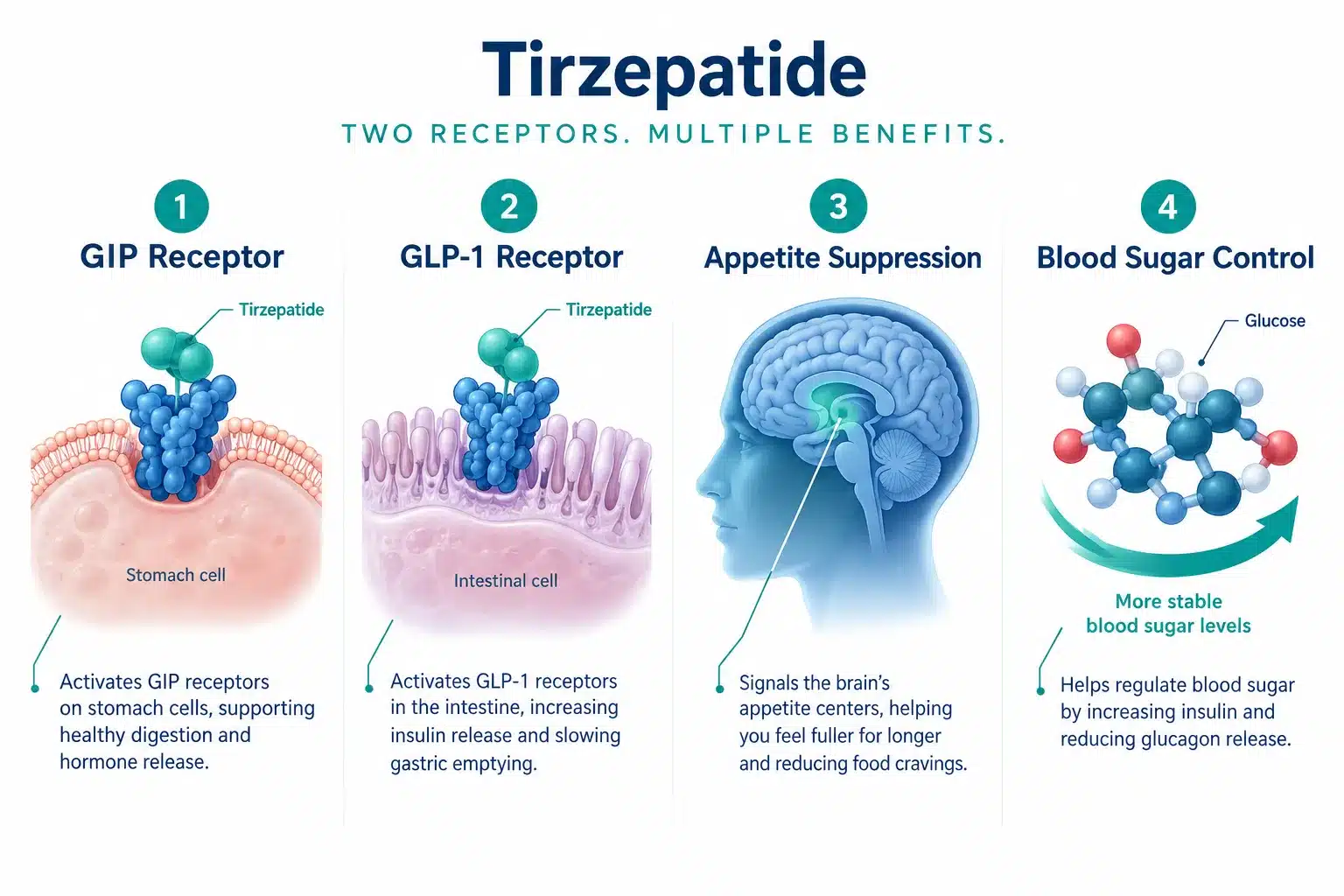
Eli Lilly manufactures tirzepatide under two brand names. Mounjaro is approved for type 2 diabetes management. Zepbound received FDA approval in late 2023 specifically for chronic weight management in adults with obesity or weight-related conditions. Clinical trials published in the New England Journal of Medicine showed participants losing an average of 15 to 22 percent of their body weight over 72 weeks, depending on the dose.
Who it’s for: Adults with a BMI of 30 or higher, or a BMI of 27 or higher with at least one weight-related condition such as high blood pressure, type 2 diabetes, or sleep apnea.
How it’s given: Tirzepatide is a once-weekly subcutaneous injection. Doses start low (typically 2.5 mg) and increase gradually over several months to reduce side effects. The maximum approved dose is 15 mg per week.
For a deeper look at patient experiences with this medication, see these tirzepatide reviews by patients.
How Much Does Tirzepatide Cost Without Insurance
The cost of tirzepatide without insurance depends heavily on which version you buy and where you buy it. At standard retail pharmacies, the list price for a month’s supply of Zepbound exceeds $1,000, and Mounjaro is similarly priced [4].
Here is a practical breakdown:
| Option | Estimated Monthly Cost |
|---|---|
| Zepbound (retail, no discount) | $1,000 to $1,200+ |
| Zepbound via LillyDirect self-pay | $299 to $449 |
| Compounded tirzepatide | $119 to $299 |
| Mounjaro (retail, no discount) | $1,000 to $1,200+ |
LillyDirect, Eli Lilly’s direct-to-patient platform, offers a structured self-pay pricing program for Zepbound. Uninsured patients can access this program directly, which brings the monthly cost down significantly compared to retail [2]. This is currently the most affordable path to branded tirzepatide for people without insurance coverage.
Important caveat: The widely advertised $25 Zepbound Savings Card is not available to uninsured patients. It applies only to commercially insured individuals whose insurance does not cover the drug. Uninsured patients must use the cash self-pay pricing instead [1][5].
For a full breakdown of monthly costs across different access points, see this tirzepatide monthly cost guide.
Where Can I Get Tirzepatide Without Insurance
Uninsured patients have three main channels for accessing tirzepatide: LillyDirect, compounding pharmacies, and traditional retail pharmacies with discount tools.
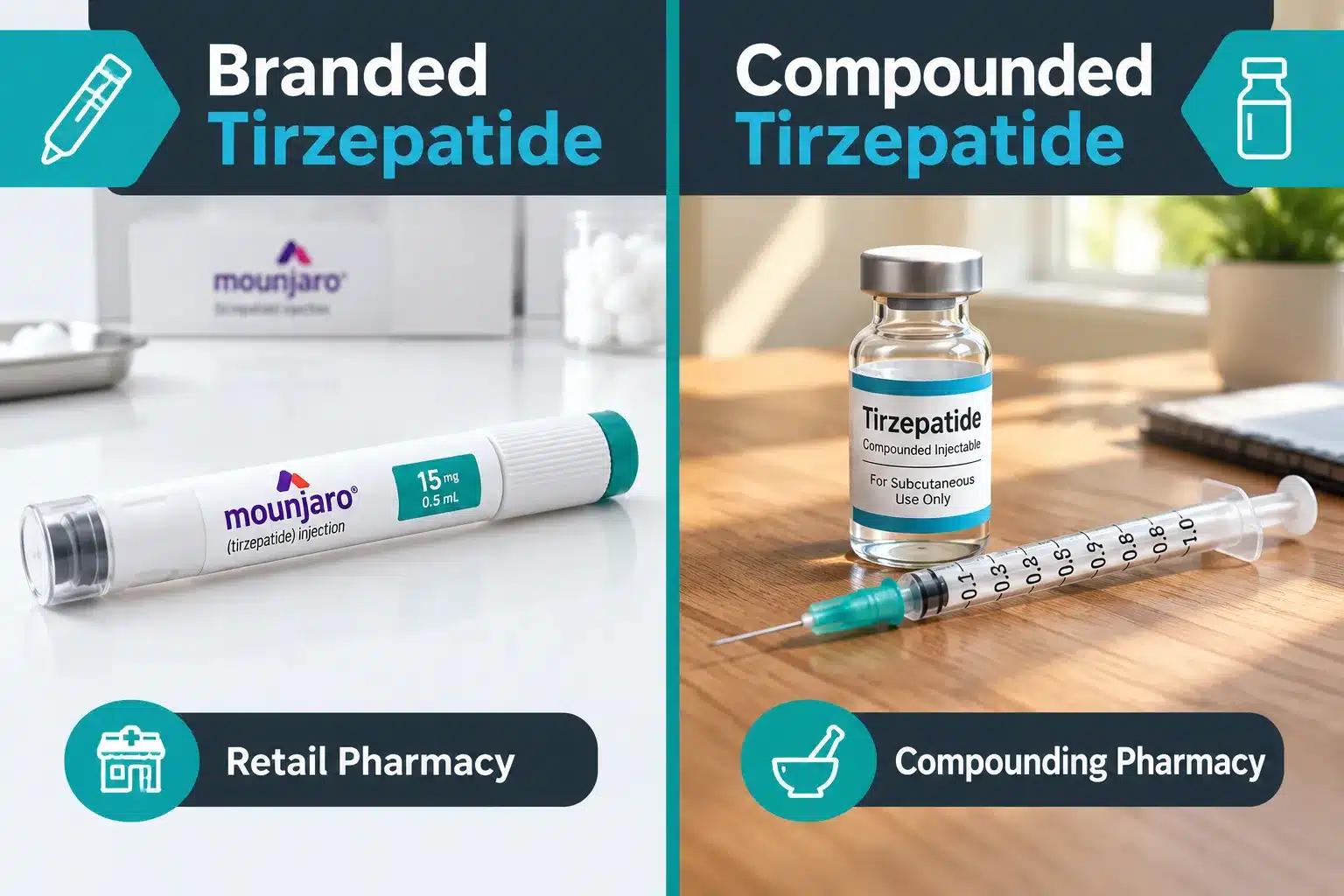
1. LillyDirect Self-Pay Program
This is Eli Lilly’s official direct-to-patient program. You get a prescription from a licensed provider, fill it through LillyDirect’s partner pharmacy network, and pay the self-pay cash price. No insurance is required, and no coupon card is needed. As of late 2026, pricing starts around $299 per month for lower doses [2][8].
2. Compounding Pharmacies
Licensed compounding pharmacies can legally prepare tirzepatide at lower concentrations and lower costs. Prices typically range from $119 to $299 per month. This is the most affordable option, but it comes with caveats (discussed in the compounded tirzepatide section below).
3. Retail Pharmacies with Discount Tools
Standard pharmacies like CVS, Walgreens, and Costco carry Zepbound and Mounjaro, but without a discount program, you pay full list price. GoodRx and similar tools can reduce this somewhat, though they rarely match LillyDirect’s self-pay rates [9].
4. Telehealth Platforms
Services like Hims, Ro, and Found connect patients with prescribers online, often at lower consultation fees than traditional clinics. Many also partner with compounding pharmacies to streamline the process.
Tirzepatide vs Ozempic Cost Comparison
For uninsured patients, tirzepatide and semaglutide (Ozempic/Wegovy) are in a similar price range, but tirzepatide may offer slightly better value per pound of weight lost based on clinical trial data.
- Ozempic (semaglutide for diabetes): Retail list price around $900 to $1,000 per month without insurance.
- Wegovy (semaglutide for weight loss): Retail list price around $1,300 to $1,600 per month without insurance.
- Zepbound (tirzepatide for weight loss): Retail list price over $1,000, but LillyDirect self-pay brings it to $299 to $449.
- Compounded semaglutide: Roughly $150 to $350 per month, similar to compounded tirzepatide.
The key difference in 2026 is that Lilly’s self-pay program for Zepbound is more structured and accessible than Novo Nordisk’s equivalent for Wegovy. If you’re comparing these two medications on cost alone, Zepbound via LillyDirect currently has an edge for uninsured patients. For more context, see this semaglutide without insurance costs and savings guide.
Does GoodRx Work for Tirzepatide Without Insurance
GoodRx does list prices for tirzepatide, but its discounts are inconsistent and often do not beat the LillyDirect self-pay rate. GoodRx works by negotiating with pharmacy benefit managers, and the resulting price varies by pharmacy location and dose.
In practice, GoodRx prices for a month of Zepbound have ranged from around $800 to over $1,000 at major retail pharmacies, which is significantly higher than LillyDirect’s self-pay program [9]. GoodRx is more useful for medications where manufacturer programs are limited or unavailable.
When GoodRx makes sense for tirzepatide:
- You cannot access LillyDirect for logistical reasons.
- You need a one-time fill while waiting for a self-pay account to process.
- Your local pharmacy offers an unusually low GoodRx price worth checking.
For a detailed look at GoodRx options alongside Mounjaro specifically, see this guide on GoodRx Mounjaro coupons and semaglutide prescriptions without insurance.
Tirzepatide Generic Version and Compounded Options
There is no FDA-approved generic tirzepatide as of 2026. Lilly’s patents on tirzepatide are expected to protect the branded product for several more years. However, compounded tirzepatide is legally available through 503A and 503B compounding pharmacies.
Compounded tirzepatide key facts:
- Typically costs $119 to $299 per month depending on dose and provider.
- Prepared from tirzepatide API (active pharmaceutical ingredient) by licensed pharmacies.
- Not FDA-approved as a finished drug product, but legal when compounded by registered facilities.
- Quality and potency can vary between compounders, so pharmacy selection matters.
For guidance on finding a reputable provider, see this best compounding pharmacy for tirzepatide guide. You can also explore the tirzepatide compounding pharmacy cost guide for a full price comparison across providers.
Common mistake: Choosing the cheapest compounder without verifying their accreditation. Always confirm the pharmacy is PCAB-accredited or registered with the FDA as a 503B outsourcing facility.
Does Tirzepatide Have Patient Assistance Programs
Patient assistance options for tirzepatide are limited for uninsured patients, particularly for Mounjaro. As of 2026, Eli Lilly does not offer a traditional patient assistance program (PAP) for Mounjaro that covers uninsured individuals [3]. Zepbound’s savings card is restricted to commercially insured patients [1][5].
What is available:
- LillyDirect self-pay pricing for Zepbound is the closest thing to a structured assistance program for uninsured patients.
- Lilly Cares Foundation may offer limited assistance for qualifying low-income patients, but eligibility criteria are strict and the application process takes time.
- State pharmaceutical assistance programs vary by state and are worth checking if you have limited income.
- Charitable clinics and federally qualified health centers (FQHCs) sometimes have access to discounted medications through the 340B drug pricing program.
Edge case: If you have Medicare or Medicaid, you are explicitly excluded from manufacturer savings cards, but you may qualify for different assistance programs. Check with your plan directly [6][7].
How to Get Tirzepatide Prescribed Cheaply
Getting a tirzepatide prescription affordably requires minimizing both the prescription cost and the consultation cost. Here is a practical step-by-step approach:
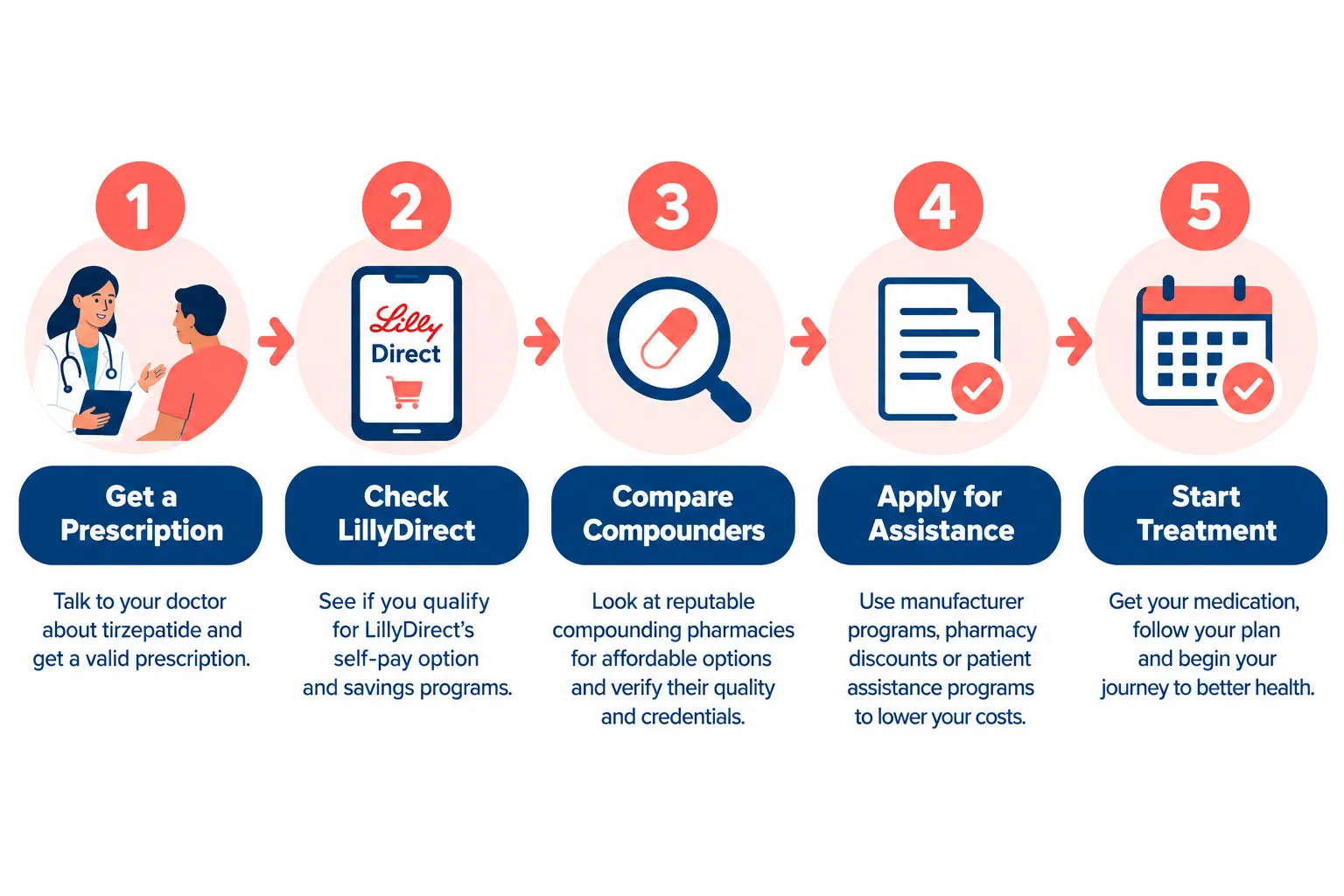
- Use a telehealth platform. Services like Found, Ro, or Calibrate charge $50 to $150 for an initial consultation, compared to $200 to $400 at a traditional obesity medicine clinic. Many can prescribe tirzepatide if you qualify.
- Request Zepbound, not Mounjaro, if weight loss is your goal. Zepbound has access to LillyDirect self-pay pricing; Mounjaro does not have an equivalent program for uninsured patients.
- Ask specifically about LillyDirect self-pay. Not all prescribers will mention this automatically. Ask your provider to send the prescription to a LillyDirect partner pharmacy.
- Compare compounding pharmacies. If LillyDirect’s price is still too high, get quotes from two or three PCAB-accredited compounders before committing.
- Check if your state has a pharmaceutical assistance program for residents below a certain income threshold.
For a broader look at accessing GLP-1 medications without insurance, see this GLP-1 without insurance overview.
What Are the Side Effects of Tirzepatide
Tirzepatide is generally well-tolerated, but side effects are common, especially during dose escalation. Most are gastrointestinal and tend to improve after the first few weeks at each dose level.
Most common side effects:
- Nausea (most frequently reported, especially at the start)
- Diarrhea or constipation
- Vomiting
- Decreased appetite (this is also the intended effect)
- Injection site reactions
Less common but serious side effects:
- Pancreatitis (rare; seek care if you have severe abdominal pain)
- Gallbladder problems, including gallstones
- Increased heart rate
- Kidney injury (usually secondary to dehydration from GI symptoms)
- Risk of thyroid C-cell tumors (observed in animal studies; not confirmed in humans, but tirzepatide carries a black box warning)
Who should not use tirzepatide:
- People with a personal or family history of medullary thyroid carcinoma (MTC)
- Those with Multiple Endocrine Neoplasia syndrome type 2 (MEN 2)
- Pregnant or breastfeeding individuals
- People with a history of severe GI disease
Always discuss your full medical history with a prescriber before starting. The cost savings from going uninsured should never mean skipping a proper medical evaluation.
Is Tirzepatide Worth the Cost Without Insurance
For many people, yes. Tirzepatide produces some of the strongest weight loss results of any approved medication, and the health benefits of sustained weight loss, including reduced cardiovascular risk, improved blood sugar control, and better mobility, have long-term economic value.
Consider the math: If you access Zepbound through LillyDirect at $349 per month, that is $4,188 per year. Compared to the long-term costs of obesity-related conditions (medications for diabetes, hypertension, and sleep apnea can easily exceed $3,000 to $5,000 annually), tirzepatide may actually reduce total healthcare spending over time.
When it may not be worth it:
- You cannot sustain the monthly cost for at least 6 to 12 months, which is the minimum timeframe to see meaningful results.
- You have contraindications that make the medication unsafe.
- You haven’t yet tried structured lifestyle interventions, which are free and should be the foundation of any weight management plan.
Choose tirzepatide if: You have tried diet and exercise consistently for 6 or more months without achieving clinically meaningful weight loss, and you do not have contraindications. The clinical evidence for tirzepatide’s effectiveness is among the strongest in the weight loss medication category.
Tirzepatide Alternatives That Are Cheaper
If tirzepatide’s cost remains a barrier even with self-pay programs, several alternatives are worth considering.
Lower-cost GLP-1 alternatives:
- Compounded semaglutide: Similar price range to compounded tirzepatide ($150 to $350/month), with strong clinical evidence for weight loss.
- Oral semaglutide (Rybelsus): Approved for type 2 diabetes; some telehealth platforms prescribe it off-label for weight loss at lower cost.
- Metformin: Very inexpensive (often under $10/month generic), but produces modest weight loss compared to GLP-1 medications.
- Phentermine/topiramate (Qsymia): Generic versions are available for $50 to $100 per month and can produce meaningful weight loss in some patients.
- Naltrexone/bupropion (Contrave): Generic versions available; moderate weight loss results.
Important: None of these alternatives match tirzepatide’s clinical weight loss results, but they may be appropriate stepping stones if cost is a hard constraint. For more on GLP-1 cost comparisons, see this cost of GLP-1 semaglutide and compounded tirzepatide breakdown.
Tirzepatide Dosage and How Long It Lasts
Tirzepatide is a once-weekly injection. Each dose lasts approximately seven days, which is why it is dosed weekly rather than daily.
Standard dosing schedule:
- Starting dose: 2.5 mg once weekly for 4 weeks
- Maintenance doses: Increase by 2.5 mg every 4 weeks as tolerated
- Available doses: 2.5 mg, 5 mg, 7.5 mg, 10 mg, 12.5 mg, 15 mg
- Maximum dose: 15 mg once weekly
Most patients reach their effective maintenance dose between 5 mg and 10 mg. The 15 mg dose is reserved for patients who need additional effect and tolerate lower doses well. Dose escalation is gradual specifically to reduce nausea and GI side effects.
How long until results: Most patients notice appetite suppression within the first two to four weeks. Meaningful weight loss (5 percent or more of body weight) typically occurs within the first three months. Maximum results are usually seen at 12 to 18 months of consistent use.
7 Best GLP-1 Providers Ranked: Accreditation, Flexibility & Support Compared (2026 Update)
32,000+ Patients Can't All Be Wrong: See the Top-Rated GLP-1 Providers: Compared on accreditation, plan flexibility, and patient support — updated for 2026.
BMI MD GLP-1 Microdosing Plan
- Specialized microdosing options (sublingual drops or low-dose injections)
- Ideal for maintaining weight or tapering off higher doses safely
- Fully bundled plan with no hidden monthly platform memberships
DirectMeds Weight Loss Solutions
- Sourced from accredited, state-licensed 503A compounding pharmacies
- No-frills high-volume savings passed directly to the patient
- Includes clinical consultation and cold-chain shipping updates
MEDVi Flat-Rate Telehealth
- Flat monthly rate holds steady even at maximum maintenance doses
- No dosage upcharges or graduation fee penalties
- Offers both injectable and advanced oral thin-film delivery options
Gala GLP-1 Care Program
- All-inclusive plan with no standalone membership costs
- Continuous text-based messaging access with state-licensed clinicians
- Temperature-controlled, cold-chain medication shipping included
Measured GLP-1 Metabolic Health
- Comprehensive metabolic health screening and expert intake analysis
- Predictable long-term budgeting with stable plan pricing
- High-end responsive dashboard with integrated diagnostic support
Refills GLP-1 (TryRefills Plan)
- Flat rate holds steady as titration scales up
- Includes clinical guides for active side-effect management
- Bundles in foundational nutritional strategies alongside medication
AltRx GLP-1 Transactional Reorders
- Zero recurring auto-billing — pay entirely on a transactional basis
- Rapid text-to-order format saves time for experienced patients
- Provides both injectable forms and fast-dissolving tablet variations
Conclusion
Getting tirzepatide without insurance is genuinely achievable in 2026, but it requires a deliberate strategy rather than just walking into a pharmacy and paying the sticker price. The retail list price of over $1,000 per month is not the only option.
Your practical action plan:
- Start with LillyDirect. If you want branded Zepbound, the self-pay program at $299 to $449 per month is your best starting point. Get a prescription through a telehealth platform to keep consultation costs low.
- Compare compounding pharmacies if LillyDirect’s price is still out of reach. Stick to PCAB-accredited or 503B-registered facilities and expect to pay $119 to $299 per month.
- Skip the $25 savings card if you are uninsured. It does not apply to you, and pursuing it will waste time.
- Check GoodRx as a backup, not a primary strategy. It rarely beats LillyDirect for tirzepatide.
- Revisit your insurance options. If you are uninsured by choice or circumstance, a marketplace plan that covers Zepbound could make the medication effectively free or very low cost.
- Give the medication time. Commit to at least six months to see meaningful results. Stopping early is the most common reason people feel the cost wasn’t worth it.
The cost is real, but so are the results. For people who have struggled with weight for years, tirzepatide represents one of the most clinically effective tools available. With the right access strategy, it does not have to be out of reach.
FAQ
Q: Can I get tirzepatide without a prescription?
No. Tirzepatide is a prescription-only medication in the United States. You need a licensed healthcare provider to prescribe it, whether through a traditional clinic or a telehealth platform.
Q: Is compounded tirzepatide safe?
Compounded tirzepatide from a licensed, PCAB-accredited or 503B-registered pharmacy is generally considered safe, but it is not FDA-approved as a finished drug product. Quality can vary between compounders. Always verify the pharmacy’s credentials before ordering.
Q: Does Medicare cover tirzepatide for weight loss?
As of 2026, Medicare Part D does not cover Zepbound for weight loss in most plans, though coverage for Mounjaro in patients with type 2 diabetes may be available. The Inflation Reduction Act expanded some coverage, but weight loss medications remain inconsistently covered.
Q: How long do I need to take tirzepatide?
Tirzepatide is intended for long-term use. Clinical data show that patients who stop the medication typically regain a significant portion of lost weight within 12 months. Most providers treat it as an ongoing therapy rather than a short-term course.
Q: Can I use a health savings account (HSA) or flexible spending account (FSA) to pay for tirzepatide?
Yes, if tirzepatide is prescribed for a qualifying medical condition (obesity, type 2 diabetes, or a related condition), it is generally an eligible HSA/FSA expense. This can effectively reduce your out-of-pocket cost by your marginal tax rate.
Q: What is the difference between Mounjaro and Zepbound for uninsured patients?
Both contain tirzepatide, but Zepbound has access to LillyDirect’s self-pay program, making it significantly more affordable for uninsured patients. Mounjaro does not have an equivalent self-pay program, so uninsured patients pay full retail price unless they find a discount tool [3].
Q: Does tirzepatide interact with other medications?
Tirzepatide can slow gastric emptying, which may affect the absorption of oral medications. It also has additive effects with insulin and other diabetes medications, increasing the risk of low blood sugar. Always disclose all medications to your prescriber.
Q: How do I know if I qualify for tirzepatide?
You generally qualify if you have a BMI of 30 or higher, or a BMI of 27 or higher with at least one weight-related health condition. A telehealth provider can assess your eligibility quickly, often within 24 to 48 hours.
Q: Can I split doses to save money on tirzepatide?
No. Tirzepatide comes in pre-filled auto-injectors designed for single use. Splitting doses is not safe, not accurate, and not recommended. Compounded tirzepatide in vials allows for dose adjustments, but only under medical supervision.
Q: Is tirzepatide available as a pill?
An oral formulation of tirzepatide is in development as of 2026, but the injectable form remains the only FDA-approved version. Some compounding pharmacies have explored oral tirzepatide tablets. For more on this, see the Medvi tirzepatide tablets overview.
References
[1] What Zepbound Coupon Savings Card 3578017 – https://www.drugs.com/medical-answers/what-zepbound-coupon-savings-card-3578017/
[2] Coverage Savings – https://zepbound.lilly.com/coverage-savings
[3] You Afford Mounjaro Without Insurance 3581105 – https://www.drugs.com/medical-answers/you-afford-mounjaro-without-insurance-3581105/
[4] Zepbound Cost Without Insurance Insurance 3578715 – https://www.drugs.com/medical-answers/zepbound-cost-without-insurance-insurance-3578715/
[5] Zepbound Savings Card Non Covered Benefit – https://prescriberpoint.com/therapies/zepbound-487cd7e/financial-assistance/zepbound-savings-card—non-covered-benefit
[6] Coverage Savings HCP – https://zepbound.lilly.com/hcp/coverage-savings
[7] Zepbound Covered Insurance 3577162 – https://www.drugs.com/medical-answers/zepbound-covered-insurance-3577162/
[8] Zepbound Cost Without Insurance – https://www.noom.com/blog/weight-management/zepbound-cost-without-insurance/
[9] Tirzepatide Cost Without Insurance – https://www.noom.com/blog/weight-management/tirzepatide-cost-without-insurance/
[10] Cheapest Tirzepatide – https://policylab.us/tirzepatide/cheapest/


