
Zepbound vs Ozempic: Which Works Better for Weight Loss?

Last updated: October 23, 2026
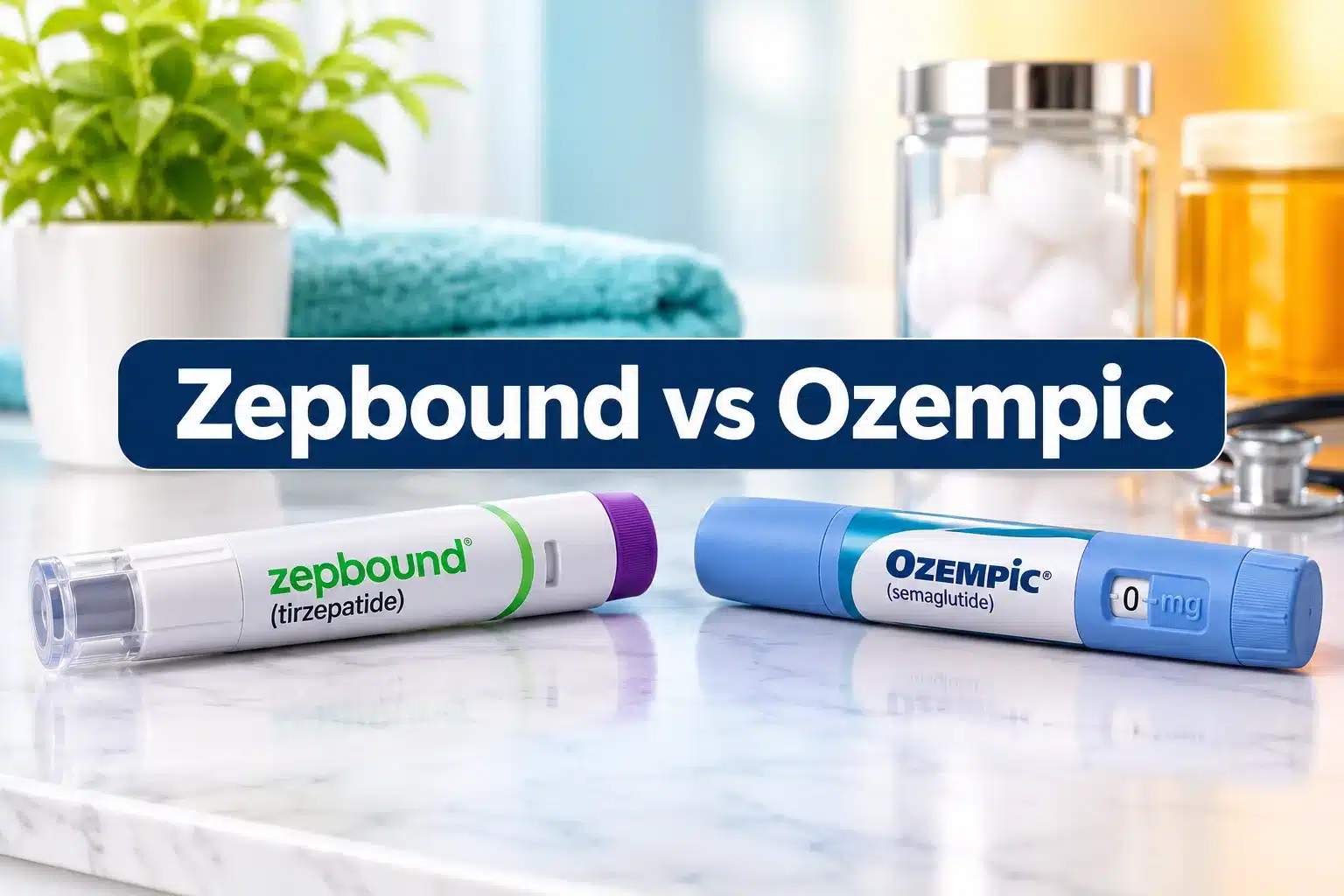
Quick Answer: In the largest head-to-head obesity trial, tirzepatide (Zepbound) produced roughly 20% body weight loss compared to about 14% with semaglutide (Ozempic’s active ingredient, approved for weight loss as Wegovy) [1][2]. When comparing Zepbound vs Ozempic for weight loss, Zepbound has the clear statistical edge, but Ozempic still works well for many people and costs less in some cases [3][4].
If you’ve been staring at two injection pens on a pharmacy counter wondering which one will actually move the number on your scale, you’re not alone. Head-to-head trial data published in 2025 settled a question doctors had debated for years, and the answer surprised even some prescribers. This guide breaks down Zepbound vs Ozempic: Which Works Better for Weight Loss, using the actual trial numbers, cost realities, side effect patterns, and candidacy criteria you need before your next doctor visit.
7 Best GLP-1 Providers Ranked: Accreditation, Flexibility & Support Compared (2026 Update)
32,000+ Patients Can't All Be Wrong: See the Top-Rated GLP-1 Providers. We compared the leading online GLP-1 providers based on program features, clinical support, convenience, and overall value.

BMI MD GLP-1 Microdosing Plan
- Specialized microdosing options, including sublingual drops and low-dose injections
- Designed for people interested in maintaining weight or gradually adjusting treatment
- Bundled program structure without a separate monthly platform membership
- Online access makes the process convenient from home

DirectMeds Weight Loss Solutions
- Online weight-loss program with a straightforward patient experience
- Compounded medication options through state-licensed compounding pharmacies
- Includes clinical consultation as part of the process
- Provides shipping updates to help patients track their orders

MEDVi Flat-Rate Telehealth
- Flat-rate telehealth approach designed for easier budgeting
- No dosage-based pricing increases within the advertised program structure
- Offers injectable and oral thin-film delivery options
- Includes medical screening and asynchronous provider consultations

Gala GLP-1 Care Program
- Text-based access to state-licensed clinicians
- Cold-chain medication shipping included in the program
- Month-to-month program structure
- Designed for people who value convenient ongoing support

Measured GLP-1 Metabolic Health
- Comprehensive metabolic health screening and intake analysis
- Designed around longer-term metabolic health management
- Responsive dashboard with integrated health tracking tools
- Useful option for patients who value a more data-focused experience

Refills GLP-1 (TryRefills Plan)
- Clinical guidance designed to help patients manage common treatment concerns
- Includes foundational nutritional strategies alongside medication
- Designed around predictable ongoing treatment
- No hidden startup or processing fees according to the program information provided

AltRx GLP-1 Transactional Reorders
- Transactional reorder model without recurring auto-billing
- Designed for patients who already understand their treatment routine
- Fast text-to-order process for convenient reorders
- Offers injectable and fast-dissolving tablet variations
Key Takeaways
- Tirzepatide (Zepbound) outperforms semaglutide (Ozempic/Wegovy) in head-to-head obesity trials, with about 20% average weight loss vs about 14% [1][2].
- Zepbound targets two gut hormone receptors (GLP-1 and GIP); Ozempic targets only GLP-1, which likely explains the efficacy gap [3].
- Ozempic is FDA-approved for type 2 diabetes; Wegovy (same drug, higher dose) is the version approved for weight loss. Zepbound is approved specifically for weight loss [4].
- Gastrointestinal side effects (nausea, diarrhea, constipation) occur with both drugs and are the leading cause of people stopping treatment [5].
- Neither drug works well without diet and exercise support, both were tested alongside lifestyle counseling in clinical trials [2].
- You may be a poor candidate for either drug if you have a personal or family history of medullary thyroid cancer or certain endocrine conditions [4].
- You can switch between the two medications under medical supervision, and many patients do so after plateauing on one drug [3].
What’s the Actual Difference Between Zepbound and Ozempic
Zepbound (tirzepatide) activates two gut hormone receptors, GLP-1 and GIP, while Ozempic (semaglutide) activates only GLP-1 [3]. That dual mechanism is the biological reason Zepbound tends to produce greater weight loss and larger improvements in blood sugar and cholesterol markers.
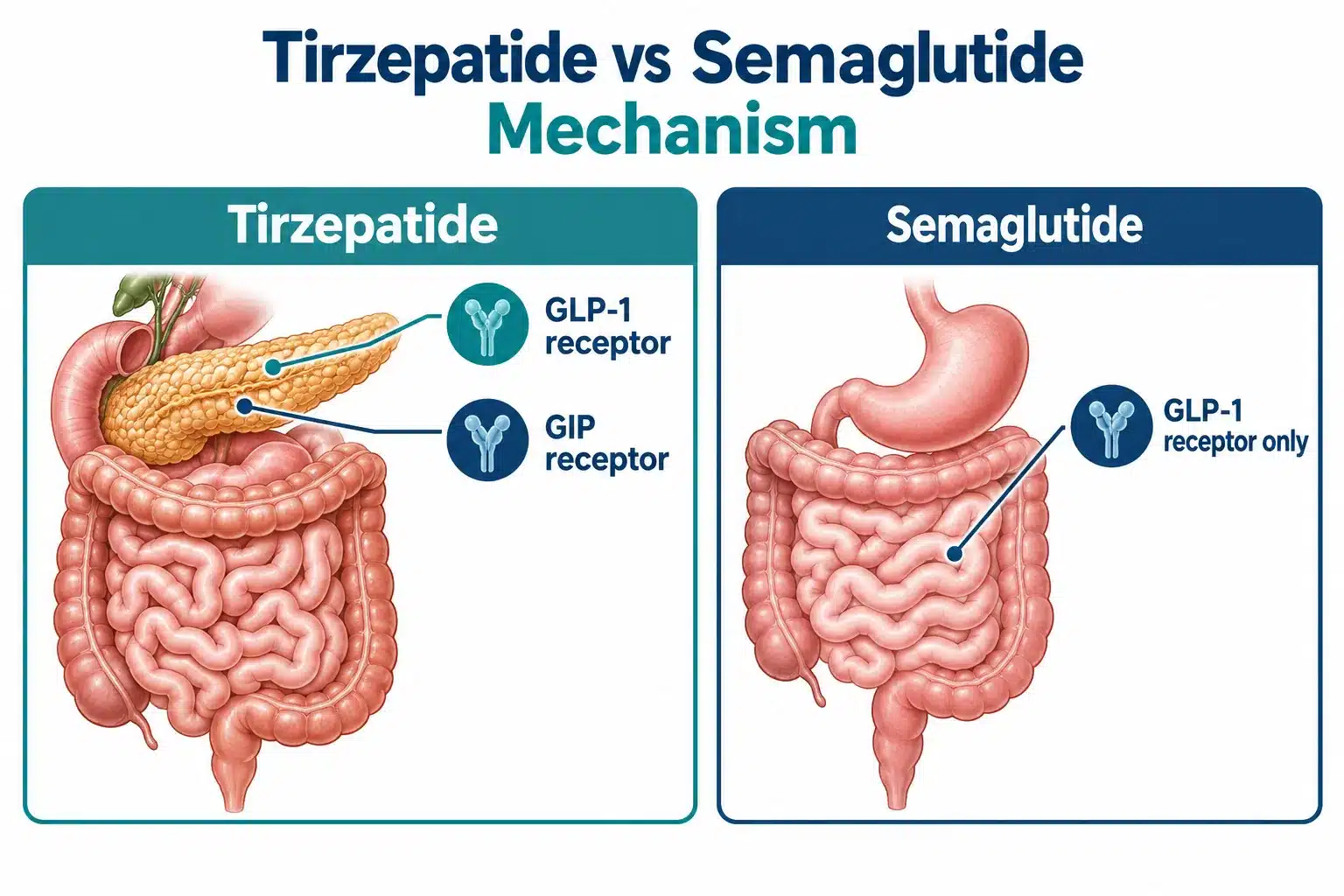
Both drugs are weekly injections made by competing manufacturers: Zepbound by Eli Lilly, Ozempic by Novo Nordisk. Ozempic itself is FDA-approved for type 2 diabetes management, not weight loss directly, the weight-loss-approved version of semaglutide is Wegovy, which uses a higher dose. People often use “Ozempic” as shorthand for semaglutide in general.
Here’s a side-by-side snapshot:
| Feature | Zepbound (tirzepatide) | Ozempic (semaglutide) |
|---|---|---|
| Receptor targets | GLP-1 and GIP | GLP-1 only |
| FDA-approved use | Chronic weight management | Type 2 diabetes (Wegovy covers weight loss) |
| Average weight loss | About 20% of body weight [1] | About 14% of body weight [1] |
| Dosing frequency | Weekly injection | Weekly injection |
| Manufacturer | Eli Lilly | Novo Nordisk |
For a broader rundown of how tirzepatide and semaglutide stack up outside of brand names, see our comparison of semaglutide vs tirzepatide for weight loss.
Does Ozempic Work Better for Weight Loss Than Zepbound
No. Current head-to-head data consistently shows tirzepatide (Zepbound) produces greater weight loss than semaglutide (Ozempic/Wegovy) [1][6][7].
The SURMOUNT-5 trial, the largest direct comparison to date, randomized patients with obesity to either tirzepatide or semaglutide and tracked results over roughly 72 weeks [2]. Tirzepatide patients lost close to 20% of body weight on average; semaglutide patients lost around 14% [1][2]. More tirzepatide patients also hit “high bar” targets like 15% or 20% total weight loss [1].
Systematic reviews and meta-analyses published through 2026 back this up, generally treating tirzepatide’s advantage for obesity (in people without diabetes) as settled science rather than an open question [7]. Cardiometabolic markers, blood pressure, triglycerides, waist circumference, also showed larger improvements on tirzepatide in comparative data [6].
Decision rule: If maximum weight loss is your priority and you tolerate GI side effects reasonably well, Zepbound is the stronger statistical bet. If you need the drug for diabetes control specifically, Ozempic remains a solid, well-studied option.
How Much Does Zepbound Cost vs Ozempic
Both drugs carry high list prices, often $1,000 or more per month without insurance, though exact figures change frequently and should be verified directly with the manufacturer or pharmacy [VERIFY: current list prices]. Manufacturer savings cards, insurance coverage, and compounded alternatives can significantly change what you actually pay.
Cost-effectiveness analyses published in 2026 generally favor tirzepatide once you factor in its higher efficacy per dollar spent, since more weight lost per treatment month can offset a higher sticker price in modeled outcomes [6]. That said, your real-world cost depends heavily on:
- Whether your insurance plan covers the drug for weight loss (many still only cover it for diabetes)
- Manufacturer coupon eligibility, which changes often [VERIFY: current savings card terms]
- Whether you use a telehealth provider versus a retail pharmacy
For a full cost breakdown across GLP-1 options, read our guide on GLP-1 weight loss cost and our list of the most affordable weight loss injections. If you’re specifically weighing vial versus pen formats for Zepbound, we break that down in our Zepbound vial vs pen price comparison.
Common mistake: Assuming the cheaper monthly price always wins. A lower-cost drug that stalls your progress at 8% weight loss may cost more per pound lost than a pricier drug that gets you to 20%.
Ozempic Side Effects Compared to Zepbound: Which Is Worse
Neither drug is clearly “worse” for side effects, both carry a similar GLP-1/GIP adverse-event profile, dominated by gastrointestinal symptoms [5]. Nausea, vomiting, diarrhea, and constipation are the most reported issues with both drugs, and these symptoms are the leading reason people discontinue treatment [5].
Some patterns worth knowing:
- GI side effects tend to be worse during dose increases (titration), not at a stable maintenance dose.
- Zepbound’s dual mechanism doesn’t appear to meaningfully increase GI side effect rates compared to Ozempic, based on trial safety data [5].
- Both drugs carry a boxed warning related to thyroid C-cell tumors seen in rodent studies; the relevance to humans is unconfirmed, but it shapes who shouldn’t take either drug [4].
- Rare but serious risks include pancreatitis, gallbladder problems, and kidney issues from severe dehydration due to vomiting or diarrhea.
Edge case: If you’ve had severe GI side effects on Ozempic specifically, that doesn’t automatically mean you’ll have the same experience on Zepbound. Some patients tolerate one better than the other due to individual metabolism, though this varies person to person and isn’t guaranteed [3].
Why Isn’t Ozempic Working for My Weight Loss
If Ozempic isn’t producing results, the most common causes are an insufficient dose, not enough time on the medication, inconsistent injection timing, or lifestyle factors that aren’t aligned with the treatment [3][4]. It’s rarely a sign the drug is “broken” for you specifically, though switching medications is a legitimate option.

Things to check before assuming treatment failure:
- Dose timeline, Semaglutide is titrated slowly over months; full effects often aren’t visible until you reach the target maintenance dose.
- Injection consistency, Missed or delayed weekly doses blunt the appetite-suppressing effect.
- Caloric intake, The drug reduces appetite, but it doesn’t erase a calorie surplus from frequent high-calorie snacking.
- Metabolic plateau, Weight loss naturally slows after the first few months on any GLP-1 drug; this is expected, not failure.
- Individual response variability, A meaningful minority of patients respond poorly to semaglutide specifically and respond better to tirzepatide’s dual mechanism [3].
If you’ve been at a stable maintenance dose for at least 3-4 months with no progress and good adherence, that’s a reasonable point to discuss switching to Zepbound with your provider.
What Other Weight Loss Drugs Are There Besides These Two
Beyond Zepbound and Ozempic, several other GLP-1 and related medications are FDA-approved or commonly prescribed for weight management. Your best option depends on your health history, insurance coverage, and how your body responds to each class.
- Wegovy, Higher-dose semaglutide, FDA-approved specifically for weight loss (same drug family as Ozempic).
- Mounjaro, Tirzepatide approved for type 2 diabetes (same drug as Zepbound, different approved use).
- Saxenda, Daily injectable liraglutide, an older GLP-1 option with modest weight loss results.
- Rybelsus, Oral semaglutide tablet, an alternative for people who prefer pills over injections.
- Trulicity, Dulaglutide, primarily for diabetes, with secondary weight loss benefits.
For a full rundown of how these stack up, see our guide on which GLP-1 medication works best for weight loss and our broader comparison of seven GLP-1 options for 2026.
Am I a Good Candidate for Zepbound or Ozempic
You’re generally considered a candidate for either drug if you have a BMI of 30 or higher, or a BMI of 27 or higher with a weight-related condition like high blood pressure, type 2 diabetes, or sleep apnea [4]. A doctor’s evaluation is required before starting either medication.
Good candidacy signals include:
- Previous unsuccessful attempts at weight loss through diet and exercise alone
- No personal or family history of medullary thyroid cancer or MEN 2 syndrome
- No active pancreatitis or severe gastrointestinal disease
- Willingness to commit to weekly injections and follow-up appointments for dose titration
Choose Zepbound if: you want the statistically higher weight loss ceiling and don’t have diabetes requiring Ozempic specifically, and you can tolerate the titration schedule.
Choose Ozempic if: you have type 2 diabetes needing blood sugar control, your insurance only covers semaglutide, or you’ve had a good experience with GLP-1-only mechanisms before.
How to Get Zepbound Prescribed by My Doctor
Getting a Zepbound prescription starts with a BMI and health history review by a licensed provider, either in person or through telehealth. Most providers will ask about previous weight loss attempts, current medications, and any thyroid or pancreatic history before prescribing.
Typical steps:
- Schedule an appointment with your primary care doctor, an endocrinologist, or a telehealth weight-management provider.
- Complete a health history questionnaire covering thyroid cancer family history, diabetes status, and prior GLP-1 use.
- Discuss insurance coverage or cash-pay options, since coverage for weight loss (versus diabetes) varies widely by plan.
- Start on the lowest dose (2.5 mg) with scheduled increases every 4 weeks based on tolerance.
- Attend follow-up visits to monitor weight, side effects, and lab work.
If your insurance denies coverage, ask your provider about a formal appeal, manufacturer savings programs [VERIFY: current eligibility], or reputable telehealth platforms that specialize in GLP-1 prescribing.
Can You Switch from Ozempic to Zepbound
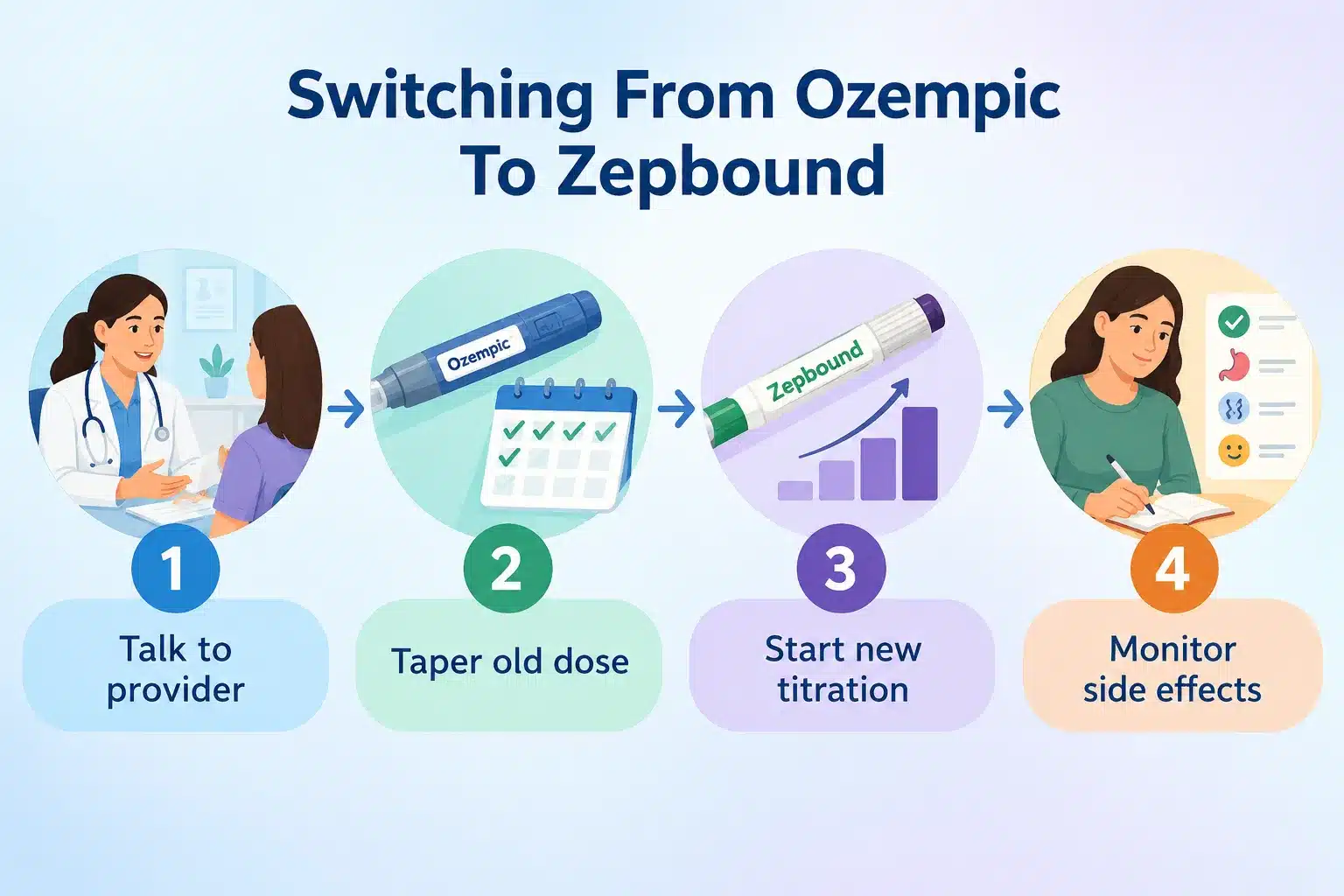
Yes, switching from Ozempic to Zepbound is possible and common when patients plateau or experience limited results, but it should always be done under medical supervision rather than self-directed [3]. Your provider will typically have you taper off the old medication before starting the new titration schedule.
What usually happens during a switch:
- Your provider reviews your current Ozempic dose and response history.
- You may have a short washout period, though exact timing is determined case by case by your prescriber.
- Zepbound titration restarts from its lowest dose (2.5 mg), regardless of how long you were on Ozempic.
- Expect a similar adjustment period with GI side effects as your body adapts to the new mechanism.
Common mistake: Switching abruptly without medical guidance, or expecting instant results right after the switch. Both drugs require weeks of titration before reaching an effective dose.
How Long Before You See Results with Zepbound
Most patients notice reduced appetite within the first few weeks, but meaningful weight loss typically becomes visible around 8-12 weeks, with the most significant results building over 36-72 weeks of consistent use [2]. Full trial-reported outcomes (around 20% average weight loss) reflect roughly a year and a half of continuous treatment, not a few months [1][2].
A realistic timeline looks like this:
- Weeks 1-4: Starting dose (2.5 mg), appetite changes begin, mild GI symptoms possible.
- Weeks 4-16: Dose increases every 4 weeks, more noticeable appetite suppression and early weight loss.
- Months 4-9: Steady, gradual weight loss as you reach and stay on a therapeutic dose.
- Months 12-18: Trial-level results (around 15-20% body weight loss) become realistic for many patients [1].
Weight loss speed varies by starting weight, dose tolerance, and how closely diet and activity habits align with treatment. Patience through the first two months matters more than many people expect.
Are Ozempic and Zepbound Basically the Same Thing
No, they are different drugs with different active ingredients, even though both are weekly injectable GLP-1-class medications made for metabolic conditions. Ozempic contains semaglutide; Zepbound contains tirzepatide, which adds a second hormone receptor target (GIP) that Ozempic doesn’t touch [3].
People confuse them because:
- Both come as weekly injector pens with similar-looking devices.
- Both are prescribed by the same types of providers for overlapping conditions.
- Both belong to the broader “GLP-1 receptor agonist” drug family, detailed further in our GLP-1 receptor agonists guide.
The practical difference shows up in trial results: tirzepatide’s dual-receptor action is the most likely explanation for its roughly 6-percentage-point weight loss advantage over semaglutide [1][6].
Do You Need to Diet and Exercise with These Medications
Yes. Every major clinical trial for both drugs paired the medication with structured diet and exercise counseling, and real-world results tend to be weaker without that support [2]. The drugs reduce appetite and slow digestion, but they don’t replace the need for a reasonable calorie intake and physical activity.
Practical guidance:
- Aim for a moderate calorie deficit rather than extreme restriction, since appetite suppression can make it easy to undereat.
- Prioritize protein intake to help preserve muscle mass during rapid weight loss.
- Add light resistance training where possible, muscle loss is a known concern with GLP-1-driven weight loss.
- Treat the medication as an appetite-management tool, not a standalone solution.
If you want ideas for pairing a GLP-1 medication with a structured eating plan, see our review of Nutrisystem’s diabetes-focused weight loss meals.
Who Shouldn’t Take Ozempic or Zepbound
Neither drug is appropriate for people with a personal or family history of medullary thyroid carcinoma, those with Multiple Endocrine Neoplasia syndrome type 2 (MEN 2), or anyone with a known hypersensitivity to the active ingredients [4]. Pregnant or breastfeeding individuals should also avoid both drugs.
Additional caution groups include:
- People with a history of pancreatitis
- Those with severe gastrointestinal disease, including gastroparesis
- Patients with a history of diabetic retinopathy (requires monitoring, not automatic exclusion)
- Anyone currently taking other medications that affect blood sugar, which requires dose coordination with a provider
This is general safety information, not a complete screening checklist. Always disclose your full medical history before starting either drug.
What Are the Most Common Mistakes People Make with These Drugs
The most common mistakes are skipping doses, expecting fast results, stopping the medication the moment side effects appear, and neglecting basic nutrition and hydration during treatment. Each of these undermines the drug’s effectiveness and can make side effects worse rather than better.
- Rushing dose increases instead of following the titration schedule, which increases GI side effects unnecessarily.
- Stopping cold turkey after reaching a weight goal, which often leads to significant weight regain since the appetite-suppressing effect fades.
- Ignoring protein and hydration, which worsens fatigue and muscle loss during rapid weight loss.
- Buying from unverified online sources instead of licensed pharmacies or legitimate telehealth providers, risking counterfeit or compounded products of unknown quality.
- Comparing your results to someone else’s trial numbers rather than tracking your own consistent progress, which can cause premature frustration.
If you’re exploring telehealth options to avoid these pitfalls, our reviews of Ro’s weight loss program and Found’s weight loss service outline what legitimate providers typically include.
7 Best GLP-1 Providers Ranked: Accreditation, Flexibility & Support Compared (2026 Update)
32,000+ Patients Can't All Be Wrong: See the Top-Rated GLP-1 Providers: Compared on accreditation, plan flexibility, and patient support — updated for 2026.
BMI MD GLP-1 Microdosing Plan
- Specialized microdosing options (sublingual drops or low-dose injections)
- Ideal for maintaining weight or tapering off higher doses safely
- Fully bundled plan with no hidden monthly platform memberships
DirectMeds Weight Loss Solutions
- Sourced from accredited, state-licensed 503A compounding pharmacies
- No-frills high-volume savings passed directly to the patient
- Includes clinical consultation and cold-chain shipping updates
MEDVi Flat-Rate Telehealth
- Flat monthly rate holds steady even at maximum maintenance doses
- No dosage upcharges or graduation fee penalties
- Offers both injectable and advanced oral thin-film delivery options
Gala GLP-1 Care Program
- All-inclusive plan with no standalone membership costs
- Continuous text-based messaging access with state-licensed clinicians
- Temperature-controlled, cold-chain medication shipping included
Measured GLP-1 Metabolic Health
- Comprehensive metabolic health screening and expert intake analysis
- Predictable long-term budgeting with stable plan pricing
- High-end responsive dashboard with integrated diagnostic support
Refills GLP-1 (TryRefills Plan)
- Flat rate holds steady as titration scales up
- Includes clinical guides for active side-effect management
- Bundles in foundational nutritional strategies alongside medication
AltRx GLP-1 Transactional Reorders
- Zero recurring auto-billing — pay entirely on a transactional basis
- Rapid text-to-order format saves time for experienced patients
- Provides both injectable forms and fast-dissolving tablet variations
Conclusion
Zepbound vs Ozempic: Which Works Better for Weight Loss comes down to this, trial data consistently favors Zepbound’s dual-hormone mechanism for raw weight loss numbers, while Ozempic remains a proven, widely available option, especially for people managing type 2 diabetes alongside their weight [1][2][4]. Side effects are broadly similar between the two, so your decision should weigh efficacy data against your insurance coverage, cost, and how your body has responded to GLP-1 medications in the past. Talk with a licensed provider about your BMI, health history, and goals before choosing either drug, and don’t be afraid to revisit that choice if your current medication stalls. For a deeper look at how these drugs compare to other options on the market, check out our guide on the best GLP-1 medications approved for weight loss.
This article is for informational purposes only and is not medical advice. Talk to a licensed healthcare provider before starting or changing any medication.
FAQ
Is Zepbound definitely better than Ozempic for everyone?
Not for everyone. Zepbound shows higher average weight loss in trials, but individual response, insurance coverage, and side effect tolerance can make Ozempic the better personal choice for some people [1][3].
Can I take Zepbound and Ozempic at the same time?
No. These drugs work on overlapping hormone pathways, and taking both simultaneously is not standard practice and could increase side effect risk. Always follow your provider’s guidance.
Does insurance cover Zepbound or Ozempic for weight loss?
Coverage varies significantly by plan and employer, and often depends on whether the prescription is for diabetes or weight management specifically [VERIFY: current insurance policies].
How much weight can I realistically expect to lose?
Trial averages show about 20% body weight loss with tirzepatide and about 14% with semaglutide over roughly 72 weeks, though individual results vary [1][2].
What happens if I stop taking Zepbound or Ozempic?
Appetite often returns, and many patients regain some or most of the lost weight without continued lifestyle changes or medication, according to trial follow-up data trends [2].
Are compounded versions of these drugs safe?
Compounded semaglutide and tirzepatide are legally distinct from FDA-approved brand products, and quality can vary by pharmacy. Learn more in our guide on how compounded semaglutide differs from Ozempic.
Do both drugs require a prescription?
Yes. Both Zepbound and Ozempic require a prescription from a licensed healthcare provider after a medical evaluation.
Can I microdose Ozempic for a gentler start?
Some providers discuss low-dose or microdosing strategies, though this is an evolving area of practice. See our overview on microdosing Ozempic and what the science says for more detail.
References
- Tirzepatide vs. Semaglutide Patients Obesity Head Head Trial Nejm Jw. clinician.nejm.org.
- Nejm V3 12052025. easo.org.
- Tirzepatide vs. Semaglutide. health.clevelandclinic.org.
- Why Mounjaro Tops Ozempic for Weight Loss. webmd.com.
- Pmc13570719. pmc.ncbi.nlm.nih.gov.
- 13696998.2026.2646078. tandfonline.com.
- Full. frontiersin.org.




