
Microdosing Ozempic: How Off-Label Lower Doses Impact Weight Loss and Side Effects

Last updated: October 3, 2026
Quick Answer
Microdosing Ozempic means taking semaglutide at doses far below the standard prescription range, often as low as 0.05 mg weekly, compared to the approved starting dose of 0.25 mg. As of 2026, no clinical trials have validated this practice for weight loss or blood sugar control, and the FDA has not endorsed any microdosing protocol. It is off-label, experimental, and should only be considered under direct medical supervision.
Key Takeaways
- Microdosing Ozempic involves taking semaglutide at doses 10 to 100 times lower than standard prescriptions, a practice driven largely by social media rather than clinical evidence.
- The FDA has not approved any microdosing protocol for semaglutide, and major medical organizations describe it as experimental and unauthorized.
- Standard Ozempic dosing starts at 0.25 mg weekly and can be titrated up to 2 mg; microdosing posts often describe doses as low as 0.05 mg or less.
- There are no published clinical trials specifically studying microdosing GLP-1 drugs in the way described online, leaving safety and efficacy data essentially absent.
- Some physicians do keep patients at lower-than-label doses for tolerability reasons, but this is individualized clinical care, not the DIY microdosing trend promoted by influencers.
- Common DIY tactics include splitting prefilled pens or ordering compounded semaglutide vials, both of which carry risks of dosing errors and device misuse.
- People with diabetes using Ozempic for cardiovascular protection face particular risk from under-dosing, as reduced efficacy could affect blood sugar control and heart outcomes.
- Compounded semaglutide from a licensed pharmacy, prescribed at appropriate doses, may offer a more affordable and medically sound alternative for those priced out of brand-name Ozempic.
What Is Microdosing Ozempic and How Does It Work
Microdosing Ozempic refers to taking semaglutide at doses significantly smaller than those studied in clinical trials and approved by the FDA. Online communities typically describe doses of 0.05 mg to 0.1 mg weekly, compared to the standard starting dose of 0.25 mg weekly that Novo Nordisk recommends for both Ozempic and Wegovy. [2]
7 Best GLP-1 Providers Ranked: Accreditation, Flexibility & Support Compared (2026 Update)
32,000+ Patients Can't All Be Wrong: See the Top-Rated GLP-1 Providers. We compared the leading online GLP-1 providers based on program features, clinical support, convenience, and overall value.
BMI MD GLP-1 Microdosing Plan
- Specialized microdosing options, including sublingual drops and low-dose injections
- Designed for people interested in maintaining weight or gradually adjusting treatment
- Bundled program structure without a separate monthly platform membership
- Online access makes the process convenient from home

DirectMeds Weight Loss Solutions
- Online weight-loss program with a straightforward patient experience
- Compounded medication options through state-licensed compounding pharmacies
- Includes clinical consultation as part of the process
- Provides shipping updates to help patients track their orders
MEDVi Flat-Rate Telehealth
- Flat-rate telehealth approach designed for easier budgeting
- No dosage-based pricing increases within the advertised program structure
- Offers injectable and oral thin-film delivery options
- Includes medical screening and asynchronous provider consultations
Gala GLP-1 Care Program
- Text-based access to state-licensed clinicians
- Cold-chain medication shipping included in the program
- Month-to-month program structure
- Designed for people who value convenient ongoing support
Measured GLP-1 Metabolic Health
- Comprehensive metabolic health screening and intake analysis
- Designed around longer-term metabolic health management
- Responsive dashboard with integrated health tracking tools
- Useful option for patients who value a more data-focused experience
Refills GLP-1 (TryRefills Plan)
- Clinical guidance designed to help patients manage common treatment concerns
- Includes foundational nutritional strategies alongside medication
- Designed around predictable ongoing treatment
- No hidden startup or processing fees according to the program information provided
AltRx GLP-1 Transactional Reorders
- Transactional reorder model without recurring auto-billing
- Designed for patients who already understand their treatment routine
- Fast text-to-order process for convenient reorders
- Offers injectable and fast-dissolving tablet variations
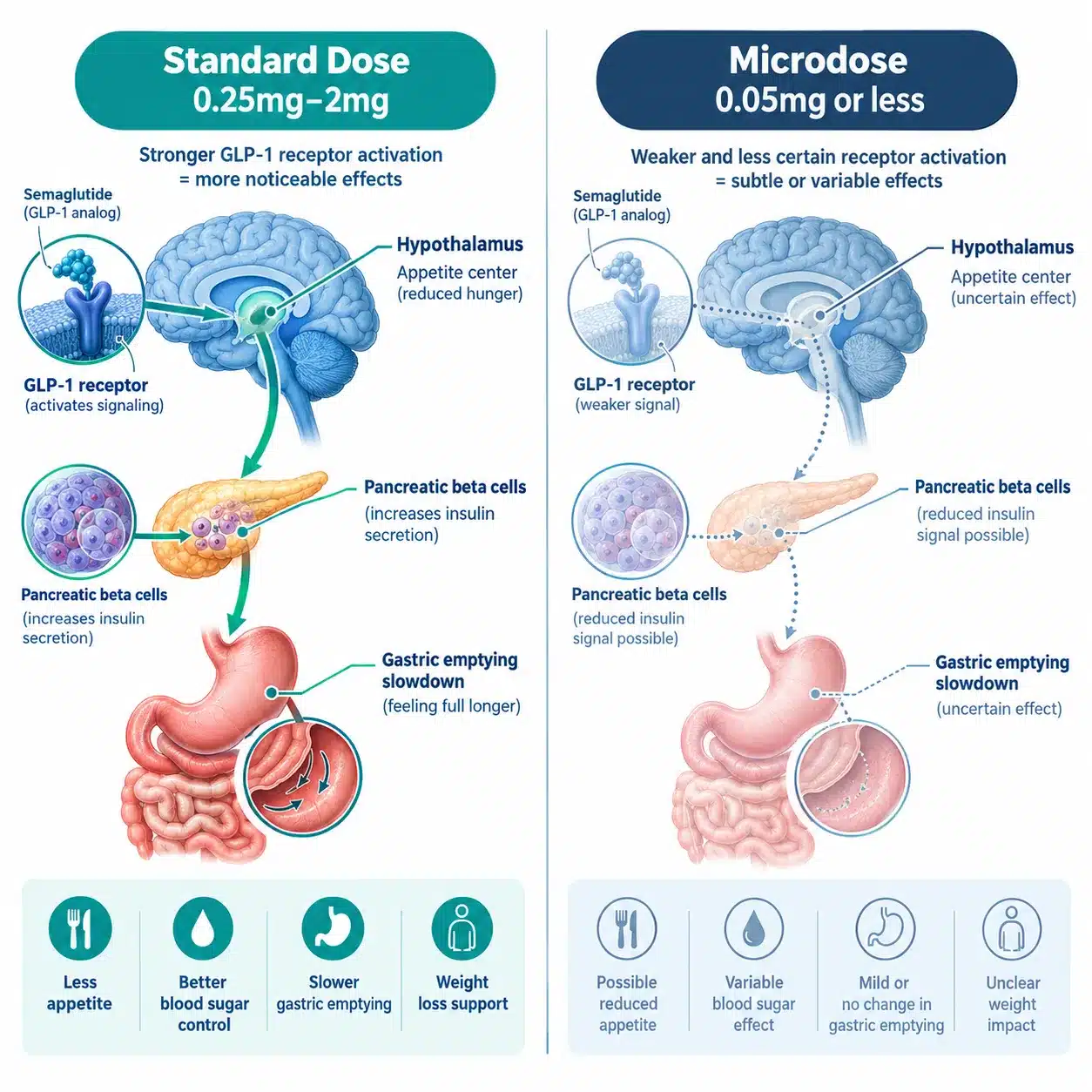
Semaglutide is a GLP-1 receptor agonist. It mimics a gut hormone that signals fullness to the brain, slows gastric emptying, and stimulates insulin release in response to meals. At standard doses, these effects are well-documented and reproducible. At microdoses, the theory is that even a small amount of GLP-1 receptor activation might reduce appetite or improve metabolic markers without triggering the nausea and gastrointestinal side effects that cause many people to quit the medication. [4]
The problem is that this theory has not been tested in controlled trials. Nobody knows whether a dose of 0.05 mg activates GLP-1 receptors enough to produce meaningful clinical effects, or whether it simply does nothing. [8]
How people are actually doing it:
- Splitting a prefilled Ozempic pen (designed for four weekly doses) into five or six injections
- Drawing fractional doses from a vial using a separate syringe
- Ordering compounded semaglutide vials from telehealth providers and self-titrating to very low doses
- Staying on a “maintenance microdose” instead of following the standard titration schedule [7]
None of these approaches are manufacturer-approved or guideline-supported. For context on how semaglutide is officially formulated and branded, see this overview of semaglutide brand names including Ozempic, Wegovy, and Rybelsus.
Is Microdosing Ozempic Safe for Weight Loss
Microdosing Ozempic is not confirmed safe for weight loss because there are no controlled studies evaluating it. UCLA Health describes GLP-1 microdosing as “experimental and unauthorized,” with no reliable data on its safety profile or potential harms. [8]
The absence of evidence cuts both ways. We do not know that microdosing is harmful, but we also cannot say it is safe. What we do know is that:
- Standard semaglutide doses carry a well-characterized side effect profile (nausea, vomiting, constipation, rare pancreatitis risk) that has been studied in tens of thousands of patients
- Microdoses have no equivalent safety database
- Under-dosing in people with type 2 diabetes could compromise blood sugar control and cardiovascular protection, both of which depend on adequate drug exposure [10]
- Manipulating prefilled injection devices to extract fractional doses creates risk of dosing errors, contamination, and device damage [7]
Cleveland Clinic notes that microdosing GLP-1 drugs is not endorsed by the American Diabetes Association and should not be attempted without medical supervision. [4]
“There are no strong data showing very low GLP-1 doses are effective for sustained weight loss.”, Tufts Medicine, summarized in recent coverage [8]
Ozempic Microdose vs Full Dose: What’s the Difference
The core difference between a microdose and a full dose of Ozempic is the degree of GLP-1 receptor activation and, consequently, the clinical effect. Standard Ozempic dosing begins at 0.25 mg weekly for the first four weeks, then increases to 0.5 mg, 1 mg, and up to 2 mg based on response and tolerability. [2]
| Feature | Standard Dose | Microdose (as described online) |
|---|---|---|
| Typical weekly amount | 0.25 mg, 2 mg | 0.05 mg, 0.1 mg (estimated) |
| FDA-approved protocol | Yes | No |
| Clinical trial evidence | Extensive (SUSTAIN, STEP trials) | None |
| Side effect profile | Well-characterized | Unknown |
| Weight loss efficacy | Clinically proven | Unproven |
| Source of supply | Licensed pharmacy with prescription | Often DIY pen-splitting or compounded vials |
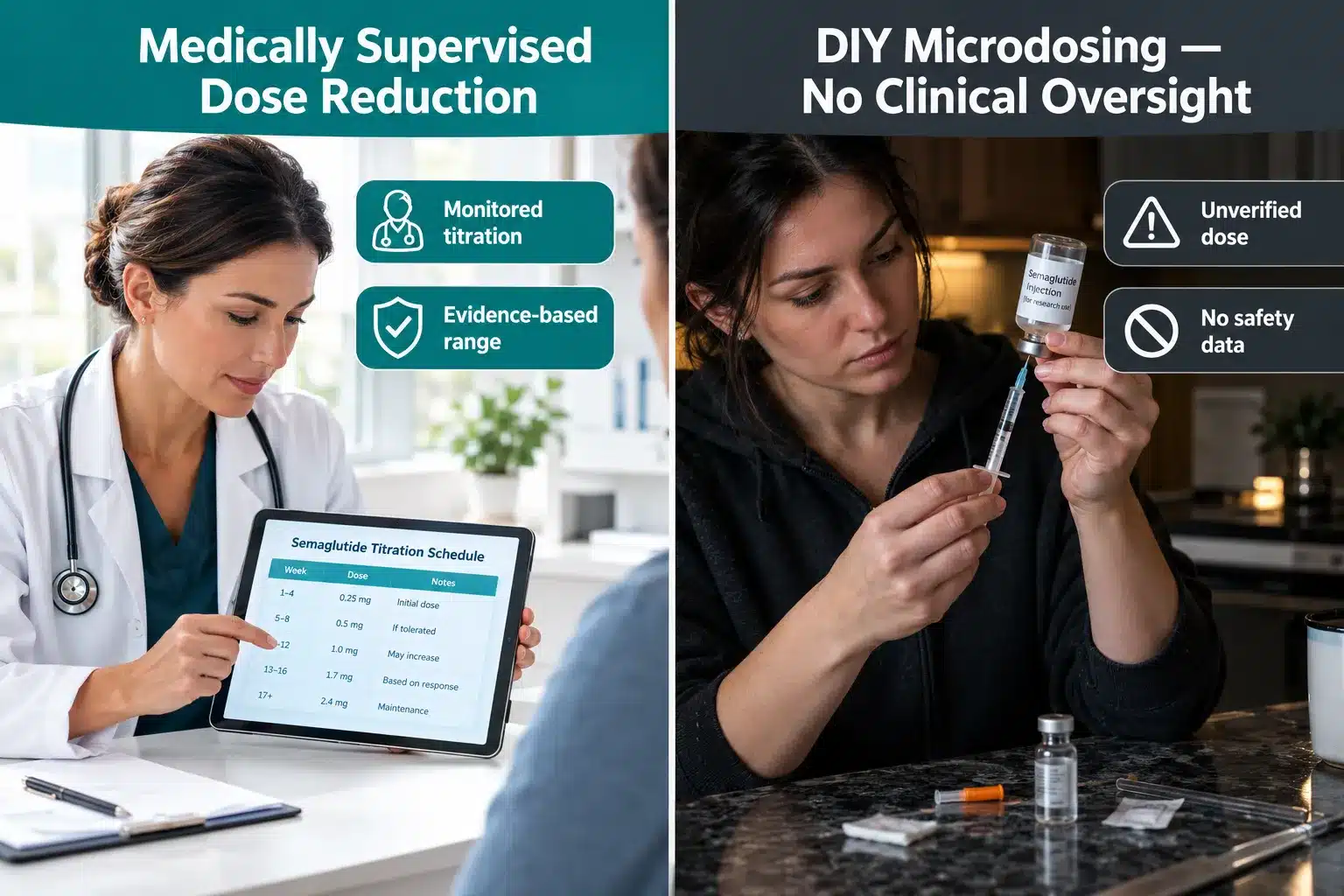
The key practical distinction: a physician who keeps a patient at 0.5 mg because higher doses cause intolerable nausea is practicing individualized medicine within a clinical framework. Someone splitting a pen at home to get six injections from a four-dose device is doing something categorically different, and riskier. [4][6]
Does Microdosing Ozempic Actually Work for Weight Loss
Current evidence does not support microdosing Ozempic as an effective weight loss strategy. The Obesity Medicine Association’s Access and Policy Working Group states there is “little to no peer-reviewed evidence” supporting microdosed GLP-1 regimens for obesity. [1]
Some users and influencers report reduced appetite and modest weight loss on very low doses, but these are anecdotal accounts, not controlled data. [3][5] Several important caveats apply:
- Placebo effect is real. Expecting a drug to suppress appetite can itself reduce eating.
- Selection bias. People who report success are more likely to post online than those who saw no effect.
- No dose-response data. We do not know the minimum effective dose of semaglutide for appetite suppression, so we cannot say whether 0.05 mg crosses any meaningful threshold.
Dr. Christopher McGowan, an obesity specialist, describes microdosing Ozempic as “an off-label, untested practice with no supporting clinical studies and no established guidelines.” [12, as cited in source 7]
For a realistic look at what standard-dose semaglutide actually delivers, see these 6-week Ozempic weight loss results from real patients following prescribed protocols.
Microdosing Ozempic Side Effects: What Should I Expect
Because no clinical trials have studied microdosing, there is no reliable side effect profile to report. What we can say is that standard semaglutide side effects, including nausea, vomiting, constipation, and fatigue, appear to be dose-dependent, meaning lower doses may produce milder symptoms. [2][5]
This is the main appeal of microdosing: some users report fewer gastrointestinal symptoms on tiny doses. But experts caution that:
- Milder side effects do not confirm the drug is working at a therapeutically meaningful level [3]
- Under-dosing may give a false sense of tolerability while providing no real metabolic benefit
- Rare but serious risks of semaglutide (pancreatitis, gallbladder disease, thyroid concerns) are not dose-threshold effects that disappear at low doses; their relationship to microdoses is unknown [4]
- People who manipulate injection devices risk accidental overdose or contamination [7]
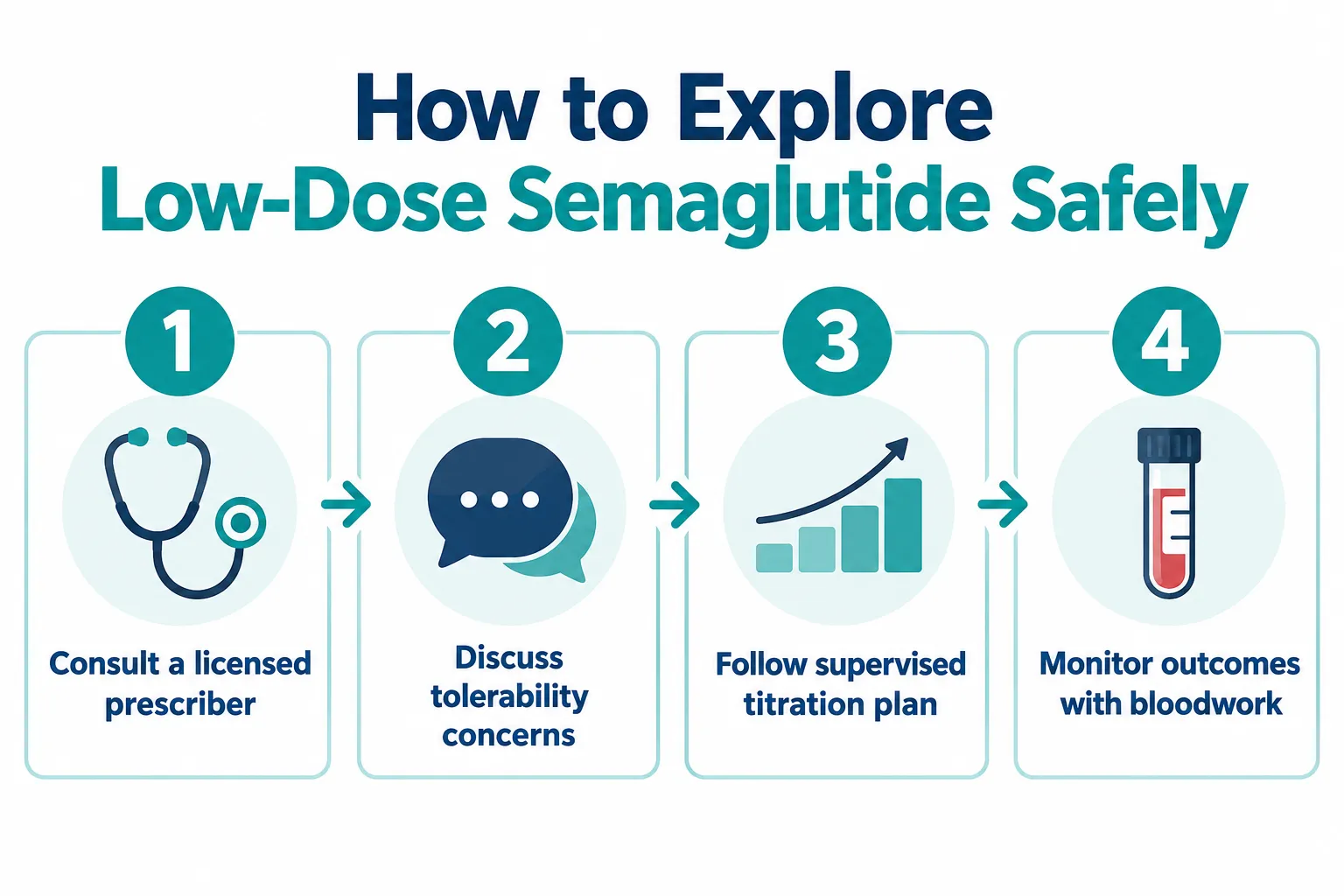
Bottom line: If nausea is the reason you are considering microdosing, the better path is telling your prescriber. Physicians routinely slow titration schedules or hold patients at lower doses for tolerability, and that is a very different thing from unsupervised pen-splitting. [6]
Can You Get Ozempic Microdoses Prescribed, and Is It Legal
A physician can legally prescribe semaglutide at any dose they judge clinically appropriate, because off-label prescribing is legal in the United States. However, no prescriber can write a prescription for a “microdosing protocol” that has been validated by evidence, because no such protocol exists. [7][8]
What some telehealth providers and compounding pharmacies do offer is compounded semaglutide in vials, which allows for flexible dosing. This is not the same as a validated microdosing program. It simply means the dose can be customized, for better or worse.
Important legal and regulatory points:
- The FDA has not authorized any microdosing protocol for semaglutide [8]
- Off-label prescribing is the physician’s prerogative, but it carries responsibility for informed consent
- Compounded semaglutide is subject to FDA oversight; the regulatory landscape shifted in 2025-2026 as the FDA addressed shortage-related compounding rules
For a current overview of the regulatory environment, see this FDA rules on compounded semaglutide 2026 update. If you are exploring compounded options, this compounding pharmacy for weight loss full guide covers what to look for in a licensed provider.
How Much Does Microdosing Ozempic Cost
Microdosing Ozempic does not have a standard cost because it is not a recognized treatment program. In practice, people who microdose either stretch a standard Ozempic pen (reducing per-injection cost but not the upfront pen price) or use compounded semaglutide vials.
Brand-name Ozempic without insurance can cost over $900 per month for a standard prescription. Stretching a pen to get extra injections does reduce the per-dose cost, but it does not reduce what you pay at the pharmacy. Compounded semaglutide from a licensed telehealth provider is typically far less expensive than brand-name Ozempic, often in the range of $100 to $300 per month depending on dose and provider, though prices vary.
For current pricing comparisons, see:
- GoodRx Ozempic price guide
- Online Ozempic prescription cost breakdown
- How much does semaglutide cost online
Cost-saving note: If affordability is the primary driver of interest in microdosing, compounded semaglutide at a properly prescribed dose from an accredited pharmacy is a more medically sound and often cheaper alternative than stretching a brand-name pen. See affordable semaglutide telehealth options for vetted providers.
Who Shouldn’t Microdose Ozempic: Medical Conditions to Know
Anyone considering microdosing Ozempic should be aware that certain medical conditions make any unsupervised semaglutide use particularly risky. The following groups face elevated risk from unmonitored or under-dosed semaglutide use: [4][10]
- People with type 2 diabetes using Ozempic for glycemic control. Under-dosing can compromise blood sugar management and cardiovascular protection. The drug’s heart benefits are dose-dependent and established at studied doses, not at microdoses.
- People with a personal or family history of medullary thyroid carcinoma or MEN2 syndrome. Semaglutide carries a black box warning for thyroid C-cell tumors; this risk does not disappear at low doses.
- People with a history of pancreatitis. GLP-1 drugs are associated with pancreatitis risk regardless of dose.
- People with gallbladder disease. Semaglutide can increase gallstone risk.
- Pregnant or breastfeeding individuals. No dose of semaglutide is considered safe during pregnancy.
- People on insulin or sulfonylureas. Even small amounts of semaglutide can interact with these medications and affect hypoglycemia risk.
Choose supervised care if: you have any of the above conditions, are on multiple medications, or have not had a recent metabolic workup. Microdosing without medical oversight is not a workaround for these contraindications.
Ozempic Microdosing vs Other Weight Loss Drugs: How Does It Compare
Microdosing Ozempic sits in a uniquely weak evidence position compared to other weight loss options, including standard-dose GLP-1 drugs, tirzepatide, and even older anti-obesity medications.
- Standard-dose semaglutide (Wegovy): Proven in large trials to produce 10-15% body weight loss over 68 weeks in people with obesity. Well-characterized safety profile. This is the benchmark.
- Tirzepatide (Mounjaro/Zepbound): Dual GIP/GLP-1 agonist with even stronger weight loss data in trials. Also prescribed at studied doses with no microdosing evidence.
- Microdosed semaglutide: No trial data. Anecdotal reports only. No established dosing schedule.
- Older agents (phentermine, topiramate, bupropion/naltrexone): Less weight loss than GLP-1 drugs but have established dosing protocols and longer safety records.
If cost is the barrier to standard-dose GLP-1 therapy, compounded semaglutide at prescribed doses is a better-evidenced option than microdosing. For a comparison of compounding providers, see these compounded semaglutide reviews from real patients.
Common Microdosing Ozempic Mistakes and What Happens If You Get It Wrong
The most common mistakes people make when microdosing Ozempic fall into two categories: dosing errors and false reassurance.
Dosing errors:
- Drawing an incorrect volume from a vial because of unit confusion (mcg vs mg, units vs milliliters)
- Damaging the injection pen mechanism by forcing it to deliver a non-standard dose
- Using non-sterile syringes or improper storage, which degrades the drug
- Accidentally administering a full dose while trying to deliver a fraction [7]
False reassurance:
- Assuming that because side effects are mild, the drug is working
- Stopping a supervised titration plan in favor of a self-designed microdose regimen
- Using microdosing as a substitute for lifestyle changes, rather than a complement to them
- Believing social media success stories represent clinical outcomes [3][9]
What happens if you get the dose wrong: At best, you take an ineffective amount and see no benefit. At worst, you administer an unintended full dose, experience severe nausea or hypoglycemia (if diabetic), or use a contaminated preparation. None of these outcomes are theoretical, they are documented in emergency medicine literature for insulin, a drug with similar injection mechanics.
Ozempic Microdosing for Diabetes vs Weight Loss: Is There a Difference
For people with type 2 diabetes, the stakes of under-dosing Ozempic are higher than for people using it solely for weight loss. Ozempic is FDA-approved to improve glycemic control and reduce cardiovascular events in adults with type 2 diabetes and established heart disease. Both of these benefits are dose-dependent and established at studied doses. [2][10]
Microdosing in a diabetic patient could:
- Fail to adequately lower HbA1c
- Provide insufficient cardiovascular protection
- Create unpredictable interactions with insulin or other diabetes medications
For someone using semaglutide purely for weight loss without diabetes, the primary risk of microdosing is simply that it may not work. That is a meaningful distinction. A diabetic patient who under-doses faces potential harm to organ systems; a non-diabetic patient who under-doses primarily wastes money and time.
Cleveland Clinic explicitly notes that microdosing is not endorsed by the American Diabetes Association, reinforcing that this practice falls outside standard diabetes care. [4]
FAQ
What exactly is microdosing Ozempic?
It is the practice of taking semaglutide at doses far below the FDA-approved range, often 0.05 mg to 0.1 mg weekly, compared to the standard 0.25 mg starting dose. It is driven by social media and has no clinical trial support.
Is microdosing Ozempic FDA-approved?
No. The FDA has not approved any microdosing protocol for semaglutide. It is off-label and experimental. [8]
Can microdosing Ozempic still cause side effects?
Possibly. The side effect profile at very low doses is unknown. Standard semaglutide side effects like nausea may be milder at lower doses, but rare serious risks are not dose-threshold effects that disappear at microdoses. [4]
Who is promoting microdosing Ozempic?
Primarily influencers, biohackers, and online weight loss communities. Some people without obesity or diabetes are using it for cosmetic weight loss, which raises ethical concerns about medication access for those with genuine medical need. [3][11, as cited in source 3]
Is compounded semaglutide the same as microdosing?
Not necessarily. Compounded semaglutide can be prescribed at any dose, including standard therapeutic doses. Microdosing specifically refers to ultra-low doses with no clinical validation. Compounded semaglutide at a properly prescribed dose is a legitimate, more affordable alternative to brand-name Ozempic.
How often do people microdose Ozempic?
Most online accounts describe once-weekly injections at very low doses, mirroring the standard injection schedule but at a fraction of the prescribed amount. Some describe even less frequent dosing, though there is no evidence to support any specific schedule. [7]
Can a doctor prescribe microdoses of Ozempic?
A physician can legally prescribe semaglutide off-label at any dose. However, no evidence-based protocol exists for microdosing, so any such prescription would be entirely outside established clinical guidelines. [6][8]
Does microdosing Ozempic work for appetite control?
Anecdotally, some users report reduced appetite. There is no controlled evidence confirming this effect at microdoses, and it is impossible to separate placebo effects from true pharmacological action at these dose levels. [5]
What is the difference between microdosing and a low-dose maintenance plan?
A physician-supervised low-dose maintenance plan keeps a patient at a lower-than-maximum dose for tolerability within a clinical framework. Microdosing typically refers to DIY ultra-low dosing far below even the starting prescription dose, without medical oversight. [4][6]
Is microdosing Ozempic legal?
Off-label prescribing is legal. Self-administering prescription medication without a prescription is not. Splitting or manipulating prefilled pens to extract extra doses falls outside manufacturer guidelines and potentially outside the terms of the prescription. [7]
7 Best GLP-1 Providers Ranked: Accreditation, Flexibility & Support Compared (2026 Update)
32,000+ Patients Can't All Be Wrong: See the Top-Rated GLP-1 Providers: Compared on accreditation, plan flexibility, and patient support — updated for 2026.
BMI MD GLP-1 Microdosing Plan
- Specialized microdosing options (sublingual drops or low-dose injections)
- Ideal for maintaining weight or tapering off higher doses safely
- Fully bundled plan with no hidden monthly platform memberships
DirectMeds Weight Loss Solutions
- Sourced from accredited, state-licensed 503A compounding pharmacies
- No-frills high-volume savings passed directly to the patient
- Includes clinical consultation and cold-chain shipping updates
MEDVi Flat-Rate Telehealth
- Flat monthly rate holds steady even at maximum maintenance doses
- No dosage upcharges or graduation fee penalties
- Offers both injectable and advanced oral thin-film delivery options
Gala GLP-1 Care Program
- All-inclusive plan with no standalone membership costs
- Continuous text-based messaging access with state-licensed clinicians
- Temperature-controlled, cold-chain medication shipping included
Measured GLP-1 Metabolic Health
- Comprehensive metabolic health screening and expert intake analysis
- Predictable long-term budgeting with stable plan pricing
- High-end responsive dashboard with integrated diagnostic support
Refills GLP-1 (TryRefills Plan)
- Flat rate holds steady as titration scales up
- Includes clinical guides for active side-effect management
- Bundles in foundational nutritional strategies alongside medication
AltRx GLP-1 Transactional Reorders
- Zero recurring auto-billing — pay entirely on a transactional basis
- Rapid text-to-order format saves time for experienced patients
- Provides both injectable forms and fast-dissolving tablet variations
Conclusion
Microdosing Ozempic is one of the more persistent health trends of 2026, and it is easy to understand why. Ozempic is expensive, side effects are real, and the idea of getting results with less drug and less discomfort is appealing. But the evidence base for microdosing is, at this point, essentially zero. No major clinical trials have studied it, no regulatory body endorses it, and the experts most qualified to evaluate it are uniformly cautious.
That does not mean lower-dose semaglutide strategies are inherently wrong. Physicians do individualize doses for tolerability, and there is nothing wrong with asking your prescriber whether a slower titration or a lower maintenance dose makes sense for you. The problem is the DIY version: splitting pens at home, ordering vials and self-titrating to arbitrary doses based on influencer advice, or abandoning a supervised protocol in favor of a social media hack.
Actionable next steps:
- If you are interested in GLP-1 therapy but concerned about cost, explore compounded semaglutide through a licensed telehealth provider rather than stretching a brand-name pen.
- If side effects are driving your interest in microdosing, talk to your prescriber about slowing your titration schedule. This is standard clinical practice and far safer than DIY dose manipulation.
- If you have type 2 diabetes, do not adjust your Ozempic dose without medical supervision. The cardiovascular and glycemic stakes are too high.
- Use reputable resources to compare your options. The best compounding pharmacy for semaglutide in 2026 guide is a good starting point for finding a vetted, affordable provider.
The bottom line: work with a prescriber, not around one.
References
[1] Microdosing Ozempic – https://health.yahoo.com/your-body/weight-management/weight-loss/article/microdosing-ozempic-110700989.html
[2] Microdosing Ozempic – https://www.verywellhealth.com/microdosing-ozempic-11700678
[3] GLP-1 Microdosing Weight Loss Benefits Risks – https://www.latimes.com/lifestyle/story/2026-06-23/glp1-microdosing-weight-loss-benefits-risks
[4] Microdosing GLP-1 – https://health.clevelandclinic.org/microdosing-glp-1
[5] Ozempic Microdose Weight Loss – https://www.nytimes.com/2024/12/05/well/ozempic-microdose-weight-loss.html
[6] Is Microdosing Ozempic Safe – https://creators.yahoo.com/lifestyle/story/is-microdosing-ozempic-safe-an-obesity-medicine-doctor-on-the-trend-the-risks-and-when-a-low-dose-makes-sense-193516755.html
[7] GLP-1 Microdosing – https://health.usnews.com/best-diet/medication/articles/glp-1-microdosing
[8] GLP-1 Microdosing Experimental and Unauthorized – https://www.uclahealth.org/news/article/glp-1-microdosing-experimental-and-unauthorized
[9] Ozempic Microdosing GLP-1 Hack – https://recovered.org/blog/ozempic-microdosing-glp1hack
[10] Microdosing Ozempic: What Happened – https://www.unilad.com/news/health/mico-dozing-ozempic-what-happened-400801-20251007

With over 13 years of experience in holistic health blogging, I aim to help you navigate your wellness journey with honest insights, expert-backed advice, and a sprinkle of real-world practicality.
Certified Wellness Writer | Herbal Nutrition Advocate | Wellness Research Enthusiast


