
Best GLP-1 Protein Powder: Top Picks Reviewed (2026)
}
Last updated: July 26, 2026
Quick Answer
The best GLP-1 protein powder is a high-quality, easily digestible supplement, typically whey isolate, pea protein, or a blended formula, that helps GLP-1 medication users meet their daily protein needs despite reduced appetite. People on semaglutide (Ozempic, Wegovy) or tirzepatide (Mounjaro, Zepbound) often struggle to eat enough protein from food alone, making a well-chosen protein powder one of the most practical tools for preserving muscle mass during weight loss. Look for products with at least 20-25 grams of protein per serving, minimal added sugars, and a short, clean ingredient list.
7 Best GLP-1 Providers Ranked: Accreditation, Flexibility & Support Compared (2026 Update)
32,000+ Patients Can't All Be Wrong: See the Top-Rated GLP-1 Providers. We compared the leading online GLP-1 providers based on program features, clinical support, convenience, and overall value.
BMI MD GLP-1 Microdosing Plan
- Specialized microdosing options, including sublingual drops and low-dose injections
- Designed for people interested in maintaining weight or gradually adjusting treatment
- Bundled program structure without a separate monthly platform membership
- Online access makes the process convenient from home

DirectMeds Weight Loss Solutions
- Online weight-loss program with a straightforward patient experience
- Compounded medication options through state-licensed compounding pharmacies
- Includes clinical consultation as part of the process
- Provides shipping updates to help patients track their orders
MEDVi Flat-Rate Telehealth
- Flat-rate telehealth approach designed for easier budgeting
- No dosage-based pricing increases within the advertised program structure
- Offers injectable and oral thin-film delivery options
- Includes medical screening and asynchronous provider consultations
Gala GLP-1 Care Program
- Text-based access to state-licensed clinicians
- Cold-chain medication shipping included in the program
- Month-to-month program structure
- Designed for people who value convenient ongoing support
Measured GLP-1 Metabolic Health
- Comprehensive metabolic health screening and intake analysis
- Designed around longer-term metabolic health management
- Responsive dashboard with integrated health tracking tools
- Useful option for patients who value a more data-focused experience
Refills GLP-1 (TryRefills Plan)
- Clinical guidance designed to help patients manage common treatment concerns
- Includes foundational nutritional strategies alongside medication
- Designed around predictable ongoing treatment
- No hidden startup or processing fees according to the program information provided
AltRx GLP-1 Transactional Reorders
- Transactional reorder model without recurring auto-billing
- Designed for patients who already understand their treatment routine
- Fast text-to-order process for convenient reorders
- Offers injectable and fast-dissolving tablet variations
Key Takeaways
- GLP-1 medications suppress appetite significantly, making it hard to hit daily protein targets through food alone, protein powder fills that gap.
- Muscle loss is a documented risk during rapid GLP-1-assisted weight loss; adequate protein intake is the primary nutritional defense against it.
- Whey isolate is the gold standard for absorption speed and amino acid profile, but pea or rice protein blends work well for those who are dairy-free or lactose intolerant.
- Most GLP-1 users should aim for 1.2-1.6 grams of protein per kilogram of body weight daily, per general clinical nutrition guidance for weight loss populations.
- Protein powder does not interact with GLP-1 medications pharmacologically, it is safe to use alongside Ozempic, Wegovy, Mounjaro, or Zepbound.
- The best time to take protein powder on GLP-1 is in the morning or immediately after resistance training, when appetite is lowest and muscle protein synthesis demand is highest.
- Choose a protein powder with low fat and low carbohydrate content to avoid adding unnecessary calories during a caloric deficit.
- Taste and mixability matter more on GLP-1 than they might otherwise, nausea is a common side effect, so a powder that mixes cleanly and tastes mild is easier to tolerate.
- Expect to spend $1.50,$3.00 per serving for a quality product; budget options exist but often sacrifice ingredient quality or third-party testing.
- Always consult your prescribing clinician before making significant changes to your nutrition plan while on a GLP-1 medication.
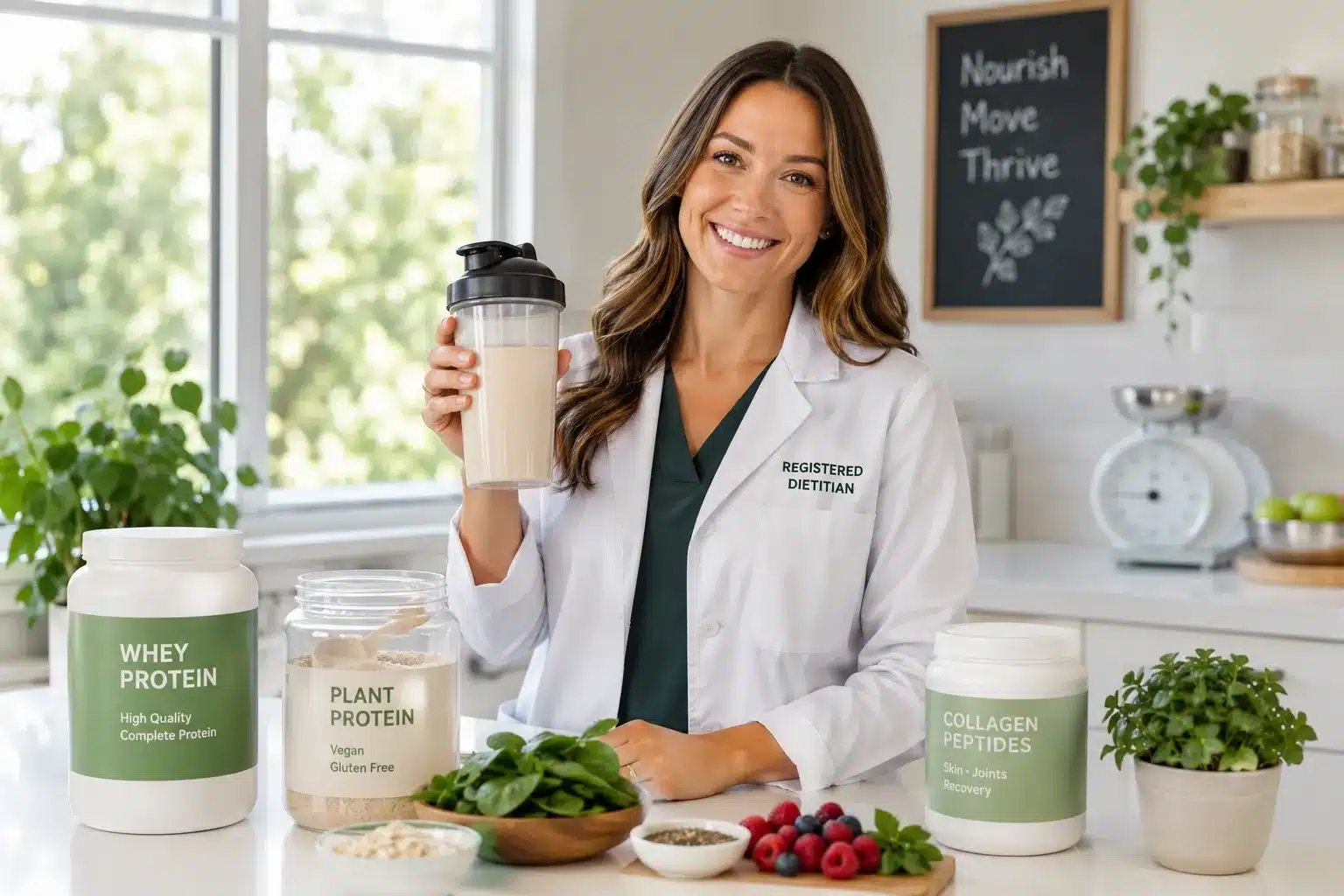
What Is GLP-1 Protein Powder and How Does It Work
GLP-1 protein powder is not a separate drug category, it is a standard dietary protein supplement specifically selected and marketed for people taking GLP-1 receptor agonist medications like semaglutide or tirzepatide. The term refers to protein powders that are well-suited to the nutritional challenges GLP-1 users face, particularly low appetite, reduced food volume tolerance, and the risk of losing lean muscle mass during weight loss.
GLP-1 medications work by mimicking the glucagon-like peptide-1 hormone, which slows gastric emptying, reduces hunger signals, and increases feelings of fullness. The result is a significant reduction in daily calorie intake. While this drives weight loss, it also creates a real risk: when calories drop sharply without enough protein, the body breaks down muscle tissue for energy alongside fat. Protein powder addresses this by delivering a concentrated, low-volume source of amino acids that the body uses to maintain and repair muscle.
The mechanism is straightforward. Consuming adequate protein, especially leucine-rich sources like whey, stimulates muscle protein synthesis, the process by which muscle fibers are rebuilt. On a GLP-1 medication, when someone might only manage 1,000-1,400 calories per day, a single 25-gram protein shake can represent 20-25% of their daily protein goal in just a few ounces of liquid.
Key point: GLP-1 protein powder works by closing the gap between what a person can comfortably eat and what their muscles actually need to stay intact during weight loss.
Best Protein Powder for GLP-1 Users: What to Look For
The best protein powder for GLP-1 users prioritizes digestibility, amino acid quality, low calorie density, and tolerability, especially for people experiencing nausea or GI sensitivity from their medication.
Here are the criteria that matter most when choosing:
Protein source:
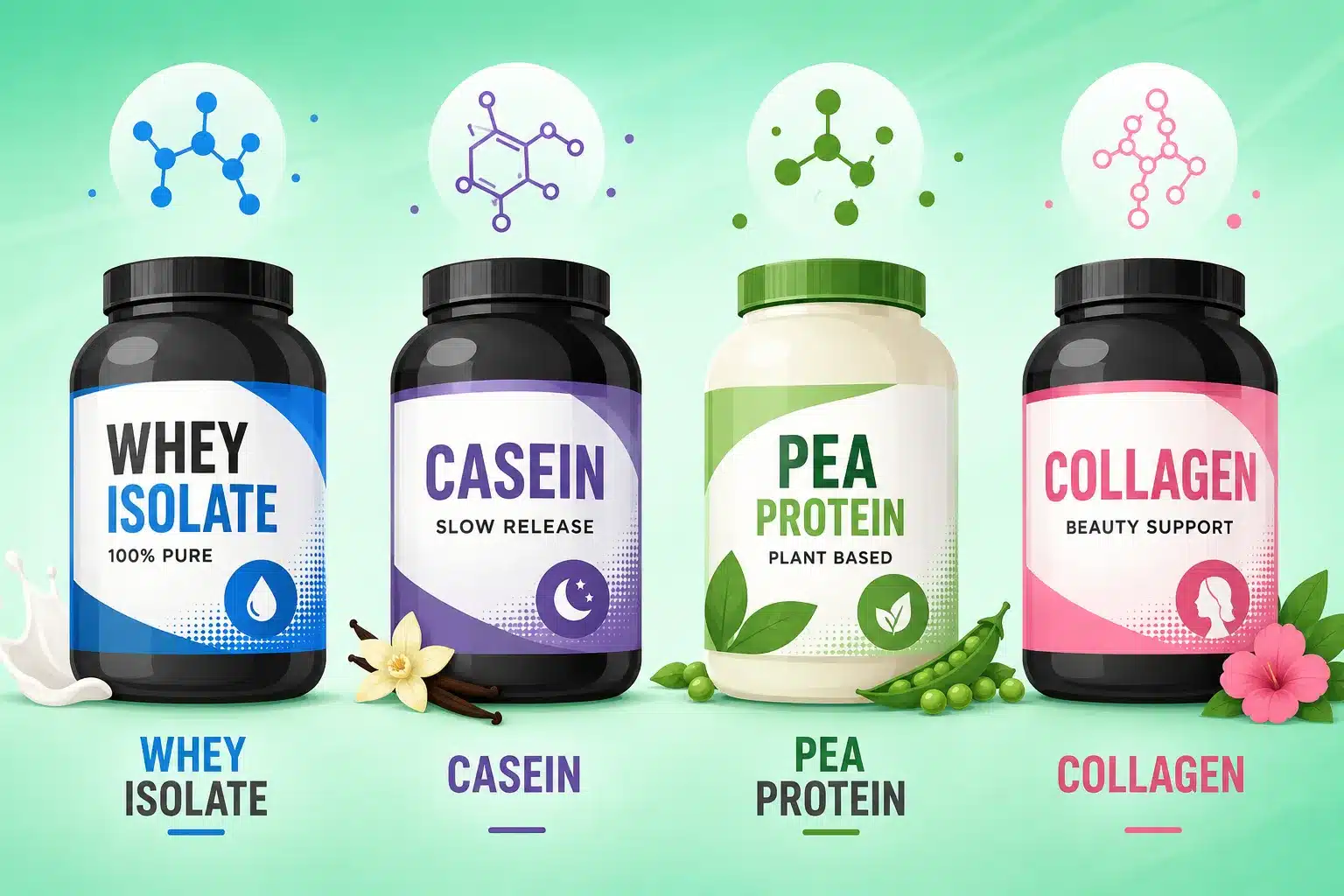
- Whey isolate, fastest-absorbing, highest leucine content, low lactose. Best overall choice for most users.
- Casein, slower digesting, good for overnight muscle support, but heavier on the stomach.
- Pea protein, excellent for dairy-free users; slightly lower leucine but effective when combined with rice protein.
- Pea + rice blend, the best plant-based option; together they provide a complete amino acid profile comparable to whey.
- Collagen peptides, not a complete protein; useful for joint and skin support but should not be the primary protein source.
Serving profile to look for:
- At least 20-25 grams of protein per serving
- Under 5 grams of sugar per serving
- Under 150 calories per serving
- Low fat content (under 4 grams)
- No artificial sweeteners known to cause GI distress (such as sorbitol or maltitol)
Third-party testing: Look for NSF Certified for Sport, Informed Sport, or USP verification. These certifications confirm the product contains what the label claims and is free from banned substances.
Mixability and taste: On GLP-1, even mild nausea can make thick, overly sweet shakes intolerable. Choose a powder that mixes easily in water or a small amount of milk without clumping, and opt for neutral or lightly flavored varieties if you are sensitive.
GLP-1 Protein Powder Brands Compared
Several brands have positioned themselves as the best GLP-1 protein powder options, and a few consistently earn high marks across the criteria above. The table below compares leading options based on protein type, serving profile, and key features.
| Brand / Product | Protein Type | Protein per Serving | Calories per Serving | Best For | Third-Party Tested |
|---|---|---|---|---|---|
| Momentous Whey Isolate | Whey Isolate | 20g | 100 | Clean-label, low calorie | NSF Certified |
| Transparent Labs 100% Whey | Whey Isolate + Concentrate | 28g | 150 | High protein per serving | Informed Choice |
| Garden of Life Sport | Pea + Sprouted Grain Blend | 30g | 160 | Plant-based, certified organic | NSF Certified |
| Orgain Organic Protein | Pea + Brown Rice | 21g | 150 | Budget-friendly plant-based | Self-certified |
| Levels Grass-Fed Whey | Whey Concentrate | 24g | 130 | Grass-fed, minimal ingredients | Informed Sport |
| Vital Proteins Collagen Peptides | Collagen (incomplete) | 18g | 70 | Joint/skin support only | No |
Decision rule: Choose whey isolate if you tolerate dairy and want maximum muscle-preservation benefit. Choose a pea-rice blend if you are dairy-free or lactose intolerant. Avoid using collagen as your sole protein source, it lacks tryptophan and is not a complete protein.
How Much Protein Powder Should I Take on GLP-1
Most GLP-1 users should aim for 1.2-1.6 grams of protein per kilogram of body weight per day, based on general clinical nutrition guidance for adults in a caloric deficit who are also engaging in resistance exercise. For a 180-pound (82 kg) person, that translates to roughly 98-131 grams of protein daily.
Because GLP-1 medications reduce appetite so dramatically, many users find they can only eat one or two small meals per day. If those meals provide 40-60 grams of protein from food, a protein powder supplement can bridge the remaining 40-70 grams.
Practical approach:
- Start with one serving (20-25g) per day and assess tolerance.
- Add a second serving if your total daily protein from food is still below target.
- Do not exceed three servings per day unless directed by a registered dietitian, more protein does not mean more muscle if total calories are already very low.
Common mistake: Many GLP-1 users assume they need less protein because they are eating less. The opposite is true. During a caloric deficit, protein needs are actually higher because the body is more likely to catabolize muscle tissue for fuel.
For a broader look at how GLP-1 programs structure nutrition alongside medication, see our guide to affordable GLP-1 weight loss programs.
GLP-1 Protein Powder for Muscle Loss Prevention
Muscle loss is one of the most clinically significant side effects of rapid GLP-1-assisted weight loss. Research published in journals covering metabolic medicine has noted that without deliberate protein intake and resistance training, a meaningful portion of weight lost on GLP-1 medications can come from lean muscle mass rather than fat alone.
Protein powder is the most practical tool for GLP-1 users to protect against this outcome, for one simple reason: it delivers a high dose of muscle-building amino acids in a very small volume of food. When someone can only manage 4-6 ounces of food at a sitting, a protein shake is far more efficient than trying to eat a full chicken breast.
Why leucine matters: Leucine is the amino acid most responsible for triggering muscle protein synthesis. Whey isolate contains approximately 10-11% leucine by weight, making it the most effective single-ingredient protein source for muscle preservation. A 25-gram serving of whey isolate delivers roughly 2.5 grams of leucine, close to the 2-3 gram threshold commonly cited in sports nutrition literature as the minimum needed to maximally stimulate muscle protein synthesis.
Resistance training is non-negotiable: Protein powder alone will not prevent muscle loss. Combining adequate protein intake with two to three resistance training sessions per week is the evidence-supported approach. Even light resistance exercise, bodyweight squats, resistance bands, or light dumbbell work, meaningfully reduces the proportion of weight lost from muscle.
For more on how specific GLP-1 medications compare in terms of body composition outcomes, see our detailed breakdown of which GLP-1 medication works best for weight loss.
Is Protein Powder Safe While Taking Ozempic or Wegovy
Yes. Protein powder is safe to use while taking Ozempic (semaglutide for type 2 diabetes), Wegovy (semaglutide for weight management), Mounjaro, or Zepbound (tirzepatide). There is no pharmacological interaction between dietary protein supplements and GLP-1 receptor agonist medications.
That said, a few practical considerations apply:
- Nausea: GLP-1 medications commonly cause nausea, especially in the first few weeks or after a dose increase. Some protein powders, particularly those with artificial sweeteners, high fat content, or very sweet flavors, can worsen nausea. Opt for unflavored or lightly flavored powders mixed in water during sensitive periods.
- Gastric emptying: GLP-1 medications slow gastric emptying. This means protein shakes will be digested more slowly than usual, which is actually beneficial for satiety but can cause discomfort if you drink a large shake too quickly.
- Kidney considerations: People with pre-existing kidney disease should consult their physician before significantly increasing protein intake, as higher protein loads increase the kidneys’ filtration workload.
Bottom line: For the vast majority of GLP-1 users without underlying kidney disease, protein powder is not only safe, it is actively recommended by many obesity medicine specialists to protect lean mass during treatment.
Can You Mix Protein Powder with GLP-1 Medication
You cannot mix protein powder directly with a GLP-1 injectable medication, these are two entirely separate things delivered by different routes (injection versus oral consumption). The question most people are actually asking is whether it is safe to consume protein powder at the same time as taking a GLP-1 medication, and the answer is yes.
For oral semaglutide (Rybelsus), the medication must be taken on an empty stomach with plain water and you should wait 30 minutes before eating or drinking anything else. In that specific case, do not drink a protein shake immediately after taking your dose, wait the full 30 minutes. Injectable GLP-1 medications (Ozempic, Wegovy, Mounjaro, Zepbound) have no such timing restriction; you can eat or drink protein shakes at any time relative to your injection.
Best Time to Drink Protein Powder on GLP-1
The best time to drink protein powder on GLP-1 is in the morning or immediately after resistance training. These are the two windows where protein intake has the greatest practical and physiological impact for GLP-1 users.
Morning: GLP-1 medications suppress appetite most strongly in the morning for many users. A protein shake at breakfast ensures you hit a significant portion of your daily protein goal before appetite suppression makes eating feel impossible later in the day.
Post-workout: The post-exercise window (within 30-60 minutes after resistance training) is when muscle protein synthesis is most active. A 20-25 gram serving of fast-absorbing whey isolate during this window directly supports muscle repair and growth.
What to avoid:
- Drinking a large protein shake right before bed if you are already experiencing GI discomfort from your medication.
- Replacing all meals with protein shakes, whole food protein sources provide micronutrients that shakes do not.
- Waiting until the end of the day to consume all your protein in one sitting. Spreading protein across two to three smaller servings is more effective for muscle protein synthesis than one large dose.

GLP-1 Protein Powder vs Regular Protein Powder
There is no meaningful biochemical difference between a “GLP-1 protein powder” and a standard high-quality protein powder. The distinction is primarily a marketing label. What actually matters is whether the product meets the specific needs of someone on a GLP-1 medication.
Where GLP-1-marketed powders sometimes differ:
- Lower calorie counts per serving (to accommodate the reduced calorie budgets of GLP-1 users)
- Added digestive enzymes to improve tolerability given slowed gastric emptying
- Added fiber (like inulin or psyllium) to support gut motility, which GLP-1 medications can reduce
- Smaller serving sizes designed for people with low food volume tolerance
The honest assessment: Many products labeled “for GLP-1 users” are standard protein powders with minor reformulations and a significant price premium. Before paying extra for a GLP-1-specific label, compare the ingredient list and nutrition facts against a standard whey isolate or pea-rice blend. In many cases, a well-chosen standard protein powder delivers equal or better value.
Choose a GLP-1-specific product if: You want the convenience of a formula already optimized for digestive sensitivity, or if you value the added fiber and enzyme components.
Choose a standard high-quality protein powder if: You want the best protein-per-dollar ratio and are comfortable reading labels to confirm quality.
For context on how GLP-1 programs are structured more broadly, our overview of GLP-1 weight loss programs covers what to expect from a full treatment plan.
Best Tasting GLP-1 Friendly Protein Powder
Taste is not a trivial concern for GLP-1 users, nausea is one of the most common side effects of these medications, and a protein powder that smells or tastes too sweet, too artificial, or too thick can trigger or worsen that nausea.
Flavors and formats that tend to work best:
- Unflavored whey isolate mixed into Greek yogurt, oatmeal, or a smoothie, no sweetness, no smell, minimal taste impact.
- Vanilla in a light, not-too-sweet formulation, works well mixed with water or unsweetened almond milk.
- Chocolate can be polarizing; opt for a cocoa-based formula rather than artificial chocolate flavoring, which is more likely to cause nausea.
- Unflavored pea protein has a mild, slightly earthy taste that many GLP-1 users find easier to tolerate than heavily sweetened options.
Brands frequently cited for taste tolerance among GLP-1 users:
- Momentous Whey Isolate (Vanilla), widely praised for a clean, not-too-sweet taste
- Transparent Labs Whey Isolate (Unflavored), no sweetener, mixes cleanly
- Naked Whey (Unflavored), minimal ingredients, very neutral taste
Practical tip: Mix your protein powder with cold water rather than warm liquid. Heat can intensify artificial sweetener flavors and make nausea worse. If you are in a particularly sensitive phase of your medication, try half a serving mixed in 12 ounces of cold water rather than a full serving in 6 ounces.
GLP-1 Protein Powder for Weight Loss Results
Protein powder supports GLP-1 weight loss results primarily by preserving lean muscle mass, not by accelerating fat loss directly. This distinction matters because the number on the scale is not the whole story, body composition (the ratio of fat to muscle) determines long-term metabolic health and how your body looks and functions after weight loss.
Studies on high-protein diets during caloric restriction consistently show that higher protein intake is associated with greater preservation of lean mass and, in some cases, slightly greater fat loss compared to lower-protein approaches. When combined with GLP-1 medication, which already provides a powerful caloric deficit, adequate protein intake from supplements and food helps ensure that the weight being lost is predominantly fat rather than muscle.
Realistic expectations for 2026:
- Protein powder will not make GLP-1 medications work faster.
- It will not add significant calories that undermine weight loss if you choose a low-calorie isolate.
- It will meaningfully reduce the proportion of muscle lost during treatment, which matters enormously for long-term weight maintenance and metabolic rate.
If you are exploring the full range of GLP-1 options available, our guide to semaglutide for fat loss provides a detailed breakdown of treatment approaches.
GLP-1 Protein Powder Cost and Pricing
Quality protein powder for GLP-1 users typically costs between $1.50 and $3.00 per serving, depending on protein source, brand, and whether the product carries third-party certifications.
Typical price ranges in 2026:
- Budget plant-based options (Orgain, Naked Pea): $0.90,$1.40 per serving
- Mid-range whey isolate (Levels, Isopure): $1.50,$2.00 per serving
- Premium certified options (Momentous, Transparent Labs): $2.00,$3.00 per serving
- GLP-1-specific branded formulas: $2.50,$4.00 per serving (often a premium over comparable standard products)
Cost-saving strategies:
- Buy in bulk (2-5 lb tubs cost less per serving than single-serving packets)
- Subscribe-and-save options from direct-to-consumer brands typically save 10-20%
- Compare cost-per-gram of protein, not cost-per-tub, a larger tub with fewer grams of protein per serving can be more expensive in practice
Is a GLP-1-specific protein powder worth the premium? In most cases, no. A third-party-tested whey isolate or pea-rice blend at the mid-range price point delivers comparable protein quality. The premium for a GLP-1 label is largely marketing unless the formula includes genuinely useful additions like digestive enzymes or added fiber.
For those looking at the broader cost of GLP-1 treatment, our breakdown of GLP-1 programs under $300 covers affordable medication access options.
What Protein Powder Do Doctors Recommend for GLP-1 Users
Most obesity medicine physicians and registered dietitians who work with GLP-1 patients recommend a few consistent principles rather than a single brand. The guidance from clinical nutrition experts in 2026 generally centers on the following:
Clinician consensus recommendations:
- Prioritize whey isolate for patients who tolerate dairy, it has the best evidence base for muscle protein synthesis.
- For dairy-free patients, a pea-rice blend is the preferred alternative.
- Choose products with third-party testing (NSF, Informed Sport, or USP) to ensure label accuracy.
- Avoid products with excessive added sugars, proprietary blends that obscure ingredient amounts, or very high calorie counts per serving.
- Collagen peptides can be used as a supplement to a primary protein source but should not replace it.
Some clinicians specifically recommend brands like Momentous, Transparent Labs, and Garden of Life Sport because of their transparent labeling and third-party certifications. However, no major clinical guideline endorses a specific commercial brand, the recommendation is always about the category of product, not a particular label.
When to involve a registered dietitian: If you are on a GLP-1 medication and losing weight rapidly, working with a registered dietitian (RD) who specializes in obesity medicine can help you build a personalized protein strategy. Many GLP-1 telehealth programs now include dietitian access as part of their service.
GLP-1 Protein Powder Side Effects
Protein powder itself has a low side-effect profile for most healthy adults, but GLP-1 users face a few specific considerations worth knowing.
Common issues and how to manage them:
- Bloating and gas: Whey concentrate (not isolate) contains more lactose, which can cause bloating. Switch to whey isolate or a plant-based option if this is a problem.
- Worsened nausea: Overly sweet or artificially flavored powders can trigger nausea in GLP-1 users. Use unflavored options during sensitive periods.
- Constipation: GLP-1 medications already slow gut motility; high protein intake without adequate fiber and hydration can worsen constipation. Drink plenty of water and consider a fiber supplement alongside your protein powder.
- Kidney strain: Not a concern for healthy adults at normal protein intakes, but people with pre-existing kidney disease should consult their physician before increasing protein significantly.
- Blood sugar impact: Most high-quality protein powders have minimal carbohydrate content and do not cause meaningful blood sugar spikes. This is generally beneficial for GLP-1 users who are managing type 2 diabetes or prediabetes.
Edge case: A small number of people experience increased acid reflux when using protein shakes on GLP-1 medications, likely because slowed gastric emptying means the shake sits in the stomach longer. If this happens, try smaller serving sizes (half a scoop) and avoid lying down for 30-60 minutes after drinking.
For more on managing blood sugar alongside GLP-1 treatment, see our review of blood sugar supplements that some clinicians recommend as adjuncts to medication.
How to Choose the Best GLP-1 Protein Powder: A Practical Checklist
Use this checklist before purchasing any protein powder as a GLP-1 user:
Protein quality:
- At least 20 grams of protein per serving
- Complete amino acid profile (whey, or pea + rice blend)
- Leucine content listed or verifiable (aim for 2g+ per serving)
Ingredient cleanliness:
- No artificial sweeteners known to cause GI distress (sorbitol, maltitol)
- Under 5g of sugar per serving
- No proprietary blends that hide individual ingredient amounts
- Short ingredient list (under 10 ingredients is a good benchmark)
Third-party testing:
- NSF Certified for Sport, Informed Sport, or USP verified
Tolerability for GLP-1 users:
- Available in unflavored or lightly flavored options
- Mixes cleanly in water (check user reviews for clumping)
- No heavy cream or oil-based additions that could worsen nausea
Value:
- Cost per gram of protein is competitive (aim for under $0.10/gram of protein)
- Available in bulk sizes to reduce per-serving cost
Key Takeaway
The single most important thing GLP-1 users can do nutritionally is protect their muscle mass during weight loss. Protein powder is the most practical, low-volume, high-efficiency tool for doing that. Choose a third-party-tested whey isolate or pea-rice blend with at least 20 grams of protein per serving, keep the ingredient list clean, and time your intake in the morning or post-workout. The brand matters far less than the protein source, the amino acid profile, and whether you can actually tolerate it given your medication’s side effects.
Frequently Asked Questions
Can I take protein powder every day while on semaglutide?
Yes. Daily protein powder use is safe for most people on semaglutide. There is no pharmacological reason to limit frequency, and consistent daily use is the most effective way to meet protein targets when appetite is suppressed.
How much protein do I need per day on Ozempic?
A general target for GLP-1 users is 1.2-1.6 grams of protein per kilogram of body weight daily. For a 180-pound (82 kg) person, that is roughly 98-131 grams per day. Your registered dietitian or prescribing physician can give you a personalized target.
Is whey protein better than plant protein for GLP-1 users?
Whey isolate has a slight edge due to its higher leucine content and faster absorption rate, both of which are important for muscle protein synthesis. However, a pea-rice protein blend is a strong alternative for dairy-free users and delivers comparable muscle-preservation benefits when consumed in adequate amounts.
Will protein powder break my fast if I am doing intermittent fasting on GLP-1?
Yes. Protein powder contains calories and amino acids that trigger metabolic responses, breaking a fast. If you are practicing intermittent fasting alongside GLP-1 treatment, consume your protein shake within your eating window.
Can protein powder cause weight gain while on GLP-1?
Protein powder can contribute to weight gain only if it adds more calories than your body needs. Most high-quality isolates contain 100-130 calories per serving. Used to replace a meal or snack rather than added on top of a full diet, they will not cause weight gain and may actually support fat loss by preserving muscle and keeping you full.
What is the best protein powder for someone experiencing nausea on Wegovy?
Unflavored whey isolate or unflavored pea protein mixed in cold water is the most tolerable option during periods of nausea. Avoid heavily sweetened, high-fat, or artificially flavored products until nausea subsides.
Is collagen protein good enough for GLP-1 users?
No, not as a primary protein source. Collagen is an incomplete protein, it lacks tryptophan, and does not effectively stimulate muscle protein synthesis. It can be useful as a supplement for joint and skin health but should be used alongside a complete protein source, not instead of one.
How long does it take to see results from protein powder on GLP-1?
Protein powder does not produce visible results on its own, it works by preventing muscle loss during weight loss, which is an outcome you measure over months, not days. Combined with resistance training and consistent GLP-1 medication use, most people notice better body composition (more toned, less “soft”) within 8-12 weeks.
Can I add protein powder to food instead of drinking it as a shake?
Absolutely. Stirring unflavored protein powder into Greek yogurt, oatmeal, soups, or sauces is an excellent strategy for GLP-1 users who cannot tolerate drinking a full shake. This approach also slows protein absorption slightly, which can be beneficial for sustained satiety.
Do I need protein powder if I eat enough protein from food?
No. Protein powder is a supplement, if you can consistently meet your protein targets through whole food sources like chicken, fish, eggs, Greek yogurt, and legumes, you do not need a supplement. Most GLP-1 users find this difficult in practice due to appetite suppression, which is why protein powder is so commonly recommended.
7 Best GLP-1 Providers Ranked: Accreditation, Flexibility & Support Compared (2026 Update)
32,000+ Patients Can't All Be Wrong: See the Top-Rated GLP-1 Providers: Compared on accreditation, plan flexibility, and patient support — updated for 2026.
BMI MD GLP-1 Microdosing Plan
- Specialized microdosing options (sublingual drops or low-dose injections)
- Ideal for maintaining weight or tapering off higher doses safely
- Fully bundled plan with no hidden monthly platform memberships
DirectMeds Weight Loss Solutions
- Sourced from accredited, state-licensed 503A compounding pharmacies
- No-frills high-volume savings passed directly to the patient
- Includes clinical consultation and cold-chain shipping updates
MEDVi Flat-Rate Telehealth
- Flat monthly rate holds steady even at maximum maintenance doses
- No dosage upcharges or graduation fee penalties
- Offers both injectable and advanced oral thin-film delivery options
Gala GLP-1 Care Program
- All-inclusive plan with no standalone membership costs
- Continuous text-based messaging access with state-licensed clinicians
- Temperature-controlled, cold-chain medication shipping included
Measured GLP-1 Metabolic Health
- Comprehensive metabolic health screening and expert intake analysis
- Predictable long-term budgeting with stable plan pricing
- High-end responsive dashboard with integrated diagnostic support
Refills GLP-1 (TryRefills Plan)
- Flat rate holds steady as titration scales up
- Includes clinical guides for active side-effect management
- Bundles in foundational nutritional strategies alongside medication
AltRx GLP-1 Transactional Reorders
- Zero recurring auto-billing — pay entirely on a transactional basis
- Rapid text-to-order format saves time for experienced patients
- Provides both injectable forms and fast-dissolving tablet variations
Conclusion
Meeting your protein needs on a GLP-1 medication is not optional, it is one of the most important things you can do to protect your long-term health outcomes during treatment. Muscle mass drives your metabolic rate, your physical function, and your ability to maintain weight loss after you stop or reduce your medication. Protein powder makes hitting your daily protein target achievable even when your appetite is dramatically reduced.
Actionable next steps:
- Calculate your daily protein target: multiply your body weight in kilograms by 1.2 to 1.6. Use the lower end if you are sedentary, the higher end if you are doing regular resistance training.
- Estimate how much protein you currently get from food on a typical day. The gap between that number and your target is what protein powder should fill.
- Choose a third-party-tested whey isolate (if you tolerate dairy) or a pea-rice blend (if you do not). Look for at least 20 grams of protein per serving and under 150 calories.
- Start with one serving per day in the morning or post-workout. Adjust based on tolerance and whether you are hitting your daily protein goal.
- Combine protein supplementation with two to three resistance training sessions per week for the best body composition outcomes.
- Review your plan with your prescribing clinician or a registered dietitian, particularly if you have kidney disease, diabetes, or other conditions that affect protein metabolism.
For a complete picture of GLP-1 treatment options and costs, explore our guides on GLP-1 agonists for weight loss and compounding pharmacy options for semaglutide to understand the full landscape of support available to you in 2026.
References
- Wilkinson, D.J., et al. “Effects of leucine and its metabolite beta-hydroxy-beta-methylbutyrate on human skeletal muscle protein metabolism.” Journal of Physiology, 2013. https://physoc.onlinelibrary.wiley.com/doi/10.1113/jphysiol.2013.263038
- Bray, G.A., et al. “Effect of dietary protein content on weight gain, energy expenditure, and body composition during overeating.” JAMA, 2012. https://jamanetwork.com/journals/jama/fullarticle/1103993
- Lim, J., et al. “Protein requirements and recommendations for older adults: A review.” Nutrients, 2020. https://www.mdpi.com/2072-6643/12/8/2236
- Wilding, J.P.H., et al. “Once-weekly semaglutide in adults with overweight or obesity.” New England Journal of Medicine, 2021. https://www.nejm.org/doi/full/10.1056/NEJMoa2032183
- Jäger, R., et al. “International Society of Sports Nutrition Position Stand: Protein and exercise.” Journal of the International Society of Sports Nutrition, 2017. https://jissn.biomedcentral.com/articles/10.1186/s12970-017-0177-8
- Phillips, S.M., & Van Loon, L.J.C. “Dietary protein for athletes: From requirements to optimum adaptation.” Journal of Sports Sciences, 2011. https://www.tandfonline.com/doi/abs/10.1080/02640414.2011.619204
Tags: GLP-1 protein powder, best protein powder for GLP-1 users, semaglutide nutrition, muscle loss prevention GLP-1, whey isolate GLP-1, plant protein GLP-1, Ozempic protein supplement, Wegovy diet tips, GLP-1 weight loss nutrition, protein powder for weight loss, GLP-1 supplement guide, tirzepatide protein intake

With over 13 years of experience in holistic health blogging, I aim to help you navigate your wellness journey with honest insights, expert-backed advice, and a sprinkle of real-world practicality.
Certified Wellness Writer | Herbal Nutrition Advocate | Wellness Research Enthusiast


