
do you have to take glp 1 forever

Last updated: September 25, 2026
Quick Answer: Most people do not have to take GLP-1 medications forever by law or medical mandate, but the evidence strongly suggests that long-term or indefinite use is necessary for most adults to maintain the weight loss and metabolic benefits these drugs provide. When people stop, the majority regain a significant portion of their lost weight within one to two years. Whether you need to stay on a GLP-1 long term depends on your health goals, your underlying conditions, and how well you can sustain lifestyle changes after stopping.
Key Takeaways
- GLP-1 medications like semaglutide and tirzepatide are designed to treat chronic conditions, not to cure them, so benefits largely persist only while you take the drug.
- After stopping, most people regain roughly two-thirds of their lost weight within one year, based on data from the STEP 1 trial extension. [1]
- A 2026 BMJ systematic review found average regain of about 0.4 kg (roughly 1 lb) per month after stopping, with most patients returning to near-baseline weight within 1.5 to 2 years. [3]
- Expert clinicians at Stanford, Cleveland Clinic, and MUSC consistently frame GLP-1s as long-term or lifelong medications for obesity and type 2 diabetes, similar to blood pressure or cholesterol drugs. [1][2][10]
- A minority of patients can maintain weight loss after stopping, especially those who make major, sustained lifestyle changes, but this is not the norm.
- Nearly half of patients (about 47.6%) stop GLP-1 therapy due to cost or insurance issues, not by medical choice. [5]
- If you have type 2 diabetes, the case for staying on a GLP-1 long term is even stronger, since stopping often worsens blood sugar control.
- Stopping should be done gradually, under medical supervision, with intensified diet and exercise habits already in place.
- Affordable options, including compounded semaglutide, exist for people who want to continue but face cost barriers.
Is GLP-1 Meant to Be a Lifelong Medication?
For most people with obesity or type 2 diabetes, yes, GLP-1 medications are generally intended for long-term or lifelong use. Obesity and type 2 diabetes are chronic, biologically driven conditions, not short-term problems that a drug can permanently fix and then be withdrawn.
7 Best GLP-1 Providers Ranked: Accreditation, Flexibility & Support Compared (2026 Update)
32,000+ Patients Can't All Be Wrong: See the Top-Rated GLP-1 Providers. We compared the leading online GLP-1 providers based on program features, clinical support, convenience, and overall value.
BMI MD GLP-1 Microdosing Plan
- Specialized microdosing options, including sublingual drops and low-dose injections
- Designed for people interested in maintaining weight or gradually adjusting treatment
- Bundled program structure without a separate monthly platform membership
- Online access makes the process convenient from home

DirectMeds Weight Loss Solutions
- Online weight-loss program with a straightforward patient experience
- Compounded medication options through state-licensed compounding pharmacies
- Includes clinical consultation as part of the process
- Provides shipping updates to help patients track their orders
MEDVi Flat-Rate Telehealth
- Flat-rate telehealth approach designed for easier budgeting
- No dosage-based pricing increases within the advertised program structure
- Offers injectable and oral thin-film delivery options
- Includes medical screening and asynchronous provider consultations
Gala GLP-1 Care Program
- Text-based access to state-licensed clinicians
- Cold-chain medication shipping included in the program
- Month-to-month program structure
- Designed for people who value convenient ongoing support
Measured GLP-1 Metabolic Health
- Comprehensive metabolic health screening and intake analysis
- Designed around longer-term metabolic health management
- Responsive dashboard with integrated health tracking tools
- Useful option for patients who value a more data-focused experience
Refills GLP-1 (TryRefills Plan)
- Clinical guidance designed to help patients manage common treatment concerns
- Includes foundational nutritional strategies alongside medication
- Designed around predictable ongoing treatment
- No hidden startup or processing fees according to the program information provided
AltRx GLP-1 Transactional Reorders
- Transactional reorder model without recurring auto-billing
- Designed for patients who already understand their treatment routine
- Fast text-to-order process for convenient reorders
- Offers injectable and fast-dissolving tablet variations
Expert clinicians at Stanford University note that the physicians they consulted “unanimously agree” that GLP-1s are usually intended for life, comparing them directly to medications for hypertension or high cholesterol. [1] The Medical University of South Carolina similarly states there is “no evidence” of any lasting reset effect after stopping, and that weight regain is the main expected outcome because the underlying biology of obesity does not change. [10]
That said, “lifelong” is not an absolute rule for everyone. A subset of patients, particularly those who undergo major lifestyle transformation or bariatric surgery alongside GLP-1 therapy, may be able to maintain some of their results after stopping. But this is the exception, not the standard outcome.
What Happens If You Stop Taking GLP-1 Drugs?
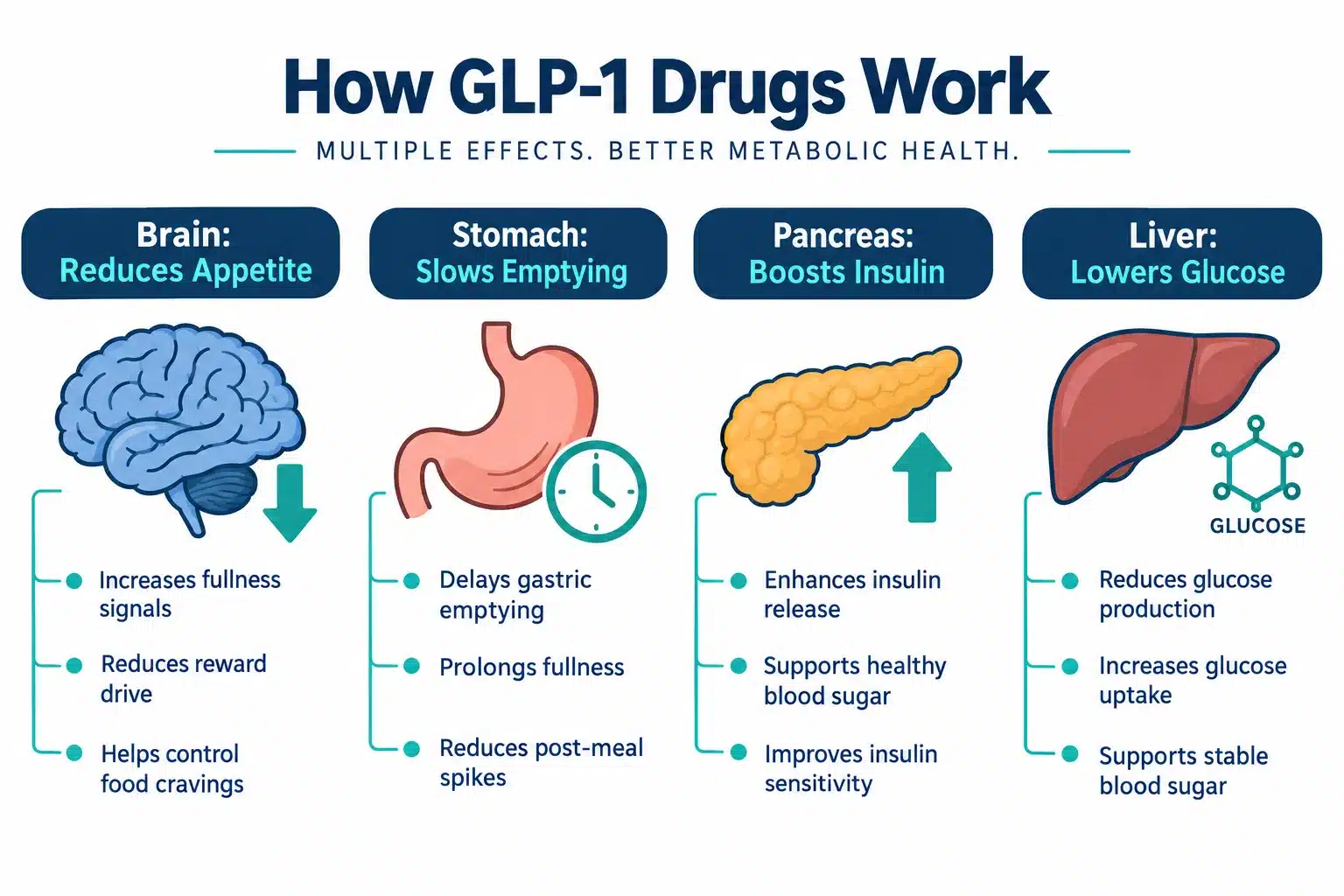
When you stop a GLP-1 medication, the drug’s appetite-suppressing and metabolic effects fade relatively quickly, and weight tends to return. This is not a personal failure. It reflects the biology of obesity as a chronic disease.
Key outcomes after stopping include:
- Weight regain: The most consistent finding across studies. The STEP 1 trial extension showed participants regained roughly two-thirds of their lost weight within one year of stopping semaglutide. [1][8]
- Rising blood sugar: For people with type 2 diabetes or prediabetes, blood glucose levels typically climb back toward pre-treatment levels.
- Worsening cardiometabolic markers: Blood pressure, cholesterol, and blood sugar all tend to worsen, not just body weight. [4]
- Return of hunger: GLP-1 drugs work partly by suppressing appetite signals in the brain. Once the drug is gone, those signals return to their prior intensity.
An AARP review of multiple studies found that among people who stopped GLP-1 treatment, 82% of those who had lost weight regained at least 25% of their initial weight loss within a year. [4] These numbers make a strong case for viewing discontinuation as a high-risk event that requires careful planning.
Do You Gain Weight Back After Stopping GLP-1? How Much?
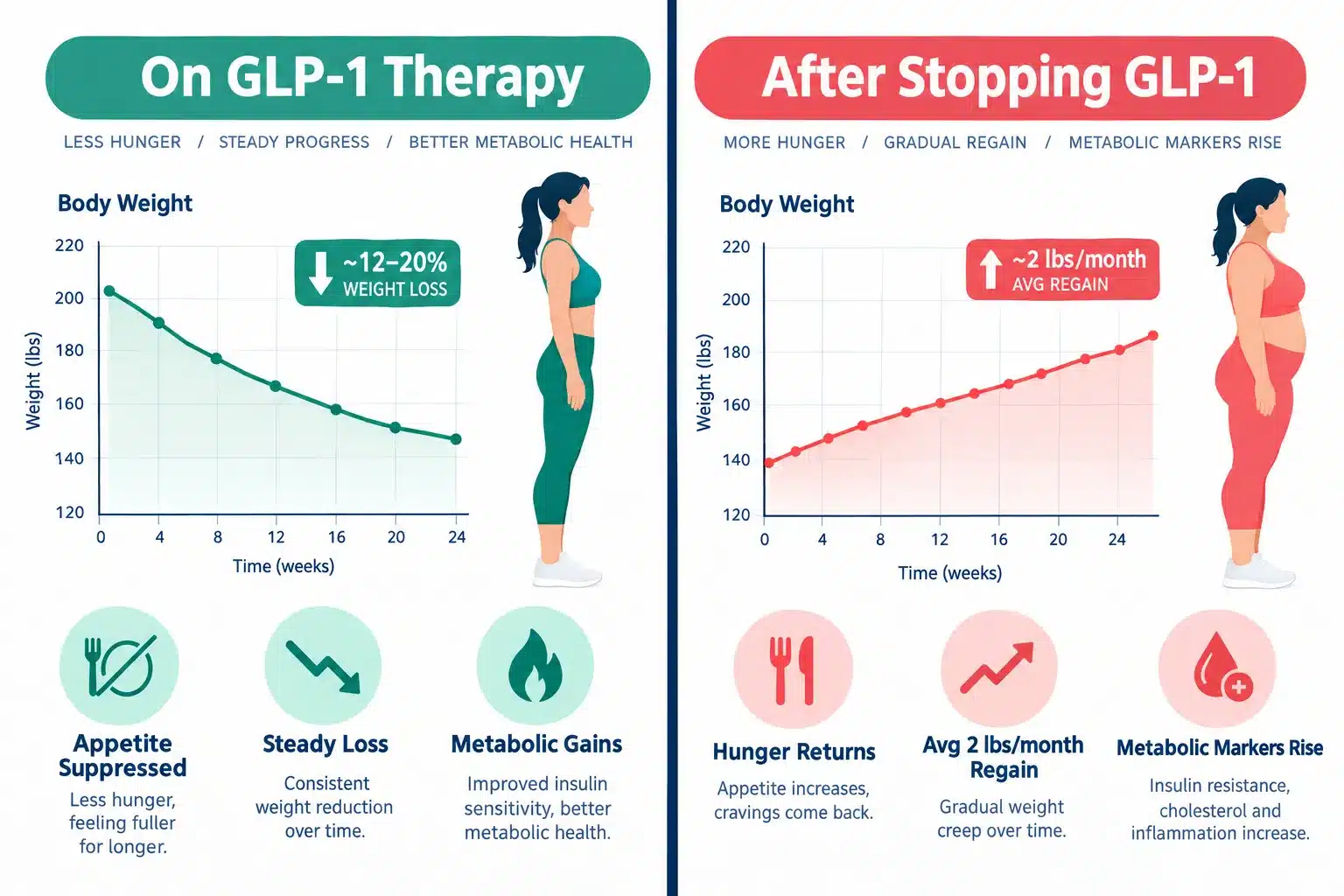
Yes, weight regain after stopping GLP-1 therapy is common and often substantial. A 2026 systematic review published in the BMJ found that weight returns at approximately 0.4 kg (about 1 lb) per month after stopping modern weight-management medications, with most patients approaching their original weight within 1.5 to 2 years. [3][8]
Here is a practical summary of the regain data:
| Medication Stopped | Approximate Regain at 1 Year | Source |
|---|---|---|
| Semaglutide (Wegovy) | ~2/3 of total lost weight | STEP 1 extension [1][12] |
| Tirzepatide (Zepbound) | ~60% of lost weight | eClinicalMedicine analysis [3][8] |
| Liraglutide (Saxenda) | Higher regain rate vs newer drugs | Cleveland Clinic review [2] |
| All modern GLP-1s (pooled) | ~0.4 kg per month | BMJ systematic review [3] |
A Cleveland Clinic review noted that complete weight regain by two years occurred in 23% of former semaglutide users, 21% of those who had taken tirzepatide, and 27% of those who stopped liraglutide. [2] Even with continued healthy eating and exercise after stopping, clinicians there warn that regaining 3 to 4% of body weight is common. [2]
The GLP-1 rebound weight gain is real, but it is not inevitable for every person. The key variable is how much of the behavioral and metabolic work a person can sustain independently after stopping.
Can You Go Off GLP-1 and Keep the Weight Off?
Some people can maintain their weight loss after stopping, but they are in the minority. A Cleveland Clinic review cited a study where more than 50% of people who stopped their GLP-1 kept their weight off or continued losing after one year. [2] However, by the two-year mark, a much larger share had regained significant weight, and the longer someone is off the medication, the higher the risk of full regain.
The people most likely to maintain results after stopping tend to share these characteristics:
- They made major, durable changes to diet and physical activity during treatment.
- They lost weight gradually rather than relying entirely on the drug’s appetite suppression.
- They have a strong support system (dietitian, behavioral coach, or structured program).
- They do not have severe obesity or significant insulin resistance driving their weight.
If you are considering stopping, the honest framing is this: it is possible to keep the weight off, but the odds favor regain without continued treatment or extraordinary lifestyle discipline. Discussing this honestly with your prescriber before stopping is essential.
For those exploring cost-effective ways to stay on therapy, our guide to affordable semaglutide telehealth options covers practical access routes in 2026.
How Long Do You Have to Stay on GLP-1?
There is no fixed minimum duration, but the data consistently show that longer treatment produces better outcomes. Observational data from a large Cleveland Clinic real-world cohort found that patients who stayed on therapy achieved an average 1-year weight loss of 11.9%, compared with only 3.6% in those who discontinued early and 6.8% in those who discontinued later. [7]
A 2024 JAMA Internal Medicine study following more than 18,000 adults using semaglutide or tirzepatide found that about 54% discontinued during follow-up, which likely limited their long-term benefit significantly. [6]
General clinical guidance on duration:
- Short-term use (3 to 6 months): May produce initial weight loss but provides little lasting benefit for most people. Regain typically begins quickly after stopping.
- Medium-term use (6 to 24 months): Produces more substantial loss, but regain still occurs after stopping unless lifestyle changes are firmly established.
- Long-term or indefinite use: Recommended by most obesity specialists for patients with significant obesity, type 2 diabetes, or cardiovascular risk factors. [1][2][3]
UT Southwestern’s 2026 GLP-1 FAQ explicitly counsels patients that ongoing therapy is often necessary to maintain maximal benefit, citing the STEP 1 extension result as the primary evidence. [12]
Can GLP-1 Be a Temporary Treatment, or Is It Permanent?
GLP-1 therapy can be temporary, but choosing to use it that way carries a meaningful risk of losing your results. The distinction between short-term and long-term use matters a great deal.
Short-term use: Some clinicians use GLP-1s as a bridge, helping a patient lose enough weight to qualify for bariatric surgery, or to reduce metabolic risk before a procedure. In these cases, the drug is intentionally temporary because another intervention takes over.
Long-term use: For most adults with chronic obesity or type 2 diabetes, long-term use is the model that evidence supports. UCSF has noted that manufacturers themselves recommend staying on GLP-1s indefinitely, and that people who go off the drugs eventually regain much of their lost weight. [14]
The practical difference between short-term and long-term GLP-1 use:
- Short-term users typically regain weight within 12 to 24 months of stopping.
- Long-term users maintain metabolic benefits as long as they stay on the medication.
- Long-term users face ongoing cost and access challenges that short-term users do not.
For a breakdown of what different GLP-1 options cost, see our compounding pharmacy semaglutide cost breakdown and our guide to the least expensive GLP-1 for weight loss.
Do You Need GLP-1 Forever If You Have Diabetes?
For people with type 2 diabetes, the case for long-term GLP-1 use is especially strong. GLP-1 receptor agonists lower blood sugar, reduce cardiovascular risk, and support weight loss simultaneously, making them a cornerstone of modern diabetes management.
Stopping a GLP-1 when you have type 2 diabetes typically means:
- Blood glucose levels rise, often requiring additional or alternative medications.
- HbA1c (a key diabetes marker) tends to worsen within weeks to months.
- Cardiovascular risk factors like blood pressure and cholesterol may increase.
- Body weight typically climbs back, which further worsens insulin resistance.
For people with type 2 diabetes who respond well to a GLP-1, most endocrinologists recommend continuing indefinitely unless a specific contraindication develops. The drug is not just managing weight in this population. It is actively treating the metabolic disease itself.
If cost is a barrier to staying on therapy, our review of GLP-1 agonists for weight loss and diabetes and the guide to cheapest GLP-1 without insurance are worth reading before you make a decision based on price alone.
What Percentage of People Stay on GLP-1 Long Term?
Adherence to GLP-1 therapy long term is lower than most people expect. A 2024 JAMA Internal Medicine study of more than 18,000 adults found that roughly 54% had discontinued semaglutide or tirzepatide during the follow-up period. [6] Real-world discontinuation rates are substantially higher than those seen in clinical trials, where participants receive more support and monitoring.
The most common reasons people stop:
- Cost and insurance issues: About 47.6% of patients in a late-2025 study cited cost or insurance as the primary reason for stopping. [5]
- Side effects: About 14.6% stopped due to gastrointestinal or other side effects. [5]
- Drug shortages: Over 11% stopped because of supply issues. [5]
- Feeling they had reached their goal: Some patients stop once they hit a target weight, not realizing the risk of regain.
These numbers matter because they show that the question of “do you have to take GLP-1 forever” is often answered not by medical choice but by financial reality. For people who want to continue but face cost barriers, compounded semaglutide through telehealth providers is one practical option. Our comparison of Hims vs Henry Meds covers two popular platforms side by side.
Can You Take Breaks from GLP-1, or Do You Have to Take It Continuously?
Technically, you can take breaks from GLP-1 therapy, but doing so is not recommended without medical guidance, and the evidence suggests breaks carry a real cost in terms of weight and metabolic control.
Taking a break from a GLP-1 means:
- Appetite suppression fades within days to weeks.
- Weight typically begins to return within the first month. [3][9]
- Blood sugar control worsens if you have diabetes.
- Restarting the drug usually requires titrating back up from a lower dose, which extends the time before full effect returns.
Harvard Health’s 2026 guidance on weaning off GLP-1s emphasizes gradual dose reduction rather than abrupt stops, along with intensified lifestyle measures and close monitoring of weight and metabolic markers for anyone attempting to come off. [9] If significant regain or metabolic deterioration occurs during a break, restarting is often recommended. [9][10]
The bottom line: breaks are possible but costly in terms of results. If cost is driving the break, exploring lower-cost options first is a better strategy than stopping entirely.
How Do People Maintain Weight Loss After Quitting GLP-1?
Maintaining weight loss after stopping a GLP-1 is genuinely difficult, but it is not impossible. The people who do it best tend to follow a structured approach that begins before they stop the medication, not after.
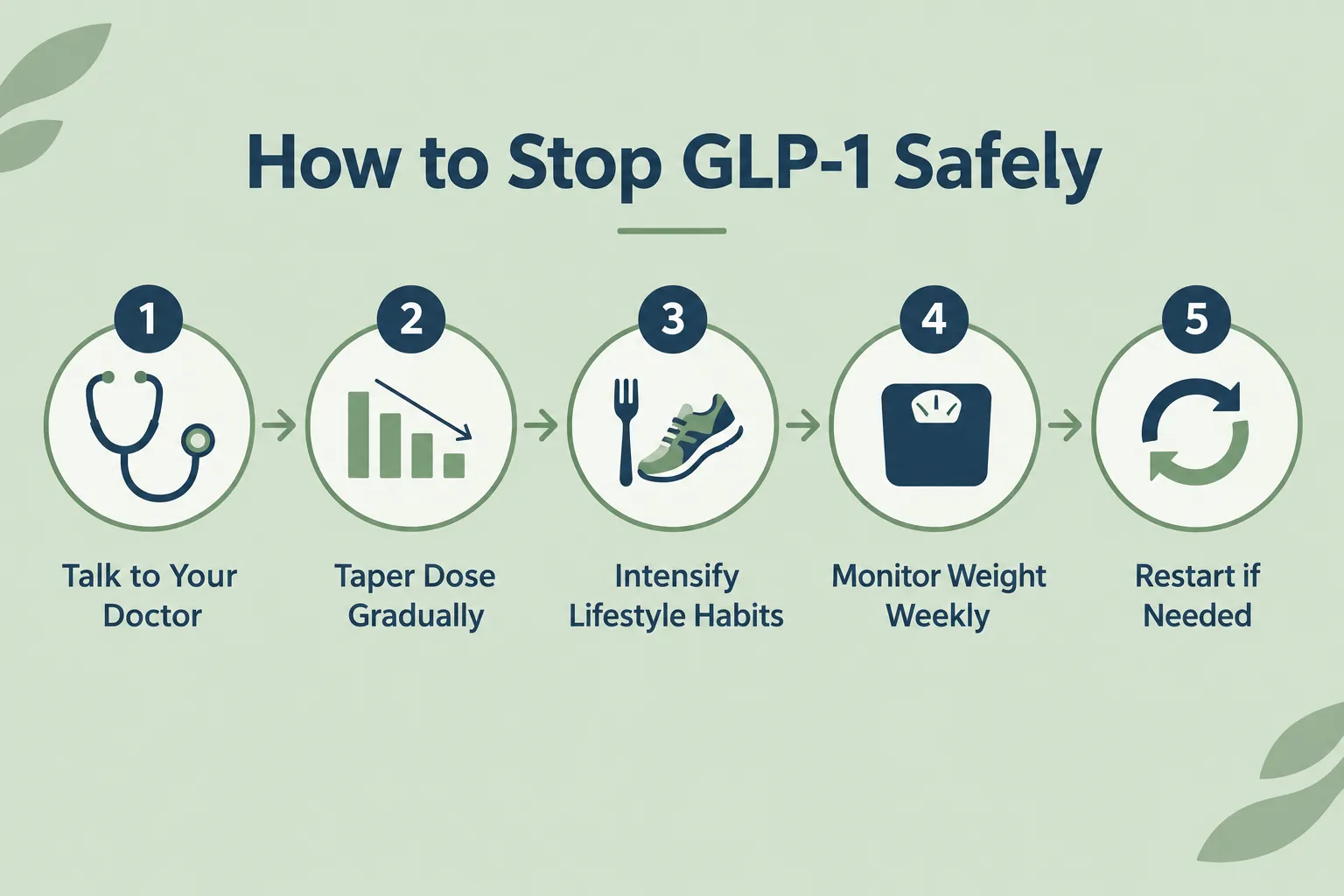
Practical steps for maximizing your chances:
- Build the habits before you stop. Use the time on medication to establish consistent meal patterns, regular exercise, and stress management. The drug makes this easier. Use that window deliberately.
- Taper gradually, not abruptly. Harvard and MUSC both recommend gradual dose reduction under medical supervision rather than stopping cold. [9][10]
- Work with a dietitian. Structured nutritional guidance significantly improves outcomes after stopping.
- Monitor your weight weekly. Catching early regain (2 to 5 lbs) is much easier to address than catching it at 20 lbs.
- Have a plan for restarting. Know in advance at what point of regain you and your doctor will consider resuming the medication. This removes the emotional barrier to restarting if needed.
- Address the underlying drivers. Sleep, stress, and sedentary behavior all contribute to weight regain. Treating these as medical issues, not willpower failures, improves outcomes.
For those who want to stay on a GLP-1 but need a more affordable path, our guide to the best GLP-1 options under $300 and semaglutide injections dosage guidance are useful starting points.
GLP-1 Long-Term Side Effects of Staying on It
Staying on a GLP-1 long term is generally considered safe based on current evidence, but it is not without considerations. The most common side effects, nausea, vomiting, and constipation, tend to diminish over time as the body adjusts. Long-term concerns that clinicians monitor include:
- Muscle mass loss: Some weight loss on GLP-1s comes from lean mass, not just fat. Resistance training and adequate protein intake are strongly recommended to offset this.
- Gastrointestinal effects: Chronic slowing of stomach emptying can cause persistent nausea or reflux in some patients.
- Thyroid considerations: GLP-1s carry a boxed warning about a potential risk of thyroid C-cell tumors based on animal studies, though this has not been confirmed in humans at clinical doses. People with a personal or family history of medullary thyroid carcinoma should not use these drugs.
- Pancreatitis risk: Rare, but patients with a history of pancreatitis require careful monitoring.
- Bone density: Some studies suggest possible effects on bone density with long-term use, though this remains an active area of research.
For most people without these specific risk factors, the long-term risk-benefit profile of staying on a GLP-1 is favorable, especially compared to the health risks of sustained obesity or uncontrolled type 2 diabetes.
7 Best GLP-1 Providers Ranked: Accreditation, Flexibility & Support Compared (2026 Update)
32,000+ Patients Can't All Be Wrong: See the Top-Rated GLP-1 Providers: Compared on accreditation, plan flexibility, and patient support — updated for 2026.
BMI MD GLP-1 Microdosing Plan
- Specialized microdosing options (sublingual drops or low-dose injections)
- Ideal for maintaining weight or tapering off higher doses safely
- Fully bundled plan with no hidden monthly platform memberships
DirectMeds Weight Loss Solutions
- Sourced from accredited, state-licensed 503A compounding pharmacies
- No-frills high-volume savings passed directly to the patient
- Includes clinical consultation and cold-chain shipping updates
MEDVi Flat-Rate Telehealth
- Flat monthly rate holds steady even at maximum maintenance doses
- No dosage upcharges or graduation fee penalties
- Offers both injectable and advanced oral thin-film delivery options
Gala GLP-1 Care Program
- All-inclusive plan with no standalone membership costs
- Continuous text-based messaging access with state-licensed clinicians
- Temperature-controlled, cold-chain medication shipping included
Measured GLP-1 Metabolic Health
- Comprehensive metabolic health screening and expert intake analysis
- Predictable long-term budgeting with stable plan pricing
- High-end responsive dashboard with integrated diagnostic support
Refills GLP-1 (TryRefills Plan)
- Flat rate holds steady as titration scales up
- Includes clinical guides for active side-effect management
- Bundles in foundational nutritional strategies alongside medication
AltRx GLP-1 Transactional Reorders
- Zero recurring auto-billing — pay entirely on a transactional basis
- Rapid text-to-order format saves time for experienced patients
- Provides both injectable forms and fast-dissolving tablet variations
Conclusion
The question of whether do you have to take GLP-1 forever does not have a single answer, but the evidence leans heavily in one direction: for most adults with obesity or type 2 diabetes, long-term or indefinite use is what produces lasting results. Stopping carries a high probability of weight regain, worsening metabolic markers, and returning to where you started within one to two years. [1][3][9]
That said, “forever” is not an absolute requirement. A minority of patients who make major, sustained lifestyle changes can maintain meaningful results after stopping. The key is making that decision intentionally, with medical supervision, and with a clear plan for monitoring and restarting if needed.
Actionable next steps:
- Talk to your prescriber before making any changes to your GLP-1 regimen.
- If cost is the barrier, explore compounded options or telehealth platforms before stopping entirely.
- Use your time on medication to build the lifestyle habits that will support you if you ever do stop.
- Monitor weight and metabolic markers closely if you taper off, and treat early regain as a signal to act, not a reason for shame.
- Review our guides on compounded semaglutide patient reviews and FDA rules on compounded semaglutide in 2026 to stay informed on your options.
GLP-1 therapy is a powerful tool. Using it wisely means understanding that for most people, it works best as a long-term commitment, not a short-term fix.
Frequently Asked Questions
Q: Do you have to take GLP-1 forever to keep the weight off?
A: For most people, yes. The evidence consistently shows that stopping a GLP-1 leads to significant weight regain, typically two-thirds of lost weight within one year. Long-term use is the most reliable way to maintain results. [1][3]
Q: What happens to your body when you stop taking a GLP-1?
A: Appetite returns to its previous level, weight typically begins to climb within weeks, and cardiometabolic markers like blood sugar, blood pressure, and cholesterol tend to worsen. [4][9]
Q: Can you stop GLP-1 after reaching your goal weight?
A: You can, but most people who do will regain a substantial portion of their weight within one to two years. Stopping after reaching a goal weight requires a very strong, sustained lifestyle foundation to avoid full regain. [2][10]
Q: How fast do you gain weight back after stopping semaglutide?
A: On average, about 2 lbs (0.9 kg) per month after stopping, putting most people on track to return to near their original weight within two years. [3][8]
Q: Is it safe to stay on a GLP-1 indefinitely?
A: Current evidence suggests long-term use is generally safe for most people without specific contraindications. Clinicians recommend monitoring thyroid function, gastrointestinal health, muscle mass, and bone density with long-term use.
Q: Can I take breaks from my GLP-1 medication?
A: Breaks are possible but not recommended without medical guidance. Weight and metabolic gains begin to reverse quickly, and restarting requires re-titrating the dose. [9][10]
Q: Do I need a GLP-1 forever if I have type 2 diabetes?
A: For most people with type 2 diabetes who respond well, long-term or indefinite use is strongly recommended. Stopping typically worsens blood sugar control and cardiovascular risk factors. [1][2]
Q: Why do so many people stop taking GLP-1 drugs?
A: Cost and insurance issues are the primary driver, cited by about 47.6% of people who discontinue. Side effects account for about 14.6%, and drug shortages for over 11%. [5]
Q: Is there any evidence that GLP-1 has a lasting effect after you stop?
A: No. The Medical University of South Carolina states there is “no evidence” of substantial lingering effect after stopping, and weight regain is the main expected outcome. [10]
Q: What is the best way to stop a GLP-1 if I need to?
A: Taper gradually under medical supervision, intensify diet and exercise habits before stopping, monitor weight weekly, and have a clear plan for restarting if significant regain occurs. [9][10]
References
[1] GLP-1s 101: Weight Loss, Wegovy, Ozempic, Zepbound, Side Effects, Safe Use – https://med.stanford.edu/news/insights/2026/06/glp1s-101-weight-loss-wegovy-ozempic-zepbound-side-effects-safe-use.html
[2] How Long to Take GLP-1 for Weight Loss – https://health.clevelandclinic.org/how-long-to-take-glp-1-for-weight-loss
[3] Will You Have to Take Weight Loss Medication Forever? – https://www.houstonmethodist.org/blog/articles/2026/jun/will-you-have-to-take-weight-loss-medication-forever/
[4] Stopping GLP-1 Weight Regain – https://www.aarp.org/health/drugs-supplements/stopping-glp-1-weight-regain/
[5] PubMed: Discontinuation of Obesity Pharmacotherapy – https://pubmed.ncbi.nlm.nih.gov/41039650/
[6] JAMA Internal Medicine: Semaglutide and Tirzepatide Discontinuation Study – https://jamanetwork.com/journals/jamainternalmedicine/fullarticle/2821080
[7] Cleveland Clinic Research: Injectable Medications for Obesity in Real-World Settings – https://newsroom.clevelandclinic.org/2025/06/10/cleveland-clinic-research-finds-injectable-medications-for-obesity-produce-smaller-weight-loss-in-a-real-world-setting-compared-to-randomized-clinical-trials
[8] GLP-1 Medications and Future Nutrition, Part Two – https://wsro.org/glp-1-medications-and-future-nutrition/glp-1-medications-and-future-nutrition-part-two
[9] Weaning Off a GLP-1: Tips for the Transition – https://www.health.harvard.edu/medications-and-treatments/weaning-off-a-glp-1-tips-for-the-transition
[10] Coming Off GLP-1s – https://www.musc.edu/content-hub/News/2026/04/06/coming-off-glp-1s


