
Can You Take GLP-1 While Breastfeeding? What Nursing Mothers Need to Know in 2026

Last updated: September 25, 2026
Quick Answer
Most major health authorities advise against taking GLP-1 medications while breastfeeding. The core reason is not confirmed harm to infants, but a lack of sufficient safety data. The UK’s MHRA states these drugs “should not be taken” during breastfeeding, and FDA labeling in the US highlights the absence of reliable human lactation data rather than offering a clear green light. [3][10]
Key Takeaways
- Current medical consensus recommends avoiding GLP-1 receptor agonists while breastfeeding due to insufficient safety data, not proven harm.
- The MHRA in the UK explicitly advises against use during breastfeeding; FDA labeling echoes this cautious stance. [3][10]
- A 2024 semaglutide lactation study found no drug detected in breast milk, but the sample size was too small to draw firm conclusions. [9]
- Tirzepatide (Mounjaro) shows pharmacokinetic properties suggesting negligible transfer into breast milk, but clinical evidence remains limited. [6]
- Oral semaglutide carries an additional concern: its absorption enhancer (salcaprozate sodium) has unknown effects on nursing infants.
- “Pump and dump” is not a validated strategy for GLP-1 medications given their long half-lives.
- GLP-1 prescriptions in postpartum women are rising sharply, making this question more clinically urgent than ever. [2]
- Safer, evidence-backed alternatives for postpartum weight management exist and should be discussed with your provider.
- If GLP-1 therapy is medically necessary, individualized decisions with close monitoring are possible in select cases. [8]
- Always consult a healthcare provider before starting, stopping, or restarting any GLP-1 medication around the breastfeeding period.
Is It Safe to Take GLP-1 Medications While Breastfeeding?
The short answer is: we don’t know enough to say it’s safe, so most clinicians advise against it. This is a “caution from uncertainty” position, not a declaration that these drugs are definitively dangerous to nursing infants.
7 Best GLP-1 Providers Ranked: Accreditation, Flexibility & Support Compared (2026 Update)
32,000+ Patients Can't All Be Wrong: See the Top-Rated GLP-1 Providers. We compared the leading online GLP-1 providers based on program features, clinical support, convenience, and overall value.
BMI MD GLP-1 Microdosing Plan
- Specialized microdosing options, including sublingual drops and low-dose injections
- Designed for people interested in maintaining weight or gradually adjusting treatment
- Bundled program structure without a separate monthly platform membership
- Online access makes the process convenient from home

DirectMeds Weight Loss Solutions
- Online weight-loss program with a straightforward patient experience
- Compounded medication options through state-licensed compounding pharmacies
- Includes clinical consultation as part of the process
- Provides shipping updates to help patients track their orders
MEDVi Flat-Rate Telehealth
- Flat-rate telehealth approach designed for easier budgeting
- No dosage-based pricing increases within the advertised program structure
- Offers injectable and oral thin-film delivery options
- Includes medical screening and asynchronous provider consultations
Gala GLP-1 Care Program
- Text-based access to state-licensed clinicians
- Cold-chain medication shipping included in the program
- Month-to-month program structure
- Designed for people who value convenient ongoing support
Measured GLP-1 Metabolic Health
- Comprehensive metabolic health screening and intake analysis
- Designed around longer-term metabolic health management
- Responsive dashboard with integrated health tracking tools
- Useful option for patients who value a more data-focused experience
Refills GLP-1 (TryRefills Plan)
- Clinical guidance designed to help patients manage common treatment concerns
- Includes foundational nutritional strategies alongside medication
- Designed around predictable ongoing treatment
- No hidden startup or processing fees according to the program information provided
AltRx GLP-1 Transactional Reorders
- Transactional reorder model without recurring auto-billing
- Designed for patients who already understand their treatment routine
- Fast text-to-order process for convenient reorders
- Offers injectable and fast-dissolving tablet variations
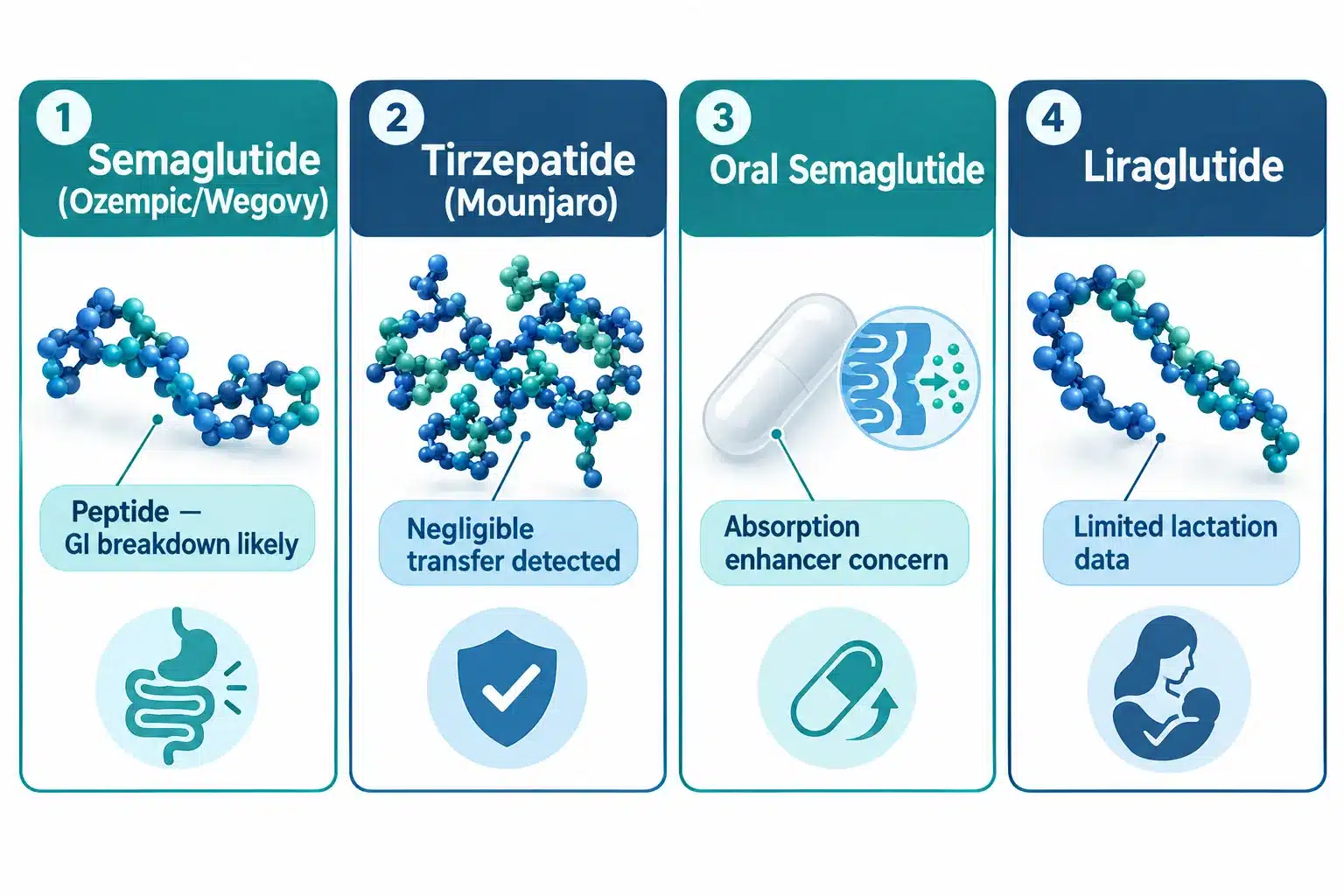
GLP-1 receptor agonists, including semaglutide (Ozempic, Wegovy) and tirzepatide (Mounjaro, Zepbound), are large peptide molecules. Because of their molecular size and the way they’re broken down in the gut, experts believe very little would survive digestion if transferred through breast milk to an infant. [9] However, “probably low risk” is not the same as “proven safe,” and that distinction matters when a vulnerable newborn is involved.
The regulatory picture is clear on one point: neither the FDA nor the MHRA has approved any GLP-1 drug for use during breastfeeding. [3][10] The UK’s Specialist Pharmacy Service notes that GLP-1 receptor agonists should be used with caution in reproductive-age women, and breastfeeding is listed as a contraindication for most formulations. [3]
Key factors that make this question complicated:
- GLP-1 drugs have long half-lives (semaglutide’s half-life is approximately one week), so stopping briefly before a feed does not clear the drug.
- Most clinical trials excluded pregnant and breastfeeding women, leaving a genuine data gap.
- Postpartum caloric restriction, which GLP-1s can cause, may affect milk supply and infant nutrition.
- Infant GI tracts may behave differently from adult GI tracts when exposed to these peptides.
What GLP-1 Drugs Pass Into Breast Milk?
The transfer of GLP-1 drugs into breast milk appears to be minimal, but the evidence base is thin. A 2024 study on semaglutide found no detectable drug in breast milk samples, though the small sample size limits how much weight that finding can carry. [9]
Here’s what is known by drug:
| Drug | Brand Names | Transfer Evidence | Key Concern |
|---|---|---|---|
| Semaglutide (injectable) | Ozempic, Wegovy | No drug detected in one small study [9] | Limited data; long half-life |
| Semaglutide (oral) | Rybelsus | Unknown transfer | Absorption enhancer (SNAC) risk |
| Tirzepatide | Mounjaro, Zepbound | Pharmacokinetics suggest negligible transfer [6] | Very limited clinical data |
| Liraglutide | Victoza, Saxenda | Minimal animal data; no robust human studies | No human lactation studies |
| Exenatide | Byetta, Bydureon | Very limited data | Large molecule; likely low oral bioavailability |
The theoretical reason transfer is likely low: GLP-1 agonists are large peptide molecules. Even if trace amounts entered breast milk, they would likely be broken down in the infant’s digestive tract before reaching systemic circulation. [6][9] But “likely” is doing a lot of work in that sentence.
Ozempic, Wegovy, and Breastfeeding Safety: Can I Breastfeed on Semaglutide?
No major health authority currently endorses breastfeeding while taking semaglutide. MotherToBaby, a widely cited teratology information service, notes that injectable semaglutide is “likely low risk” based on its pharmacokinetic profile, but still recommends discussing alternatives with your provider. [9]
The injectable form (Ozempic, Wegovy) is considered lower risk than the oral form for one specific reason: oral semaglutide (Rybelsus) contains salcaprozate sodium (SNAC), an absorption enhancer that allows the drug to cross the gut wall. The safety of SNAC in nursing infants is unknown, and that uncertainty tips the scale further toward avoidance. [9]
For women who were taking Wegovy or Ozempic before becoming pregnant and are now breastfeeding, the practical question is whether to restart. Most clinicians advise waiting until breastfeeding is complete. If weight management is urgent, safer alternatives exist (see the alternatives section below).
“The current evidence is limited but not alarming. The concern is what we don’t know, not what we’ve found.”, Clinical lactation expert commentary summarized from recent overviews [8]
Tirzepatide (Mounjaro) Breastfeeding: Safe or Not?
Tirzepatide is not considered safe for use during breastfeeding based on current evidence, though the available data are more reassuring than alarming. MotherToBaby’s fact sheet on tirzepatide notes that “very small amounts” may appear in breast milk and that these amounts would likely undergo GI breakdown in the infant, reducing systemic exposure. [6]
However, tirzepatide is a dual GIP/GLP-1 receptor agonist, meaning it acts on two hormone pathways simultaneously. The long-term effects of even trace exposure on infant development are not studied. The drug’s half-life is approximately five days, which means it stays in the body for weeks after the last dose.
What this means practically:
- Stopping tirzepatide one or two days before a feed does not meaningfully reduce infant exposure.
- A full washout takes approximately 25 days (five half-lives).
- If you’re considering Mounjaro for weight loss and are currently nursing, discuss timing with your prescriber before starting.
For a deeper look at how compounded versions of this drug work, see our guide on compounded tirzepatide.
GLP-1 Receptor Agonists and Lactation Effects: Does It Affect Milk Supply?
GLP-1 medications may affect milk supply indirectly, primarily through appetite suppression and caloric restriction. There is no direct evidence that GLP-1 drugs suppress prolactin or otherwise interfere with the hormonal machinery of lactation. [5]
The concern is nutritional: breastfeeding requires roughly 400 to 500 additional calories per day. GLP-1 drugs significantly reduce appetite and food intake. If a nursing mother is eating substantially less because of GLP-1-induced satiety, her milk volume and caloric content could decline, affecting infant growth.
Indirect effects on milk supply to watch for:
- Reduced maternal caloric intake leading to lower milk volume
- Nausea and vomiting (common GLP-1 side effects) reducing fluid and nutrient intake
- Rapid maternal weight loss, which can mobilize fat-soluble compounds into breast milk
- Dehydration from GI side effects, which directly reduces milk production [5]
These are not theoretical concerns. They are documented side effect patterns of GLP-1 drugs that become more clinically significant in the context of breastfeeding. [5]
How Long After Stopping GLP-1 Can I Breastfeed?
The waiting period depends on which drug you were taking and its half-life. There is no official FDA or MHRA-endorsed washout period specifically for breastfeeding resumption, but pharmacokinetic principles provide a practical guide.
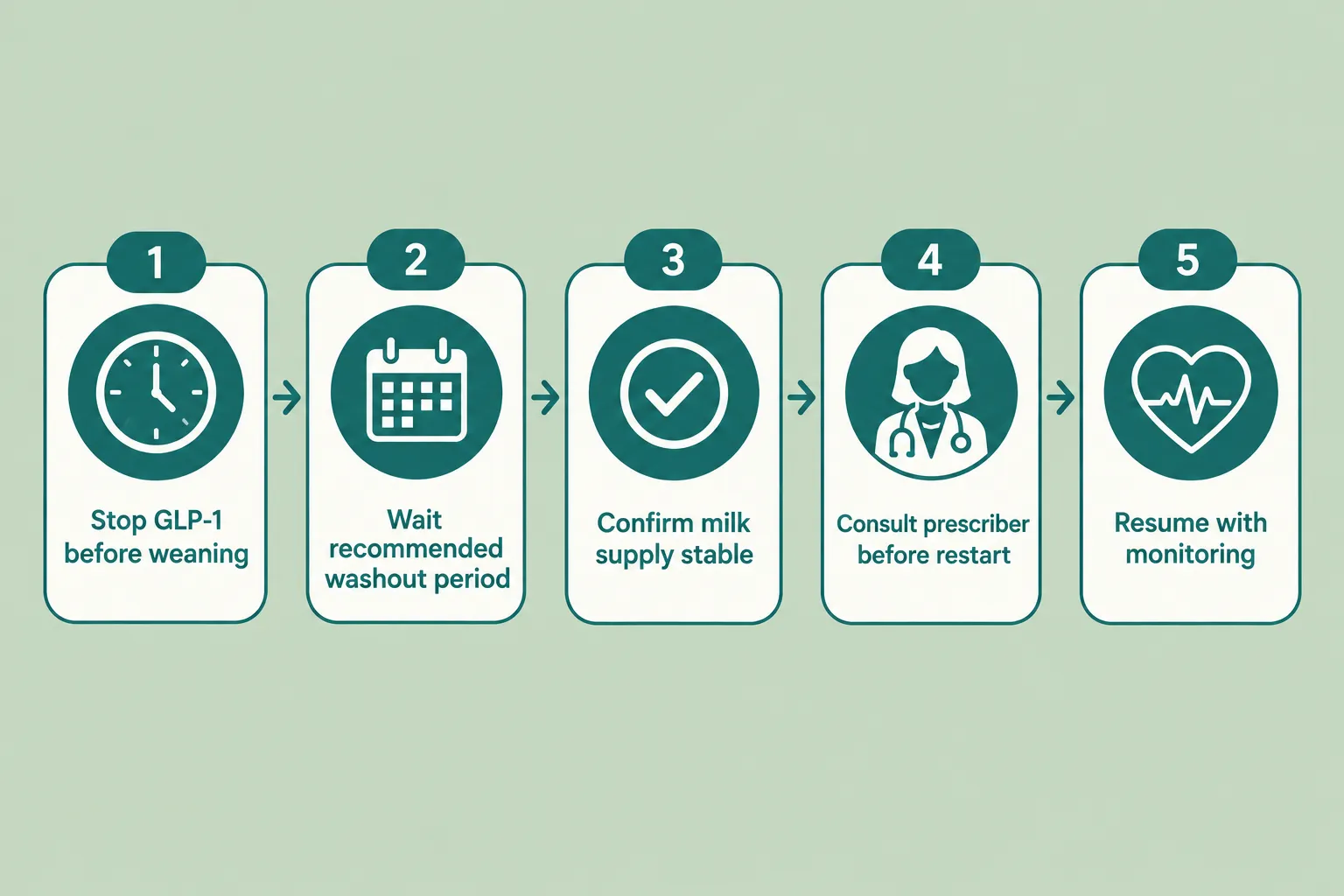
Estimated washout timelines (five half-lives as standard clearance benchmark):
- Semaglutide (weekly injection): Half-life approximately 7 days; full washout approximately 5 weeks
- Tirzepatide (weekly injection): Half-life approximately 5 days; full washout approximately 25 days
- Liraglutide (daily injection): Half-life approximately 13 hours; full washout approximately 3 days
- Oral semaglutide: Half-life approximately 7 days; full washout approximately 5 weeks (plus SNAC concerns)
These are estimates based on pharmacokinetics, not clinical breastfeeding studies. The safest approach is to consult your prescriber and, if possible, a certified lactation consultant before making any decisions.
Do not use “pump and dump” as a strategy for GLP-1 medications. Given the long half-lives of semaglutide and tirzepatide, pumping and discarding milk does not meaningfully reduce infant exposure. The drug remains in your bloodstream and will continue to appear in milk until it clears your system. [5]
GLP-1 Side Effects That Could Harm a Baby Through Breast Milk
The direct transfer risk appears low, but indirect effects deserve attention. The most clinically relevant concern is not the drug molecule itself reaching the infant, but the downstream consequences of what GLP-1 drugs do to the mother’s body. [5][8]
Potential indirect risks to the nursing infant:
- Reduced caloric intake: Appetite suppression may leave the mother under-nourished, reducing milk quality and quantity.
- GI symptoms: Nausea, vomiting, and diarrhea can cause maternal dehydration, directly lowering milk output.
- Rapid weight loss: Accelerated fat breakdown can release stored environmental toxins (such as persistent organic pollutants) into breast milk.
- Hypoglycemia risk: In mothers with type 2 diabetes using GLP-1 drugs alongside other agents, low blood sugar can affect alertness and safe infant care.
For the infant directly, if any peptide does transfer, the most likely outcome is GI breakdown with no systemic effect. But effects on infant GI motility or gut microbiome development are not studied. [6][9]
What Doctors Say About GLP-1 Breastfeeding Compatibility
Medical opinion in 2026 sits firmly in the “cautious avoidance” camp, though some experts are beginning to call for individualized approaches. [8]
The Breastfeeding Network in the UK advises that GLP-1 drugs should not be used during breastfeeding. [1] The NHS Specialist Pharmacy Service echoes this, noting that the lack of data makes a safety determination impossible. [3] A 2026 expert review on incretin drugs and reproduction concluded that individualized decisions with close monitoring are appropriate when GLP-1 therapy is medically necessary, but that routine use during lactation is not supported by evidence. [8]
A notable data point: GLP-1 prescriptions among postpartum women rose sharply between 2023 and 2025, according to a study covered by the New York Times. [2] This trend is outpacing the evidence base, which is why clinicians are increasingly being asked this question.
The Hale’s Medications and Mothers’ Milk database, a leading clinical reference for lactation pharmacology, classifies most GLP-1 drugs as having limited data and advises caution. [4]
For women exploring affordable access to semaglutide outside the breastfeeding period, our guide on affordable semaglutide telehealth options covers the current landscape. You can also review how much semaglutide costs in 2026 to plan ahead.
Can You Take GLP-1 While Pregnant and Then Breastfeed?
GLP-1 medications are also not recommended during pregnancy. Animal studies have shown developmental toxicity at high doses, and human data are insufficient to establish safety. [10] Women who become pregnant while on semaglutide or tirzepatide are advised to discontinue immediately.
The question of whether a woman who used GLP-1 drugs during early pregnancy (before knowing she was pregnant) can safely breastfeed afterward is more nuanced. In that scenario, the drug would have cleared the system long before delivery in most cases, given the washout timelines above. Breastfeeding after a full washout period is not contraindicated.
The scenario to avoid: resuming GLP-1 therapy immediately postpartum while breastfeeding. This is the situation where both the direct transfer risk and the indirect nutritional effects are most relevant.
Alternatives to GLP-1 for Weight Loss While Nursing
Effective, safer options exist for postpartum weight management that don’t carry the same uncertainty. These won’t produce the same rate of weight loss as GLP-1 drugs, but they carry established safety profiles for breastfeeding women.
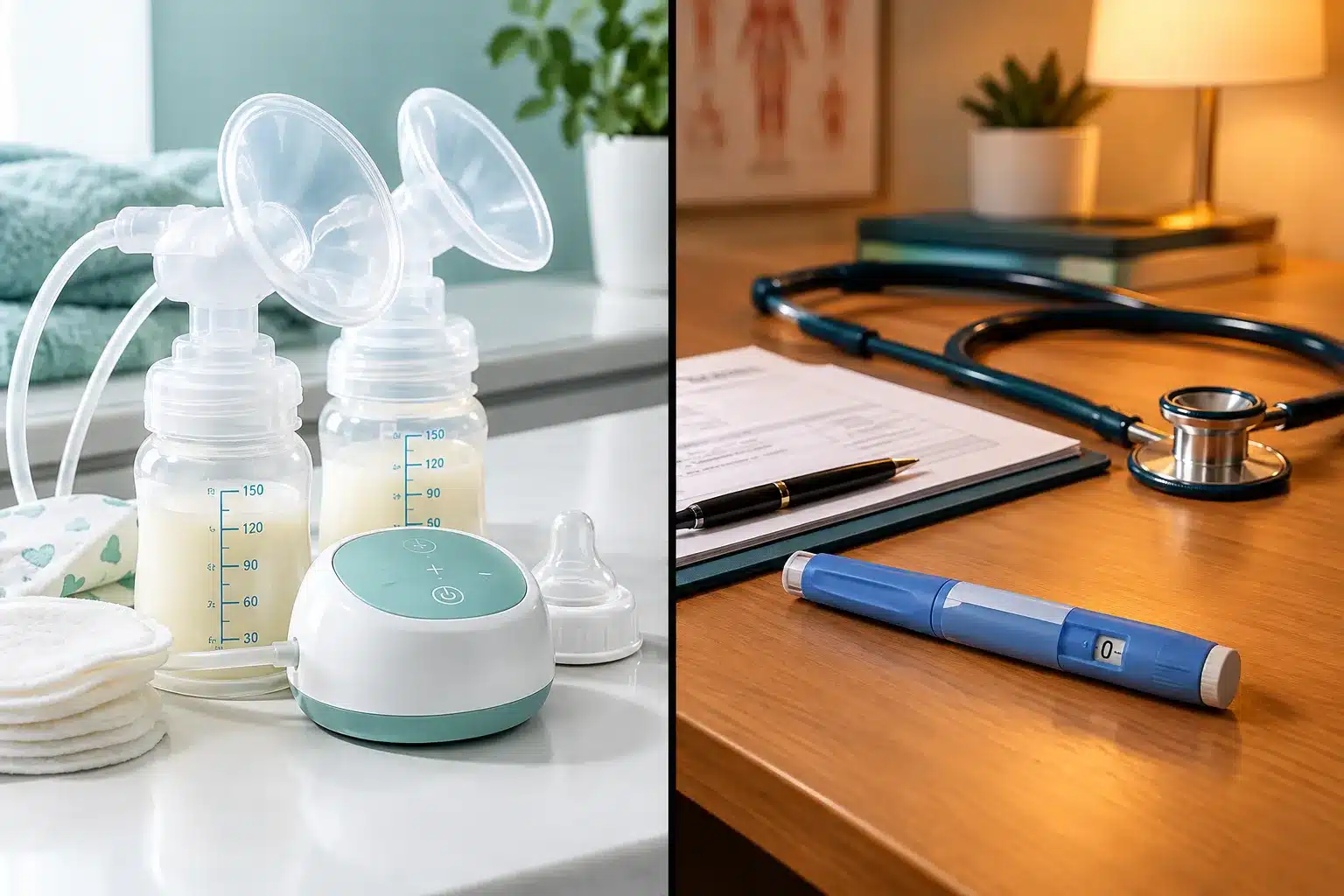
Evidence-supported alternatives during breastfeeding:
- Structured nutrition counseling: A registered dietitian can help create a caloric plan that supports both weight loss and milk production.
- Moderate aerobic exercise: Walking, swimming, and postnatal fitness programs are safe and effective for postpartum weight management.
- Breastfeeding itself: Nursing burns approximately 400 to 500 calories per day, which supports gradual weight loss without intervention.
- Behavioral support programs: Structured programs addressing eating patterns and activity have demonstrated effectiveness in postpartum populations.
- Metformin: In women with type 2 diabetes or insulin resistance, metformin has a more established lactation safety profile than GLP-1 drugs, though it should still be discussed with a provider. See our article on why doctors no longer prescribe metformin for context on its evolving role.
- Meal delivery programs: Structured eating plans can support caloric goals without appetite-suppressing drugs. Our Nutrisystem reviews cover one well-known option.
For women who want to understand the full weight-loss mechanism of GLP-1 drugs before deciding when to start, our guide on GLP-1 transformation and what it does to your body is a useful starting point.
Once breastfeeding is complete, women interested in GLP-1 therapy can explore options through our GLP-1 agonists for weight loss resource and compare compounded vs. brand semaglutide costs.
FAQ
Q: Can I take Ozempic while breastfeeding if my doctor approves it?
A: Most guidelines advise against it due to insufficient safety data, but some clinicians may consider it in cases where the medical need outweighs the unknown risk. This decision requires individualized assessment, not a general rule. [8]
Q: Will GLP-1 drugs dry up my breast milk?
A: There is no direct evidence that GLP-1 drugs suppress milk production hormonally. However, appetite suppression, reduced caloric intake, and GI side effects can indirectly reduce milk supply. [5]
Q: How much GLP-1 transfers to a baby through breast milk?
A: Current evidence suggests very little. A 2024 semaglutide study found no detectable drug in breast milk, and tirzepatide pharmacokinetics suggest negligible transfer. However, both datasets are limited. [6][9]
Q: Is pump and dump effective for GLP-1 medications?
A: No. GLP-1 drugs like semaglutide and tirzepatide have half-lives of five to seven days. Pumping and discarding milk does not reduce infant exposure because the drug remains in your bloodstream continuously. [5]
Q: When can I start GLP-1 therapy after stopping breastfeeding?
A: You can generally start GLP-1 therapy once breastfeeding has fully stopped. There is no mandatory waiting period after weaning, but confirm with your prescriber that your postpartum health status supports starting treatment.
Q: Is tirzepatide safer than semaglutide during breastfeeding?
A: Neither is considered safe based on current evidence. Both have limited lactation data. Tirzepatide’s slightly shorter half-life means a faster washout, but this does not make it an approved option for nursing mothers. [6]
Q: What if I accidentally took a GLP-1 dose while breastfeeding?
A: A single accidental dose is unlikely to cause significant harm given the low transfer and likely GI breakdown. Contact your prescriber and consider pausing breastfeeding temporarily while seeking guidance. Do not panic, but do follow up promptly.
Q: Are there any GLP-1 drugs approved for breastfeeding?
A: No. As of 2026, no GLP-1 receptor agonist has regulatory approval for use during breastfeeding in the US, UK, or EU. [3][10]
Q: Does breastfeeding affect how GLP-1 drugs work in my body?
A: There is no strong evidence that lactation significantly alters GLP-1 drug pharmacokinetics in the mother. The concern runs in the other direction: how the drug affects the nursing infant.
Q: Can I take oral semaglutide (Rybelsus) while breastfeeding?
A: Oral semaglutide carries an additional concern beyond the drug itself. Its absorption enhancer, salcaprozate sodium (SNAC), has unknown effects on nursing infants, making it a higher-concern option than injectable forms. [9]
7 Best GLP-1 Providers Ranked: Accreditation, Flexibility & Support Compared (2026 Update)
32,000+ Patients Can't All Be Wrong: See the Top-Rated GLP-1 Providers: Compared on accreditation, plan flexibility, and patient support — updated for 2026.
BMI MD GLP-1 Microdosing Plan
- Specialized microdosing options (sublingual drops or low-dose injections)
- Ideal for maintaining weight or tapering off higher doses safely
- Fully bundled plan with no hidden monthly platform memberships
DirectMeds Weight Loss Solutions
- Sourced from accredited, state-licensed 503A compounding pharmacies
- No-frills high-volume savings passed directly to the patient
- Includes clinical consultation and cold-chain shipping updates
MEDVi Flat-Rate Telehealth
- Flat monthly rate holds steady even at maximum maintenance doses
- No dosage upcharges or graduation fee penalties
- Offers both injectable and advanced oral thin-film delivery options
Gala GLP-1 Care Program
- All-inclusive plan with no standalone membership costs
- Continuous text-based messaging access with state-licensed clinicians
- Temperature-controlled, cold-chain medication shipping included
Measured GLP-1 Metabolic Health
- Comprehensive metabolic health screening and expert intake analysis
- Predictable long-term budgeting with stable plan pricing
- High-end responsive dashboard with integrated diagnostic support
Refills GLP-1 (TryRefills Plan)
- Flat rate holds steady as titration scales up
- Includes clinical guides for active side-effect management
- Bundles in foundational nutritional strategies alongside medication
AltRx GLP-1 Transactional Reorders
- Zero recurring auto-billing — pay entirely on a transactional basis
- Rapid text-to-order format saves time for experienced patients
- Provides both injectable forms and fast-dissolving tablet variations
Conclusion
The answer to “can you take GLP-1 while breastfeeding” in 2026 remains a cautious no, grounded not in confirmed harm but in a genuine lack of safety data.
The science is moving in a reassuring direction: early lactation studies on semaglutide found no detectable drug in breast milk, and tirzepatide’s pharmacokinetics suggest minimal transfer. But “reassuring early signals” and “proven safe” are not the same thing, and regulatory bodies on both sides of the Atlantic are not yet willing to close that gap.
Actionable next steps:
- If you are currently breastfeeding and considering GLP-1 therapy, speak with your OB, primary care provider, or a maternal-fetal medicine specialist before starting.
- If you were on a GLP-1 drug before or during pregnancy, calculate the washout period (approximately five half-lives) before resuming breastfeeding after stopping.
- Do not use pump-and-dump as a workaround. It does not work for drugs with long half-lives.
- Explore postpartum weight management alternatives that have established safety profiles for nursing mothers.
- Plan ahead: if GLP-1 therapy is a priority for your health, discuss a post-weaning start date with your provider now so you can begin promptly once breastfeeding ends.
- Stay current. This is a fast-moving area of research. The evidence base for GLP-1 drugs in lactation is growing, and guidance may evolve.
The goal is to protect both your health and your infant’s. With the right timing and provider support, GLP-1 therapy can be a powerful tool for weight management, just not while you’re nursing.
References
[1] Diabetes – https://www.breastfeedingnetwork.org.uk/factsheet/diabetes/
[2] Postpartum Glp1 Prescription Increase Study – https://www.nytimes.com/2025/11/25/health/postpartum-glp1-prescription-increase-study.html
[3] Considerations And Interactions With Glp 1 Receptor Agonists – https://sps.nhs.uk/articles/considerations-and-interactions-with-glp-1-receptor-agonists/
[4] Share – https://www.halesmeds.com/share?expires=1722628028628&resource_id=62238&resource_type=monograph&signature=ca72acce2d1477d548cfec31ac830f37afd0c95de9e7282461eb25a80354b1df
[5] Glp1 And Breastfeeding Safety Considerations – https://www.mavenclinic.com/post/glp1-and-breastfeeding-safety-considerations
[6] Tirzepatide – https://mothertobaby.org/fact-sheets/tirzepatide/
[7] Nbk581488 – https://www.ncbi.nlm.nih.gov/books/NBK581488/
[8] onlinelibrary.wiley – https://onlinelibrary.wiley.com/doi/full/10.1111/obr.70203
[9] Semaglutide – https://mothertobaby.org/fact-sheets/semaglutide/
[10] 217806s003lbl – https://www.accessdata.fda.gov/drugsatfda_docs/label/2024/217806s003lbl.pdf

With over 13 years of experience in holistic health blogging, I aim to help you navigate your wellness journey with honest insights, expert-backed advice, and a sprinkle of real-world practicality.
Certified Wellness Writer | Herbal Nutrition Advocate | Wellness Research Enthusiast


