
Does Berberine Help With Weight Loss? Benefits, Research, and Potential Side Effects

Last updated: November 18, 2026
A compound from a shrub has been called “nature’s Ozempic” on social media, yet the largest trial of 2026 found it did nothing to visceral or liver fat. That gap between hype and evidence is exactly why this guide exists.
Quick Answer
Does berberine help with weight loss? Research through 2026 shows berberine may produce small, modest reductions in body weight, BMI, and waist size for some people, but the effect is far smaller than GLP-1 medications and the evidence remains mixed, with at least one large 2026 trial showing no benefit on visceral or liver fat [1]. It is not FDA-approved for weight loss and works best, if at all, as an adjunct to diet and exercise rather than a standalone solution.
7 Best GLP-1 Providers Ranked: Accreditation, Flexibility & Support Compared (2026 Update)
32,000+ Patients Can't All Be Wrong: See the Top-Rated GLP-1 Providers. We compared the leading online GLP-1 providers based on program features, clinical support, convenience, and overall value.
BMI MD GLP-1 Microdosing Plan
- Specialized microdosing options, including sublingual drops and low-dose injections
- Designed for people interested in maintaining weight or gradually adjusting treatment
- Bundled program structure without a separate monthly platform membership
- Online access makes the process convenient from home

DirectMeds Weight Loss Solutions
- Online weight-loss program with a straightforward patient experience
- Compounded medication options through state-licensed compounding pharmacies
- Includes clinical consultation as part of the process
- Provides shipping updates to help patients track their orders
MEDVi Flat-Rate Telehealth
- Flat-rate telehealth approach designed for easier budgeting
- No dosage-based pricing increases within the advertised program structure
- Offers injectable and oral thin-film delivery options
- Includes medical screening and asynchronous provider consultations
Gala GLP-1 Care Program
- Text-based access to state-licensed clinicians
- Cold-chain medication shipping included in the program
- Month-to-month program structure
- Designed for people who value convenient ongoing support
Measured GLP-1 Metabolic Health
- Comprehensive metabolic health screening and intake analysis
- Designed around longer-term metabolic health management
- Responsive dashboard with integrated health tracking tools
- Useful option for patients who value a more data-focused experience
Refills GLP-1 (TryRefills Plan)
- Clinical guidance designed to help patients manage common treatment concerns
- Includes foundational nutritional strategies alongside medication
- Designed around predictable ongoing treatment
- No hidden startup or processing fees according to the program information provided
AltRx GLP-1 Transactional Reorders
- Transactional reorder model without recurring auto-billing
- Designed for patients who already understand their treatment routine
- Fast text-to-order process for convenient reorders
- Offers injectable and fast-dissolving tablet variations
Key Takeaways
- Berberine is a plant compound sold as an over-the-counter supplement, not an FDA-approved weight-loss drug [2].
- A 2025 meta-analysis found modest average weight loss with berberine use, but effects were small [3].
- A 2026 randomized controlled trial in 337 adults found no significant effect on visceral or liver fat [1].
- Gastrointestinal side effects (bloating, diarrhea, cramping) are the most common complaint [4][5].
- Berberine interacts with several medications through liver enzymes (CYP450) and drug transporters [5][6].
- It is not recommended during pregnancy or breastfeeding [5][7].
- Berberine is not a substitute for prescription weight-loss medications like semaglutide or tirzepatide.
- Supplement quality varies widely since the FDA does not review berberine products before sale [2][8].
What Is Berberine and How Does It Actually Work
Berberine is a yellow, bitter-tasting compound extracted from plants like barberry, goldenseal, and Oregon grape, and it has been used for centuries in traditional Chinese and Ayurvedic medicine [4]. Modern research focuses on its effects on blood sugar and metabolism rather than fat loss directly.
Berberine appears to work through several pathways at once, which is part of why researchers find it interesting:
- AMPK activation: Berberine may activate an enzyme called AMPK, sometimes nicknamed a “metabolic master switch,” which helps cells use sugar and fat for energy [3].
- Gut microbiome changes: Some studies suggest berberine shifts gut bacteria populations in ways linked to improved metabolism [3].
- Insulin sensitivity: Berberine may help cells respond better to insulin, similar in concept (but not strength) to metformin [6].
A 2025 mechanistic review described these as “multi-target metabolic effects,” noting berberine’s potential as an adjunct therapy rather than a primary treatment [3]. That distinction matters: a supporting tool is not the same as a proven weight-loss solution.
Does Scientific Research Support Berberine for Weight Loss
Research on berberine for weight loss is mixed, with some smaller studies showing modest benefits and a major 2026 trial showing none for visceral and liver fat specifically [1]. Overall, evidence is best described as limited and short-term.
Here is a summary of the current evidence landscape:
| Study Type | Finding | Source |
|---|---|---|
| 2025 meta-analysis | Modest average weight loss across pooled studies | [3] |
| NCCIH 2026 update | Small effects, limited and short-term evidence overall | [2] |
| 2026 RCT, 337 adults | No significant effect on visceral or liver fat | [1] |
| Smaller RCTs/pooled data | Modest BMI, waist, and trunk-fat reductions, with GI side effects | [9] |
| 2026 combination-product trial | Meaningful fat loss, but berberine’s specific role unclear | [3] |
The National Center for Complementary and Integrative Health (NCCIH) summarized the overall picture in a 2026 update, stating that berberine shows small effects on weight with evidence that remains limited in scope and duration [2]. Expert commentary cited in that review cautions against treating berberine as a natural alternative to prescription GLP-1 medications, since the data simply does not support that comparison [2].
Decision rule: Choose berberine as a possible adjunct if you already eat a balanced diet and exercise regularly and want modest additional support for blood sugar and metabolism. Do not choose berberine expecting results similar to prescription medications.
How Much Berberine Should I Take Daily for Weight Loss
Most studies used doses between 900 mg and 1,500 mg per day, typically split into two or three smaller doses taken with meals [5][9]. There is no FDA-established dosage for weight loss because berberine is not approved for that purpose.
A few practical notes:
- Splitting doses (for example, 500 mg three times daily) may reduce stomach upset compared with one large dose [5].
- Products vary in purity and concentration, so the same “500 mg” label may not deliver identical amounts of active compound across brands [8].
- Always start at a lower dose to assess tolerance before increasing, and talk with a healthcare provider first, especially if you take other medications.
Common mistake: Taking a full adult dose immediately, without easing in, often triggers stomach cramping or diarrhea that could have been avoided by starting lower.
How Long Does It Take to See Weight Loss Results From Berberine
Most trials measuring berberine’s effects on weight ran for 8 to 24 weeks, and modest changes, where they appeared, generally showed up gradually over that window rather than in the first few days [3][9]. This is not a fast-acting supplement.
If you are trying berberine, give it a minimum of two to three months alongside diet and exercise changes before judging its effect. Track weight, waist measurement, and how your clothes fit rather than expecting dramatic shifts in the mirror.
Berberine vs Metformin: Which Is Better for Weight Loss
Metformin is an FDA-approved prescription medication for type 2 diabetes with decades of safety data, while berberine is an unregulated supplement with a much thinner evidence base [5][6]. For blood sugar management, metformin has far stronger clinical support; for weight loss specifically, neither is a primary therapy.
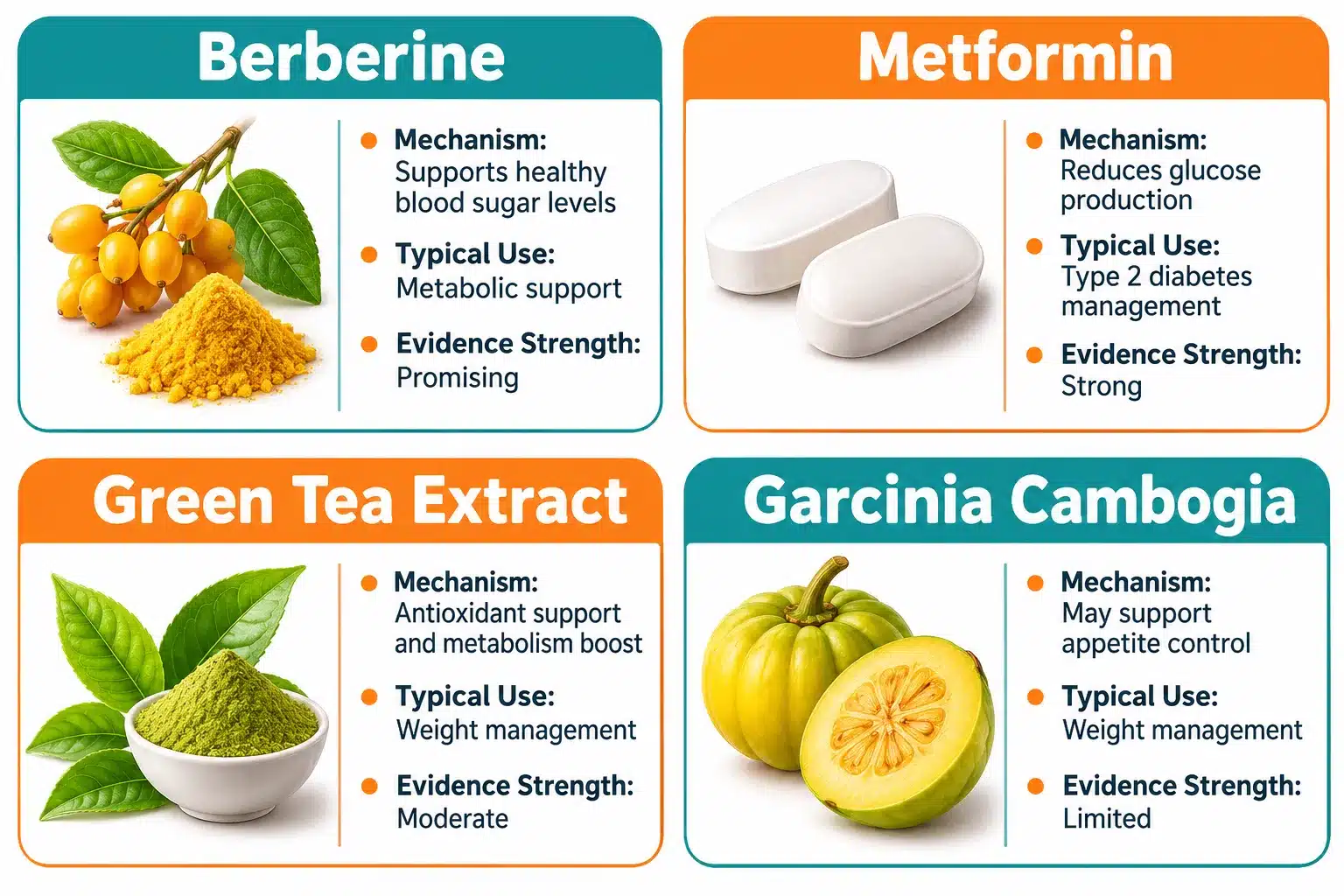
| Factor | Berberine | Metformin |
|---|---|---|
| FDA status | Not approved; sold as supplement | FDA-approved prescription drug |
| Evidence strength | Limited, mixed, short-term | Decades of robust clinical data |
| Primary use | Blood sugar/metabolic support | Type 2 diabetes management |
| Weight loss effect | Modest, inconsistent | Modest, more consistently documented |
| Access | Over the counter | Requires prescription |
If you are managing diabetes or prediabetes under a doctor’s care, metformin has a much stronger evidence base. Readers exploring prescription options for weight management more broadly may also want to review how semaglutide works as a weight loss medication or compare it with other GLP-1 options.
What Are the Common Side Effects of Taking Berberine
The most frequently reported side effects of berberine are gastrointestinal, including bloating, diarrhea, constipation, and stomach cramping [4][5]. These effects are usually mild but can be bothersome enough that some people stop taking it.
Less common reported issues include:
- Low blood sugar, particularly when combined with other blood-sugar-lowering medications [6]
- Headache
- Interaction-related effects depending on other drugs taken [5]
Edge case: People who already have sensitive digestion or irritable bowel syndrome may experience stronger GI reactions and should introduce berberine cautiously, if at all, under medical guidance.
Is Berberine Safe During Pregnancy or While Breastfeeding
Berberine is not considered safe during pregnancy or breastfeeding and should be avoided by people who are pregnant, trying to conceive, or nursing [5][7]. Some data suggests berberine can cross the placenta and may affect bilirubin levels in infants.
This is a firm safety boundary, not a gray area. Anyone pregnant or breastfeeding should skip berberine supplements entirely and discuss any weight or metabolic concerns with an OB-GYN or primary care provider instead.
Can I Take Berberine With My Other Medications
Berberine can interact with a range of medications because it affects liver enzymes (CYP450 pathways) and certain drug transporters in the body [5][6]. This means it can change how strongly other drugs work, sometimes making them stronger or weaker than intended.
Medications of particular concern include:
- Diabetes medications (risk of low blood sugar when combined) [6]
- Blood thinners
- Certain cholesterol medications
- Drugs metabolized through the same liver pathways, including some common prescriptions [5]
Decision rule: If you take any prescription medication regularly, check with a pharmacist or doctor before starting berberine, even if it is sold over the counter. “Natural” does not mean “interaction-free.”
Best Berberine Supplements to Buy and How Much Do They Cost
Berberine supplements are widely available online and in pharmacies, typically priced in the range of $15 to $40 for a one-month supply, though exact pricing and formulation vary by brand. Because the FDA does not review dietary supplements before they reach shelves, product quality and purity can vary significantly between brands [2][8].
When evaluating a product:
- Look for third-party testing (such as NSF or USP verification) when available.
- Check the exact berberine compound listed (berberine HCl is the most studied form).
- Avoid products making exaggerated claims like “burns fat fast” or “natural Ozempic,” since these claims are not supported by current evidence [2].
For readers comparing supplement claims against actual prescription options, our breakdown of whether berberine and other supplements work as a “natural Ozempic” covers this comparison in more depth.
Berberine Isn’t Working for Me: What Am I Doing Wrong
If berberine isn’t producing results, the most common reasons are inconsistent dosing, unrealistic expectations, or lack of supporting diet and exercise changes. Berberine, even in supportive studies, never produced weight loss on its own without lifestyle changes alongside it [3][9].
Checklist to troubleshoot:
- Confirm you’re taking a consistent daily dose for at least 8 to 12 weeks.
- Review whether your diet and activity level have genuinely changed, since berberine was never tested as a standalone fix.
- Consider that your specific product may have low bioavailability or inconsistent potency.
- Recognize that some people simply do not respond, which is consistent with the mixed research findings [1].
If diet, exercise, and consistent supplementation still aren’t moving the needle, that may be a sign to discuss medical weight-loss options, including prescription medications, with a healthcare provider.
Berberine Compared to Other Weight Loss Supplements Like Green Tea or Garcinia
Berberine, green tea extract, and garcinia cambogia all have modest, inconsistent evidence for weight loss, and none of them come close to the effect sizes seen with prescription GLP-1 medications. Each works through a different mechanism, but all share the same core limitation: small effects, short study durations, and unregulated product quality.
| Supplement | Proposed Mechanism | Evidence Strength |
|---|---|---|
| Berberine | AMPK activation, gut microbiome, insulin sensitivity | Mixed, modest at best [1][3] |
| Green tea extract | Catechins may boost metabolism | Limited, inconsistent |
| Garcinia cambogia | HCA may suppress appetite | Weak, largely unsupported |
None of these supplements are reviewed or approved by the FDA for weight loss [2][8]. People seeking a more evidence-backed path toward significant weight loss often look into prescription options, such as those discussed in our guide to GLP-1 weight loss injections.
Who Should Not Take Berberine Supplements
People who are pregnant or breastfeeding, taking interacting medications, or managing liver disease should avoid berberine without direct medical supervision [5][7]. Children should also avoid berberine unless specifically directed by a pediatrician.
Additional groups who should be cautious:
- People with low blood pressure or blood sugar disorders
- Anyone scheduled for surgery soon, due to potential bleeding or blood sugar interactions
- People already taking multiple medications metabolized by the liver
Does Berberine Help With Blood Sugar and Metabolism Too
Berberine’s most consistent research support is for blood sugar and metabolic markers, not weight loss specifically. Several studies suggest berberine may modestly lower fasting blood sugar and improve insulin sensitivity, which is part of why it’s often compared to metformin [3][6].
The Cleveland Clinic notes possible benefit in conditions like MASLD (metabolic dysfunction-associated steatotic liver disease), though evidence there is still described as preliminary [4]. This metabolic angle, more than fat loss itself, is where berberine shows its strongest signal.
Common Mistakes People Make When Taking Berberine for Weight Loss
The biggest mistake is treating berberine as a replacement for prescription weight-loss medication or for diet and exercise, when research supports it only as a possible minor adjunct [2][3]. Expecting dramatic results sets people up for disappointment and sometimes for stopping a program too early.
Other frequent mistakes:
- Buying unverified, low-quality supplements without checking for third-party testing [8]
- Combining berberine with other blood-sugar-lowering supplements or medications without medical guidance [6]
- Stopping too soon because results take 8+ weeks to show, if they show at all
- Ignoring GI side effects instead of adjusting dose timing or splitting doses [5]
For people who want to compare the realistic weight-loss potential of berberine against prescription medications, reviewing resources like how Ozempic helps with weight loss or current GLP-1 weight loss costs can help set realistic expectations before choosing a path forward.
Frequently Asked Questions
Does berberine really help with weight loss? Berberine may produce small, modest weight loss in some people, according to 2025 and 2026 research, but a large 2026 trial found no effect on visceral or liver fat specifically [1][3]. It is not a proven primary weight-loss treatment.
Is berberine the same as natural Ozempic? No. Berberine works through different, weaker mechanisms than GLP-1 medications like Ozempic, and expert commentary in 2026 specifically rejected the “nature’s Ozempic” label as unsupported by evidence [2].
How long should I take berberine before expecting results? Most studies ran 8 to 24 weeks, so give it at least two to three months alongside diet and exercise changes before evaluating effectiveness [3][9].
Can berberine replace my blood sugar medication? No. Berberine should never replace a prescribed medication like metformin without a doctor’s explicit guidance, since stopping prescribed treatment without supervision can be dangerous [6].
What is the biggest side effect risk with berberine? Gastrointestinal issues like diarrhea, bloating, and cramping are the most common side effects, generally mild but sometimes significant enough to stop use [4][5].
Is it safe to combine berberine with other supplements? Not automatically. Combining berberine with other metabolic or blood-sugar supplements can increase the risk of low blood sugar or unpredictable interactions, so check with a healthcare provider first [5][6].
Does the FDA regulate berberine supplements? No. Berberine is sold as a dietary supplement and is not reviewed by the FDA for safety, effectiveness, or purity before it reaches the market [2][8].
7 Best GLP-1 Providers Ranked: Accreditation, Flexibility & Support Compared (2026 Update)
32,000+ Patients Can't All Be Wrong: See the Top-Rated GLP-1 Providers: Compared on accreditation, plan flexibility, and patient support — updated for 2026.
BMI MD GLP-1 Microdosing Plan
- Specialized microdosing options (sublingual drops or low-dose injections)
- Ideal for maintaining weight or tapering off higher doses safely
- Fully bundled plan with no hidden monthly platform memberships
DirectMeds Weight Loss Solutions
- Sourced from accredited, state-licensed 503A compounding pharmacies
- No-frills high-volume savings passed directly to the patient
- Includes clinical consultation and cold-chain shipping updates
MEDVi Flat-Rate Telehealth
- Flat monthly rate holds steady even at maximum maintenance doses
- No dosage upcharges or graduation fee penalties
- Offers both injectable and advanced oral thin-film delivery options
Gala GLP-1 Care Program
- All-inclusive plan with no standalone membership costs
- Continuous text-based messaging access with state-licensed clinicians
- Temperature-controlled, cold-chain medication shipping included
Measured GLP-1 Metabolic Health
- Comprehensive metabolic health screening and expert intake analysis
- Predictable long-term budgeting with stable plan pricing
- High-end responsive dashboard with integrated diagnostic support
Refills GLP-1 (TryRefills Plan)
- Flat rate holds steady as titration scales up
- Includes clinical guides for active side-effect management
- Bundles in foundational nutritional strategies alongside medication
AltRx GLP-1 Transactional Reorders
- Zero recurring auto-billing — pay entirely on a transactional basis
- Rapid text-to-order format saves time for experienced patients
- Provides both injectable forms and fast-dissolving tablet variations
Conclusion
So, does berberine help with weight loss? The honest answer, based on evidence through 2026, is: maybe a little, for some people, but not reliably and not dramatically. A 2025 meta-analysis found modest average effects, while a large 2026 randomized trial found no benefit on visceral or liver fat at all [1][3]. The research supports berberine, at best, as a minor adjunct to diet and exercise, not a standalone weight-loss solution and certainly not a “natural” equivalent to prescription GLP-1 medications.
If you are considering berberine, talk with a healthcare provider first, especially if you take other medications or have underlying health conditions. If you’ve tried lifestyle changes and modest supplements without meaningful results, it may be worth exploring medically supervised options, including prescription weight-loss medications, with a qualified provider who can evaluate your specific health history and goals.
References
- S41366 025 01943 X. link.springer.com.
- Berberine and Weight Loss What You Need to Know. nccih.nih.gov.
- S12967 024 05011 2. link.springer.com.
- Berberine. health.clevelandclinic.org.
- Barberry. drugs.com.
- Berberine 3569378. drugs.com.
- Conditions. myhealth.alberta.ca.
- Diabetes and Dietary Supplements What You Need to Know. nccih.nih.gov.
- Tab2. pmc.ncbi.nlm.nih.gov.