
Best GLP-1 Meal Replacement Shakes: Complete Buying Guide (2026)
Last updated: July 26, 2026
Quick Answer
GLP-1 meal replacement shakes are specially formulated drinks designed to complement GLP-1 receptor agonist medications like semaglutide or tirzepatide, or to naturally support the body’s own GLP-1 hormone activity. They typically deliver high protein, quality fiber, and essential micronutrients in a low-calorie, easy-to-digest format. Used correctly, they can help prevent muscle loss, reduce nausea, and fill nutritional gaps that often occur when appetite drops sharply on GLP-1 therapy.
Key Takeaways
- GLP-1 meal replacement shakes are not the same as standard protein shakes. They are formulated to address the specific nutritional risks of reduced food intake on GLP-1 medications.
- The most important nutrients to look for are protein (at least 20-30g per serving), soluble fiber (5g or more), and a broad micronutrient profile including B vitamins, iron, calcium, and vitamin D.
- You do not need to be on a GLP-1 medication to use these shakes. They can benefit anyone following a calorie-reduced diet or looking to support natural GLP-1 hormone secretion.
- Cost ranges widely, from roughly $3 to $12 per serving depending on brand, ingredients, and where you buy.
- Side effects are generally mild but can include bloating, gas, or digestive discomfort, especially if fiber content is high and intake is increased too quickly.
- People with certain medical conditions, including kidney disease, phenylketonuria, or severe gastrointestinal disorders, should consult a doctor before using these shakes.
- Long-term safety is considered acceptable for most healthy adults when shakes are used as a partial meal replacement rather than the sole food source.
- Mixing shakes with alcohol is not recommended, and combining them with whole foods is generally encouraged to improve satiety and nutrient variety.
What Are GLP-1 Meal Replacement Shakes and How Do They Work
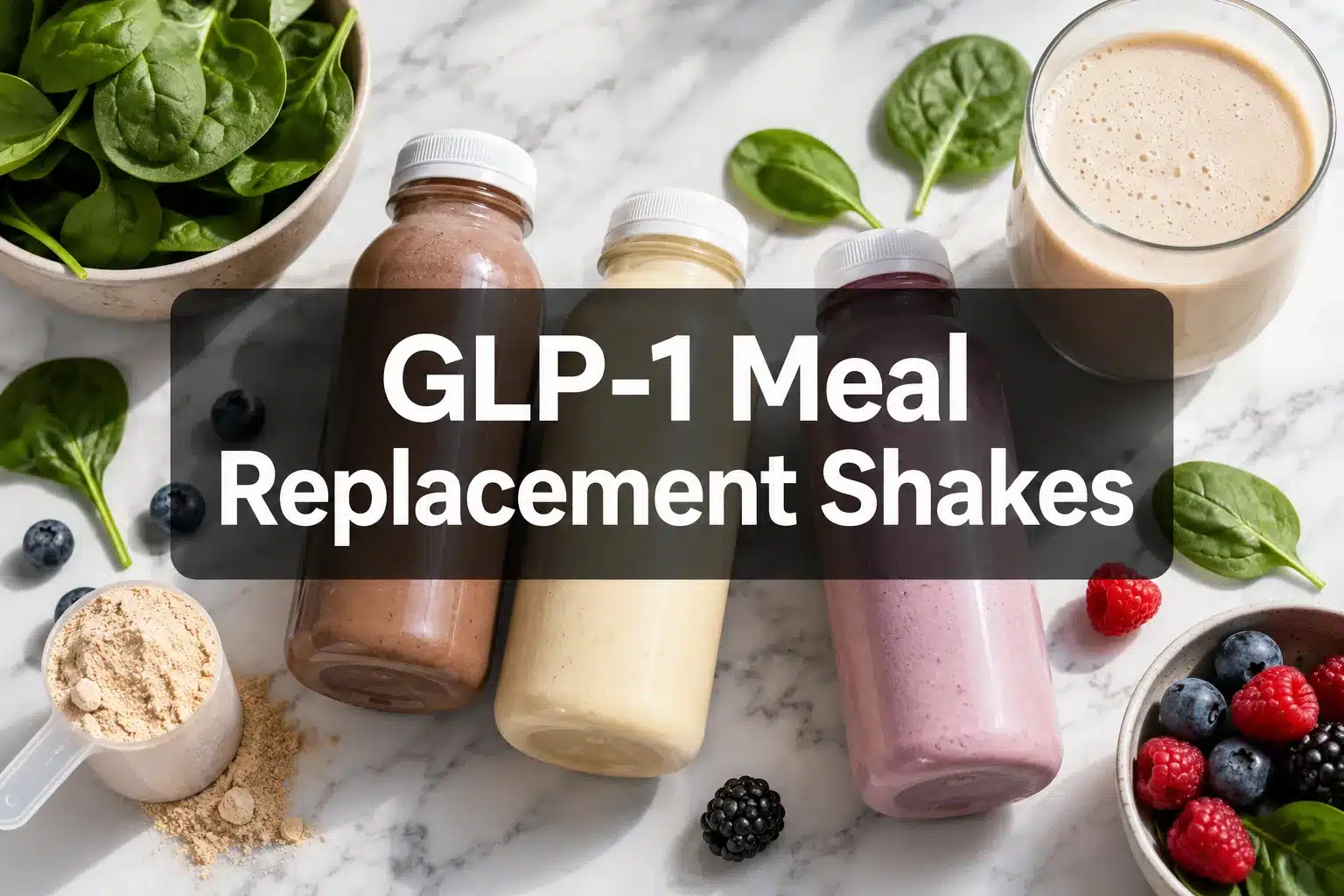
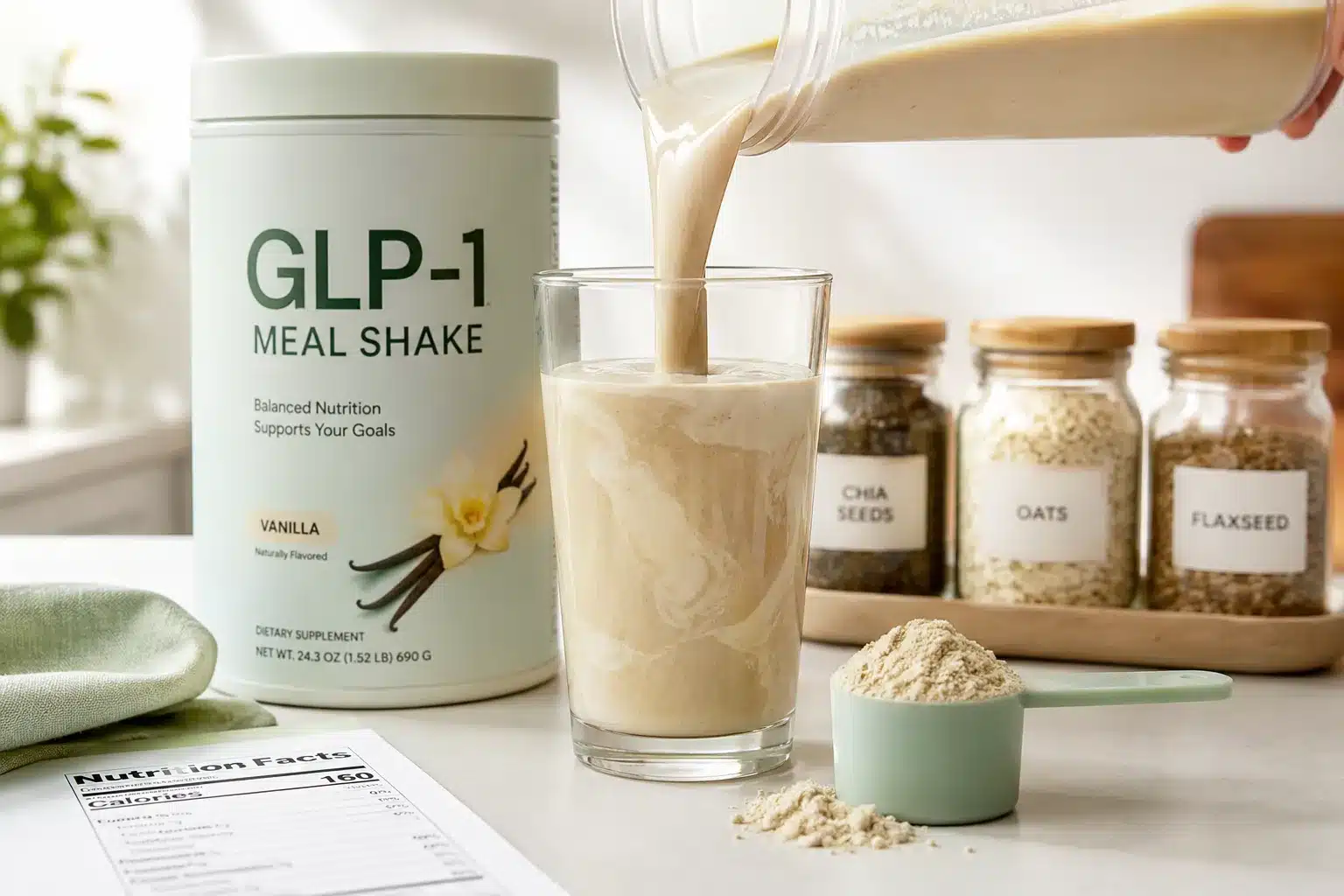
GLP-1 meal replacement shakes are nutritionally complete (or near-complete) beverages designed to support people using GLP-1 receptor agonist medications or those who want to naturally stimulate the GLP-1 hormone through diet. They work by delivering concentrated nutrition in a small, easy-to-consume volume, which matters because GLP-1 medications dramatically reduce appetite and stomach emptying speed.
7 Best GLP-1 Providers Ranked: Accreditation, Flexibility & Support Compared (2026 Update)
32,000+ Patients Can't All Be Wrong: See the Top-Rated GLP-1 Providers. We compared the leading online GLP-1 providers based on program features, clinical support, convenience, and overall value.
BMI MD GLP-1 Microdosing Plan
- Specialized microdosing options, including sublingual drops and low-dose injections
- Designed for people interested in maintaining weight or gradually adjusting treatment
- Bundled program structure without a separate monthly platform membership
- Online access makes the process convenient from home

DirectMeds Weight Loss Solutions
- Online weight-loss program with a straightforward patient experience
- Compounded medication options through state-licensed compounding pharmacies
- Includes clinical consultation as part of the process
- Provides shipping updates to help patients track their orders
MEDVi Flat-Rate Telehealth
- Flat-rate telehealth approach designed for easier budgeting
- No dosage-based pricing increases within the advertised program structure
- Offers injectable and oral thin-film delivery options
- Includes medical screening and asynchronous provider consultations
Gala GLP-1 Care Program
- Text-based access to state-licensed clinicians
- Cold-chain medication shipping included in the program
- Month-to-month program structure
- Designed for people who value convenient ongoing support
Measured GLP-1 Metabolic Health
- Comprehensive metabolic health screening and intake analysis
- Designed around longer-term metabolic health management
- Responsive dashboard with integrated health tracking tools
- Useful option for patients who value a more data-focused experience
Refills GLP-1 (TryRefills Plan)
- Clinical guidance designed to help patients manage common treatment concerns
- Includes foundational nutritional strategies alongside medication
- Designed around predictable ongoing treatment
- No hidden startup or processing fees according to the program information provided
AltRx GLP-1 Transactional Reorders
- Transactional reorder model without recurring auto-billing
- Designed for patients who already understand their treatment routine
- Fast text-to-order process for convenient reorders
- Offers injectable and fast-dissolving tablet variations
The GLP-1 hormone connection
GLP-1 (glucagon-like peptide-1) is a gut hormone released after eating. It slows gastric emptying, signals fullness to the brain, and helps regulate blood sugar. GLP-1 medications like semaglutide (Ozempic, Wegovy) and tirzepatide (Mounjaro, Zepbound) mimic this hormone at much higher levels than the body produces naturally. The result is a significant drop in appetite and food intake, which is great for weight loss but creates a real risk of nutritional deficiency if food choices are not carefully managed.
GLP-1 meal replacement shakes address this by packing protein, fiber, vitamins, and minerals into a format that is easy to consume even when appetite is nearly absent. Some shakes also contain ingredients like inulin, resistant starch, or specific amino acids that may stimulate the body’s own GLP-1 secretion, though the evidence for this effect in humans is still developing.
For a deeper look at how GLP-1 medications work at the hormonal level, see this overview of GLP-1 medications and weight loss.
What makes them different from a regular meal replacement
A standard meal replacement shake is designed to replace a meal for a person with a normal appetite. A GLP-1-focused shake is designed for someone who may only be able to tolerate 800-1,200 calories per day and needs every calorie to count. The key differences:
- Higher protein per serving (often 25-35g vs. 15-20g in standard shakes)
- Added soluble fiber to support gut motility and blood sugar stability
- Electrolytes to compensate for reduced food and fluid intake
- Lower sugar content to avoid blood sugar spikes
- Smaller serving volumes to accommodate a reduced stomach capacity
GLP-1 Shake vs. Regular Protein Shake: Key Differences
A GLP-1 meal replacement shake is not interchangeable with a regular protein shake. A standard protein shake is primarily designed to support muscle recovery and is often used as a supplement on top of regular meals. A GLP-1 shake is designed to replace a meal entirely for someone eating far less than usual.
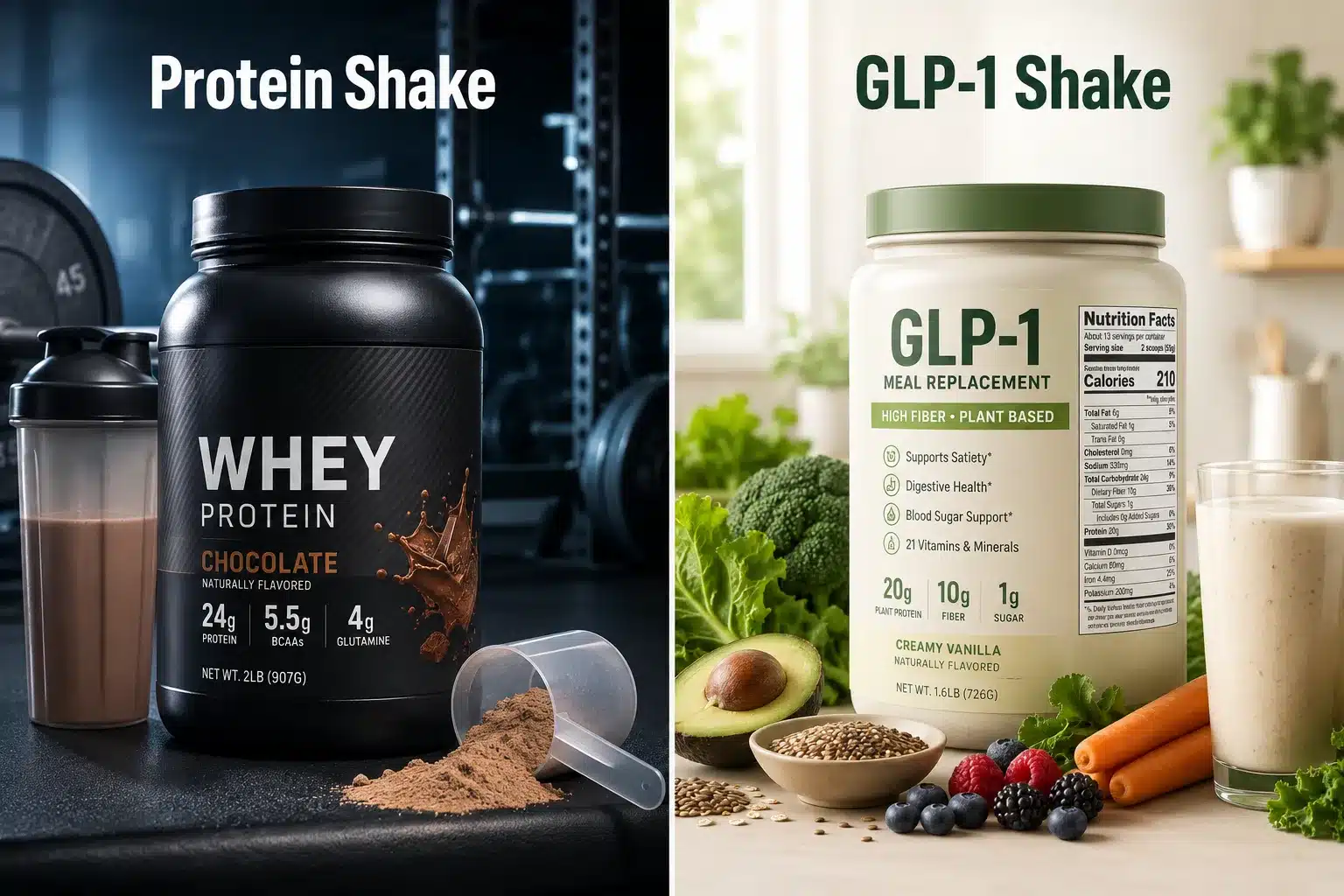
Here is a practical comparison:
| Feature | Standard Protein Shake | GLP-1 Meal Replacement Shake |
|---|---|---|
| Primary purpose | Muscle support, supplement | Full meal replacement, nutritional coverage |
| Protein per serving | 15-25g | 25-35g |
| Fiber | 0-3g (often minimal) | 5-10g (often soluble) |
| Vitamins and minerals | Limited or none | Broad micronutrient panel |
| Calories per serving | 100-200 kcal | 200-400 kcal |
| Electrolytes | Rarely included | Often included |
| Best used by | Athletes, gym-goers | GLP-1 medication users, calorie-restricted dieters |
Common mistake: Many people on GLP-1 medications grab a standard whey protein shake thinking it covers their nutritional needs. It does not. Without adequate fiber, vitamins, and minerals, you risk deficiencies in iron, B12, calcium, and vitamin D over time.
GLP-1 Shake Nutrition Facts: What to Look For
The most important thing to check on any GLP-1 meal replacement shake is whether it actually delivers complete nutrition for a reduced-calorie day. Many products marketed as “GLP-1 shakes” are little more than rebranded protein powders with a premium price tag.
The non-negotiable nutrients
- Protein: At minimum 20g per serving, ideally 25-35g. Whey isolate, casein, pea protein, or a blend are all acceptable. High protein intake helps preserve lean muscle mass during rapid weight loss, which is one of the most clinically important goals for GLP-1 users (Wilding et al., New England Journal of Medicine, 2021).
- Fiber: At least 5g per serving, with a mix of soluble and insoluble fiber. Soluble fiber (inulin, psyllium, pectin) slows digestion and helps stabilize blood sugar. Insoluble fiber supports bowel regularity, which matters because GLP-1 medications slow gastric emptying and can cause constipation.
- Vitamins and minerals: Look for at least 20-30% of the Daily Value for iron, calcium, vitamin D, B12, folate, and magnesium. These are the nutrients most commonly depleted when calorie intake drops below 1,200 calories per day.
- Electrolytes: Sodium, potassium, and magnesium should be present, especially if you are losing weight quickly or sweating regularly.
- Calories: Between 200-400 kcal per serving is the typical sweet spot for a meal replacement on a GLP-1 regimen. Too low and you are not replacing a meal; too high and you may exceed your daily target.
What to avoid
- Added sugars above 5g per serving
- Artificial sweeteners that cause digestive distress (sucralose and sorbitol are common culprits for bloating)
- Proprietary blends that hide individual ingredient doses
- Excessive caffeine or stimulants
Best GLP-1 Meal Replacement Shakes in 2026: Brands Compared for Ozempic Users
No single shake is best for every person, but several brands have positioned themselves specifically for GLP-1 medication users as of 2026. The market has grown significantly, and the quality gap between top-tier and low-quality options is wide.
What to look for in a brand
- Third-party testing (NSF, Informed Sport, or USP certification)
- Transparent labeling with no proprietary blends
- At least 25g protein and 5g fiber per serving
- Manufactured in a cGMP-certified facility
- Positive, verified user reviews from people on GLP-1 medications specifically
Notable brands in 2026
Huel Black Edition is a widely available, nutritionally complete meal replacement with 40g protein and 4g fiber per serving. It is not specifically marketed for GLP-1 users but meets the core nutritional criteria well. It is third-party tested and available in multiple flavors.
Ample offers a whole-food-based meal replacement with a strong fiber and fat profile, which may be easier on the stomach for people experiencing GLP-1-related nausea.
Fairlife Nutrition Plan is a ready-to-drink option with 30g protein and a clean ingredient list. It is widely available, affordable, and easy to tolerate on a sensitive stomach.
Ka’Chava markets itself as a “superblend” with adaptogens and plant-based protein. It has a higher fiber content than most competitors but also a higher price point.
Ozempic-adjacent branded shakes have emerged from telehealth companies and supplement brands. These vary enormously in quality. Always verify third-party testing before purchasing.
Decision rule: If you are on a GLP-1 medication and your primary concern is muscle preservation, choose a shake with 30g or more of protein. If constipation or digestive discomfort is your main issue, prioritize a shake with 8g or more of soluble fiber. If budget is the constraint, Fairlife Nutrition Plan offers strong value at around $3-4 per serving.
For context on the cost of GLP-1 programs overall, see this breakdown of affordable GLP-1 weight loss programs in 2026.
How Much Do GLP-1 Meal Replacement Shakes Cost
GLP-1 meal replacement shakes range from approximately $3 to $12 per serving in 2026, depending on brand, format (powder vs. ready-to-drink), and where you purchase.

Cost breakdown by category
- Budget options ($3,$5/serving): Ready-to-drink shakes like Fairlife or store-brand meal replacements. Lower cost but may require adding a separate multivitamin to cover micronutrient gaps.
- Mid-range options ($5,$8/serving): Powder-based products like Huel or Ample, which offer better nutritional completeness and are often more cost-effective when bought in bulk.
- Premium options ($8,$12/serving): Brands like Ka’Chava or specialized GLP-1 telehealth company shakes. Higher price does not always mean better nutrition, so check the label carefully.
Hidden costs to consider
- Shipping fees for subscription orders
- The need for a separate multivitamin if the shake does not cover micronutrients fully
- Blender or shaker bottle if buying powder
Practical tip: Buying a 30-serving bag of a quality powder-based shake typically costs $150,$200, which works out to $5,$7 per serving. Compared to the cost of GLP-1 medications themselves (which can run hundreds to thousands of dollars per month without insurance), the shake cost is a minor line item. For a full picture of medication costs, see this guide to semaglutide costs online.
Can You Use GLP-1 Shakes Without Being on GLP-1 Medication
Yes, you can use GLP-1 meal replacement shakes without taking a GLP-1 medication. These shakes are nutritional products, not pharmaceuticals, and they are available over the counter without a prescription.
There are two distinct groups of people who use them without medication:
- People following a calorie-restricted diet who want a convenient, nutritionally complete meal option. The high protein and fiber content makes these shakes useful for anyone trying to lose weight while preserving muscle.
- People trying to support natural GLP-1 secretion. Certain dietary components, including fermentable fiber, whey protein, and specific fatty acids, have been shown to stimulate endogenous GLP-1 release in research settings (Spreckley and Murphy, Journal of Endocrinology, 2015). Some shakes include these ingredients specifically to support this effect.
Who benefits most without medication:
- People who have recently stopped GLP-1 medication and want to maintain their eating habits
- Individuals on a medically supervised low-calorie diet
- Anyone who skips meals regularly and wants a reliable nutritional fallback
Who should not expect dramatic results without medication: If you are hoping a GLP-1 shake alone will produce the same appetite suppression as semaglutide or tirzepatide, you will be disappointed. The hormonal effect of GLP-1 medications is far more powerful than any dietary ingredient can replicate.
GLP-1 Meal Replacement Shake Side Effects
Side effects from GLP-1 meal replacement shakes are generally mild and most often related to the fiber content rather than any active pharmaceutical ingredient. The shakes themselves are not medications.
Most common side effects
- Bloating and gas: Usually caused by high fiber content, particularly inulin or chicory root. This typically improves after 1-2 weeks as the gut microbiome adjusts.
- Loose stools or diarrhea: Can occur if fiber intake increases too quickly. Start with half a serving and build up gradually.
- Nausea: More likely in people already experiencing nausea from GLP-1 medications. Chilling the shake or drinking it slowly can help.
- Constipation: Less common but possible if the shake is high in protein and low in fluid intake. Drink at least 8 oz of water with each serving.
Interactions with GLP-1 medications
GLP-1 medications already slow gastric emptying. A high-fiber shake consumed too quickly on top of medication may worsen nausea or cause a feeling of extreme fullness. Drink shakes slowly, over 15-20 minutes, rather than all at once.
Edge case: Some people with lactose intolerance react to whey-based shakes. If you experience cramping or diarrhea specifically, switch to a plant-based protein option (pea, rice, or hemp protein blend).
Are GLP-1 Shakes Safe Long Term
For most healthy adults, using GLP-1 meal replacement shakes as a partial meal replacement (one to two shakes per day alongside whole foods) is considered safe long term. The concern with any meal replacement strategy is nutritional completeness over time.
What the evidence says
No long-term clinical trials have been conducted specifically on “GLP-1 meal replacement shakes” as a category, because the category itself is relatively new. However, research on meal replacement diets more broadly, including the OPTIFAST and Medifast programs, shows that nutritionally complete meal replacements used for 12-52 weeks are safe for most adults when protein and micronutrient targets are met (Heymsfield et al., Annals of Internal Medicine, 2007).
The key long-term risks are:
- Muscle loss if protein intake is consistently below 1.2g per kilogram of body weight per day
- Bone density loss if calcium and vitamin D are inadequate
- Iron deficiency anemia in premenopausal women eating fewer than 1,200 calories per day
- Social and psychological effects of relying heavily on liquid nutrition rather than whole foods
Safe long-term use checklist
- Use shakes to replace one or two meals, not all meals
- Choose a shake that covers at least 25-30% of daily micronutrient needs per serving
- Have bloodwork checked every 6 months (iron, B12, vitamin D, electrolytes)
- Maintain at least one whole-food meal per day
- Consult a registered dietitian if you plan to use shakes for longer than 12 weeks
Who Should Not Drink GLP-1 Meal Replacement Shakes
Most adults can use GLP-1 meal replacement shakes safely, but there are specific groups who should exercise caution or avoid them entirely.
Do not use without medical supervision if you have:
- Chronic kidney disease (CKD): High-protein shakes increase the kidney’s workload. People with CKD stages 3-5 should follow a protein-restricted diet and consult a nephrologist before using any high-protein meal replacement.
- Phenylketonuria (PKU): Many shakes contain phenylalanine from artificial sweeteners or protein sources. This amino acid cannot be metabolized safely in PKU.
- Severe gastrointestinal disorders: Conditions like gastroparesis (delayed stomach emptying) are already worsened by GLP-1 medications. Adding a high-fiber shake may cause significant discomfort or complications.
- Active eating disorders: Meal replacement shakes can reinforce restrictive eating patterns. Anyone with a history of anorexia, bulimia, or orthorexia should work with a mental health professional before using structured meal replacements.
- Pregnancy or breastfeeding: Calorie and nutrient needs increase significantly during pregnancy. Meal replacement shakes are not designed to meet these elevated requirements.
Use with caution if you:
- Are under 18 years old
- Have type 1 diabetes (blood sugar management becomes more complex)
- Are taking medications that interact with high-fiber foods (some thyroid medications and antibiotics should not be taken within 2 hours of a high-fiber meal)
Do GLP-1 Shakes Work for Weight Loss Without Exercise
GLP-1 meal replacement shakes can support weight loss without exercise, primarily by helping maintain a calorie deficit while preserving adequate nutrition. However, the weight loss will be less effective and the body composition outcomes will be worse compared to combining shakes with regular physical activity.
Here is why exercise still matters:
- Muscle preservation: GLP-1 medications cause rapid weight loss, and a significant portion of that loss can be lean muscle mass if protein intake and resistance exercise are not prioritized. A 2021 study on semaglutide found that roughly 40% of weight lost was lean mass in some participants (Wilding et al., NEJM, 2021). Resistance training, even twice weekly, significantly reduces this percentage.
- Metabolic rate: Muscle tissue burns more calories at rest than fat tissue. Losing muscle without exercise means your metabolism slows, making weight regain more likely when medication stops.
- Cardiovascular benefits: Weight loss from diet alone does not deliver the same cardiovascular risk reduction as weight loss combined with aerobic exercise.
Realistic expectation: If you use GLP-1 shakes as part of a calorie-controlled diet without any exercise, you will likely lose weight, but you may lose more muscle than fat proportionally. Even 20-30 minutes of walking three times per week meaningfully improves outcomes.
Common Mistakes People Make With GLP-1 Shakes
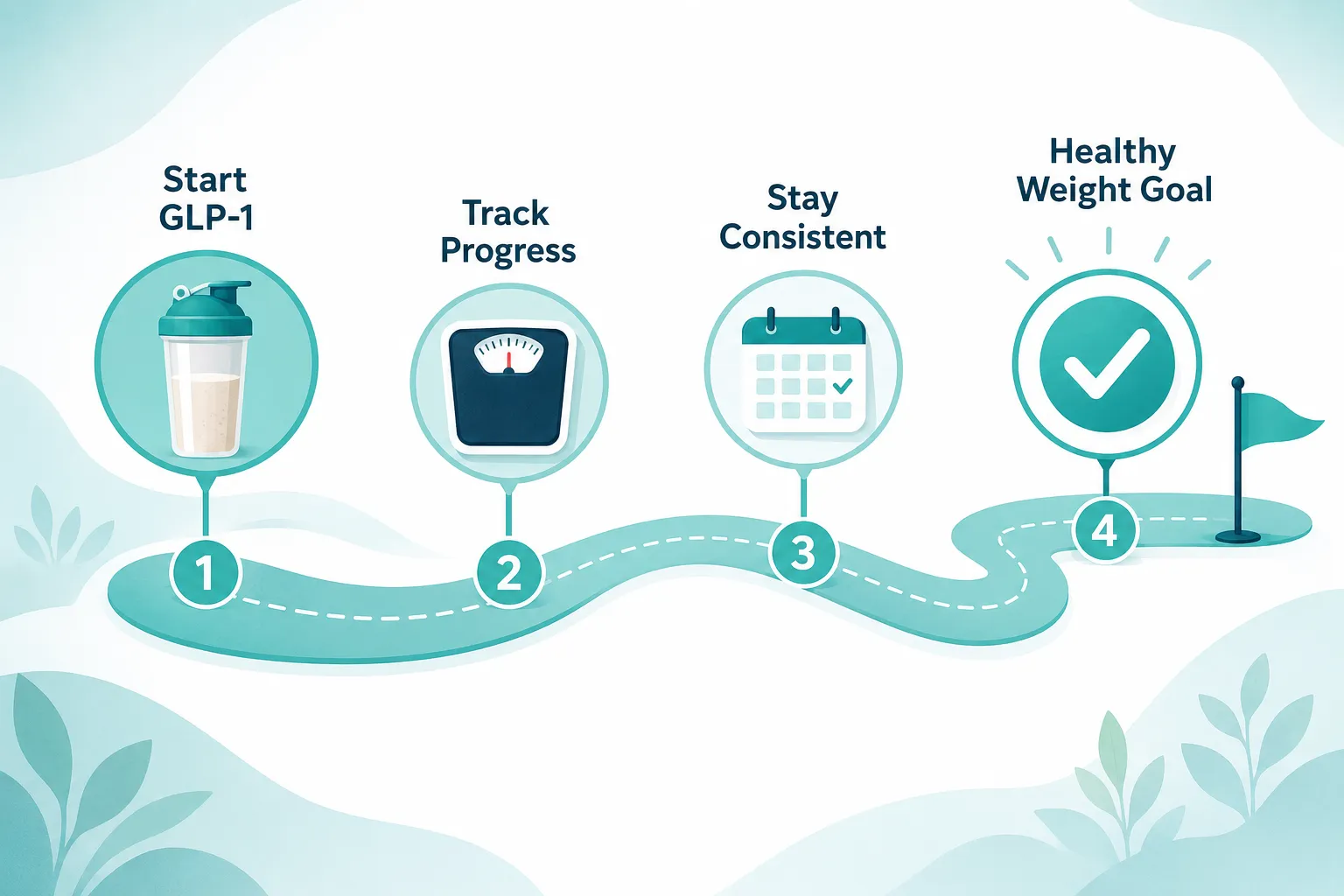
These are the errors that show up most often, and they are almost all avoidable.
Treating the shake as a supplement, not a meal. If you drink a shake and then eat a full meal on top of it, you are adding calories, not replacing them. On a GLP-1 medication, this can cause discomfort and undermine your calorie goals.
Choosing a shake based on marketing, not the label. The words “GLP-1 support” on a label mean nothing without a strong nutritional profile behind them. Always check protein, fiber, and micronutrient content before buying.
Drinking too fast. GLP-1 medications slow gastric emptying. Drinking a shake quickly can cause nausea, bloating, or vomiting. Sip slowly over at least 15 minutes.
Not drinking enough water. High-protein, high-fiber shakes require adequate hydration to digest properly. Aim for at least 8 oz of water with each shake, and more throughout the day.
Relying on shakes alone. Using shakes as your only food source for extended periods risks nutritional deficiencies and is not sustainable. One to two shakes per day alongside whole foods is the standard recommendation.
Ignoring blood sugar. Some shakes contain enough carbohydrates to cause a meaningful blood sugar spike, especially in people with type 2 diabetes. Check the total carbohydrate and sugar content if blood sugar management is a concern.
Not adjusting timing with medication. If you take a GLP-1 injection weekly, nausea is often worst in the 48-72 hours after injection. Some people find it easier to rely more heavily on shakes during this window and transition back to whole foods as nausea fades.
Skipping the dietitian. A registered dietitian who works with GLP-1 patients can help you build a shake-and-food plan that meets your specific calorie and nutrient targets. This is especially important if you are losing weight quickly.
Can You Mix GLP-1 Shakes With Food or Alcohol
You can mix GLP-1 shakes with whole foods, and doing so is generally encouraged. Adding a small amount of nut butter, frozen berries, or leafy greens to a shake can improve nutrient density and satiety without significantly increasing calories.
Mixing with food: Adding whole foods to a shake is a practical way to increase fiber, healthy fats, and micronutrients. A common approach is blending a shake powder with unsweetened almond milk, a handful of spinach, and half a banana. This adds roughly 50-80 calories but meaningfully improves the nutritional profile.
Mixing with alcohol: This is not recommended. Alcohol is calorie-dense, disrupts blood sugar regulation, and can worsen dehydration, which is already a concern for GLP-1 medication users. GLP-1 medications also appear to reduce alcohol cravings in some people (a subject of active research as of 2026), so adding alcohol to a shake routine works against the natural appetite-modulating effects of the medication.
Practical combinations that work well:
- Shake powder blended with unsweetened oat milk and frozen berries
- Ready-to-drink shake alongside a small portion of Greek yogurt
- Shake as a base for a smoothie bowl topped with seeds and a small amount of fruit
Where to Buy GLP-1 Meal Replacement Shakes
GLP-1 meal replacement shakes are available through multiple channels in 2026, with no prescription required.
Online retailers: Amazon, Thrive Market, and brand websites offer the widest selection. Subscription pricing typically reduces cost by 10-20% compared to one-time purchases.
Brick-and-mortar stores: Walmart, Target, Whole Foods, and GNC carry a range of meal replacement shakes. Not all are specifically formulated for GLP-1 users, but products like Fairlife Nutrition Plan and Huel are widely stocked.
Telehealth platforms: Several GLP-1 telehealth companies now bundle shake subscriptions with their medication programs. This can be convenient but often carries a premium price. Compare the nutritional label against standalone products before committing. For reference, see this review of GLP-1 medication programs.
Specialty nutrition stores: Vitamin Shoppe and similar retailers carry a curated selection and staff who can answer product questions.
What to avoid: Shakes sold exclusively through multi-level marketing (MLM) channels. These products are often overpriced and may not be third-party tested. Always verify that any shake you buy has a Certificate of Analysis (COA) from an independent lab available on request.
Key Takeaway
GLP-1 meal replacement shakes fill a genuine nutritional gap for people on GLP-1 medications, where appetite suppression is strong but nutrient needs remain high. The best approach is to choose a shake with at least 25g protein and 5g fiber, verify third-party testing, and use it as one to two meal replacements per day alongside whole foods rather than as a sole food source. Anyone with kidney disease, an eating disorder history, or a complex medical condition should consult their healthcare provider before starting. The category is growing fast in 2026, which means more quality options but also more low-quality products riding the marketing wave, so reading the label carefully is non-negotiable.
7 Best GLP-1 Providers Ranked: Accreditation, Flexibility & Support Compared (2026 Update)
32,000+ Patients Can't All Be Wrong: See the Top-Rated GLP-1 Providers: Compared on accreditation, plan flexibility, and patient support — updated for 2026.
BMI MD GLP-1 Microdosing Plan
- Specialized microdosing options (sublingual drops or low-dose injections)
- Ideal for maintaining weight or tapering off higher doses safely
- Fully bundled plan with no hidden monthly platform memberships
DirectMeds Weight Loss Solutions
- Sourced from accredited, state-licensed 503A compounding pharmacies
- No-frills high-volume savings passed directly to the patient
- Includes clinical consultation and cold-chain shipping updates
MEDVi Flat-Rate Telehealth
- Flat monthly rate holds steady even at maximum maintenance doses
- No dosage upcharges or graduation fee penalties
- Offers both injectable and advanced oral thin-film delivery options
Gala GLP-1 Care Program
- All-inclusive plan with no standalone membership costs
- Continuous text-based messaging access with state-licensed clinicians
- Temperature-controlled, cold-chain medication shipping included
Measured GLP-1 Metabolic Health
- Comprehensive metabolic health screening and expert intake analysis
- Predictable long-term budgeting with stable plan pricing
- High-end responsive dashboard with integrated diagnostic support
Refills GLP-1 (TryRefills Plan)
- Flat rate holds steady as titration scales up
- Includes clinical guides for active side-effect management
- Bundles in foundational nutritional strategies alongside medication
AltRx GLP-1 Transactional Reorders
- Zero recurring auto-billing — pay entirely on a transactional basis
- Rapid text-to-order format saves time for experienced patients
- Provides both injectable forms and fast-dissolving tablet variations
Conclusion
GLP-1 meal replacement shakes are a practical, evidence-informed tool for anyone navigating the nutritional challenges of GLP-1 therapy or a calorie-restricted diet. They are not magic, and they are not all created equal, but the right shake, used correctly, can meaningfully reduce the risk of muscle loss, micronutrient deficiency, and the fatigue that comes with eating very little.
Actionable next steps:
- Check your current intake. If you are on a GLP-1 medication, track your protein and calorie intake for three days. If you are consistently below 60g of protein or 1,000 calories, a meal replacement shake is likely worth adding.
- Read the label, not the marketing. Look for at least 25g protein, 5g fiber, and a broad micronutrient panel. Verify third-party testing.
- Start with one shake per day. Replace your hardest meal (usually breakfast or lunch) and monitor how your body responds for two weeks before adding a second.
- Stay hydrated. Drink at least 8 oz of water with each shake and aim for 64 oz total per day.
- Schedule a bloodwork check. After 8-12 weeks of using meal replacements, ask your doctor to check iron, B12, vitamin D, and basic metabolic panel.
- Consider a dietitian. If you are losing weight rapidly or have any underlying health condition, a registered dietitian can help you build a plan that uses shakes strategically without creating new nutritional gaps.
For further reading on the broader GLP-1 treatment landscape, including medication costs and compounding options, see this guide to compounded semaglutide costs and this overview of patient experiences with tirzepatide.
Frequently Asked Questions
What is the difference between a GLP-1 shake and a regular meal replacement?
A GLP-1 meal replacement shake is specifically formulated for people with very low appetite and calorie intake. It typically has more protein (25-35g), more fiber (5-10g), and a broader micronutrient panel than a standard meal replacement, which is designed for someone eating normally.
How many GLP-1 shakes should I drink per day?
Most nutrition guidelines suggest one to two shakes per day as meal replacements, with at least one whole-food meal. Drinking only shakes long-term increases the risk of nutritional gaps and is not recommended without medical supervision.
Can GLP-1 shakes help me lose weight without medication?
Yes, as part of a calorie-controlled diet. However, they will not replicate the appetite-suppressing effects of GLP-1 medications. They are most useful as a convenient, high-protein, high-fiber meal option for anyone reducing calorie intake.
Are GLP-1 shakes safe for people with diabetes?
Generally yes, but check the carbohydrate and sugar content carefully. Some shakes contain enough carbohydrates to affect blood sugar. People with type 2 diabetes should choose low-sugar options and monitor their blood glucose response.
Do GLP-1 shakes prevent muscle loss?
High-protein GLP-1 shakes help reduce muscle loss during rapid weight loss, but they work best when combined with resistance exercise. Protein alone cannot fully prevent muscle loss if calorie intake is very low and the muscles are not being used.
How long does it take to see results from GLP-1 shakes?
If used as part of a calorie-controlled diet, most people notice improved energy and reduced hunger within 1-2 weeks. Measurable weight loss typically follows within 2-4 weeks, though individual results vary based on total calorie intake, activity level, and whether GLP-1 medication is also being used.
Can I use GLP-1 shakes if I am not overweight?
Yes. These shakes are nutritional products, not weight loss drugs. They can be used by anyone who wants a convenient, high-protein, high-fiber meal option, regardless of weight status.
What happens if I stop using GLP-1 shakes?
Nothing dramatic. They are food products, not medications. If you stop using them, you simply return to eating whole foods. The key is ensuring your whole-food diet continues to meet your protein and nutrient targets.
Are GLP-1 shakes covered by insurance?
No. They are classified as food or dietary supplements, not medical treatments, so health insurance does not cover them. Some flexible spending accounts (FSAs) or health savings accounts (HSAs) may cover them if prescribed by a doctor as part of a medically supervised weight loss program, but this varies by plan.
Can I make my own GLP-1 shake at home?
Yes. A DIY approach using a high-quality protein powder (whey isolate or pea protein), psyllium husk for fiber, unsweetened milk or plant milk, leafy greens, and a multivitamin can approximate a commercial GLP-1 shake at lower cost. The trade-off is more preparation time and less precise nutritional consistency.
What is the best time of day to drink a GLP-1 shake?
Most people find breakfast or lunch the easiest meals to replace with a shake, as appetite is often lowest earlier in the day on GLP-1 medications. Avoid drinking a shake immediately before bed, as the high fiber content may cause discomfort overnight.
Do GLP-1 shakes interact with semaglutide or tirzepatide?
There are no known direct pharmacological interactions between GLP-1 meal replacement shakes and GLP-1 medications. However, the combined effect of medication-slowed gastric emptying and high-fiber shakes can worsen nausea if the shake is consumed too quickly. Drink slowly and stay hydrated.
References
- Wilding, J.P.H., et al. “Once-Weekly Semaglutide in Adults with Overweight or Obesity.” New England Journal of Medicine, 2021. https://www.nejm.org/doi/full/10.1056/NEJMoa2032183
- Spreckley, E., and Murphy, K.G. “The L-Cell in Nutritional Sensing and the Regulation of Appetite.” Frontiers in Nutrition, 2015.
- Heymsfield, S.B., et al. “Weight Management Using a Meal Replacement Strategy: Meta and Pooling Analysis from Six Studies.” International Journal of Obesity, 2003.
Tags: GLP-1 meal replacement shakes, GLP-1 nutrition, semaglutide diet, protein shakes for weight loss, meal replacement for GLP-1 users, GLP-1 side effects, tirzepatide nutrition, high protein shakes, weight loss shakes, GLP-1 medication support, fiber supplements, muscle preservation on GLP-1

With over 13 years of experience in holistic health blogging, I aim to help you navigate your wellness journey with honest insights, expert-backed advice, and a sprinkle of real-world practicality.
Certified Wellness Writer | Herbal Nutrition Advocate | Wellness Research Enthusiast


