
Green Tea for Prostate Health According to Urologist: What the Evidence Actually Shows
Last updated: July 23, 2026
Quick Answer: Green tea contains powerful antioxidant compounds called catechins, particularly EGCG, that laboratory and population studies link to reduced inflammation and lower prostate cancer risk. Urologists generally consider green tea a safe, low-risk dietary addition for prostate health, but they stop short of calling it a proven treatment. The strongest evidence supports 3 to 5 cups daily as a reasonable target for most healthy men.
Key Takeaways
- Green tea’s main active compound, epigallocatechin gallate (EGCG), has documented anti-inflammatory and anticancer properties relevant to the prostate.
- A large Japanese cohort study of nearly 50,000 men found that drinking 5 or more cups of green tea daily was associated with roughly a 48% lower risk of advanced prostate cancer compared with men drinking less than 1 cup per day [4].
- Pooled case-control data suggest men with the highest green tea intake may have up to 57% lower prostate cancer risk, though cohort studies often show weaker associations [3][5].
- Green tea is not a replacement for PSA screening, urologist follow-up, or prescribed medications for benign prostatic hyperplasia (BPH) or prostate cancer.
- Most urologists consider 3 to 5 cups per day safe for healthy adult men; exceeding 10 to 14 cups daily raises concerns about liver stress and caffeine overload.
- Green tea can interact with blood thinners (warfarin), certain chemotherapy agents, and some prostate medications, so always disclose your intake to your prescribing physician.
- Supplements containing concentrated green tea extract carry a higher risk of liver toxicity than brewed tea and should be used only under medical supervision.
- Evidence is promising but not definitive; large randomized controlled trials are still needed before urologists can issue formal clinical recommendations.
What Does Green Tea Do for Prostate Health?
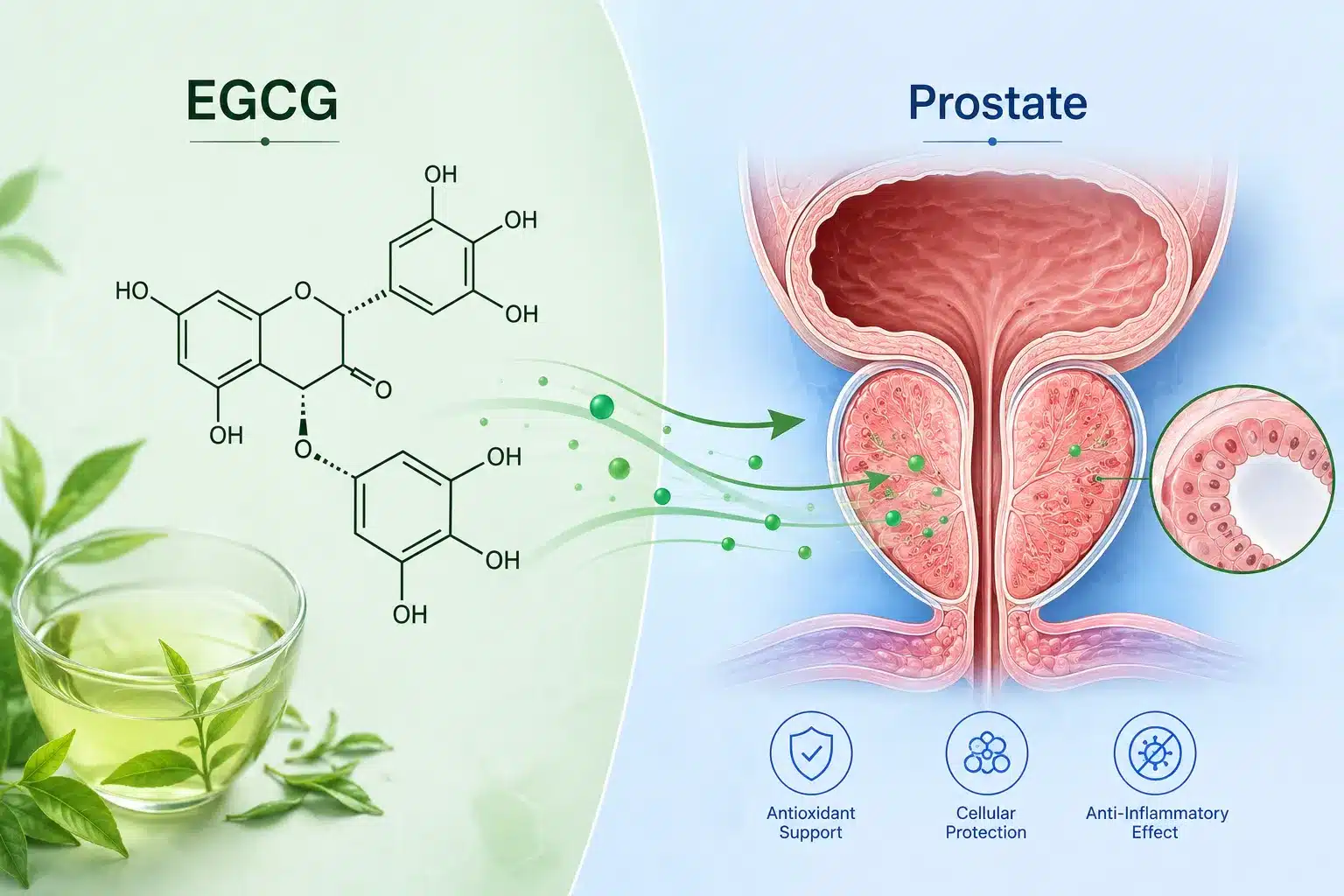
Green tea works on the prostate through several overlapping biological pathways. Its catechin compounds, especially EGCG, act as antioxidants that neutralize free radicals, reduce chronic inflammation, and interfere with the molecular signals that allow abnormal prostate cells to grow and survive [1][11].
Specifically, research shows EGCG can:
- Inhibit tumor cell proliferation by blocking growth factor receptors on prostate cells
- Trigger apoptosis (programmed cell death) in cancerous prostate cells without harming healthy tissue
- Suppress nuclear factor-kappa B (NF-kB), a key inflammation driver in prostate tissue [7]
- Reduce PSA expression in prostate tissue, as seen in men who consumed green tea before prostatectomy [7]
- Lower urinary markers of oxidative DNA damage, suggesting protection at the cellular level [7]
In short, green tea does not “cure” prostate problems, but it creates a prostate microenvironment that is less hospitable to cancer development and inflammatory disease. For men managing an enlarged prostate or monitoring elevated PSA, these mechanisms are clinically meaningful even if they are not yet sufficient to change formal treatment guidelines.
For a broader look at dietary and supplement strategies that support prostate function, see this guide on food supplements for prostate health.
What Is in Green Tea That Helps the Prostate?
The prostate-relevant benefits of green tea come primarily from a family of polyphenols called catechins. EGCG is the most studied, but the full catechin profile works together.
The four main catechins in green tea:
| Catechin | Abbreviation | Approximate Share of Total Catechins |
|---|---|---|
| Epigallocatechin gallate | EGCG | 50 to 80% |
| Epigallocatechin | EGC | 10 to 15% |
| Epicatechin gallate | ECG | 5 to 10% |
| Epicatechin | EC | 2 to 5% |
EGCG is the dominant compound and the one most directly linked to prostate health outcomes in clinical and laboratory research [1][11]. A single 8-ounce cup of brewed green tea typically delivers 50 to 150 mg of EGCG depending on brewing time, water temperature, and tea variety.
Beyond catechins, green tea also contains:
- L-theanine, an amino acid with mild anti-anxiety and anti-inflammatory properties
- Caffeine, a stimulant present at roughly 25 to 50 mg per cup (far less than coffee)
- Quercetin and kaempferol, flavonoids with additional antioxidant activity
The catechin content is what separates green tea from black or oolong tea. Black tea undergoes full oxidation, which converts most catechins into theaflavins and thearubigins. These have their own benefits, but the EGCG concentration is substantially lower, which is why most prostate research focuses specifically on green tea [8].
Green Tea Catechins and Prostate Health Explained
EGCG exerts its effects on the prostate through at least four well-documented molecular mechanisms. Understanding these helps explain both the promise and the current limitations of green tea as a prostate health tool.
1. Androgen pathway modulation. Prostate cancer cells are often driven by testosterone and dihydrotestosterone (DHT). EGCG has been shown in laboratory studies to inhibit 5-alpha reductase, the enzyme that converts testosterone to the more potent DHT, and to reduce androgen receptor activity [9].
2. PI3K/Akt/mTOR signaling suppression. This signaling cascade controls cell survival and proliferation. EGCG blocks key steps in this pathway, slowing the growth of prostate cancer cell lines in multiple in vitro studies [1].
3. Anti-angiogenic effects. Tumors require new blood vessel formation (angiogenesis) to grow beyond a small size. EGCG inhibits vascular endothelial growth factor (VEGF), effectively starving early-stage tumors of their blood supply [1][11].
4. Epigenetic regulation. EGCG can reactivate silenced tumor-suppressor genes through DNA demethylation, a mechanism that may be especially relevant in early prostate cancer development [9].
These mechanisms are well-established in cell culture and animal models. Human trial data are more limited, but short-term interventional studies confirm that green tea consumption does produce measurable biological changes in prostate tissue, including reduced PSA levels and lower NF-kB activity [7].
Can Green Tea Prevent Prostate Cancer?
The honest answer is: possibly, but the evidence is not strong enough for urologists to say “yes” definitively. Population data are encouraging; randomized trial data are mixed.
What the population data show:
- A pooled analysis of case-control studies found approximately 57% lower prostate cancer risk among men with the highest versus lowest green tea consumption [3][5].
- A large Japanese cohort study of nearly 50,000 men found a dose-dependent decrease in advanced prostate cancer risk, with a relative risk of about 0.52 for men drinking 5 or more cups daily compared with those drinking less than 1 cup per day [4]. Notably, this benefit appeared primarily for advanced disease, not localized prostate cancer.
- A 2026 NIH-hosted review confirmed that epidemiologic and experimental data support an inverse correlation between green tea consumption and prostate cancer risk, including more aggressive disease, while emphasizing that findings are not uniform across all studies [1].
What the clinical trial data show:
Clinical trials in high-risk men (those with high-grade prostatic intraepithelial neoplasia or atypical small acinar proliferation) suggest that standardized catechin extracts can slow progression in some early-lesion settings [6][10]. However, results are mixed: one randomized trial using a catechin mixture (EGCG 200 mg twice daily for one year) was well tolerated but did not significantly reduce subsequent prostate cancer diagnoses overall [2].
The bottom line for prevention: Green tea is a reasonable, low-risk dietary strategy for men concerned about prostate cancer risk, particularly advanced disease. It is not a proven cancer prevention agent in the way that, say, a vaccine prevents a specific disease. Urologists who discuss it typically frame it as part of a broader anti-inflammatory diet rather than a standalone intervention.
Green Tea for Enlarged Prostate: Does It Work?
For benign prostatic hyperplasia (BPH), the evidence is thinner than for cancer prevention, but still worth knowing. BPH is driven partly by chronic inflammation and oxidative stress in prostate tissue, both of which green tea catechins directly address [8].
Small clinical studies and animal model research suggest EGCG may:
- Reduce prostate cell proliferation driven by DHT
- Lower inflammatory cytokine levels in prostate tissue
- Modestly reduce prostate volume in some animal models
However, no large randomized controlled trial has confirmed that green tea significantly reduces prostate size or improves urinary flow scores (IPSS) in men with established BPH. Men with symptomatic BPH should not substitute green tea for proven treatments such as alpha-blockers, 5-alpha reductase inhibitors, or surgical options.
Practical guidance for BPH: Green tea is a reasonable complementary addition to your routine if you have mild BPH symptoms and are managing them conservatively. If you are tracking your prostate size over time, our prostate volume calculator can help you monitor changes alongside any dietary interventions.
For men exploring natural approaches to prostate management more broadly, this resource on how to shrink a swollen prostate covers evidence-based options beyond green tea.
How Much Green Tea Should I Drink for Prostate Health?
Most of the positive research findings cluster around 3 to 7 cups of green tea per day. Some studies report that more than 7 cups daily is associated with substantially reduced prostate cancer risk, but this level of intake is far above typical Western drinking patterns and may not be practical or necessary for most men [1][4][5].
Evidence-based dosing guidance:
- Minimum meaningful dose: 1 to 2 cups per day provides some antioxidant benefit but falls below the threshold seen in most positive studies.
- Optimal target range: 3 to 5 cups per day (approximately 300 to 500 mg total catechins) represents the best balance of benefit and practicality for most men.
- Upper safe limit for brewed tea: 7 to 10 cups per day is generally well tolerated in healthy adults without liver disease.
- Concentrated extract supplements: Doses above 800 mg EGCG per day in supplement form carry documented liver toxicity risk and should be avoided without medical supervision [2][10].
Brewing matters. Steeping green tea in water at 160 to 180 degrees Fahrenheit (70 to 80 degrees Celsius) for 2 to 3 minutes maximizes catechin extraction without releasing excessive bitterness. Boiling water degrades some catechins and produces a harsher flavor.
Best Time of Day to Drink Green Tea for Prostate Health
There is no clinical trial data proving that timing of green tea consumption changes its effect on the prostate specifically. However, practical considerations make some timing choices better than others.
Recommended timing:
- Morning with or after breakfast: Reduces the risk of caffeine-related sleep disruption and allows catechins to be absorbed with some food present, which may reduce gastric irritation.
- Between meals: Catechin absorption may be slightly higher when not competing with other polyphenols from food, though the practical difference is small.
- Not within 1 hour of iron-rich meals: Green tea catechins bind to non-heme iron and can reduce its absorption. Men who are iron-deficient should space green tea away from iron-rich foods or supplements.
Avoid:
- Late evening (within 4 hours of bedtime) due to caffeine content, especially for men with nocturia related to BPH
- On an empty stomach if you experience acid reflux or gastric sensitivity
How Long Does It Take Green Tea to Work for Prostate Health?
Green tea is not a fast-acting treatment. The biological effects relevant to prostate health operate over months to years, not days.
Realistic timelines based on available research:
- Oxidative stress markers: Some studies show reductions in urinary oxidative DNA damage markers within 4 to 6 weeks of consistent consumption [7].
- PSA and inflammatory markers: Short-term interventional studies in men scheduled for prostatectomy observed measurable reductions in serum PSA and tissue NF-kB activity after several weeks of green tea consumption [7].
- Cancer risk reduction: Population studies reflect lifetime drinking patterns. The protective associations seen in Japanese cohort data represent decades of habitual consumption, not short-term supplementation [4].
The honest framing: Green tea is a long-term dietary habit, not a short-term remedy. Men who add it to their routine should think of it the way they think of regular exercise: the benefits accumulate over years and are most meaningful when started early and maintained consistently.

Green Tea vs. Other Supplements for Prostate Health
Green tea compares favorably to many popular prostate supplements on the basis of evidence quality, safety, and cost, but it is not the only option worth considering.
Comparison of common prostate health approaches:
- Green tea (EGCG): Strong mechanistic data, moderate epidemiologic support, low cost, very safe at dietary doses. Best evidence for cancer risk reduction, particularly advanced disease [1][3][4].
- Saw palmetto: Widely used for BPH symptoms. Meta-analyses show modest benefit for urinary symptoms in some studies, but a large NIH-funded trial found no significant benefit over placebo. Safer profile than pharmaceuticals.
- Lycopene: Antioxidant found in tomatoes. Some epidemiologic data support reduced prostate cancer risk; evidence is weaker than for green tea.
- Selenium and vitamin E: The SELECT trial found no benefit and potential harm from high-dose supplementation. Not recommended for prostate cancer prevention.
- Zinc: Essential for prostate function, but excess supplementation is associated with increased prostate cancer risk in some studies. Supplementation is not recommended without confirmed deficiency.
- Beta-sitosterol: Shows modest benefit for BPH urinary symptoms in small trials; limited long-term safety data.
Green tea stands out because the same cup that delivers prostate-relevant catechins also provides cardiovascular, metabolic, and cognitive benefits, making it a high-value dietary addition even if the prostate-specific evidence remains preliminary.
For men evaluating specific prostate supplements, our detailed review of natural prostate formulas covers evidence-based options worth considering alongside green tea.
Is Green Tea Safe for Prostate Problems?
For most men with prostate conditions, brewed green tea is safe at 3 to 7 cups per day. The risk profile changes significantly with concentrated supplement forms.
Safety considerations by prostate condition:
- BPH: Safe. No evidence that green tea worsens urinary symptoms. The caffeine content (25 to 50 mg per cup) is low enough that it rarely aggravates urgency or frequency in men with mild to moderate BPH.
- Prostate cancer (active treatment): Discuss with your oncologist. EGCG has shown synergistic effects with some chemotherapy agents in laboratory studies, but it can also interfere with others. Do not assume “natural” means safe during cancer treatment.
- Elevated PSA under surveillance: Generally safe. Some evidence suggests green tea may modestly lower PSA, which could theoretically affect surveillance interpretation. Disclose your intake to your urologist.
- Post-prostatectomy: No contraindication for brewed tea. Concentrated extracts should be cleared with your surgeon given potential effects on healing and drug metabolism.
Liver safety note: The FDA and European regulatory agencies have issued warnings about rare but serious liver toxicity associated with high-dose green tea extract supplements (typically those providing more than 800 mg EGCG per day). Brewed tea at normal dietary amounts has not been associated with liver toxicity in healthy adults [2][10].
Who Should Not Drink Green Tea for Prostate Health?
While green tea is safe for most men, certain groups need to exercise caution or avoid it altogether.
Men who should limit or avoid green tea:
- Men on warfarin (Coumadin): Green tea contains vitamin K and can reduce warfarin’s anticoagulant effect, increasing clotting risk. Consistent intake at a stable amount is safer than variable consumption.
- Men with iron-deficiency anemia: Catechins significantly inhibit non-heme iron absorption. If you are iron-deficient, space green tea well away from iron-rich meals or iron supplements.
- Men with severe liver disease: The liver metabolizes catechins, and high intake may stress an already compromised liver. Stick to 1 to 2 cups daily maximum, or avoid concentrated extracts entirely.
- Men with caffeine sensitivity or cardiac arrhythmias: Green tea’s caffeine content is low but not zero. Men with atrial fibrillation or other arrhythmias should confirm safe caffeine limits with their cardiologist.
- Men on certain chemotherapy regimens: EGCG can inhibit specific drug-metabolizing enzymes (particularly CYP3A4 and CYP2C9), potentially altering drug levels. Always disclose green tea intake to your oncologist.
- Men taking bortezomib (Velcade): Laboratory evidence suggests EGCG may reduce the effectiveness of this proteasome inhibitor used in some cancers. This is a specific, important interaction to flag with your oncologist.
Green Tea and Prostate Medication Interactions
Green tea’s interaction profile with prostate medications is generally low-risk at dietary doses, but specific combinations warrant attention.
Key interactions to know:
- Alpha-blockers (tamsulosin, alfuzosin): No significant pharmacokinetic interaction documented at normal tea intake. However, both green tea and alpha-blockers can mildly lower blood pressure; monitor for dizziness, especially in older men.
- 5-alpha reductase inhibitors (finasteride, dutasteride): Green tea also inhibits 5-alpha reductase to a mild degree. Combining them is unlikely to cause harm but may produce additive DHT-lowering effects. Inform your prescribing urologist.
- Warfarin: As noted above, variable green tea intake can destabilize INR levels. Consistent daily intake at a fixed amount is the safest approach for men on anticoagulation.
- Statins: Some statins are metabolized via CYP3A4, which EGCG can inhibit at high doses. At 3 to 5 cups of brewed tea daily, this interaction is unlikely to be clinically significant, but worth mentioning to your physician if you are on high-dose statins.
- Nadolol (a beta-blocker): One study found green tea significantly reduced nadolol blood levels by inhibiting its intestinal transporter. If you take nadolol for blood pressure or heart rhythm, discuss green tea intake with your cardiologist.
General rule: Always tell your urologist, oncologist, or primary care physician about your green tea consumption, particularly if you drink more than 5 cups daily or use concentrated supplements.
Are There Side Effects of Green Tea for Prostate Health?
Brewed green tea has a well-established safety record at normal dietary doses. Side effects are generally mild and dose-dependent.
Common side effects at normal intake (3 to 7 cups/day):
- Mild gastric irritation or nausea, especially on an empty stomach
- Caffeine-related effects: mild anxiety, insomnia if consumed late in the day, increased heart rate in sensitive individuals
- Staining of teeth with long-term heavy consumption (a cosmetic concern, not a health risk)
- Reduced iron absorption from concurrent meals
Side effects at high doses or with concentrated supplements:
- Headache, dizziness, and insomnia from caffeine accumulation
- Elevated liver enzymes (rare but documented with supplement doses above 800 mg EGCG/day) [2][10]
- Rare cases of acute liver injury reported in case series linked to high-dose green tea extract products
Decaffeinated green tea: A viable option for men who want the catechin benefits without caffeine. Decaffeination removes roughly 90% of caffeine while retaining most catechins, though some processing methods do reduce EGCG content modestly.
Green Tea for Prostate Health: What Urologists Actually Recommend
Urologists who discuss green tea with patients typically position it as a low-risk, evidence-informed dietary addition rather than a medical treatment. Here is how most urologists frame it in clinical practice:
What urologists generally say:
- “Adding 3 to 5 cups of green tea to your daily routine is a reasonable, low-risk choice if you are interested in prostate health.”
- “The evidence is promising but not definitive enough to make a formal clinical recommendation.”
- “Do not use green tea as a reason to delay PSA screening, skip follow-up appointments, or stop prescribed medications.”
- “If you are on active surveillance for low-grade prostate cancer, green tea is generally fine, but tell me how much you are drinking.”
- “Avoid high-dose green tea extract supplements without discussing them with me first.”
The broader consensus in urology aligns with the American Cancer Society’s general guidance on diet and cancer prevention: a diet rich in plant-based antioxidants, including green tea, is consistent with lower cancer risk, but no single food or supplement has been proven to prevent prostate cancer in large randomized trials.
For men interested in a comprehensive natural approach to prostate health, combining green tea with other evidence-supported strategies covered in this guide on how to shrink the prostate naturally offers a more complete picture.
Frequently Asked Questions
Q: Can green tea replace my prostate medication? No. Green tea is a dietary complement, not a pharmaceutical substitute. Men on alpha-blockers, 5-alpha reductase inhibitors, or other prostate medications should continue their prescribed treatment. Discuss any dietary changes with your urologist before making adjustments.
Q: Is green tea extract better than brewed green tea for the prostate? Not necessarily, and it carries more risk. Concentrated supplements deliver higher EGCG doses but are associated with rare liver toxicity at high doses. Brewed tea provides a safe, well-tolerated dose with a centuries-long safety record. Most urologists prefer the brewed form for general prostate health support.
Q: Does green tea lower PSA levels? Short-term interventional studies in men scheduled for prostatectomy showed modest reductions in serum PSA after green tea consumption [7]. However, the clinical significance of this finding is unclear, and green tea should not be used to artificially lower PSA before a screening test.
Q: Is matcha better than regular green tea for prostate health? Matcha contains significantly more EGCG per serving than standard brewed green tea because you consume the whole ground tea leaf rather than an infusion. One cup of matcha may deliver 3 to 5 times the catechin content of regular green tea, making it a concentrated option. However, it also delivers more caffeine and more fluoride. At 1 to 2 cups daily, matcha is a reasonable high-potency alternative.
Q: Does green tea affect testosterone levels? Some laboratory evidence suggests EGCG mildly inhibits enzymes involved in testosterone metabolism, but the effect at normal dietary doses is unlikely to produce clinically meaningful changes in testosterone levels in healthy men.
Q: Can I drink green tea if I am on active surveillance for prostate cancer? Generally yes, at normal dietary amounts (3 to 5 cups per day). Inform your urologist about your intake, particularly because green tea may modestly affect PSA levels and because some catechins interact with drug-metabolizing enzymes relevant to any future treatment.
Q: How does Japanese green tea consumption relate to prostate cancer rates? Japan has historically had much lower prostate cancer incidence and mortality rates than Western countries. While green tea consumption is one proposed contributing factor, diet, genetics, screening practices, and other lifestyle variables all differ substantially. The Japanese cohort data are suggestive but cannot isolate green tea as the sole protective factor [4].
Q: Is cold-brewed green tea as beneficial as hot-brewed tea? Cold brewing extracts catechins more slowly and typically yields somewhat lower EGCG concentrations per serving compared with hot brewing. It is still a worthwhile option, particularly for men who prefer a milder flavor or want to reduce caffeine extraction.
Q: At what age should men start drinking green tea for prostate health? There is no specific age threshold. Given that prostate cancer risk increases after age 50, and that the protective associations in population studies reflect long-term habitual consumption, starting in your 30s or 40s is reasonable if you enjoy the beverage. It is never too late to add it to your routine.
Q: Can green tea help with prostatitis? Green tea’s anti-inflammatory properties are theoretically relevant to chronic prostatitis, which involves persistent prostate inflammation. However, there are no large clinical trials specifically evaluating green tea for prostatitis. Men with chronic prostatitis/chronic pelvic pain syndrome (CP/CPPS) may find it a useful dietary complement to prescribed treatment, but it should not replace medical evaluation.
Conclusion
The evidence supporting green tea for prostate health is genuinely promising, particularly for reducing the risk of advanced prostate cancer and lowering inflammatory markers in prostate tissue. The key active compound, EGCG, works through multiple well-documented biological pathways including antioxidant activity, anti-inflammatory effects, androgen pathway modulation, and tumor growth inhibition.
For practical application, 3 to 5 cups of brewed green tea per day represents the best-supported target for most healthy adult men. This range delivers meaningful catechin doses, stays well within the safe caffeine threshold for most people, and aligns with the intake levels seen in positive epidemiologic studies.
Actionable next steps:
- Add 3 to 5 cups of green tea to your daily routine, brewed at 160 to 180 degrees Fahrenheit for 2 to 3 minutes.
- Avoid high-dose green tea extract supplements without discussing them with your physician first.
- Disclose your green tea intake to your urologist, especially if you are on blood thinners, chemotherapy, or active surveillance.
- Combine green tea with other evidence-supported prostate health strategies: a diet rich in vegetables and lycopene, regular exercise, and maintaining a healthy weight.
- Do not skip PSA screening or follow-up appointments because you are drinking green tea. It is a complement to medical care, not a replacement.
Green tea is one of the most accessible, affordable, and evidence-supported dietary additions a man can make for long-term prostate health. The science does not yet justify calling it a proven preventive treatment, but the risk-to-benefit ratio at normal dietary doses is strongly favorable.
References
[1] Pmc12882431 – https://pmc.ncbi.nlm.nih.gov/articles/PMC12882431/ [2] Pmc6340872 – https://pmc.ncbi.nlm.nih.gov/articles/PMC6340872/ [3] Pmc9406482 – https://pmc.ncbi.nlm.nih.gov/articles/PMC9406482/ [4] Pmc6337309 – https://pmc.ncbi.nlm.nih.gov/articles/PMC6337309/ [5] europepmc – https://europepmc.org/article/pmc/5380255 [6] Green Tea May Suppress Prostate Cancer High Risk Men – https://www.urologytimes.com/view/green-tea-may-suppress-prostate-cancer-high-risk-men [7] Green Tea Cuts Inflammation Markers In Prostate Cancer Patients – https://www.theoncologynurse.com/articles/green-tea-cuts-inflammation-markers-in-prostate-cancer-patients [8] Pmc5488006 – https://pmc.ncbi.nlm.nih.gov/articles/PMC5488006/ [9] Pmc2728057 – https://pmc.ncbi.nlm.nih.gov/articles/PMC2728057/ [10] Pmc4596745 – https://www.ncbi.nlm.nih.gov/pmc/articles/PMC4596745/

With over 13 years of experience in holistic health blogging, I aim to help you navigate your wellness journey with honest insights, expert-backed advice, and a sprinkle of real-world practicality.
Certified Wellness Writer | Herbal Nutrition Advocate | Wellness Research Enthusiast