
microdose tirzepatide

Last updated: October 3, 2026
Quick Answer: Microdose tirzepatide refers to using tirzepatide (the active ingredient in Mounjaro and Zepbound) at doses significantly lower than the FDA-approved starting dose of 2.5 mg weekly. Proponents claim smaller doses reduce side effects while still supporting appetite control and metabolic health. However, clinical evidence specifically supporting microdosing protocols is limited, and most obesity medicine specialists do not recommend it as a first-line approach. Anyone considering it should work closely with a licensed prescriber.
Key Takeaways
- Microdose tirzepatide typically means doses below 2.5 mg per week, often ranging from 0.5 mg to 2 mg, though no standard definition exists
- The FDA has not approved any microdosing protocol for tirzepatide; standard approved doses begin at 2.5 mg weekly
- Telehealth clinics and some compounding pharmacies promote microdosing, but clinical trial data specifically on microdose tirzepatide is sparse
- Claimed benefits include fewer gastrointestinal side effects and lower cost, but these claims are largely anecdotal or extrapolated from standard-dose studies
- Microdosing may be unsuitable for people with moderate to severe obesity who need meaningful weight loss quickly
- Compounded tirzepatide used in microdosing protocols carries its own regulatory and quality concerns
- Weight loss results at microdoses are generally slower and less dramatic than at therapeutic doses
- A licensed prescriber, not a social media trend, should guide any tirzepatide dosing decision
What Is Microdose Tirzepatide and How Does It Work
Microdose tirzepatide is an off-label dosing approach where tirzepatide is administered at doses well below the FDA-approved 2.5 mg weekly starting point, typically somewhere between 0.5 mg and 2 mg per injection. The idea is that even at these lower doses, the drug’s dual action on GIP (glucose-dependent insulinotropic polypeptide) and GLP-1 (glucagon-like peptide-1) receptors may still produce meaningful metabolic effects with fewer side effects [9].
7 Best GLP-1 Providers Ranked: Accreditation, Flexibility & Support Compared (2026 Update)
32,000+ Patients Can't All Be Wrong: See the Top-Rated GLP-1 Providers. We compared the leading online GLP-1 providers based on program features, clinical support, convenience, and overall value.
BMI MD GLP-1 Microdosing Plan
- Specialized microdosing options, including sublingual drops and low-dose injections
- Designed for people interested in maintaining weight or gradually adjusting treatment
- Bundled program structure without a separate monthly platform membership
- Online access makes the process convenient from home

DirectMeds Weight Loss Solutions
- Online weight-loss program with a straightforward patient experience
- Compounded medication options through state-licensed compounding pharmacies
- Includes clinical consultation as part of the process
- Provides shipping updates to help patients track their orders
MEDVi Flat-Rate Telehealth
- Flat-rate telehealth approach designed for easier budgeting
- No dosage-based pricing increases within the advertised program structure
- Offers injectable and oral thin-film delivery options
- Includes medical screening and asynchronous provider consultations
Gala GLP-1 Care Program
- Text-based access to state-licensed clinicians
- Cold-chain medication shipping included in the program
- Month-to-month program structure
- Designed for people who value convenient ongoing support
Measured GLP-1 Metabolic Health
- Comprehensive metabolic health screening and intake analysis
- Designed around longer-term metabolic health management
- Responsive dashboard with integrated health tracking tools
- Useful option for patients who value a more data-focused experience
Refills GLP-1 (TryRefills Plan)
- Clinical guidance designed to help patients manage common treatment concerns
- Includes foundational nutritional strategies alongside medication
- Designed around predictable ongoing treatment
- No hidden startup or processing fees according to the program information provided
AltRx GLP-1 Transactional Reorders
- Transactional reorder model without recurring auto-billing
- Designed for patients who already understand their treatment routine
- Fast text-to-order process for convenient reorders
- Offers injectable and fast-dissolving tablet variations
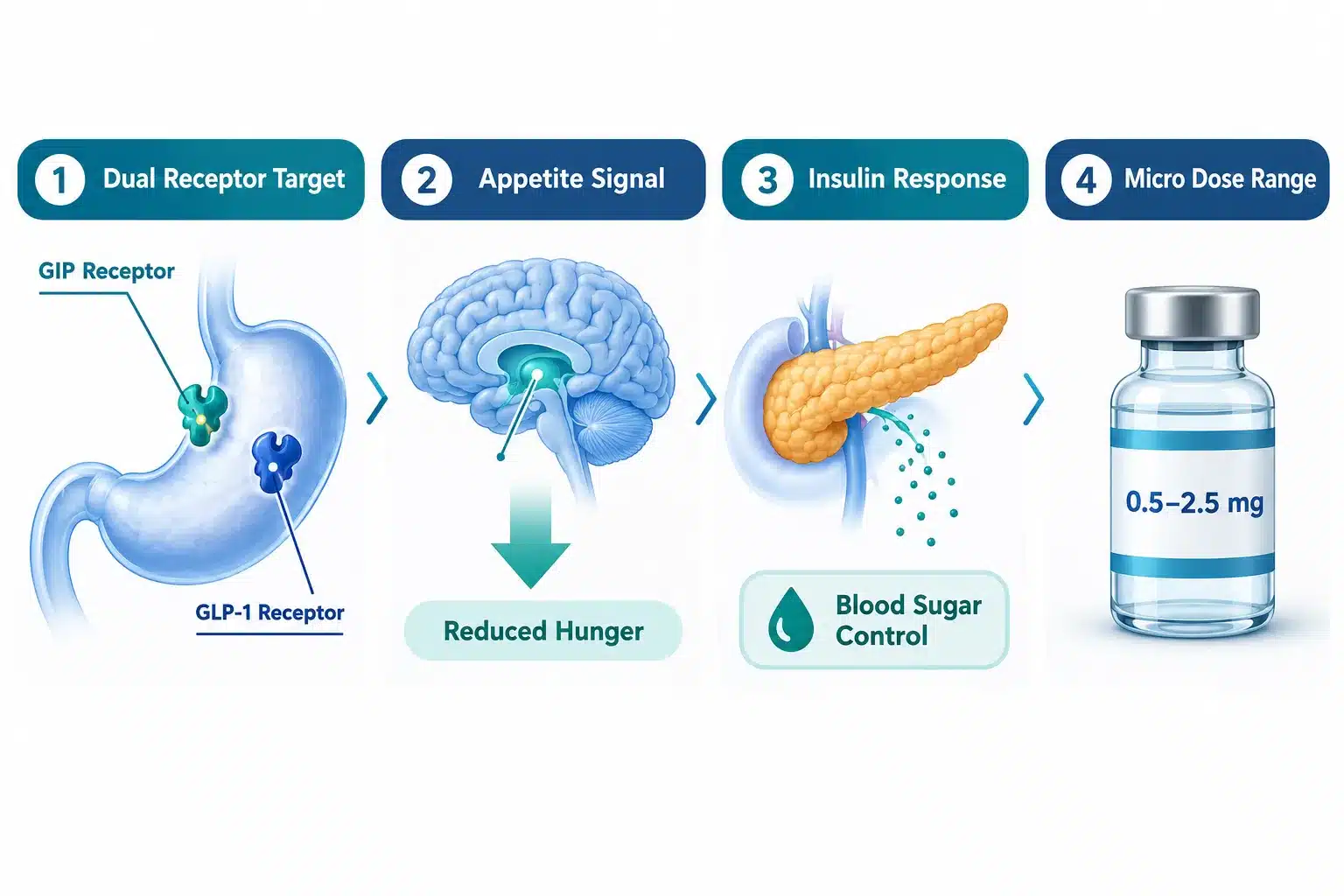
Tirzepatide works by mimicking two gut hormones simultaneously. When it binds to GIP and GLP-1 receptors, it signals the brain to reduce appetite, slows gastric emptying so you feel full longer, and improves insulin sensitivity. At standard doses, these effects are well-documented in large clinical trials. At microdoses, the same pathways are activated, but to a lesser degree. Whether that partial activation is clinically meaningful for weight loss is the central question that current evidence has not yet answered [5].
How the mechanism differs at low doses:
- Receptor activation is dose-dependent, meaning smaller doses produce weaker signals
- Appetite suppression may still occur but is likely milder
- Blood sugar benefits in people with type 2 diabetes may be reduced at sub-therapeutic doses
- The half-life of tirzepatide (approximately five days) means even a small weekly dose maintains some circulating drug level throughout the week
“Microdosing GLP-1 medications is not a formally studied or FDA-approved protocol. Patients should understand they are entering territory where clinical guidance is limited.” [6]
Microdose Tirzepatide vs Regular Dose: Key Differences
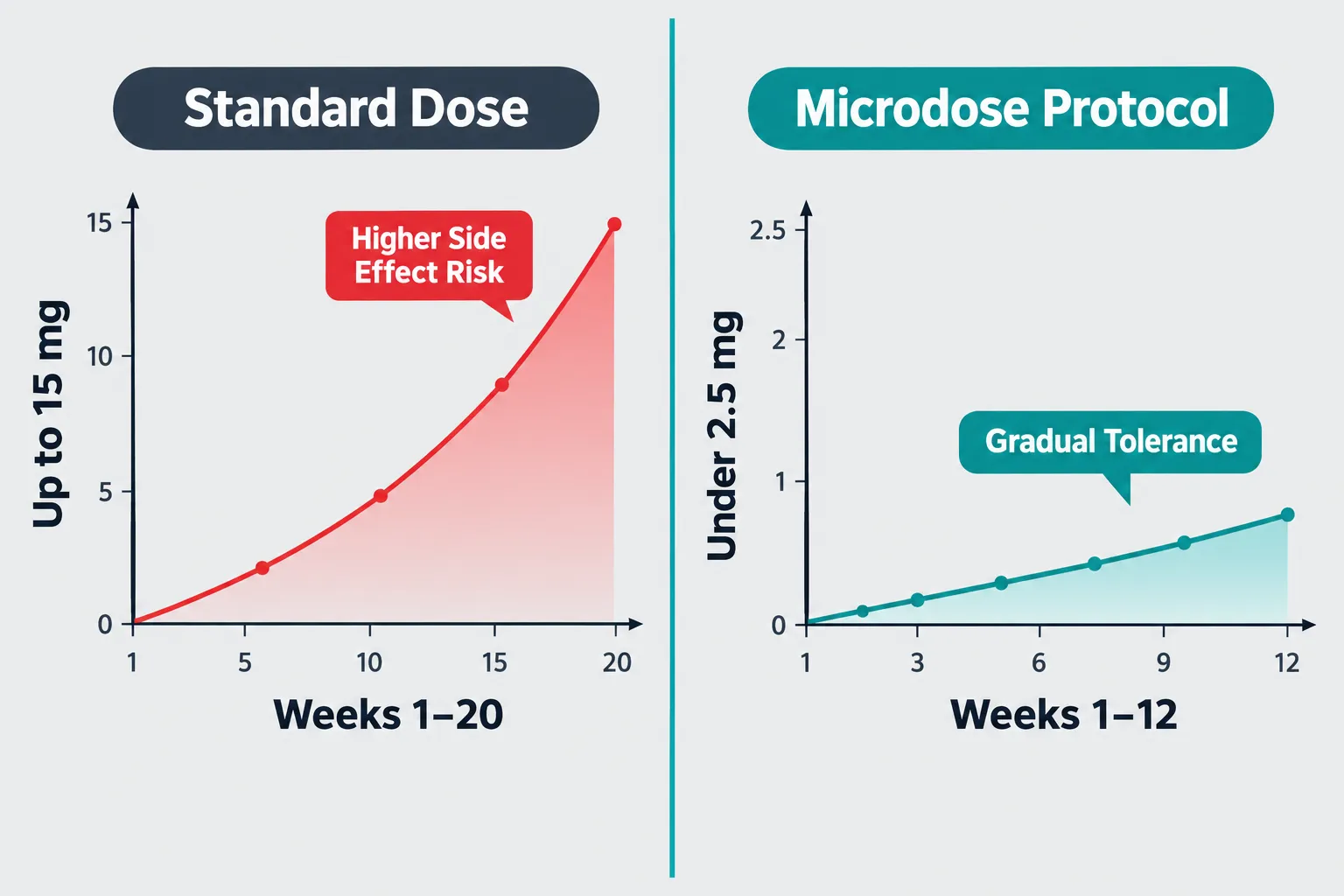
The core difference between microdose tirzepatide and standard-dose tirzepatide is the amount injected and the expected clinical outcome. Standard FDA-approved doses begin at 2.5 mg weekly and escalate up to 15 mg weekly over several months. Microdose protocols typically stay below 2.5 mg indefinitely or use sub-therapeutic doses as a ramp-up phase [9].
| Feature | Microdose Tirzepatide | Standard-Dose Tirzepatide |
|---|---|---|
| Typical dose range | 0.5 mg, 2 mg/week | 2.5 mg, 15 mg/week |
| FDA approval status | Off-label, not approved | FDA-approved (Mounjaro, Zepbound) |
| Expected weight loss | Modest, variable, slower | Up to 20%+ body weight in trials |
| GI side effect risk | Lower (claimed) | Moderate, especially during escalation |
| Clinical evidence base | Minimal, largely anecdotal | Extensive Phase 3 trial data (SURMOUNT) |
| Source | Often compounded pharmacies | Brand-name or compounded |
Common mistake: Assuming that a lower dose is automatically safer. Compounded tirzepatide used in microdosing protocols may carry quality and consistency risks that brand-name products do not [10].
Microdose Tirzepatide for Weight Loss: What Results Are Realistic
Microdose tirzepatide may support modest appetite reduction and gradual weight loss, but results are unlikely to match those seen in FDA-approved clinical trials. In the SURMOUNT-1 trial, participants on 15 mg tirzepatide lost an average of about 20.9% of body weight over 72 weeks. Microdose users should not expect comparable outcomes [4].
Anecdotal reports from telehealth platforms and online communities describe weight loss of 5 to 10 pounds over several months at microdoses, with some individuals reporting meaningful appetite suppression even at 1 mg per week [10]. These reports are self-selected and not controlled, so they carry significant bias.
Realistic expectations for microdose tirzepatide:
- Appetite suppression: possible but milder than at therapeutic doses
- Weight loss rate: slower, likely 0.25 to 0.5 lbs per week at best for most users
- Metabolic benefits (blood sugar, insulin sensitivity): reduced compared to standard doses
- Plateau risk: higher, because the dose may never reach the threshold needed for sustained fat loss
Choose microdosing if your primary goal is side-effect tolerance during an initial ramp-up phase, not if you need significant weight loss quickly. For deeper context on real patient experiences, the tirzepatide reviews by patients resource covers a wide range of outcomes.
How Long Does It Take to See Results From Microdose Tirzepatide
Most people who respond to microdose tirzepatide report noticing reduced appetite within two to four weeks. Visible weight loss typically takes six to twelve weeks, and results vary widely based on diet, activity level, and individual metabolic response [3].
At standard doses, tirzepatide produces measurable weight loss within the first four weeks for many patients. At microdoses, the timeline stretches because the metabolic signal is weaker. Some clinicians use a microdose phase as a four- to eight-week tolerance-building period before escalating to a therapeutic dose, which may be a more evidence-consistent approach than staying at a microdose indefinitely [2].
General timeline (estimates, not clinical guarantees):
- Weeks 1 to 2: Possible mild appetite reduction
- Weeks 3 to 6: Some users notice reduced cravings and smaller portion sizes
- Weeks 6 to 12: Modest scale movement, typically 3 to 8 lbs for adherent users
- Beyond 12 weeks: Plateau likely unless dose is increased
Microdose Tirzepatide Side Effects
Microdose tirzepatide is generally associated with fewer and milder side effects than standard doses, though it is not side-effect-free. The most commonly reported issues are nausea, mild fatigue, and reduced appetite, which at low doses tend to be transient [7].
The main side effects reported at microdoses include:
- Nausea: Usually mild and occurring in the first one to two days after injection
- Constipation or loose stools: Less common than at higher doses but still possible
- Fatigue: Some users report low energy in the first week or two
- Injection site reactions: Redness or mild irritation, common to all injectable GLP-1 medications
- Headache: Reported occasionally, possibly related to reduced caloric intake
Serious side effects documented at therapeutic doses, including pancreatitis, gallbladder disease, and thyroid C-cell tumors (in animal studies), are theoretically possible at any dose. The risk at very low doses is unknown because no large safety studies have been conducted specifically on microdose protocols [6].
Edge case: People who are highly sensitive to GLP-1 receptor agonists may experience significant nausea even at 0.5 mg. Sensitivity varies widely and cannot be predicted in advance.
Is Microdose Tirzepatide Safe Long Term
Long-term safety data for microdose tirzepatide specifically does not exist. Standard-dose tirzepatide has multi-year safety data from clinical trials, but no equivalent data exists for sustained sub-therapeutic dosing. This is the most important gap in the current evidence base [5].
Hackensack Meridian Health noted in 2026 that microdosing GLP-1 medications lacks the clinical evidence to be considered a standard of care, and that patients who pursue it should do so only under close medical supervision [6]. The Cleveland Clinic has similarly cautioned that while microdosing is gaining popularity on social media, the practice is not backed by the same evidence as approved dosing protocols [5].
What we do and don’t know:
- We know standard-dose tirzepatide is generally safe over 72 weeks based on SURMOUNT trial data
- We do not know whether staying at a sub-therapeutic dose for years carries unique risks
- We do not know the minimum effective dose for metabolic benefit
- We do not know whether microdosing produces durable weight loss or only short-term appetite suppression
The honest answer is that long-term microdose tirzepatide safety is an open question, not a settled one.
Microdose Tirzepatide Cost and Pricing
Microdose tirzepatide is almost always sourced from compounding pharmacies, since brand-name Mounjaro and Zepbound are only available in fixed doses starting at 2.5 mg. Compounded tirzepatide at microdose levels typically costs less per injection than brand-name products, but total monthly costs vary significantly by provider [1].
For a detailed breakdown of what compounded tirzepatide costs across different providers and dose levels, see this tirzepatide compounding pharmacy cost guide and the broader tirzepatide monthly cost overview.
Cost factors to consider:
- Compounding pharmacy fees and formulation costs
- Telehealth consultation and monthly monitoring fees
- Whether your insurance covers any portion (most do not cover compounded versions)
- Shipping and supplies (syringes, alcohol swabs)
Because microdoses use less drug per injection, the raw medication cost can be lower. However, some telehealth platforms charge flat monthly program fees regardless of dose, which can offset those savings. For a full cost comparison across GLP-1 options, the cost of GLP-1, semaglutide, and compounded tirzepatide guide is a useful reference.
Where Can I Get Microdose Tirzepatide Prescribed
Microdose tirzepatide is available through telehealth platforms and some weight loss clinics that work with compounding pharmacies. You cannot get a true microdose from a standard retail pharmacy filling a brand-name prescription, because Mounjaro and Zepbound do not come in sub-2.5 mg doses [9].
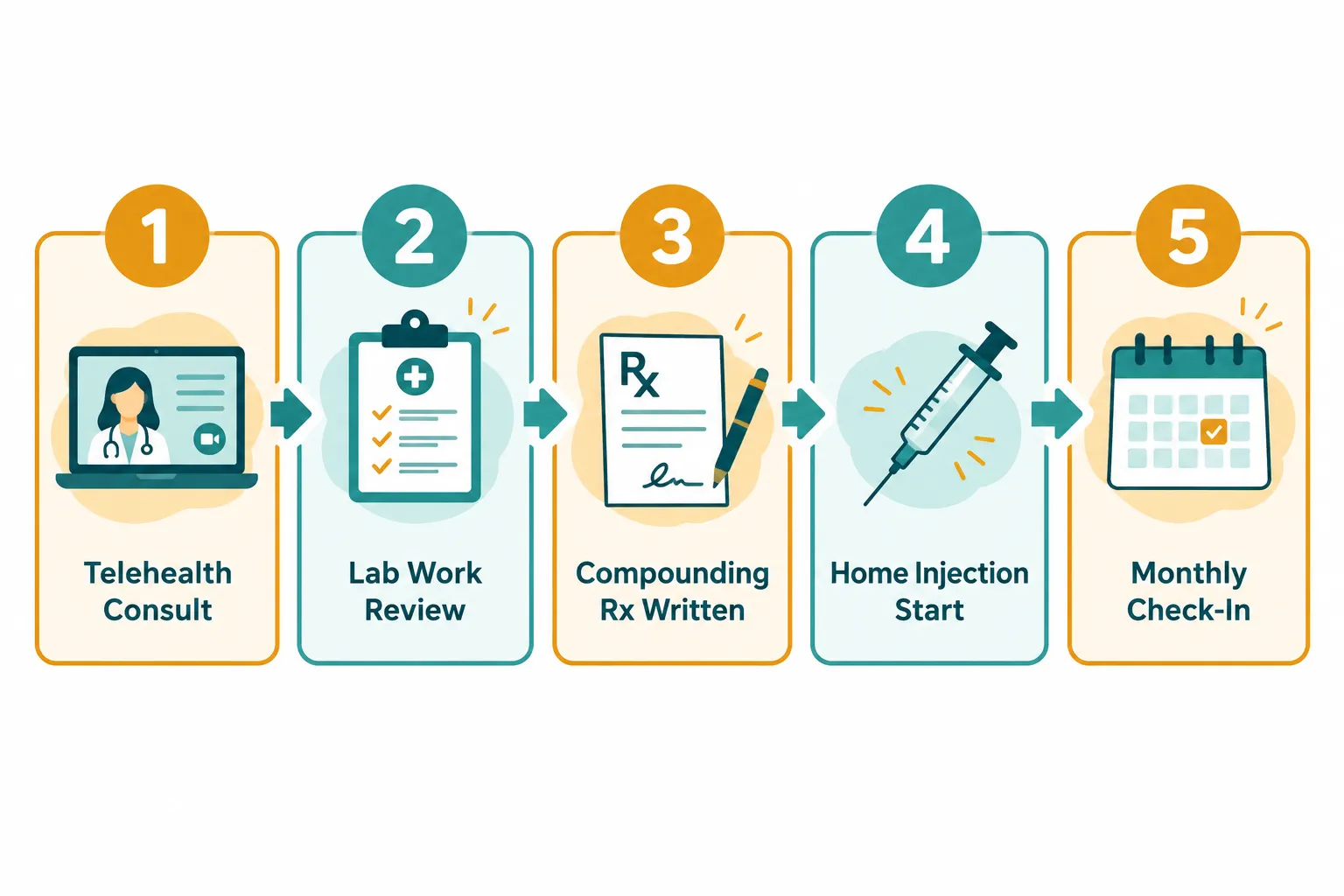
How the process typically works:
- Telehealth consultation: A licensed provider reviews your health history, labs, and goals
- Prescription written: If appropriate, a compounded tirzepatide prescription is sent to a licensed compounding pharmacy
- Pharmacy ships medication: Usually a multi-week supply of pre-filled vials or syringes
- Self-injection at home: Most microdose protocols involve weekly subcutaneous injections
- Monthly check-ins: A good provider monitors your response and adjusts the dose
To find a reputable compounding source, review what the best compounding pharmacy for tirzepatide guide recommends, and verify that any pharmacy you use is accredited by PCAB (Pharmacy Compounding Accreditation Board) or a comparable body.
Microdose Tirzepatide vs Semaglutide: Which Is Better
Neither microdose tirzepatide nor microdose semaglutide has been studied head-to-head at sub-therapeutic doses, so a definitive answer is not possible. At standard doses, tirzepatide has outperformed semaglutide for weight loss in the SURMOUNT vs. STEP trial comparisons, but that advantage may not translate to microdose levels [4].
Practical comparison:
- Tirzepatide targets both GIP and GLP-1 receptors; semaglutide targets only GLP-1. This dual action is thought to explain tirzepatide’s superior weight loss at full doses.
- Semaglutide has a longer track record and more published safety data overall.
- Cost at microdoses is similar for both when sourced from compounding pharmacies.
- Side effect profiles are comparable at low doses for most users.
Choose tirzepatide if your prescriber believes the dual-receptor mechanism is important for your metabolic profile. Choose semaglutide if cost, familiarity, or a longer evidence base matters more to you. Either way, the decision should be made with a licensed clinician, not based on social media trends.
Who Should Not Take Microdose Tirzepatide
Microdose tirzepatide is not appropriate for everyone. Certain medical conditions and situations make any form of tirzepatide risky, regardless of the dose [6].
Contraindications and caution groups:
- Personal or family history of medullary thyroid carcinoma (MTC): Tirzepatide carries a boxed warning for thyroid C-cell tumors in animal studies
- Multiple endocrine neoplasia syndrome type 2 (MEN 2): Contraindicated at any dose
- History of pancreatitis: Use with caution; GLP-1 receptor agonists have been associated with pancreatitis
- Severe gastroparesis: Tirzepatide slows gastric emptying, which can worsen this condition
- Pregnancy or breastfeeding: Not recommended; weight loss during pregnancy carries risks
- Type 1 diabetes: Not studied or approved for this population
- Children and adolescents: No safety data for microdosing in minors
People with mild obesity (BMI under 27) who do not have metabolic comorbidities may also find that the risk-benefit balance does not favor any form of tirzepatide, micro or standard dose.
Microdose Tirzepatide for Diabetes vs Weight Loss
For people with type 2 diabetes, microdose tirzepatide is unlikely to provide adequate blood sugar control. The FDA approved tirzepatide for type 2 diabetes at doses of 5 mg, 10 mg, and 15 mg weekly. Sub-therapeutic doses may produce some insulin-sensitizing effect, but they are not a substitute for guideline-directed diabetes management [9].
For weight loss in people without diabetes, the calculus is slightly different. Even modest appetite suppression can support behavioral changes and gradual weight reduction. Some clinicians use microdosing as an entry point for patients who are highly sensitive to GLP-1 side effects, with a plan to escalate the dose over time [2].
Bottom line by use case:
- Type 2 diabetes management: Microdose tirzepatide is not appropriate as primary therapy; standard doses are required
- Prediabetes or insulin resistance: Microdosing may offer some metabolic benefit, but evidence is weak
- Weight loss without diabetes: May be reasonable as a tolerance-building phase, but should not be a permanent strategy if meaningful weight loss is the goal
Microdose Tirzepatide Common Mistakes to Avoid
The most common mistake with microdose tirzepatide is treating it as a permanent low-risk alternative to standard dosing, rather than as a short-term tolerance strategy. Other frequent errors include sourcing medication from unverified compounding pharmacies and self-adjusting doses without medical oversight [1].
Mistakes that undermine safety and results:
- Using unaccredited compounding pharmacies: Potency and sterility cannot be guaranteed without proper accreditation
- Skipping lab work: Baseline metabolic panels and thyroid screening are important before starting any tirzepatide protocol
- Expecting standard-dose results at microdoses: Unrealistic expectations lead to early abandonment
- Staying at a microdose indefinitely: If weight loss stalls, the dose likely needs to be increased under medical supervision
- Ignoring diet and activity: Tirzepatide at any dose is not a substitute for lifestyle changes
- Relying on social media protocols: Dosing guidance from influencers or online forums is not a substitute for individualized medical care [8]
Microdose Tirzepatide Alternatives
If microdose tirzepatide does not seem right for you, several alternatives exist across the spectrum of GLP-1 medications and other metabolic interventions.
Alternatives worth discussing with a prescriber:
- Standard-dose compounded tirzepatide: Often more cost-effective than brand-name and allows for gradual dose escalation under supervision. See the cheapest tirzepatide online guide for current options.
- Compounded semaglutide: A well-studied GLP-1 receptor agonist with a strong evidence base for weight loss
- Oral tirzepatide formulations: Emerging options like tablet-based tirzepatide are being studied; see the Medvi tirzepatide tablets overview for one current example
- Liraglutide (Saxenda): An older GLP-1 medication with a well-established safety profile
- Lifestyle-based metabolic programs: For people with mild obesity or metabolic concerns, structured nutrition and exercise programs remain first-line options with no drug-related risks
Frequently Asked Questions
What exactly counts as a microdose of tirzepatide?
There is no official definition. Most practitioners and telehealth platforms use the term to describe doses below 2.5 mg per week, often in the range of 0.5 mg to 2 mg. Because it is not a regulated term, the definition varies by provider [9].
Can I microdose tirzepatide at home?
Yes, most microdose protocols involve self-administered subcutaneous injections at home, similar to standard tirzepatide. The medication typically comes from a compounding pharmacy as a multi-dose vial. You should receive injection training and medical supervision before starting [3].
Is microdose tirzepatide FDA-approved?
No. The FDA has approved tirzepatide only at doses of 2.5 mg and above for specific indications. Any sub-2.5 mg protocol is off-label and not supported by FDA-reviewed clinical data [5].
Will microdose tirzepatide show up on a drug test?
Tirzepatide is not a controlled substance and is not screened for in standard employment drug tests. However, it is a prescription medication and should be disclosed to any healthcare provider reviewing your medications.
Can I get microdose tirzepatide without a prescription?
No. Tirzepatide is a prescription-only medication in the United States at any dose. Any source offering it without a valid prescription is operating outside the law and poses serious safety risks.
How does microdose tirzepatide compare to doing nothing?
For people with obesity or metabolic dysfunction, even modest appetite suppression from a low dose may help establish better eating habits. But the evidence for long-term benefit at microdoses is thin, and the cost and effort may not justify the outcome for everyone [7].
Does microdosing tirzepatide prevent muscle loss?
At standard doses, tirzepatide is associated with some lean mass loss alongside fat loss. At microdoses, this risk is likely lower because the overall metabolic effect is smaller, but it is not eliminated. Adequate protein intake and resistance exercise remain important regardless of dose.
How is compounded tirzepatide different from brand-name Mounjaro or Zepbound?
Compounded tirzepatide contains the same active ingredient but is manufactured by a compounding pharmacy rather than Eli Lilly. Quality, potency, and sterility can vary. For a detailed breakdown, see this guide on compounded tirzepatide: what you need to know.
Is microdose tirzepatide good for maintenance after weight loss?
Some clinicians are exploring low-dose tirzepatide as a maintenance strategy after achieving weight loss goals at higher doses. This is an emerging area without strong evidence, but it is a reasonable hypothesis being studied informally in clinical practice [2].
What happens if I stop microdose tirzepatide suddenly?
Unlike some medications, tirzepatide does not require a taper. However, appetite typically returns to baseline after stopping, and weight regain is common. This is true at any dose, not just microdoses.
7 Best GLP-1 Providers Ranked: Accreditation, Flexibility & Support Compared (2026 Update)
32,000+ Patients Can't All Be Wrong: See the Top-Rated GLP-1 Providers: Compared on accreditation, plan flexibility, and patient support — updated for 2026.
BMI MD GLP-1 Microdosing Plan
- Specialized microdosing options (sublingual drops or low-dose injections)
- Ideal for maintaining weight or tapering off higher doses safely
- Fully bundled plan with no hidden monthly platform memberships
DirectMeds Weight Loss Solutions
- Sourced from accredited, state-licensed 503A compounding pharmacies
- No-frills high-volume savings passed directly to the patient
- Includes clinical consultation and cold-chain shipping updates
MEDVi Flat-Rate Telehealth
- Flat monthly rate holds steady even at maximum maintenance doses
- No dosage upcharges or graduation fee penalties
- Offers both injectable and advanced oral thin-film delivery options
Gala GLP-1 Care Program
- All-inclusive plan with no standalone membership costs
- Continuous text-based messaging access with state-licensed clinicians
- Temperature-controlled, cold-chain medication shipping included
Measured GLP-1 Metabolic Health
- Comprehensive metabolic health screening and expert intake analysis
- Predictable long-term budgeting with stable plan pricing
- High-end responsive dashboard with integrated diagnostic support
Refills GLP-1 (TryRefills Plan)
- Flat rate holds steady as titration scales up
- Includes clinical guides for active side-effect management
- Bundles in foundational nutritional strategies alongside medication
AltRx GLP-1 Transactional Reorders
- Zero recurring auto-billing — pay entirely on a transactional basis
- Rapid text-to-order format saves time for experienced patients
- Provides both injectable forms and fast-dissolving tablet variations
Conclusion
Microdose tirzepatide sits at the intersection of genuine patient need and a significant evidence gap. The appeal is understandable: lower doses mean potentially fewer side effects, lower costs, and a gentler entry point into GLP-1 therapy. For some patients, particularly those who are highly sensitive to nausea or who want to build tolerance before escalating, a supervised low-dose start may be a reasonable short-term strategy.
But microdosing is not a shortcut to the results seen in clinical trials, and it is not a validated long-term approach. The evidence base is thin, the regulatory framework is absent, and the quality of compounded products varies. Anyone pursuing this path should do so with a licensed prescriber, verified lab work, and realistic expectations.
Actionable next steps:
- Consult a licensed obesity medicine specialist or telehealth provider before starting any tirzepatide protocol
- Verify that any compounding pharmacy you use is PCAB-accredited
- Set realistic weight loss expectations: microdoses are a starting point, not a destination
- Review your full cost picture using resources like the tirzepatide cost review before committing to a program
- Revisit your dose with your prescriber at 8 to 12 weeks if results are insufficient
The goal is not to microdose forever. The goal is to find the right dose, at the right time, with the right support, to achieve lasting metabolic health.
References
[1] Thinking About Microdosing GLP-1? 5 Myths Debunked – https://livehealthy.muhealth.org/stories/thinking-about-microdosing-glp-1-5-myths-debunked
[2] Microdosing GLP-1s: A Doctor’s Guide to Gentle, Effective Metabolic Reset – https://www.dramersi.com/blog/microdosing-glp-1s-a-doctors-guide-to-gentle-effective-metabolic-reset
[3] Microdosing Tirzepatide – https://www.luxskinlasers.com/microdosing-tirzepatide/
[4] PMC13511409 – https://pmc.ncbi.nlm.nih.gov/articles/PMC13511409/
[5] Microdosing GLP-1 – https://health.clevelandclinic.org/microdosing-glp-1
[6] Is Microdosing GLP-1s Safe? – https://www.hackensackmeridianhealth.org/en/healthier-you/2026/05/12/is-microdosing-glp-1s-safe
[7] What to Know About Microdosing GLP-1s – https://www.healthcentral.com/condition/obesity/what-to-know-about-microdosing-glp-1s
[8] Microdosing GLP-1s for Weight Loss – https://www.oprahdaily.com/life/health/a73931064/microdosing-glp-1s-weight-loss/
[9] What Is a Microdose of Tirzepatide? – https://rx.com/education/what-is-a-microdose-of-tirzepatide
[10] Microdosing Tirzepatide – https://agelessrx.com/microdosing-tirzepatide/


