
Noom Microdosing: Full Review of Noom’s Microdose GLP-1Rx Program

Last updated: October 3, 2026
Quick Answer
Noom microdosing is a medically supervised weight loss program that uses low doses of compounded semaglutide (0.2-0.6 mg per week) combined with Noom’s behavioral coaching app. It’s designed for adults who want the appetite-control benefits of GLP-1 medications at a lower dose, with the goal of reducing common side effects like nausea. The program starts at $119 per month, including both medication and the Microhabits coaching program.
Key Takeaways
- Noom microdosing uses compounded semaglutide at doses of 0.2-0.6 mg per week, which is lower than the standard clinical starting dose of 0.25 mg weekly used in FDA-approved Ozempic and Wegovy protocols
- The program combines low-dose GLP-1 medication with Noom’s behavioral Microhabits coaching, not medication alone
- Pricing starts at $119 per month, making it one of the more affordable GLP-1 program options currently available
- Noom positions the program for adults who are sensitive to side effects or who want a gentler entry point into GLP-1 therapy
- Some medical experts are skeptical that doses this low produce meaningful weight loss, and clinical evidence specific to microdosing GLP-1s for weight loss is limited
- The program is not appropriate for everyone, including those with a history of thyroid cancer, pancreatitis, or certain other conditions
- Results vary, and most users should expect a slower rate of weight loss compared to standard GLP-1 dosing
- Noom distinguishes between its “Microdose GLP-1 Rx” and its “Proactive Health” low-dose program, which serve different eligibility profiles
- Long-term safety data specific to GLP-1 microdosing protocols is not yet well established
- Alternatives include standard-dose GLP-1 programs, other telehealth platforms, and behavioral-only weight loss approaches
What Is Noom Microdosing and How Does It Work
Noom microdosing is a weight loss program that delivers compounded semaglutide at very low weekly doses, paired with Noom’s app-based behavioral coaching. The core idea is that a smaller dose of a GLP-1 receptor agonist can still shift appetite and food cravings while producing fewer side effects than standard clinical doses. [2]
7 Best GLP-1 Providers Ranked: Accreditation, Flexibility & Support Compared (2026 Update)
32,000+ Patients Can't All Be Wrong: See the Top-Rated GLP-1 Providers. We compared the leading online GLP-1 providers based on program features, clinical support, convenience, and overall value.
BMI MD GLP-1 Microdosing Plan
- Specialized microdosing options, including sublingual drops and low-dose injections
- Designed for people interested in maintaining weight or gradually adjusting treatment
- Bundled program structure without a separate monthly platform membership
- Online access makes the process convenient from home

DirectMeds Weight Loss Solutions
- Online weight-loss program with a straightforward patient experience
- Compounded medication options through state-licensed compounding pharmacies
- Includes clinical consultation as part of the process
- Provides shipping updates to help patients track their orders
MEDVi Flat-Rate Telehealth
- Flat-rate telehealth approach designed for easier budgeting
- No dosage-based pricing increases within the advertised program structure
- Offers injectable and oral thin-film delivery options
- Includes medical screening and asynchronous provider consultations
Gala GLP-1 Care Program
- Text-based access to state-licensed clinicians
- Cold-chain medication shipping included in the program
- Month-to-month program structure
- Designed for people who value convenient ongoing support
Measured GLP-1 Metabolic Health
- Comprehensive metabolic health screening and intake analysis
- Designed around longer-term metabolic health management
- Responsive dashboard with integrated health tracking tools
- Useful option for patients who value a more data-focused experience
Refills GLP-1 (TryRefills Plan)
- Clinical guidance designed to help patients manage common treatment concerns
- Includes foundational nutritional strategies alongside medication
- Designed around predictable ongoing treatment
- No hidden startup or processing fees according to the program information provided
AltRx GLP-1 Transactional Reorders
- Transactional reorder model without recurring auto-billing
- Designed for patients who already understand their treatment routine
- Fast text-to-order process for convenient reorders
- Offers injectable and fast-dissolving tablet variations
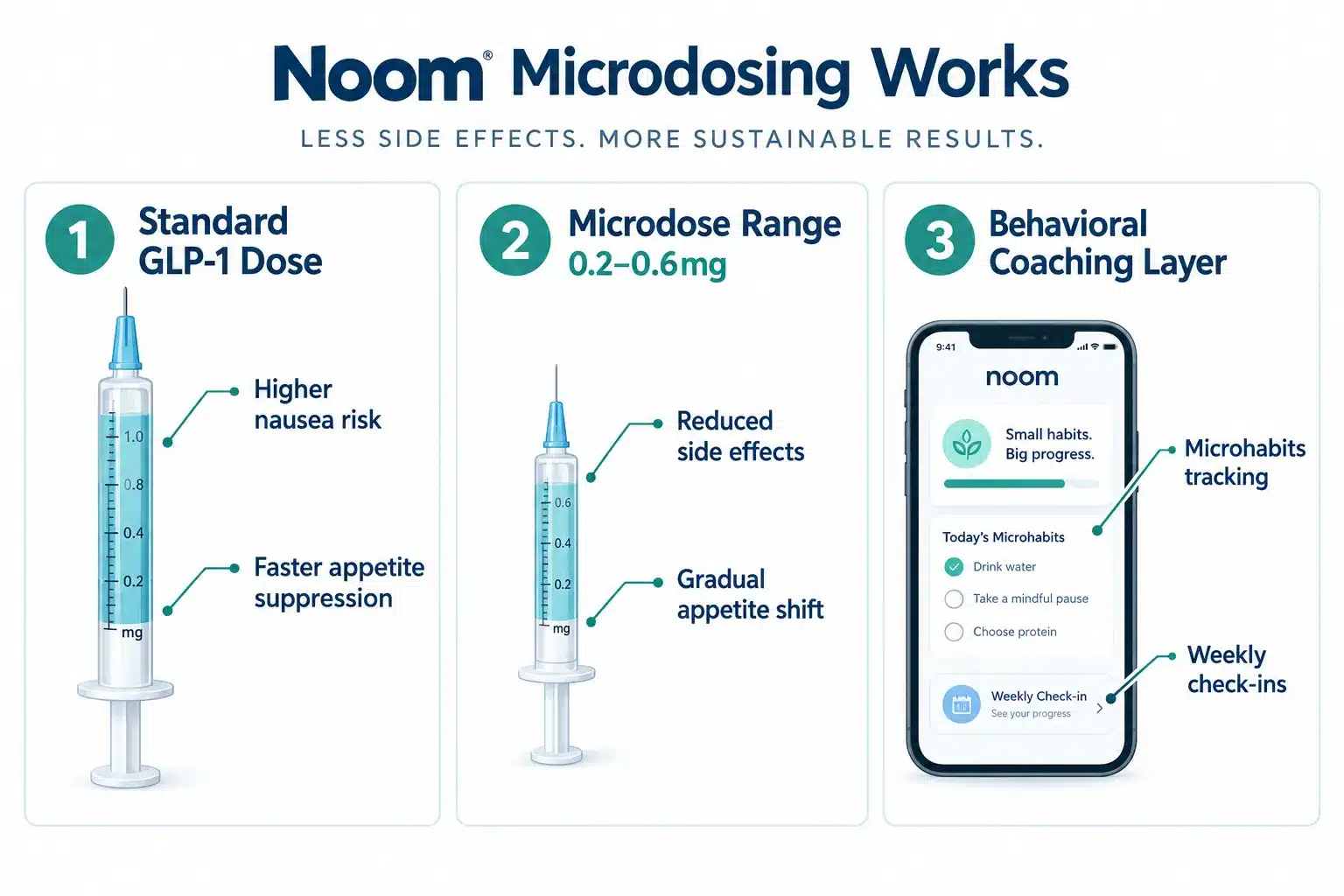
GLP-1 (glucagon-like peptide-1) receptor agonists work by mimicking a hormone your gut releases after eating. They slow gastric emptying, reduce hunger signals, and increase feelings of fullness. Standard doses used in FDA-approved medications like Wegovy start at 0.25 mg per week and escalate up to 2.4 mg. Noom’s microdose program uses 0.2-0.6 mg per week, staying below that standard escalation range. [6]
The program has two distinct tracks:
- Noom Microdose GLP-1 Rx: The primary medically supervised track, using compounded semaglutide with a licensed provider consultation and Noom’s Microhabits behavioral coaching included. [5]
- Proactive Health low-dose program: A separate track with its own dosing guide, designed for a different eligibility profile, including users who may not qualify for the Rx track. [7]
The delivery method is subcutaneous injection, the same as standard semaglutide products. Noom emphasizes that the behavioral coaching component is not optional, it’s built into the program design, based on the premise that medication alone doesn’t address the psychological patterns behind overeating. [4]
Is Noom Microdosing Safe and Does It Actually Work
For most healthy adults without contraindicated conditions, compounded semaglutide at low doses is generally considered safe, but the evidence that microdose GLP-1 therapy produces clinically meaningful weight loss is limited. Noom launched this program partly in response to user demand for a lower-side-effect entry point, not because large randomized trials confirmed that 0.2-0.6 mg doses drive significant fat loss. [4]
Here’s what the evidence picture looks like honestly:
- The large clinical trials that established semaglutide’s weight loss efficacy (the STEP trials) used doses up to 2.4 mg weekly. Results at the 0.2-0.6 mg range were not the focus of those trials.
- Some endocrinologists and obesity medicine specialists have publicly questioned whether doses this low produce more than modest appetite suppression in most people.
- Noom’s own materials acknowledge that the program is designed for gradual, sustainable weight loss rather than rapid results. [6]
- User reports vary widely. Some people on Reddit’s Noom community report noticeable appetite changes even at low doses; others report minimal effect. [1]
The safety profile of compounded semaglutide itself is a separate consideration. Compounded medications are not FDA-approved products, though they are legal when prepared by licensed compounding pharmacies. For more on how compounded GLP-1s compare to brand-name versions, see our guide on whether compounded GLP-1 is as effective as brand name.
Bottom line: Noom microdosing is likely safe for eligible adults, but whether it works well enough to justify the cost depends heavily on your individual response to low-dose semaglutide.
Noom Microdosing vs Regular Noom: Which Is Better
Noom microdosing adds compounded semaglutide to Noom’s existing behavioral platform; regular Noom is a behavioral and psychology-based weight loss program with no medication component. They serve different needs and different budgets.
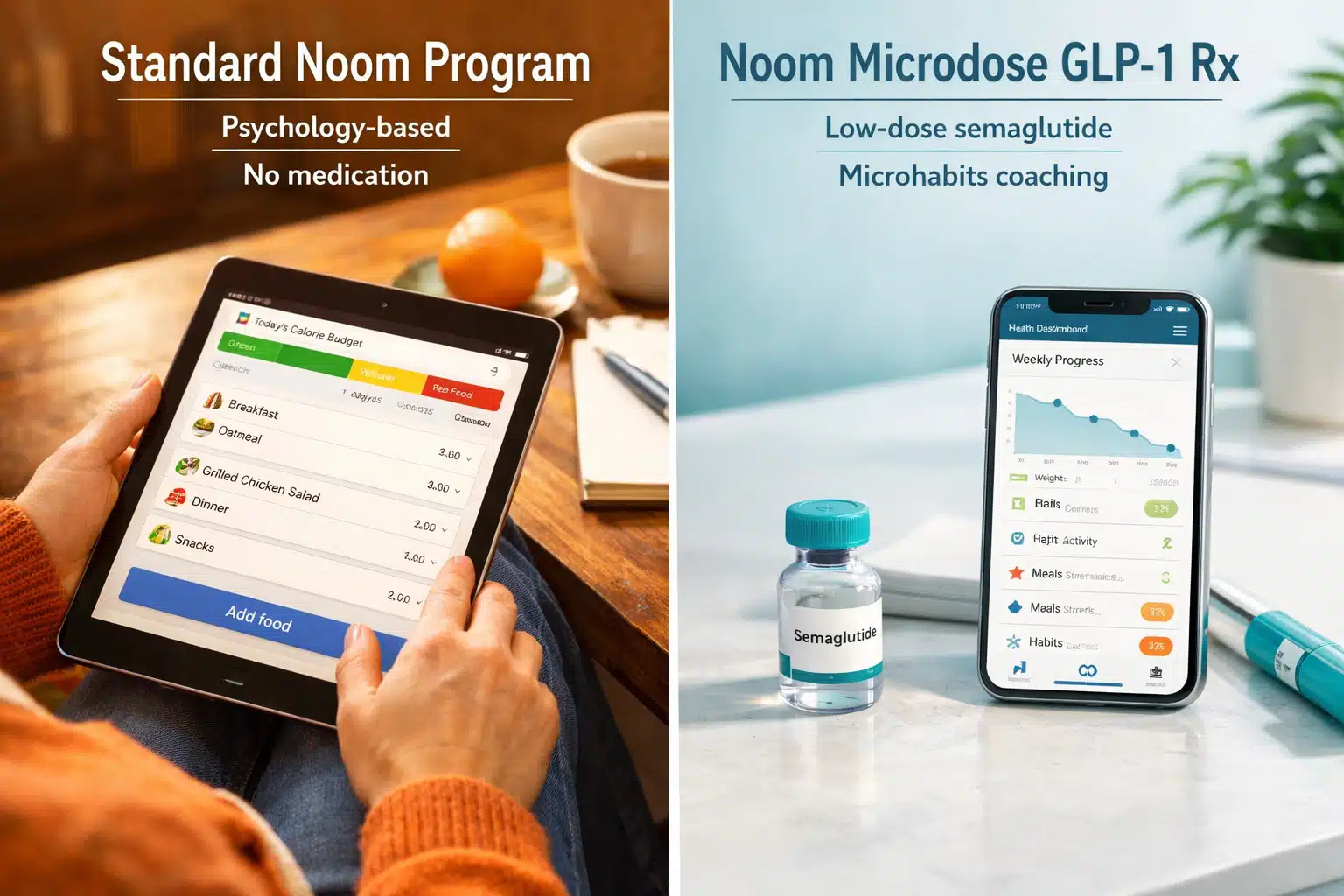
| Feature | Regular Noom | Noom Microdose GLP-1 Rx |
|---|---|---|
| Medication | None | Compounded semaglutide 0.2-0.6 mg/week |
| Behavioral coaching | Yes (core program) | Yes (Microhabits program included) |
| Provider consultation | No | Yes, required |
| Prescription required | No | Yes |
| Best for | Behavior change, mild weight loss | Appetite control + behavior change |
Choose regular Noom if you prefer a medication-free approach, have contraindications to GLP-1s, or want the lowest possible cost.
Choose Noom microdosing if you’ve struggled with appetite control using behavioral methods alone, you’re sensitive to side effects from standard GLP-1 doses, or you want a medically supervised entry point into semaglutide therapy.
Compared to competitors like WeightWatchers’ GLP-1 program or Ro’s Body program, Noom’s microdose approach is differentiated primarily by its lower dose strategy and the integration of behavioral coaching as a core component rather than an add-on. For a broader comparison of telehealth weight loss platforms, see Ro Body alternatives.
How Much Does Noom Microdosing Cost
As of late 2026, Noom microdosing starts at $119 per month, which includes the compounded semaglutide medication and access to the Microhabits behavioral coaching program. [3] [9]
A few important cost details to understand:
- The $119 starting price is for the lowest dose tier. Costs may increase as dosing adjusts upward within the 0.2-0.6 mg range.
- The price includes the provider consultation fee, medication, and coaching access. [3]
- This is notably lower than the retail cost of brand-name semaglutide products (Ozempic, Wegovy), which can exceed $900,$1,000 per month without insurance.
- Noom’s pricing is competitive with other compounded semaglutide telehealth programs. For comparison, see Hims weight loss cost and cheapest online GLP-1 providers compared.
Common mistake: Assuming the starting price is locked in long-term. If your dose increases or you transition to a different program tier, the monthly cost may change. Always confirm current pricing directly with Noom before committing. [10]
Noom Microdosing Side Effects: What Should I Know
The most commonly reported side effects of low-dose semaglutide are similar to those of standard doses, but generally milder. Noom specifically designed the microdose program to reduce the nausea and gastrointestinal distress that cause many people to discontinue standard GLP-1 therapy. [3]
Most common side effects at microdose levels:
- Mild nausea, especially in the first few weeks
- Reduced appetite (this is also the intended effect)
- Occasional constipation or loose stools
- Injection site reactions (redness, minor irritation)
- Fatigue or low energy, particularly early in treatment
Less common but worth knowing:
- Headache
- Dizziness
- Acid reflux
Serious but rare risks associated with semaglutide at any dose include pancreatitis, gallbladder problems, and a theoretical risk of thyroid C-cell tumors (observed in animal studies; not confirmed in humans at therapeutic doses). These risks apply regardless of dose level and are why a provider consultation is required before starting. [6]
Noom’s materials emphasize that the lower dose is intended to make the side effect profile more manageable, not to eliminate risk entirely. If you experience severe abdominal pain, persistent vomiting, or signs of an allergic reaction, stop the medication and contact a healthcare provider immediately.
Can I Do Noom Microdosing If I Have Health Conditions
Not everyone qualifies for Noom microdosing. The program requires a provider consultation specifically to screen for contraindications. [5]
You likely cannot use this program if you have:
- Personal or family history of medullary thyroid carcinoma (MTC)
- Multiple Endocrine Neoplasia syndrome type 2 (MEN 2)
- History of pancreatitis
- Severe kidney or liver disease
- Current pregnancy or breastfeeding
Conditions that require careful evaluation (may or may not qualify):
- Type 1 or Type 2 diabetes (especially if already on insulin or other glucose-lowering medications, risk of hypoglycemia)
- Gastroparesis or other gastrointestinal motility disorders
- History of eating disorders
- Cardiovascular disease (GLP-1s have shown cardiovascular benefits in some populations, but individual risk assessment is needed)
If you have prediabetes or metabolic syndrome, Noom microdosing may actually be a reasonable option, as GLP-1 receptor agonists have demonstrated benefits for blood sugar regulation. For more on this, see our guide on how to reverse prediabetes in 3 months.
Decision rule: If you take any prescription medication for diabetes, thyroid conditions, or cardiovascular disease, disclose all of these during your provider consultation before starting. Do not self-screen.
Noom Microdosing for Weight Loss: Does It Really Help and How Long Until Results
Noom microdosing can support weight loss, but results at the 0.2-0.6 mg dose range are typically more modest and slower than what standard GLP-1 programs produce. Most users should expect gradual progress rather than the dramatic early weight loss sometimes reported with higher-dose protocols. [6]
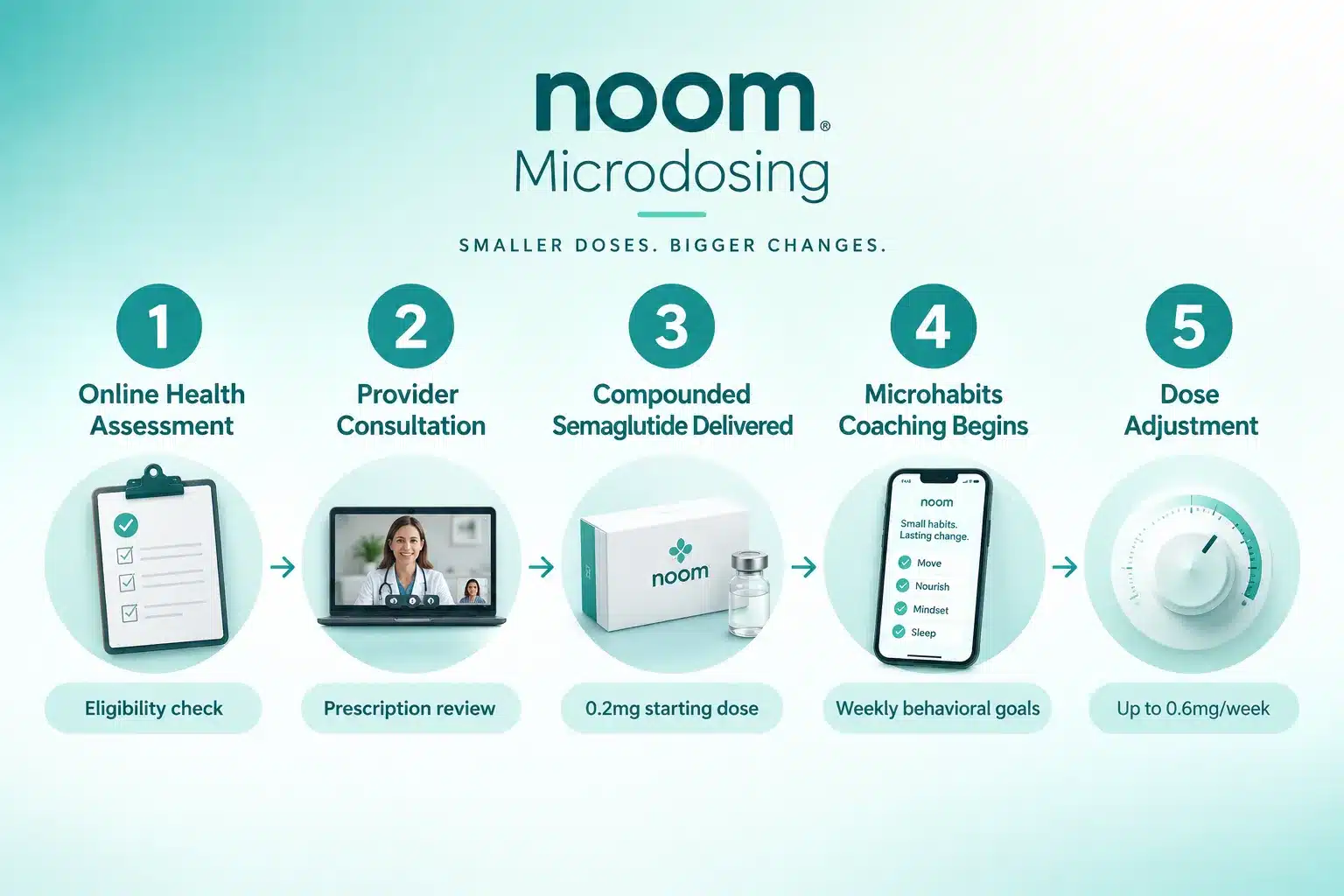
Realistic timeline expectations:
- Weeks 1-4: Appetite changes may begin; some users notice reduced cravings. Weight loss at this stage is often minimal (0-2 lbs for many people).
- Months 1-3: Gradual weight loss of 1-3 lbs per month is a reasonable expectation for users who also follow the Microhabits coaching program.
- Months 3-6: Users who respond well may see 5-10% body weight reduction over this period, though this varies significantly.
- Beyond 6 months: Long-term outcomes depend on sustained behavioral changes alongside continued medication use.
For context, the STEP 1 trial of semaglutide at 2.4 mg weekly showed an average weight loss of approximately 14.9% of body weight over 68 weeks. Microdose protocols have not been studied in comparable large trials, so extrapolating those results to 0.2-0.6 mg doses is not scientifically supported.
The behavioral coaching component matters here. Users who engage consistently with the Microhabits program are likely to see better outcomes than those who treat it as optional. This is the core argument Noom makes for combining medication with behavioral support rather than relying on either alone. [4]
Noom Microdosing Common Mistakes People Make
Several patterns consistently undermine results in GLP-1 microdose programs. Knowing them upfront saves time and frustration.
Mistake 1: Expecting standard GLP-1 speed at microdose levels. People who’ve read about dramatic weight loss on Wegovy or Ozempic sometimes start Noom microdosing with the same expectations. The lower dose means slower, more gradual effects. Recalibrate your timeline.
Mistake 2: Skipping the behavioral coaching. The Microhabits program isn’t filler. Noom built the entire product premise around the idea that medication alone doesn’t address why people overeat. Ignoring the coaching half of the program reduces your odds of lasting results. [4]
Mistake 3: Stopping too early. GLP-1 medications, even at low doses, often take 4-8 weeks before appetite effects become noticeable. Many users quit in weeks 2-3 when they don’t feel an immediate difference.
Mistake 4: Not disclosing all medications during intake. Drug interactions with semaglutide are real, particularly with insulin, sulfonylureas, and some blood pressure medications. Incomplete health histories during the provider consultation create safety risks.
Mistake 5: Assuming compounded semaglutide is identical to brand-name. Compounded medications can vary in concentration and formulation. Use only programs that source from licensed, verifiable compounding pharmacies. See our guide on how to verify a legitimate compounding pharmacy.
Is Noom Microdosing Right for Me: Who Should Try It
Noom microdosing is best suited for adults who want a medically supervised, lower-side-effect entry point into GLP-1 therapy, combined with behavioral support. It’s not the right fit for everyone.
Good candidates:
- Adults with a BMI of 27 or higher who have at least one weight-related health condition, or a BMI of 30 or higher
- People who tried standard GLP-1 doses and stopped due to nausea or other side effects
- Those who want behavioral coaching integrated with medication, not just a prescription
- Adults looking for a more affordable GLP-1 program than brand-name options
Not ideal for:
- People who need rapid, significant weight loss (higher-dose programs may be more appropriate)
- Those with the contraindications listed above
- Anyone unwilling to engage with the behavioral coaching component
- People who prefer in-person medical supervision over telehealth
Noom Microdosing Alternatives: What Else Can I Try
Several alternatives exist depending on your budget, health profile, and how much weight you need to lose.
Other GLP-1 telehealth programs:
- Hims GLP-1 program: Compounded semaglutide at standard escalating doses. See Hims semaglutide price for current cost details.
- Tirzepatide programs: A newer dual GLP-1/GIP agonist with strong clinical evidence. Read tirzepatide reviews by patients for real-world experiences.
- Compounding pharmacy direct: Some people access compounded semaglutide through independent telehealth providers. Our compounding pharmacy for weight loss guide covers how to do this safely.
Non-GLP-1 options:
- Standard Noom behavioral program (no medication)
- Structured meal delivery programs like Nutrisystem (see Nutrisystem diabetic program reviews)
- Berberine-based supplements (evidence is modest; see Purisaki berberine patches review)
- Medically supervised standard-dose GLP-1 therapy through your primary care provider or an obesity medicine specialist
Choose Noom microdosing over alternatives if you specifically want the combination of low-dose semaglutide plus behavioral coaching in one integrated platform at a lower monthly cost than most brand-name options.
Why Isn’t Noom Microdosing Working for Me: Troubleshooting
If you’re several weeks into the program and seeing no results, a few specific factors are worth examining before concluding the program doesn’t work for you.
Check these first:
- Are you actually at a therapeutic dose? At 0.2 mg per week, some people simply don’t experience meaningful appetite suppression. Ask your provider whether a dose increase within the 0.6 mg ceiling is appropriate.
- Are you engaging with the Microhabits coaching? Medication without behavioral change rarely produces lasting weight loss. Log your food, complete the coaching modules, and track your habits consistently for at least 8 weeks.
- Is something else affecting your appetite or metabolism? Thyroid disorders, sleep deprivation, certain medications (antidepressants, corticosteroids), and high stress levels can all blunt weight loss even with GLP-1 support.
- Are you eating enough protein? GLP-1 medications reduce overall appetite, but if caloric restriction is too aggressive, muscle loss can slow metabolic rate over time.
- Has enough time passed? Four weeks is not enough to evaluate a GLP-1 program. Give it at least 8-12 weeks at a consistent dose before drawing conclusions.
If you’ve addressed all of the above and still see no progress after 12 weeks, it may be worth discussing a transition to a standard-dose GLP-1 protocol with a provider.
Can You Do Noom Microdosing Long Term Safely
Long-term use of low-dose semaglutide is plausible from a safety standpoint, but specific long-term data on GLP-1 microdosing protocols (as opposed to standard therapeutic doses) is not yet available. [6]
What we know from standard-dose semaglutide research:
- Long-term use (up to 2 years) at therapeutic doses has been studied and shows an acceptable safety profile for most adults
- Weight regain after stopping GLP-1 medications is common, regardless of dose, which is why Noom emphasizes behavioral habit formation as a parallel strategy
- Ongoing provider monitoring is important for anyone using semaglutide long-term, including periodic assessment of thyroid function, kidney function, and gastrointestinal health
Noom’s program includes provider check-ins, which is appropriate for long-term use. If you plan to stay on the program beyond 6 months, ensure those check-ins are happening and that your provider is actively monitoring your response.
7 Best GLP-1 Providers Ranked: Accreditation, Flexibility & Support Compared (2026 Update)
32,000+ Patients Can't All Be Wrong: See the Top-Rated GLP-1 Providers: Compared on accreditation, plan flexibility, and patient support — updated for 2026.
BMI MD GLP-1 Microdosing Plan
- Specialized microdosing options (sublingual drops or low-dose injections)
- Ideal for maintaining weight or tapering off higher doses safely
- Fully bundled plan with no hidden monthly platform memberships
DirectMeds Weight Loss Solutions
- Sourced from accredited, state-licensed 503A compounding pharmacies
- No-frills high-volume savings passed directly to the patient
- Includes clinical consultation and cold-chain shipping updates
MEDVi Flat-Rate Telehealth
- Flat monthly rate holds steady even at maximum maintenance doses
- No dosage upcharges or graduation fee penalties
- Offers both injectable and advanced oral thin-film delivery options
Gala GLP-1 Care Program
- All-inclusive plan with no standalone membership costs
- Continuous text-based messaging access with state-licensed clinicians
- Temperature-controlled, cold-chain medication shipping included
Measured GLP-1 Metabolic Health
- Comprehensive metabolic health screening and expert intake analysis
- Predictable long-term budgeting with stable plan pricing
- High-end responsive dashboard with integrated diagnostic support
Refills GLP-1 (TryRefills Plan)
- Flat rate holds steady as titration scales up
- Includes clinical guides for active side-effect management
- Bundles in foundational nutritional strategies alongside medication
AltRx GLP-1 Transactional Reorders
- Zero recurring auto-billing — pay entirely on a transactional basis
- Rapid text-to-order format saves time for experienced patients
- Provides both injectable forms and fast-dissolving tablet variations
Conclusion
Noom microdosing fills a specific gap in the GLP-1 weight loss market: a lower-dose, lower-side-effect, more affordable entry point that pairs medication with structured behavioral coaching. At $119 per month, it’s accessible compared to brand-name alternatives, and the integration of Microhabits coaching addresses something most prescription-only programs ignore, the behavioral patterns that drive weight regain.
That said, it’s not a shortcut. The clinical evidence for weight loss at 0.2-0.6 mg semaglutide doses is less established than for standard therapeutic doses, results are gradual, and the program works best for people who genuinely engage with both the medication and the coaching components.
Actionable next steps:
- Check your eligibility by completing Noom’s online health assessment at noom.com/med/glp1-microdose
- Review the contraindications listed above before your provider consultation
- Set realistic expectations: plan for 3-6 months of consistent use before evaluating results
- Engage with the Microhabits coaching from day one, not as an afterthought
- If cost is a primary concern, compare options using our cheapest online GLP-1 providers compared guide before deciding
Noom microdosing is worth serious consideration for the right person. The key is going in with accurate expectations and a genuine commitment to the behavioral work alongside the medication.
Frequently Asked Questions
What is the exact dose used in Noom microdosing? Noom’s microdose GLP-1 Rx program uses compounded semaglutide at 0.2-0.6 mg per week. This is lower than the standard starting dose of 0.25 mg weekly used in FDA-approved Wegovy and Ozempic escalation protocols. [5]
Is Noom microdosing FDA-approved? No. The compounded semaglutide used in Noom’s program is not an FDA-approved product. Compounded medications are legal when prepared by licensed compounding pharmacies but are not subject to the same FDA approval process as brand-name drugs. [6]
How is Noom microdosing different from Ozempic or Wegovy? Ozempic and Wegovy are FDA-approved brand-name semaglutide products used at higher doses (0.25 mg escalating to 1 mg or 2.4 mg). Noom’s microdose program uses compounded semaglutide at a lower fixed range (0.2-0.6 mg) and includes behavioral coaching as a core component. [2]
Can I get Noom microdosing if I’m not obese? Noom targets adults with a BMI of 27 or higher with at least one weight-related health condition, or a BMI of 30 or higher. People below these thresholds are unlikely to qualify during the provider consultation. [5]
Does Noom microdosing require injections? Yes. Compounded semaglutide is delivered via subcutaneous injection, the same method used for Ozempic and Wegovy. There is no oral version in Noom’s microdose program.
What happens if I stop taking Noom microdosing? Weight regain is common after stopping GLP-1 medications at any dose. This is why Noom emphasizes building behavioral habits during the program, those habits are intended to help maintain results after medication is discontinued. [4]
Is the Noom Microdose GLP-1 Rx the same as the Proactive Health program? No. These are two distinct tracks within Noom’s platform with different dosing guides and eligibility criteria. The Microdose GLP-1 Rx is the primary medically supervised track; the Proactive Health program serves a different user profile. [7]
How does Noom microdosing compare to just using the regular Noom app? Regular Noom is a behavioral weight loss program with no medication. Noom microdosing adds compounded semaglutide to the behavioral coaching. The microdose program costs significantly more but offers appetite suppression that behavioral coaching alone cannot provide. [4]
Will insurance cover Noom microdosing? Most insurance plans do not cover compounded semaglutide. Noom’s program is typically an out-of-pocket expense. Check with your insurer directly, but do not count on coverage. [9]
How quickly will I lose weight on Noom microdosing? Most users experience gradual weight loss of 1-3 lbs per month in the first few months, assuming consistent engagement with both the medication and the Microhabits coaching. Faster results are possible but not guaranteed at these dose levels. [6]
References
[1] Noom GLP-1 Microdose – https://www.reddit.com/r/Noom/comments/1mjn5g5/noom_glp1_microdose/
[2] GLP-1 Microdose – https://www.noom.com/med/glp1-microdose/
[3] Noom Launches Microdose GLP-1 Program Enabling Weight Loss Without the Side Effects and Priced at $119 to Start Including Medication and Microhabits Program – https://www.noom.com/in-the-news/noom-launches-microdose-glp-1-program-enabling-weight-loss-without-the-side-effects-and-priced-at-119-to-start-including-medication-and-microhabits-program/
[4] Why We Launched Noom Microdose GLP-1 Rx – https://www.noom.com/blog/weight-management/why-we-launched-noom-microdose-glp-1rx/
[5] Microdose GLP-1 Rx – https://www.noom.com/med/microdose-glp1-rx/
[6] Microdosing GLP-1 for Weight Loss – https://www.noom.com/blog/weight-management/microdosing-glp-1-for-weight-loss/
[7] Microdose Dosing Guide Proactive Health – https://www.noom.com/med/microdose-dosing-guide-proactive-health/
[9] Pricing – https://www.noom.com/med/pricing/
[10] Noom Cost – https://www.noom.com/blog/weight-management/noom-cost-2/

With over 13 years of experience in holistic health blogging, I aim to help you navigate your wellness journey with honest insights, expert-backed advice, and a sprinkle of real-world practicality.
Certified Wellness Writer | Herbal Nutrition Advocate | Wellness Research Enthusiast


