
Noom Weight Loss Drugs: What They Are, How They Work, and What to Expect in 2026

Last updated: October 4, 2026
Quick Answer: Noom now offers prescription weight loss drugs, including GLP-1 medications like semaglutide and tirzepatide, through its telehealth program called Noom Med. Eligible adults can get a prescription online after a clinical assessment, with ongoing coaching built into the app. Noom Med is not the same as the original Noom behavior-change program, it is a medically supervised track designed for people with a BMI of 30 or higher (or 27+ with a weight-related health condition). [2]
Key Takeaways
- Noom Med is Noom’s prescription weight loss program, offering GLP-1 medications alongside behavioral coaching.
- Medications available include semaglutide (the active ingredient in Ozempic and Wegovy) and tirzepatide (the active ingredient in Mounjaro and Zepbound).
- The program is accessed entirely online through a telehealth intake, clinical review, and app-based support.
- Noom Med pricing starts at around $149/month for the coaching program, with medication costs separate and varying by drug and dose. [1]
- Insurance coverage for Noom Med is limited; most users pay out of pocket.
- Noom members who used the app consistently regained roughly 3 times less weight after stopping GLP-1s compared to those who did not use behavioral support. [8]
- GLP-1 medications like semaglutide and tirzepatide are not safe during pregnancy or breastfeeding; women who are breastfeeding should not use these drugs.
- Noom Med is not appropriate for everyone, people with certain thyroid conditions, pancreatitis history, or those who are pregnant or breastfeeding are excluded.
- Compared to Weight Watchers, Noom offers a stronger clinical pathway for medication access; compared to Ozempic alone, Noom adds structured behavioral support.
- Results vary, but many users see meaningful weight loss within 12 to 16 weeks when combining medication with the coaching program.
What Is Noom and How Does It Work?
Noom is a digital health company that started as a psychology-based weight loss app and has since expanded into prescription medication management. The original Noom program uses cognitive behavioral techniques, daily lessons, food logging, and coaching to help users build healthier habits over time. [3]
7 Best GLP-1 Providers Ranked: Accreditation, Flexibility & Support Compared (2026 Update)
32,000+ Patients Can't All Be Wrong: See the Top-Rated GLP-1 Providers. We compared the leading online GLP-1 providers based on program features, clinical support, convenience, and overall value.
BMI MD GLP-1 Microdosing Plan
- Specialized microdosing options, including sublingual drops and low-dose injections
- Designed for people interested in maintaining weight or gradually adjusting treatment
- Bundled program structure without a separate monthly platform membership
- Online access makes the process convenient from home

DirectMeds Weight Loss Solutions
- Online weight-loss program with a straightforward patient experience
- Compounded medication options through state-licensed compounding pharmacies
- Includes clinical consultation as part of the process
- Provides shipping updates to help patients track their orders
MEDVi Flat-Rate Telehealth
- Flat-rate telehealth approach designed for easier budgeting
- No dosage-based pricing increases within the advertised program structure
- Offers injectable and oral thin-film delivery options
- Includes medical screening and asynchronous provider consultations
Gala GLP-1 Care Program
- Text-based access to state-licensed clinicians
- Cold-chain medication shipping included in the program
- Month-to-month program structure
- Designed for people who value convenient ongoing support
Measured GLP-1 Metabolic Health
- Comprehensive metabolic health screening and intake analysis
- Designed around longer-term metabolic health management
- Responsive dashboard with integrated health tracking tools
- Useful option for patients who value a more data-focused experience
Refills GLP-1 (TryRefills Plan)
- Clinical guidance designed to help patients manage common treatment concerns
- Includes foundational nutritional strategies alongside medication
- Designed around predictable ongoing treatment
- No hidden startup or processing fees according to the program information provided
AltRx GLP-1 Transactional Reorders
- Transactional reorder model without recurring auto-billing
- Designed for patients who already understand their treatment routine
- Fast text-to-order process for convenient reorders
- Offers injectable and fast-dissolving tablet variations
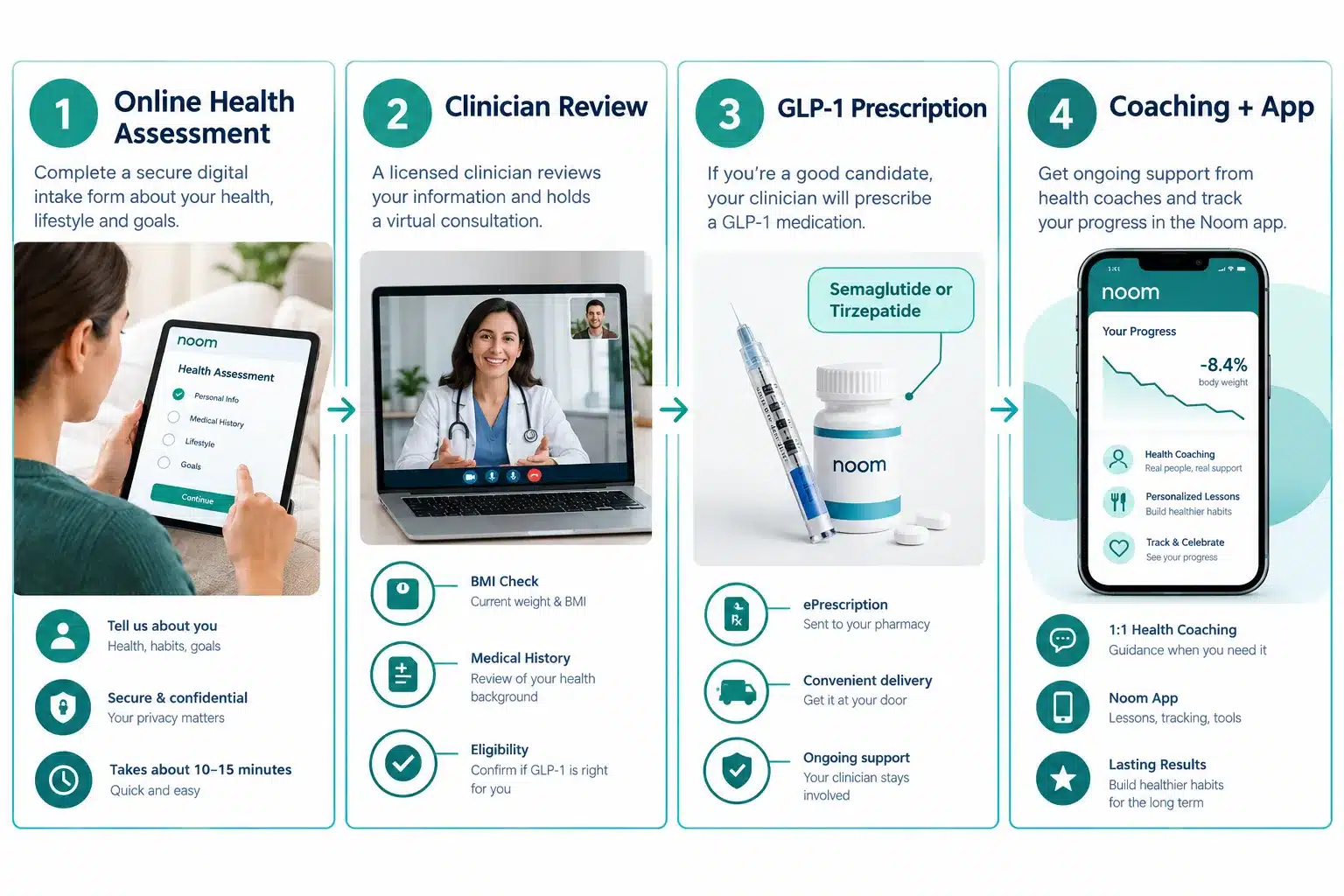
Noom Med is the clinical extension of that platform. It layers telehealth prescribing on top of the behavioral coaching model, so users get both a medication pathway and structured lifestyle support in one subscription. The workflow looks like this:
- Complete an online health assessment covering your weight history, medical conditions, and current medications.
- A licensed clinician reviews your intake and determines eligibility.
- If approved, a prescription is sent to a pharmacy (or a compounding pharmacy partner, depending on the plan).
- You receive ongoing coaching, check-ins, and progress tracking through the Noom app.
This integrated model is what separates Noom Med from simply getting an Ozempic prescription from a standalone telehealth service.
Does Noom Prescribe Weight Loss Medication?
Yes, Noom prescribes weight loss medication through Noom Med, its dedicated medical weight management program. Prescriptions are issued by licensed clinicians after a virtual health assessment and are not guaranteed, eligibility depends on BMI, health history, and clinical judgment. [2]
The medications currently offered through Noom Med include:
- Semaglutide (GLP-1 receptor agonist, the same class as Wegovy and Ozempic), available in injectable and, in some plans, oral form
- Tirzepatide (dual GIP/GLP-1 agonist, the same class as Mounjaro and Zepbound), injectable weekly dosing
- Noom Microdose, a lower-dose GLP-1 option positioned for people who want to start at a gentler titration schedule
- Noom SmartDose, a personalized dosing approach that adjusts based on tolerance and response [4]
For a broader look at how these drug classes compare, see this complete guide to GLP-1 weight loss medications and the RX medications for weight loss 2026 guide.
Eligibility thresholds for Noom Med:
- BMI of 30 or higher, OR
- BMI of 27 or higher with at least one weight-related condition (such as type 2 diabetes, hypertension, or sleep apnea)
Noom Weight Loss Drugs: Side Effects and Safety
The most common side effects of Noom weight loss drugs mirror those of GLP-1 medications broadly: nausea, vomiting, constipation, diarrhea, and fatigue. These are typically most pronounced during dose escalation and tend to ease over time.
Common side effects:
- Nausea (most frequently reported, especially in the first 4 to 8 weeks)
- Constipation or loose stools
- Decreased appetite (this is the intended mechanism, but can feel uncomfortable)
- Headache and mild fatigue
- Injection site reactions for injectable forms
Serious but less common risks:
- Pancreatitis (rare; stop medication and seek care if you have severe abdominal pain)
- Gallbladder issues, including gallstones
- Increased heart rate
- Possible thyroid C-cell tumor risk (based on animal studies; a black-box warning applies to all GLP-1 drugs)
Who should not use Noom weight loss drugs:
- People with a personal or family history of medullary thyroid carcinoma (MTC) or Multiple Endocrine Neoplasia syndrome type 2 (MEN 2)
- Anyone with a history of pancreatitis
- Pregnant women
- Women who are breastfeeding, GLP-1 medications like semaglutide and tirzepatide have not been established as safe during breastfeeding, and current clinical guidance recommends against using GLP-1 weight loss drugs while breastfeeding. If you are postpartum and considering GLP-1 postpartum weight loss options, discuss the timing with your OB or primary care provider before starting any GLP-1 program.
For more detail on how these medications work in the body, see this explanation of GLP-1 shots for weight loss and diabetes.
Noom vs. Ozempic: Which Is Better for Weight Loss?
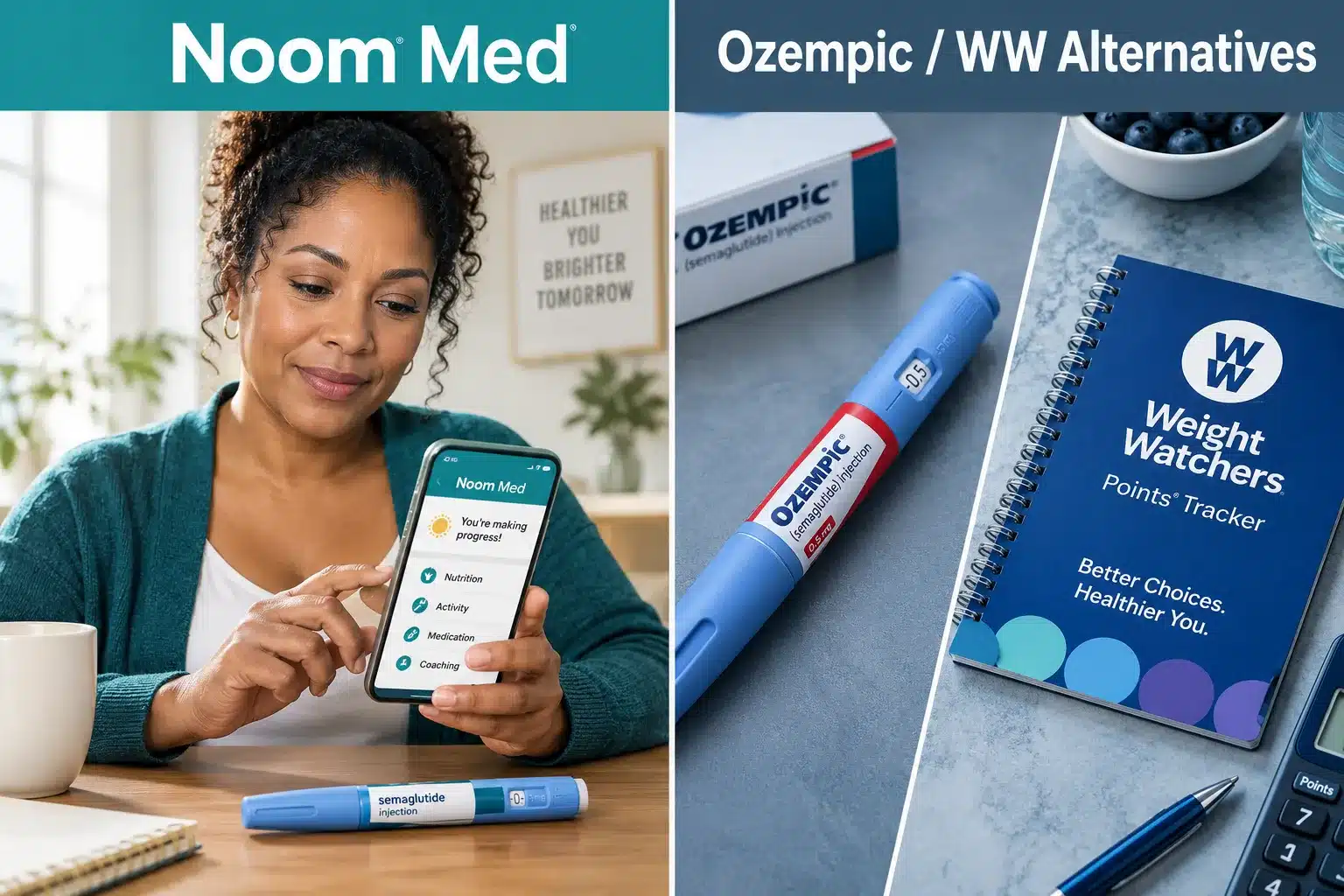
Noom and Ozempic are not direct competitors, Noom Med can actually prescribe semaglutide (the same active ingredient as Ozempic) as part of its program. The real comparison is between getting a GLP-1 prescription through Noom Med versus getting one through a standalone prescriber or telehealth service.
| Factor | Noom Med | Ozempic (standalone Rx) |
|---|---|---|
| Drug access | Semaglutide, tirzepatide via telehealth | Semaglutide only, via prescriber |
| Behavioral coaching | Included (app + human coaches) | Not included |
| Weight regain after stopping | Lower with app engagement [8] | Higher without lifestyle support |
| Prescription online | Yes, fully telehealth | Depends on provider |
| Insurance coverage | Limited; mostly out of pocket | Sometimes covered for T2D |
Choose Noom Med if you want medication plus structured coaching in one program and prefer a telehealth-first experience.
Choose a standalone GLP-1 prescription if you already have a primary care provider managing your weight and just need the medication.
For a detailed look at semaglutide dosing, see the semaglutide dosage guide for weight loss. If you are interested in tirzepatide specifically, the Mounjaro shot for weight loss guide covers that drug in depth.
How Much Does Noom Cost Per Month and Is It Covered by Insurance?
Noom Med pricing starts at approximately $149 per month for the program (coaching, clinical access, and app features), with medication costs billed separately. [1] The total monthly cost depends on which drug you are prescribed and whether you use a compounding pharmacy or a brand-name option.
Approximate cost breakdown (2026):
- Noom Med program fee: starting around $149/month [1]
- Compounded semaglutide: often $200 to $350/month depending on dose and pharmacy
- Brand-name Wegovy or Zepbound: $1,000+ per month without insurance
Insurance coverage for Noom Med is limited. Most commercial insurance plans do not cover the program fee. Some plans cover GLP-1 medications for obesity (Wegovy, Zepbound) when prescribed by a physician, but coverage varies widely. Noom does not currently accept insurance directly for Noom Med. [7]
If cost is a primary concern, it is worth comparing Noom Med against other telehealth platforms. For context on what other services charge, see this review of Hims weight loss costs and this guide to the least expensive GLP-1 options for weight loss.
Can You Get a Noom Prescription Online?
Yes, the entire Noom Med process is online. You do not need to visit a clinic in person. After completing the health intake form on Noom’s website, a licensed clinician reviews your information and makes a prescribing decision, typically within one to two business days. [2]
The online prescription process:
- Visit noom.com/med and complete the health questionnaire.
- A clinician reviews your BMI, medical history, and current medications.
- If eligible, you receive a prescription sent to a partner pharmacy or compounding pharmacy.
- Medication is shipped to your home.
- Ongoing clinical check-ins happen through the app.
This is a standard telehealth model, similar to services like Hims or Ro. For a comparison of how Noom stacks up against Ro specifically, Noom has published its own side-by-side breakdown. [6]
Noom vs. Weight Watchers for Weight Loss
Noom and Weight Watchers (now WW) both use behavioral frameworks, but they differ significantly in clinical depth and medication access. Noom Med offers prescription GLP-1 drugs; WW does not prescribe medication directly. [9]
Key differences:
- Medication access: Noom Med prescribes GLP-1s; WW does not.
- Coaching model: Noom uses psychology-based daily lessons; WW uses a points system with group meetings.
- Clinical oversight: Noom Med includes clinician review; WW is a lifestyle program without medical prescribing.
- Cost: Both programs have monthly fees; Noom Med adds medication costs on top.
Choose Noom if you want medication-assisted weight loss with behavioral support in one platform.
Choose WW if you prefer a community-based, non-medication approach and respond well to social accountability.
How Long Does It Take to See Results With Noom Weight Loss Drugs?
Most people using Noom weight loss drugs begin to see measurable results within 8 to 16 weeks, with the most significant changes typically occurring between months 3 and 6 as medication doses reach therapeutic levels.
Noom’s own data suggests that members who engage most consistently with the app lose the most weight, engagement with daily lessons and food logging correlates with better outcomes. [10] The medication accelerates results, but behavioral consistency appears to determine how durable those results are.
General timeline expectations:
- Weeks 1 to 4: Dose titration, side effects most likely, modest appetite reduction
- Weeks 4 to 12: Appetite suppression increases, early weight loss becomes noticeable
- Months 3 to 6: Most users reach meaningful weight loss milestones (often 5% to 15% of body weight, depending on the drug and adherence)
- Month 6 and beyond: Continued loss or maintenance, depending on ongoing medication and lifestyle habits
Noom Drug Interactions and Who Should Not Use Noom
GLP-1 medications can interact with other drugs, and Noom’s clinical intake process is designed to screen for these conflicts. That said, it is important to disclose all medications during the assessment.
Medications that may interact with GLP-1 drugs:
- Insulin and sulfonylureas (used in diabetes management): GLP-1s can lower blood sugar further, increasing hypoglycemia risk. Diabetics on insulin need careful dose adjustment.
- Oral medications with narrow absorption windows: GLP-1s slow gastric emptying, which can affect how quickly oral drugs are absorbed. This includes some thyroid medications and oral contraceptives.
- Warfarin and other anticoagulants: Slower gastric emptying may alter absorption timing.
Is Noom safe for diabetics? Semaglutide is FDA-approved for type 2 diabetes (as Ozempic), and tirzepatide is also approved for T2D (as Mounjaro). So GLP-1s can be appropriate for diabetics, but the prescribing context matters. Noom Med screens for diabetes during intake, and people with T2D should inform their endocrinologist or primary care provider before starting any GLP-1 program through a telehealth service.
Who should not use Noom weight loss drugs:
- People with a personal or family history of MTC or MEN 2
- Anyone with active or prior pancreatitis
- Pregnant or breastfeeding women (GLP-1 medications like semaglutide while breastfeeding and tirzepatide while breastfeeding are not established as safe; GLP-1 breastfeeding safety data is insufficient, and clinical guidance recommends avoiding these drugs during lactation)
- People with severe gastrointestinal conditions
- Those with certain kidney or liver conditions (assessed case by case)
What Happens When You Stop Using Noom?
When you stop GLP-1 medications, appetite typically returns and weight regain is common, this is a well-documented pattern across all GLP-1 drugs, not specific to Noom. What makes Noom’s approach notable is its claim that behavioral coaching reduces that rebound.
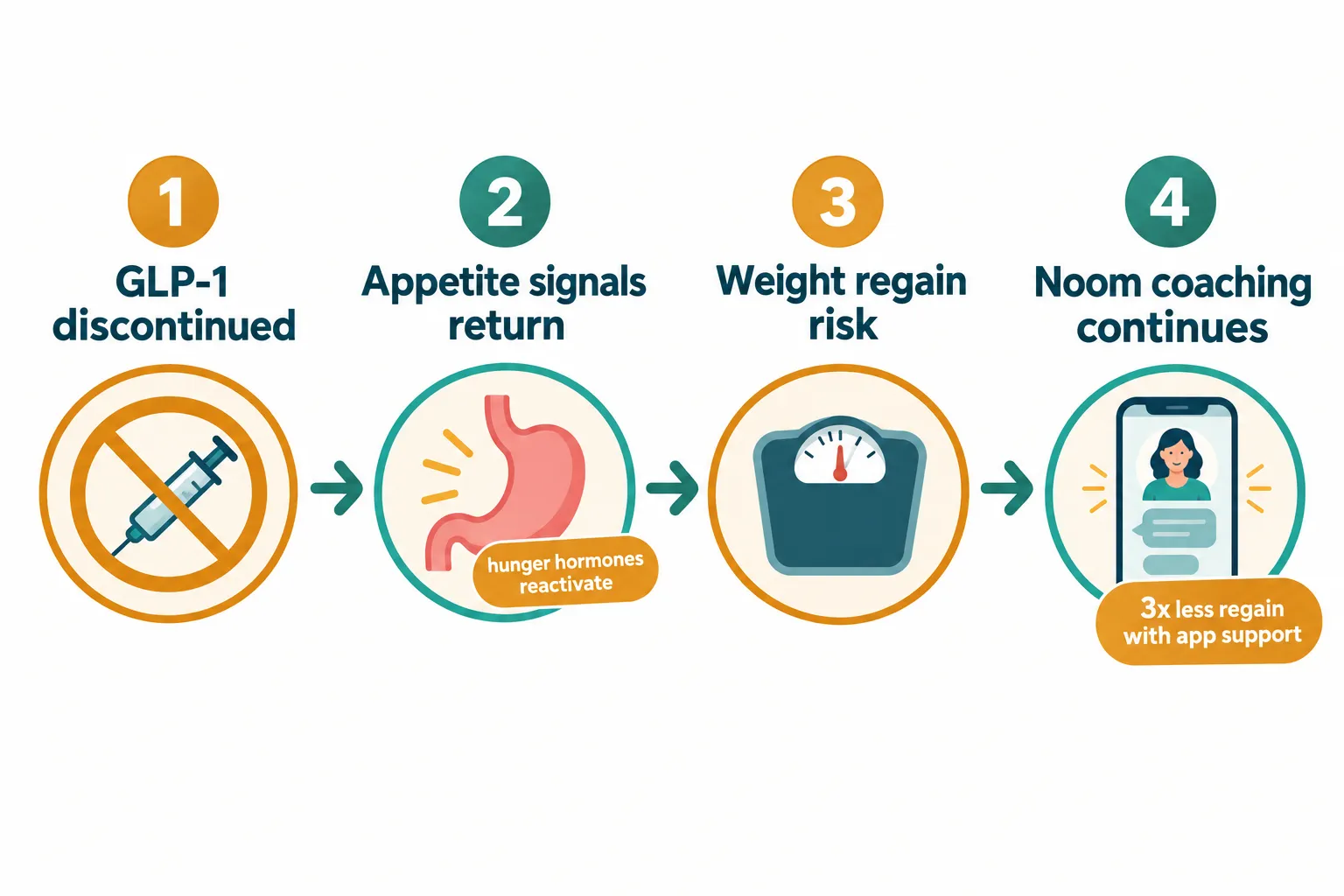
Noom’s own analysis found that members who used the Noom app consistently regained approximately 3 times less weight after stopping GLP-1 medications compared to those who did not engage with the behavioral program. [8] This suggests that the coaching component is not just a marketing add-on, it may materially affect long-term outcomes.
What to expect after stopping Noom Med:
- Appetite signals typically return within days to weeks of stopping GLP-1 medications
- Weight regain often begins within 3 to 6 months without continued lifestyle habits
- Noom’s coaching program can continue independently of medication
- Some users transition to a maintenance dose or pause medication seasonally
If you stop the program entirely, the behavioral skills developed through the app are yours to keep, but without reinforcement, many users find that old patterns gradually return. Planning an exit strategy with your clinician before stopping is the most practical approach.
FAQ
Q: What drugs does Noom prescribe for weight loss?
Noom Med prescribes GLP-1 medications including semaglutide and tirzepatide, available through its GLP-1 Rx, Microdose, and SmartDose program tracks. [4]
Q: Is Noom Med the same as the regular Noom app?
No. The regular Noom app is a behavioral coaching program. Noom Med is a separate, medically supervised track that includes clinical assessment and prescription drug access. [2]
Q: Can I get semaglutide through Noom?
Yes. Noom Med offers semaglutide as part of its GLP-1 program, including compounded versions through pharmacy partners. [4]
Q: Does Noom accept insurance for weight loss drugs?
Noom Med does not currently accept insurance directly for the program fee. Some insurance plans may cover GLP-1 medications separately, but users typically pay out of pocket for the Noom Med subscription. [1]
Q: Can I take GLP-1 medications while breastfeeding through Noom?
No. GLP-1 medications including semaglutide and tirzepatide are not recommended while breastfeeding. Noom Med screens for this during intake and would not prescribe these drugs to someone who is currently breastfeeding. Women interested in GLP-1 postpartum weight loss should wait until they have stopped breastfeeding and consult their doctor.
Q: How does Noom compare to Hims for weight loss?
Both offer telehealth GLP-1 prescriptions, but Noom adds a more developed behavioral coaching layer. For a direct look at the Hims model, see this Hims weight loss review.
Q: What is the Noom SmartDose program?
SmartDose is Noom’s personalized dosing approach within Noom Med, designed to adjust GLP-1 medication doses based on individual tolerance and response rather than a fixed titration schedule. [4]
Q: How quickly does Noom Med ship medication?
After prescription approval, medication is typically shipped within a few business days, depending on the pharmacy partner and your location. Noom does not publish a guaranteed shipping timeline.
Q: Is tirzepatide available through Noom?
Yes. Tirzepatide is available through Noom Med as part of its GLP-1 program options. [2]
Q: Can diabetics use Noom Med?
People with type 2 diabetes may be eligible for Noom Med, since GLP-1 medications are also used to manage T2D. However, anyone on insulin or diabetes medications should coordinate with their existing care team before starting.
Q: What happens if I am not eligible for Noom Med?
If you do not meet the clinical criteria for Noom Med, you can still access the standard Noom behavioral coaching program. You may also want to explore other GLP-1 access options, this guide to which GLP-1 medication works best for weight loss covers the full landscape.
Q: Does Noom offer compounded GLP-1 medications?
Yes, Noom Med works with compounding pharmacy partners to offer compounded semaglutide and tirzepatide, which are typically lower in cost than brand-name versions. For more on how this works, see this compounding pharmacy for weight loss guide.
7 Best GLP-1 Providers Ranked: Accreditation, Flexibility & Support Compared (2026 Update)
32,000+ Patients Can't All Be Wrong: See the Top-Rated GLP-1 Providers: Compared on accreditation, plan flexibility, and patient support — updated for 2026.
BMI MD GLP-1 Microdosing Plan
- Specialized microdosing options (sublingual drops or low-dose injections)
- Ideal for maintaining weight or tapering off higher doses safely
- Fully bundled plan with no hidden monthly platform memberships
DirectMeds Weight Loss Solutions
- Sourced from accredited, state-licensed 503A compounding pharmacies
- No-frills high-volume savings passed directly to the patient
- Includes clinical consultation and cold-chain shipping updates
MEDVi Flat-Rate Telehealth
- Flat monthly rate holds steady even at maximum maintenance doses
- No dosage upcharges or graduation fee penalties
- Offers both injectable and advanced oral thin-film delivery options
Gala GLP-1 Care Program
- All-inclusive plan with no standalone membership costs
- Continuous text-based messaging access with state-licensed clinicians
- Temperature-controlled, cold-chain medication shipping included
Measured GLP-1 Metabolic Health
- Comprehensive metabolic health screening and expert intake analysis
- Predictable long-term budgeting with stable plan pricing
- High-end responsive dashboard with integrated diagnostic support
Refills GLP-1 (TryRefills Plan)
- Flat rate holds steady as titration scales up
- Includes clinical guides for active side-effect management
- Bundles in foundational nutritional strategies alongside medication
AltRx GLP-1 Transactional Reorders
- Zero recurring auto-billing — pay entirely on a transactional basis
- Rapid text-to-order format saves time for experienced patients
- Provides both injectable forms and fast-dissolving tablet variations
Conclusion
Noom weight loss drugs represent a meaningful evolution from the app’s behavioral-only roots. By combining GLP-1 prescriptions with structured coaching, Noom Med addresses two of the biggest failure points in weight management: getting access to effective medication and building the habits needed to keep weight off after stopping it.
The evidence that consistent app engagement reduces post-medication weight regain is encouraging, though it comes from Noom’s own analyses and should be interpreted with that context in mind. [8] The program is not cheap, insurance coverage is limited, and it is not appropriate for everyone, particularly those who are pregnant, breastfeeding, or have specific medical contraindications.
Actionable next steps:
- Check your BMI eligibility at noom.com/med before investing time in the intake process.
- List all current medications and share them with the Noom clinician, drug interactions with GLP-1s are real and worth flagging.
- If cost is a barrier, compare Noom Med against compounded GLP-1 options through other telehealth platforms before committing.
- If you are postpartum and interested in GLP-1 weight loss, wait until you have finished breastfeeding and consult your OB first.
- Treat the coaching program as a core part of the investment, not an add-on, the data suggests it matters for long-term outcomes.
For anyone serious about medically supervised weight loss in 2026, Noom Med is a credible option worth evaluating, but it works best when you engage with the full program, not just the prescription.
References
[1] Pricing – https://www.noom.com/med/pricing/
[2] Noom Med – https://www.noom.com/med/
[3] Noom – https://www.noom.com/
[4] GLP-1 Rx – https://www.noom.com/med/glp-1rx/
[6] Noom Vs Ro For Weight Loss – https://www.noom.com/blog/weight-management/noom-vs-ro-for-weight-loss/
[7] Noom Cost – https://www.noom.com/blog/weight-management/noom-cost-2/
[8] Noom Members Regained 3x Less Of Their Lost Weight After Stopping GLP-1s – https://www.noom.com/in-the-news/noom-members-regained-3x-less-of-their-lost-weight-after-stopping-glp-1s-new-analyses-show/
[9] Noom Vs Weight Watchers – https://www.noom.com/blog/weight-management/noom-vs-weight-watchers/
[10] People Who Use Noom The Most Also Lose The Most Weight – https://www.noom.com/in-the-news/people-who-use-noom-the-most-also-lose-the-most-weight/

With over 13 years of experience in holistic health blogging, I aim to help you navigate your wellness journey with honest insights, expert-backed advice, and a sprinkle of real-world practicality.
Certified Wellness Writer | Herbal Nutrition Advocate | Wellness Research Enthusiast