noom microdose glp 1

Last updated: October 4, 2026
Quick Answer: Noom Microdose GLP-1 is a medically supervised weight loss program that uses very low doses of GLP-1 receptor agonist medication, combined with behavioral coaching, to produce gradual weight loss with fewer side effects than standard GLP-1 prescriptions. As of 2026, it starts at $119 per month, includes medication and a microhabits coaching program, and is available through Noom’s telehealth platform. It is designed for adults who want the metabolic benefits of GLP-1 therapy without the nausea, muscle loss, or high cost often associated with full-dose drugs like Ozempic or Wegovy.
Key Takeaways
- Noom Microdose GLP-1 uses sub-therapeutic doses of semaglutide to reduce appetite gradually, minimizing common side effects like nausea and vomiting.
- The program starts at $119/month and bundles medication with a behavioral microhabits coaching component.
- It is distinct from standard Noom Med GLP-1 prescriptions, which use higher, escalating doses similar to Ozempic or Wegovy.
- Eligibility requires a BMI of 27 or higher, or 25 or higher with a weight-related health condition, based on a telehealth consultation.
- Clinical rationale centers on tolerability, muscle-mass preservation, and long-term habit formation alongside medication.
- It is not appropriate for people who are pregnant, breastfeeding, or have certain thyroid or GI conditions.
- User reports and early program data suggest meaningful appetite suppression even at low doses, though weight loss is typically slower than with full-dose GLP-1 therapy.
- Alternatives include standard compounded semaglutide, tirzepatide programs, and other telehealth GLP-1 providers.
- People who are breastfeeding should avoid GLP-1 medications entirely until cleared by their physician.
- The program integrates with Noom’s GLP-1 Companion app for habit tracking and behavioral support.
What Is Noom Microdose GLP-1?
Noom Microdose GLP-1 is a structured weight management program that prescribes semaglutide at doses significantly lower than those used in standard GLP-1 treatments like Ozempic or Wegovy. Rather than rapidly escalating to a full therapeutic dose, the program keeps doses intentionally low, pairing medication with a behavioral coaching curriculum built around microhabits.
7 Best GLP-1 Providers Ranked: Accreditation, Flexibility & Support Compared (2026 Update)
32,000+ Patients Can't All Be Wrong: See the Top-Rated GLP-1 Providers. We compared the leading online GLP-1 providers based on program features, clinical support, convenience, and overall value.
BMI MD GLP-1 Microdosing Plan
- Specialized microdosing options, including sublingual drops and low-dose injections
- Designed for people interested in maintaining weight or gradually adjusting treatment
- Bundled program structure without a separate monthly platform membership
- Online access makes the process convenient from home

DirectMeds Weight Loss Solutions
- Online weight-loss program with a straightforward patient experience
- Compounded medication options through state-licensed compounding pharmacies
- Includes clinical consultation as part of the process
- Provides shipping updates to help patients track their orders
MEDVi Flat-Rate Telehealth
- Flat-rate telehealth approach designed for easier budgeting
- No dosage-based pricing increases within the advertised program structure
- Offers injectable and oral thin-film delivery options
- Includes medical screening and asynchronous provider consultations
Gala GLP-1 Care Program
- Text-based access to state-licensed clinicians
- Cold-chain medication shipping included in the program
- Month-to-month program structure
- Designed for people who value convenient ongoing support
Measured GLP-1 Metabolic Health
- Comprehensive metabolic health screening and intake analysis
- Designed around longer-term metabolic health management
- Responsive dashboard with integrated health tracking tools
- Useful option for patients who value a more data-focused experience
Refills GLP-1 (TryRefills Plan)
- Clinical guidance designed to help patients manage common treatment concerns
- Includes foundational nutritional strategies alongside medication
- Designed around predictable ongoing treatment
- No hidden startup or processing fees according to the program information provided
AltRx GLP-1 Transactional Reorders
- Transactional reorder model without recurring auto-billing
- Designed for patients who already understand their treatment routine
- Fast text-to-order process for convenient reorders
- Offers injectable and fast-dissolving tablet variations
Noom launched the program in 2025 as part of its broader Noom Med platform, positioning it as an entry point for people who are GLP-1-curious but wary of side effects or high costs [5]. The program is also offered under the name “Proactive Health Microdose GLP-1Rx Program” for users who do not yet meet standard obesity-medication thresholds but want metabolic support [7].
What makes it different from standard GLP-1 prescriptions:
- Doses start lower and escalate more slowly, or may stay at a microdose level throughout
- The program explicitly bundles behavioral coaching, not just medication
- Pricing is structured to be more accessible than brand-name drugs
- It uses compounded semaglutide, not brand-name Ozempic or Wegovy
For a broader look at how GLP-1 agonists work for weight loss, see this guide to GLP-1 agonists for weight loss.
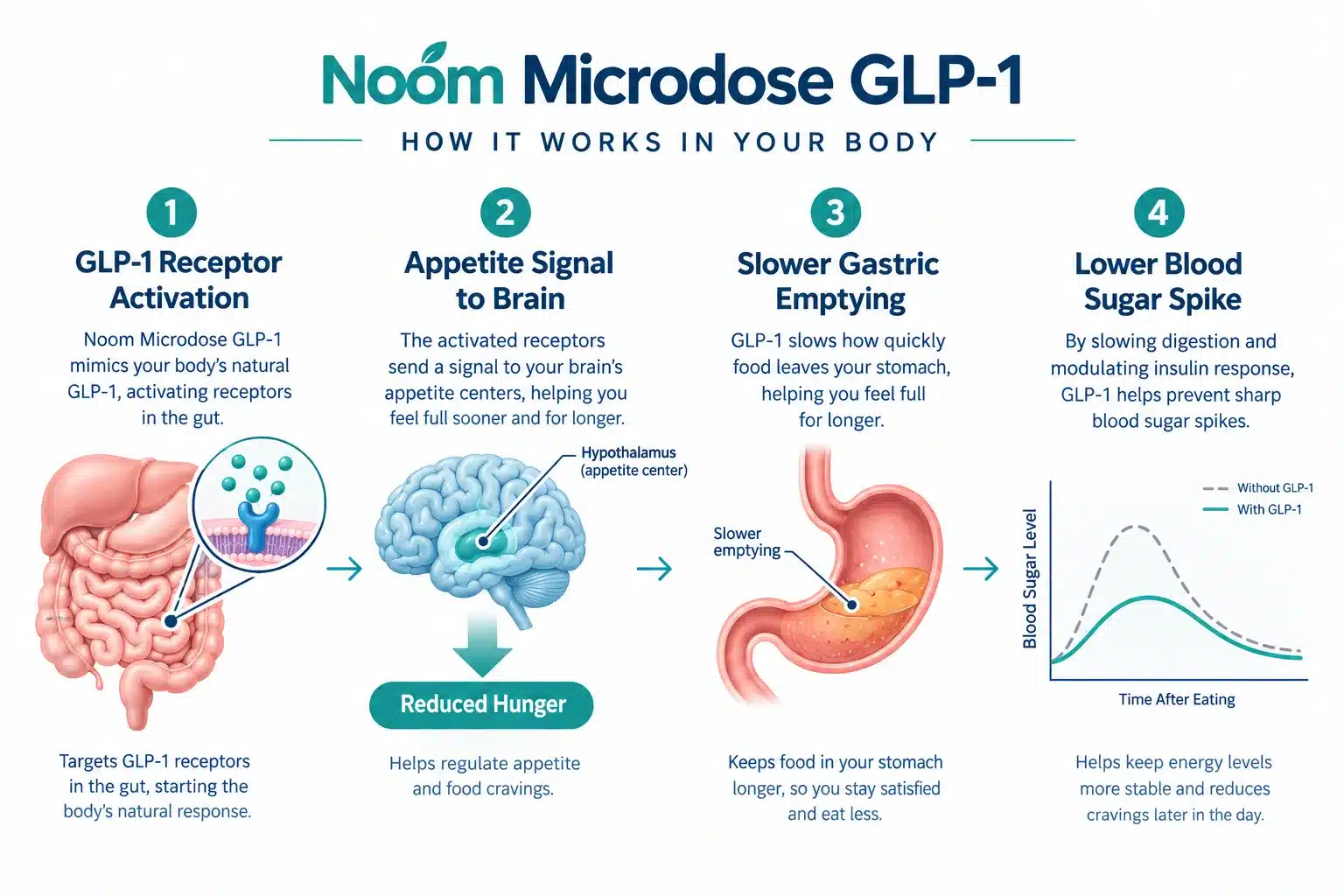
How Does Noom Microdose GLP-1 Work?
Noom Microdose GLP-1 works by activating GLP-1 receptors in the gut and brain at a low level, reducing appetite and slowing gastric emptying without the aggressive hormonal signaling that causes nausea at higher doses. The behavioral coaching component runs alongside medication to reinforce sustainable eating habits.
GLP-1 (glucagon-like peptide-1) is a hormone naturally released after eating. It signals fullness to the brain, slows how quickly food leaves the stomach, and helps regulate blood sugar. Semaglutide mimics this hormone. At microdose levels, the appetite-suppressing effect is present but more subtle, which is why Noom pairs it with structured habit coaching rather than relying on medication alone [10].
The program’s two-part structure:
- Medication component: Compounded semaglutide at a low starting dose, delivered via injection. Dose adjustments are made during telehealth check-ins based on tolerance and progress.
- Microhabits coaching component: Noom’s GLP-1 Companion app guides users through small, repeatable behavioral changes around eating, movement, and mindset [4].
The clinical rationale Noom cites for microdosing includes better tolerability, reduced risk of muscle mass loss (which can occur with rapid weight loss at high doses), and improved long-term adherence because users are not quitting due to side effects [10].
“The goal isn’t just weight loss, it’s weight loss that sticks. Microdosing gives people time to build the habits they’ll need when and if they ever taper off medication.”, Noom’s stated program rationale [10]
Noom Microdose GLP-1 Cost and Pricing
As of 2026, Noom Microdose GLP-1 starts at $119 per month, which includes both the compounded semaglutide medication and access to the microhabits coaching program [5][8]. This is significantly lower than brand-name GLP-1 drugs, which can exceed $900 per month without insurance.
Pricing can vary based on dose level and program tier. Noom’s standard GLP-1Rx program (higher doses) is priced separately and costs more. The microdose tier is positioned as the most affordable entry point in Noom’s medication lineup [8].
What the $119/month includes:
- Compounded semaglutide prescription (if eligible)
- Telehealth consultation with a licensed clinician
- Ongoing medication management
- Access to the Noom GLP-1 Companion app and microhabits curriculum
What it does not include:
- Lab work (may be required separately depending on your health history)
- Any brand-name GLP-1 medications
For a side-by-side look at what other telehealth platforms charge, see this comparison of cheapest online GLP-1 providers. You can also review a detailed breakdown of how much semaglutide costs in 2026.
Noom Microdose GLP-1 vs Regular GLP-1 Drugs (and vs Ozempic)
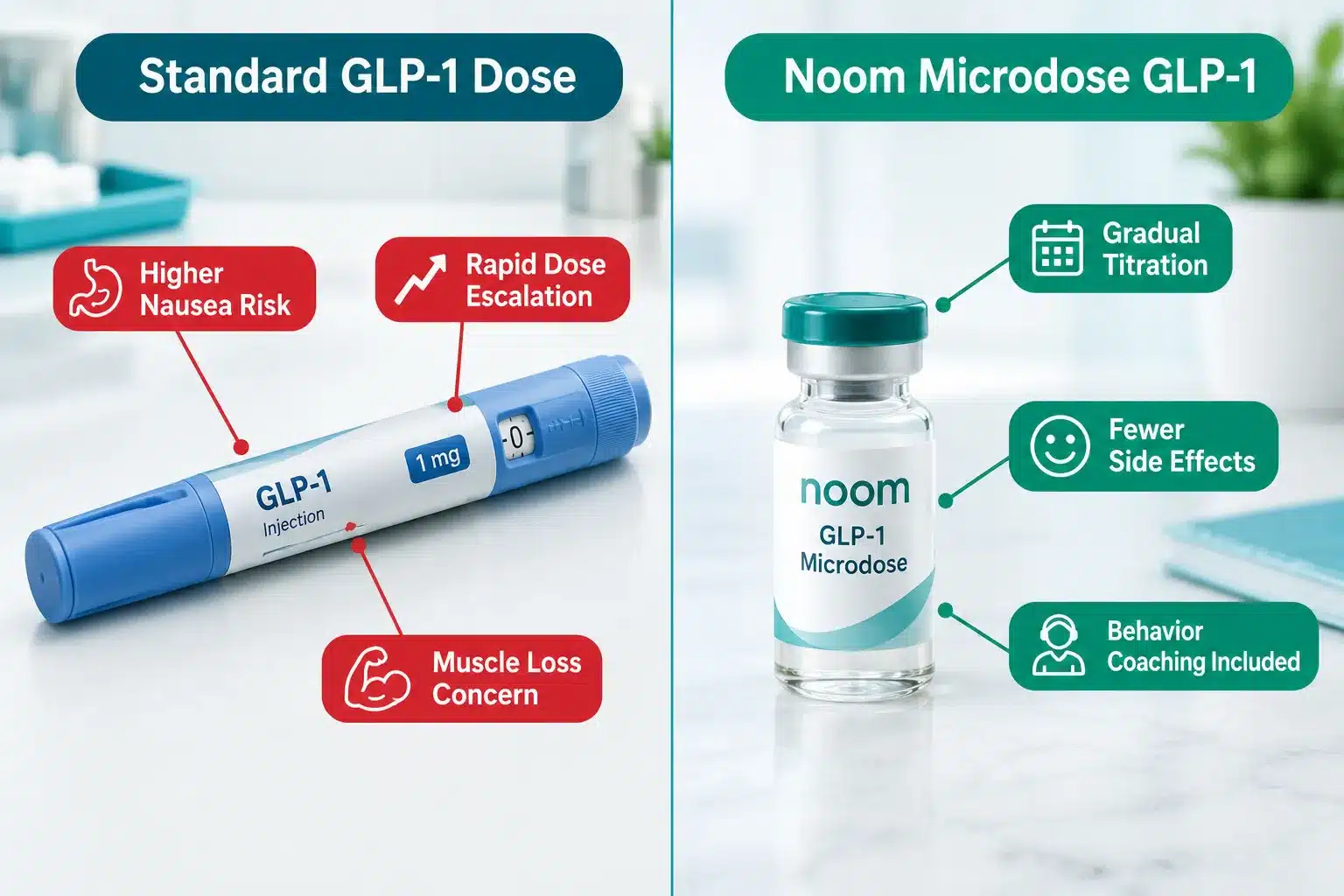
Noom Microdose GLP-1 uses the same active ingredient as Ozempic and Wegovy (semaglutide), but at a fraction of the dose and with a slower or non-escalating titration schedule. The result is a gentler experience with less dramatic weight loss in the short term, but potentially better tolerability and lower dropout rates.
Here is a direct comparison:
| Feature | Noom Microdose GLP-1 | Standard GLP-1 (Ozempic/Wegovy) |
|---|---|---|
| Active ingredient | Compounded semaglutide | Brand-name semaglutide |
| Starting dose | Sub-therapeutic (microdose) | 0.25 mg/week, escalating to 1-2.4 mg |
| Side effect profile | Lower nausea, fewer GI issues | Higher nausea, vomiting common early on |
| Weight loss speed | Gradual | Faster at full dose |
| Behavioral coaching | Included (microhabits app) | Not typically included |
| Approximate monthly cost | Starts at $119 | $900+ without insurance |
| FDA approval status | Compounded (not FDA-approved) | FDA-approved |
Choose Noom Microdose GLP-1 if: you want to start GLP-1 therapy affordably, you have had bad experiences with nausea on higher doses, or you want medication paired with structured habit support.
Choose standard GLP-1 therapy if: you need faster, more significant weight loss, you have insurance coverage for brand-name drugs, or your BMI and health profile call for full therapeutic dosing.
For more context on compounded options, see this guide to compounded tirzepatide and the FDA rules on compounded semaglutide in 2026.
Is Noom Microdose GLP-1 Safe, and What Are the Side Effects?
For most eligible adults, Noom Microdose GLP-1 is considered lower-risk than standard GLP-1 dosing because the lower dose reduces the intensity of common side effects. That said, it is still a prescription medication and carries real contraindications.
Reported side effects at microdose levels:
- Mild nausea (less common than at full doses)
- Mild constipation or loose stools
- Reduced appetite (intended effect, but can be pronounced)
- Injection site reactions (minor, typically temporary)
Contraindications, do not use if you:
- Have a personal or family history of medullary thyroid carcinoma or MEN2 syndrome
- Are pregnant or planning to become pregnant
- Are breastfeeding (see note below)
- Have a history of pancreatitis
- Have severe gastroparesis or significant GI motility disorders
A critical note on GLP-1 medications while breastfeeding: GLP-1 medications, including semaglutide and tirzepatide, are not considered safe during breastfeeding. There is currently insufficient safety data on whether semaglutide passes into breast milk and what effect it may have on a nursing infant. Both the Noom program and mainstream clinical guidance advise against taking any GLP-1 medication while breastfeeding. If you are postpartum and considering GLP-1 weight loss support, speak with your OB or primary care provider before starting any program. GLP-1 postpartum weight loss is a growing area of interest, but safety must come first for both mother and infant [2].
Medical News Today notes that experts have raised questions about the long-term data on GLP-1 microdosing specifically, and that more clinical evidence is needed to fully characterize outcomes at sub-therapeutic doses [2].
Who Is Noom Microdose GLP-1 For?
Noom Microdose GLP-1 is designed for adults with a BMI of 27 or higher, or 25 or higher with at least one weight-related health condition such as type 2 diabetes, hypertension, or high cholesterol. It is also offered as a “Proactive Health” option for people who want metabolic support before they reach standard obesity-medication thresholds [7].
Good candidates:
- Adults who have tried diet and exercise without sustained results
- People who are GLP-1-curious but nervous about side effects
- Those who cannot afford brand-name GLP-1 drugs
- Adults who want medication paired with behavioral coaching
- People who have previously stopped GLP-1 therapy due to nausea
Not appropriate for:
- Anyone who is pregnant, planning pregnancy, or breastfeeding
- People with a history of thyroid cancer or MEN2 syndrome
- Those with active eating disorders (anorexia, bulimia)
- Individuals under 18
- People with severe kidney or liver disease (case-by-case basis)
One user on Reddit described starting the microdose program after stopping Ozempic due to severe nausea: “I was on 0.5 mg and felt sick constantly. The microdose is so much more manageable. I’m losing slower but I’m actually staying on it.” [1] This reflects a common pattern Noom’s program is designed to address.
Noom Microdose GLP-1 Eligibility Requirements
To qualify for Noom Microdose GLP-1, you must complete an online health intake and a telehealth consultation with a licensed Noom Med clinician, who will confirm your eligibility based on BMI, health history, and current medications [6][7].
Standard eligibility checklist:
- Age 18 or older
- BMI of 27+ (or 25+ with a qualifying condition)
- No contraindicated medical history (thyroid cancer, pancreatitis, etc.)
- Not pregnant or breastfeeding
- Able to self-administer subcutaneous injections (or willing to learn)
- Residing in a U.S. state where Noom Med operates
The Proactive Health Microdose GLP-1Rx tier has slightly more flexible BMI thresholds for people who want early metabolic intervention [7]. A clinician makes the final call.
Noom Microdose GLP-1 Results and Reviews: Does It Actually Work for Weight Loss?
Early program data and user reports suggest that Noom Microdose GLP-1 does produce meaningful appetite reduction and gradual weight loss, though results are slower than with full-dose GLP-1 therapy. Noom has not yet published peer-reviewed clinical trial data specific to the microdose program as of 2026 [3].
What the available evidence shows:
- Users report noticeable appetite suppression even at low doses [1]
- Weight loss tends to be 1-2 pounds per week on average at microdose levels (estimate based on user reports; no published RCT data yet)
- Tolerability is consistently described as better than standard GLP-1 programs
- The behavioral coaching component appears to improve adherence compared to medication-only approaches [10]
Toward Healthcare reported that Noom’s internal data showed strong early retention rates, with users staying on the program longer than typical GLP-1 drop-off patterns suggest [3].
Common mistake: Expecting Ozempic-level weight loss speed from a microdose program. The trade-off is tolerability and habit formation, not maximum short-term results. People who go in expecting rapid loss often feel disappointed even when the program is working as intended.
For a deeper look at what GLP-1 therapy does to your body over time, see this guide on GLP-1 transformation and metabolism.
How to Get Noom Microdose GLP-1
Getting started with Noom Microdose GLP-1 takes about 15-30 minutes online and does not require an in-person doctor visit. The process is fully telehealth-based.
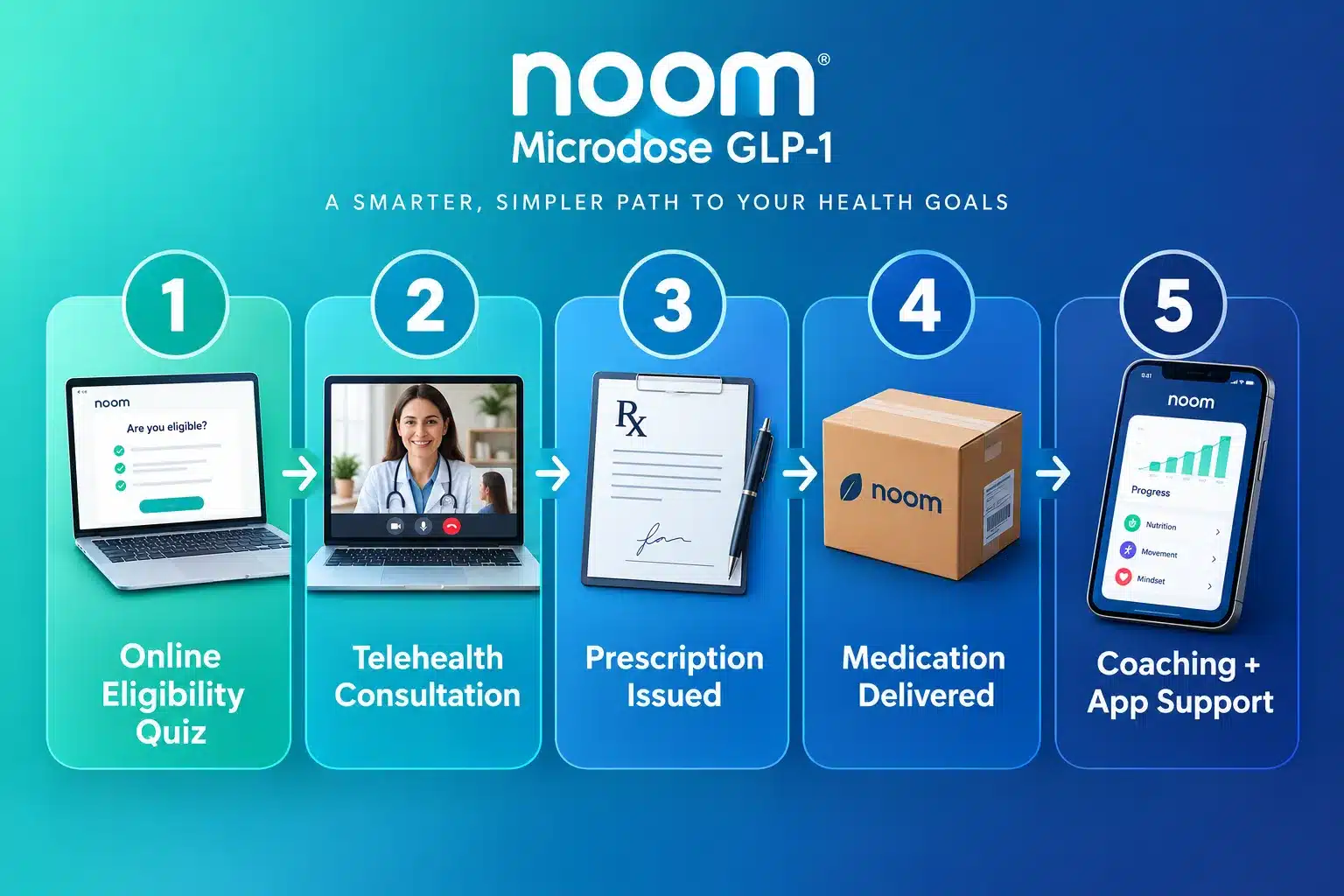
Step-by-step process:
- Visit Noom’s website and navigate to the Noom Med or Microdose GLP-1 section [6].
- Complete the health intake quiz covering your weight history, current medications, and health conditions.
- Schedule or complete a telehealth consultation with a Noom Med clinician.
- Receive your prescription if eligible. Compounded semaglutide is dispensed through a licensed compounding pharmacy.
- Medication is shipped to your home. Most users receive their first shipment within 5-7 business days.
- Download the Noom GLP-1 Companion app and begin the microhabits curriculum alongside your medication [4].
- Attend follow-up check-ins to adjust dosing and track progress.
If you are uninsured and comparing options, this guide to how to get GLP-1 if you’re uninsured covers your full range of choices. You may also want to review affordable semaglutide telehealth options before committing to one provider.
Noom Microdose GLP-1 Alternatives
If Noom Microdose GLP-1 is not the right fit, several alternatives offer similar or overlapping benefits. The best choice depends on your budget, desired weight loss speed, tolerance for injections, and whether you want behavioral support bundled in.
Main alternatives:
- Standard compounded semaglutide (higher dose, faster results, higher side-effect risk): Available through providers like Hims, Ro, and others. See Hims weight loss cost for a pricing comparison.
- Compounded tirzepatide (dual GIP/GLP-1 agonist, stronger appetite suppression): Generally more expensive but may produce greater weight loss. See compounded tirzepatide: what you need to know.
- Oral semaglutide (Rybelsus): A pill-form option for those who prefer to avoid injections. See semaglutide oral tablets Rybelsus.
- Other telehealth GLP-1 programs: Platforms like Measured, Evolve Telemed, and others offer varying levels of clinical support and pricing.
- Non-GLP-1 approaches: For people who are not eligible or prefer to avoid medication, structured diet programs, metabolic testing, and behavioral coaching alone remain options.
Choose Noom Microdose GLP-1 if you want the lowest-cost entry point into GLP-1 therapy with built-in behavioral support and a gentler side-effect profile. Choose a higher-dose program if you need faster results and are prepared to manage stronger GI side effects.
Common Mistakes With Noom Microdose GLP-1
The most common mistake people make with Noom Microdose GLP-1 is treating it as a passive medication program rather than an active behavior-change program. The microhabits component is not optional decoration, it is core to how the program is designed to work.
Other frequent mistakes:
- Skipping the coaching curriculum: Users who ignore the app and only take the medication see slower and less sustained results.
- Expecting standard GLP-1 side effects and quitting preemptively: Some users stop before giving the program time to work because they assume they will feel sick, even when they do not.
- Not disclosing all medications: GLP-1 medications can interact with insulin and other diabetes drugs. Full disclosure during the intake is essential.
- Taking GLP-1 medications while breastfeeding: This is a safety error, not just a program violation. Semaglutide while breastfeeding and tirzepatide while breastfeeding are both contraindicated due to unknown risks to infants. Anyone who is breastfeeding should wait until they have fully weaned and received clearance from their physician before starting any GLP-1 program.
- Comparing week-by-week results to Ozempic users: Different dose, different timeline. Comparing microdose outcomes to full-dose results will always be discouraging and is not a fair measure of whether the program is working.
Frequently Asked Questions
What is the difference between Noom Microdose GLP-1 and Noom Med GLP-1Rx?
Noom Med GLP-1Rx uses standard escalating semaglutide doses similar to Ozempic or Wegovy. Noom Microdose GLP-1 uses sub-therapeutic doses that stay lower throughout the program, prioritizing tolerability and habit formation over maximum short-term weight loss [7].
Is compounded semaglutide FDA-approved?
No. Compounded semaglutide is not FDA-approved as a finished drug product. It is prepared by licensed compounding pharmacies and prescribed by licensed clinicians, but it does not carry the same regulatory status as brand-name Ozempic or Wegovy. For the latest regulatory context, see the FDA rules on compounded semaglutide 2026 update.
Can I take Noom Microdose GLP-1 if I have type 2 diabetes?
Possibly, but it depends on your current medications. Semaglutide can lower blood sugar, so if you are already on insulin or other diabetes drugs, your clinician needs to evaluate the interaction carefully. See also: semaglutide for type 2 diabetes.
Can you take semaglutide while breastfeeding?
No. GLP-1 medications including semaglutide and tirzepatide are not recommended during breastfeeding. There is no adequate safety data on GLP-1 and breastfeeding, and the potential risk to a nursing infant is unknown. GLP-1 breastfeeding safety guidelines consistently advise waiting until after weaning.
How long does it take to see results with Noom Microdose GLP-1?
Most users report noticeable appetite reduction within the first 2-4 weeks. Visible weight loss typically becomes apparent within 4-8 weeks, though the pace is slower than with full-dose GLP-1 therapy [1][3].
Does Noom Microdose GLP-1 require injections?
Yes. Compounded semaglutide is administered via subcutaneous injection, typically once per week. Noom provides instructions and support for self-administration.
What happens if I want to stop the program?
You can discontinue at any time. Because microdose programs involve lower doses, the adjustment period off medication may be less intense than stopping a full-dose GLP-1 drug, though individual responses vary.
Is Noom Microdose GLP-1 available in all U.S. states?
Not necessarily. Noom Med operates in most U.S. states, but availability depends on state telehealth regulations and licensing. The intake process will confirm whether the program is available in your state.
Can I use Noom Microdose GLP-1 for GLP-1 postpartum weight loss?
Only after you have stopped breastfeeding and received clearance from your physician. GLP-1 weight loss while breastfeeding is not safe, and postpartum use should be discussed with a healthcare provider who knows your full health history.
What is the Noom GLP-1 Companion?
The GLP-1 Companion is Noom’s app-based coaching tool that runs alongside the medication program, guiding users through microhabits related to eating, movement, and mindset [4]. It is included in the program cost.
How does Noom Microdose GLP-1 compare to other affordable telehealth GLP-1 programs?
At $119/month including medication and coaching, it is among the more affordable options in 2026. For a full comparison, see cheapest online GLP-1 providers compared.
Is there a free trial for Noom Microdose GLP-1?
Noom does not advertise a free medication trial. However, the initial consultation and intake process are typically low-cost or included in the first month’s fee. Check Noom’s current pricing page for the most up-to-date offer [8].
7 Best GLP-1 Providers Ranked: Accreditation, Flexibility & Support Compared (2026 Update)
32,000+ Patients Can't All Be Wrong: See the Top-Rated GLP-1 Providers: Compared on accreditation, plan flexibility, and patient support — updated for 2026.
BMI MD GLP-1 Microdosing Plan
- Specialized microdosing options (sublingual drops or low-dose injections)
- Ideal for maintaining weight or tapering off higher doses safely
- Fully bundled plan with no hidden monthly platform memberships
DirectMeds Weight Loss Solutions
- Sourced from accredited, state-licensed 503A compounding pharmacies
- No-frills high-volume savings passed directly to the patient
- Includes clinical consultation and cold-chain shipping updates
MEDVi Flat-Rate Telehealth
- Flat monthly rate holds steady even at maximum maintenance doses
- No dosage upcharges or graduation fee penalties
- Offers both injectable and advanced oral thin-film delivery options
Gala GLP-1 Care Program
- All-inclusive plan with no standalone membership costs
- Continuous text-based messaging access with state-licensed clinicians
- Temperature-controlled, cold-chain medication shipping included
Measured GLP-1 Metabolic Health
- Comprehensive metabolic health screening and expert intake analysis
- Predictable long-term budgeting with stable plan pricing
- High-end responsive dashboard with integrated diagnostic support
Refills GLP-1 (TryRefills Plan)
- Flat rate holds steady as titration scales up
- Includes clinical guides for active side-effect management
- Bundles in foundational nutritional strategies alongside medication
AltRx GLP-1 Transactional Reorders
- Zero recurring auto-billing — pay entirely on a transactional basis
- Rapid text-to-order format saves time for experienced patients
- Provides both injectable forms and fast-dissolving tablet variations
Conclusion
Noom Microdose GLP-1 is a legitimate, medically supervised option for adults who want to explore GLP-1 therapy without the cost, side effects, or rapid escalation of standard programs. At $119/month including medication and behavioral coaching, it fills a real gap in the market for people who have been priced out of Ozempic or who stopped previous GLP-1 therapy because of nausea.
The trade-off is speed. Microdosing is not a shortcut to dramatic weight loss. It is a slower, more sustainable approach that bets on habit formation as much as pharmacology. For the right person, that is exactly what is needed.
Actionable next steps:
- Visit Noom’s website and complete the free health intake to check your eligibility.
- Review the FDA’s current stance on compounded semaglutide before starting any compounded GLP-1 program.
- If you are postpartum, confirm with your OB that you have fully weaned and that GLP-1 medications are appropriate for your situation. Do not take semaglutide while breastfeeding or tirzepatide while breastfeeding.
- Compare at least two or three telehealth GLP-1 providers before committing. Use the cheapest online GLP-1 providers comparison as a starting point.
- If you start the program, commit to the microhabits curriculum. The medication works better when paired with behavioral change.
References
[1] Noom GLP-1 Microdose (Reddit discussion) – https://www.reddit.com/r/Noom/comments/1mjn5g5/noom_glp1_microdose/
[2] GLP-1 Microdosing for Weight Loss: Experts Weigh the Pros and Cons – https://www.medicalnewstoday.com/articles/glp-1-microdosing-for-weight-loss-experts-weigh-the-pros-and-cons
[3] Noom Microdose GLP-1 Weight Loss Program – https://www.towardshealthcare.com/news/noom-microdose-glp1-weight-loss-program
[4] Introducing Noom’s GLP-1 Companion – https://www.noom.com/health/resources/video/introducing-nooms-glp-1-companion/
[5] Noom Launches Microdose GLP-1 Program – https://www.noom.com/in-the-news/noom-launches-microdose-glp-1-program-enabling-weight-loss-without-the-side-effects-and-priced-at-119-to-start-including-medication-and-microhabits-program/
[6] GLP-1 Microdose (Noom Med) – https://www.noom.com/med/glp1-microdose/
[7] Microdose GLP-1Rx (Noom Med) – https://www.noom.com/med/microdose-glp1-rx/
[8] Noom Med Pricing – https://www.noom.com/med/pricing/
[10] Why We Launched Noom Microdose GLP-1Rx – https://www.noom.com/blog/weight-management/why-we-launched-noom-microdose-glp-1rx/