
GLP-1 Microdosing Chart: Weekly Dosing Schedules for Semaglutide and Tirzepatide

Last updated: October 3, 2026
Quick Answer: A GLP-1 microdosing chart maps out a slow, low-dose escalation schedule for GLP-1 receptor agonists like semaglutide or tirzepatide, typically starting at doses far below the standard labeled amount (often 0.05 mg for semaglutide) and increasing every one to two weeks based on tolerance. These protocols are off-label, compounded-product regimens that must be supervised by a licensed clinician. The goal is to reduce side effects while still achieving meaningful appetite control and weight loss.
Key Takeaways
- A GLP-1 microdosing chart starts semaglutide as low as 0.05 mg weekly and escalates in small steps, compared to the standard 0.25 mg starting dose.
- Microdosing is not FDA-approved; it applies primarily to compounded semaglutide or tirzepatide and requires a prescribing clinician.
- The main benefit is fewer gastrointestinal side effects during the early weeks of treatment.
- Tirzepatide microdosing follows a similar logic but uses the drug’s already-low 2.5 mg labeled starting dose as a reference point.
- Most people on a microdosing protocol begin to notice appetite suppression within two to four weeks, though meaningful weight loss typically takes eight to twelve weeks.
- Cost for compounded GLP-1 microdosing programs generally runs lower than brand-name products, but varies widely by provider.
- Skipping a dose is not ideal but is rarely dangerous; the protocol should simply resume at the same dose, not escalate.
- Microdosing is best suited for people who are highly sensitive to GI side effects, those with lower body weight, or anyone who has previously stopped GLP-1 therapy due to nausea.
What Is GLP-1 Microdosing and How Does It Work
GLP-1 microdosing means starting a GLP-1 receptor agonist at a dose significantly lower than the standard labeled starting amount, then increasing slowly in small increments over several weeks. The idea is to let the body adapt to the drug’s effects on gastric emptying and appetite signaling before reaching a therapeutic maintenance dose.
7 Best GLP-1 Providers Ranked: Accreditation, Flexibility & Support Compared (2026 Update)
32,000+ Patients Can't All Be Wrong: See the Top-Rated GLP-1 Providers. We compared the leading online GLP-1 providers based on program features, clinical support, convenience, and overall value.
BMI MD GLP-1 Microdosing Plan
- Specialized microdosing options, including sublingual drops and low-dose injections
- Designed for people interested in maintaining weight or gradually adjusting treatment
- Bundled program structure without a separate monthly platform membership
- Online access makes the process convenient from home

DirectMeds Weight Loss Solutions
- Online weight-loss program with a straightforward patient experience
- Compounded medication options through state-licensed compounding pharmacies
- Includes clinical consultation as part of the process
- Provides shipping updates to help patients track their orders
MEDVi Flat-Rate Telehealth
- Flat-rate telehealth approach designed for easier budgeting
- No dosage-based pricing increases within the advertised program structure
- Offers injectable and oral thin-film delivery options
- Includes medical screening and asynchronous provider consultations
Gala GLP-1 Care Program
- Text-based access to state-licensed clinicians
- Cold-chain medication shipping included in the program
- Month-to-month program structure
- Designed for people who value convenient ongoing support
Measured GLP-1 Metabolic Health
- Comprehensive metabolic health screening and intake analysis
- Designed around longer-term metabolic health management
- Responsive dashboard with integrated health tracking tools
- Useful option for patients who value a more data-focused experience
Refills GLP-1 (TryRefills Plan)
- Clinical guidance designed to help patients manage common treatment concerns
- Includes foundational nutritional strategies alongside medication
- Designed around predictable ongoing treatment
- No hidden startup or processing fees according to the program information provided
AltRx GLP-1 Transactional Reorders
- Transactional reorder model without recurring auto-billing
- Designed for patients who already understand their treatment routine
- Fast text-to-order process for convenient reorders
- Offers injectable and fast-dissolving tablet variations
GLP-1 (glucagon-like peptide-1) receptor agonists work by mimicking a natural gut hormone. When you eat, your gut releases GLP-1, which signals the pancreas to release insulin, slows digestion, and tells the brain you are full. Injectable versions like semaglutide and tirzepatide replicate this effect at sustained levels throughout the week. For a deeper look at how these drugs work mechanically, see this overview of GLP-1 shots for weight loss and diabetes.
The “micro” part refers to the dose size. Instead of the FDA-labeled 0.25 mg starting dose for semaglutide, a microdosing protocol might begin at 0.05 mg or 0.10 mg. This is only possible with compounded semaglutide, where a compounding pharmacy can prepare custom concentrations in smaller increments than the branded pen allows [2][4].
Why do some people prefer this approach?
- Standard titration schedules still cause nausea, vomiting, and fatigue in a significant portion of users during the first four to eight weeks.
- Microdosing gives the gut more time to adjust before the dose reaches a level that strongly slows gastric emptying.
- Some clinicians use it as a re-introduction strategy for patients who previously quit GLP-1 therapy due to side effects [9].
GLP-1 Microdosing Dosage Chart by Week
The most widely referenced GLP-1 microdosing chart for semaglutide uses insulin-syringe units to measure compounded doses, with each step lasting one to two weeks depending on tolerance.
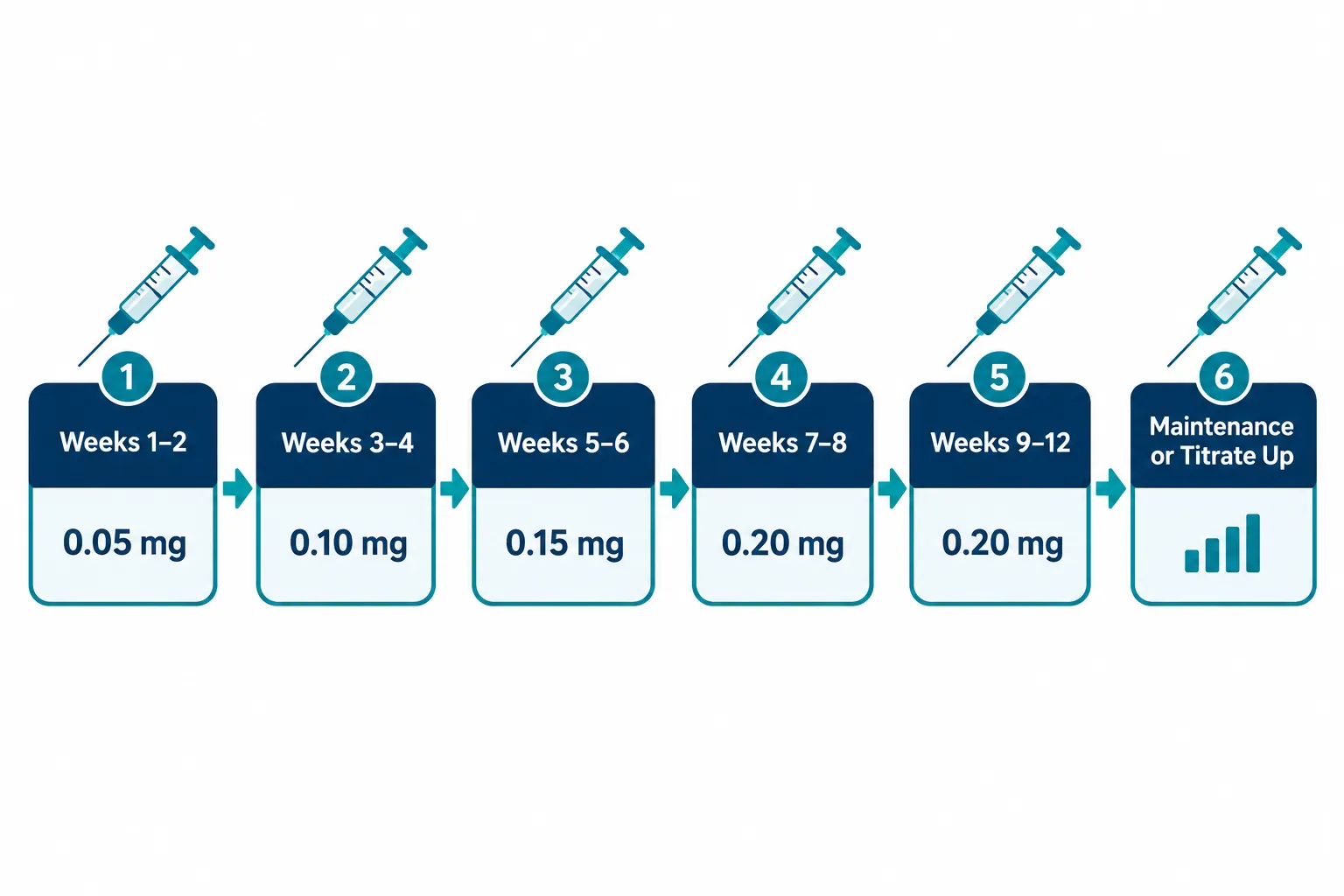
Semaglutide Microdosing Chart (Compounded)
The following schedule is based on protocols described by Noom’s compounded semaglutide dosing guide and Eden Health’s microdosing primer, and is representative of what many telehealth providers use [2]:
| Week(s) | Dose (mg) | Approx. Units (insulin syringe) | Notes |
|---|---|---|---|
| 1-2 | 0.05 mg | 5 units | Starting dose; assess tolerance |
| 3-4 | 0.10 mg | 10 units | Increase only if no significant nausea |
| 5-6 | 0.15 mg | 15 units | Many patients notice appetite reduction here |
| 7+ | 0.20 mg | 20 units | Typical max for this protocol; may then follow standard titration |
After reaching 0.20 mg without significant side effects, many providers transition patients to the standard semaglutide schedule: 0.25 mg (weeks 1-4 of standard dosing), then 0.5 mg, 1.0 mg, 1.7 mg, and a maintenance dose of 2.4 mg weekly for weight loss [1][4].
Standard Semaglutide Titration (Reference)
For comparison, the AGA-aligned standard schedule is:
- Weeks 1-4: 0.25 mg weekly
- Weeks 5-8: 0.5 mg weekly
- Weeks 9-12: 1.0 mg weekly
- Weeks 13-16: 1.7 mg weekly
- Week 17+: 2.4 mg weekly (maintenance for weight loss) [1]
Tirzepatide Microdosing Chart
Tirzepatide’s labeled starting dose of 2.5 mg weekly is already considered low relative to its maintenance range of 10-15 mg. “Microdosing” tirzepatide typically means staying at 2.5 mg longer than the standard four-week window, or using compounded tirzepatide at sub-2.5 mg doses. The full labeled escalation runs: 2.5 mg, 5 mg, 7.5 mg, 10 mg, 12.5 mg, and 15 mg, each step held for at least four weeks [5][6]. For sourcing compounded tirzepatide, see our guide to the best compounding pharmacy for tirzepatide.
Is GLP-1 Microdosing Safe and Effective
GLP-1 microdosing is generally considered safe when supervised by a clinician, but it is not FDA-approved and the evidence base is thinner than for standard dosing. The primary safety advantage is a reduced risk of severe nausea and vomiting during the first weeks of treatment [8][9].
What the evidence suggests:
- Microdosing does not have its own dedicated clinical trials. Safety and efficacy data are extrapolated from standard GLP-1 trials, where lower doses showed fewer GI events but also less weight loss [1].
- Drugs.com’s medical answer on microdosing Ozempic notes that while the approach may improve tolerability, there is no peer-reviewed evidence confirming that sub-labeled doses produce the same long-term weight outcomes as full therapeutic doses [8].
- The approach is most defensible as a bridge strategy: use microdosing to establish tolerance, then escalate to a proven therapeutic dose.
Who benefits most from a cautious start:
- People with a history of GI sensitivity or gastroparesis
- Patients with lower BMI who may be more sensitive to appetite suppression
- Anyone restarting after a previous GLP-1 discontinuation due to side effects
GLP-1 Microdosing vs Standard Dosing Comparison
The core difference between microdosing and standard dosing is the starting point and the pace of escalation. Standard dosing begins at 0.25 mg for semaglutide and escalates every four weeks. Microdosing begins at 0.05 mg and escalates every one to two weeks in smaller steps before eventually merging with or paralleling the standard schedule [2][4].
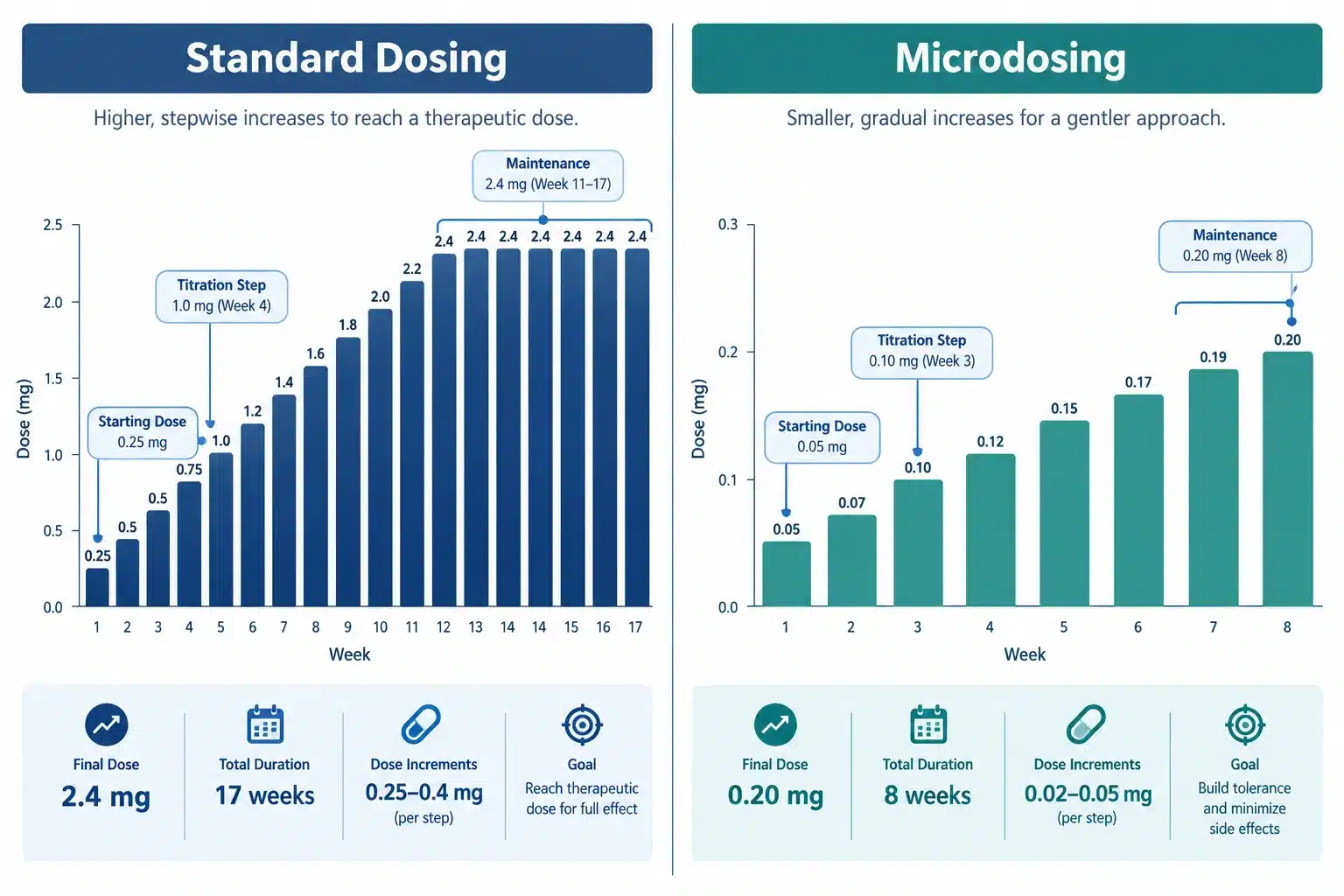
| Feature | Microdosing Protocol | Standard Protocol |
|---|---|---|
| Starting dose (semaglutide) | 0.05 mg | 0.25 mg |
| Escalation interval | Every 1-2 weeks | Every 4 weeks |
| FDA approval status | Off-label / compounded | FDA-approved schedule |
| GI side effect risk (early weeks) | Lower | Moderate to high |
| Time to therapeutic dose | Longer (8-16+ weeks) | 17 weeks to 2.4 mg |
| Requires compounded product | Yes (typically) | No (brand-name pens available) |
Choose microdosing if: You have previously experienced intolerable nausea on GLP-1s, you are restarting after a break, or your provider recommends a gentler approach due to your body weight or health history.
Choose standard dosing if: You want the most evidence-backed path to the maintenance dose, have no history of GI sensitivity, or are using a brand-name pen that does not allow sub-0.25 mg doses.
GLP-1 Microdosing Side Effects and How to Manage Them
Even at micro doses, GLP-1 medications can cause side effects, though they tend to be milder than with standard starting doses. The most common early effects are nausea, fatigue, mild constipation, and reduced appetite [8][9].
Management strategies that actually help:
- Inject on a full stomach or after a light meal to reduce nausea intensity
- Stay well hydrated; dehydration worsens nausea significantly
- Avoid high-fat, greasy meals on injection day and the day after
- If nausea is still disruptive at a given dose, hold at that dose for an extra week rather than escalating
- Over-the-counter ginger supplements or ginger tea can reduce mild nausea for some people
- Contact your prescriber if you experience vomiting that prevents you from keeping fluids down, as this warrants a dose hold or reduction
Serious but rare side effects to watch for:
- Pancreatitis (severe upper abdominal pain radiating to the back)
- Gallbladder problems (right-sided abdominal pain, especially after eating)
- Rapid heart rate at rest
These are not unique to microdosing; they apply to all GLP-1 users and require immediate medical attention.
Who Should Use GLP-1 Microdosing
GLP-1 microdosing is best suited for adults with obesity or overweight who have a specific reason to start below the standard dose. It is not the right first choice for everyone, and it should always be directed by a prescribing clinician.
Good candidates:
- Adults who stopped a previous GLP-1 prescription due to nausea or vomiting
- People with a BMI between 27 and 32 who may be more sensitive to appetite suppression
- Those with a history of GI conditions like IBS or acid reflux
- Patients who want to start treatment while managing work or family commitments that make severe nausea impractical
Not ideal for:
- People with type 2 diabetes who need faster glycemic control (standard dosing reaches therapeutic levels sooner)
- Anyone using brand-name pens (Ozempic, Wegovy, Mounjaro, Zepbound), which do not allow sub-labeled doses without modification
- Patients with a personal or family history of medullary thyroid carcinoma or MEN2 syndrome (this is a contraindication for all GLP-1 agonists, regardless of dose)
For a broader look at who qualifies for GLP-1 therapy, see our guide on what GLP-1s are and how they work for weight loss and diabetes.
How Much Does GLP-1 Microdosing Cost
GLP-1 microdosing relies on compounded semaglutide or tirzepatide, which is typically less expensive than brand-name products. Costs vary depending on the compounding pharmacy, the telehealth platform, and the dose prescribed.
As of 2026, compounded semaglutide programs through telehealth providers generally range from roughly $100 to $250 per month for lower doses used in microdosing protocols, though prices shift as the regulatory landscape around compounding evolves. For a detailed breakdown of what compounded semaglutide actually costs, see our compounding pharmacy semaglutide cost breakdown. You can also explore the least expensive GLP-1 options for weight loss if cost is a primary concern.
Key cost factors:
- Dose size: lower doses cost less per vial but may require more frequent refills as you escalate
- Platform fees: some telehealth programs charge a separate monthly membership fee on top of medication cost
- Insurance: compounded GLP-1s are almost never covered by insurance
- FDA regulatory status: rules around compounded semaglutide have shifted in 2026, which affects availability and pricing, see our FDA rules on compounded semaglutide 2026 update for the latest
GLP-1 Microdosing for Weight Loss vs Diabetes
For weight loss, the microdosing chart is designed to eventually reach a full therapeutic dose (2.4 mg for semaglutide, 10-15 mg for tirzepatide), with the early micro-phase serving as a tolerance-building ramp. For type 2 diabetes management, the priority is glycemic control, and sub-therapeutic doses may not adequately lower blood sugar, making microdosing a less suitable long-term strategy for diabetes [1][8].
Weight loss use case: Microdosing is a valid on-ramp. The goal is to reach a dose that suppresses appetite meaningfully, even if that takes a few extra weeks.
Diabetes use case: Standard titration is generally preferred because the glycemic benefit is dose-dependent. If a patient with diabetes cannot tolerate standard starting doses, a clinician may use a modified slow titration, but this is distinct from the consumer-facing “microdosing” protocols described in most GLP-1 microdosing charts.
Can I Microdose GLP-1 at Home Safely
Yes, GLP-1 microdosing can be done at home with subcutaneous injections, but only under the supervision of a licensed prescriber. You cannot safely microdose without a prescription, a proper compounded product with a verified concentration, and clear instructions on how to draw up the correct dose using an insulin syringe [2][4].
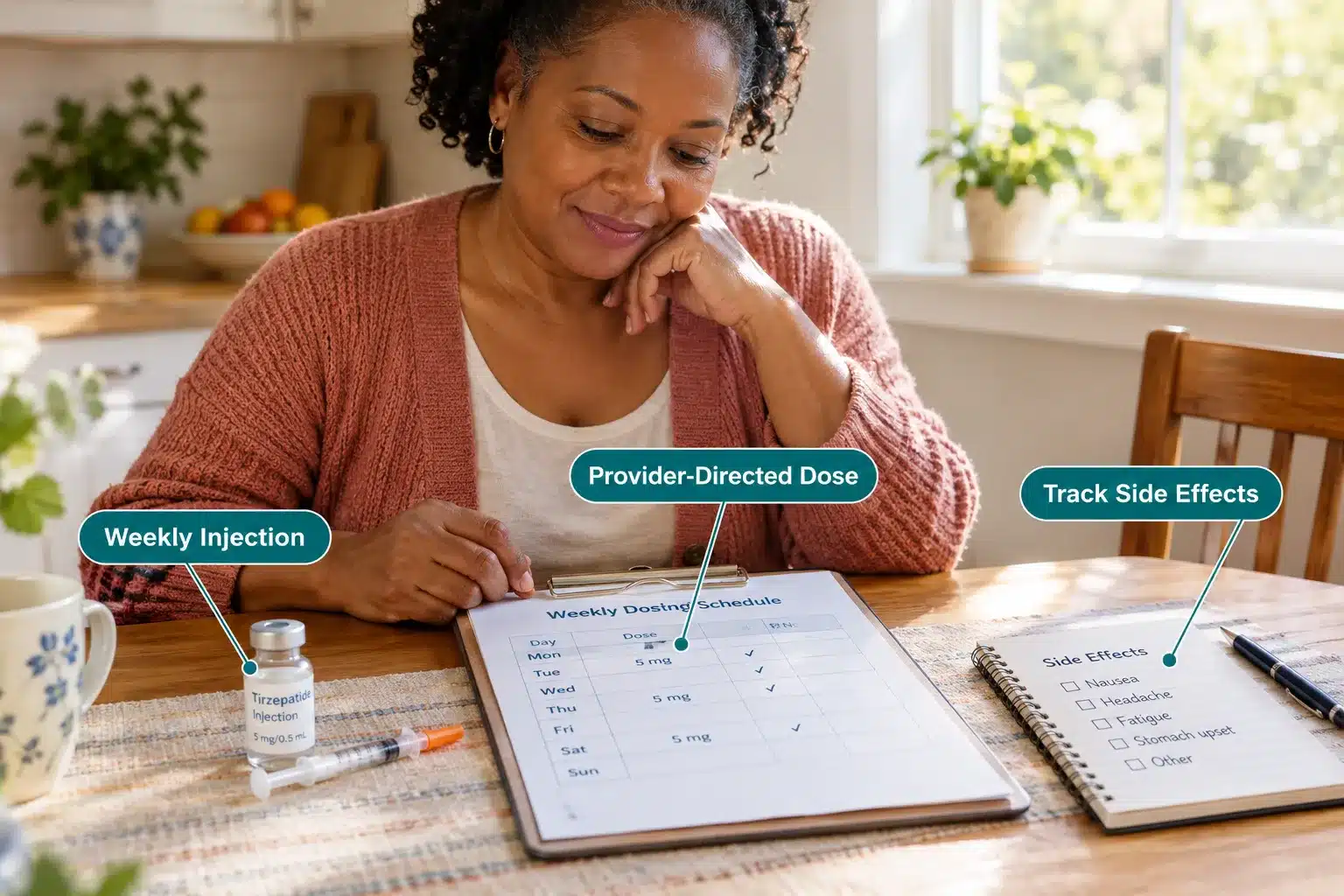
What safe at-home microdosing requires:
- A valid prescription from a telehealth provider or in-person physician
- Compounded semaglutide or tirzepatide from an accredited compounding pharmacy
- An insulin syringe (typically a 1 mL or 0.5 mL U-100 syringe) to measure small doses accurately
- Written dosing instructions specifying the exact number of units per injection
- A sharps disposal container
- A clinician contact for questions or side effect management
Common mistake: Drawing up doses by eyeballing the syringe rather than counting units precisely. At 0.05 mg, even a small measurement error represents a large percentage of the intended dose. Always count units carefully and confirm the concentration of your vial with your pharmacy.
For a review of a telehealth platform that offers GLP-1 programs, see our Evolve Telemed review.
How Long Does It Take to See Results From GLP-1 Microdosing
Most people notice reduced appetite within two to four weeks of starting a GLP-1 microdosing protocol, but meaningful, measurable weight loss typically takes eight to twelve weeks. This is slightly longer than with standard dosing because the therapeutic dose is reached more gradually [9][4].
Realistic timeline:
- Weeks 1-2: Little to no appetite change at 0.05 mg; body is adapting
- Weeks 3-4: Mild appetite reduction begins at 0.10-0.15 mg for most people
- Weeks 5-8: Noticeable fullness with smaller meals; early weight changes of 2-5 lbs are common
- Weeks 8-12: Once approaching or reaching 0.20-0.25 mg and beyond, weight loss accelerates
- Weeks 12-20+: Sustained weight loss becomes more consistent as the dose approaches therapeutic levels
What affects results: Diet quality, physical activity, sleep, starting body weight, and how quickly you escalate all influence outcomes. Microdosing is not a shortcut to results; it is a slower, gentler path to the same destination.
Common Mistakes People Make With GLP-1 Microdosing
The most frequent errors with GLP-1 microdosing involve dose measurement, escalation timing, and unrealistic expectations. Getting these wrong can reduce effectiveness or increase side effects.
Top mistakes to avoid:
- Escalating too fast because you feel fine at a low dose. Nausea can appear a day or two after an injection, not immediately. Give each dose level a full one to two weeks.
- Using the wrong syringe. A standard 3 mL syringe cannot measure 0.05 mg accurately. You need an insulin syringe calibrated in units.
- Confusing units with milligrams. The number of units you draw depends on the concentration of your compounded vial. A 1 mg/mL vial and a 2 mg/mL vial require completely different unit volumes for the same dose. Always confirm with your pharmacy.
- Stopping abruptly when side effects appear instead of holding the dose and waiting. Most early nausea resolves within a week.
- Expecting the same weight loss speed as standard dosing. Microdosing trades speed for tolerability; results come, but more slowly.
- Not tracking injections. Missing a dose or accidentally doubling up is easy without a weekly log.
GLP-1 Microdosing Alternatives and Similar Treatments
If microdosing is not the right fit, several alternatives exist along the spectrum of GLP-1 therapy and weight management.
- Standard GLP-1 titration with anti-nausea support (ondansetron, ginger supplements) is a common alternative for those who want faster escalation with side effect management.
- Brand-name GLP-1 pens (Wegovy, Ozempic, Mounjaro, Zepbound) follow fixed dose increments and do not allow microdosing, but they are FDA-approved and widely studied.
- Oral semaglutide (Rybelsus) is an oral GLP-1 option for type 2 diabetes, though it is not approved for weight loss and has lower bioavailability than injectable forms.
- Lifestyle-based programs combined with lower-dose GLP-1 therapy can produce meaningful results for people not ready for full therapeutic doses.
- Compounded tirzepatide at the labeled 2.5 mg starting dose is sometimes considered a form of “conservative dosing” for those who want a dual GLP-1/GIP agonist with a gentler start.
For a comparison of affordable GLP-1 programs, see our guide to the best cheap GLP-1 programs.
What Happens If You Skip a GLP-1 Microdose
Skipping a single weekly microdose is not dangerous, but it can slow your progress and may affect how your body responds when you resume. GLP-1 agonists build up in the system over weeks; one missed dose does not reset you entirely, but consistency matters for both appetite suppression and weight loss [8].
What to do if you miss a dose:
- If you remember within one to two days of your scheduled injection, take it as soon as possible and resume your normal weekly schedule.
- If it has been more than three to four days, skip the missed dose and resume on your next scheduled day.
- Do not double up doses to compensate for a missed injection.
- If you miss two or more consecutive doses, contact your prescriber before restarting, as some protocols recommend restarting at a lower dose after a longer gap.
FAQ
What is the starting dose on a GLP-1 microdosing chart?
Most microdosing protocols for compounded semaglutide start at 0.05 mg (approximately 5 units on an insulin syringe) weekly for the first one to two weeks [2].
Is microdosing GLP-1 FDA-approved?
No. Microdosing protocols using sub-labeled doses are off-label and apply specifically to compounded products. They require a valid prescription from a licensed clinician [4][8].
Can I use a brand-name Ozempic or Wegovy pen for microdosing?
No. Brand-name pens deliver fixed doses that cannot be adjusted below the labeled starting amount. Microdosing requires compounded semaglutide drawn up in an insulin syringe [4].
How is tirzepatide microdosing different from semaglutide microdosing?
Tirzepatide’s labeled starting dose of 2.5 mg is already quite low. Microdosing tirzepatide typically means extending time at 2.5 mg or using compounded tirzepatide at doses below 2.5 mg, which requires a compounding pharmacy [5][10].
Will I lose less weight with microdosing than standard dosing?
Potentially in the short term, because you spend more time at sub-therapeutic doses. Over 6 to 12 months, outcomes may be comparable if you successfully escalate to a full therapeutic dose [9].
How do I know what concentration my compounded vial is?
Your pharmacy label and prescription instructions will state the concentration (e.g., 1 mg/mL or 2.5 mg/mL). Always confirm this before drawing up a dose, as the number of units changes with concentration.
Is it safe to microdose GLP-1 without a doctor?
No. Obtaining and self-administering compounded GLP-1s without a prescription is both unsafe and illegal in the United States. A prescribing clinician is required [8][9].
What if I feel no effect after four weeks of microdosing?
At 0.05-0.10 mg, many people feel minimal appetite suppression. This is expected. The protocol is designed to build tolerance, not to produce immediate results at the lowest doses. Discuss escalation timing with your provider.
Can microdosing help people who got sick on standard GLP-1 doses?
Yes. This is one of the most common clinical use cases. Re-introducing at 0.05 mg allows the GI system to adapt more gradually, and many patients who previously stopped GLP-1 therapy tolerate the microdosing approach much better [9].
How long should I stay on a microdosing protocol before switching to standard dosing?
Most protocols run four to eight weeks before transitioning to standard titration. Your prescriber will guide this based on your tolerance and response.
7 Best GLP-1 Providers Ranked: Accreditation, Flexibility & Support Compared (2026 Update)
32,000+ Patients Can't All Be Wrong: See the Top-Rated GLP-1 Providers: Compared on accreditation, plan flexibility, and patient support — updated for 2026.
BMI MD GLP-1 Microdosing Plan
- Specialized microdosing options (sublingual drops or low-dose injections)
- Ideal for maintaining weight or tapering off higher doses safely
- Fully bundled plan with no hidden monthly platform memberships
DirectMeds Weight Loss Solutions
- Sourced from accredited, state-licensed 503A compounding pharmacies
- No-frills high-volume savings passed directly to the patient
- Includes clinical consultation and cold-chain shipping updates
MEDVi Flat-Rate Telehealth
- Flat monthly rate holds steady even at maximum maintenance doses
- No dosage upcharges or graduation fee penalties
- Offers both injectable and advanced oral thin-film delivery options
Gala GLP-1 Care Program
- All-inclusive plan with no standalone membership costs
- Continuous text-based messaging access with state-licensed clinicians
- Temperature-controlled, cold-chain medication shipping included
Measured GLP-1 Metabolic Health
- Comprehensive metabolic health screening and expert intake analysis
- Predictable long-term budgeting with stable plan pricing
- High-end responsive dashboard with integrated diagnostic support
Refills GLP-1 (TryRefills Plan)
- Flat rate holds steady as titration scales up
- Includes clinical guides for active side-effect management
- Bundles in foundational nutritional strategies alongside medication
AltRx GLP-1 Transactional Reorders
- Zero recurring auto-billing — pay entirely on a transactional basis
- Rapid text-to-order format saves time for experienced patients
- Provides both injectable forms and fast-dissolving tablet variations
Conclusion
A GLP-1 microdosing chart is a practical tool for anyone who wants the metabolic benefits of semaglutide or tirzepatide but needs a gentler on-ramp. Starting at 0.05 mg and escalating in small weekly steps is not a shortcut to faster results; it is a strategy for staying on the medication long enough to reach a dose that actually works.
Actionable next steps:
- Speak with a telehealth provider or your primary care physician about whether a microdosing protocol is appropriate for your health history and goals.
- Confirm that any compounded GLP-1 you are prescribed comes from an accredited pharmacy with verified concentrations.
- Print or save a copy of your specific GLP-1 microdosing chart and track each injection in a simple weekly log.
- Set realistic expectations: appetite changes in weeks two to four, measurable weight loss in weeks eight to twelve.
- Do not escalate doses faster than your protocol specifies, even if you feel fine. Tolerance is built over time, not all at once.
If cost is a barrier, explore our guide to semaglutide without insurance: costs and savings strategies and compare available programs before committing to one.
References
[1] Pmc13525501 – https://pmc.ncbi.nlm.nih.gov/articles/PMC13525501/
[2] Microdose Dosing Guide Proactive Health – https://www.noom.com/med/microdose-dosing-guide-proactive-health/
[3] What Is The Lowest Dose Of Tirzepatide – https://formblends.com/articles/glp1-hub/what-is-the-lowest-dose-of-tirzepatide
[4] Microdosing Semaglutide Chart – https://www.nicerx.com/blog/microdosing-semaglutide-chart/
[5] Tirzepatide – https://www.drugs.com/tirzepatide.html
[6] Tirzepatide Dosage Guide – https://rx.com/education/tirzepatide-dosage-guide
[7] Tirzepatide Dosage Chart For Weight Loss – https://www.nicerx.com/blog/tirzepatide-dosage-chart-for-weight-loss/
[8] Microdosing Ozempic Safe Effective Weight Loss 3579239 – https://www.drugs.com/medical-answers/microdosing-ozempic-safe-effective-weight-loss-3579239/
[9] What Is Micro Dosing Semaglutide – https://formblends.com/articles/glp1-hub/what-is-micro-dosing-semaglutide
[10] Tirzepatide Microdose Chart – https://www.seekpeptides.com/blog/articles/tirzepatide-microdose-chart

With over 13 years of experience in holistic health blogging, I aim to help you navigate your wellness journey with honest insights, expert-backed advice, and a sprinkle of real-world practicality.
Certified Wellness Writer | Herbal Nutrition Advocate | Wellness Research Enthusiast


