
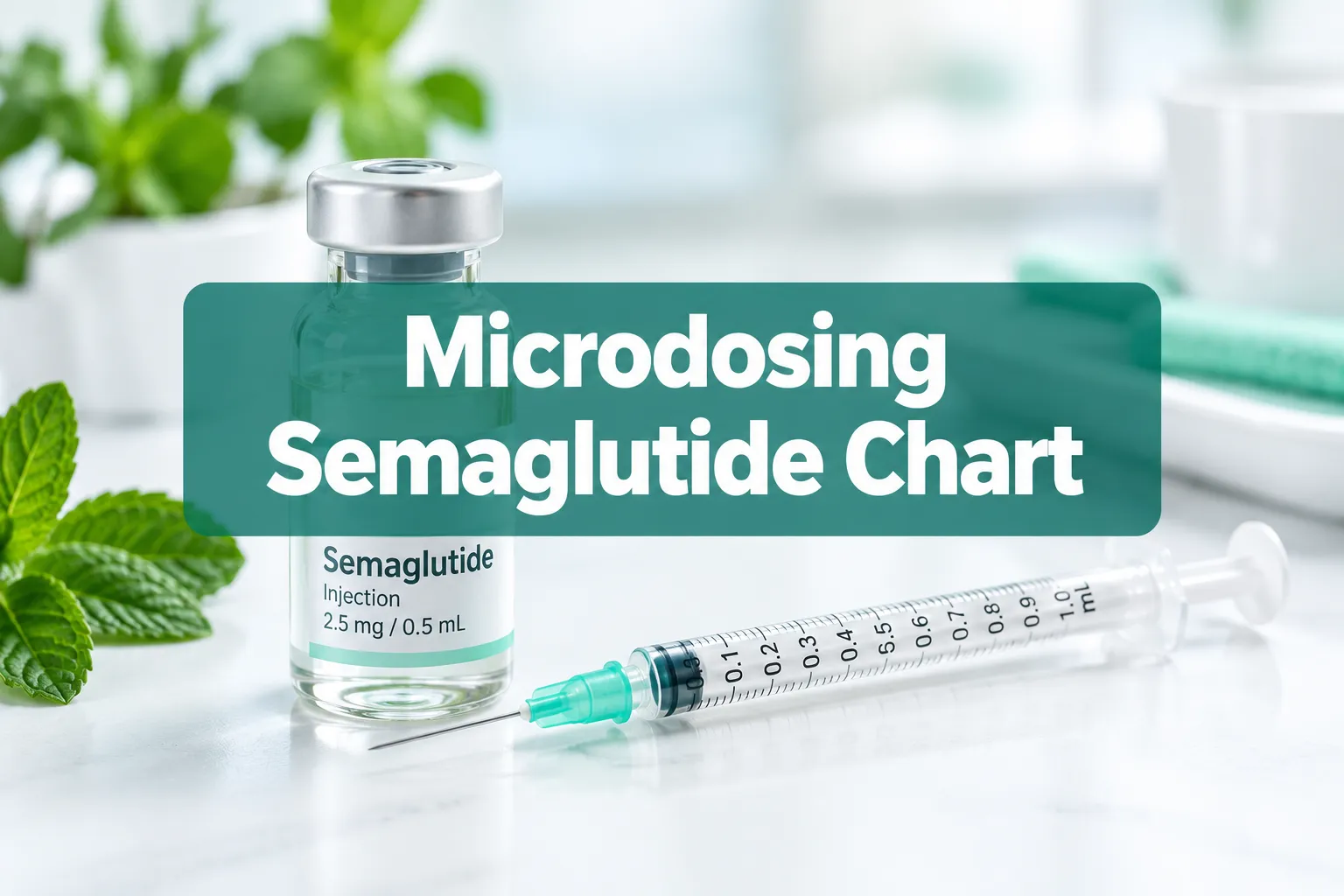
Microdosing Semaglutide chart: Step-by-Step Titration and Weekly Dosing Guide

Last updated: October 3, 2026
Quick Answer: A microdosing semaglutide chart is a week-by-week titration schedule that starts you at a fraction of the standard dose, typically 0.05 mg per week, and gradually increases over 8 to 12 weeks. The goal is to get the appetite-suppressing and metabolic benefits of semaglutide while minimizing nausea, vomiting, and other common side effects. Any microdosing schedule should be supervised by a licensed clinician, because dosing errors with compounded semaglutide have led to hospitalizations when patients misread vial-based charts or miscalculated unit conversions [1][3].
Key Takeaways
- A microdosing semaglutide chart breaks the standard titration into smaller increments, starting as low as 0.05 mg weekly instead of the FDA-approved 0.25 mg starting dose.
- Microdosing is not an FDA-approved protocol; it is an off-label approach most often used with compounded semaglutide to reduce side effects during the early weeks of treatment.
- The FDA has documented multiple hospitalizations from dosing errors with compounded injectable semaglutide, including patients accidentally taking five to twenty times the intended dose from multidose vials [1][3].
- Weight loss from microdosing is generally slower than from standard dosing, but some patients tolerate it better and stay on the medication longer as a result.
- Compounded semaglutide concentrations vary between pharmacies, meaning a chart built for one concentration can produce a dangerous overdose if used with a different product [9].
- Always use the correct syringe size and confirm the mg/mL concentration of your specific vial before drawing any dose.
- Physician supervision, clear written instructions, and unit-conversion guidance are essential safety requirements for any microdosing protocol [3][9].
- Alternatives to microdosing include standard titration with anti-nausea support, tirzepatide, or oral semaglutide (Rybelsus).
What Is Microdosing Semaglutide and How Does It Work
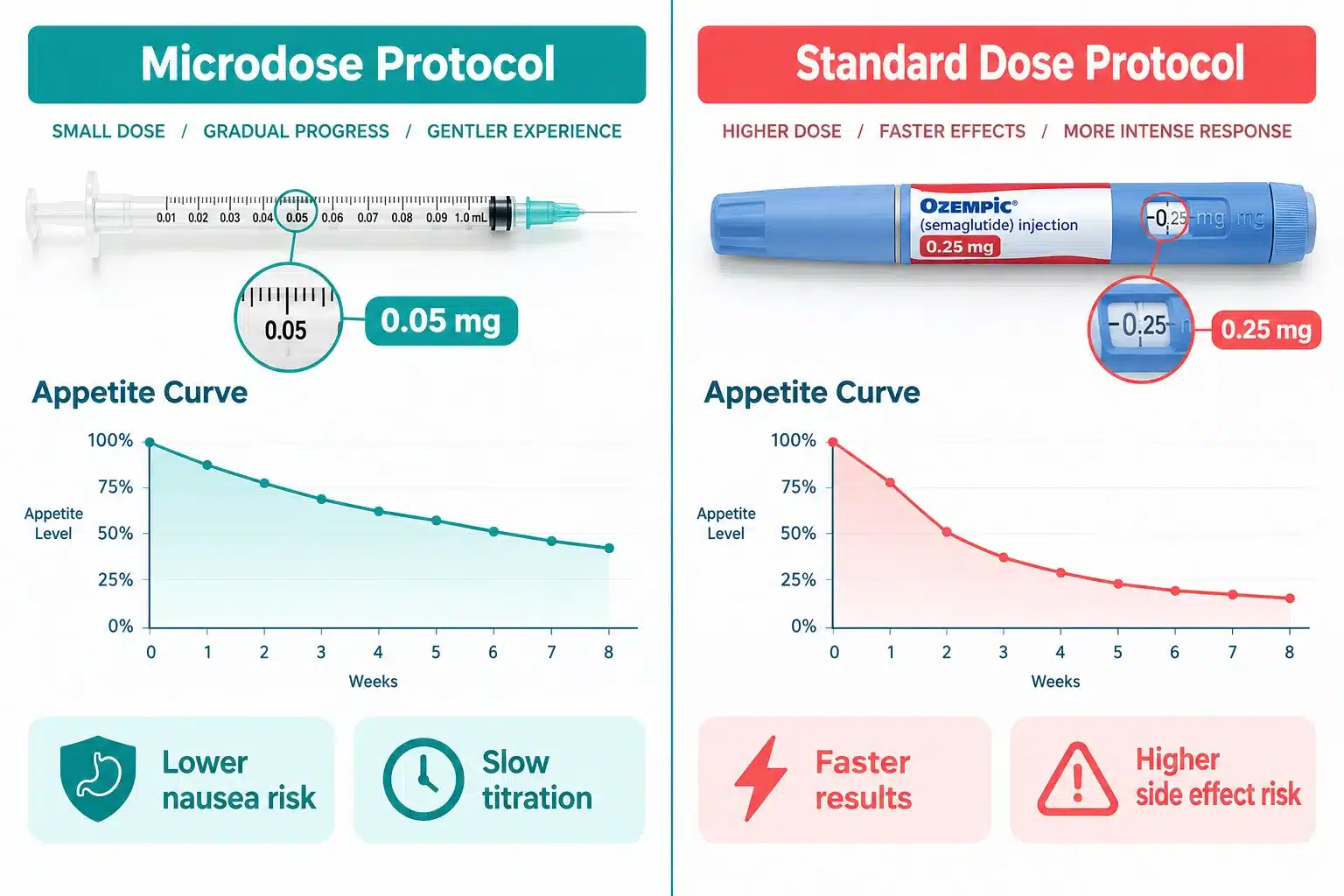
Microdosing semaglutide means using doses smaller than the standard FDA-approved starting dose, usually to improve tolerability during the early weeks of treatment. Instead of beginning at 0.25 mg per week (the approved Ozempic/Wegovy starting dose), a microdosing protocol might start at 0.05 mg and increase in small steps over several weeks.
7 Best GLP-1 Providers Ranked: Accreditation, Flexibility & Support Compared (2026 Update)
32,000+ Patients Can't All Be Wrong: See the Top-Rated GLP-1 Providers. We compared the leading online GLP-1 providers based on program features, clinical support, convenience, and overall value.
BMI MD GLP-1 Microdosing Plan
- Specialized microdosing options, including sublingual drops and low-dose injections
- Designed for people interested in maintaining weight or gradually adjusting treatment
- Bundled program structure without a separate monthly platform membership
- Online access makes the process convenient from home

DirectMeds Weight Loss Solutions
- Online weight-loss program with a straightforward patient experience
- Compounded medication options through state-licensed compounding pharmacies
- Includes clinical consultation as part of the process
- Provides shipping updates to help patients track their orders
MEDVi Flat-Rate Telehealth
- Flat-rate telehealth approach designed for easier budgeting
- No dosage-based pricing increases within the advertised program structure
- Offers injectable and oral thin-film delivery options
- Includes medical screening and asynchronous provider consultations
Gala GLP-1 Care Program
- Text-based access to state-licensed clinicians
- Cold-chain medication shipping included in the program
- Month-to-month program structure
- Designed for people who value convenient ongoing support
Measured GLP-1 Metabolic Health
- Comprehensive metabolic health screening and intake analysis
- Designed around longer-term metabolic health management
- Responsive dashboard with integrated health tracking tools
- Useful option for patients who value a more data-focused experience
Refills GLP-1 (TryRefills Plan)
- Clinical guidance designed to help patients manage common treatment concerns
- Includes foundational nutritional strategies alongside medication
- Designed around predictable ongoing treatment
- No hidden startup or processing fees according to the program information provided
AltRx GLP-1 Transactional Reorders
- Transactional reorder model without recurring auto-billing
- Designed for patients who already understand their treatment routine
- Fast text-to-order process for convenient reorders
- Offers injectable and fast-dissolving tablet variations
Semaglutide is a GLP-1 receptor agonist. It works by mimicking a hormone your gut releases after eating, which signals your brain to reduce hunger, slows gastric emptying, and improves insulin sensitivity. These effects happen at any dose, but higher doses tend to produce more pronounced nausea and vomiting, especially in the first four to eight weeks.
The logic behind microdosing is straightforward: if your body adapts to the drug gradually, you may experience fewer side effects and be more likely to stay on the medication long enough to see meaningful results. Cedars-Sinai experts describe what patients call “microdosing” GLP-1s as essentially using smaller amounts of approved medications to manage tolerability, while noting that evidence for informal microdosing charts is limited and clinical supervision remains essential [6].
For a broader overview of how semaglutide works across its approved indications, see this guide to semaglutide dosage for weight loss.
Semaglutide Microdose Chart: Starting Dose and Titration Schedule
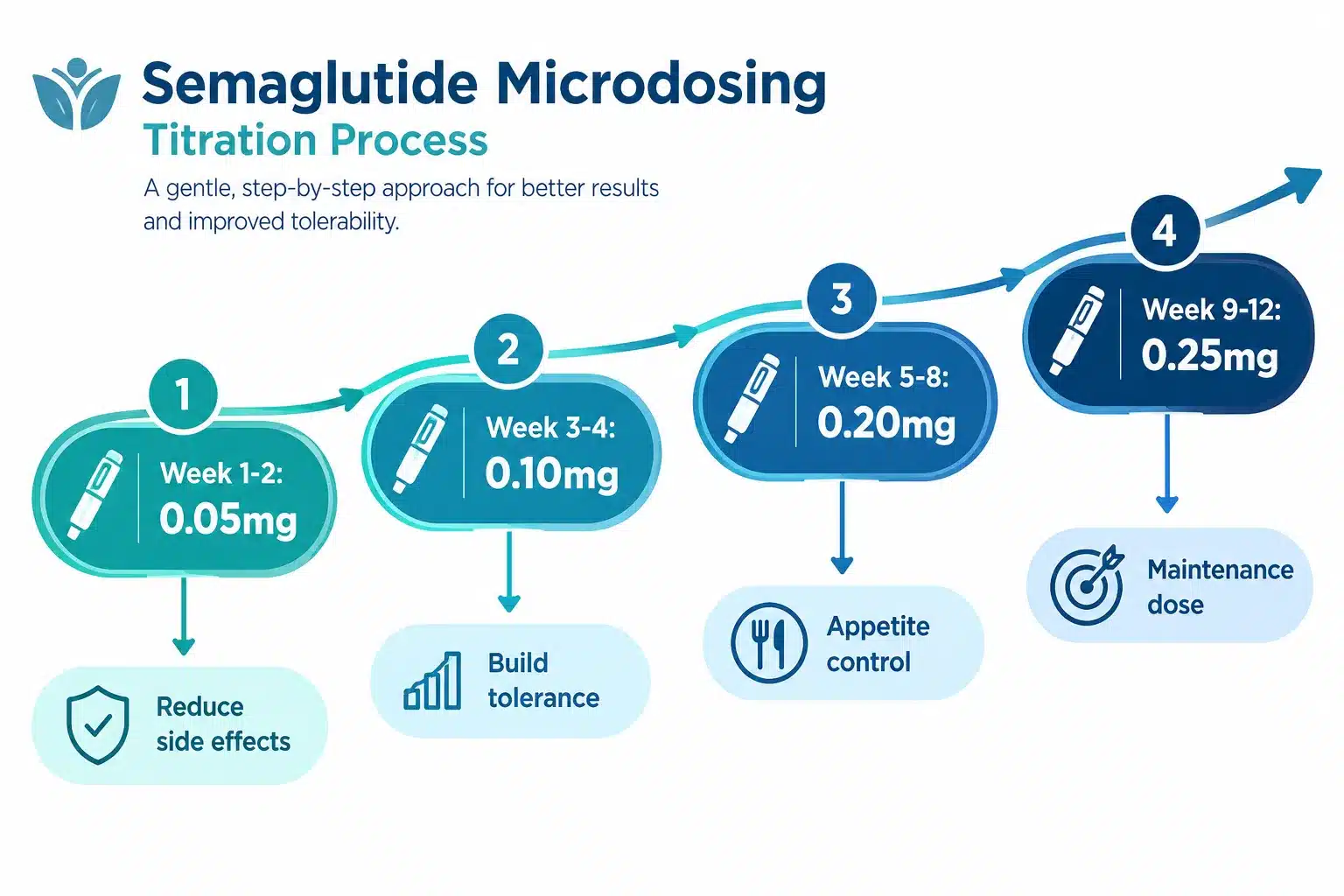
A typical microdosing semaglutide chart, based on a compounded concentration of 2.5 mg/mL, looks like this:
| Weeks | Dose (mg) | Volume at 2.5 mg/mL | Insulin Syringe Units |
|---|---|---|---|
| 1-2 | 0.05 mg | 0.02 mL | 2 units |
| 3-4 | 0.10 mg | 0.04 mL | 4 units |
| 5-6 | 0.15 mg | 0.06 mL | 6 units |
| 7-8 | 0.20 mg | 0.08 mL | 8 units |
| 9-12 | 0.25 mg | 0.10 mL | 10 units |
Critical warning: This chart applies only to a 2.5 mg/mL concentration. If your compounded semaglutide is a different concentration, the syringe units will be completely different. Using the wrong chart with the wrong vial is one of the most documented causes of semaglutide overdose [1][9].
Some microdosing protocols use an even lower starting point. One consumer-oriented guide describes starting at 0.05 mg weekly (roughly one-fifth of the standard 0.25 mg starting dose), then escalating to 0.1 mg, 0.2 mg, and higher over successive four-week blocks. Another approach uses “click-based” dosing from a multi-dose pen device, where each click delivers a small fraction of a full dose. These click counts vary by pen size and are not standardized across products.
Key rule: Always confirm the mg/mL concentration printed on your vial label before drawing any dose. Never use a chart from one source with a product from another.
For more detail on standard injection dosing, see this semaglutide injections dosage guide.
Microdosing Semaglutide vs Regular Dose: What Is the Difference
The core difference is the starting dose and the speed of titration. Standard FDA-approved titration for Ozempic begins at 0.25 mg weekly for four weeks, then increases to 0.5 mg. Wegovy follows a similar escalation up to 2.4 mg weekly. A microdosing protocol starts lower (often 0.05 mg) and escalates more slowly.
Here is a side-by-side comparison:
| Factor | Microdose Protocol | Standard Protocol |
|---|---|---|
| Starting dose | 0.05-0.1 mg/week | 0.25 mg/week |
| Titration speed | Every 2-4 weeks | Every 4 weeks |
| Time to therapeutic dose | 10-16 weeks | 4-8 weeks |
| Nausea/vomiting risk | Lower early on | Higher early on |
| Weight loss speed | Slower | Faster |
| FDA approval status | Off-label | Approved |
| Requires compounding | Usually yes | Not necessarily |
Microdosing is not better or worse than standard dosing in every case. Choose microdosing if you have a history of severe GI side effects with GLP-1 medications, if you are highly sensitive to new medications, or if a previous attempt at standard dosing caused you to stop treatment entirely. Choose standard dosing if you want faster results and have no prior GI sensitivity.
How Much Weight Can You Lose Microdosing Semaglutide
Weight loss from microdosing semaglutide is real but generally slower than from standard dosing, because you spend more weeks at sub-therapeutic doses. Most patients do not reach a fully effective dose until week 10 or later on a microdosing schedule.
The landmark STEP trials for semaglutide (using standard dosing) showed an average body weight reduction of around 15% over 68 weeks in adults without diabetes. Microdosing protocols have not been studied in large clinical trials, so there is no verified average weight loss figure specific to this approach.
What we can reasonably expect:
- Weeks 1-8: Modest appetite reduction, minimal weight loss (1-3 lbs is a reasonable estimate for many people).
- Weeks 9-16: As the dose approaches 0.25-0.5 mg, appetite suppression becomes more noticeable and weight loss accelerates.
- Weeks 16+: If titration continues toward 1 mg or higher, outcomes may approach those seen in standard trials.
The main advantage is not faster weight loss. It is staying on the medication long enough to reach an effective dose without quitting due to side effects. Patients who tolerate the drug well and stay on it consistently tend to see the best long-term results.
Is Microdosing Semaglutide Safe and Effective
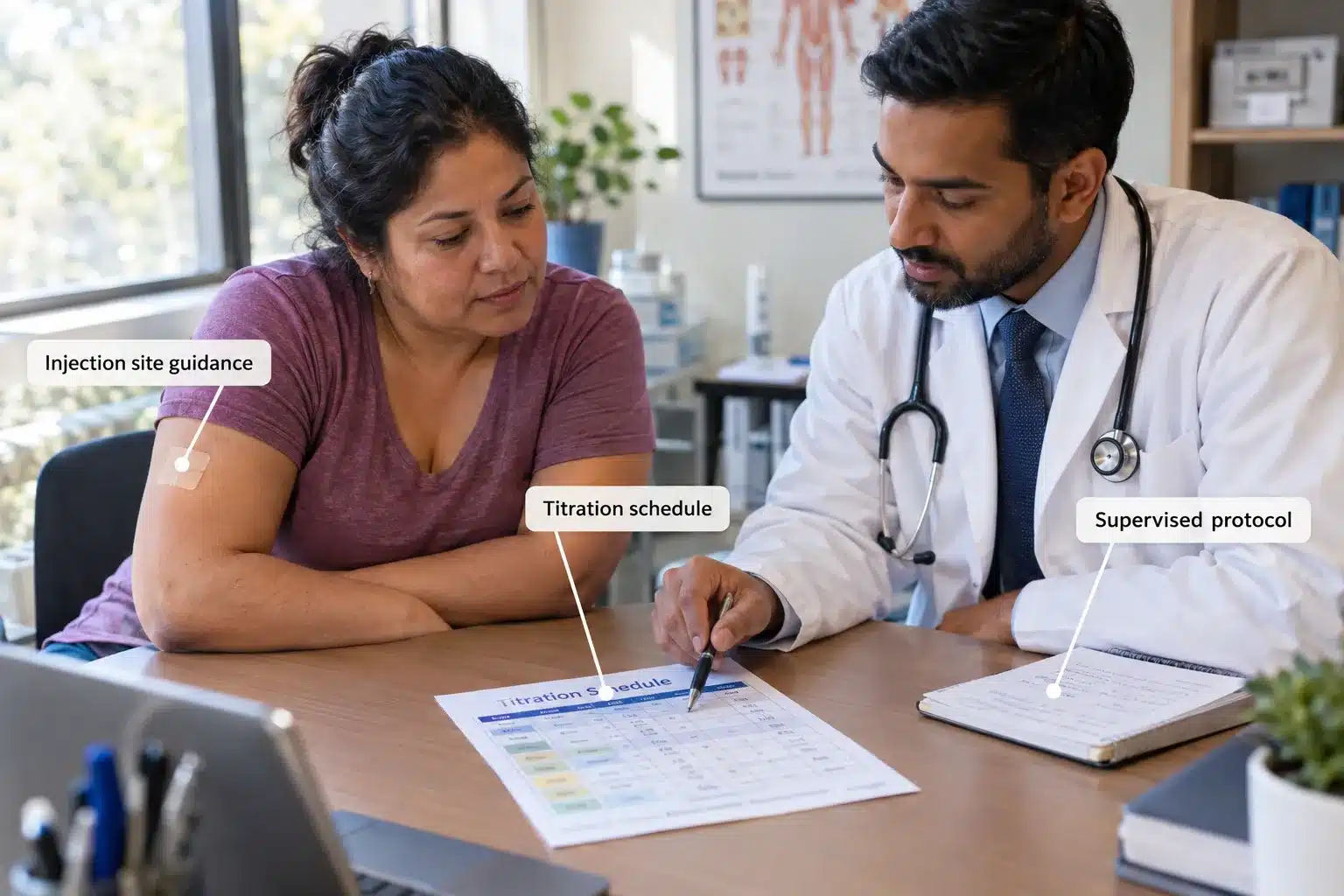
Microdosing semaglutide can be safe and effective when done under medical supervision with correctly labeled compounded products and accurate dosing instructions. The safety concern is not the low dose itself but the error-prone process of drawing small volumes from multidose vials.
The FDA has formally documented multiple hospitalizations tied to compounded injectable semaglutide, specifically citing dosing errors where patients took five to twenty times the intended dose [1][3]. A BMJ report from July 2024 described cases where patients misread vial-based charts and took far more than prescribed [8]. The American Diabetes Association attributed many of these errors to variable concentrations between compounders, multidose vials, and confusion between milliliters, milligrams, and “units” [9].
Safety checklist for microdosing:
- Confirm the mg/mL concentration on your vial before every dose
- Use the correct syringe size (an insulin syringe for small volumes)
- Get written instructions that show the exact volume in mL, not just “units”
- Have a clinician review your titration schedule
- Never use a chart designed for a different concentration product
- Report any nausea, vomiting, or heart rate changes to your provider
For more on the regulatory landscape around compounded products, see this FDA rules on compounded semaglutide 2026 update.
Semaglutide Microdose Side Effects and How to Manage Them
The most common side effects of microdosing semaglutide are the same as standard dosing, just typically milder: nausea, constipation, fatigue, and occasional headaches. Because doses start lower, many patients experience fewer GI symptoms in the early weeks.
Managing side effects:
- Nausea: Eat smaller meals, avoid high-fat foods, and take your injection at night so peak nausea occurs while you sleep.
- Constipation: Increase fiber and water intake. Stool softeners can help if needed.
- Fatigue: Common in the first two to four weeks. Usually resolves as your body adjusts.
- Injection site reactions: Rotate injection sites (abdomen, thigh, upper arm) each week.
If side effects are severe at any dose level, hold the increase and stay at the current dose for an additional two to four weeks before trying to go up. Do not push through significant vomiting or severe abdominal pain without contacting your provider.
When to stop and call a doctor immediately:
- Severe abdominal pain that does not resolve
- Persistent vomiting lasting more than 24 hours
- Signs of pancreatitis (upper abdominal pain radiating to the back)
- Rapid heart rate or palpitations
Where to Buy Semaglutide for Microdosing: Cost and Pricing
Most microdosing protocols use compounded semaglutide because it allows for custom concentrations and vial sizes that standard branded pens do not offer. Compounded semaglutide is available through licensed compounding pharmacies, often accessed via telehealth platforms.
Pricing for compounded semaglutide varies widely. For a detailed current breakdown, see this compounding pharmacy semaglutide cost breakdown. Telehealth platforms that prescribe compounded semaglutide include several well-known services reviewed here: affordable semaglutide telehealth options.
What to look for when choosing a source:
- A licensed compounding pharmacy (503A or 503B facility)
- Clear labeling that states the exact mg/mL concentration
- Written dosing instructions in mL and mg, not just “units”
- A prescribing physician or NP who reviews your health history
- Transparent pricing with no hidden fees
For safety and legality considerations, see compounded semaglutide: is it safe and legal.
Common Mistakes People Make Microdosing Semaglutide
The most dangerous mistake is using a microdosing semaglutide chart built for one concentration with a vial of a different concentration. This single error accounts for a large share of the overdoses the FDA has documented [1][9].
Other common mistakes:
- Using the wrong syringe: A standard 1 mL syringe and an insulin syringe read “units” differently. Drawing 10 units on a 1 mL syringe is 0.10 mL; on an insulin syringe calibrated for U-100 insulin, 10 units is also 0.10 mL, but the markings can look identical while the context differs. Always confirm with your pharmacy which syringe to use.
- Escalating too fast: Jumping dose levels to speed up weight loss increases side effects and the risk of GI complications.
- Skipping doses then doubling up: Never take two doses to make up for a missed one.
- Storing the vial incorrectly: Compounded semaglutide typically requires refrigeration. Heat or light exposure can degrade the medication.
- Using an online chart without verifying concentration: Charts circulating on social media or forums may not match your product. A June 2025 review noted that differing concentrations across compounded formulations mean a given “unit” on a chart may not correspond to a consistent dose.
- Not telling your doctor about other medications: Semaglutide slows gastric emptying, which can affect how other oral medications are absorbed.
Who Should Not Take a Semaglutide Microdose: Contraindications
Microdosing does not eliminate the contraindications that apply to semaglutide at any dose. Semaglutide is not appropriate for everyone, regardless of how low the starting dose is.
Do not use semaglutide if you have:
- A personal or family history of medullary thyroid carcinoma (MTC)
- Multiple Endocrine Neoplasia syndrome type 2 (MEN 2)
- A history of serious hypersensitivity reactions to semaglutide or any component of the formulation
- Active pancreatitis or a history of recurrent pancreatitis
- Pregnancy or plans to become pregnant (semaglutide should be stopped at least two months before attempting conception)
Use with caution if you have:
- Diabetic retinopathy (rapid glucose lowering can temporarily worsen it)
- Severe kidney or liver disease
- A history of gastroparesis or other GI motility disorders
- Current use of insulin or sulfonylureas (increased hypoglycemia risk)
Can You Microdose Semaglutide If You Have Diabetes
Yes, semaglutide can be used at lower doses in people with type 2 diabetes, but the approach requires closer monitoring of blood glucose levels. Semaglutide is FDA-approved for type 2 diabetes management under the brand name Ozempic, and lower starting doses are already part of the approved titration for that indication.
For people with type 2 diabetes using insulin or other glucose-lowering medications alongside semaglutide, even small doses can increase the risk of hypoglycemia. Your prescribing physician should adjust your other diabetes medications before or shortly after starting semaglutide, even at microdose levels.
For a deeper look at semaglutide’s role in diabetes management, see semaglutide for type 2 diabetes.
Semaglutide Microdose Not Working: What Am I Doing Wrong
If you are not seeing any appetite suppression or weight loss after six to eight weeks on a microdosing protocol, the most likely explanations are that your dose is still below the therapeutic threshold, or there is a dosing error occurring.
Troubleshooting checklist:
- Verify your actual dose: Confirm with your pharmacy that you are drawing the correct volume. Small measurement errors at low volumes (0.02-0.05 mL) are easy to make.
- Check the concentration: Make sure the chart you are using matches the exact mg/mL of your vial.
- Review your titration timeline: If you have been at 0.05 mg for more than four weeks without any effect, it may be time to move to the next dose level with your provider’s approval.
- Assess injection technique: Subcutaneous injection requires reaching the fatty tissue under the skin, not just the skin surface. A shallow injection reduces absorption.
- Consider diet and activity: Semaglutide is not a standalone solution. Without some reduction in caloric intake, even therapeutic doses may not produce visible weight loss.
- Rule out product degradation: If the vial was stored improperly or has passed its expiration date, the medication may be less potent.
If none of these apply and you are still seeing no effect at 0.25 mg or higher after eight weeks, speak with your provider about whether standard dosing or a different medication is more appropriate.
Microdosing Semaglutide Alternatives for Weight Loss
Microdosing semaglutide is one approach, but it is not the only option for people who want the benefits of GLP-1 therapy with fewer early side effects.
Alternatives to consider:
- Standard semaglutide with anti-nausea support: Some clinicians prescribe ondansetron or other anti-nausea medications during the first four to eight weeks of standard titration, allowing patients to reach therapeutic doses faster.
- Oral semaglutide (Rybelsus): The oral formulation may produce milder GI effects for some patients. See semaglutide oral tablets (Rybelsus) for more detail.
- Tirzepatide (Mounjaro/Zepbound): A dual GIP/GLP-1 agonist that some patients tolerate better than semaglutide alone, with comparable or greater weight loss in trials.
- Liraglutide (Saxenda): A daily GLP-1 injection with a longer track record, though generally less effective for weight loss than semaglutide. See semaglutide vs Saxenda cost comparison.
- Lifestyle-only approaches: For patients who are not candidates for any GLP-1 medication, structured diet and exercise programs remain the evidence-based foundation of weight management.
FAQ
What is a microdosing semaglutide chart?
A microdosing semaglutide chart is a week-by-week schedule that maps out doses smaller than the FDA-approved starting dose of 0.25 mg, typically beginning at 0.05 mg and increasing gradually. It is used with compounded semaglutide to reduce early side effects.
Is microdosing semaglutide FDA-approved?
No. Microdosing is an off-label approach. The FDA has approved specific titration schedules for Ozempic and Wegovy, and those schedules start at 0.25 mg. Any protocol below that threshold is not FDA-endorsed [3].
How do I know which microdosing chart to use?
The chart must match the exact mg/mL concentration of your compounded semaglutide vial. Using the wrong chart is the leading cause of overdose errors documented by the FDA [1][9]. Ask your pharmacy to provide a chart specific to your product.
Can I microdose semaglutide with a standard Ozempic pen?
Standard Ozempic pens are not designed for sub-0.25 mg doses and cannot reliably deliver the small volumes used in microdosing protocols. Microdosing typically requires a compounded product in a vial with an insulin syringe.
How long until I see results from semaglutide microdosing?
Most patients do not reach a fully appetite-suppressing dose until week 8 to 12 on a microdosing schedule. Noticeable weight loss typically begins around that point, with more significant results building over the following months.
What syringe should I use for microdosing semaglutide?
Use the syringe your pharmacy specifies for your product’s concentration. Typically, a U-100 insulin syringe (1 mL, 100 units) is used. Confirm in writing which syringe to use before drawing your first dose.
Can I speed up the microdosing titration if I feel fine?
Only with your provider’s approval. Escalating faster than the schedule recommends increases the risk of nausea and other GI side effects, even if you feel well at the current dose.
Does microdosing semaglutide work for people without diabetes?
Yes. Semaglutide’s appetite-suppressing effects occur in people with and without diabetes. The GLP-1 receptor pathway that reduces hunger is active regardless of diabetes status.
What happens if I accidentally take too much semaglutide?
Contact your healthcare provider or poison control immediately. Overdose symptoms can include severe nausea, vomiting, low blood sugar (in people on other diabetes medications), and rapid heart rate. The FDA has documented hospitalizations from semaglutide overdoses tied to dosing errors [1][8].
Is compounded semaglutide the same as Ozempic or Wegovy?
Compounded semaglutide contains the same active ingredient but is not manufactured by Novo Nordisk and is not FDA-approved as a finished drug product. Quality and concentration can vary between compounders [9].
7 Best GLP-1 Providers Ranked: Accreditation, Flexibility & Support Compared (2026 Update)
32,000+ Patients Can't All Be Wrong: See the Top-Rated GLP-1 Providers: Compared on accreditation, plan flexibility, and patient support — updated for 2026.
BMI MD GLP-1 Microdosing Plan
- Specialized microdosing options (sublingual drops or low-dose injections)
- Ideal for maintaining weight or tapering off higher doses safely
- Fully bundled plan with no hidden monthly platform memberships
DirectMeds Weight Loss Solutions
- Sourced from accredited, state-licensed 503A compounding pharmacies
- No-frills high-volume savings passed directly to the patient
- Includes clinical consultation and cold-chain shipping updates
MEDVi Flat-Rate Telehealth
- Flat monthly rate holds steady even at maximum maintenance doses
- No dosage upcharges or graduation fee penalties
- Offers both injectable and advanced oral thin-film delivery options
Gala GLP-1 Care Program
- All-inclusive plan with no standalone membership costs
- Continuous text-based messaging access with state-licensed clinicians
- Temperature-controlled, cold-chain medication shipping included
Measured GLP-1 Metabolic Health
- Comprehensive metabolic health screening and expert intake analysis
- Predictable long-term budgeting with stable plan pricing
- High-end responsive dashboard with integrated diagnostic support
Refills GLP-1 (TryRefills Plan)
- Flat rate holds steady as titration scales up
- Includes clinical guides for active side-effect management
- Bundles in foundational nutritional strategies alongside medication
AltRx GLP-1 Transactional Reorders
- Zero recurring auto-billing — pay entirely on a transactional basis
- Rapid text-to-order format saves time for experienced patients
- Provides both injectable forms and fast-dissolving tablet variations
Conclusion
A microdosing semaglutide chart can be a practical tool for people who want to start GLP-1 therapy with a gentler on-ramp. Starting at 0.05 mg and working up slowly over 10 to 12 weeks reduces early nausea and may improve long-term adherence, which matters more than speed for most people trying to lose weight and keep it off.
That said, the chart itself is only as safe as the process behind it. The FDA has documented serious harm from dosing errors with compounded semaglutide, and most of those errors came from patients or providers using the wrong chart for the wrong concentration, or misreading small volumes on a syringe [1][3][9].
Actionable next steps:
- Work with a licensed telehealth provider or physician who can prescribe compounded semaglutide and provide a concentration-specific dosing chart.
- Before your first injection, confirm the mg/mL on your vial label and match it to your chart.
- Use the syringe your pharmacy recommends, and ask for written instructions in both mL and mg.
- Start at the lowest dose on your chart and do not escalate until you have completed the full recommended period at each level.
- Track your weight, appetite, and any side effects weekly and share that log with your provider.
- If you experience severe GI symptoms or suspect a dosing error, contact your provider or seek medical care immediately.
Microdosing semaglutide is not a shortcut. It is a slower, more careful path to the same destination. Done right, with proper supervision and an accurate chart, it gives your body time to adapt and gives you the best chance of staying on the medication long enough to see real, lasting results.
References
[1] The United States: FDA alerts health care providers, compounders and patients of dosing errors associated with compounded injectable semaglutide products – https://www.drugoffice.gov.hk/gb/unigb/www.drugoffice.gov.hk/eps/news/showNews/The+United+States:+FDA+alerts+health+care+providers,+compounders+and+patients+of+dosing+errors+associated+with+compounded+injectable+semaglutide+produ/consumer/2024-07-27/tc/53911.html
[2] Attachment 1 – https://downloads.regulations.gov/FDA-2024-N-3762-0005/attachment_1.pdf
[3] FDA’s Concerns About Unapproved GLP-1 Drugs Used for Weight Loss – https://www.fda.gov/drugs/drug-alerts-and-statements/fdas-concerns-unapproved-glp-1-drugs-used-weight-loss
[4] Compounding Risk Alerts – https://www.fda.gov/drugs/human-drug-compounding/compounding-risk-alerts
[6] Can Microdosing GLP-1s Promote Health and Weight Loss – https://www.cedars-sinai.org/stories-and-insights/expert-advice/can-microdosing-glp-1s-promote-health-and-weight-loss
[8] BMJ – Semaglutide overdose reports linked to compounded products – https://www.bmj.com/content/386/bmj.q1696
[9] Compounded GLP-1 and Dual GIP/GLP-1 Receptor Agonists – American Diabetes Association – https://diabetesjournals.org/care/article/48/2/177/157478/Compounded-GLP-1-and-Dual-GIP-GLP-1-Receptor

With over 13 years of experience in holistic health blogging, I aim to help you navigate your wellness journey with honest insights, expert-backed advice, and a sprinkle of real-world practicality.
Certified Wellness Writer | Herbal Nutrition Advocate | Wellness Research Enthusiast


