
Ozempic Patches: Do They Work or Are They a Scam?
Last updated: October 23, 2026
Quick Answer
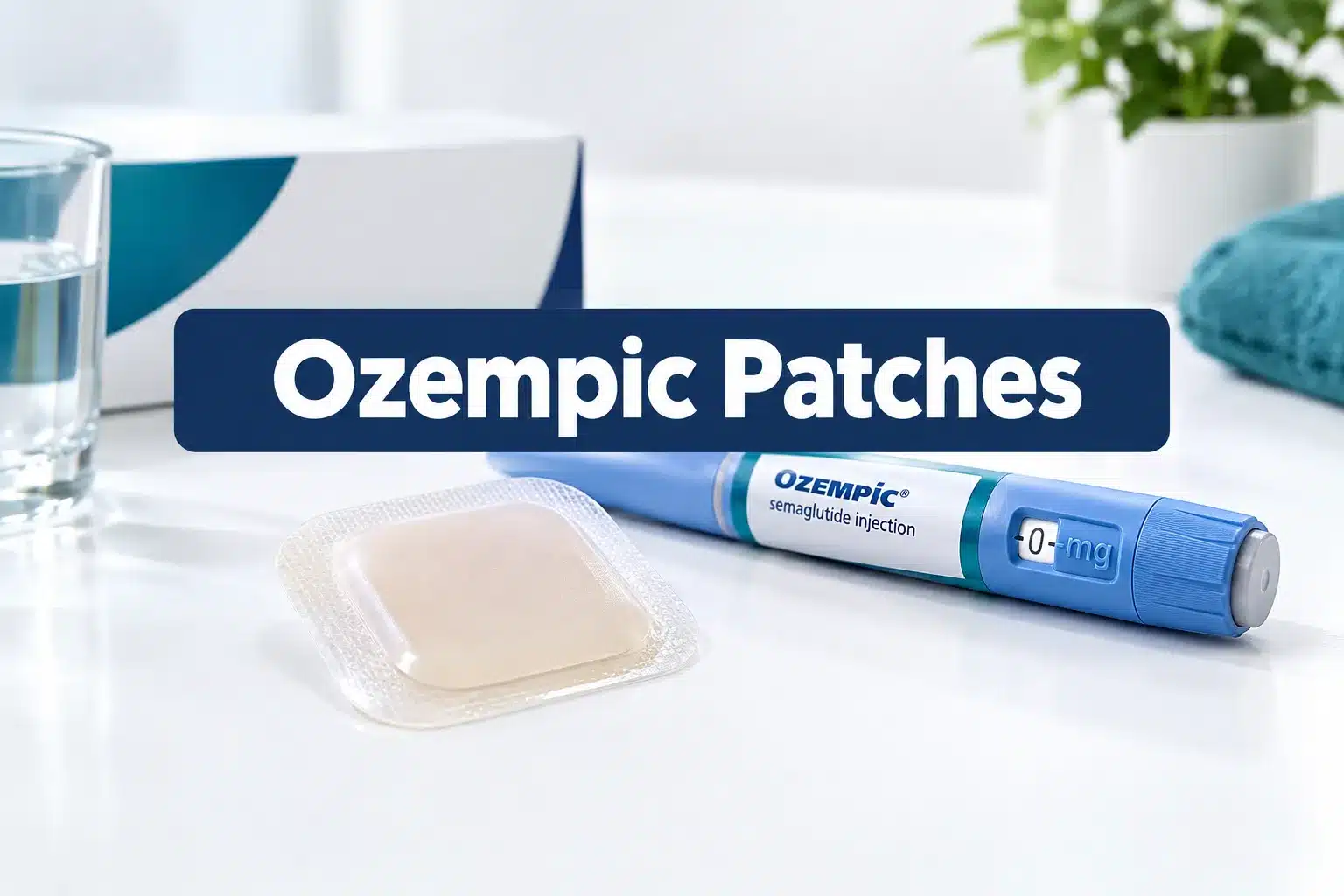
No FDA-approved Ozempic patch exists, so any product marketed as an “Ozempic patch” is not real semaglutide and does not work the way the Ozempic injection does. Ozempic patches: do they work or are they a scam? The honest answer is that they’re almost always a scam or, at best, an unproven supplement patch with no clinical backing [1][2].
There’s no gentle way to say this: if you’ve typed “Ozempic patches” into a search bar hoping for a needle-free shortcut to the same results people get from semaglutide injections, you’re chasing something that doesn’t exist on the market today. Semaglutide, the active ingredient in Ozempic, has never been approved in a transdermal patch form by the FDA or any major regulator [1][2]. This article breaks down what’s really being sold under that name, why regulators are issuing warnings, and what options actually work if you’re trying to lose weight or manage blood sugar without relying on injections.
7 Best GLP-1 Providers Ranked: Accreditation, Flexibility & Support Compared (2026 Update)
32,000+ Patients Can't All Be Wrong: See the Top-Rated GLP-1 Providers. We compared the leading online GLP-1 providers based on program features, clinical support, convenience, and overall value.

BMI MD GLP-1 Microdosing Plan
- Specialized microdosing options, including sublingual drops and low-dose injections
- Designed for people interested in maintaining weight or gradually adjusting treatment
- Bundled program structure without a separate monthly platform membership
- Online access makes the process convenient from home

DirectMeds Weight Loss Solutions
- Online weight-loss program with a straightforward patient experience
- Compounded medication options through state-licensed compounding pharmacies
- Includes clinical consultation as part of the process
- Provides shipping updates to help patients track their orders

MEDVi Flat-Rate Telehealth
- Flat-rate telehealth approach designed for easier budgeting
- No dosage-based pricing increases within the advertised program structure
- Offers injectable and oral thin-film delivery options
- Includes medical screening and asynchronous provider consultations

Gala GLP-1 Care Program
- Text-based access to state-licensed clinicians
- Cold-chain medication shipping included in the program
- Month-to-month program structure
- Designed for people who value convenient ongoing support

Measured GLP-1 Metabolic Health
- Comprehensive metabolic health screening and intake analysis
- Designed around longer-term metabolic health management
- Responsive dashboard with integrated health tracking tools
- Useful option for patients who value a more data-focused experience

Refills GLP-1 (TryRefills Plan)
- Clinical guidance designed to help patients manage common treatment concerns
- Includes foundational nutritional strategies alongside medication
- Designed around predictable ongoing treatment
- No hidden startup or processing fees according to the program information provided

AltRx GLP-1 Transactional Reorders
- Transactional reorder model without recurring auto-billing
- Designed for patients who already understand their treatment routine
- Fast text-to-order process for convenient reorders
- Offers injectable and fast-dissolving tablet variations
Key Takeaways
- No Ozempic patch has FDA approval or any equivalent approval in Europe; regulators have said these products “don’t exist” as authorized medicines [3].
- Most products sold as “Ozempic patches” are supplements with unregulated ingredients, not drug-delivery systems containing semaglutide [1].
- Semaglutide is a large peptide molecule that cannot easily cross intact skin, which is a core scientific reason a true patch version isn’t on pharmacy shelves yet.
- Counterfeit GLP-1 products have already infiltrated legitimate supply chains, showing how widespread fraud is in this space [4].
- The real injectable Ozempic has years of clinical trial data behind it; patches marketed under its name have none.
- Buying “Ozempic patches” without a prescription is a major red flag and a sign you’re likely dealing with an unregulated or fraudulent seller [5][6].
- If you want GLP-1 benefits without needles, the realistic alternatives are oral semaglutide (Rybelsus) or working with a licensed telehealth provider, not patches.
What Are Ozempic Patches and How Do They Work (In Theory)?
Ozempic patches are marketed as adhesive skin patches that supposedly deliver semaglutide or a similar GLP-1 effect through the skin instead of a weekly injection. In theory, they’d work like nicotine or fentanyl patches, releasing medication slowly over hours or days.
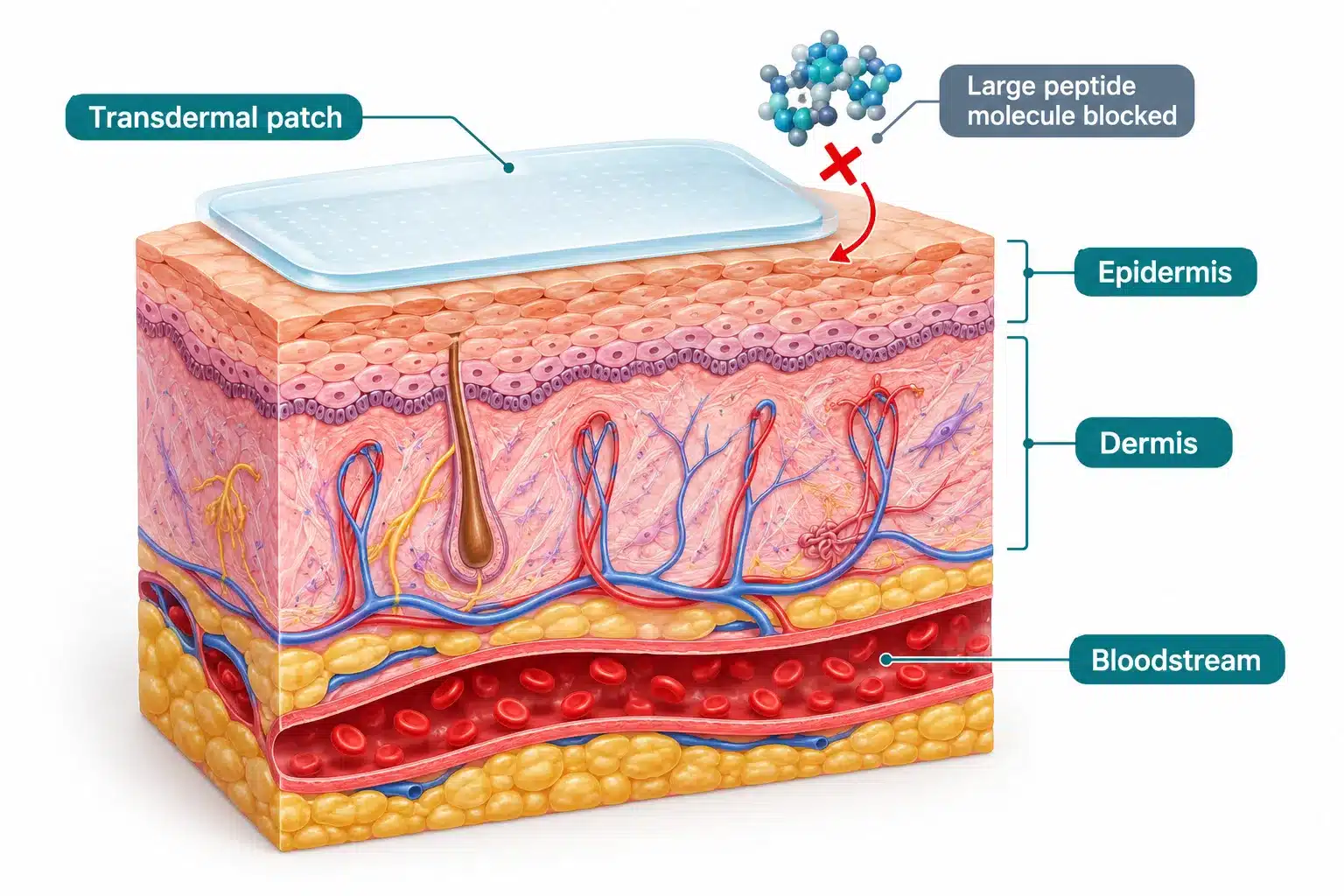
The problem is semaglutide is a large peptide molecule. Peptides this size generally cannot pass through intact skin in meaningful amounts without advanced technology like microneedle arrays, something still in early research stages and not available in any consumer product [1]. So while the concept sounds plausible, the biology doesn’t support it with current over-the-counter patch technology.
Decision rule: if a patch claims to deliver “semaglutide” or “Ozempic” through the skin with no prescription and no drug facts label matching an approved medication, assume it does not contain real semaglutide.
Is There Actually a Real Ozempic Patch or Is It Fake?
There is no real, FDA-approved Ozempic patch sold anywhere, prescription or over-the-counter. Every “Ozempic patch” currently marketed online is either a supplement blend, a mislabeled product, or outright fraud [1][3].
Ireland’s health regulator and other European bodies have stated plainly that Ozempic-type patches “don’t exist” as authorized medicines [3]. The FDA has separately flagged broader concerns about unapproved GLP-1 products sold to consumers chasing weight loss results [2]. If a seller claims their patch is “the same as Ozempic” or “FDA-cleared,” that claim itself should raise suspicion, because no such approval has been granted.
For a deeper look at this exact pattern across the GLP-1 patch category, see our breakdown of GLP-1 patches for weight loss and the scam patterns behind them.
Ozempic Patch vs Ozempic Injection: Which One Works Better?
The injection wins by default because it’s the only version backed by real clinical data; the patch has none. Ozempic injections use subcutaneous semaglutide that’s been studied in large trials for blood sugar control and weight loss, while patches have no equivalent research behind them [1].
| Feature | Ozempic Injection | “Ozempic Patch” |
|---|---|---|
| FDA approved | Yes | No |
| Active ingredient verified | Yes, semaglutide | Usually unverified or absent |
| Clinical trial data | Extensive | None |
| Requires prescription | Yes | Rarely, which is itself a red flag |
| Delivery mechanism proven | Yes, injection pen | Not proven for peptides this size |
If you’re comparing semaglutide delivery methods more broadly, our guide to semaglutide brand names including Ozempic, Wegovy, and Rybelsus explains which forms are actually approved.
How Much Do Ozempic Patches Cost?
Pricing varies widely because these are unregulated products, but many sites charge $40 to $90 for a month’s supply of patches with no standardized dosing. [VERIFY: current pricing, since sellers change frequently and prices are not regulated].
Compare that to the real injection, where cost depends on insurance coverage and pharmacy, and you’ll often find patches aren’t even cheaper once you account for the fact they likely don’t work at all. Paying for a product with zero verified active ingredient is money lost, regardless of the sticker price.
Are Ozempic Patches FDA Approved?
No. No semaglutide patch has received FDA approval for weight loss, diabetes, or any other use [1][2]. The only FDA-approved semaglutide products are the Ozempic injection, Wegovy injection, and Rybelsus oral tablet.
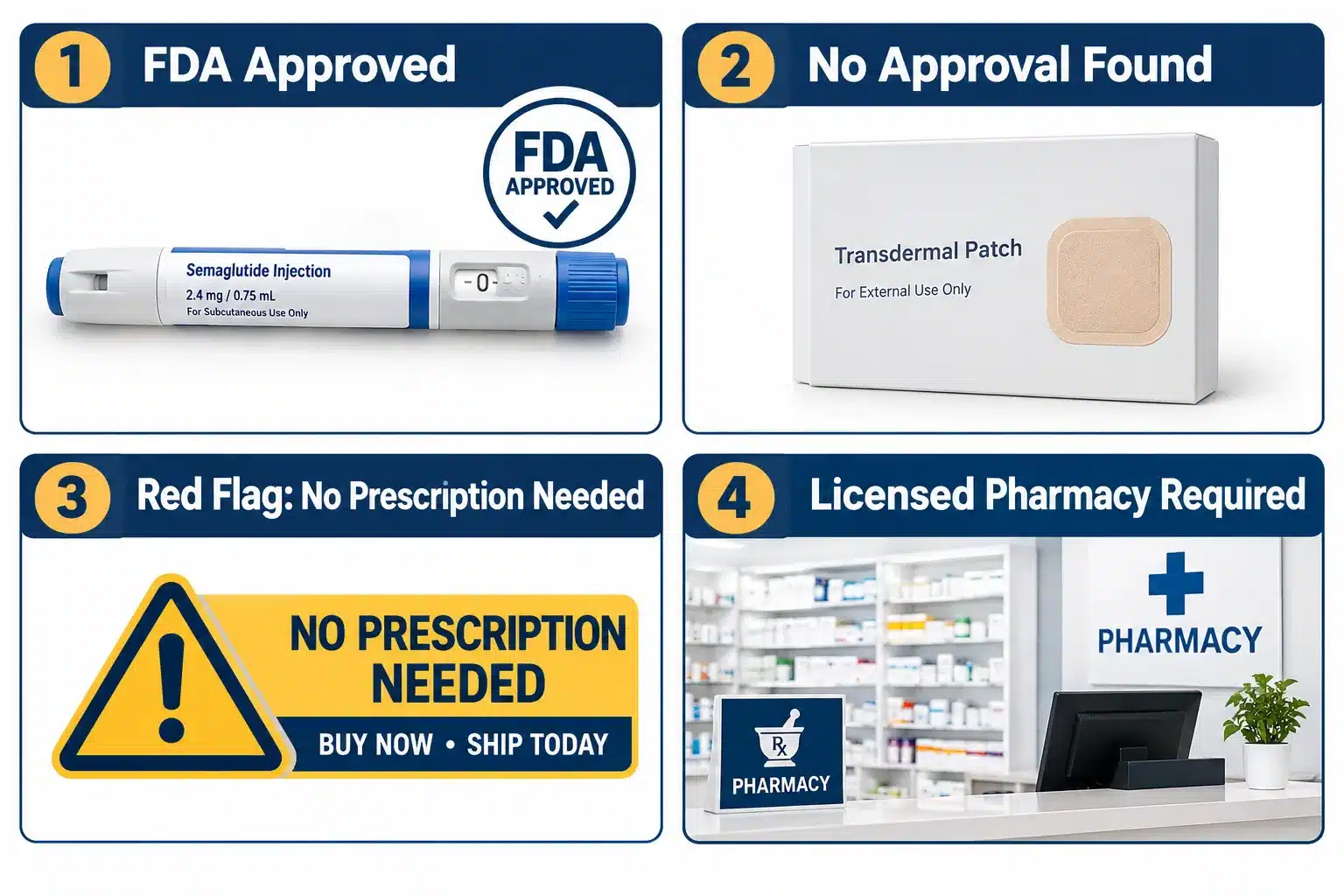
The FDA has also issued broader warnings about unapproved and potentially fraudulent GLP-1 products flooding the market as demand for weight loss drugs spikes [2]. Warning letters to companies selling unapproved weight-loss products show regulators are actively watching this space [6][7].
Ozempic Patch Side Effects and Risks
The biggest risk isn’t a known side effect list, it’s the unknown. Because patch ingredients aren’t regulated or disclosed with the same rigor as approved drugs, you can’t predict what skin reactions, allergic responses, or systemic effects might occur [8].
Common risks reported with unregulated weight-loss products include:
- Skin irritation or allergic contact dermatitis from unlisted adhesives or fillers
- Wasted money on a product delivering no therapeutic benefit
- Delayed access to treatments that actually work, while your health condition goes unmanaged
- Potential interactions if the patch secretly contains undisclosed stimulants or drugs
Harvard’s public health researchers have raised similar concerns about the broader wave of GLP-1-adjacent supplements, noting many lack both safety and efficacy evidence [8].
Ozempic Patches Scam Red Flags to Watch For
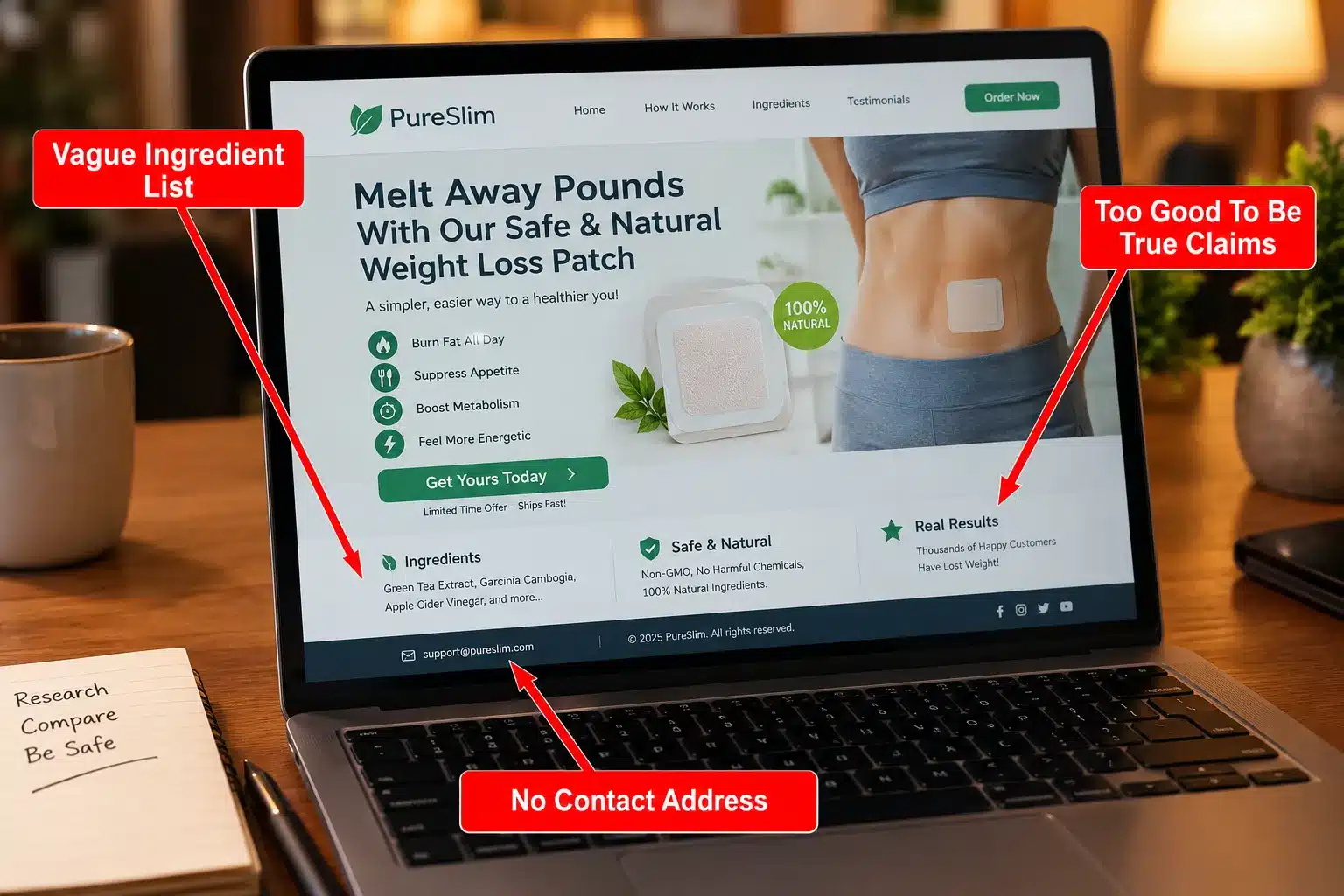
Most “Ozempic patch” sellers show the same warning signs, and recognizing them can save you money and protect your health. Watch for these patterns before buying anything branded as an Ozempic alternative.
Common red flags:
- No prescription required for a product claiming drug-level effects
- Vague or missing ingredient lists
- Claims of “FDA cleared” or “clinically proven” with no study citations
- Prices that seem too low or too high compared to known medication costs
- Sales pages with countdown timers, fake reviews, or urgency tactics
- No verifiable company address or licensed pharmacy affiliation
- Marketing language copying real Ozempic branding without authorization
State attorneys general have already issued consumer alerts about unapproved and compounded weight-loss products using these exact tactics [5]. Federal prosecutors have also charged individuals for trafficking counterfeit Ozempic, proving the fraud extends well beyond patches into the broader supply chain [4].
Common mistake: assuming a product is legitimate just because it uses “semaglutide” in the name. Naming alone proves nothing without lab verification or a prescription from a licensed provider.
Do Ozempic Patches Actually Help With Weight Loss?
No credible evidence shows Ozempic patches produce meaningful weight loss. Consumer and medical reference sources classify these patches as unproven and likely ineffective, since they lack the drug delivery mechanism needed to work like the injection [1].
Any weight loss reported by patch users is more likely explained by placebo effect, simultaneous diet changes, or coincidence, not the patch itself. Real semaglutide’s weight loss results come from activating GLP-1 receptors systemically, something a topical patch with no verified active ingredient cannot replicate.
Where Can You Legally Buy Ozempic Patches?
You can’t, because no legal, approved Ozempic patch exists to buy. The only legitimate way to access real semaglutide is through a prescription filled at a licensed pharmacy, whether in person or via a legitimate telehealth provider [2].
If a website sells “Ozempic patches” without requiring a prescription or medical consultation, that’s a strong signal you’re outside the legal, regulated drug supply chain. For context on how counterfeit products have even reached licensed pharmacies, see reporting on fake Ozempic infiltrating the legitimate supply chain [4].
Ozempic Patch Alternatives That Actually Work
If needles are your main concern, oral semaglutide (Rybelsus) is the only FDA-approved needle-free GLP-1 option on the market today. It’s a daily pill, not a patch, but it uses the same approved active ingredient with real trial data behind it.
Other legitimate paths worth discussing with a provider:
- Rybelsus (oral semaglutide): approved tablet form, no injection needed
- Compounded semaglutide through licensed providers: differs from brand-name Ozempic in sourcing; see our explainer on how compounded semaglutide differs from Ozempic
- Telehealth weight loss programs: platforms that connect you with licensed prescribers, such as the options reviewed in our Hims weight loss reviews covering cost and results
- Microdosing approaches: some patients explore lower-dose GLP-1 strategies under medical supervision, covered in our guide to microdosing Ozempic and what the science actually says
If you want to understand how GLP-1 medications compare overall, our breakdown of which GLP-1 medication works best for weight loss is a useful next read.
Who Shouldn’t Use Ozempic Patches?
Honestly, no one should use them, because there’s no legitimate, approved version to use safely. Anyone considering a patch marketed under the Ozempic name should redirect that interest toward a licensed provider instead.
People who should be especially cautious include:
- Anyone with known skin allergies, since patch ingredients are often undisclosed
- People with diabetes who need reliable, predictable blood sugar management, not an unverified product
- Pregnant or breastfeeding individuals, who should avoid any unregulated supplement entirely
- Anyone already taking prescription medications, due to unknown interaction risks
How Long Until Ozempic Patches Start Working?
They don’t, in the sense that there’s no verified active ingredient to produce a measurable effect. Any timeline claims you see on a patch sales page (“results in 2 weeks”) are marketing language, not clinical findings [1].
Compare that to real semaglutide, where our guide on how long it takes for GLP-1 medications to work walks through realistic, trial-backed timelines for appetite changes and weight loss.
Can You Get Ozempic Patches Without a Prescription?
Yes, and that’s exactly the problem. Most sellers let you buy without any prescription or medical screening, which is a hallmark of unregulated, non-FDA-approved products rather than a convenience feature [5][6].
Real semaglutide, in any approved form, requires a prescription because it’s a medication with real physiological effects and potential side effects that need medical oversight. A product that skips this step entirely is skipping the safety net designed to protect you.
Common Mistakes People Make With Weight Loss Patches
The biggest mistake is assuming “natural” or “patch-based” automatically means “safer.” Transdermal delivery doesn’t bypass the need for regulatory testing, and unregulated patches can carry their own risks without any proven benefit [8].
Other frequent mistakes:
- Trusting before-and-after photos on sales pages without checking for independent reviews
- Assuming a product is legal just because it’s for sale online
- Skipping a conversation with a doctor before trying any weight-loss product, patch or otherwise
- Confusing legitimate “GLP-1 support” supplement patches (which don’t claim to contain drugs) with fraudulent products claiming to contain actual semaglutide
It’s worth noting some products marketed as “GLP-1 patches” are openly sold as supplements, not drugs, and don’t claim FDA approval. Those are a different category entirely from scams impersonating Ozempic itself. Our deep dive on GLP-1 patches reviews separates the two categories in more detail.
FAQ
Do Ozempic patches really work?
No. There’s no evidence they deliver semaglutide effectively, and no FDA-approved version exists [1][2].
Are Ozempic patches a scam?
Most are, especially any claiming to contain real semaglutide without a prescription. Experts broadly view current “Ozempic” branded patches as scams or high-risk unproven products.
Is there a legitimate semaglutide patch in development?
Early-stage research into true peptide patch delivery exists, but it remains experimental and isn’t available to consumers yet. [VERIFY: current trial status, as this field moves quickly].
Can Ozempic patches cause side effects?
Possibly, since many contain undisclosed ingredients that could trigger skin irritation or allergic reactions [8].
What’s the difference between Ozempic patches and real Ozempic?
Real Ozempic is an FDA-approved injectable containing semaglutide with extensive trial data. Patches lack approval, verified ingredients, and clinical evidence [1].
Where should I buy real semaglutide instead?
Only through a licensed pharmacy with a valid prescription, ideally through your doctor or a reputable telehealth provider.
Will insurance cover an Ozempic patch?
No, since it’s not an approved medication, insurance won’t cover it. [VERIFY: individual insurer policies if a true patch is ever approved].
Are all GLP-1 patches fraudulent?
Not exactly. Some are honestly marketed supplements that don’t claim to contain drugs. The scam risk comes specifically from products falsely claiming to be or replicate Ozempic.
7 Best GLP-1 Providers Ranked: Accreditation, Flexibility & Support Compared (2026 Update)
32,000+ Patients Can't All Be Wrong: See the Top-Rated GLP-1 Providers: Compared on accreditation, plan flexibility, and patient support — updated for 2026.
BMI MD GLP-1 Microdosing Plan
- Specialized microdosing options (sublingual drops or low-dose injections)
- Ideal for maintaining weight or tapering off higher doses safely
- Fully bundled plan with no hidden monthly platform memberships
DirectMeds Weight Loss Solutions
- Sourced from accredited, state-licensed 503A compounding pharmacies
- No-frills high-volume savings passed directly to the patient
- Includes clinical consultation and cold-chain shipping updates
MEDVi Flat-Rate Telehealth
- Flat monthly rate holds steady even at maximum maintenance doses
- No dosage upcharges or graduation fee penalties
- Offers both injectable and advanced oral thin-film delivery options
Gala GLP-1 Care Program
- All-inclusive plan with no standalone membership costs
- Continuous text-based messaging access with state-licensed clinicians
- Temperature-controlled, cold-chain medication shipping included
Measured GLP-1 Metabolic Health
- Comprehensive metabolic health screening and expert intake analysis
- Predictable long-term budgeting with stable plan pricing
- High-end responsive dashboard with integrated diagnostic support
Refills GLP-1 (TryRefills Plan)
- Flat rate holds steady as titration scales up
- Includes clinical guides for active side-effect management
- Bundles in foundational nutritional strategies alongside medication
AltRx GLP-1 Transactional Reorders
- Zero recurring auto-billing — pay entirely on a transactional basis
- Rapid text-to-order format saves time for experienced patients
- Provides both injectable forms and fast-dissolving tablet variations
Conclusion
Ozempic patches: do they work or are they a scam? Based on everything regulators and researchers have confirmed, the honest answer leans heavily toward scam, or at best, an unproven product riding on a famous drug’s name. No FDA-approved semaglutide patch exists, the science behind peptide skin absorption doesn’t support current claims, and multiple regulators and enforcement agencies have already flagged this category as a risk [1][2][3][4].
If you’re serious about losing weight or managing blood sugar with a GLP-1 approach, the real options are the approved injection, the oral Rybelsus tablet, or a conversation with a licensed provider about compounded alternatives. Skip the patch, keep your money, and start with a provider who can confirm what’s actually safe and effective for your situation.
This article is for informational purposes only and is not medical advice. Talk to a licensed healthcare provider before starting or changing any medication.
References
- Glp 1 Patches Work FDA Approval Proven Benefit 3582314. drugs.com.
- Fdas Concerns Unapproved Glp 1 Drugs Used Weight Loss. fda.gov.
- 1515710 Hpra Drugs. rte.ie.
- Two Men Charged Infiltrating Fake Ozempic US. pharmaphorum.com.
- Consumer Alert Attorney General Alan Wilson Warns Consumers to Be Cautious When Purchasing Unapproved and Compounded Weight Loss Medications. scag.gov.
- Wwwsemaspacecom 665848 10022023. fda.gov.
- Medica Weight Loss 728284 06082026. fda.gov.
- Ozempic Wegovy Inspire Wave of Glp 1 Supplements but Are They Safe or Effective. hsph.harvard.edu.


