What is wegovy? Uses, How It Works, Benefits & Risks

Last updated: October 30, 2026
Quick Answer
Wegovy is the brand name for semaglutide, a once-weekly injectable (and now oral tablet) GLP-1 receptor agonist made by Novo Nordisk [1][2]. It’s approved to help adults and some teens lose weight and keep it off, and to lower cardiovascular risk in adults with heart disease plus obesity or overweight, when paired with diet and exercise [1]. This article covers what is Wegovy, how it works, who qualifies, what it costs, and the real risks you should know before starting.
Nearly seven in ten obesity patients who try to lose weight on their own with diet alone regain most of it within a few years, that’s the uncomfortable reality that pushed millions of people toward GLP-1 drugs like Wegovy. If you’ve tried every diet plan and still feel hungry all the time, you’re not imagining it. Your biology is working against you, and that’s exactly the problem Wegovy was designed to address.
7 Best GLP-1 Providers Ranked: Accreditation, Flexibility & Support Compared (2026 Update)
32,000+ Patients Can't All Be Wrong: See the Top-Rated GLP-1 Providers. We compared the leading online GLP-1 providers based on program features, clinical support, convenience, and overall value.

BMI MD GLP-1 Microdosing Plan
- Specialized microdosing options, including sublingual drops and low-dose injections
- Designed for people interested in maintaining weight or gradually adjusting treatment
- Bundled program structure without a separate monthly platform membership
- Online access makes the process convenient from home

DirectMeds Weight Loss Solutions
- Online weight-loss program with a straightforward patient experience
- Compounded medication options through state-licensed compounding pharmacies
- Includes clinical consultation as part of the process
- Provides shipping updates to help patients track their orders

MEDVi Flat-Rate Telehealth
- Flat-rate telehealth approach designed for easier budgeting
- No dosage-based pricing increases within the advertised program structure
- Offers injectable and oral thin-film delivery options
- Includes medical screening and asynchronous provider consultations

Gala GLP-1 Care Program
- Text-based access to state-licensed clinicians
- Cold-chain medication shipping included in the program
- Month-to-month program structure
- Designed for people who value convenient ongoing support

Measured GLP-1 Metabolic Health
- Comprehensive metabolic health screening and intake analysis
- Designed around longer-term metabolic health management
- Responsive dashboard with integrated health tracking tools
- Useful option for patients who value a more data-focused experience

Refills GLP-1 (TryRefills Plan)
- Clinical guidance designed to help patients manage common treatment concerns
- Includes foundational nutritional strategies alongside medication
- Designed around predictable ongoing treatment
- No hidden startup or processing fees according to the program information provided

AltRx GLP-1 Transactional Reorders
- Transactional reorder model without recurring auto-billing
- Designed for patients who already understand their treatment routine
- Fast text-to-order process for convenient reorders
- Offers injectable and fast-dissolving tablet variations
Key Takeaways
- Wegovy is semaglutide, a GLP-1 receptor agonist available as a weekly injection or oral tablet, used with diet and exercise [1][2].
- It works by mimicking a gut hormone that reduces hunger, slows digestion, and increases fullness [2].
- Wegovy and Ozempic share the same active ingredient but have different approved uses and maximum doses [1].
- Common side effects are gastrointestinal: nausea, vomiting, diarrhea, and constipation, especially during dose increases [1].
- Serious risks include a boxed warning for thyroid C-cell tumors, plus warnings for pancreatitis and gallbladder disease [1].
- Weight regain is common after stopping, since Wegovy treats a chronic condition, not a temporary one [1][3].
- Wegovy also carries a cardiovascular risk-reduction indication for adults with existing heart disease and obesity or overweight [1].
How Does Wegovy Actually Work in Your Body
Wegovy works by copying a natural gut hormone called GLP-1, which tells your brain you’re full, slows down how fast your stomach empties, and reduces cravings [2]. This is the core answer to how Wegovy works, and it’s why people on the drug often say food “just doesn’t call to them” the way it used to.
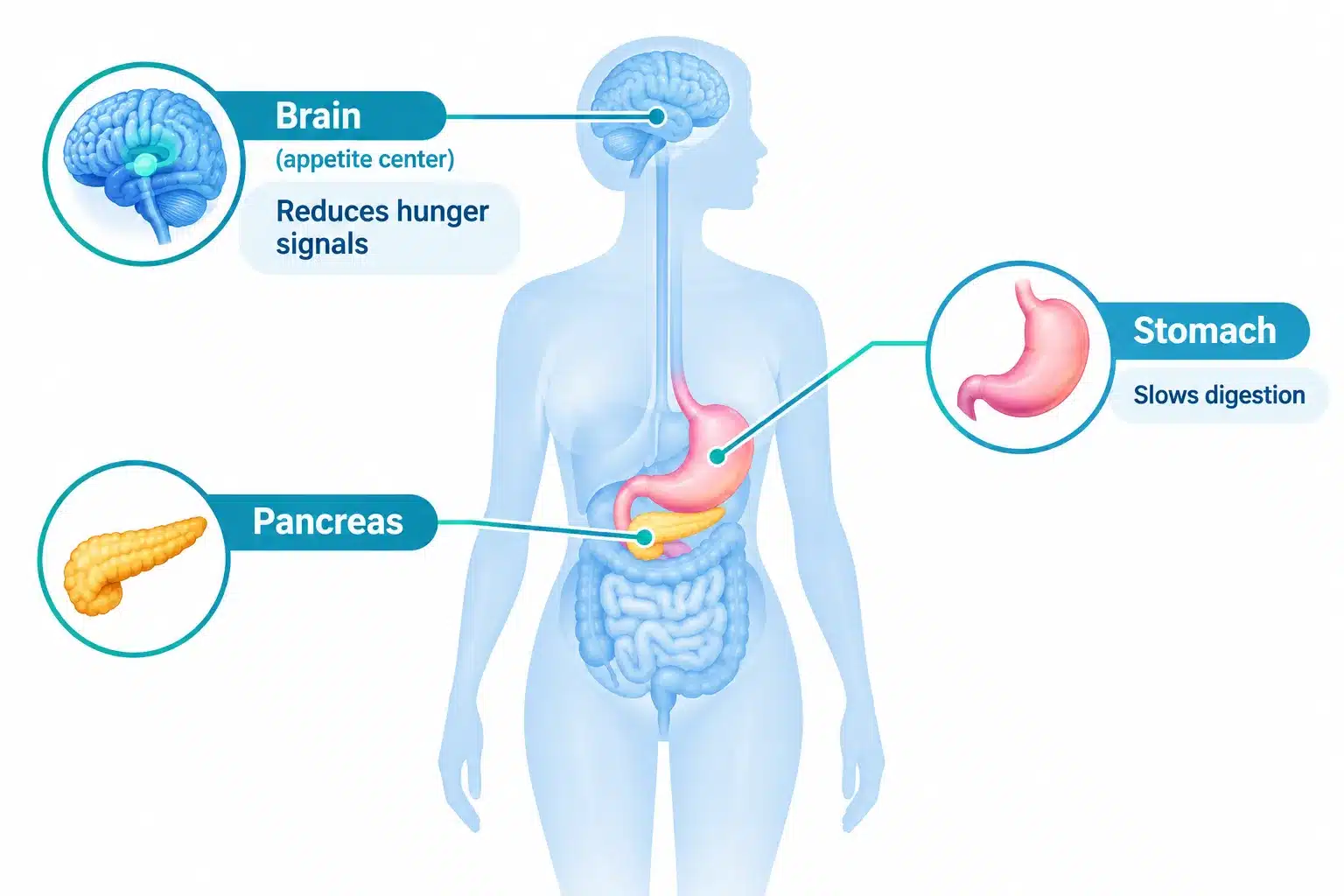
Your body naturally releases GLP-1 after eating, but it breaks down quickly. Semaglutide, the active ingredient in Wegovy, is built to resist that breakdown, so it stays active in your system for about a week, hence the once-weekly dosing [2][4].
What this means practically:
- You feel full on smaller portions.
- Food noise (constant thoughts about eating) tends to quiet down.
- Digestion slows, which helps control blood sugar spikes but can also cause nausea early on.
Decision rule: if your main struggle is constant hunger and portion control rather than emotional eating triggers unrelated to appetite, a GLP-1 like Wegovy is more likely to help.
Is Wegovy the Same As Ozempic
No. Wegovy and Ozempic both contain semaglutide, but they’re approved for different purposes and sold at different doses [1]. Ozempic is FDA-approved for type 2 diabetes management, while Wegovy is approved for chronic weight management and cardiovascular risk reduction in people with obesity or overweight.
Wegovy’s maximum maintenance dose is 2.4 mg weekly, which is higher than Ozempic’s typical maintenance range [1][3]. Some people use Ozempic off-label for weight loss, but Wegovy is the version specifically studied and labeled for that purpose. If you’re researching real patient experiences with the diabetes version, our Ozempic reviews roundup covers what users actually report.
Common mistake: assuming the two drugs are interchangeable at the same dose. They are not, and switching without medical guidance can cause under- or over-dosing.
What Are the Most Common Side Effects of Wegovy
The most common Wegovy side effects are nausea, vomiting, diarrhea, constipation, and abdominal pain, particularly during the dose-escalation phase [1]. These effects are usually mild to moderate and tend to fade as your body adjusts.
Here’s what tends to help, according to patient materials from the manufacturer [3][4][5]:
- Eat smaller meals and stop before you feel stuffed.
- Avoid greasy or very rich foods during dose increases.
- Stay on the titration schedule your provider sets rather than rushing it.
- Stay hydrated, especially if diarrhea or vomiting occurs.
Some users also report skin and hair changes. If you’re noticing hair thinning, see our breakdown of why Ozempic may cause hair loss and how to fix it. Digestive issues are also common enough to warrant their own guide, check causes and relief tips for Ozempic diarrhea and constipation.
Edge case: if nausea is severe enough to prevent eating or drinking for more than a day, contact your provider, this isn’t a “push through it” symptom.
How Much Does Wegovy Cost Per Month
Wegovy’s list price without insurance has historically run well over a thousand dollars per month, though actual out-of-pocket costs vary widely based on insurance, savings programs, and Medicare Part D coverage [VERIFY: current list price]. As of 2026, Wegovy’s manufacturer notes that Medicare Part D may cover the drug when used for cardiovascular risk reduction in people with heart disease and obesity, a meaningful shift from earlier policies that excluded weight-loss drugs entirely [6].
Factors that change your real cost:
- Whether your insurance classifies Wegovy as a weight-loss drug or a cardiometabolic therapy.
- Manufacturer savings card eligibility (commercially insured patients may pay less) [VERIFY: current savings card terms].
- Pharmacy and dose (injection vs. tablet pricing differs) [7][8].
Choose to ask your provider about cardiovascular indication coding if you have established heart disease plus obesity, since this may unlock Medicare coverage that weight-loss-only use would not [6].
Who Is Eligible to Take Wegovy
Wegovy injection is approved for adults with obesity, adults with overweight plus a weight-related condition, and pediatric patients aged 12 and older with obesity, all used alongside diet and physical activity [1][3]. It’s also approved to reduce cardiovascular events in adults with established heart disease and obesity or overweight [1].
You are generally not a candidate if you:
- Have a personal or family history of medullary thyroid carcinoma (MTC) or MEN 2 syndrome [1].
- Are pregnant or planning pregnancy within two months [1][3].
- Have a history of severe gastrointestinal disease or pancreatitis without medical clearance [1].
For a closer look at how the weekly pen is administered, our guide to the Wegovy weekly injection pen walks through the process step by step.
Do You Gain Weight Back After Stopping Wegovy
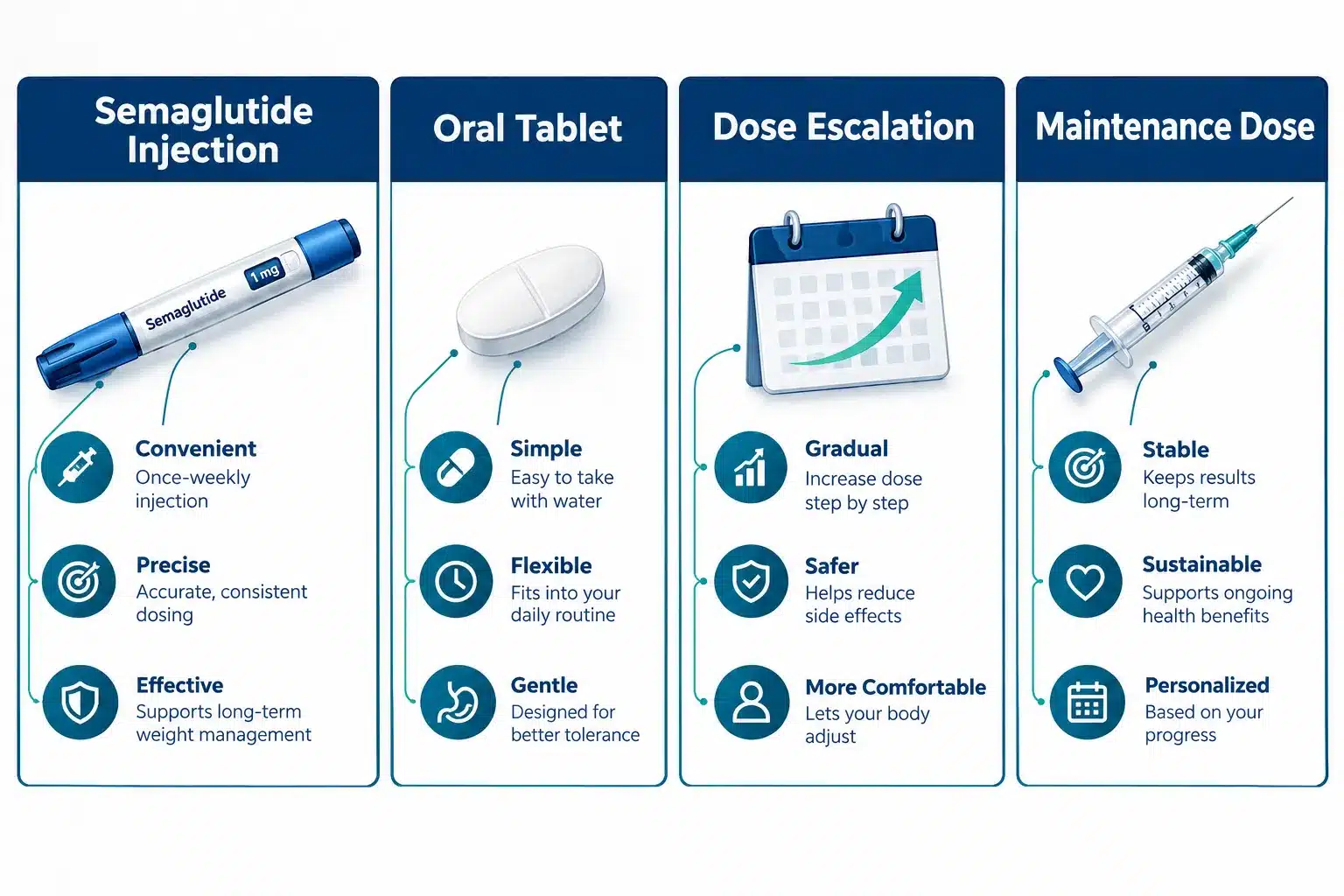
Yes, most people regain a significant portion of lost weight after stopping Wegovy, because obesity is treated as a chronic condition rather than something “cured” by a few months of medication [1][3]. The manufacturer’s own patient materials stress that Wegovy is intended for long-term use, not a short course [3].
This is one of the most misunderstood parts of GLP-1 treatment. Once semaglutide clears your system, the appetite-suppressing effect fades, and your hunger signals often return to baseline. Lifestyle habits built during treatment (smaller portions, more movement) can soften the rebound, but they rarely prevent it entirely without continued medical support.
Decision rule: if you’re not prepared to stay on a maintenance plan (medication, intensive lifestyle program, or both) indefinitely, talk to your provider about realistic expectations before starting.
How Long Does It Take to See Results From Wegovy
Most people start noticing reduced appetite within the first few weeks, but meaningful weight loss typically builds over several months as the dose increases toward the 2.4 mg maintenance level [1][3]. Early changes are often more about how you feel around food than the number on the scale.
A general pattern, based on the official titration schedule [1][3]:
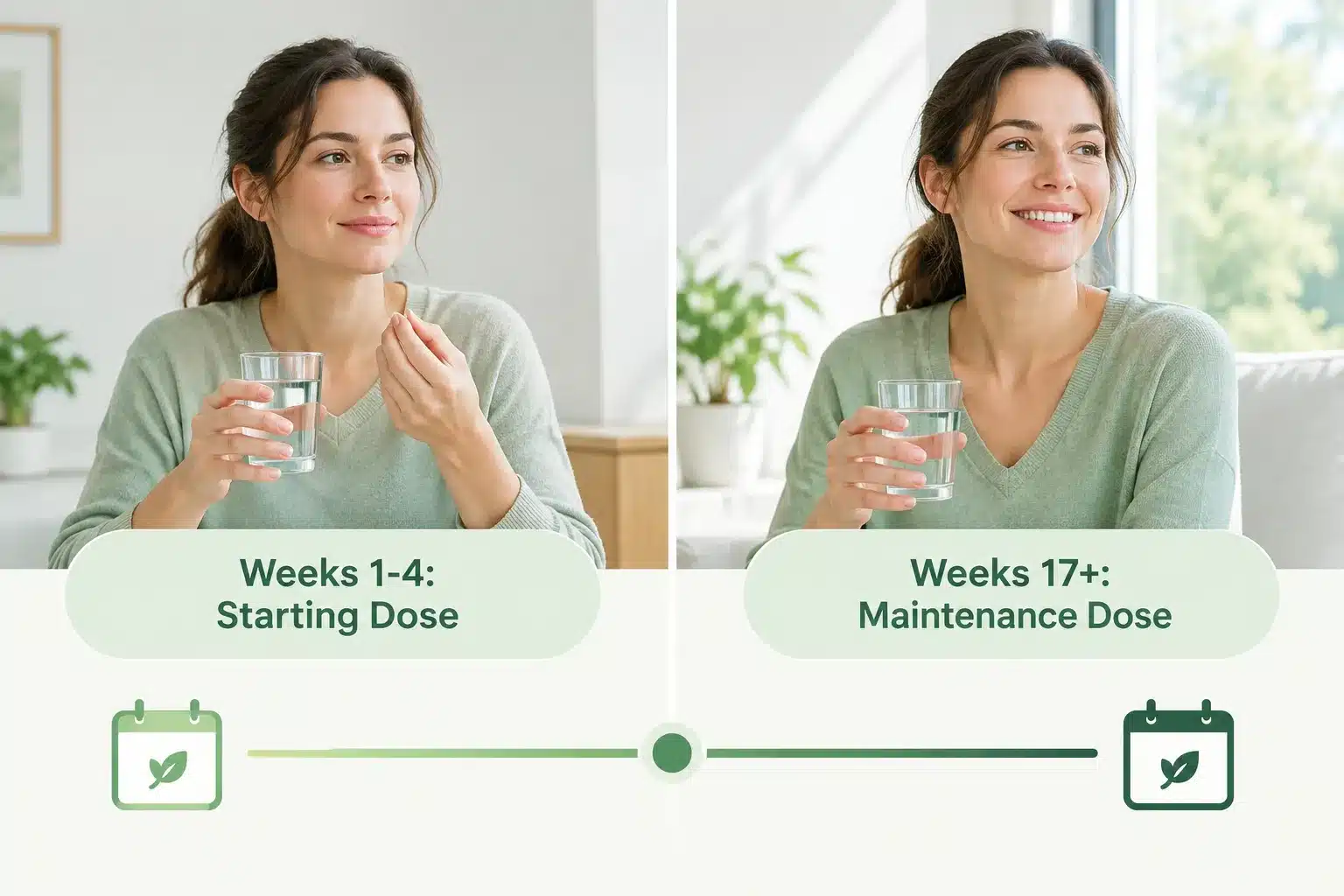
- Weeks 1-4: Lowest starting dose, mild appetite changes, most nausea occurs here.
- Weeks 5-16: Dose increases roughly every four weeks.
- Week 17 onward: Maintenance dose (2.4 mg), where most measurable weight loss accumulates.
For a broader look at timing across GLP-1 drugs generally, see how long GLP-1 medications take to work and the week-by-week Ozempic timeline for a comparable mechanism.
Can Wegovy Work Without Diet and Exercise
Not as intended. Wegovy’s own labeling requires it be used with a reduced-calorie diet and increased physical activity, and skipping that piece limits results and may worsen side effects [1][3]. The drug reduces hunger, but it doesn’t replace the need for better food quality or movement.
Think of it this way: Wegovy lowers the volume on hunger signals, which makes healthier choices easier to stick with, not automatic. People who pair the medication with protein-focused meals and regular activity tend to report better outcomes and fewer plateaus than those who rely on the injection alone.
If you’re adjusting your diet around treatment, our guide on Ozempic foods to avoid and what to eat instead applies directly to semaglutide-based drugs like Wegovy.
Wegovy vs Other Weight Loss Drugs Like Phentermine
Wegovy and phentermine work through completely different mechanisms: Wegovy mimics a gut hormone to reduce appetite over the long term, while phentermine is a short-term stimulant that suppresses appetite through the central nervous system [2]. Phentermine is typically prescribed for a few weeks to months, while Wegovy is designed for chronic, ongoing use [1][3].
| Feature | Wegovy | Phentermine |
|---|---|---|
| Mechanism | GLP-1 receptor agonist | Stimulant, appetite suppressant |
| Typical use length | Long-term, chronic | Short-term, weeks to months |
| Administration | Weekly injection or daily tablet | Daily oral pill |
| Cardiovascular benefit | Yes, in approved population [1] | Not established |
Choose Wegovy if you need a sustainable, long-term approach and have obesity or weight-related health conditions. Choose phentermine (with provider guidance) if you need a short bridge while making other lifestyle changes, though this is a narrower use case.
Is Wegovy Safe for Long-Term Use
Wegovy’s safety profile for long-term use is supported by trial data, including the SELECT cardiovascular outcomes trial, but it carries a boxed warning and requires ongoing monitoring [1]. The European Medicines Agency’s 2026 review concluded the benefit-risk balance remains favorable for appropriate patients who follow monitoring guidance [2].
Key long-term safety considerations:
- Boxed warning for thyroid C-cell tumors (contraindicated with personal/family MTC history or MEN 2) [1].
- Risk of pancreatitis, gallbladder disease, and acute kidney injury, often tied to severe GI symptoms [1].
- Potential worsening of diabetic retinopathy in some patients [1].
- Hypoglycemia risk when combined with insulin or insulin secretagogues [1].
The SELECT trial, a large randomized, placebo-controlled study presented at the American Diabetes Association’s 2026 Scientific Sessions, tested semaglutide 2.4 mg in adults with overweight or obesity and established cardiovascular disease, looking at cardiovascular death, non-fatal heart attack, and non-fatal stroke [1]. This data is what led to Wegovy’s cardiovascular risk-reduction indication [1].
If you’ve seen concerns online about cancer risk, our detailed look at Ozempic and thyroid cancer risk addresses the same semaglutide-related warning in more depth.
What Happens When You Stop Injecting Wegovy
When you stop Wegovy, semaglutide gradually clears your system over several weeks, and appetite suppression fades along with it [1][3]. Most people experience a return of hunger signals and, without continued lifestyle support, partial or full weight regain.
Stopping isn’t dangerous in the way abruptly quitting some medications can be, but it does mean the underlying condition (obesity) is no longer being pharmacologically managed. Providers often recommend a plan before stopping: whether that’s transitioning to a maintenance-focused lifestyle program, switching medications, or tapering under supervision.
Quick example: a patient who loses 15% of body weight over a year on Wegovy and then stops cold-turkey, without any structured maintenance plan, is statistically likely to regain a meaningful share of that weight within the following year, based on general obesity-recurrence patterns described in patient materials [3].
Common Mistakes People Make Starting Wegovy
The most common mistake is rushing the dose-escalation schedule or skipping meals entirely to avoid nausea, both of which tend to backfire [1][3][5]. Slow and steady almost always wins with GLP-1 drugs.
Other frequent errors:
- Combining Wegovy with other semaglutide-containing products, which the label specifically warns against [5][7].
- Not adjusting the diet at all, expecting the drug to do all the work.
- Stopping abruptly at the first sign of mild nausea instead of giving the body time to adjust.
- Switching between the injection and oral tablet without medical supervision [5][8].
Edge case: people with a history of gallbladder issues should flag this proactively, since rapid weight loss itself can increase gallstone risk, separate from the drug’s own gallbladder warning [1].
Wegovy for Diabetes vs Just Weight Loss
Wegovy is not FDA-approved specifically for type 2 diabetes, that’s Ozempic’s role, but Wegovy is approved for chronic weight management and, separately, for cardiovascular risk reduction in people with heart disease and obesity or overweight [1]. Some patients with diabetes also qualify for Wegovy based on their weight-related criteria, but the drug isn’t prescribed purely to control blood sugar under this brand name.
If blood sugar management is your primary concern, read our article on what to do about high blood sugar for context on when a diabetes-specific medication might be the better fit.
How Often Do You Inject Wegovy
Wegovy injection is given once a week, on the same day each week, regardless of mealtime [1][3][7]. Consistency matters more than the specific day you choose, pick one that fits your routine and stick with it.
The oral tablet version follows a different daily dosing schedule and should not be mixed with the injection without medical guidance [5][8]. Our page on the Wegovy weekly injection pen and semaglutide dosing has more detail on proper technique and storage.
Pros and Cons at a Glance
- Pros: Strong appetite reduction, backed by cardiovascular outcomes data, available in two formats, approved for teens 12+ [1][2].
- Cons: Requires ongoing use to maintain results, GI side effects are common early on, boxed warning limits eligibility, cost can be high without coverage [1][6].
For firsthand accounts of what starting and staying on this medication actually feels like, our collection of Wegovy reviews offers real patient perspectives alongside the clinical facts above.
FAQ
What is Wegovy made of?
Wegovy’s active ingredient is semaglutide, a GLP-1 receptor agonist that mimics a natural gut hormone involved in appetite regulation [1][2].
Can I take Wegovy if I have diabetes?
You may be eligible if you also meet the obesity or overweight criteria, but Wegovy isn’t specifically approved as a diabetes treatment; Ozempic fills that role [1].
Does Wegovy cause hair loss?
Hair thinning has been reported by some users, often linked to rapid weight loss rather than a direct drug effect; see our dedicated guide for details [VERIFY: direct causal link].
Is the Wegovy pill the same as the injection?
Both contain semaglutide, but dosing schedules differ, and switching between them should only happen under medical supervision [5][8].
How much weight can I expect to lose on Wegovy?
Results vary by individual, and official sources describe “significant” weight loss when combined with diet and activity, but specific percentages depend on your starting point and adherence [2][3].
Will insurance cover Wegovy?
Coverage varies; Medicare Part D may now cover it for cardiovascular risk reduction in eligible patients, but weight-loss-only coverage still depends on your specific plan [6][VERIFY].
What’s the boxed warning about?
Wegovy carries a boxed warning for thyroid C-cell tumors seen in rodent studies, and it’s contraindicated for people with a personal or family history of medullary thyroid carcinoma or MEN 2 [1].
Can teenagers take Wegovy?
Yes, Wegovy injection is approved for patients 12 and older with obesity, used alongside diet and physical activity [1][3].
7 Best GLP-1 Providers Ranked: Accreditation, Flexibility & Support Compared (2026 Update)
32,000+ Patients Can't All Be Wrong: See the Top-Rated GLP-1 Providers: Compared on accreditation, plan flexibility, and patient support — updated for 2026.
BMI MD GLP-1 Microdosing Plan
- Specialized microdosing options (sublingual drops or low-dose injections)
- Ideal for maintaining weight or tapering off higher doses safely
- Fully bundled plan with no hidden monthly platform memberships
DirectMeds Weight Loss Solutions
- Sourced from accredited, state-licensed 503A compounding pharmacies
- No-frills high-volume savings passed directly to the patient
- Includes clinical consultation and cold-chain shipping updates
MEDVi Flat-Rate Telehealth
- Flat monthly rate holds steady even at maximum maintenance doses
- No dosage upcharges or graduation fee penalties
- Offers both injectable and advanced oral thin-film delivery options
Gala GLP-1 Care Program
- All-inclusive plan with no standalone membership costs
- Continuous text-based messaging access with state-licensed clinicians
- Temperature-controlled, cold-chain medication shipping included
Measured GLP-1 Metabolic Health
- Comprehensive metabolic health screening and expert intake analysis
- Predictable long-term budgeting with stable plan pricing
- High-end responsive dashboard with integrated diagnostic support
Refills GLP-1 (TryRefills Plan)
- Flat rate holds steady as titration scales up
- Includes clinical guides for active side-effect management
- Bundles in foundational nutritional strategies alongside medication
AltRx GLP-1 Transactional Reorders
- Zero recurring auto-billing — pay entirely on a transactional basis
- Rapid text-to-order format saves time for experienced patients
- Provides both injectable forms and fast-dissolving tablet variations
Conclusion
Wegovy is a GLP-1 medication that changes how your body signals hunger and fullness, and the clinical data now supports both weight management and cardiovascular risk reduction for the right patients [1]. It isn’t a quick fix: results build over months, side effects are common early on, and stopping the drug usually means the weight-loss effect fades too. The decision to start comes down to your health profile, your eligibility against the boxed warning and contraindications, and your readiness for a long-term commitment paired with real lifestyle changes. If you think you might qualify, the clearest next step is a conversation with a licensed provider who can review your history and discuss whether Wegovy, a comparable GLP-1, or another approach fits your situation best.
This article is for informational purposes only and is not medical advice. Talk to a licensed healthcare provider before starting or changing any medication.
References
- 215256s030lbl. accessdata.fda.gov.
- Wegovy. ema.europa.eu.
- Wegovy Patient Brochure. wegovy.com.
- FAQ. wegovy.com.
- How to Take Wegovy. wegovy.com.
- Medicare. wegovy.com.
- Prescribing Information. wegovy.com.
- Starting Wegovy Pill. wegovy.com.