
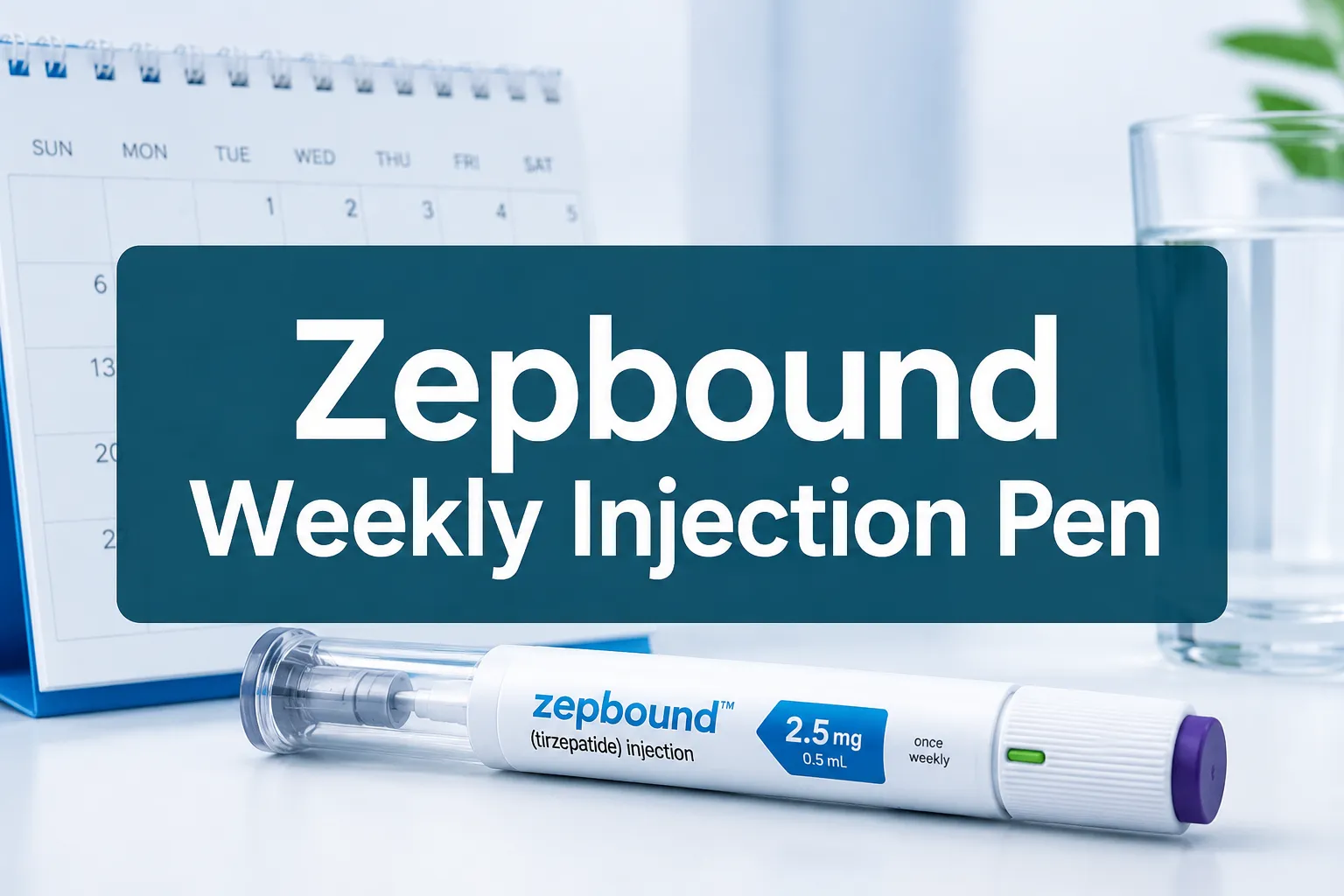
Zepbound Rx Weekly injection pen (tirzepatide)
Last updated: August 10, 2026
Quick Answer: The Zepbound Rx Weekly injection pen (tirzepatide) is an FDA-approved once-weekly self-injection medication for chronic weight management in adults with obesity or overweight plus a weight-related condition. It works by activating two gut hormone receptors simultaneously, making it one of the most effective prescription weight loss options currently available. Clinical trials showed average body weight reductions of 15-21% over 72 weeks, depending on dose.
Key Takeaways
- The Zepbound Rx Weekly injection pen (tirzepatide) is the same active molecule as Mounjaro, but FDA-approved specifically for weight loss rather than type 2 diabetes
- Tirzepatide activates both GLP-1 and GIP receptors, which is why it tends to produce greater weight loss than semaglutide (Ozempic/Wegovy), which targets only GLP-1
- List price without insurance runs approximately $1,060,$1,086 per month for the branded pen, though savings cards and insurance can significantly reduce this
- The pen comes in six doses: 2.5 mg, 5 mg, 7.5 mg, 10 mg, 12.5 mg, and 15 mg, with most patients starting at 2.5 mg and titrating up every four weeks
- Common side effects are gastrointestinal, nausea, diarrhea, constipation, and are usually mild to moderate, peaking during dose increases
- You inject once per week on the same day, rotating between the abdomen, thigh, or upper arm
- People with a personal or family history of medullary thyroid carcinoma or MEN2 syndrome should not use this medication
- If weight loss stalls, the cause is often a missed titration, dietary drift, or the need for a medication review, not necessarily treatment failure
- Compounded tirzepatide alternatives exist but carry different regulatory considerations; see our guide on compounded tirzepatide: what you need to know
What Is Zepbound and How Does It Work?
Zepbound is a brand-name prescription injectable medication containing tirzepatide, manufactured by Eli Lilly. It was FDA-approved in November 2023 specifically for chronic weight management in adults with a BMI of 30 or higher, or a BMI of 27 or higher with at least one weight-related condition such as high blood pressure, type 2 diabetes, or sleep apnea.
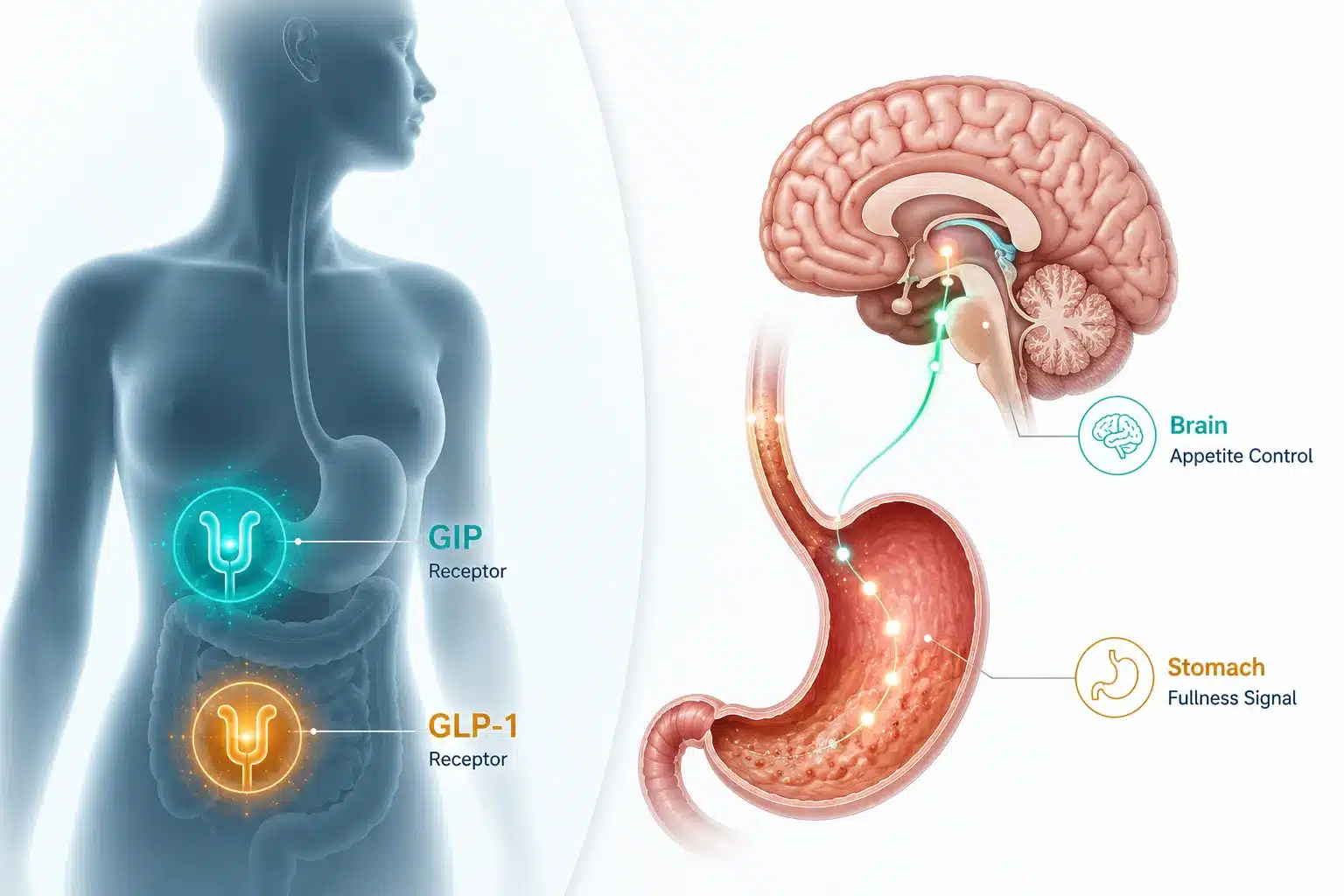
How tirzepatide works is what sets it apart. Most GLP-1 medications activate a single receptor. Tirzepatide is a dual agonist, it activates both the glucagon-like peptide-1 (GLP-1) receptor and the glucose-dependent insulinotropic polypeptide (GIP) receptor. These two receptors work together to:
- Slow gastric emptying, so food stays in your stomach longer and you feel full sooner
- Reduce appetite signals sent from the gut to the brain
- Improve insulin sensitivity and glucose regulation
- Decrease caloric intake by reducing hunger between meals
The result is a more powerful appetite-suppressing effect than single-receptor GLP-1 drugs. For a deeper look at how tirzepatide differs from semaglutide at the molecular level, see this breakdown of the difference between semaglutide and tirzepatide.
Who Is Zepbound Right For? Am I a Good Candidate?
Zepbound is right for adults who meet specific BMI thresholds and have not achieved sufficient weight loss through diet and exercise alone. You are likely a good candidate if your BMI is 30 or above, or 27 or above with a qualifying comorbidity, and you do not have any contraindications.
You may be a good candidate if:
- You have obesity (BMI 30+) or overweight (BMI 27+) with high blood pressure, high cholesterol, type 2 diabetes, or obstructive sleep apnea
- You have tried lifestyle changes without reaching a healthy weight
- Your doctor has cleared you of thyroid cancer risk factors
You should NOT use Zepbound if you have:
- A personal or family history of medullary thyroid carcinoma (MTC)
- Multiple Endocrine Neoplasia syndrome type 2 (MEN2)
- A known serious hypersensitivity to tirzepatide
- Pregnancy (weight loss medications are not recommended during pregnancy)
Edge case: People with type 2 diabetes can use tirzepatide, but they would typically be prescribed Mounjaro (the same molecule, different brand) rather than Zepbound. More on that distinction below.
Can You Use Zepbound If You Have Diabetes?
Yes, people with type 2 diabetes can use tirzepatide, but the FDA-approved brand for diabetes management is Mounjaro, not Zepbound. Zepbound is approved specifically for weight management. In practice, some patients with type 2 diabetes may be prescribed Zepbound if their primary goal is weight loss, but insurance coverage rules often differ between the two indications.
If you have type 2 diabetes and want tirzepatide, your prescriber will determine which brand and indication is most appropriate given your insurance plan and clinical goals. Both contain the identical active ingredient at the same doses. For more context on GLP-1 injections for weight loss and diabetes, our full guide covers both use cases.
Zepbound Results: How Much Weight Can You Lose?
In the SURMOUNT-1 clinical trial published in the New England Journal of Medicine (2022), adults taking the highest dose of tirzepatide (15 mg weekly) lost an average of 20.9% of their body weight over 72 weeks, compared to 3.1% in the placebo group. At the 10 mg dose, average weight loss was approximately 19.5%.
What this looks like in real numbers:
- A person starting at 250 lbs could expect to lose 40-52 lbs at the highest dose over 72 weeks
- Most patients see meaningful weight loss within the first 12 weeks
- Weight loss tends to be fastest in the first 6 months and then continues at a slower rate
Important caveats:
- Results vary based on starting weight, dose reached, diet, and activity level
- Trial participants also followed a reduced-calorie diet and increased physical activity
- Weight loss is maintained only as long as the medication is continued; most patients regain weight after stopping
Adding a structured exercise routine alongside medication amplifies results. Our 12-week home workout plan is a practical complement to any GLP-1 regimen.
Zepbound vs. Ozempic: Which Is Better for Weight Loss?
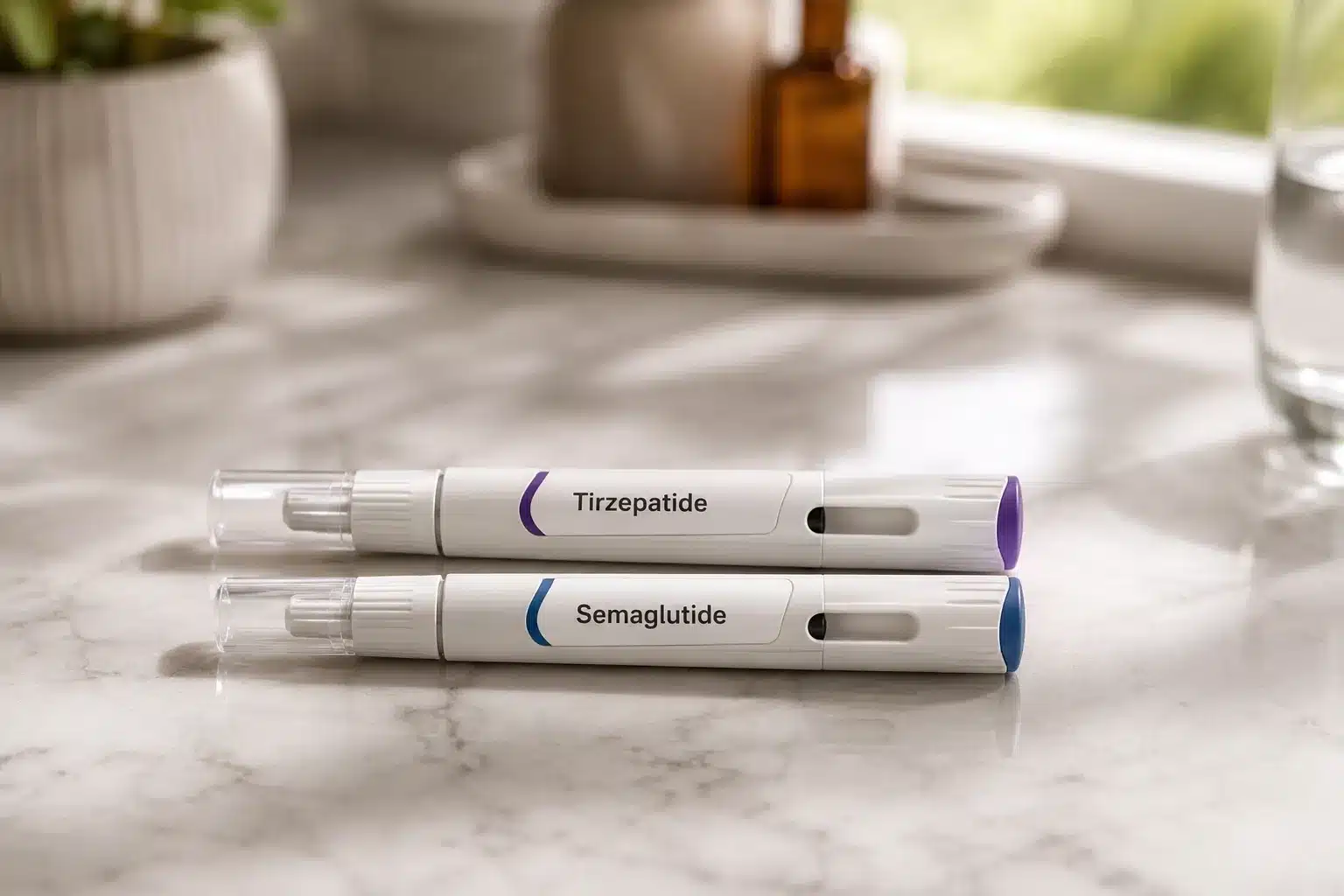
For weight loss specifically, tirzepatide (Zepbound) consistently outperforms semaglutide (Ozempic/Wegovy) in head-to-head data. The SURMOUNT-5 trial (2024) directly compared tirzepatide to semaglutide for weight management and found tirzepatide produced approximately 47% greater weight loss.
| Feature | Zepbound (Tirzepatide) | Wegovy/Ozempic (Semaglutide) |
|---|---|---|
| Receptor targets | GLP-1 + GIP (dual) | GLP-1 only |
| Avg. weight loss (max dose, 72 wks) | ~21% body weight | ~15% body weight |
| Injection frequency | Once weekly | Once weekly |
| FDA weight loss approval | Yes (Zepbound) | Yes (Wegovy) |
| FDA diabetes approval | Yes (Mounjaro) | Yes (Ozempic) |
| Starting dose | 2.5 mg | 0.25 mg |
| Max approved dose | 15 mg | 2.4 mg (Wegovy) |
Choose Zepbound if you want maximum weight loss efficacy and have no contraindications to tirzepatide.
Choose Wegovy/semaglutide if you have had prior success with semaglutide, your insurance covers it better, or your prescriber recommends it for your specific health profile.
For a full breakdown, see our comparison of the difference between semaglutide and tirzepatide.
Zepbound vs. Mounjaro: What’s the Difference?
Zepbound and Mounjaro contain the exact same active ingredient, tirzepatide, at identical doses. The only meaningful differences are FDA indication, branding, and insurance coverage.
- Mounjaro is FDA-approved for type 2 diabetes management
- Zepbound is FDA-approved for chronic weight management
- Both are manufactured by Eli Lilly in the same auto-injector pen format
- Insurance plans often cover one but not the other depending on your diagnosis
Practically speaking, if your insurer covers Mounjaro for diabetes but not Zepbound for obesity, your doctor may prescribe Mounjaro off-label for weight loss, or vice versa. Always confirm coverage before assuming one is cheaper than the other.
How Much Does Zepbound Cost With and Without Insurance?
Without insurance, the list price of the Zepbound Rx Weekly injection pen (tirzepatide) is approximately $1,060,$1,086 per month (four pens) as of 2026, per Eli Lilly’s published pricing. With commercial insurance that covers obesity medications, out-of-pocket costs can drop significantly, sometimes to under $50 per month with Lilly’s savings card for eligible patients.
Cost breakdown by scenario:
| Scenario | Estimated Monthly Cost |
|---|---|
| No insurance, list price | ~$1,060,$1,086 |
| Commercial insurance (covered) | $0,$50 with Lilly savings card |
| Medicare/Medicaid | Generally not covered for weight loss as of 2026 |
| Compounded tirzepatide (telehealth) | $200,$500 (varies by provider) |
Ways to reduce cost:
- Lilly’s LillyDirect savings program (check eligibility on Lilly’s official site)
- Employer-sponsored insurance with obesity medication coverage
- HSA/FSA accounts to pay pre-tax dollars
- Compounded tirzepatide through licensed compounding pharmacies (see our tirzepatide compounding pharmacy cost guide)
For a detailed comparison of pen versus vial pricing, see our Zepbound vial vs pen price breakdown. You can also compare across providers with our GLP-1 price per month comparison.
Zepbound Injection Pen: How to Use It Step by Step
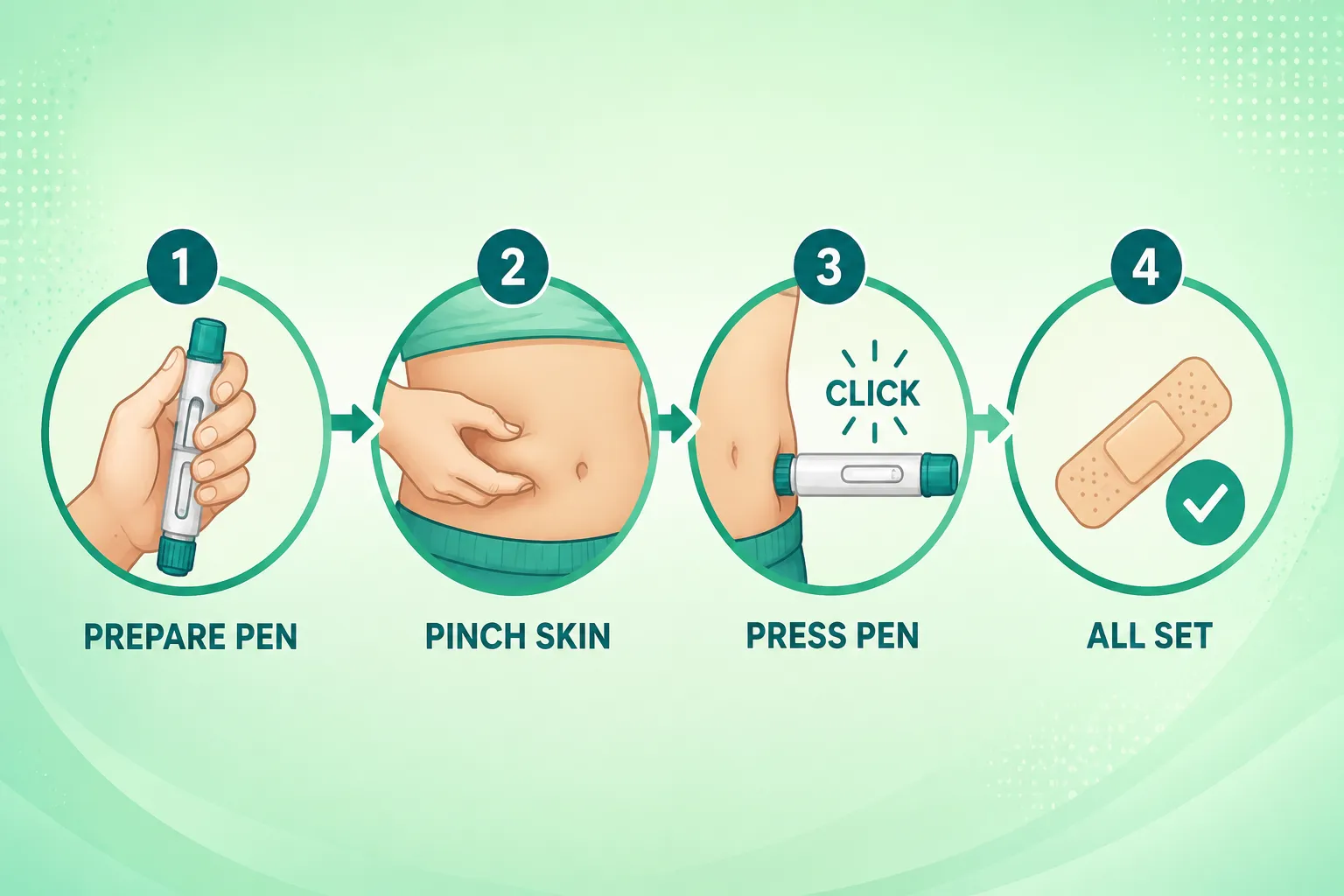
Using the Zepbound Rx Weekly injection pen (tirzepatide) correctly takes about two minutes once you’ve done it a few times. The pen is a single-use auto-injector, no needle handling, no drawing up medication.
Before you inject:
- Remove the pen from the refrigerator 30 minutes before injecting so it reaches room temperature, cold injections are more uncomfortable
- Wash your hands thoroughly with soap and water
- Check the pen: the liquid should be clear to slightly yellow, with no particles. Do not use if it looks cloudy or discolored
- Choose your injection site: abdomen (at least 2 inches from the navel), front of the thigh, or upper arm
Injection steps:
- Remove the base cap (gray cap), do not remove the needle cap yet
- Remove the needle cap (clear cap) just before injecting
- Pinch a fold of skin at your chosen site
- Press the flat end of the pen firmly against the skin at a 90-degree angle
- Press and hold the orange injection button until you hear a click, then hold for 5 more seconds
- Lift the pen straight off, the needle shield will automatically cover the needle
- Dispose of the used pen in a sharps container
Rotation rule: Rotate injection sites each week. Do not inject into skin that is bruised, tender, scarred, or has stretch marks.
Common mistake: Many people press the button before the pen is fully flat against the skin, which can cause a partial dose. Make sure the pen is flush against the skin before pressing.
Zepbound Side Effects: What to Expect
The most common side effects of the Zepbound Rx Weekly injection pen (tirzepatide) are gastrointestinal and tend to be worst during dose increases. Most people find that side effects improve within a few weeks as the body adjusts.
Most common (reported in more than 5% of trial participants):
- Nausea (up to 31% at 15 mg dose in trials)
- Diarrhea
- Vomiting
- Constipation
- Stomach pain or discomfort
- Decreased appetite (expected and desired)
Less common but serious, contact your doctor if you experience:
- Severe abdominal pain that radiates to the back (possible pancreatitis)
- Changes in vision (possible diabetic retinopathy complication)
- Racing heartbeat or heart palpitations
- Signs of allergic reaction: rash, swelling, difficulty breathing
- Gallbladder problems (rapid weight loss can increase gallstone risk)
Managing nausea practically:
- Eat smaller, slower meals
- Avoid high-fat or fried foods, especially in the first 24 hours after injection
- Stay well hydrated
- Inject at night so peak nausea occurs during sleep
If side effects are severe enough to affect daily life, do not skip doses without talking to your prescriber. Dose reduction is a legitimate option and does not mean treatment failure.
Zepbound Pen Storage and Expiration: How Long Does It Last?
Store unused Zepbound pens in the refrigerator at 36-46°F (2-8°C). Do not freeze them. Keep pens in their original carton to protect from light.
Room temperature storage: If refrigeration is not available, Zepbound pens can be stored at room temperature up to 86°F (30°C) for a maximum of 21 days. After 21 days at room temperature, discard the pen even if medication remains.
Key storage rules:
- Never freeze, a frozen pen must be discarded
- Discard after the expiration date printed on the label
- Do not use a pen that has been dropped and may be damaged
- Keep out of direct sunlight and away from heat sources
Traveling with Zepbound: Use an insulated travel case with an ice pack (not direct contact with ice). TSA allows injectable medications in carry-on luggage with a prescription label.
Why Is Zepbound Not Working Anymore? Common Reasons Weight Loss Stalls
A weight loss plateau on Zepbound is common and does not automatically mean the medication has stopped working. Most plateaus have an identifiable cause.
Most common reasons for a stall:
- You haven’t reached your optimal dose. Many patients plateau at 5 mg or 7.5 mg but see renewed loss after titrating to 10 mg or 15 mg. Discuss dose escalation with your prescriber.
- Caloric adaptation. As body weight drops, your total daily energy expenditure decreases. The same calorie intake that caused a deficit at 250 lbs may be maintenance at 210 lbs.
- Dietary drift. It’s easy to gradually increase portion sizes over months. A food diary reset often reveals the issue.
- Medication adherence. Missing doses or injecting inconsistently disrupts steady-state drug levels.
- Muscle loss. Without resistance training, weight loss includes muscle, which lowers metabolic rate. Adding strength training can restart progress.
- Underlying metabolic factors. Thyroid dysfunction, sleep apnea, or hormonal changes can blunt results. A lab panel is worth requesting if the plateau persists beyond 8-12 weeks.
When to call your doctor: If you’ve been on the maximum tolerated dose for 12 or more weeks with no weight loss, your prescriber may reassess the treatment plan.
Zepbound Alternatives: Other Weight Loss Medications
Zepbound is not the only option. Several FDA-approved and emerging alternatives exist, each with different mechanisms, efficacy profiles, and costs.
| Medication | Brand | Mechanism | Avg. Weight Loss |
|---|---|---|---|
| Tirzepatide | Zepbound | GLP-1 + GIP dual agonist | ~15-21% |
| Semaglutide | Wegovy | GLP-1 agonist | ~12-15% |
| Semaglutide (oral) | Rybelsus | GLP-1 agonist (oral) | ~5-10% |
| Naltrexone/bupropion | Contrave | CNS appetite modulation | ~5-9% |
| Phentermine/topiramate | Qsymia | CNS stimulant + anticonvulsant | ~8-11% |
| Compounded tirzepatide | Various | Same as Zepbound | Comparable (unverified) |
Choose Zepbound if you want the highest evidence-based efficacy from a single injectable medication.
Consider semaglutide if cost is a barrier and your insurance covers Wegovy, or if you’ve already responded well to it. See our semaglutide weight loss injections guide for a full comparison.
Consider compounded tirzepatide if branded Zepbound is unaffordable and you want the same active ingredient at lower cost. Read our guide on compounded tirzepatide: what you need to know before choosing this route.
Zepbound Weekly Injection Pen Refill Cost and Availability
Refilling your Zepbound Rx Weekly injection pen (tirzepatide) prescription requires a valid prescription from a licensed prescriber. Refills are available at major retail pharmacies (CVS, Walgreens, Walmart), specialty pharmacies, and through Eli Lilly’s LillyDirect mail-order pharmacy.
Availability note: Supply shortages have affected tirzepatide at various points since 2023. As of 2026, branded Zepbound availability has improved, but specific doses (particularly 2.5 mg and 5 mg starter doses) may still face intermittent shortages at individual pharmacies. Call ahead before assuming your dose is in stock.
Refill cost options:
- Retail pharmacy with insurance: varies by plan; check your formulary
- LillyDirect (Lilly’s own pharmacy): list price applies, but savings cards may reduce cost
- Online telehealth platforms: some offer bundled prescribing plus pharmacy services; compare costs at our Zepbound online price guide
For patients who cannot access or afford branded Zepbound, our cheapest tirzepatide online guide reviews legitimate lower-cost options.
Frequently Asked Questions
How long does it take for Zepbound to start working?
Most people notice reduced appetite within the first 1-2 weeks. Measurable weight loss typically appears by weeks 4-8. Maximum results occur over 12-18 months of consistent use.
Can I inject Zepbound anywhere on my body?
No. FDA-approved injection sites are the abdomen (at least 2 inches from the navel), the front of the thigh, or the upper arm. Do not inject into muscle, veins, or damaged skin.
What happens if I miss a dose of Zepbound?
If fewer than 4 days have passed since your scheduled injection day, inject as soon as you remember. If more than 4 days have passed, skip the missed dose and resume your regular weekly schedule. Never take two doses within 3 days of each other.
Is Zepbound the same as Mounjaro?
Yes and no. Both contain tirzepatide at the same doses. Mounjaro is FDA-approved for type 2 diabetes; Zepbound is FDA-approved for weight management. Insurance coverage rules differ between the two.
Can I drink alcohol while taking Zepbound?
Alcohol is not explicitly contraindicated, but it can worsen nausea (a common side effect) and adds empty calories that work against weight loss goals. Moderate consumption is generally acceptable; heavy drinking is not advisable.
Does Zepbound require a prescription?
Yes. Zepbound is a Schedule IV controlled substance (in the U.S., as of 2026) and requires a valid prescription from a licensed healthcare provider. It cannot be purchased over the counter.
Will I regain weight if I stop Zepbound?
Clinical data consistently shows that most patients regain a significant portion of lost weight after stopping tirzepatide. This reflects the chronic nature of obesity as a condition, not a personal failure. Many patients remain on the medication long-term.
Is Zepbound covered by Medicare?
As of 2026, Medicare Part D does not cover GLP-1 medications solely for weight loss. Coverage may apply if you also have type 2 diabetes and are prescribed Mounjaro. Legislative changes are ongoing; check with your plan for the most current status.
How do I dispose of used Zepbound pens safely?
Place used pens in an FDA-cleared sharps disposal container. When full, follow your local guidelines for sharps disposal, many pharmacies offer drop-off programs. Never throw loose needles in household trash.
Can I use Zepbound if I’m pregnant or breastfeeding?
No. Zepbound is not recommended during pregnancy or breastfeeding. Women of childbearing age should use effective contraception while on this medication and inform their prescriber immediately if they become pregnant.
Conclusion
The Zepbound Rx Weekly injection pen (tirzepatide) is currently the highest-efficacy FDA-approved injectable medication for chronic weight management, with clinical trial data showing average weight loss of up to 21% over 72 weeks. Its dual GLP-1 and GIP receptor mechanism gives it a meaningful edge over single-receptor alternatives like semaglutide.
Your next steps:
- Confirm eligibility: Talk to your primary care provider or an obesity medicine specialist about whether your BMI and health history qualify you for Zepbound.
- Check your insurance: Call your insurer or check your formulary online before your appointment, coverage varies widely and affects your out-of-pocket cost.
- Compare cost options: If branded Zepbound is out of reach, review our tirzepatide monthly cost guide and the compounded tirzepatide cost guide for alternatives.
- Read patient experiences: Real-world tirzepatide reviews by patients can help set realistic expectations before you start.
Zepbound works best as part of a broader lifestyle approach. Medication handles the appetite and metabolic side; consistent nutrition and movement handle the rest.

With over 13 years of experience in holistic health blogging, I aim to help you navigate your wellness journey with honest insights, expert-backed advice, and a sprinkle of real-world practicality.
Certified Wellness Writer | Herbal Nutrition Advocate | Wellness Research Enthusiast


