
GLP-1 Dinner Ideas: Healthy High-Protein Meals (2026)
Last updated: July 26, 2026
Quick Answer: The best GLP-1 dinner ideas center on small, high-protein, low-fat portions that digest easily and keep you full without triggering nausea. Aim for 3 to 5 ounces of lean protein, one to two cups of non-starchy vegetables, and a modest serving of complex carbohydrates. Avoid greasy, fried, or heavily spiced foods at dinner, as these are the most common triggers for GI discomfort on GLP-1 medications like semaglutide (Ozempic, Wegovy) or tirzepatide (Mounjaro, Zepbound).
Key Takeaways
- GLP-1 medications slow stomach emptying, so smaller, nutrient-dense dinners work better than large meals.
- Prioritize lean protein at every dinner, chicken breast, fish, eggs, tofu, and legumes are all solid choices.
- Fatty, fried, and highly processed foods are the top triggers for nausea and reflux on GLP-1 therapy.
- Most people on GLP-1 medications do well with dinners between 300 and 500 calories, depending on their total daily intake goals.
- Meal prepping dinners for the week dramatically reduces the friction of eating well when appetite is low.
- Families can share GLP-1 friendly dinners by building “base plus add-ons” meals where everyone customizes their plate.
- If nausea is a recurring problem after dinner, meal timing, portion size, and food choices are the three levers to adjust first.
- Vegetarian and budget-friendly GLP-1 dinners are entirely practical with the right protein sources.
What Makes a Good GLP-1 Friendly Dinner
A good GLP-1 friendly dinner is one that delivers adequate protein and fiber in a small volume, digests without overwhelming a slowed stomach, and does not spike blood sugar sharply. Because GLP-1 receptor agonists delay gastric emptying, large or fatty meals sit in the stomach longer than usual, which is the primary reason people feel nauseated, bloated, or uncomfortably full after eating.
7 Best GLP-1 Providers Ranked: Accreditation, Flexibility & Support Compared (2026 Update)
32,000+ Patients Can't All Be Wrong: See the Top-Rated GLP-1 Providers. We compared the leading online GLP-1 providers based on program features, clinical support, convenience, and overall value.
BMI MD GLP-1 Microdosing Plan
- Specialized microdosing options, including sublingual drops and low-dose injections
- Designed for people interested in maintaining weight or gradually adjusting treatment
- Bundled program structure without a separate monthly platform membership
- Online access makes the process convenient from home

DirectMeds Weight Loss Solutions
- Online weight-loss program with a straightforward patient experience
- Compounded medication options through state-licensed compounding pharmacies
- Includes clinical consultation as part of the process
- Provides shipping updates to help patients track their orders
MEDVi Flat-Rate Telehealth
- Flat-rate telehealth approach designed for easier budgeting
- No dosage-based pricing increases within the advertised program structure
- Offers injectable and oral thin-film delivery options
- Includes medical screening and asynchronous provider consultations
Gala GLP-1 Care Program
- Text-based access to state-licensed clinicians
- Cold-chain medication shipping included in the program
- Month-to-month program structure
- Designed for people who value convenient ongoing support
Measured GLP-1 Metabolic Health
- Comprehensive metabolic health screening and intake analysis
- Designed around longer-term metabolic health management
- Responsive dashboard with integrated health tracking tools
- Useful option for patients who value a more data-focused experience
Refills GLP-1 (TryRefills Plan)
- Clinical guidance designed to help patients manage common treatment concerns
- Includes foundational nutritional strategies alongside medication
- Designed around predictable ongoing treatment
- No hidden startup or processing fees according to the program information provided
AltRx GLP-1 Transactional Reorders
- Transactional reorder model without recurring auto-billing
- Designed for patients who already understand their treatment routine
- Fast text-to-order process for convenient reorders
- Offers injectable and fast-dissolving tablet variations
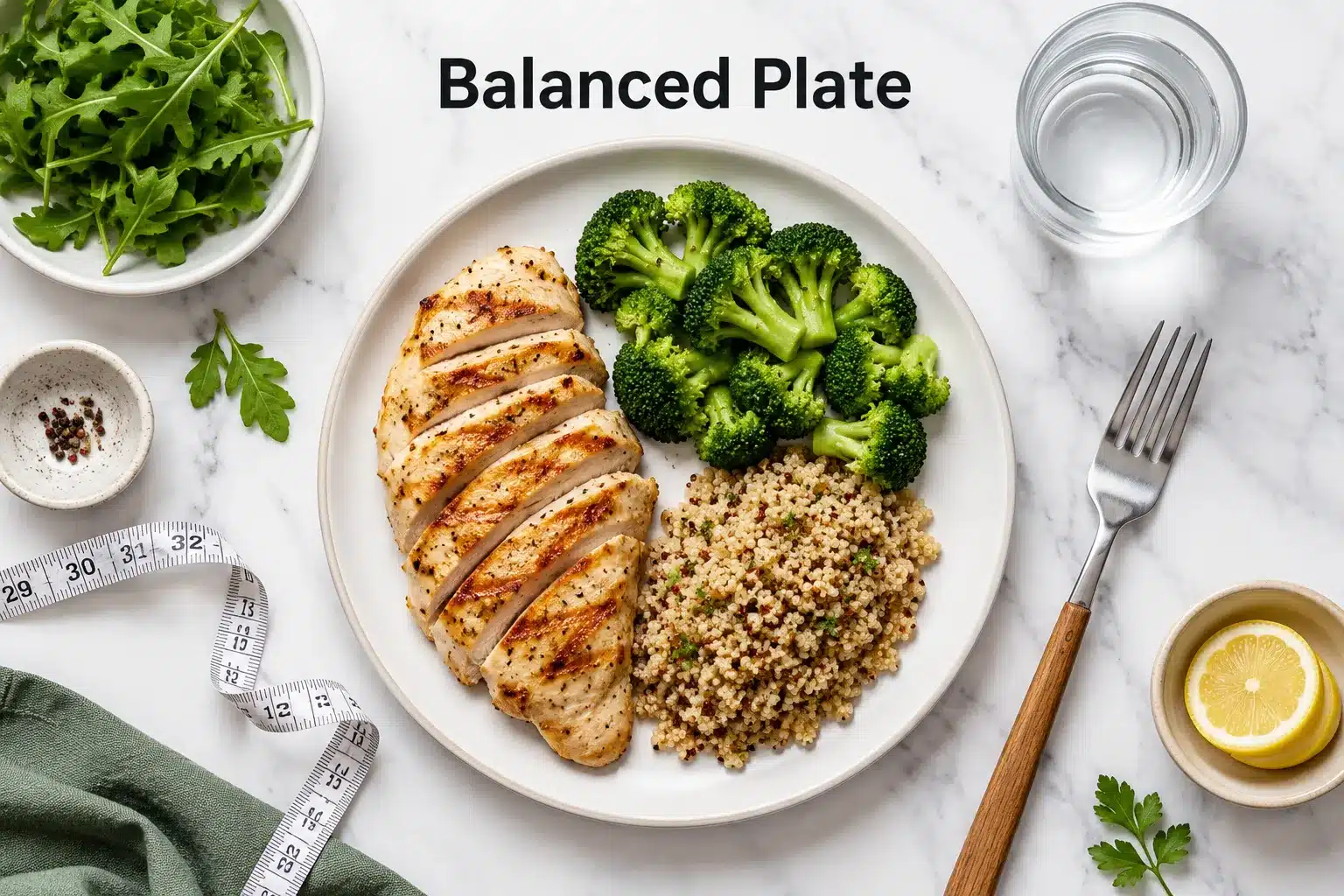
The core structure of a well-designed GLP-1 dinner looks like this:
- Protein first: 3 to 5 ounces of lean protein (roughly 20 to 35 grams of protein)
- Non-starchy vegetables: 1 to 2 cups, cooked or raw
- Optional complex carbohydrate: a small portion (about one-quarter of the plate) of quinoa, brown rice, sweet potato, or lentils
- Healthy fat in moderation: a drizzle of olive oil or a small serving of avocado, not a large portion
What to keep small or skip entirely: high-fat sauces, cream-based dishes, fried foods, large bread portions, and carbonated drinks with the meal.
The “plate method” works well here. Fill half the plate with vegetables, one quarter with lean protein, and one quarter with a complex carb. This naturally controls portion size without counting calories at every meal.
“The goal isn’t to eat as little as possible. It’s to eat enough of the right foods so your body gets the nutrients it needs while your medication does its job.”
For a deeper look at how GLP-1 medications change your metabolism and appetite signals, see our GLP-1 transformation guide.
Best High-Protein Low-Carb GLP-1 Dinner Ideas
High-protein, lower-carb dinners are the most effective GLP-1 dinner ideas for preserving muscle mass during weight loss and staying satisfied on smaller portions. Protein has the highest satiety value per calorie and is the hardest macronutrient to overeat, which aligns well with the reduced appetite most GLP-1 users experience.
Top protein sources for GLP-1 dinners
| Protein Source | Serving Size | Approx. Protein | Prep Difficulty |
|---|---|---|---|
| Grilled chicken breast | 4 oz | 35g | Easy |
| Baked salmon | 4 oz | 28g | Easy |
| Shrimp (steamed or sauteed) | 4 oz | 24g | Very easy |
| Baked cod or tilapia | 4 oz | 26g | Easy |
| Eggs (2 large) | 2 eggs | 12g | Very easy |
| Firm tofu (pan-seared) | 5 oz | 18g | Easy |
| Canned tuna in water | 3 oz | 22g | No cook |
| Greek yogurt (plain, full dinner use) | 6 oz | 17g | No cook |
| Lentils (cooked) | 1/2 cup | 9g | Moderate |
| Edamame | 1/2 cup | 9g | Very easy |
Five practical high-protein GLP-1 dinner ideas
- Lemon herb baked salmon with steamed broccoli and a small portion of quinoa
- Sheet pan chicken thighs (skin removed) with zucchini, bell peppers, and cherry tomatoes
- Shrimp stir-fry with bok choy, snap peas, and a light soy-ginger sauce over cauliflower rice
- Turkey taco bowls with ground turkey, black beans, shredded cabbage, salsa, and a small corn tortilla
- Egg and vegetable frittata with spinach, mushrooms, and feta, served with a side salad
Each of these keeps fat moderate, avoids heavy sauces, and delivers at least 25 grams of protein per serving.
How Much Should I Eat on GLP-1 Medication at Dinner
Most people on GLP-1 medications should aim for a dinner of 300 to 500 calories, though the right amount depends on total daily calorie goals, body size, and activity level. The medication itself will reduce hunger signals, so many users naturally eat less without tracking strictly.
A practical rule: stop eating when you feel about 70 to 80 percent full. GLP-1 medications enhance satiety signals, so fullness arrives faster and more strongly than before. Ignoring that signal and eating past it is one of the most common causes of nausea and discomfort.
General portion guidelines for GLP-1 dinner:
- Protein: 3 to 5 ounces (palm-sized)
- Vegetables: 1 to 2 cups (fist-sized or larger)
- Complex carb: 1/4 to 1/2 cup cooked (about the size of a tennis ball)
- Fat: 1 teaspoon of oil or 1/4 of an avocado
If you are working with a registered dietitian or a GLP-1 weight loss program, they may set a specific calorie target. For most people in the early weeks of GLP-1 therapy, eating three small meals a day with no snacks is a sustainable starting point.
GLP-1 Dinner Ideas That Won’t Cause Nausea
The dinners least likely to cause nausea on GLP-1 are those that are low in fat, low in fiber (relative to a very large portion), easy to digest, and served in small amounts. Nausea is most commonly triggered by fatty foods, large portions, eating too fast, and lying down shortly after eating.
Low-nausea dinner options
- Plain baked chicken or fish with steamed or roasted vegetables (no heavy sauces)
- Broth-based soups with lean protein and soft vegetables (chicken vegetable soup, miso with tofu)
- Scrambled eggs with sauteed spinach and a slice of whole grain toast
- Plain Greek yogurt with cucumber and a small portion of grilled protein (a light Mediterranean-style bowl)
- Soft-cooked lentil soup with a small piece of crusty bread
Foods most likely to cause nausea at dinner on GLP-1:
- Fried chicken, french fries, or any deep-fried food
- Creamy pasta dishes (Alfredo, carbonara)
- Large portions of red meat, especially fatty cuts
- Spicy curries or heavily seasoned dishes
- Alcohol (which also interacts poorly with GLP-1 medications)
- Carbonated drinks during the meal
If nausea is a persistent problem, consider eating dinner at least 2 to 3 hours before lying down, eating more slowly, and reducing portion size further until symptoms settle.
Easy GLP-1 Dinners When You Have No Appetite
When appetite is very low, the priority shifts from building a full plate to getting enough protein and staying hydrated. Easy, low-effort GLP-1 dinners that work even when you don’t feel hungry include foods that are soft, mild in flavor, and quick to prepare.
No-appetite dinner ideas (under 15 minutes):
- A small bowl of chicken broth with soft-cooked egg noodles and shredded rotisserie chicken
- Greek yogurt with a tablespoon of nut butter and a few berries
- Cottage cheese with sliced cucumber and a small handful of whole grain crackers
- A protein shake made with milk or a milk alternative, a scoop of protein powder, and a banana (blended)
- Scrambled eggs with a piece of whole grain toast
- Canned tuna mixed with a small amount of avocado, served on cucumber slices
The key is not to skip dinner entirely. Even a 200-calorie, high-protein mini-meal is better than nothing, because skipping meals can accelerate muscle loss during GLP-1-driven weight loss.
Common mistake: Waiting until you feel hungry to eat. On GLP-1 medications, hunger cues are suppressed, so you may never feel “hungry.” Set a regular dinner time and eat a small amount regardless of appetite level.
GLP-1 Dinner Meal Prep for the Week
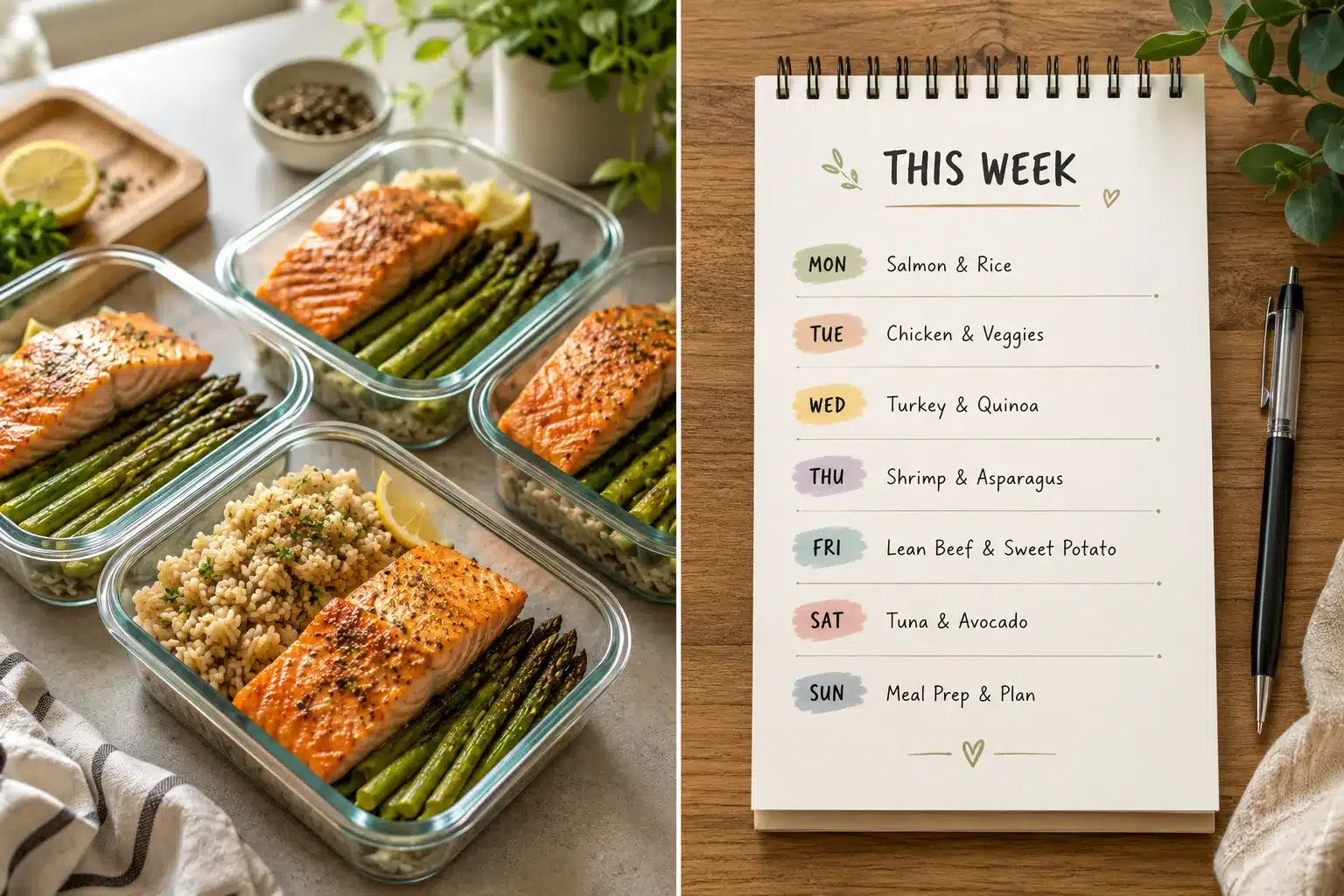
Meal prepping dinners for the week is one of the most practical strategies for people on GLP-1 medications. When appetite is low or nausea is present, the last thing you want to do is cook from scratch. Having ready-to-eat or easy-to-assemble dinners removes that barrier.
A simple 5-day GLP-1 dinner meal prep plan
| Day | Dinner | Prep Notes |
|---|---|---|
| Monday | Baked lemon salmon + roasted broccoli | Batch bake salmon on Sunday |
| Tuesday | Turkey and vegetable soup | Make a large pot, portion into containers |
| Wednesday | Sheet pan chicken + zucchini + peppers | Prep and roast all at once |
| Thursday | Shrimp stir-fry with cauliflower rice | Use pre-riced cauliflower to save time |
| Friday | Lentil and spinach soup | Batch cook lentils ahead |
Meal prep checklist
- Cook a large batch of a single lean protein (chicken breast, salmon, or ground turkey) on Sunday
- Roast two or three trays of mixed vegetables (broccoli, zucchini, peppers, asparagus)
- Prepare one or two whole grains or legumes (quinoa, lentils, brown rice)
- Store in individual glass containers portioned to your target dinner size
- Label each container with the day to reduce decision fatigue
This approach also makes it easier to track protein intake, which is important for preserving muscle mass during GLP-1-assisted weight loss. If you’re exploring GLP-1 medication options and costs, our compounding pharmacy semaglutide cost breakdown covers what to expect financially.
Foods to Avoid on GLP-1 at Dinner Time
Several food categories consistently worsen GLP-1 side effects at dinner and should be limited or avoided. Because GLP-1 medications slow gastric emptying, foods that are already slow to digest become even more problematic.
Foods to avoid or minimize at GLP-1 dinners
High-fat foods:
- Fried foods of any kind
- Fatty cuts of meat (ribeye, pork belly, lamb chops with fat)
- Full-fat cheese in large amounts
- Cream-based sauces and soups
High-sugar or refined carb foods:
- White bread, white pasta in large portions
- Sugary sauces (teriyaki with added sugar, sweet and sour sauce)
- Desserts immediately after dinner
Gas-producing foods (especially in large amounts):
- Raw cruciferous vegetables in very large portions (broccoli, cauliflower, Brussels sprouts), cooked versions are better tolerated
- Beans and legumes if you’re in the early weeks of GLP-1 therapy (introduce gradually)
- Carbonated beverages
Alcohol:
Alcohol slows digestion further, lowers blood sugar unpredictably, and reduces inhibitions around food choices. Most GLP-1 prescribers recommend limiting or avoiding alcohol, particularly at dinner.
Edge case: Some people tolerate small amounts of these foods without issue, especially after several months on GLP-1 therapy. The key is to test cautiously and in small portions, not to assume you’ll have the same reaction as someone else.
GLP-1 Dinners for Families So Everyone Can Eat Together
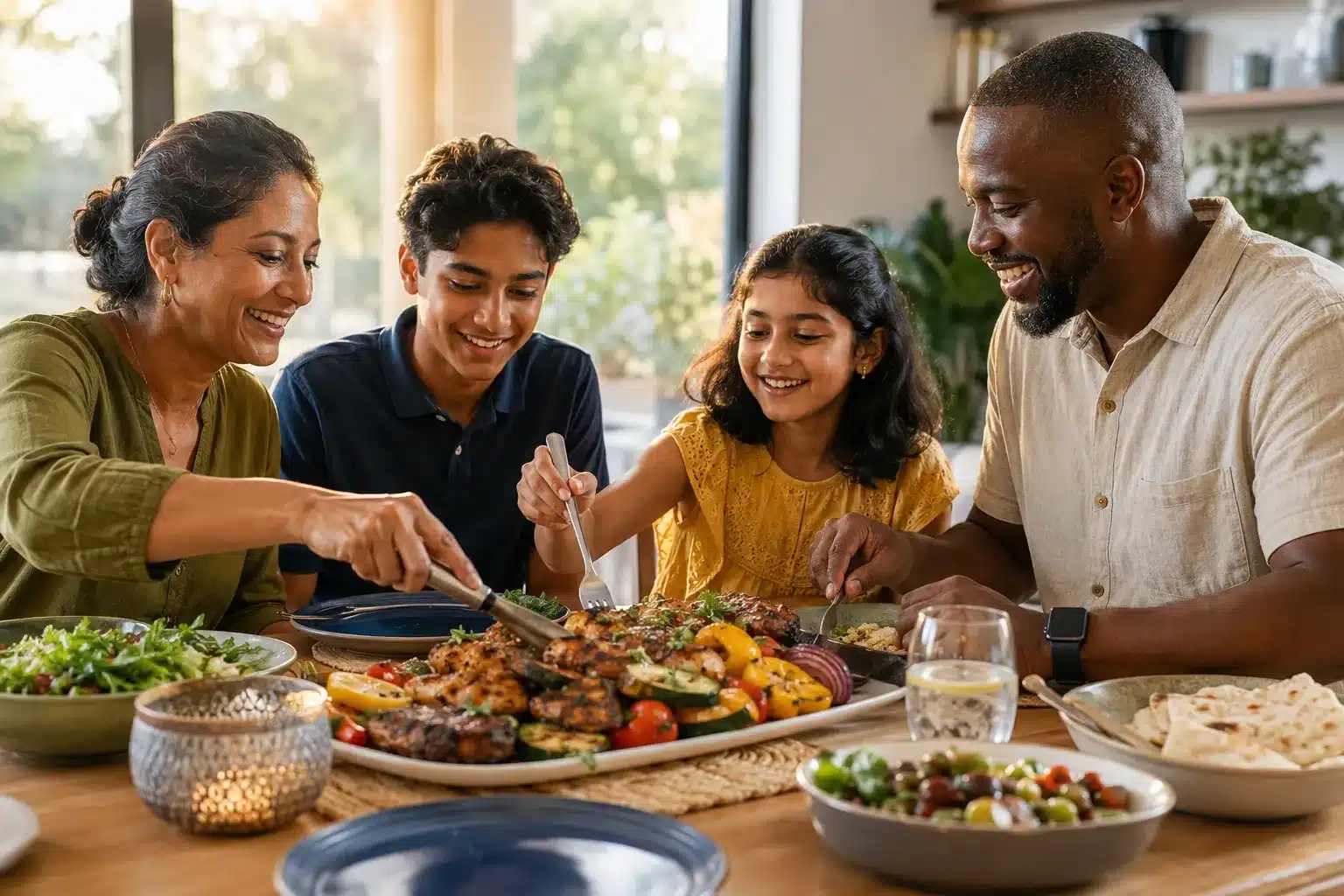
GLP-1 friendly dinners don’t have to be separate from what the rest of the family eats. The most practical approach is a “build-your-own” or “base plus add-ons” format, where the GLP-1 user eats a smaller, protein-forward portion and family members add higher-calorie sides or larger servings.
Family-friendly GLP-1 dinner formats
Taco or burrito bowls:
- Base: seasoned ground turkey or chicken, black beans, shredded cabbage, salsa, lime
- GLP-1 user: small bowl, skip the tortilla or use one small corn tortilla
- Family add-ons: flour tortillas, cheese, sour cream, guacamole, rice
Sheet pan dinners:
- Base: chicken thighs or salmon, roasted vegetables
- GLP-1 user: smaller protein portion, extra vegetables
- Family add-ons: crusty bread, a side of pasta or roasted potatoes
Stir-fry nights:
- Base: shrimp or chicken with mixed vegetables in a light sauce
- GLP-1 user: serve over cauliflower rice or a small portion of brown rice
- Family add-ons: regular white or brown rice in larger portions, egg rolls
Soup nights:
- A large pot of chicken vegetable or lentil soup works for everyone
- GLP-1 user: a smaller bowl, focus on the protein and vegetable content
- Family add-ons: crusty bread, a side salad with dressing
This approach avoids cooking two separate meals and keeps dinner a shared experience.
How Long After GLP-1 Injection Should I Eat Dinner
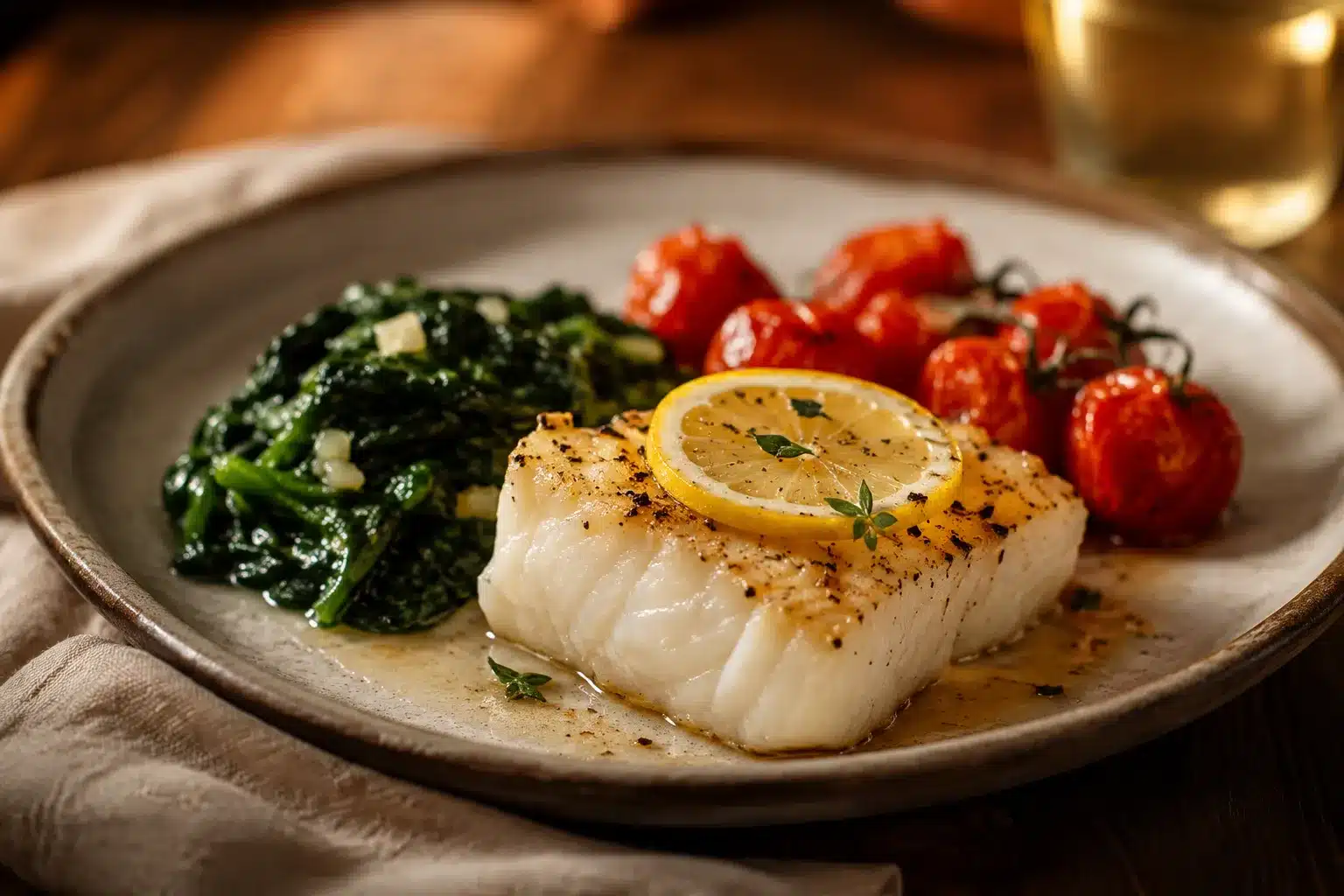
There is no strict medical requirement to wait a specific amount of time after a GLP-1 injection before eating dinner. Weekly GLP-1 injections (semaglutide, tirzepatide) work continuously over seven days, so the injection timing does not directly dictate when you should eat.
However, many people report that nausea peaks in the 24 to 72 hours after their weekly injection. A practical approach is to schedule your injection on a day when you can eat lighter meals for the following two to three days, including dinner.
Practical timing tips:
- If you inject on a Friday evening, plan for lighter, easier-to-digest dinners on Saturday and Sunday
- Eat dinner at least 2 to 3 hours before lying down, regardless of injection timing
- If nausea is severe in the first day or two post-injection, prioritize liquid or semi-liquid protein sources (broth, protein shakes, yogurt) at dinner
For daily GLP-1 formulations (older versions like liraglutide), injecting 30 to 60 minutes before dinner is common practice, but this varies by prescriber guidance. Always follow your specific medication instructions.
GLP-1 Friendly Restaurant Dinner Options
Eating at restaurants on GLP-1 medications is manageable with a few consistent strategies. The main challenge is that restaurant portions are large and dishes are often high in fat, sodium, and hidden calories. You don’t need to avoid restaurants, but you do need a plan.
Best restaurant choices for GLP-1 users at dinner
- Grilled fish or chicken (not fried, not breaded) with steamed or roasted vegetables
- Sushi (sashimi or simple rolls without heavy sauces, in small portions)
- Mediterranean restaurants: grilled protein, hummus, tabbouleh, roasted vegetables
- Mexican: grilled protein bowls, skip the chips and large portions of rice
- Asian cuisine: steamed dumplings, miso soup, stir-fried vegetables with protein (ask for sauce on the side)
- American grill: a 4 to 6 ounce lean protein, a side salad, and steamed vegetables
Restaurant strategies
- Ask for a half portion or a lunch-sized serving at dinner
- Request sauces and dressings on the side
- Box up half the meal before you start eating
- Avoid the bread basket
- Choose still water over sparkling, and skip alcohol or limit to one small glass of dry wine
Common mistake: Ordering a “healthy-sounding” salad with a creamy dressing, croutons, and a large portion of cheese. These can be higher in fat and calories than a grilled protein plate. Ask for olive oil and vinegar on the side.
Best Vegetables and Proteins for GLP-1 Dinners
The best vegetables for GLP-1 dinners are non-starchy, easy to digest when cooked, and nutrient-dense. The best proteins are lean, minimally processed, and easy to portion.
Top vegetables for GLP-1 dinners
- Zucchini (low in fiber when cooked, very gentle on the stomach)
- Spinach and kale (sauteed, not raw in large amounts)
- Asparagus (roasted or steamed)
- Bell peppers (roasted)
- Cucumber (raw, very easy to digest)
- Green beans (steamed or sauteed)
- Carrots (roasted or steamed)
- Tomatoes (roasted or fresh in small amounts)
Cruciferous vegetables like broccoli, cauliflower, and Brussels sprouts are nutritious but can cause gas and bloating in large amounts, especially in the early weeks of GLP-1 therapy. Cook them well and start with smaller portions.
Top proteins for GLP-1 dinners
- Skinless chicken breast or thigh (baked, grilled, poached)
- Salmon and other fatty fish (the fat in fish is well-tolerated compared to animal fat)
- Shrimp (very low in fat, high in protein)
- Eggs (versatile, fast, and easy to digest)
- Firm or extra-firm tofu (pan-seared or baked)
- Canned tuna or sardines (convenient, no cooking required)
- Lentils and chickpeas (moderate protein, introduce gradually)
GLP-1 Dinner Ideas If You’re Vegetarian
Vegetarian GLP-1 dinner ideas are entirely practical, but they require more intentional protein planning since plant proteins are generally lower in protein density than animal sources. The goal is still 20 to 35 grams of protein per dinner.
High-protein vegetarian GLP-1 dinners
Tofu and vegetable stir-fry over cauliflower rice, use extra-firm tofu, pan-sear until golden, add bok choy, snap peas, and a light tamari sauce. Approximately 28 grams of protein per serving.
Lentil and spinach soup, red lentils cook quickly, pair with cumin, turmeric, and a squeeze of lemon. Add a small portion of Greek yogurt on the side. Approximately 22 grams of protein.
Egg and vegetable frittata, four eggs with spinach, mushrooms, cherry tomatoes, and feta. Approximately 28 grams of protein.
Chickpea and roasted vegetable bowl, roasted chickpeas, zucchini, bell pepper, and a tahini-lemon dressing over a small portion of quinoa. Approximately 20 grams of protein.
Greek yogurt protein bowl, plain full-fat Greek yogurt with cucumber, olives, cherry tomatoes, and a drizzle of olive oil. Add a side of hard-boiled eggs for extra protein. Approximately 24 grams of protein.
Tip for vegetarians: Combining legumes with a grain (lentils and rice, chickpeas and quinoa) provides a complete amino acid profile, which is important for muscle preservation during GLP-1-assisted weight loss.
Why Do I Feel Sick After Eating Dinner on GLP-1
Feeling sick after dinner on GLP-1 is one of the most common side effects, particularly in the first 8 to 12 weeks of treatment or after a dose increase. The primary cause is delayed gastric emptying: food sits in the stomach longer than normal, creating pressure, bloating, and nausea.
The most common dinner-specific triggers:
- Eating too much (overfilling a stomach that empties slowly)
- Eating too fast (not giving satiety signals time to register)
- High-fat meals (fat slows gastric emptying more than any other macronutrient)
- Lying down within an hour or two of eating
- Carbonated drinks with dinner
- Alcohol
What to do if you feel sick after dinner:
- Sit upright for at least 90 minutes after eating
- Reduce dinner portion size by 20 to 30 percent
- Eliminate the highest-fat item from your dinner
- Eat more slowly, aim for 20 minutes minimum per meal
- If nausea is severe and persistent, contact your prescriber; a dose reduction may be appropriate
For people managing GLP-1 costs and access, our guide to affordable semaglutide telehealth options covers how to stay on therapy without financial stress.
Budget-Friendly GLP-1 Dinner Recipes
Eating well on GLP-1 medications does not require expensive specialty foods. Some of the most GLP-1 friendly proteins and vegetables are among the cheapest items in any grocery store.
Budget GLP-1 dinner staples (estimated cost per serving, 2026)
- Eggs: Roughly $0.25 to $0.40 per egg, one of the cheapest protein sources available
- Canned tuna or sardines: $1.00 to $2.00 per can, 20+ grams of protein
- Dried lentils: $0.50 to $0.75 per serving when bought in bulk
- Frozen vegetables: $0.50 to $1.00 per serving (broccoli, spinach, mixed vegetables)
- Chicken thighs (bone-in): Often $1.50 to $2.50 per serving, cheaper than breasts
- Canned chickpeas: $0.75 to $1.00 per serving
- Frozen shrimp: $2.00 to $3.00 per serving when bought in bulk bags
Three budget GLP-1 dinners under $4 per serving
Egg and vegetable scramble: Two eggs, frozen spinach, canned diced tomatoes, and a slice of whole grain toast. Total cost: approximately $1.50 per serving.
Lentil soup: Dried red lentils, canned diced tomatoes, frozen carrots, cumin, and garlic. Makes four to six servings. Total cost: approximately $1.00 to $1.50 per serving.
Baked chicken thigh with frozen broccoli: One bone-in chicken thigh (skin removed), a cup of frozen broccoli, and a small portion of brown rice. Total cost: approximately $2.50 to $3.00 per serving.
Cost-saving tip: Buying proteins in bulk and freezing them in individual portions is the single most effective way to reduce per-meal cost while maintaining GLP-1 friendly eating habits.
If you’re comparing GLP-1 medication costs alongside your food budget, our tirzepatide cost guide and cost of GLP-1 semaglutide and compounded tirzepatide breakdown are useful references.
Key Takeaway
The most important thing to understand about GLP-1 dinner ideas is that less is more, but quality matters enormously. A small plate built around lean protein, cooked vegetables, and a modest complex carbohydrate will serve you far better than a large “healthy” meal that overwhelms a stomach that now empties more slowly. Nausea, bloating, and discomfort are almost always linked to portion size, fat content, or eating speed, all of which are within your control.
Meal prepping, building family-friendly base meals, and keeping a short list of go-to dinners removes the daily decision fatigue that makes GLP-1 eating harder than it needs to be. Whether you are vegetarian, on a tight budget, or eating out at restaurants, there are practical, satisfying options at every level.
7 Best GLP-1 Providers Ranked: Accreditation, Flexibility & Support Compared (2026 Update)
32,000+ Patients Can't All Be Wrong: See the Top-Rated GLP-1 Providers: Compared on accreditation, plan flexibility, and patient support — updated for 2026.
BMI MD GLP-1 Microdosing Plan
- Specialized microdosing options (sublingual drops or low-dose injections)
- Ideal for maintaining weight or tapering off higher doses safely
- Fully bundled plan with no hidden monthly platform memberships
DirectMeds Weight Loss Solutions
- Sourced from accredited, state-licensed 503A compounding pharmacies
- No-frills high-volume savings passed directly to the patient
- Includes clinical consultation and cold-chain shipping updates
MEDVi Flat-Rate Telehealth
- Flat monthly rate holds steady even at maximum maintenance doses
- No dosage upcharges or graduation fee penalties
- Offers both injectable and advanced oral thin-film delivery options
Gala GLP-1 Care Program
- All-inclusive plan with no standalone membership costs
- Continuous text-based messaging access with state-licensed clinicians
- Temperature-controlled, cold-chain medication shipping included
Measured GLP-1 Metabolic Health
- Comprehensive metabolic health screening and expert intake analysis
- Predictable long-term budgeting with stable plan pricing
- High-end responsive dashboard with integrated diagnostic support
Refills GLP-1 (TryRefills Plan)
- Flat rate holds steady as titration scales up
- Includes clinical guides for active side-effect management
- Bundles in foundational nutritional strategies alongside medication
AltRx GLP-1 Transactional Reorders
- Zero recurring auto-billing — pay entirely on a transactional basis
- Rapid text-to-order format saves time for experienced patients
- Provides both injectable forms and fast-dissolving tablet variations
Conclusion
GLP-1 dinner ideas don’t need to be complicated, restrictive, or joyless. The framework is simple: prioritize lean protein, fill half the plate with cooked vegetables, keep portions modest, and avoid high-fat or fried foods that will sit heavily in a slower-emptying stomach.
Actionable next steps:
- Choose three to five go-to dinners from the ideas in this guide and rotate them for the first month.
- Set a consistent dinner time and eat it regardless of appetite level, do not skip dinner entirely.
- Meal prep on Sundays: batch cook one protein, one vegetable, and one grain or legume.
- If nausea is a problem, eliminate the highest-fat item from your dinner first and reduce portion size by 20 percent.
- Work with a registered dietitian if you are losing weight quickly, they can help ensure you are meeting protein and micronutrient needs on smaller portions.
For more on how GLP-1 medications change your body and metabolism beyond just appetite, read our complete GLP-1 transformation guide. If you’re exploring GLP-1 program options, our best GLP-1 weight loss programs review covers what to look for in a supervised program.
Frequently Asked Questions
What is the best dinner for someone just starting GLP-1 medication?
Start with very simple, low-fat meals: baked chicken or fish with steamed vegetables and a small portion of brown rice or quinoa. Avoid anything fried, creamy, or heavily spiced in the first few weeks while your body adjusts to the medication.
Can I eat carbs at dinner on GLP-1?
Yes, but keep the portion small, about one quarter of your plate. Choose complex carbohydrates like quinoa, sweet potato, lentils, or brown rice rather than white bread, white pasta, or sugary sides. Complex carbs digest more slowly and provide more fiber per serving.
How many calories should a GLP-1 dinner be?
Most GLP-1 users do well with dinners between 300 and 500 calories, but this depends on total daily intake goals and body size. Focus on protein and vegetable quality first, and let the calorie count follow naturally from appropriate portion sizes.
Is it okay to skip dinner on GLP-1 if I’m not hungry?
Skipping dinner occasionally is not harmful, but doing it regularly can accelerate muscle loss and lead to nutrient deficiencies. If you’re not hungry, eat a small, high-protein mini-meal (yogurt, eggs, a protein shake) rather than skipping entirely.
Why does red meat cause problems on GLP-1?
Red meat, especially fatty cuts, is high in fat and takes longer to digest. On GLP-1 medications, which already slow gastric emptying, this combination frequently causes nausea, bloating, and discomfort. Lean cuts in small portions (3 to 4 ounces of sirloin or tenderloin) are better tolerated than fatty cuts or large steaks.
Can I drink alcohol with dinner on GLP-1?
Most GLP-1 prescribers recommend limiting or avoiding alcohol. Alcohol slows digestion further, can cause unpredictable blood sugar fluctuations, and increases the risk of nausea. If you do drink, one small glass of dry wine with food is generally better tolerated than spirits or beer.
What if I feel full after just a few bites at dinner?
This is normal on GLP-1 medications, especially in the first few months. Stop eating when you feel 70 to 80 percent full, wait 20 minutes, and eat the rest if you’re still hungry. Do not force yourself to finish a full portion. Prioritize getting your protein in first before filling up on vegetables or carbs.
Are protein shakes a good dinner replacement on GLP-1?
Occasionally, yes, especially on days when nausea is high or appetite is very low. A protein shake with 25 to 30 grams of protein, made with milk or a milk alternative, is a reasonable dinner substitute. It should not be a daily habit, as whole food sources provide micronutrients that shakes don’t fully replicate.
How do I get enough protein at dinner on GLP-1 if I can only eat a small amount?
Focus on protein-dense foods first: fish, shrimp, chicken breast, eggs, and Greek yogurt have the highest protein per calorie. Eat protein before vegetables and carbs at every dinner. A 4-ounce serving of salmon or chicken delivers 25 to 35 grams of protein in a very small volume.
What are the best GLP-1 dinner ideas for someone who hates cooking?
Rotisserie chicken (skin removed) with pre-washed bagged salad and canned beans is a complete, no-cook dinner. Canned tuna or sardines on whole grain crackers with cucumber slices is another. Greek yogurt with a hard-boiled egg and some raw vegetables requires zero cooking. Keeping these options stocked means you always have a GLP-1 friendly dinner available with minimal effort.
Do I need to eat differently on the day of my GLP-1 injection?
There is no strict dietary rule for injection day, but many people find that eating lighter, lower-fat meals in the 24 to 48 hours after injection reduces nausea. Plan for simple, easy-to-digest dinners on injection day and the following day.
Can children or teenagers eat the same GLP-1 friendly dinners as an adult on medication?
Yes. The meals described in this guide are nutritionally appropriate for the whole family. Children and teenagers may need larger portions and higher-calorie additions (more rice, bread, or healthy fats) to meet their growth needs, but the base meals are healthy for all ages.
References
- Drucker, D.J. (2018). Mechanisms of Action and Therapeutic Application of Glucagon-like Peptide-1. Cell Metabolism, 27(4), 740-756. https://doi.org/10.1016/j.cmet.2018.03.001
- Wilding, J.P.H., et al. (2021). Once-Weekly Semaglutide in Adults with Overweight or Obesity. New England Journal of Medicine, 384, 989-1002. https://doi.org/10.1056/NEJMoa2032183
- Jastreboff, A.M., et al. (2022). Tirzepatide Once Weekly for the Treatment of Obesity. New England Journal of Medicine, 387, 205-216. https://doi.org/10.1056/NEJMoa2206038
- Academy of Nutrition and Dietetics. (2023). Position of the Academy of Nutrition and Dietetics: Interventions for the Treatment of Overweight and Obesity in Adults. Journal of the Academy of Nutrition and Dietetics, 123(5), 822-874.
- U.S. Food and Drug Administration. (2023). FDA Approves New Medication for Chronic Weight Management. https://www.fda.gov/news-events/press-announcements/fda-approves-new-medication-chronic-weight-management
Tags: GLP-1 dinner ideas, semaglutide meal plan, tirzepatide diet, high protein low carb dinner, GLP-1 nausea relief, GLP-1 friendly recipes, weight loss dinner ideas, GLP-1 meal prep, vegetarian GLP-1 meals, budget GLP-1 dinners, GLP-1 nutrition, GLP-1 foods to avoid

With over 13 years of experience in holistic health blogging, I aim to help you navigate your wellness journey with honest insights, expert-backed advice, and a sprinkle of real-world practicality.
Certified Wellness Writer | Herbal Nutrition Advocate | Wellness Research Enthusiast


