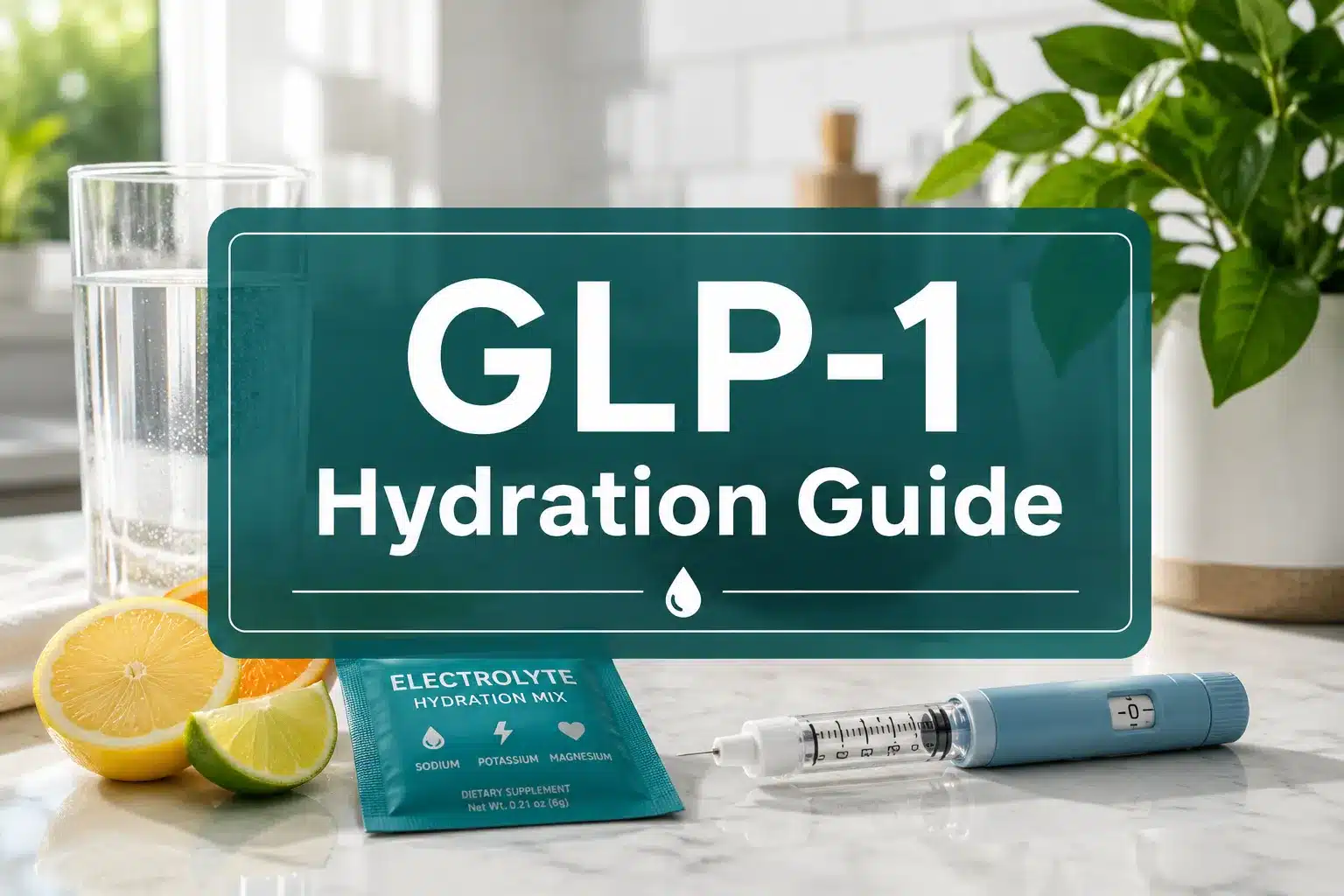
GLP-1 Hydration Guide: How to Stay Properly Hydrated (2026)
Last updated: July 26, 2026
Quick Answer
People taking GLP-1 medications like semaglutide (Ozempic, Wegovy) or tirzepatide (Mounjaro, Zepbound) face a higher risk of dehydration because these drugs suppress appetite, reduce thirst cues, and can cause nausea and vomiting that lead to fluid loss. Most GLP-1 users should aim for 8 to 10 cups (64 to 80 ounces) of fluid per day, with added electrolytes when experiencing side effects, exercising, or spending time in heat. This GLP-1 Hydration Guide covers exactly how much to drink, what to drink, and how to avoid the most common hydration mistakes on these medications.
Key Takeaways
- GLP-1 drugs slow gastric emptying and blunt thirst signals, making dehydration easy to miss
- Target 64 to 80 ounces of fluid daily; increase this during exercise, hot weather, or active nausea
- Electrolytes matter as much as water volume, sodium, potassium, and magnesium are the key three
- Early dehydration signs on GLP-1 include dark urine, dizziness, headache, and muscle cramps
- Sipping small amounts throughout the day works better than drinking large amounts at once
- Sugary sports drinks are not ideal; low-sugar electrolyte options are a better fit for weight-loss goals
- People with kidney disease should consult their prescriber before adjusting fluid or electrolyte intake
- Hydration challenges are most intense in the first 4 to 8 weeks; they often improve as the body adjusts
- Drinking too much plain water without electrolytes can cause hyponatremia, especially if vomiting has occurred
- Ozempic, Wegovy, Mounjaro, and Zepbound all carry similar hydration risks despite different dosing schedules
What Is GLP-1 and Why Does It Affect Hydration?
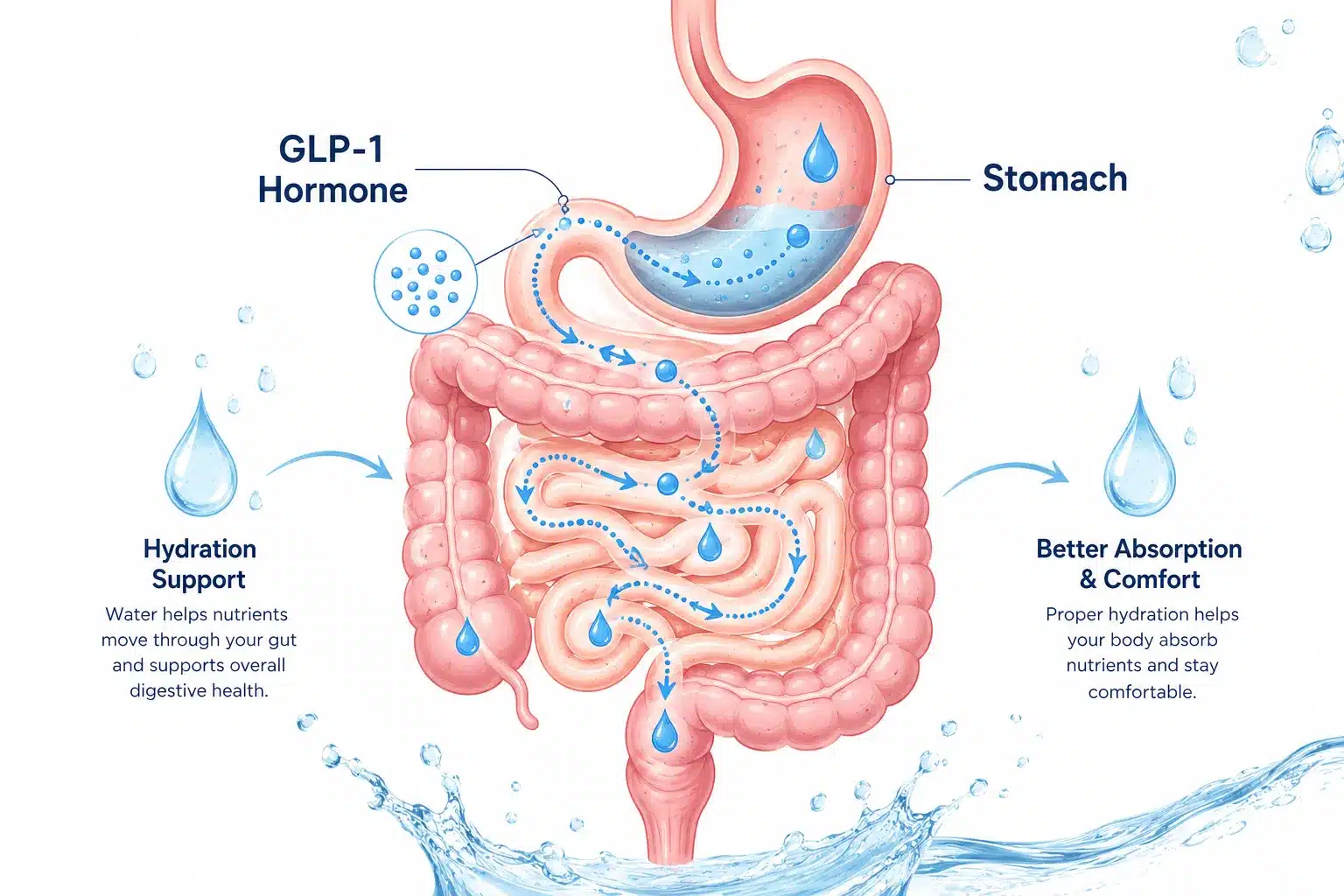
GLP-1 (glucagon-like peptide-1) is a hormone naturally produced in the gut after eating. It signals the pancreas to release insulin, tells the brain you are full, and slows the rate at which the stomach empties. GLP-1 receptor agonist medications mimic this hormone at much higher levels than the body produces on its own, which is why they are so effective for blood sugar control and weight loss.
7 Best GLP-1 Providers Ranked: Accreditation, Flexibility & Support Compared (2026 Update)
32,000+ Patients Can't All Be Wrong: See the Top-Rated GLP-1 Providers. We compared the leading online GLP-1 providers based on program features, clinical support, convenience, and overall value.
BMI MD GLP-1 Microdosing Plan
- Specialized microdosing options, including sublingual drops and low-dose injections
- Designed for people interested in maintaining weight or gradually adjusting treatment
- Bundled program structure without a separate monthly platform membership
- Online access makes the process convenient from home

DirectMeds Weight Loss Solutions
- Online weight-loss program with a straightforward patient experience
- Compounded medication options through state-licensed compounding pharmacies
- Includes clinical consultation as part of the process
- Provides shipping updates to help patients track their orders
MEDVi Flat-Rate Telehealth
- Flat-rate telehealth approach designed for easier budgeting
- No dosage-based pricing increases within the advertised program structure
- Offers injectable and oral thin-film delivery options
- Includes medical screening and asynchronous provider consultations
Gala GLP-1 Care Program
- Text-based access to state-licensed clinicians
- Cold-chain medication shipping included in the program
- Month-to-month program structure
- Designed for people who value convenient ongoing support
Measured GLP-1 Metabolic Health
- Comprehensive metabolic health screening and intake analysis
- Designed around longer-term metabolic health management
- Responsive dashboard with integrated health tracking tools
- Useful option for patients who value a more data-focused experience
Refills GLP-1 (TryRefills Plan)
- Clinical guidance designed to help patients manage common treatment concerns
- Includes foundational nutritional strategies alongside medication
- Designed around predictable ongoing treatment
- No hidden startup or processing fees according to the program information provided
AltRx GLP-1 Transactional Reorders
- Transactional reorder model without recurring auto-billing
- Designed for patients who already understand their treatment routine
- Fast text-to-order process for convenient reorders
- Offers injectable and fast-dissolving tablet variations
The hydration connection comes from several overlapping effects:
- Slowed gastric emptying means food and fluids sit in the stomach longer, which reduces the natural thirst drive that normally follows eating
- Appetite suppression means people eat and drink less overall, cutting into fluid intake from food (roughly 20% of daily fluid typically comes from food)
- Nausea and vomiting, the most common GLP-1 side effects, cause direct fluid loss
- Reduced caloric intake can lower the body’s production of metabolic water, a small but real contribution to hydration
For a deeper look at how these medications change your body, see this guide on what GLP-1 really does to your body, weight, and metabolism.
Common mistake: Many new GLP-1 users assume that because they are not hungry or thirsty, their body does not need fluids. Thirst is a lagging indicator of hydration status, by the time you feel thirsty, mild dehydration has already begun.
How Much Water Should I Drink on GLP-1?
Most GLP-1 users should target 64 to 80 ounces (8 to 10 cups) of fluid per day as a baseline. This is slightly above the standard 8-cup recommendation because GLP-1 drugs reduce the passive fluid intake that normally comes from eating regular-sized meals.
Adjust upward in these situations:
| Situation | Additional Fluid Recommended |
|---|---|
| Active nausea or vomiting | 16 to 24 extra ounces, with electrolytes |
| Exercise (moderate, 30-60 min) | 16 to 24 extra ounces |
| Hot or humid weather | 16 to 32 extra ounces |
| High-fiber diet or fiber supplements | 8 to 16 extra ounces |
| Fever or illness | 24 to 32 extra ounces |
Choose this approach if: You are in the first 4 to 8 weeks on GLP-1 therapy, when nausea is most likely. During this window, set a phone reminder to sip every 30 to 45 minutes rather than relying on thirst.
The National Academy of Medicine’s general adult fluid recommendation is approximately 91 ounces per day for women and 125 ounces per day for men from all sources combined (including food). GLP-1 users who are eating significantly less food should compensate by drinking more. (National Academy of Medicine, 2004)
Why Do GLP-1 Drugs Cause Dehydration?
GLP-1 medications cause dehydration through three main pathways: reduced fluid intake, active fluid loss, and altered kidney signaling.
Pathway 1: Reduced intake
When appetite drops sharply, people often forget to drink as well as eat. A person who previously ate three meals a day was passively consuming roughly 16 to 32 ounces of fluid from food alone. On GLP-1, that source shrinks considerably.
Pathway 2: Active fluid loss
Nausea and vomiting are reported by 15 to 44% of patients starting GLP-1 therapy, according to clinical trial data for semaglutide (New England Journal of Medicine, STEP trials, 2021). Each episode of vomiting can mean a loss of 200 to 400 milliliters of fluid plus electrolytes.
Pathway 3: Diuretic-adjacent effects
Some early research suggests GLP-1 receptors in the kidney may influence sodium and water reabsorption, though this mechanism is still being studied. What is well established is that weight loss itself, especially rapid weight loss, is associated with increased fluid turnover.
For those considering GLP-1 medications and wanting to understand the full cost and access picture, our complete guide to RX medications for weight loss covers the major options in 2026.
Signs of Dehydration While Taking GLP-1
Dehydration on GLP-1 can be easy to miss because the usual hunger-thirst connection is disrupted. Knowing the early warning signs is the most practical defense.
Early signs (mild dehydration):
- Urine that is dark yellow or amber (pale yellow is the target)
- Headache, especially in the afternoon
- Fatigue that feels disproportionate to activity level
- Dry mouth or sticky saliva
- Mild dizziness when standing up
Moderate signs (seek fluids immediately):
- Muscle cramps, particularly in the legs or feet
- Rapid heartbeat at rest
- Reduced urination (fewer than 3 times per day)
- Difficulty concentrating or brain fog
- Skin that is slow to bounce back when pinched (poor turgor)
Severe signs (contact a healthcare provider):
- Confusion or disorientation
- No urination for 8 or more hours
- Fainting or near-fainting
- Rapid, shallow breathing
- Sunken eyes
Quick self-check: The urine color test is the most reliable at-home indicator. Aim for pale lemonade yellow. If your urine is consistently darker, increase fluid intake and add electrolytes.
Best Electrolyte Drinks for GLP-1 Users
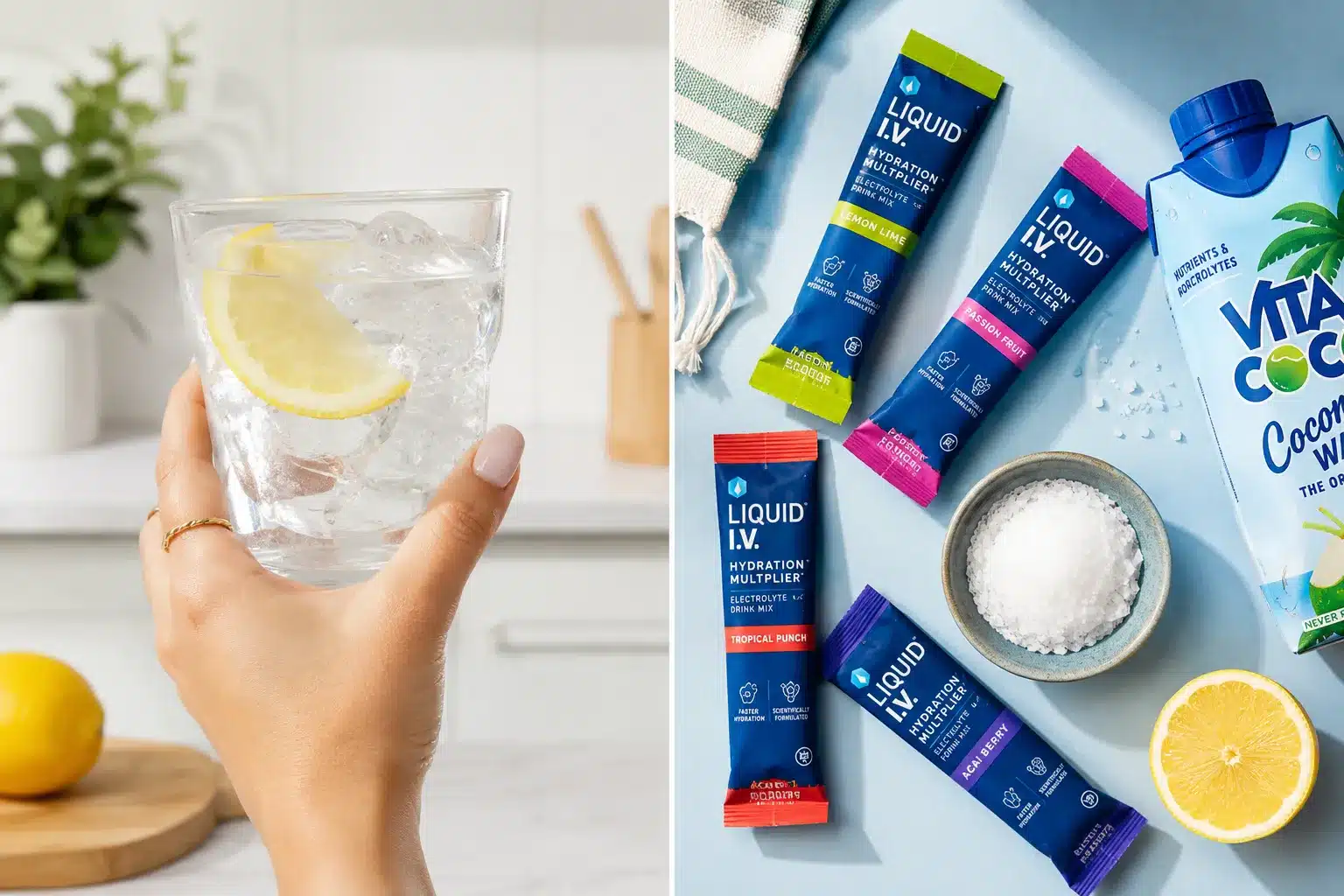
Plain water alone is not always enough on GLP-1, especially during nausea or vomiting episodes. The best electrolyte drinks for GLP-1 users are low in sugar, contain at least sodium and potassium, and are easy on a sensitive stomach.
What to look for:
- Sodium: 200 to 500 mg per serving
- Potassium: 100 to 300 mg per serving
- Magnesium: 20 to 60 mg per serving (optional but helpful for muscle cramps)
- Sugar: under 5 grams per serving (to avoid spiking blood sugar or adding empty calories)
- Flavor: mild, not overly sweet (strong flavors can worsen nausea)
Good options by category:
| Category | Examples | Best For |
|---|---|---|
| Low-sugar electrolyte packets | LMNT, Liquid IV (reduced sugar), Nuun | Daily use, exercise |
| Coconut water (plain) | Harmless Harvest, Vita Coco | Mild dehydration, potassium boost |
| Oral rehydration salts | Pedialyte (unflavored), DripDrop | Active nausea/vomiting |
| Electrolyte tablets | Nuun Sport, Hydrant | Travel, convenience |
| Bone broth | Low-sodium varieties | Nausea days, sodium replacement |
Avoid: Regular sports drinks like Gatorade or Powerade in full-sugar form. A 20-ounce bottle contains roughly 34 grams of sugar, which works against weight-loss goals and can worsen nausea.
Choose coconut water if: You prefer a whole-food option and your stomach is only mildly unsettled. Choose oral rehydration salts if you have vomited more than twice in a day.
Can You Drink Too Much Water on GLP-1?
Yes, overhydration is a real but less common risk on GLP-1. Drinking excessive amounts of plain water without adequate sodium can dilute blood sodium levels, a condition called hyponatremia.
Hyponatremia risk is elevated in GLP-1 users who:
- Have experienced repeated vomiting (sodium is lost with each episode)
- Are drinking large volumes of plain water to compensate for nausea
- Are elderly (older adults have a narrower sodium balance window)
- Take diuretics or certain blood pressure medications alongside GLP-1
Signs of overhydration or hyponatremia:
- Nausea and headache that worsen despite drinking more water
- Swelling in the hands, feet, or face
- Confusion or unusual fatigue
- Muscle weakness
The practical rule: If you have been vomiting, replace fluids with an electrolyte solution rather than plain water. The goal is not just volume, it is mineral balance. Drinking 10 cups of plain water after two vomiting episodes will not restore sodium or potassium.
GLP-1 Nausea and Dehydration Connection
Nausea is the most common GLP-1 side effect, and it creates a feedback loop that drives dehydration. Nausea reduces the desire to drink, vomiting removes fluids and electrolytes, and dehydration itself worsens nausea, making the cycle harder to break.
Breaking the cycle:
- Start with ice chips or very small sips (1 to 2 ounces every 10 to 15 minutes) rather than trying to drink a full glass
- Use cold or room-temperature fluids, very hot or very cold beverages can trigger nausea in some people
- Add a small amount of ginger (ginger tea, ginger chews) which has evidence for mild nausea relief (Cochrane Review, 2014)
- Avoid carbonated drinks during peak nausea, the gas can increase bloating and discomfort
- Try electrolyte popsicles as an alternative to drinking, they deliver fluids and minerals slowly
Timing matters: GLP-1 nausea is typically worst in the 24 to 72 hours after an injection. Plan to be more intentional about hydration during that window each week.
For more strategies on managing GLP-1 side effects, our semaglutide weight loss injections guide covers what to expect at each dose stage.
How to Stay Hydrated With GLP-1 Side Effects: A Practical Daily Plan
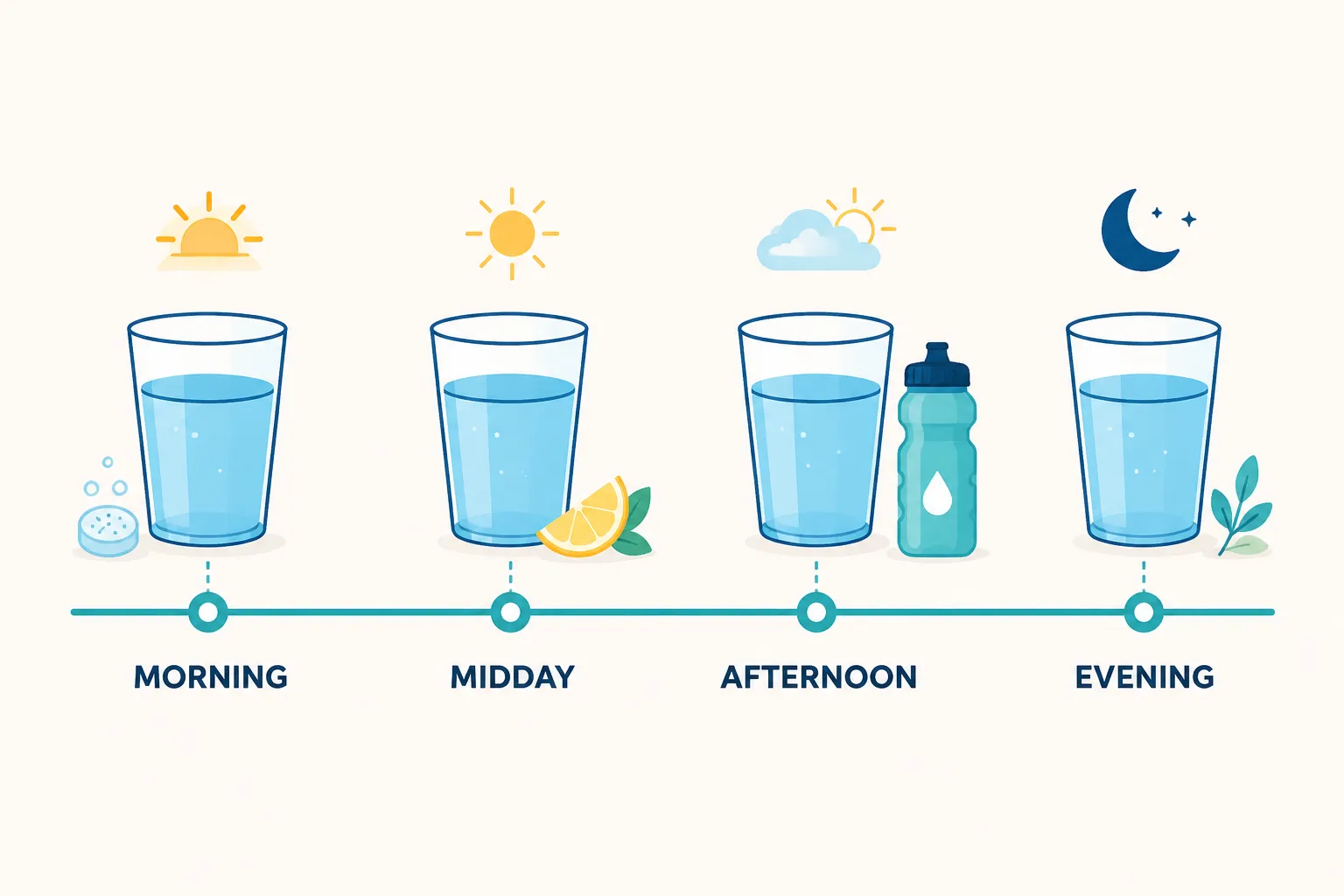
Staying hydrated on GLP-1 requires a structured approach because you cannot rely on hunger or thirst signals the way you normally would. The most effective strategy is scheduled sipping combined with electrolyte supplementation on high-risk days.
Daily hydration checklist for GLP-1 users:
- Wake up: Drink 8 to 12 ounces of water before coffee or any other beverage
- Morning: Sip 4 to 6 ounces every 30 minutes through a reusable bottle
- With meals: Drink 4 to 8 ounces, but avoid drinking large amounts immediately before or during eating (it can worsen fullness and nausea)
- Afternoon: Add an electrolyte drink if you have been active or if urine is dark
- Evening: Aim for another 8 to 16 ounces before 7 p.m. to avoid nighttime disruptions
- Injection days: Increase fluid intake by 16 to 24 ounces and keep electrolytes on hand
Practical tools that help:
- A 32-ounce marked water bottle (fill it twice daily as a visual goal)
- A hydration tracking app or simple tally in your phone notes
- Electrolyte packets stored with your injection supplies as a reminder
Does GLP-1 Dehydration Go Away Over Time?
For most people, the hydration challenges associated with GLP-1 improve significantly after the first 8 to 12 weeks. Nausea and vomiting tend to peak during dose escalation and then taper as the body adjusts to the medication.
What typically improves:
- Nausea frequency and intensity decrease after reaching a stable dose
- Appetite and food intake (including fluid from food) gradually normalize at a lower but consistent level
- Thirst cues become somewhat more reliable once the initial adjustment period passes
What does not fully go away:
- The structural reduction in food-derived fluid intake persists as long as appetite is suppressed
- The need for conscious hydration habits remains throughout treatment
- People who exercise, live in hot climates, or have physically demanding jobs will always need more intentional fluid intake on GLP-1
Edge case: A small percentage of people continue to experience significant nausea beyond 12 weeks. If nausea is severe enough to prevent adequate hydration, contact your prescriber. Dose reduction, injection timing changes, or anti-nausea medications may be appropriate.
GLP-1 Hydration Tips for Exercise and Heat
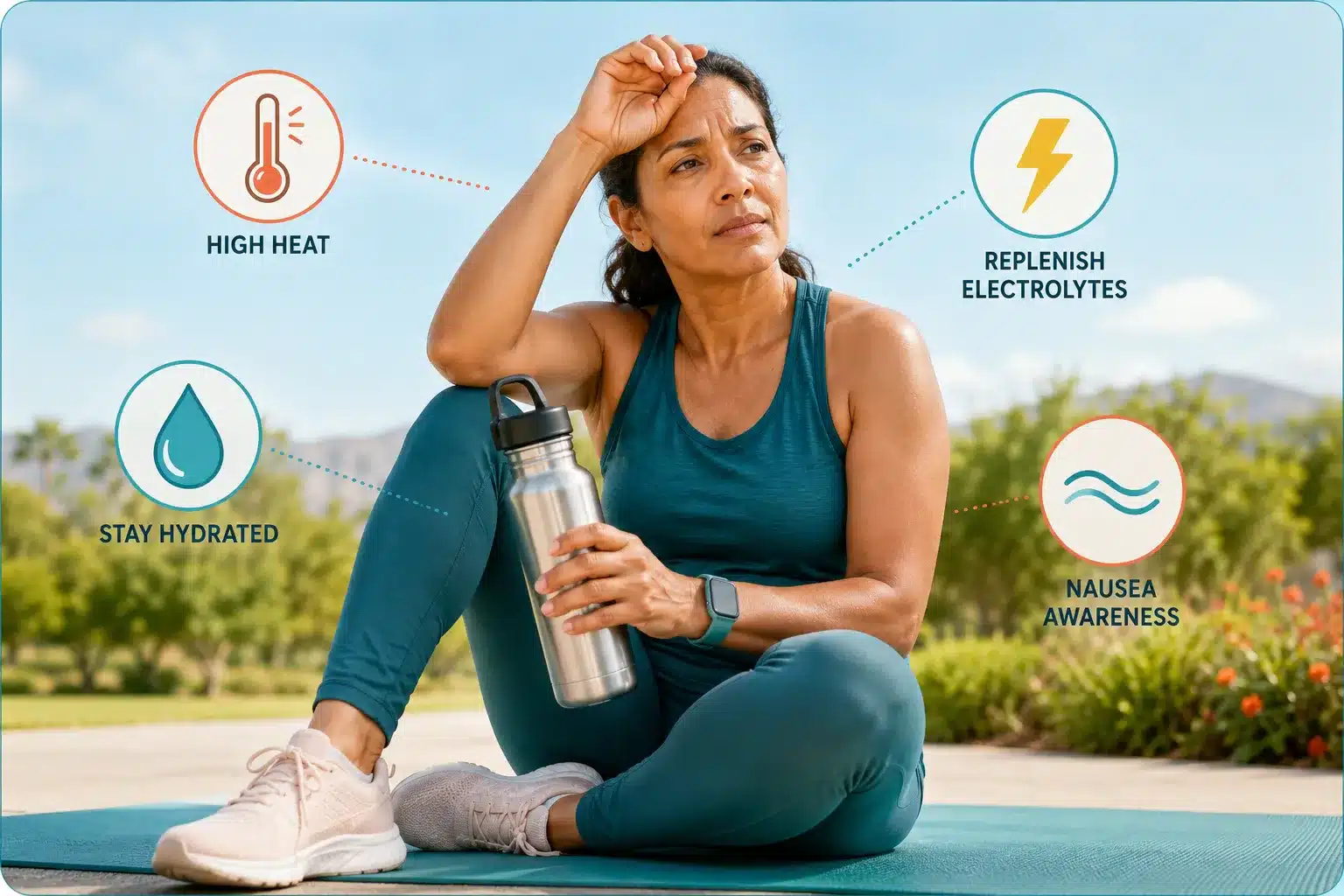
Exercise and heat both increase fluid and electrolyte needs substantially, and GLP-1 users face a compounded challenge because their thirst signals are already blunted. This section of the GLP-1 Hydration Guide is especially important for anyone who exercises regularly or lives in a warm climate.
Before exercise:
- Drink 16 to 20 ounces of water 2 hours before working out
- Check urine color, if it is dark, delay exercise until you have rehydrated
- Avoid scheduling intense workouts within 24 hours of your injection if nausea is a consistent problem
During exercise:
- Drink 6 to 8 ounces every 15 to 20 minutes for moderate activity
- For sessions over 45 minutes, switch to an electrolyte drink rather than plain water
- Watch for dizziness or muscle cramping, these are early warning signs that electrolytes are low
After exercise:
- Weigh yourself before and after if you want a precise measure: each pound lost during exercise equals roughly 16 ounces of fluid to replace
- Include sodium in your post-workout drink to support reabsorption
Heat-specific tips:
- In temperatures above 85°F (29°C), add 8 to 16 ounces per hour of outdoor exposure
- Wear light, breathable clothing to reduce sweat rate
- Schedule outdoor activity for early morning or evening when on GLP-1
Who Should Be Cautious About GLP-1 Hydration: Kidney Considerations
People with chronic kidney disease (CKD) or a history of kidney stones need to approach GLP-1 hydration with extra care and should consult their prescriber before making significant changes to fluid or electrolyte intake.
Why kidneys matter here:
- GLP-1 medications have been associated with acute kidney injury in post-marketing reports, primarily in the context of severe dehydration from nausea and vomiting (FDA Drug Safety Communication, 2016, updated 2023)
- People with CKD may have reduced ability to excrete excess potassium, making high-potassium electrolyte drinks potentially risky
- Those with a history of kidney stones may need higher fluid targets (often 80 to 100 ounces per day) to prevent stone formation
Who should get personalized guidance:
- Anyone with a GFR (glomerular filtration rate) below 60
- People on dialysis (GLP-1 medications require careful monitoring in this population)
- Anyone who has had a kidney stone in the past 5 years
- People taking ACE inhibitors, ARBs, or diuretics alongside GLP-1
General rule: If you have kidney disease, do not self-prescribe high-dose electrolyte supplements. Work with your care team to set a specific daily fluid and sodium target.
For a broader overview of GLP-1 safety and access, our guide on how to buy GLP-1 medications online safely is a useful companion resource.
Electrolytes vs. Water for GLP-1 Hydration: Which Matters More?
Both matter, but electrolytes are the more commonly neglected piece. Water provides the volume; electrolytes, primarily sodium, potassium, and magnesium, control how well your body actually holds onto and uses that water.
When plain water is sufficient:
- You are well-nourished, eating regular meals, and have no nausea
- You are lightly active in a cool environment
- Your urine is consistently pale yellow
When electrolytes are essential:
- You have vomited even once in the past 24 hours
- You are exercising for more than 30 minutes
- You are sweating heavily due to heat or physical work
- You are experiencing muscle cramps or headaches despite drinking water
- You are eating very little (under 1,000 calories per day)
The simplest electrolyte approach: Add a pinch of sea salt (about 1/8 teaspoon, roughly 300 mg sodium) and a squeeze of lemon to a 16-ounce glass of water. This is low-cost, low-sugar, and effective for mild electrolyte replacement.
For those comparing GLP-1 program costs and options, our least expensive GLP-1 guide can help you understand the full financial picture of treatment.
Common Hydration Mistakes People Make on GLP-1
Even well-intentioned GLP-1 users make predictable hydration errors. Here are the most common ones and how to correct them.
Mistake 1: Waiting until thirsty to drink
GLP-1 suppresses thirst alongside appetite. By the time you feel thirsty, you are already mildly dehydrated. Fix: Drink on a schedule, not on demand.
Mistake 2: Drinking too much at once
Large volumes of fluid consumed quickly can worsen nausea and cause bloating. Fix: Sip 4 to 6 ounces every 20 to 30 minutes rather than gulping 16 ounces at once.
Mistake 3: Relying on coffee or tea for hydration
Caffeinated beverages have a mild diuretic effect. One or two cups of coffee per day is fine, but counting them toward your fluid total is a mistake. Fix: For every cup of coffee, add an extra 4 to 6 ounces of water.
Mistake 4: Using full-sugar sports drinks
High-sugar drinks can spike blood glucose, add unwanted calories, and worsen nausea. Fix: Choose low-sugar electrolyte options (under 5 grams of sugar per serving).
Mistake 5: Skipping electrolytes during dose escalation
The first few weeks at each new dose level carry the highest nausea risk. This is exactly when electrolytes are most needed. Fix: Keep electrolyte packets with your injection supplies and use them proactively.
Mistake 6: Ignoring hydration on non-injection days
Some people are vigilant on injection day but neglect hydration the rest of the week. Fix: Maintain consistent daily habits regardless of injection timing.
Are GLP-1 Hydration Needs Different for Ozempic vs. Wegovy vs. Mounjaro?
The core hydration principles in this GLP-1 Hydration Guide apply to all GLP-1 receptor agonists, but there are some practical differences worth knowing.
Ozempic vs. Wegovy (both semaglutide):
- Same active ingredient, different approved doses
- Wegovy reaches higher maintenance doses (up to 2.4 mg weekly vs. 2.0 mg for Ozempic), which typically means more pronounced appetite suppression and potentially more nausea
- Hydration needs are slightly higher on Wegovy at peak doses
Mounjaro vs. Zepbound (both tirzepatide):
- Tirzepatide acts on both GLP-1 and GIP receptors, making it a dual agonist
- Clinical trials showed tirzepatide produced somewhat more nausea and vomiting than semaglutide at equivalent weight-loss efficacy doses (SURMOUNT trials, 2022)
- GLP-1 users on tirzepatide may need to be especially proactive about electrolyte replacement
Ozempic/Wegovy vs. Mounjaro/Zepbound:
| Drug | Active Ingredient | Receptor Targets | Nausea Risk | Hydration Priority |
|---|---|---|---|---|
| Ozempic | Semaglutide | GLP-1 | Moderate | High |
| Wegovy | Semaglutide | GLP-1 | Moderate-High | High |
| Mounjaro | Tirzepatide | GLP-1 + GIP | Moderate-High | High |
| Zepbound | Tirzepatide | GLP-1 + GIP | Moderate-High | High |
Bottom line: All four medications require the same core hydration strategy. Tirzepatide users and those on higher semaglutide doses may need to be slightly more aggressive with electrolyte replacement during dose escalation.
For a detailed cost comparison of these medications, see our tirzepatide cost guide and our semaglutide cost guide for 2026.
Key Takeaway
Hydration on GLP-1 is not passive, it requires a deliberate daily strategy. The combination of blunted thirst, reduced food intake, and nausea-related fluid loss creates a real dehydration risk that plain water alone cannot fully address. Pairing consistent scheduled sipping with appropriate electrolyte replacement, especially during the first 8 to 12 weeks and on high-dose or high-activity days, is the most effective approach. People with kidney disease should get personalized guidance before adjusting fluid or electrolyte intake significantly.
7 Best GLP-1 Providers Ranked: Accreditation, Flexibility & Support Compared (2026 Update)
32,000+ Patients Can't All Be Wrong: See the Top-Rated GLP-1 Providers: Compared on accreditation, plan flexibility, and patient support — updated for 2026.
BMI MD GLP-1 Microdosing Plan
- Specialized microdosing options (sublingual drops or low-dose injections)
- Ideal for maintaining weight or tapering off higher doses safely
- Fully bundled plan with no hidden monthly platform memberships
DirectMeds Weight Loss Solutions
- Sourced from accredited, state-licensed 503A compounding pharmacies
- No-frills high-volume savings passed directly to the patient
- Includes clinical consultation and cold-chain shipping updates
MEDVi Flat-Rate Telehealth
- Flat monthly rate holds steady even at maximum maintenance doses
- No dosage upcharges or graduation fee penalties
- Offers both injectable and advanced oral thin-film delivery options
Gala GLP-1 Care Program
- All-inclusive plan with no standalone membership costs
- Continuous text-based messaging access with state-licensed clinicians
- Temperature-controlled, cold-chain medication shipping included
Measured GLP-1 Metabolic Health
- Comprehensive metabolic health screening and expert intake analysis
- Predictable long-term budgeting with stable plan pricing
- High-end responsive dashboard with integrated diagnostic support
Refills GLP-1 (TryRefills Plan)
- Flat rate holds steady as titration scales up
- Includes clinical guides for active side-effect management
- Bundles in foundational nutritional strategies alongside medication
AltRx GLP-1 Transactional Reorders
- Zero recurring auto-billing — pay entirely on a transactional basis
- Rapid text-to-order format saves time for experienced patients
- Provides both injectable forms and fast-dissolving tablet variations
Conclusion
Dehydration is one of the most underestimated challenges for people on GLP-1 medications, and it is also one of the most preventable. The core message of this GLP-1 Hydration Guide is straightforward: drink on a schedule, not on demand; replace electrolytes whenever nausea, vomiting, exercise, or heat is involved; and pay attention to urine color as your daily feedback signal.
Actionable next steps:
- Set a daily fluid target of 64 to 80 ounces and track it for the first two weeks using a marked water bottle or app
- Stock low-sugar electrolyte packets before starting or escalating your GLP-1 dose
- Use the urine color test every morning, pale yellow is your goal
- On injection days and the 24 to 48 hours following, increase fluid intake by at least 16 ounces and keep electrolytes accessible
- If you exercise regularly, pre-hydrate before every session and switch to electrolyte drinks for workouts over 30 minutes
- If you have kidney disease, talk to your prescriber before making changes to your fluid or electrolyte routine
Hydration is not a glamorous part of GLP-1 therapy, but getting it right protects your kidneys, reduces nausea severity, supports muscle function, and makes the overall experience of these medications significantly more manageable. For more on optimizing your GLP-1 experience, explore the full range of GLP-1 medication guides and programs available to support your journey.
Frequently Asked Questions
Q: How do I know if I am dehydrated on GLP-1?
Check your urine color. Dark yellow or amber urine is the clearest sign of dehydration. Other early signs include headache, fatigue, dry mouth, and dizziness when standing.
Q: Can GLP-1 medications damage my kidneys if I get dehydrated?
Severe dehydration while on GLP-1 has been linked to acute kidney injury in post-marketing reports. The FDA updated its safety communication on this risk in 2023. Staying adequately hydrated is one of the most important protective steps you can take.
Q: Should I drink more water on the day I inject?
Yes. Injection day and the following 24 to 48 hours carry the highest nausea risk for most people. Increase fluid intake by 16 to 24 ounces and have electrolytes available.
Q: Is coconut water a good electrolyte drink for GLP-1 users?
Plain coconut water is a reasonable choice for mild dehydration. It provides potassium and some sodium. However, it contains natural sugars (roughly 9 to 11 grams per 8 ounces), so limit it to one serving per day if you are managing blood sugar.
Q: Can I count herbal tea toward my daily fluid goal?
Yes. Caffeine-free herbal teas count fully toward your fluid total. Caffeinated teas and coffee have a mild diuretic effect; count them at about 50 to 75% of their volume.
Q: What is the fastest way to rehydrate after vomiting on GLP-1?
Use an oral rehydration solution (such as Pedialyte unflavored) rather than plain water. Sip 2 to 4 ounces every 10 to 15 minutes. Avoid large volumes at once, which can trigger more nausea.
Q: Do I need to take magnesium supplements on GLP-1?
Not necessarily as a standalone supplement, but magnesium is worth including in your electrolyte drink if you experience muscle cramps. Many low-sugar electrolyte products include 20 to 60 mg per serving, which is sufficient for most people.
Q: Is sparkling water okay on GLP-1?
Sparkling water counts toward your fluid goal, but carbonation can worsen bloating and nausea in some GLP-1 users, especially during dose escalation. If you notice increased discomfort, switch to still water.
Q: How long does GLP-1-related nausea and dehydration risk last?
For most people, nausea peaks in the first 4 to 8 weeks and improves significantly by week 12. Each dose increase may bring a temporary return of symptoms.
Q: Does tirzepatide (Mounjaro, Zepbound) cause more dehydration than semaglutide?
Tirzepatide showed slightly higher rates of nausea and vomiting in clinical trials compared to semaglutide at equivalent weight-loss doses. This suggests a marginally higher dehydration risk, though the difference is modest and both require the same hydration strategy.
Q: Can I add electrolytes to my protein shake?
Yes. Adding an electrolyte packet or a pinch of sea salt to a protein shake is a practical way to combine nutrition and hydration in a single serving, especially on days when appetite is very low.
Q: What if I simply cannot drink enough because of nausea?
Contact your prescriber. Persistent inability to maintain hydration may warrant a temporary dose reduction, anti-nausea medication, or in severe cases, intravenous fluids. Do not try to push through severe dehydration without medical guidance.
References
- National Academy of Medicine. Dietary Reference Intakes for Water, Potassium, Sodium, Chloride, and Sulfate. 2004. https://www.ncbi.nlm.nih.gov/books/NBK223807/
- Wilding JPH, et al. “Once-Weekly Semaglutide in Adults with Overweight or Obesity.” New England Journal of Medicine. 2021. https://www.nejm.org/doi/full/10.1056/NEJMoa2032183
- Jastreboff AM, et al. “Tirzepatide Once Weekly for the Treatment of Obesity.” New England Journal of Medicine. 2022. https://www.nejm.org/doi/full/10.1056/NEJMoa2206038
- FDA Drug Safety Communication: “FDA warns that DPP-4 inhibitors for type 2 diabetes may cause severe joint pain; adds new warning.” Updated to include GLP-1 receptor agonist kidney injury data. 2016, updated 2023. https://www.fda.gov/drugs/drug-safety-and-availability
- Viljoen A, Sinclair A. “Safety and efficacy of GLP-1 receptor agonists in type 2 diabetes and their role in primary prevention of cardiovascular events.” Diabetes, Obesity and Metabolism. 2021.
- Lete I, Allué J. “The Effectiveness of Ginger in the Prevention of Nausea and Vomiting during Pregnancy and Chemotherapy.” Integrative Medicine Insights. 2016. https://www.ncbi.nlm.nih.gov/pmc/articles/PMC4818021/
Tags: GLP-1 hydration, semaglutide hydration, tirzepatide dehydration, electrolytes for GLP-1, Ozempic side effects, Wegovy hydration tips, GLP-1 nausea, GLP-1 water intake, dehydration on GLP-1, GLP-1 kidney risk, electrolyte drinks weight loss, GLP-1 side effects management

With over 13 years of experience in holistic health blogging, I aim to help you navigate your wellness journey with honest insights, expert-backed advice, and a sprinkle of real-world practicality.
Certified Wellness Writer | Herbal Nutrition Advocate | Wellness Research Enthusiast


