
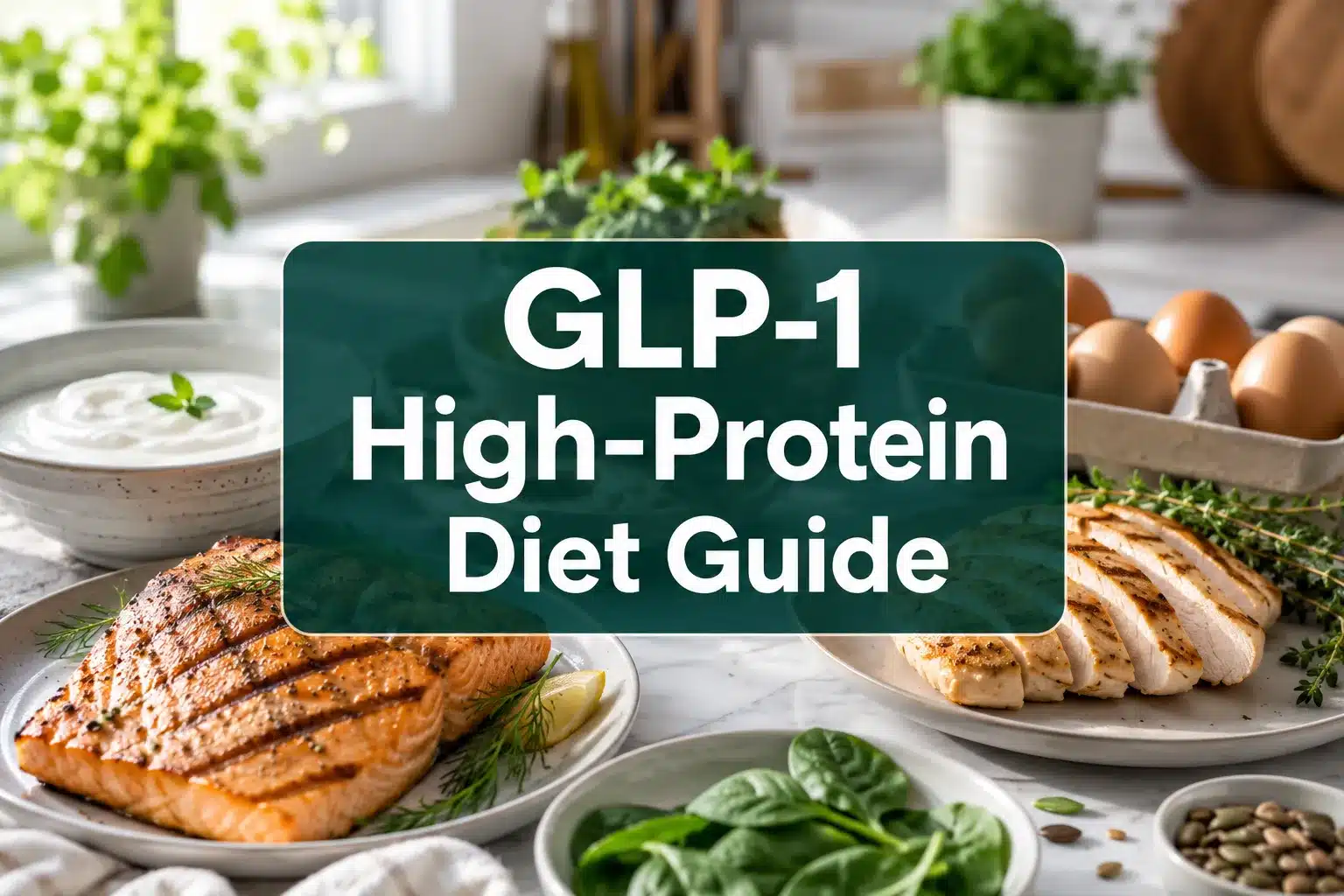
GLP-1 High-Protein Diet Guide: Build Healthy Meals for Better Results (2026)
Last updated: July 26, 2026
Quick Answer
A GLP-1 high-protein diet pairs GLP-1 receptor agonist medications (such as semaglutide or tirzepatide) with a deliberate high-protein eating pattern to preserve lean muscle mass during rapid weight loss. Most clinicians recommend 1.2 to 1.6 grams of protein per kilogram of body weight per day for GLP-1 users. Without adequate protein, the significant calorie reduction caused by GLP-1 drugs increases the risk of muscle loss, nutritional deficiencies, and weight regain after stopping the medication.
Key Takeaways
- GLP-1 medications suppress appetite sharply, making it easy to under-eat protein without a deliberate plan.
- Aim for 1.2 to 1.6 g of protein per kilogram of body weight daily, higher than standard dietary guidelines.
- Muscle loss is the biggest nutritional risk on GLP-1 drugs; high protein intake combined with resistance training is the primary defense.
- Spread protein across three to four meals rather than eating it all at once for better muscle protein synthesis.
- Best protein sources for GLP-1 users include Greek yogurt, eggs, cottage cheese, lean poultry, fish, and legumes.
- A high-protein diet on GLP-1 is not optional for most users, it is a clinical priority backed by current obesity medicine guidance.
- People with chronic kidney disease should not increase protein without medical supervision.
- Budget-friendly high-protein eating on GLP-1 is achievable; eggs, canned tuna, and cottage cheese cost under $0.50 per serving in most U.S. markets.
- What you eat matters as much as how much you eat when taking GLP-1 medications.
What Is a GLP-1 High-Protein Diet and How Does It Work
A GLP-1 high-protein diet is a structured eating approach that combines the appetite-suppressing effects of GLP-1 receptor agonist medications with intentionally high protein intake to preserve muscle mass and support sustainable weight loss. It works by compensating for the steep calorie reduction that GLP-1 drugs produce, ensuring the body receives enough amino acids to maintain lean tissue even when total food intake drops significantly.
7 Best GLP-1 Providers Ranked: Accreditation, Flexibility & Support Compared (2026 Update)
32,000+ Patients Can't All Be Wrong: See the Top-Rated GLP-1 Providers. We compared the leading online GLP-1 providers based on program features, clinical support, convenience, and overall value.
BMI MD GLP-1 Microdosing Plan
- Specialized microdosing options, including sublingual drops and low-dose injections
- Designed for people interested in maintaining weight or gradually adjusting treatment
- Bundled program structure without a separate monthly platform membership
- Online access makes the process convenient from home

DirectMeds Weight Loss Solutions
- Online weight-loss program with a straightforward patient experience
- Compounded medication options through state-licensed compounding pharmacies
- Includes clinical consultation as part of the process
- Provides shipping updates to help patients track their orders
MEDVi Flat-Rate Telehealth
- Flat-rate telehealth approach designed for easier budgeting
- No dosage-based pricing increases within the advertised program structure
- Offers injectable and oral thin-film delivery options
- Includes medical screening and asynchronous provider consultations
Gala GLP-1 Care Program
- Text-based access to state-licensed clinicians
- Cold-chain medication shipping included in the program
- Month-to-month program structure
- Designed for people who value convenient ongoing support
Measured GLP-1 Metabolic Health
- Comprehensive metabolic health screening and intake analysis
- Designed around longer-term metabolic health management
- Responsive dashboard with integrated health tracking tools
- Useful option for patients who value a more data-focused experience
Refills GLP-1 (TryRefills Plan)
- Clinical guidance designed to help patients manage common treatment concerns
- Includes foundational nutritional strategies alongside medication
- Designed around predictable ongoing treatment
- No hidden startup or processing fees according to the program information provided
AltRx GLP-1 Transactional Reorders
- Transactional reorder model without recurring auto-billing
- Designed for patients who already understand their treatment routine
- Fast text-to-order process for convenient reorders
- Offers injectable and fast-dissolving tablet variations
GLP-1 medications like semaglutide (Ozempic, Wegovy) and tirzepatide (Mounjaro, Zepbound) mimic the glucagon-like peptide-1 hormone, which slows gastric emptying, reduces hunger signals, and increases satiety. The result is that most users eat considerably less food, sometimes 30 to 50 percent fewer calories than before. That calorie deficit drives weight loss, but without enough protein, a meaningful portion of that weight loss comes from muscle rather than fat.
How the diet works in practice:
- Total calorie intake drops due to reduced appetite from the medication.
- Protein intake is kept high (relative to total calories) to preserve lean muscle.
- Fat and carbohydrate calories are reduced proportionally.
- Resistance exercise is typically added to reinforce muscle retention.
- The combination produces fat-dominant weight loss rather than mixed fat-and-muscle loss.
For a deeper look at how GLP-1 drugs affect your body beyond appetite suppression, see this GLP-1 transformation guide covering metabolic and body composition changes.
Why Do Doctors Recommend Protein with GLP-1 Medications
Doctors recommend high protein intake with GLP-1 medications primarily to prevent sarcopenia (muscle loss), which is a well-documented risk during any rapid weight loss program. When the body is in a significant calorie deficit, it can break down muscle tissue for energy if dietary protein is insufficient.
Clinical obesity medicine specialists have raised this concern consistently as GLP-1 prescriptions have grown. A 2021 study published in Obesity found that participants using GLP-1 receptor agonists lost a notable proportion of lean mass alongside fat mass, and that protein intake was a key modifiable factor in the outcome. The American Society for Metabolic and Bariatric Surgery and the Obesity Medicine Association both recommend protein prioritization as a cornerstone of GLP-1 nutritional support.
Why protein matters beyond muscle:
- Satiety: Protein is the most satiating macronutrient, helping users feel full on smaller portions.
- Thermic effect: The body burns more calories digesting protein than fat or carbohydrates.
- Blood sugar stability: Protein slows glucose absorption, which complements GLP-1’s blood sugar effects.
- Immune function and tissue repair: Adequate protein supports wound healing, immune response, and organ function.
“Protein is not a bonus on GLP-1 therapy, it is the nutritional foundation that determines whether weight loss is healthy or harmful long-term.”, Obesity Medicine Association guidance, 2023
How Much Protein Should I Eat on GLP-1 Medication
Most clinical guidelines recommend 1.2 to 1.6 grams of protein per kilogram of body weight per day for people on GLP-1 medications. For a 200-pound (91 kg) person, that translates to roughly 109 to 145 grams of protein daily. Some higher-intensity protocols suggest up to 2.0 g/kg for individuals doing regular resistance training.
General protein targets by body weight:
| Body Weight | 1.2 g/kg Target | 1.6 g/kg Target |
|---|---|---|
| 150 lbs (68 kg) | 82 g/day | 109 g/day |
| 180 lbs (82 kg) | 98 g/day | 131 g/day |
| 200 lbs (91 kg) | 109 g/day | 145 g/day |
| 250 lbs (113 kg) | 136 g/day | 181 g/day |
These targets are higher than the standard Recommended Dietary Allowance (RDA) of 0.8 g/kg, which is designed for sedentary adults maintaining weight, not people in an active weight-loss phase on medication.
Practical tip: If tracking grams feels overwhelming, aim for a palm-sized serving of protein at every meal and a protein-rich snack. That approach typically delivers 90 to 130 grams per day for most adults.
Choose the higher end (1.6 g/kg) if:
- You are doing resistance training three or more times per week.
- You are over age 60 (older adults absorb amino acids less efficiently).
- You have lost more than 10 percent of your body weight in less than six months.
Best High-Protein Foods for GLP-1 Users
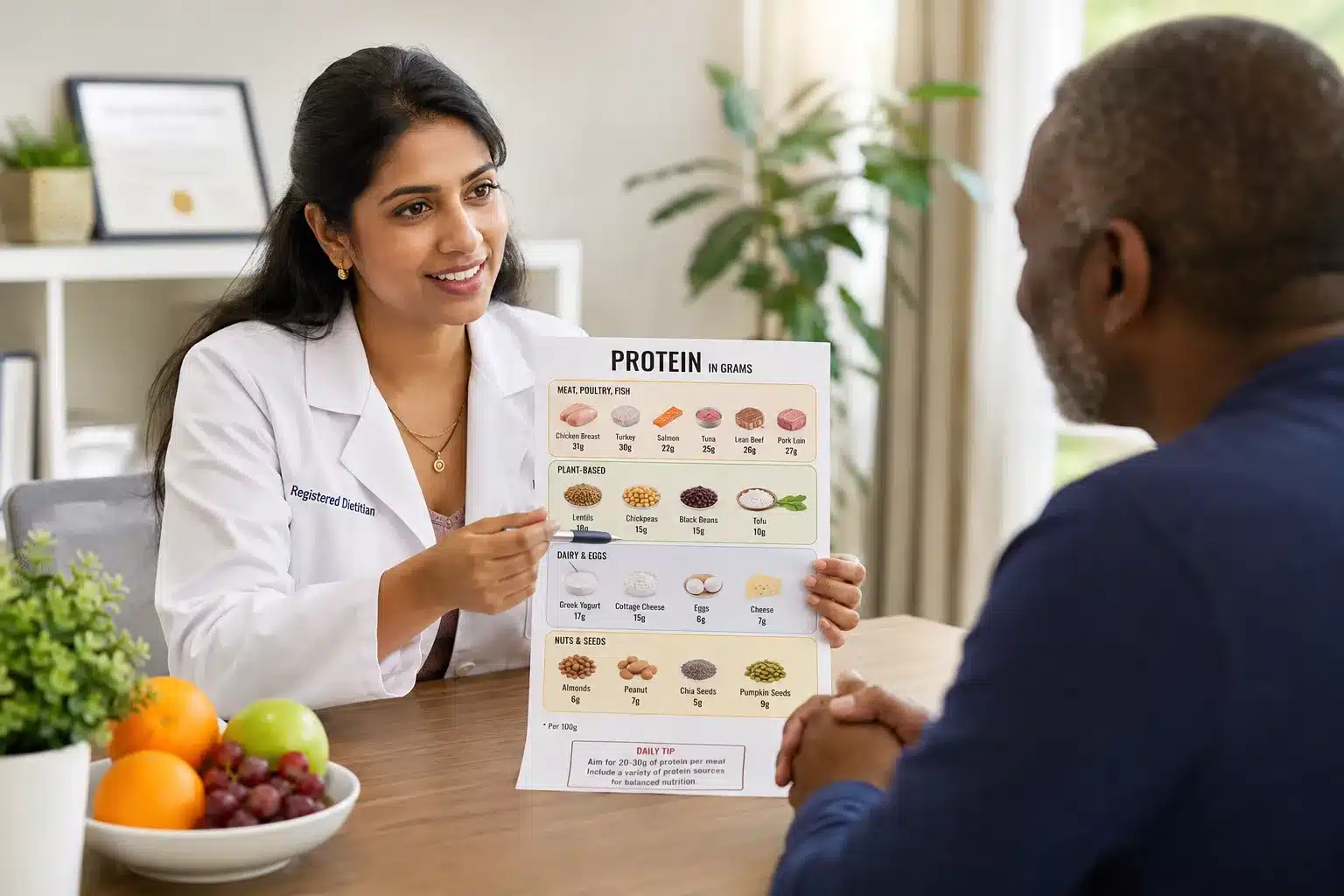
The best high-protein foods for GLP-1 users are nutrient-dense, easy to digest in small portions, and low in the high-fat or high-sugar combinations that can worsen GLP-1 side effects like nausea. Lean animal proteins, low-fat dairy, eggs, and legumes top the list.
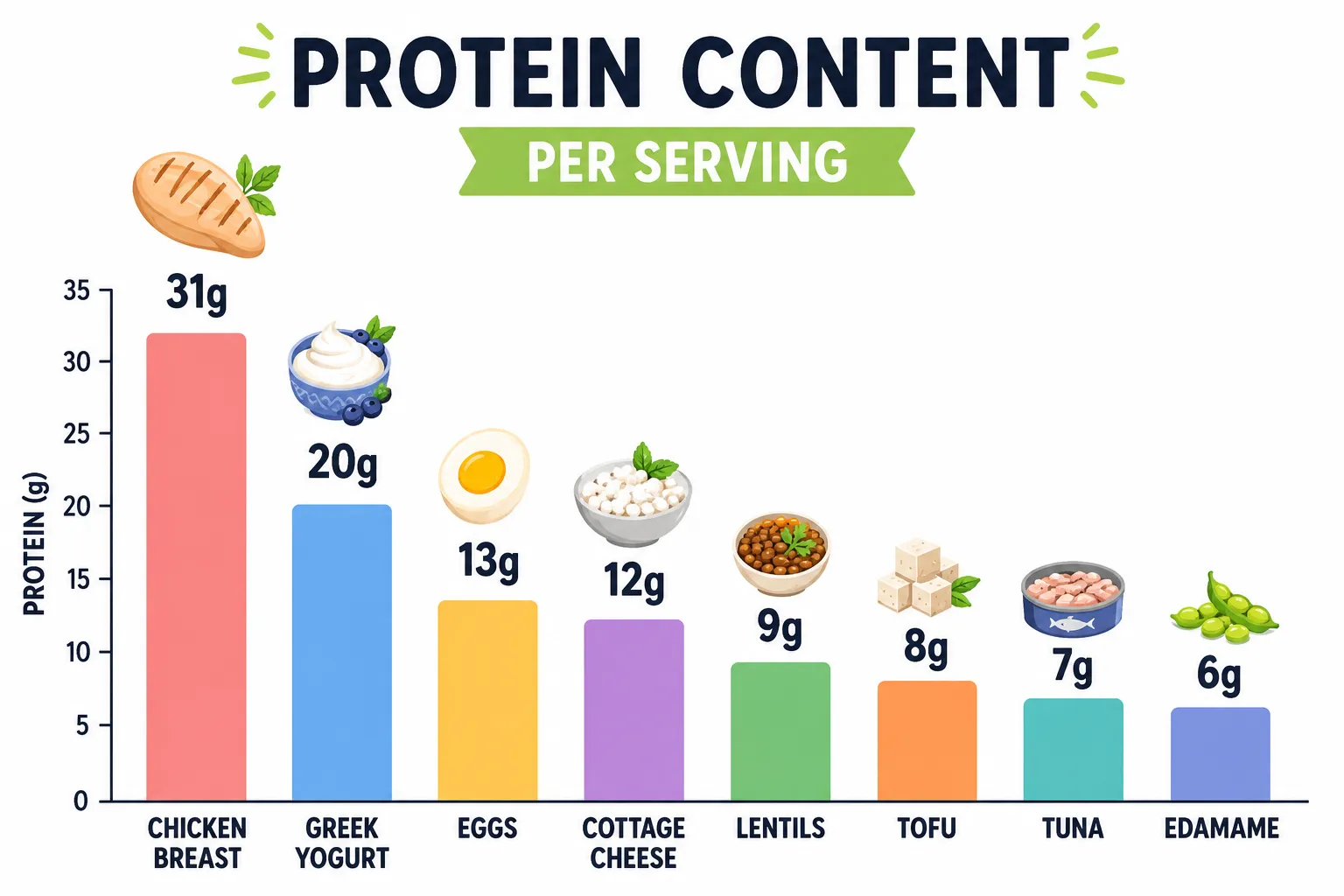
Top protein sources ranked by digestibility and practicality:
| Food | Protein per Serving | Notes for GLP-1 Users |
|---|---|---|
| Greek yogurt (plain, 0%) | 17-20 g per cup | Easy on digestion, high in calcium |
| Eggs | 6 g per egg | Versatile, affordable, complete protein |
| Chicken breast (cooked) | 26-30 g per 3.5 oz | Lean, easy to prep in bulk |
| Cottage cheese (low-fat) | 14 g per half cup | High satiety, mild flavor |
| Canned tuna (in water) | 22 g per 3 oz | Cheap, no cooking required |
| Salmon (cooked) | 22 g per 3 oz | Adds omega-3s, anti-inflammatory |
| Lentils (cooked) | 18 g per cup | High fiber, good for gut health |
| Edamame | 17 g per cup | Plant-based, easy snack |
| Tofu (firm) | 10 g per half cup | Good for plant-based users |
| Whey or casein protein powder | 20-25 g per scoop | Useful when appetite is very low |
Foods to use cautiously on GLP-1:
- High-fat proteins like fatty cuts of red meat or fried chicken can worsen nausea.
- Large protein portions at once are harder to tolerate; split them across meals.
- Protein bars with high sugar alcohols may cause GI distress.
Can You Combine GLP-1 Drugs with High Protein Intake Safely
Yes, combining GLP-1 medications with a high-protein diet is safe for most people and is actively recommended by obesity medicine specialists. There are no known negative interactions between GLP-1 receptor agonists and dietary protein. The combination is considered best practice, not a risk.
The main safety consideration is for people with pre-existing kidney disease. High protein intake increases the kidneys’ filtration workload, and individuals with chronic kidney disease (CKD) stages 3 through 5 should not increase protein without a nephrologist’s guidance. For everyone else, the evidence strongly supports higher protein intake during GLP-1 therapy.
Safety checklist for combining GLP-1 and high protein:
- Confirm kidney function is normal before significantly increasing protein (a basic metabolic panel covers this).
- Increase protein gradually over one to two weeks to reduce GI side effects.
- Stay well hydrated, protein metabolism increases the body’s water needs.
- If using protein supplements, choose products without excessive artificial sweeteners, which can worsen GLP-1-related nausea.
For a full overview of GLP-1 medication options and how they work, the complete RX medications for weight loss guide covers semaglutide, tirzepatide, and their clinical profiles in detail.
Does High Protein Help or Hurt GLP-1 Weight Loss
High protein intake consistently supports GLP-1 weight loss outcomes rather than hurting them. It preserves the lean muscle mass that keeps metabolism higher, improves satiety on smaller portions, and reduces the risk of weight regain after discontinuing the medication.
The concern some people raise is that protein has calories and could “slow” weight loss. This misunderstands how protein works in a calorie-reduced state. Because protein has a high thermic effect (roughly 20 to 30 percent of its calories are burned during digestion, compared to 5 to 10 percent for carbohydrates and 0 to 3 percent for fat), it is metabolically favorable during weight loss.
What the evidence shows:
- A 2022 review in Nutrients found that higher protein intake during calorie restriction was associated with greater fat mass loss and better preservation of lean body mass compared to standard protein intake.
- Muscle mass is the primary driver of resting metabolic rate. Losing muscle slows metabolism, making weight maintenance harder after GLP-1 therapy ends.
- GLP-1 users who maintain higher protein intake report better energy levels and less fatigue during the weight-loss phase.
Bottom line: High protein does not slow GLP-1 weight loss. It improves the quality of that weight loss by shifting the ratio toward fat loss rather than muscle loss.
GLP-1 High-Protein Diet vs Regular High-Protein Diet
The GLP-1 high-protein diet differs from a standard high-protein diet primarily in context and strategy, not in food choices. The core difference is that GLP-1 users must achieve high protein targets within a much smaller total food volume because the medication dramatically reduces appetite and portion tolerance.
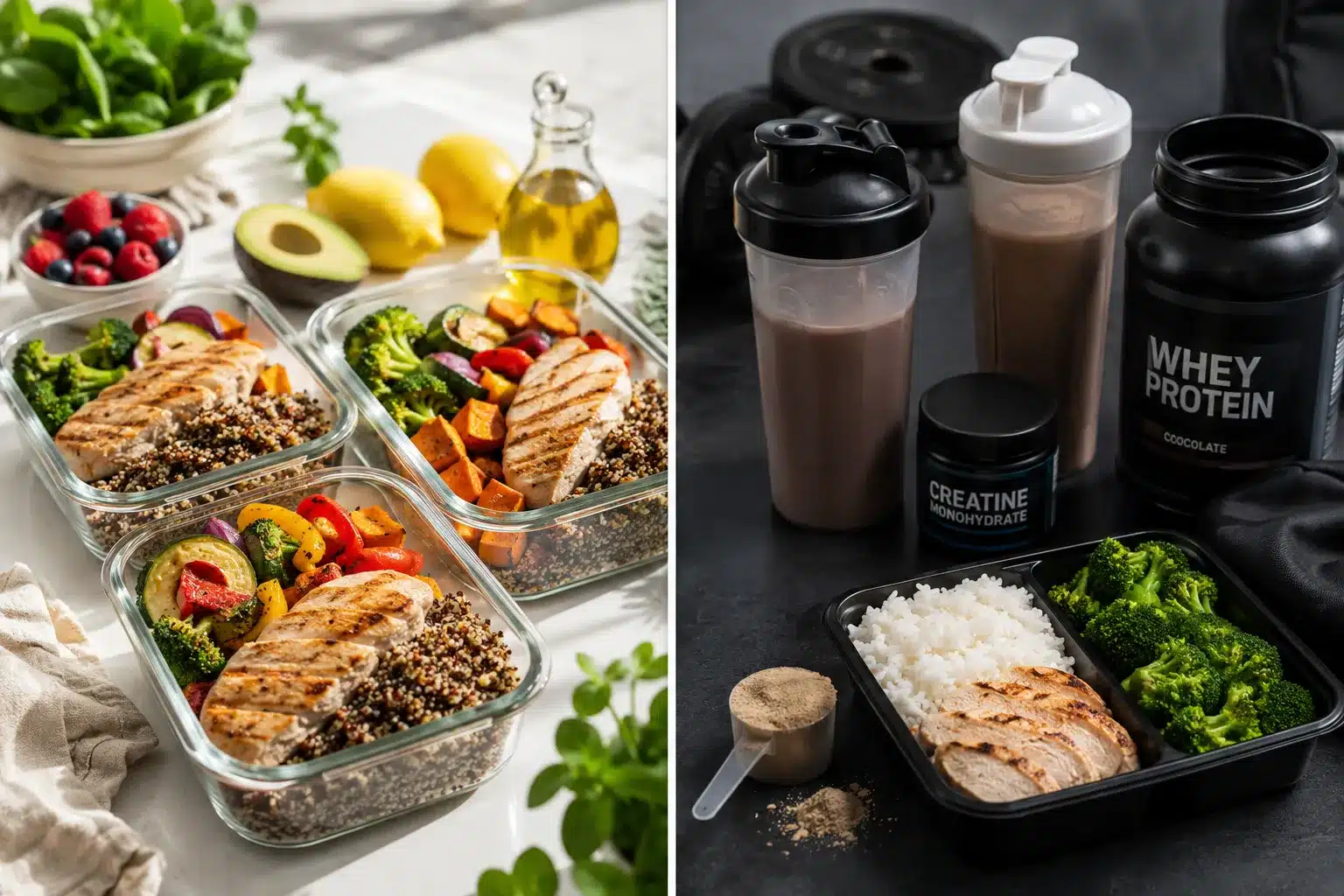
Key differences at a glance:
| Factor | Standard High-Protein Diet | GLP-1 High-Protein Diet |
|---|---|---|
| Total calorie intake | Moderate deficit or maintenance | Often severe deficit (30-50% less) |
| Appetite | Normal to elevated | Strongly suppressed |
| Protein density needed | Moderate | High, every bite must count |
| Portion size | Standard | Small; dense foods preferred |
| Supplement use | Optional | Often necessary to hit targets |
| GI considerations | Minimal | Nausea and slow gastric emptying common |
| Muscle loss risk | Low to moderate | Higher without deliberate protein focus |
Practical implication: A person on a standard high-protein diet might eat 200 grams of chicken breast at dinner without difficulty. A GLP-1 user may only tolerate 80 to 100 grams at a sitting. This means protein density, choosing foods with the highest protein per calorie and per gram of food, becomes critical.
Choose protein-dense, small-volume foods like:
- Greek yogurt over regular yogurt
- Cottage cheese over ricotta
- Canned fish over crackers and dip
- Protein shakes when solid food is poorly tolerated
GLP-1 High-Protein Diet Meal Plan Examples
A practical GLP-1 high-protein diet meal plan prioritizes protein at every meal, keeps portions small and frequent, and avoids high-fat or high-sugar combinations that worsen GLP-1 side effects. The goal is to hit 100 to 140 grams of protein daily across three to four small meals.
Sample 1-Day Meal Plan (approximately 1,400 calories, 130 g protein):
Breakfast:
- 3/4 cup plain Greek yogurt (0% fat), 15 g protein
- 1 hard-boiled egg, 6 g protein
- 1/4 cup blueberries
- Total: ~21 g protein, ~230 calories
Lunch:
- 3 oz canned tuna mixed with 1 tbsp light mayo on 1 slice whole-grain toast, 24 g protein
- 1/2 cup cucumber slices
- Total: ~26 g protein, ~280 calories
Afternoon Snack:
- 1/2 cup low-fat cottage cheese with 5 cherry tomatoes, 14 g protein
- Total: ~14 g protein, ~120 calories
Dinner:
- 3.5 oz grilled chicken breast, 28 g protein
- 1/2 cup cooked lentils, 9 g protein
- 1 cup steamed broccoli
- Total: ~37 g protein, ~350 calories
Evening Snack (if needed):
- 1 scoop whey protein in 8 oz water or unsweetened almond milk, 22 g protein
- Total: ~22 g protein, ~130 calories
Daily total: approximately 120 g protein, 1,110 to 1,400 calories
This plan is a starting framework, not a prescription. Adjust portions based on your tolerance, weight, and activity level. A registered dietitian familiar with GLP-1 nutrition can personalize targets further.
For structured meal planning support, reviewing a GLP-1 weight loss program that includes dietary coaching may be worthwhile.
Common Mistakes People Make on GLP-1 High-Protein Diets
The most common mistake on a GLP-1 high-protein diet is assuming that reduced appetite automatically means eating well. In reality, GLP-1 users often eat too little protein, too few total calories, and not enough variety, all of which undermine long-term results.
Eight mistakes to avoid:
Skipping meals entirely. GLP-1 suppresses hunger so effectively that some users eat only once a day. This makes hitting protein targets nearly impossible and accelerates muscle loss.
Prioritizing volume over protein density. Eating a large salad feels like a “healthy” choice but delivers almost no protein. Every meal needs a protein anchor.
Relying on protein bars as a primary source. Many bars are high in sugar alcohols and artificial additives that worsen GLP-1-related GI symptoms.
Not spreading protein across the day. The body can only use roughly 30 to 40 grams of protein for muscle synthesis per meal. Eating 100 grams in one sitting wastes the excess.
Ignoring hydration. Protein metabolism requires water. Dehydration is common on GLP-1 medications and worsens fatigue and constipation.
Avoiding all carbohydrates. Carbohydrates spare protein from being used as fuel. A moderate amount of complex carbohydrates (oats, legumes, sweet potato) actually supports muscle retention.
Not tracking protein at all. Even a rough count for two to four weeks helps users identify gaps and adjust food choices.
Stopping protein focus after weight loss slows. Muscle preservation is a continuous need, not just an early-phase concern.
How to Avoid Muscle Loss While on GLP-1 and Eating High Protein
Avoiding muscle loss on GLP-1 requires two things working together: adequate dietary protein and regular resistance exercise. Neither alone is sufficient. Protein provides the raw material for muscle maintenance; resistance training provides the stimulus that tells the body to keep that muscle rather than break it down.

Muscle preservation checklist for GLP-1 users:
- Hit your daily protein target (1.2 to 1.6 g/kg body weight) consistently, not just on good appetite days.
- Do resistance training (weights, resistance bands, bodyweight exercises) at least two to three times per week.
- Spread protein across three to four meals rather than one or two large ones.
- Include leucine-rich foods at each meal, leucine is the amino acid most responsible for triggering muscle protein synthesis. Best sources: eggs, dairy, chicken, beef, and soy.
- Avoid very low calorie intake below 1,000 calories per day unless under direct medical supervision.
- Get adequate sleep, growth hormone, which supports muscle repair, is primarily released during deep sleep.
- Consider a creatine supplement (3 to 5 grams daily), a 2022 meta-analysis in the Journal of Cachexia, Sarcopenia and Muscle found creatine supplementation combined with resistance training significantly reduced lean mass loss during calorie restriction.
For more information on semaglutide dosing and how it interacts with nutrition timing, the semaglutide injections dosage guide provides practical clinical detail.
What Happens If You Don’t Eat Enough Protein on GLP-1
Not eating enough protein on GLP-1 medications leads to muscle loss, slower metabolism, increased fatigue, and a higher risk of weight regain once the medication is stopped or reduced. This outcome is sometimes called “skinny fat”, a lower scale weight but a poor body composition with high fat percentage and low muscle mass.
Specific consequences of protein deficiency on GLP-1:
- Muscle wasting (sarcopenia): The body breaks down muscle tissue to meet amino acid needs. This is particularly harmful for older adults.
- Metabolic slowdown: Muscle is metabolically active tissue. Losing it lowers resting metabolic rate, making future weight maintenance harder.
- Increased fatigue: Low protein intake impairs neurotransmitter production and energy metabolism.
- Immune suppression: Antibodies and immune cells are made from protein. Chronic under-eating of protein weakens immune response.
- Hair loss: Telogen effluvium (temporary hair shedding) is common during rapid weight loss and is worsened by protein deficiency.
- Nutrient deficiencies: High-protein whole foods also deliver iron, zinc, B vitamins, and other nutrients. Skipping them creates cascading deficiencies.
If you’re struggling to eat enough protein:
- Try liquid protein sources (Greek yogurt smoothies, protein shakes) when solid food is poorly tolerated.
- Eat protein first at every meal before vegetables or carbohydrates.
- Use smaller, more frequent meals (every three to four hours) rather than two large ones.
Is a High-Protein Diet Necessary with GLP-1 or Optional
A high-protein diet is medically necessary for most GLP-1 users, not optional. Given the degree of calorie restriction these medications produce, failing to prioritize protein creates a clinically significant risk of muscle loss, nutritional deficiency, and long-term metabolic harm.
The only context where “optional” applies is for individuals with specific medical conditions, such as advanced kidney disease, where high protein intake is contraindicated. In those cases, protein targets should be set by a nephrologist and dietitian working together.
For everyone else, current obesity medicine guidelines treat protein prioritization as a non-negotiable component of GLP-1 therapy. It is not a dietary preference, it is a medical nutrition strategy.
Who Should Not Follow a High-Protein Diet on GLP-1
Most people on GLP-1 medications can and should follow a high-protein diet. However, three specific groups need medical supervision before increasing protein intake significantly.
Groups requiring caution:
Chronic kidney disease (CKD) stages 3-5: High protein increases glomerular filtration rate and can accelerate kidney damage. These individuals may need a protein-restricted diet, even on GLP-1.
Phenylketonuria (PKU): A rare metabolic disorder where the amino acid phenylalanine cannot be processed. High-protein diets are dangerous without specialized management.
Individuals with a history of calcium oxalate kidney stones: Very high animal protein intake can increase urinary oxalate and uric acid, raising stone recurrence risk. Moderation and hydration are key.
For everyone else: Standard high-protein intake (1.2 to 1.6 g/kg) is safe and beneficial. A basic metabolic panel before starting GLP-1 therapy will identify any kidney function concerns.
If you’re exploring cost-effective ways to access GLP-1 medications alongside a nutrition plan, the least expensive GLP-1 options guide is a useful resource, as is this overview of compounding pharmacy options for weight loss.
GLP-1 High-Protein Diet Cost and Food Budget
A high-protein diet on GLP-1 does not have to be expensive. The most affordable high-protein foods, eggs, canned tuna, cottage cheese, lentils, and chicken thighs, cost between $0.25 and $0.75 per serving in most U.S. markets as of 2026. A full day of high-protein eating can be achieved for $8 to $14 per day without supplements.
Budget-friendly protein sources (estimated 2026 U.S. prices):
| Food | Approx. Cost per Serving | Protein per Serving |
|---|---|---|
| Eggs (large, dozen) | $0.25-0.35 per egg | 6 g |
| Canned tuna (in water) | $0.75-1.00 per can | 22 g |
| Cottage cheese (low-fat, 16 oz) | $0.50-0.75 per half cup | 14 g |
| Chicken thighs (bone-in) | $0.60-0.90 per serving | 22 g |
| Lentils (dried, 1 lb bag) | $0.20-0.30 per cooked cup | 18 g |
| Greek yogurt (store brand) | $0.75-1.00 per cup | 17 g |
Cost-saving strategies:
- Buy chicken in bulk and freeze in portion-sized bags.
- Use dried lentils and beans instead of canned (roughly 40 percent cheaper).
- Choose store-brand Greek yogurt and cottage cheese over name brands.
- Prioritize whole food protein over protein bars and powders, which cost significantly more per gram.
Protein powder is worth the cost only when appetite is so suppressed that solid food protein is genuinely difficult to consume. In that case, a basic unflavored whey concentrate is the most cost-effective supplement option.
Key Takeaway
Following a GLP-1 high-protein diet is the single most important nutritional strategy for anyone on semaglutide, tirzepatide, or similar medications. The medication handles appetite suppression; your job is to make sure the calories you do eat are rich in protein to protect muscle, support metabolism, and set up long-term weight maintenance. Aim for 1.2 to 1.6 g of protein per kilogram of body weight daily, spread across three to four meals, and pair it with resistance training for the best body composition outcomes.
7 Best GLP-1 Providers Ranked: Accreditation, Flexibility & Support Compared (2026 Update)
32,000+ Patients Can't All Be Wrong: See the Top-Rated GLP-1 Providers: Compared on accreditation, plan flexibility, and patient support — updated for 2026.
BMI MD GLP-1 Microdosing Plan
- Specialized microdosing options (sublingual drops or low-dose injections)
- Ideal for maintaining weight or tapering off higher doses safely
- Fully bundled plan with no hidden monthly platform memberships
DirectMeds Weight Loss Solutions
- Sourced from accredited, state-licensed 503A compounding pharmacies
- No-frills high-volume savings passed directly to the patient
- Includes clinical consultation and cold-chain shipping updates
MEDVi Flat-Rate Telehealth
- Flat monthly rate holds steady even at maximum maintenance doses
- No dosage upcharges or graduation fee penalties
- Offers both injectable and advanced oral thin-film delivery options
Gala GLP-1 Care Program
- All-inclusive plan with no standalone membership costs
- Continuous text-based messaging access with state-licensed clinicians
- Temperature-controlled, cold-chain medication shipping included
Measured GLP-1 Metabolic Health
- Comprehensive metabolic health screening and expert intake analysis
- Predictable long-term budgeting with stable plan pricing
- High-end responsive dashboard with integrated diagnostic support
Refills GLP-1 (TryRefills Plan)
- Flat rate holds steady as titration scales up
- Includes clinical guides for active side-effect management
- Bundles in foundational nutritional strategies alongside medication
AltRx GLP-1 Transactional Reorders
- Zero recurring auto-billing — pay entirely on a transactional basis
- Rapid text-to-order format saves time for experienced patients
- Provides both injectable forms and fast-dissolving tablet variations
Conclusion
The GLP-1 high-protein diet guide covered in this article is not a trend or a preference, it is a clinical strategy backed by current obesity medicine guidelines. GLP-1 medications are among the most effective weight-loss tools available in 2026, but they work best when paired with deliberate nutritional planning.
Actionable next steps:
- Calculate your daily protein target using the 1.2 to 1.6 g/kg formula and write it down.
- Audit your current meals for protein content, most people are surprised by how little they’re actually eating.
- Choose two to three affordable, high-protein anchor foods (eggs, Greek yogurt, canned tuna) and build meals around them.
- Add resistance training two to three times per week, even if it’s just bodyweight exercises at home.
- Ask your prescribing provider for a referral to a registered dietitian who has experience with GLP-1 nutrition.
- Reassess your protein intake and body composition every four to six weeks and adjust as needed.
For those still researching medication options, the semaglutide weight loss injections guide and the GLP-1 buy online safety guide are practical starting points for understanding your options before committing to a program.
Weight loss on GLP-1 is achievable. Weight loss that preserves muscle, supports metabolism, and lasts after the medication ends requires the protein-first approach this guide outlines.
Frequently Asked Questions
Q: Can I eat too much protein on GLP-1?
For most healthy adults, eating up to 2.0 g/kg of body weight daily is safe. Amounts significantly above that offer diminishing returns and may cause GI discomfort. People with kidney disease should stay within medically supervised limits.
Q: Should I eat protein before or after my GLP-1 injection?
Timing your protein intake relative to your injection does not affect how the medication works. Focus on spreading protein evenly across the day regardless of injection schedule.
Q: Does protein powder count toward my daily protein goal on GLP-1?
Yes. Protein from any source, whole food or supplement, counts toward your daily target. Whole food sources are preferred because they also deliver micronutrients, but protein powder is a valid tool when appetite is very low.
Q: Will eating more protein cause weight gain on GLP-1?
No. In a calorie-reduced state (which GLP-1 creates), higher protein intake supports fat loss and muscle preservation without causing weight gain. Protein has a higher thermic effect than other macronutrients, making it metabolically favorable.
Q: How long does it take to see the benefits of high protein on GLP-1?
Muscle preservation benefits begin immediately, every day you eat adequate protein is a day you reduce muscle breakdown risk. Visible body composition improvements (more muscle definition, less “loose” appearance) typically become noticeable after six to twelve weeks of consistent protein intake and resistance training.
Q: What if I can’t stomach much food at all on GLP-1?
Start with liquid protein sources like Greek yogurt, protein shakes, or milk-based smoothies. Eat small amounts every three to four hours rather than waiting for hunger. If food intake stays very low for more than a week, contact your prescribing provider, a dose adjustment may be appropriate.
Q: Is plant-based protein as effective as animal protein on GLP-1?
Plant proteins can meet your needs, but most are incomplete proteins (lacking one or more essential amino acids) and are less bioavailable than animal proteins. Combine different plant sources (lentils and rice, for example) or use soy protein (a complete plant protein) to ensure you get all essential amino acids.
Q: Do I need to count calories as well as protein on GLP-1?
You don’t have to count calories, but tracking protein grams is strongly recommended, at least initially. Once you know which meals reliably hit your protein targets, you can rely on habit rather than daily counting.
Q: Can children or teenagers use a GLP-1 high-protein diet?
GLP-1 medications are approved for adolescents in some cases (semaglutide is FDA-approved for ages 12 and up for obesity), but nutritional protocols for younger patients should always be supervised by a pediatric dietitian. Protein needs differ by age and growth stage.
Q: What is the best time of day to eat my largest protein meal?
Distribute protein evenly rather than concentrating it in one meal. If you must prioritize one meal, breakfast or lunch tends to work better for GLP-1 users because nausea and fullness are often worse in the evening.
Q: How does fiber interact with protein on a GLP-1 diet?
Fiber and protein work well together on GLP-1. Fiber slows digestion further (complementing GLP-1’s gastric emptying effect), improves gut health, and supports satiety. Aim for 25 to 35 grams of fiber daily from vegetables, legumes, and whole grains alongside your protein targets.
Q: Is it safe to use a compounded GLP-1 while following a high-protein diet?
Yes. Compounded semaglutide and tirzepatide work through the same mechanism as brand-name versions. The nutritional recommendations in this guide apply equally. For more on compounded options, see this guide to compounded tirzepatide.
References
- Wilding JPH, et al. “Once-Weekly Semaglutide in Adults with Overweight or Obesity.” New England Journal of Medicine, 2021. https://www.nejm.org/doi/full/10.1056/NEJMoa2032183
- Obesity Medicine Association. “Protein and Weight Management in GLP-1 Therapy.” Clinical Practice Statement, 2023. https://obesitymedicine.org
- Stokes T, et al. “Recent Perspectives Regarding the Role of Dietary Protein for the Promotion of Muscle Hypertrophy with Resistance Exercise Training.” Nutrients, 2018. https://www.mdpi.com/2072-6643/10/2/180
- Morton RW, et al. “A systematic review, meta-analysis and meta-regression of the effect of protein supplementation on resistance training-induced gains in muscle mass and strength in healthy adults.” British Journal of Sports Medicine, 2018. https://bjsm.bmj.com/content/52/6/376
- Cava E, et al. “Preserving Healthy Muscle during Weight Loss.” Advances in Nutrition, 2017. https://academic.oup.com/advances/article/8/3/511/4558114
- Landi F, et al. “Protein intake and muscle health in old age: from biological plausibility to clinical evidence.” Nutrients, 2016. https://www.mdpi.com/2072-6643/8/5/295
- Jäger R, et al. “International Society of Sports Nutrition Position Stand: protein and exercise.” Journal of the International Society of Sports Nutrition, 2017. https://jissn.biomedcentral.com/articles/10.1186/s12970-017-0177-8
Tags: GLP-1 high-protein diet, GLP-1 nutrition, protein intake on GLP-1, semaglutide diet, tirzepatide meal plan, muscle preservation GLP-1, high-protein foods, GLP-1 weight loss, GLP-1 meal plan, protein for weight loss, GLP-1 diet guide, obesity medicine nutrition

With over 13 years of experience in holistic health blogging, I aim to help you navigate your wellness journey with honest insights, expert-backed advice, and a sprinkle of real-world practicality.
Certified Wellness Writer | Herbal Nutrition Advocate | Wellness Research Enthusiast


