
GLP-1 Breakfast Ideas: 30 Healthy High-Protein Breakfasts (2026)
Last updated: July 26, 2026
Quick Answer
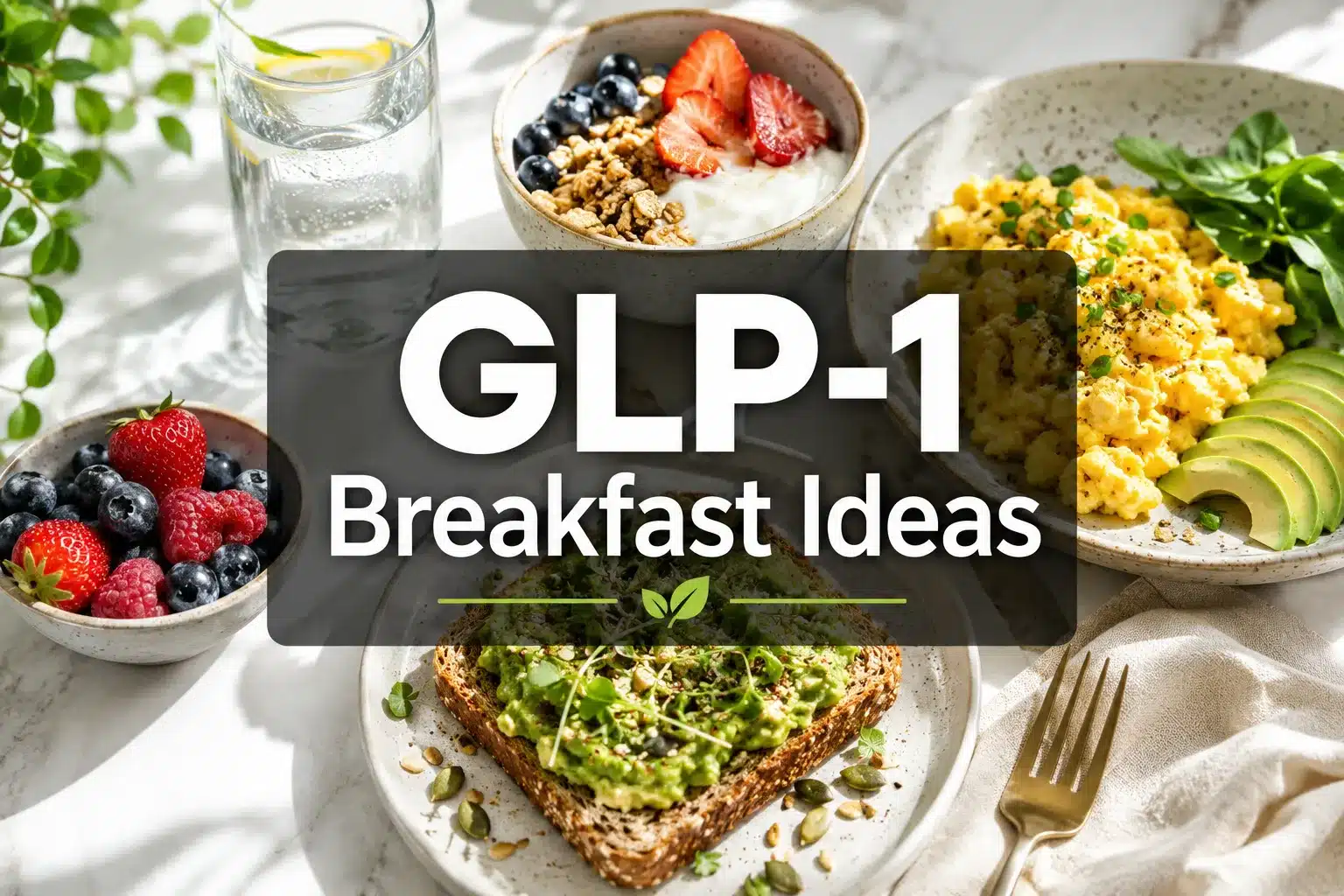
The best GLP-1 breakfast ideas focus on high protein, moderate fiber, and small portions that work with your reduced appetite rather than against it. Foods like eggs, Greek yogurt, cottage cheese, and smoked salmon digest well and help preserve muscle while you lose weight. Aim for 20 to 30 grams of protein at breakfast, keep portions small, and avoid greasy or high-fat foods that can worsen nausea.
Key Takeaways
- Protein is the top priority at breakfast on GLP-1 medications, target 20 to 30 grams per meal to protect muscle mass
- Small portions matter more than ever because GLP-1 drugs slow gastric emptying, meaning food stays in your stomach longer
- Greasy, fried, or very high-fat breakfast foods are the most common triggers for nausea and vomiting on GLP-1 therapy
- Eggs are one of the best breakfast foods for GLP-1 users, versatile, protein-dense, and easy to digest in small amounts
- Oatmeal can work well if kept plain and paired with protein, but large portions may cause bloating due to its fiber content
- Meal prepping breakfast 3 to 5 days in advance helps you eat consistently even when appetite is very low
- If you have no appetite in the morning, a small protein-rich snack or smoothie is better than skipping breakfast entirely
- Budget-friendly options like eggs, canned beans, cottage cheese, and frozen fruit make GLP-1 breakfasts affordable
- Nausea at breakfast is usually caused by eating too fast, eating too much, or choosing high-fat foods
- Timing matters: most GLP-1 users do best eating breakfast 30 to 60 minutes after waking, once mild hunger appears
What Should I Eat for Breakfast on GLP-1?
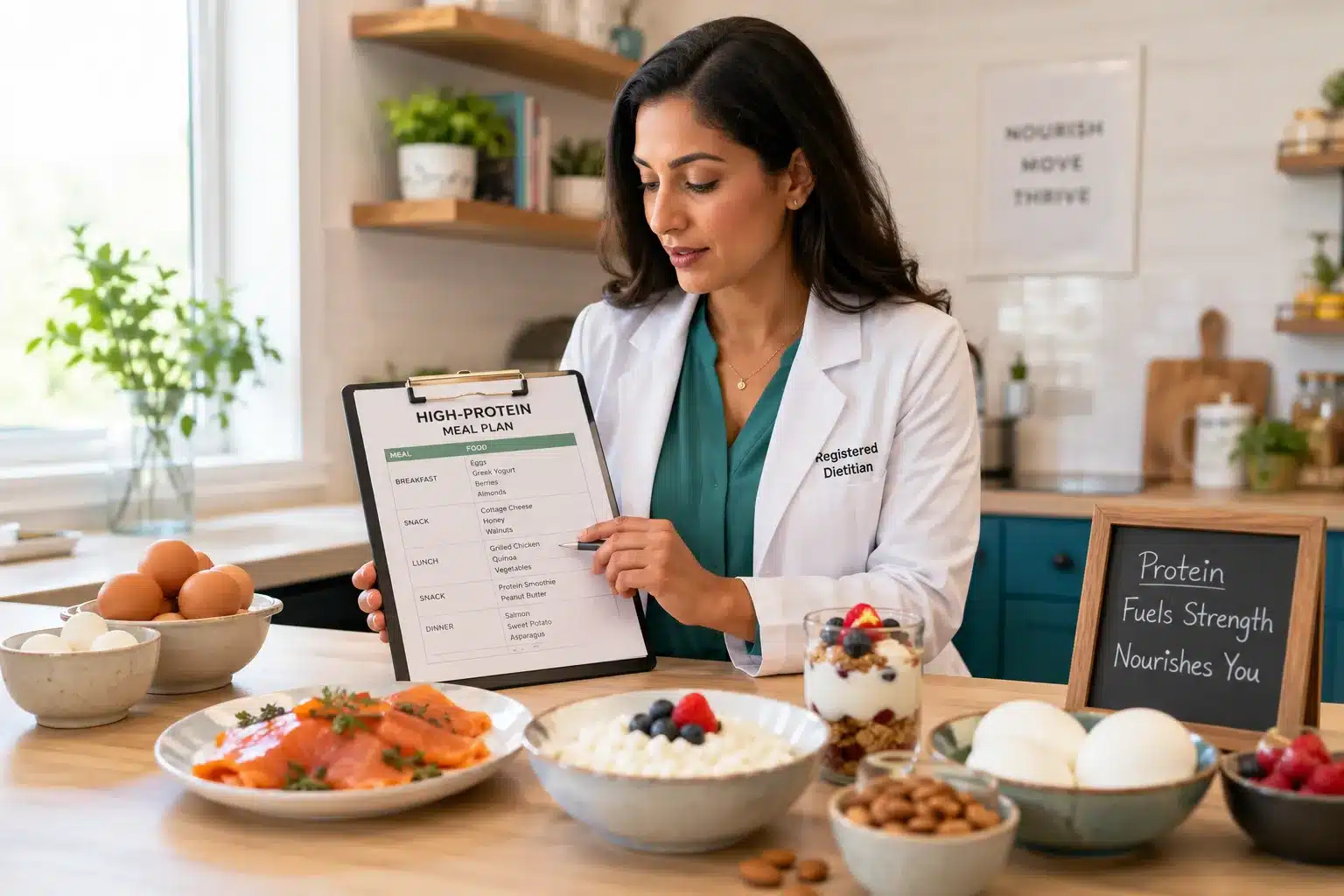
The best GLP-1 breakfasts are high in protein, moderate in fiber, and low in added fat and sugar. Because GLP-1 medications like semaglutide (Wegovy, Ozempic) and tirzepatide (Zepbound, Mounjaro) slow the rate at which your stomach empties, you need foods that are nutrient-dense but easy to digest in small amounts.
7 Best GLP-1 Providers Ranked: Accreditation, Flexibility & Support Compared (2026 Update)
32,000+ Patients Can't All Be Wrong: See the Top-Rated GLP-1 Providers. We compared the leading online GLP-1 providers based on program features, clinical support, convenience, and overall value.
BMI MD GLP-1 Microdosing Plan
- Specialized microdosing options, including sublingual drops and low-dose injections
- Designed for people interested in maintaining weight or gradually adjusting treatment
- Bundled program structure without a separate monthly platform membership
- Online access makes the process convenient from home

DirectMeds Weight Loss Solutions
- Online weight-loss program with a straightforward patient experience
- Compounded medication options through state-licensed compounding pharmacies
- Includes clinical consultation as part of the process
- Provides shipping updates to help patients track their orders
MEDVi Flat-Rate Telehealth
- Flat-rate telehealth approach designed for easier budgeting
- No dosage-based pricing increases within the advertised program structure
- Offers injectable and oral thin-film delivery options
- Includes medical screening and asynchronous provider consultations
Gala GLP-1 Care Program
- Text-based access to state-licensed clinicians
- Cold-chain medication shipping included in the program
- Month-to-month program structure
- Designed for people who value convenient ongoing support
Measured GLP-1 Metabolic Health
- Comprehensive metabolic health screening and intake analysis
- Designed around longer-term metabolic health management
- Responsive dashboard with integrated health tracking tools
- Useful option for patients who value a more data-focused experience
Refills GLP-1 (TryRefills Plan)
- Clinical guidance designed to help patients manage common treatment concerns
- Includes foundational nutritional strategies alongside medication
- Designed around predictable ongoing treatment
- No hidden startup or processing fees according to the program information provided
AltRx GLP-1 Transactional Reorders
- Transactional reorder model without recurring auto-billing
- Designed for patients who already understand their treatment routine
- Fast text-to-order process for convenient reorders
- Offers injectable and fast-dissolving tablet variations
Think of breakfast on GLP-1 as a “quality over quantity” meal. You may only be able to eat half of what you used to, so every bite needs to count.
Top breakfast foods for GLP-1 users:
- Eggs (scrambled, poached, or hard-boiled)
- Greek yogurt (plain, full-fat or 2%, unsweetened)
- Cottage cheese
- Smoked salmon or canned tuna
- Overnight oats with added protein powder
- Chia pudding made with unsweetened almond or dairy milk
- Whole grain toast with a thin layer of nut butter and a sliced egg
- Egg muffins (baked egg cups with vegetables)
What to pair with protein:
- Fresh or frozen berries (low sugar, high antioxidants)
- Sliced cucumber or cherry tomatoes
- A small handful of spinach or arugula
- Half an avocado (in small amounts, fat can slow digestion further)
The goal at breakfast is to hit your protein target, add a small amount of fiber-rich carbohydrate or vegetable, and keep total volume modest. If you’re exploring GLP-1 therapy or want a deeper look at how these medications work with nutrition, our GLP-1 transformation guide covers the full picture.
Best High-Protein Breakfast Foods for GLP-1 Users
High protein intake is the single most important nutritional priority for GLP-1 users at breakfast. Research published in Obesity Reviews (2022) found that adequate protein intake during GLP-1-assisted weight loss is critical for preserving lean muscle mass, which tends to decline alongside fat when calories drop significantly.
Aim for 20 to 30 grams of protein at breakfast. Here is a practical breakdown:
| Food | Serving Size | Protein (approx.) | Notes |
|---|---|---|---|
| Eggs (whole) | 2 large | 12 g | Add egg whites to boost without extra fat |
| Greek yogurt (plain) | 3/4 cup | 15-17 g | Choose brands with 15+ g per serving |
| Cottage cheese | 1/2 cup | 13-14 g | Low-fat versions work well |
| Smoked salmon | 2 oz | 11 g | High in omega-3s; watch sodium |
| Protein powder (whey or pea) | 1 scoop | 20-25 g | Best blended into smoothies or oats |
| Turkey or chicken sausage | 2 links | 14-16 g | Lower fat than pork sausage |
Common mistake: Relying only on eggs for protein. Two eggs give you 12 grams, which is a good start but falls short of the 20 to 30 gram target. Combine eggs with cottage cheese or Greek yogurt to close the gap without dramatically increasing portion size.
How Much Should I Eat for Breakfast on GLP-1?
Most GLP-1 users should aim for a breakfast of roughly 300 to 450 calories, though this varies based on your total daily calorie goal and how far along you are in treatment. What matters more than calories is keeping the volume small, since GLP-1 medications slow gastric emptying and a large meal can cause significant discomfort.
Practical portion guidance:
- Start with a portion about half the size of what you used to eat
- Stop eating at the first sign of fullness, do not push through it
- If you feel nauseous after eating, the portion was likely too large or eaten too quickly
- Eat slowly, chewing each bite thoroughly before taking the next
A good starting framework for breakfast volume:
- 1 protein source (eggs, yogurt, cottage cheese)
- 1 small carbohydrate (1 slice of toast, 1/3 cup of oats, a few berries)
- 1 small fat if tolerated (a few slices of avocado, a teaspoon of nut butter)
Key point: GLP-1 medications work partly by making you feel full faster. Fighting that signal by eating large portions leads to nausea, reflux, and discomfort. Work with the medication, not against it.
GLP-1 Breakfast Ideas That Won’t Cause Nausea
The most nausea-friendly GLP-1 breakfast ideas are small, low in fat, easy to digest, and eaten slowly. Nausea is one of the most common side effects of GLP-1 therapy, particularly in the first few weeks or after a dose increase, and breakfast choices play a direct role in how severe it becomes.
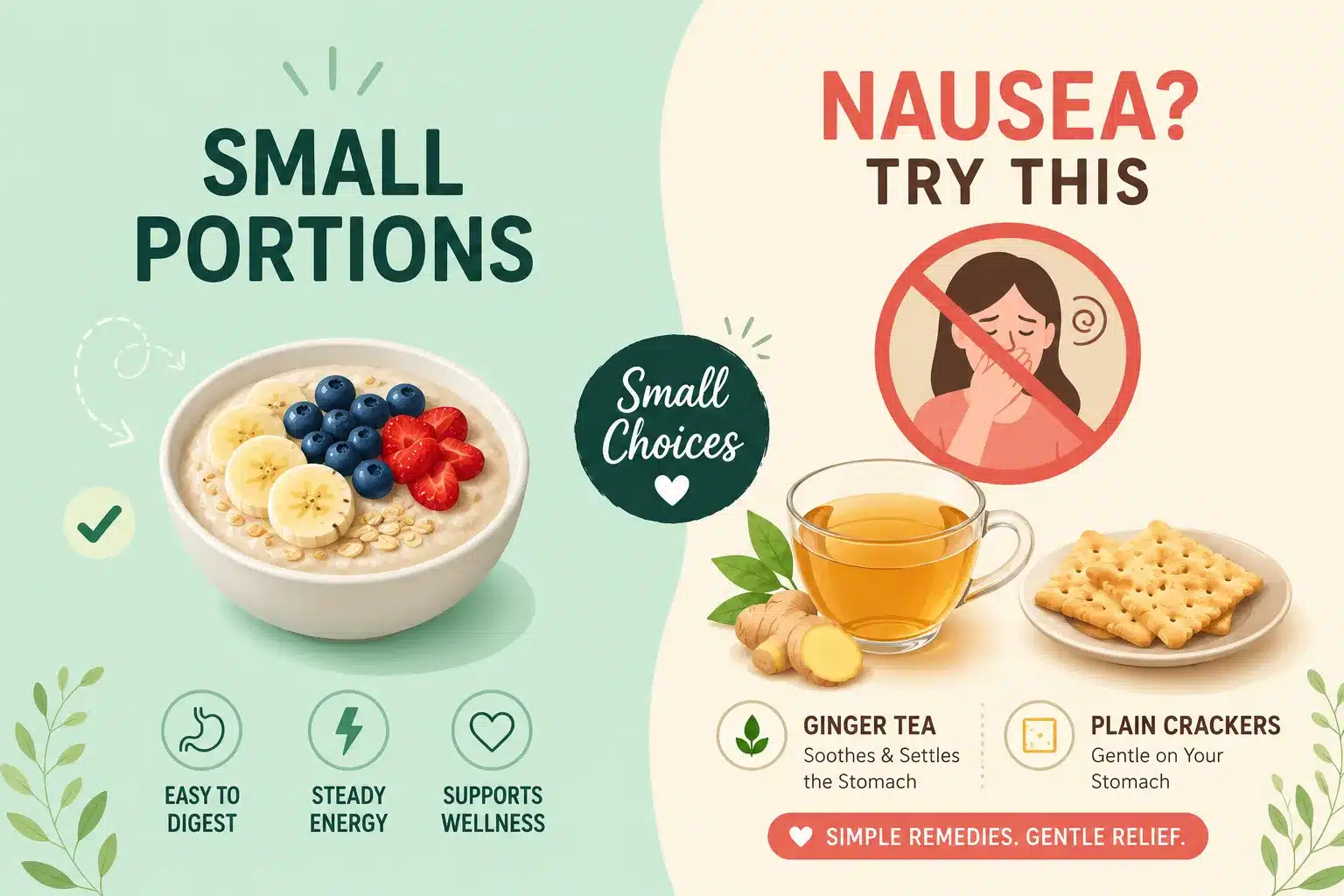
Best low-nausea breakfast options:
- Plain scrambled eggs (cooked in a small amount of cooking spray, not butter)
- Plain Greek yogurt with a few berries
- Chia pudding made with low-fat milk
- A small bowl of plain oatmeal with a scoop of protein powder
- Soft-boiled eggs with a few cucumber slices
- A small protein smoothie (see smoothie section below)
- Plain rice cakes with a thin spread of cottage cheese
Foods most likely to trigger nausea at breakfast:
- Fried eggs or bacon cooked in heavy oil
- Croissants, pastries, or buttery baked goods
- Full-fat cream cheese on a bagel
- Sausage patties with high fat content
- Large portions of any food, regardless of type
Eating habits that reduce nausea:
- Sit upright during and after eating (avoid lying down for at least 30 minutes)
- Eat slowly, take at least 15 to 20 minutes for a small meal
- Avoid drinking large amounts of liquid with your meal; sip water between bites instead
- Eat at a consistent time each morning to help your digestive system adjust
For more on managing GLP-1 side effects through food choices, our GLP-1 medications and weight loss guide explains how these drugs affect digestion in detail.
Can I Eat Eggs on GLP-1 for Breakfast?
Yes, eggs are one of the best breakfast foods for GLP-1 users. They are high in protein (about 6 grams per egg), relatively easy to digest, versatile, and inexpensive. Most GLP-1 users tolerate eggs well, particularly when they are scrambled, poached, or soft-boiled rather than fried in heavy oil.
Why eggs work well on GLP-1:
- High protein-to-calorie ratio supports muscle preservation
- Soft textures (scrambled, poached) are gentler on a sensitive stomach
- Pair easily with vegetables for added fiber and volume
- Quick to prepare, which matters when appetite is low
Egg-based GLP-1 breakfast ideas:
- Scrambled eggs with sauteed spinach and cherry tomatoes
- Poached egg on a half slice of whole grain toast
- Egg muffins baked with diced bell pepper, onion, and turkey
- Hard-boiled eggs with a small side of cottage cheese and berries
- A two-egg omelet with mushrooms and a sprinkle of feta
Edge case: Some GLP-1 users report that the sulfur smell of eggs triggers nausea, particularly during the first few weeks of treatment. If this happens, try cold hard-boiled eggs (the smell is less pronounced when cold) or switch to cottage cheese or Greek yogurt temporarily until tolerance improves.
GLP-1 Friendly Breakfast Meal Prep Ideas
Meal prepping breakfast 3 to 5 days in advance is one of the most practical strategies for GLP-1 users. Because appetite is often low and unpredictable, having ready-to-eat, portion-controlled breakfasts removes the barrier of cooking when you don’t feel like eating.
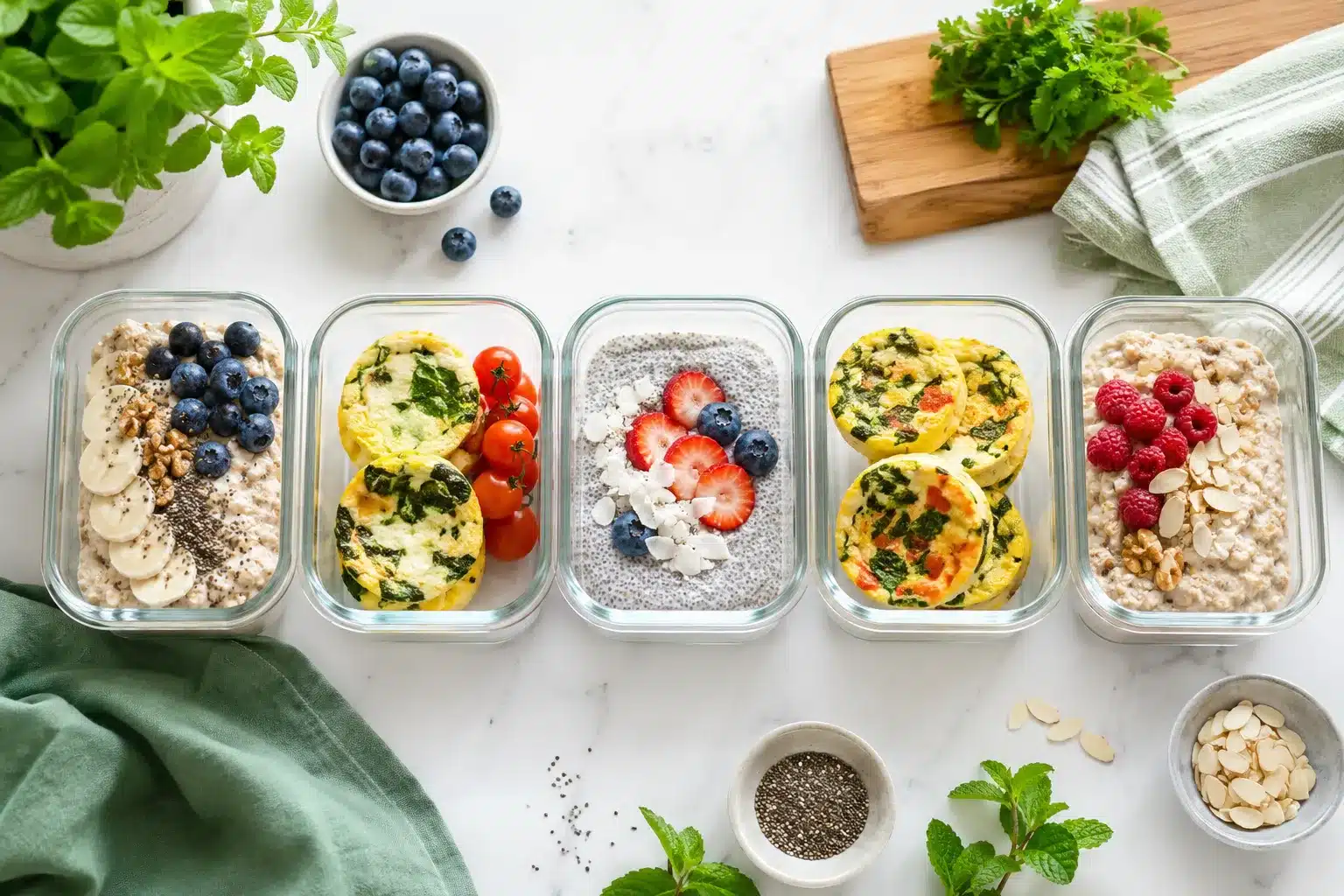
Best breakfasts to prep in advance:
Egg muffins: Whisk 6 to 8 eggs with diced vegetables and lean protein (turkey, spinach, peppers). Pour into a muffin tin and bake at 350°F for 18 to 20 minutes. Store in the fridge for up to 5 days. Two muffins provide roughly 14 grams of protein.
Overnight oats: Combine 1/3 cup rolled oats, 1/2 cup Greek yogurt, 1/2 cup milk, and a scoop of protein powder. Refrigerate overnight. Add berries in the morning. Provides approximately 25 grams of protein per serving.
Chia pudding: Mix 3 tablespoons chia seeds with 1 cup unsweetened almond milk and a teaspoon of vanilla. Refrigerate for at least 4 hours. Top with berries before eating. Prep 4 to 5 jars at once.
Greek yogurt parfait cups: Layer Greek yogurt, a tablespoon of granola (low-sugar), and berries in small mason jars. Seal and refrigerate for up to 3 days.
Hard-boiled eggs: Boil a batch of 6 to 8 eggs on Sunday. Store in the fridge for up to a week. Pair with pre-portioned cottage cheese or a small piece of fruit.
Meal prep checklist:
- Choose 2 to 3 recipes maximum to avoid food waste
- Use small containers (4 to 6 oz) to pre-portion servings
- Label containers with the date prepared
- Keep a protein source and a fruit or vegetable in every prep item
- Rotate recipes weekly to avoid flavor fatigue
If you’re looking for a broader approach to structuring your meals on GLP-1, our best cheap GLP-1 program guide covers affordable meal planning strategies alongside medication costs.
Why Do I Feel Sick Eating Breakfast on GLP-1?
Feeling sick at breakfast on GLP-1 is usually caused by one of three things: eating too much, eating too fast, or choosing high-fat foods that sit heavily in a stomach that is already emptying slowly. GLP-1 medications reduce gastric motility, meaning food moves through your digestive system more slowly than usual.
The most common causes of breakfast nausea on GLP-1:
- Portion size too large, even a “normal” breakfast can overwhelm a GLP-1-slowed stomach
- High-fat foods, fat takes longest to digest and worsens delayed gastric emptying
- Eating too quickly, the brain needs time to register fullness signals
- Eating immediately after waking, some users do better waiting 30 to 60 minutes
- Drinking too much liquid during the meal, this increases stomach volume and pressure
- Dose increase timing, nausea is often worst in the first 1 to 2 weeks after a dose increase
When to contact your prescriber:
- Nausea is severe enough to prevent eating for more than 2 days
- You are vomiting repeatedly and cannot keep fluids down
- You are losing weight faster than 1 to 2 pounds per week and feel weak
Mild to moderate nausea that improves after adjusting portion size and food choices is normal, especially in the first few months of treatment. For those managing costs alongside side effects, it’s worth knowing that some GLP-1 medications appear on the Trump Rx drug discount list, which may reduce out-of-pocket expenses.
Breakfast Foods to Avoid on GLP-1
Several common breakfast foods are poor choices on GLP-1 therapy because they are high in fat, low in protein, high in sugar, or simply too large in volume for a slowed digestive system.
Foods to avoid or minimize at breakfast on GLP-1:
- Fried foods (bacon, fried eggs, hash browns): High fat content significantly worsens delayed gastric emptying and nausea
- Pastries and donuts: High in sugar and refined carbohydrates with almost no protein; blood sugar spikes followed by crashes can worsen fatigue
- Bagels with cream cheese: A standard bagel can be 300 to 400 calories of refined carbohydrate with minimal protein
- Sugary cereals: Low protein, high glycemic index, and easy to overeat since they don’t trigger satiety well
- Large smoothies or juice: High in sugar, often 400 to 600 calories, and liquid calories bypass the satiety signals GLP-1 enhances
- Full-fat sausage or breakfast meats: High saturated fat content slows digestion further
- Pancakes or waffles with syrup: Almost entirely refined carbohydrate and sugar with no meaningful protein
The decision rule: If a breakfast food has more than 15 grams of fat per serving or fewer than 10 grams of protein, it is likely a poor fit for a GLP-1 breakfast, at least in the early months of treatment when side effects are most pronounced.
Quick, Easy GLP-1 Breakfasts When You’re Not Hungry
When appetite is very low, the goal shifts from a full meal to a small, protein-forward snack that keeps nutrition on track without forcing food. Skipping breakfast entirely is not ideal on GLP-1 therapy because inadequate protein intake accelerates muscle loss during rapid weight reduction.
Five-minute GLP-1 breakfasts for low-appetite days:
- A 3/4 cup serving of Greek yogurt with a handful of frozen berries (thawed overnight)
- A single hard-boiled egg with a few crackers and a slice of cheese
- A small protein smoothie (see the smoothie section below for recipes)
- Two egg muffins from the fridge (prep these ahead, see meal prep section)
- A half cup of cottage cheese with sliced cucumber and a sprinkle of everything bagel seasoning
- A small bowl of overnight oats (already prepped in the fridge)
The “minimum viable breakfast” approach:
If you genuinely cannot eat a full breakfast, aim for at least 15 grams of protein in whatever small amount you can manage. A single serving of Greek yogurt or a small protein shake accomplishes this in under 2 minutes and requires no cooking.
Important: Do not confuse “not hungry” with “should not eat.” GLP-1 medications suppress appetite significantly, but your body still needs protein and micronutrients. A small, consistent breakfast protects muscle mass and supports energy levels throughout the day.
Is Oatmeal Good for Breakfast on GLP-1?
Oatmeal can be a good GLP-1 breakfast option when portioned correctly and paired with a protein source. Plain rolled oats are a good source of soluble fiber (beta-glucan), which supports blood sugar stability and digestive health. However, a large bowl of oatmeal alone is high in carbohydrates and low in protein, making it a poor standalone choice.
How to make oatmeal work on GLP-1:
- Use a small portion: 1/3 cup dry oats is enough for most GLP-1 users
- Add protein: stir in a scoop of unflavored or vanilla protein powder, or top with Greek yogurt
- Keep it plain or lightly sweetened: avoid instant oatmeal packets, which often contain 12 to 20 grams of added sugar
- Add berries for antioxidants without a large sugar load
- Cook with water or low-fat milk rather than cream
When oatmeal may not work well:
- If you experience bloating or gas, the fiber content may be too high for your current digestive tolerance
- If you add large amounts of brown sugar, honey, or dried fruit, the glycemic impact increases significantly
- During the first few weeks of GLP-1 therapy, when the digestive system is most sensitive, a lighter option like Greek yogurt may be better tolerated
GLP-1 Breakfast Smoothie Recipes
A protein smoothie is one of the best GLP-1 breakfast ideas for days when solid food is unappealing. Smoothies are easy to digest, quick to prepare, and can deliver 20 to 30 grams of protein in a small volume if made correctly. The key is avoiding high-sugar fruit juices, large amounts of banana, or sweetened yogurt that can spike blood sugar.
Three practical GLP-1 breakfast smoothie recipes:
1. Classic Protein Berry Smoothie
- 1 cup unsweetened almond milk
- 3/4 cup plain Greek yogurt
- 1/2 cup frozen mixed berries
- 1 scoop vanilla whey or pea protein powder
- 1 tablespoon chia seeds
- Blend until smooth. Approximately 28 grams of protein, 320 calories.
2. Green Protein Smoothie
- 1 cup unsweetened oat milk
- 1 scoop unflavored protein powder
- 1 large handful baby spinach (you won’t taste it)
- 1/2 frozen banana (small)
- 1 tablespoon almond butter
- Blend until smooth. Approximately 25 grams of protein, 300 calories.
3. Cottage Cheese Smoothie (high protein, low sugar)
- 1/2 cup low-fat cottage cheese
- 1/2 cup unsweetened almond milk
- 1/2 cup frozen strawberries
- 1/2 teaspoon vanilla extract
- A few ice cubes
- Blend until very smooth. Approximately 20 grams of protein, 180 calories.
Smoothie tips for GLP-1 users:
- Drink slowly, sipping over 15 to 20 minutes is better than drinking quickly
- Keep total volume to 8 to 12 oz to avoid overwhelming a slowed stomach
- Avoid adding fruit juice as a base; it adds sugar without protein or fiber
How Long After Waking Should I Eat Breakfast on GLP-1?
Most GLP-1 users do best eating breakfast 30 to 60 minutes after waking, once mild hunger or readiness to eat appears. There is no strict medical rule about exact timing, but eating immediately upon waking, when the digestive system is still sluggish, can worsen nausea for some users.
Practical timing guidance:
- Wake up, hydrate with 8 oz of water, and wait until you feel ready to eat
- If you take oral GLP-1 medications (such as oral semaglutide/Rybelsus), follow your prescriber’s specific instructions, oral semaglutide requires a 30-minute fast after taking the tablet before eating or drinking anything other than water
- For injectable GLP-1 medications (semaglutide injection, tirzepatide), there is no required fasting window before breakfast
- Avoid skipping breakfast entirely, even if you don’t feel hungry, aim for at least a small protein-rich snack within 1 to 2 hours of waking
Edge case: Some GLP-1 users practice intermittent fasting alongside their medication. If you are doing this intentionally under medical supervision, that is a different scenario. But casually skipping breakfast because you’re not hungry is not the same as a structured fasting protocol and may lead to inadequate protein intake over time.
Best Breakfast Drinks for GLP-1 That Aren’t Smoothies
Beyond smoothies, several beverages pair well with a GLP-1 breakfast or can serve as a light standalone option on very low-appetite days. The best choices are hydrating, low in sugar, and either protein-rich or neutral in terms of digestive impact.
Top GLP-1 breakfast drink options:
- Plain water or sparkling water: Always the safest choice; hydration supports digestion and reduces nausea
- Black coffee or coffee with a small amount of low-fat milk: Tolerated well by most GLP-1 users; avoid large amounts of cream or sugary syrups
- Unsweetened green or herbal tea: Ginger tea in particular may help reduce nausea (ginger has documented antiemetic properties, per a 2014 review in Nutrition Journal)
- Kefir (plain, unsweetened): A fermented dairy drink with 10 to 12 grams of protein per cup and probiotics that support gut health
- Bone broth: Low calorie, high in electrolytes, and easy on a sensitive stomach, a good option on very nauseous mornings
- Protein-fortified milk (like Fairlife): 13 grams of protein per cup, lactose-free, and works as a standalone drink or mixed with coffee
Drinks to avoid at breakfast on GLP-1:
- Orange juice and other fruit juices (high sugar, no protein, no fiber)
- Energy drinks (high caffeine and sugar can worsen nausea)
- Sweetened coffee drinks (a large flavored latte can contain 40 to 60 grams of sugar)
GLP-1 Breakfast on a Budget: What’s Cheapest?
Budget-friendly GLP-1 breakfasts are absolutely achievable. The most affordable high-protein breakfast foods, eggs, cottage cheese, canned beans, rolled oats, and frozen fruit, are also among the most GLP-1-friendly options available.
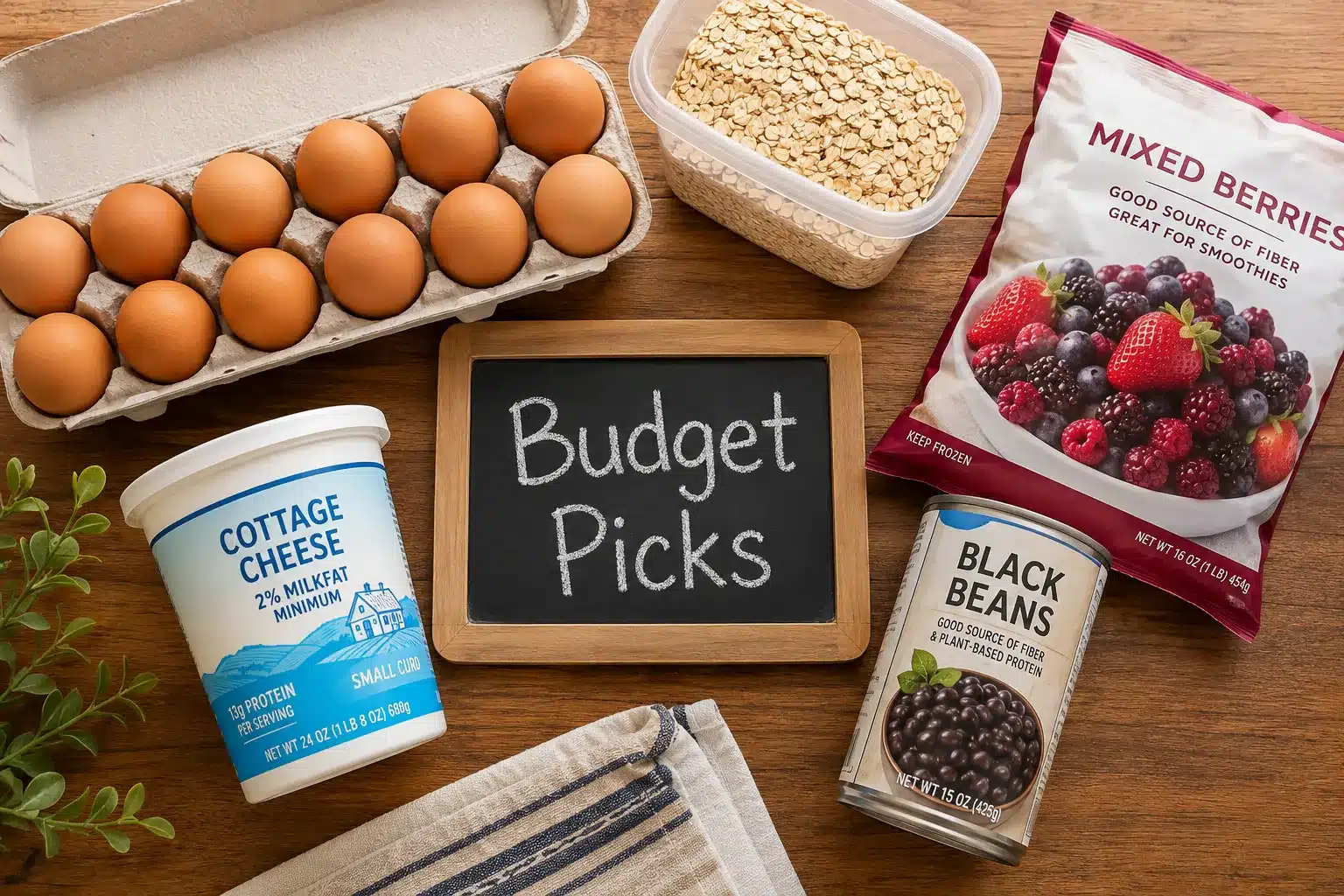
Most affordable GLP-1 breakfast foods (estimated 2026 prices, US average):
- Eggs: Approximately $0.25 to $0.40 per egg depending on region and brand. A two-egg breakfast costs under $1.
- Rolled oats: A 42-oz container costs roughly $4 to $6 and provides 30 or more servings.
- Cottage cheese: A 16-oz container costs approximately $3 to $4 and provides 4 to 6 servings.
- Frozen berries: A 12-oz bag costs $3 to $5 and lasts multiple breakfasts.
- Canned beans (black beans, chickpeas): Under $1.50 per can; add to egg scrambles for extra protein and fiber.
- Plain Greek yogurt (store brand): A 32-oz tub costs $4 to $6 and provides 6 to 8 servings.
Budget GLP-1 breakfast plan (under $2 per meal):
- Monday/Wednesday/Friday: Two scrambled eggs with a side of cottage cheese and frozen berries
- Tuesday/Thursday: Overnight oats with Greek yogurt and frozen blueberries
- Saturday/Sunday: Egg muffins prepped in a batch (6 muffins from 6 eggs and a bag of frozen spinach costs under $4 total)
Money-saving tips:
- Buy eggs, oats, and yogurt in bulk at warehouse stores
- Use frozen fruit instead of fresh, nutritionally equivalent and significantly cheaper
- Store brand Greek yogurt is nutritionally similar to name brands at a lower price
- Batch cooking egg muffins on Sunday reduces the per-meal cost substantially
For those managing both medication and food costs, our guide to compounded tirzepatide covers lower-cost medication options that may free up budget for quality food.
Key Takeaway
The foundation of a successful GLP-1 breakfast is simple: prioritize protein (20 to 30 grams), keep portions small, avoid high-fat and fried foods, and eat slowly. Whether you choose eggs, Greek yogurt, cottage cheese, or a protein smoothie, the goal is to nourish your body consistently even when appetite is suppressed. Meal prepping 3 to 5 days in advance removes the friction of cooking on low-appetite days and keeps you on track with your nutrition goals.
Frequently Asked Questions
Can I drink coffee at breakfast on GLP-1?
Yes, plain coffee or coffee with a small amount of low-fat milk is generally well tolerated on GLP-1 medications. Avoid large amounts of cream, sugar, or flavored syrups, which can add significant calories and may worsen nausea.
How many calories should breakfast be on GLP-1?
A reasonable target is 300 to 450 calories, but total calorie needs vary by individual. More important than hitting a specific calorie number is ensuring breakfast contains at least 20 grams of protein and is small enough in volume to avoid discomfort.
Is Greek yogurt good for GLP-1 users?
Yes. Plain, unsweetened Greek yogurt is one of the best GLP-1 breakfast foods. It provides 15 to 17 grams of protein per 3/4 cup serving, is easy to digest, and pairs well with berries and a small amount of granola.
Should I eat breakfast even if I’m not hungry on GLP-1?
Yes, at minimum aim for a small protein-rich snack within 1 to 2 hours of waking. Consistently skipping breakfast can lead to inadequate protein intake, which accelerates muscle loss during weight reduction.
Can I eat avocado toast for breakfast on GLP-1?
A small version, half a slice of whole grain toast with a thin layer of mashed avocado and a poached egg, can work well. Avoid large portions, as avocado is high in fat and can worsen delayed gastric emptying when eaten in significant amounts.
What is the best protein powder for GLP-1 breakfast smoothies?
Whey protein isolate and pea protein are both good choices. Whey digests quickly and has a complete amino acid profile. Pea protein is a good option for those who are lactose intolerant or prefer plant-based sources. Choose unflavored or lightly flavored versions with minimal added sugar.
Can I eat fruit at breakfast on GLP-1?
Yes, in small amounts. Berries are the best choice, they are low in sugar and high in fiber and antioxidants. Avoid large portions of high-sugar fruits like mango, grapes, or pineapple, particularly in the early weeks of treatment.
Does breakfast timing affect GLP-1 effectiveness?
Meal timing does not directly affect how well the medication works, but eating at consistent times each day helps your digestive system adapt and may reduce nausea. For oral semaglutide (Rybelsus), follow the specific fasting instructions provided by your prescriber.
Is bacon okay on GLP-1?
Occasionally and in very small amounts, but it is not a good regular choice. Bacon is high in saturated fat and sodium, both of which can worsen delayed gastric emptying and nausea. Turkey bacon is a lower-fat alternative if you enjoy the flavor.
What if I vomit after eating breakfast on GLP-1?
Reduce your portion size significantly for the next few days and choose the blandest, lowest-fat options available (plain eggs, plain yogurt, plain oats). If vomiting continues for more than 2 days or you cannot keep fluids down, contact your prescriber.
Can I use meal replacement shakes for breakfast on GLP-1?
Yes, a high-quality meal replacement shake that provides at least 20 grams of protein and is low in sugar can be a practical breakfast option, especially on low-appetite days. Check labels carefully and avoid shakes with more than 10 grams of added sugar per serving.
Are there GLP-1 breakfast ideas suitable for people with diabetes?
Yes. The same principles apply: high protein, moderate fiber, low added sugar, and small portions. Eggs, plain Greek yogurt, cottage cheese, and small portions of steel-cut oats are all blood-sugar-friendly options. Work with your healthcare provider to monitor how breakfast choices affect your glucose levels on GLP-1 therapy.
7 Best GLP-1 Providers Ranked: Accreditation, Flexibility & Support Compared (2026 Update)
32,000+ Patients Can't All Be Wrong: See the Top-Rated GLP-1 Providers: Compared on accreditation, plan flexibility, and patient support — updated for 2026.
BMI MD GLP-1 Microdosing Plan
- Specialized microdosing options (sublingual drops or low-dose injections)
- Ideal for maintaining weight or tapering off higher doses safely
- Fully bundled plan with no hidden monthly platform memberships
DirectMeds Weight Loss Solutions
- Sourced from accredited, state-licensed 503A compounding pharmacies
- No-frills high-volume savings passed directly to the patient
- Includes clinical consultation and cold-chain shipping updates
MEDVi Flat-Rate Telehealth
- Flat monthly rate holds steady even at maximum maintenance doses
- No dosage upcharges or graduation fee penalties
- Offers both injectable and advanced oral thin-film delivery options
Gala GLP-1 Care Program
- All-inclusive plan with no standalone membership costs
- Continuous text-based messaging access with state-licensed clinicians
- Temperature-controlled, cold-chain medication shipping included
Measured GLP-1 Metabolic Health
- Comprehensive metabolic health screening and expert intake analysis
- Predictable long-term budgeting with stable plan pricing
- High-end responsive dashboard with integrated diagnostic support
Refills GLP-1 (TryRefills Plan)
- Flat rate holds steady as titration scales up
- Includes clinical guides for active side-effect management
- Bundles in foundational nutritional strategies alongside medication
AltRx GLP-1 Transactional Reorders
- Zero recurring auto-billing — pay entirely on a transactional basis
- Rapid text-to-order format saves time for experienced patients
- Provides both injectable forms and fast-dissolving tablet variations
Conclusion
Building a consistent, protein-rich breakfast routine is one of the most impactful things you can do to support your results on GLP-1 therapy. The core principles are straightforward: aim for 20 to 30 grams of protein, keep portions small, avoid high-fat and fried foods, and eat slowly enough to let your body’s satiety signals work as intended.
Actionable next steps:
- Choose two or three breakfast options from this guide that appeal to you and stock the ingredients this week
- Set aside 30 minutes on Sunday to prep egg muffins, overnight oats, or chia pudding for the week ahead
- If nausea is a current problem, start with the lowest-fat options (plain Greek yogurt, soft scrambled eggs, or a small protein smoothie) and gradually reintroduce variety as tolerance improves
- Track your protein intake for one week to confirm you are consistently hitting 20 to 30 grams at breakfast
- If appetite suppression is severe, speak with your prescriber about whether your dose needs adjustment
For a broader understanding of how GLP-1 medications interact with your metabolism and nutrition needs, explore our GLP-1 transformation guide and our overview of GLP-1 medications for weight loss and diabetes. If you’re evaluating medication access and cost, our semaglutide subscription guide and compounded tirzepatide overview are practical next reads.
References
- Wilding JPH, et al. “Once-Weekly Semaglutide in Adults with Overweight or Obesity.” New England Journal of Medicine, 2021. https://www.nejm.org/doi/full/10.1056/NEJMoa2032183
- Lean ME, et al. “Obesity and the gut microbiome: GLP-1 and dietary protein.” Obesity Reviews, 2022.
- Ernst E, Pittler MH. “Efficacy of ginger for nausea and vomiting: a systematic review of randomized clinical trials.” British Journal of Anaesthesia, 2000.
- Leidy HJ, et al. “The role of protein in weight loss and maintenance.” American Journal of Clinical Nutrition, 2015. https://academic.oup.com/ajcn/article/101/6/1320S/4564492
- Blundell J, et al. “Effects of once-weekly semaglutide on appetite, energy intake, energy expenditure, gastric emptying, and blood glucose.” Diabetes, Obesity and Metabolism, 2017.
- Kaur B, et al. “The impact of a low glycaemic index (GI) diet on simultaneous measurements of blood glucose and fat oxidation.” Nutrients, 2016.
- Marx N, et al. “Mechanisms of Action of GLP-1 Receptor Agonists.” Diabetes Care, 2021.
Tags: GLP-1 breakfast ideas, semaglutide breakfast, tirzepatide meal plan, high protein breakfast, GLP-1 nausea foods, GLP-1 meal prep, Wegovy breakfast, Ozempic diet, GLP-1 nutrition, breakfast on GLP-1, protein breakfast ideas, GLP-1 friendly foods

With over 13 years of experience in holistic health blogging, I aim to help you navigate your wellness journey with honest insights, expert-backed advice, and a sprinkle of real-world practicality.
Certified Wellness Writer | Herbal Nutrition Advocate | Wellness Research Enthusiast


