
microdosing GLP1: Can Lower Weekly Doses Still Deliver Weight Loss Results?

Last updated: October 3, 2026
Quick Answer
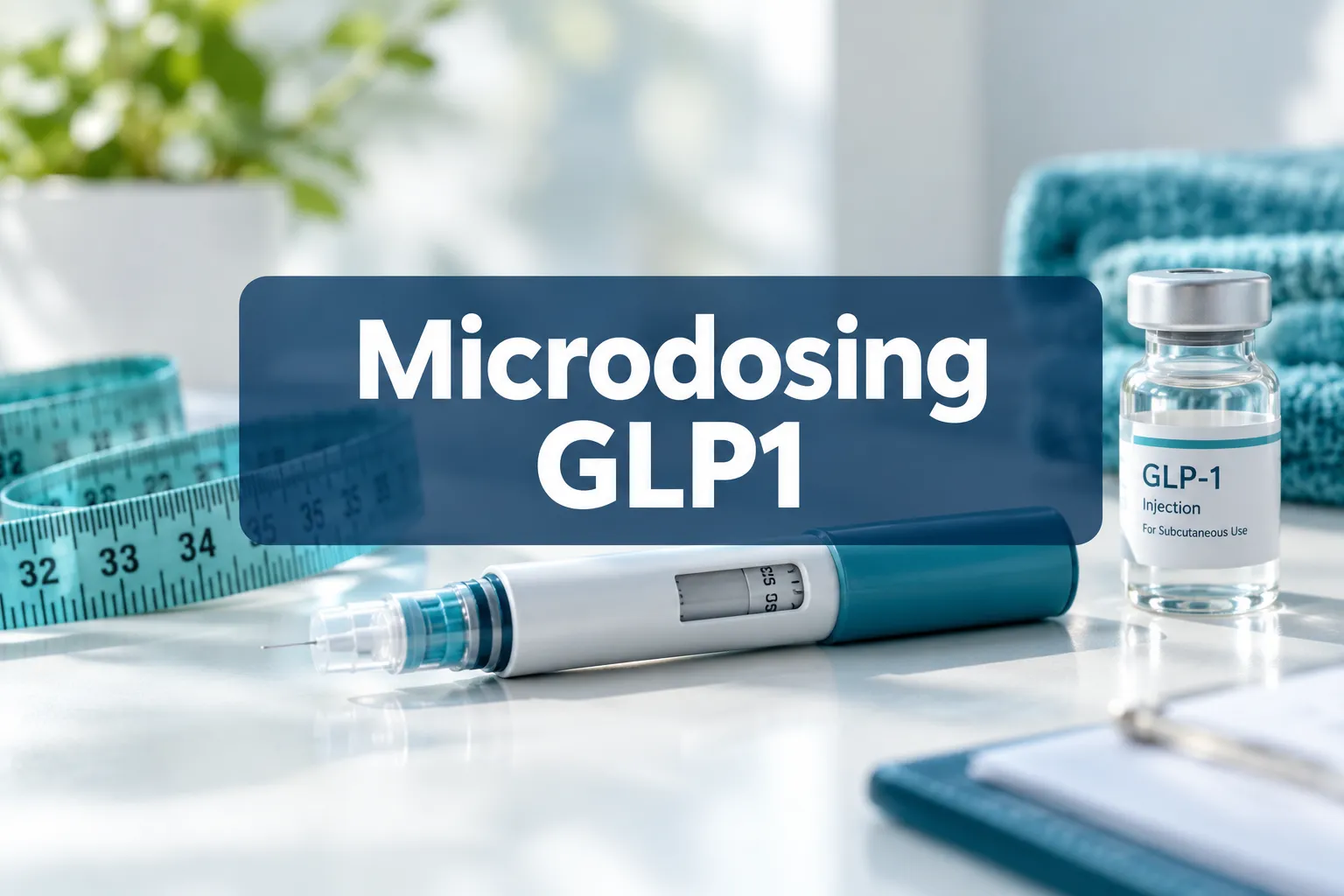
Microdosing GLP-1 means taking a fraction of the standard prescribed dose of a GLP-1 receptor agonist, such as semaglutide or tirzepatide, typically to reduce side effects, cut costs, or achieve subtle appetite control. As of 2026, no FDA-approved microdosing protocol exists, and clinical evidence for this approach is scant. Most major medical centers advise against self-directed microdosing without physician oversight.
Key Takeaways
- Microdosing GLP-1 is an off-label practice with no standardized protocol and no FDA approval for this specific use
- People microdose primarily to lower costs, minimize nausea, or gain mild appetite suppression without full-dose side effects
- Clinical experts at Cedars-Sinai, Yale Medicine, and Cleveland Clinic consistently note that evidence for microdosing efficacy is limited or absent
- Standard GLP-1 doses range from 0.25 mg to 2.4 mg weekly (semaglutide); microdoses are generally described as anything below the lowest approved starting dose
- Weight loss results at microdose levels are likely slower and smaller than at therapeutic doses, though some users report meaningful appetite changes
- Side effects may be milder at lower doses, but safety data specific to microdosing are lacking
- Microdosing without medical supervision carries real risks, including inconsistent dosing, unmonitored metabolic changes, and use of unverified compounded products
- Cost can be lower with compounded GLP-1 products, but quality and sterility vary widely
- People with type 2 diabetes should not substitute microdosing for their prescribed treatment plan
- Lifestyle factors, diet, exercise, sleep, remain essential regardless of dose level
What Is Microdosing GLP-1 and How Does It Work
Microdosing GLP-1 refers to taking a deliberately small, sub-therapeutic amount of a GLP-1 receptor agonist, typically well below the lowest approved starting dose. The goal varies by person: some want to ease into the medication with fewer side effects, others are trying to stretch a supply to save money, and a growing group, often influenced by longevity and wellness communities, believe low doses offer metabolic benefits without the full drug burden [1][3].
7 Best GLP-1 Providers Ranked: Accreditation, Flexibility & Support Compared (2026 Update)
32,000+ Patients Can't All Be Wrong: See the Top-Rated GLP-1 Providers. We compared the leading online GLP-1 providers based on program features, clinical support, convenience, and overall value.
BMI MD GLP-1 Microdosing Plan
- Specialized microdosing options, including sublingual drops and low-dose injections
- Designed for people interested in maintaining weight or gradually adjusting treatment
- Bundled program structure without a separate monthly platform membership
- Online access makes the process convenient from home

DirectMeds Weight Loss Solutions
- Online weight-loss program with a straightforward patient experience
- Compounded medication options through state-licensed compounding pharmacies
- Includes clinical consultation as part of the process
- Provides shipping updates to help patients track their orders
MEDVi Flat-Rate Telehealth
- Flat-rate telehealth approach designed for easier budgeting
- No dosage-based pricing increases within the advertised program structure
- Offers injectable and oral thin-film delivery options
- Includes medical screening and asynchronous provider consultations
Gala GLP-1 Care Program
- Text-based access to state-licensed clinicians
- Cold-chain medication shipping included in the program
- Month-to-month program structure
- Designed for people who value convenient ongoing support
Measured GLP-1 Metabolic Health
- Comprehensive metabolic health screening and intake analysis
- Designed around longer-term metabolic health management
- Responsive dashboard with integrated health tracking tools
- Useful option for patients who value a more data-focused experience
Refills GLP-1 (TryRefills Plan)
- Clinical guidance designed to help patients manage common treatment concerns
- Includes foundational nutritional strategies alongside medication
- Designed around predictable ongoing treatment
- No hidden startup or processing fees according to the program information provided
AltRx GLP-1 Transactional Reorders
- Transactional reorder model without recurring auto-billing
- Designed for patients who already understand their treatment routine
- Fast text-to-order process for convenient reorders
- Offers injectable and fast-dissolving tablet variations
GLP-1 (glucagon-like peptide-1) is a hormone naturally released in the gut after eating. It signals the brain to reduce hunger, slows gastric emptying, and prompts the pancreas to release insulin in response to blood sugar. Synthetic GLP-1 receptor agonists like semaglutide (Ozempic, Wegovy) and tirzepatide (Mounjaro, Zepbound) mimic this hormone at pharmacological levels.
At a microdose, the receptor activation is partial. The theory is that even a small signal may dull appetite or improve metabolic markers without triggering the full cascade of side effects, particularly nausea and vomiting, that some people experience at standard doses [4]. However, experts note that the dose-response relationship for GLP-1 drugs is not fully linear, and there is no established threshold below which benefits reliably appear [3].
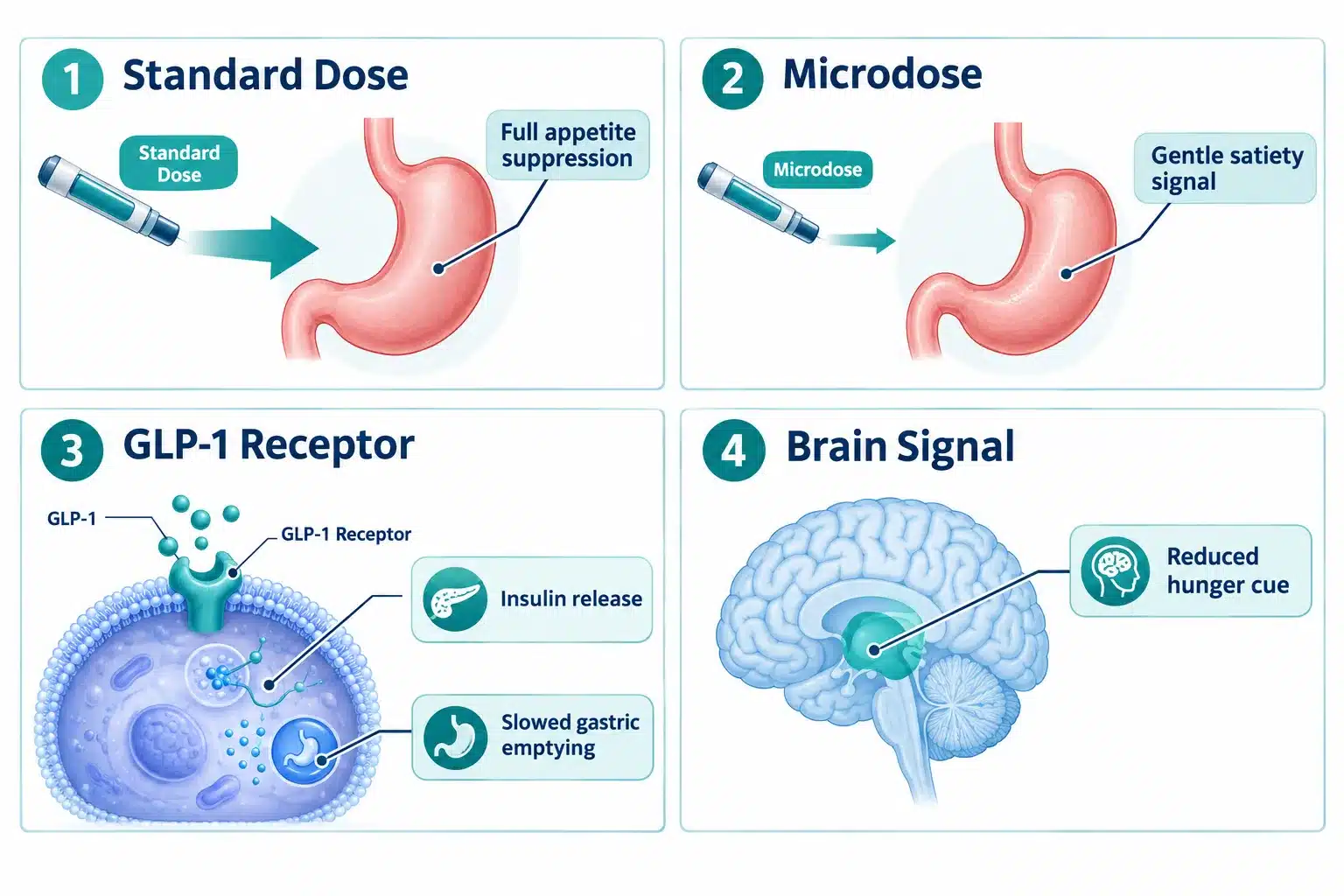
GLP-1 Microdosing vs. Standard Dosing: Key Differences
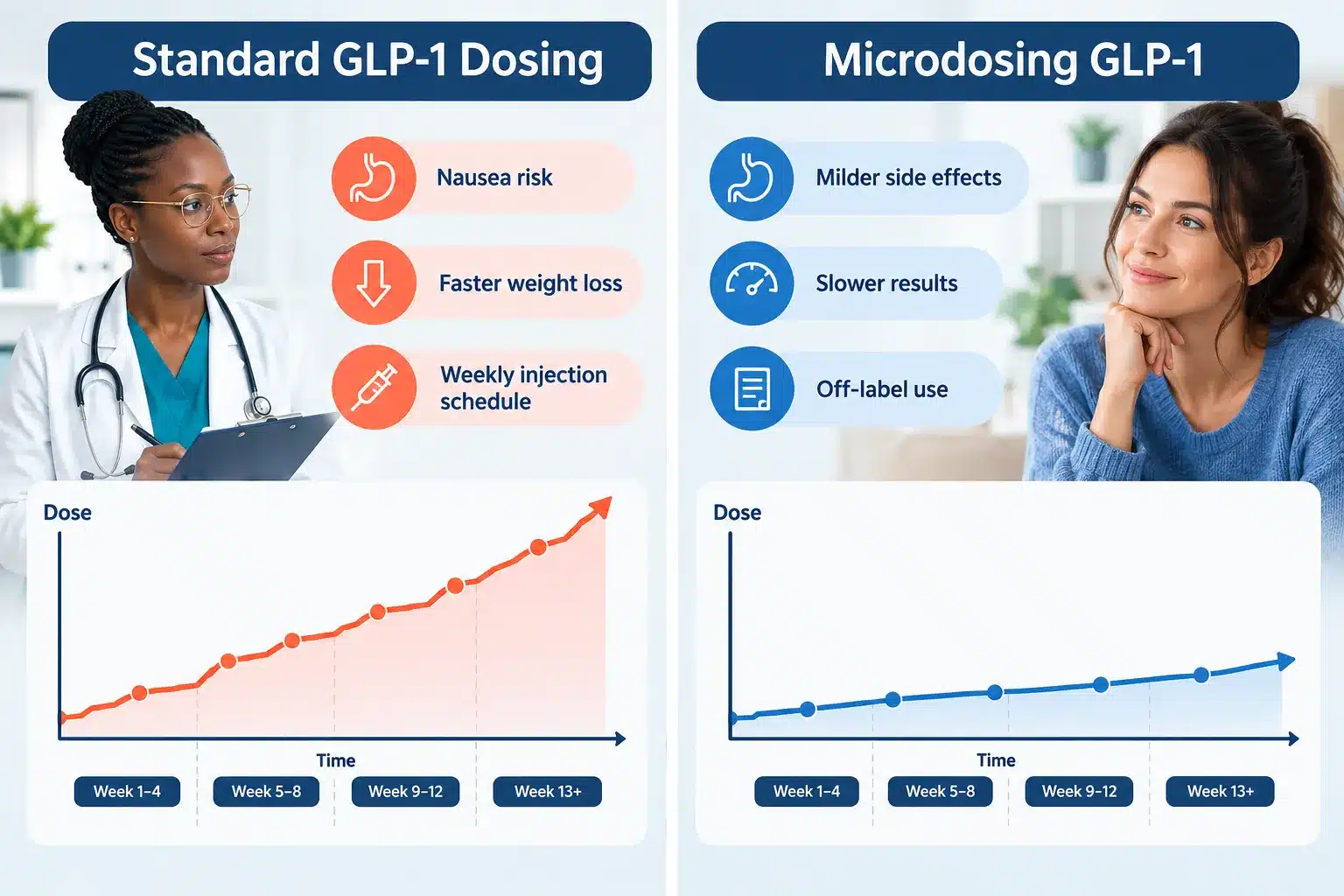
Standard dosing follows FDA-approved escalation schedules designed to maximize efficacy while managing tolerability. Microdosing departs from these schedules in ways that matter clinically.
| Factor | Standard Dosing | Microdosing |
|---|---|---|
| Dose range (semaglutide) | 0.25 mg, 2.4 mg/week | Often below 0.25 mg/week |
| FDA approval | Yes, for obesity/T2D | No approved protocol |
| Weight loss evidence | Strong clinical trial data | Largely anecdotal |
| Side effect profile | Nausea common, especially early | Potentially milder, but unknown |
| Medical supervision | Standard of care | Often self-directed |
The core clinical distinction is intent and oversight. Standard dosing is titrated upward under physician guidance to reach a therapeutic target. Microdosing, as practiced in 2026, is largely self-directed, often using compounded semaglutide from online pharmacies, and follows no validated escalation schedule [6][9].
For a deeper look at how standard GLP-1 dosing works, see this semaglutide dosage guide for weight loss.
Does Microdosing GLP-1 for Weight Loss Actually Work
The honest answer is: possibly, but not reliably, and not as well as therapeutic doses. Some people do report reduced appetite and modest weight loss at sub-therapeutic GLP-1 doses, but clinical trial data specifically for microdosing do not exist [1][4].
Experts at Yale Medicine point out that GLP-1 drugs were studied and approved at specific dose ranges. Going below those ranges means operating outside the evidence base entirely [3]. Cleveland Clinic physicians note that while some patients may notice appetite changes at very low doses, it is unclear whether this translates to meaningful, sustained weight loss [4].
A few important considerations:
- Appetite suppression may occur at lower doses, but the magnitude is almost certainly smaller than at standard doses
- Individual response varies widely, some people are more sensitive to GLP-1 receptor activation than others
- Placebo effect is real, in the absence of controlled trials, it is hard to separate true pharmacological response from expectation
- Longevity-focused microdosing is a growing niche, with proponents claiming metabolic and cardiovascular benefits, but as of 2026, no outcomes data support this use [5][8]
If your primary goal is meaningful weight loss, the current evidence strongly favors standard therapeutic dosing under medical supervision. For those exploring affordable options, reviewing GLP-1 agonists for weight loss can help set realistic expectations.
GLP-1 Microdosing Side Effects and Risks
Microdosing may reduce the intensity of common GLP-1 side effects, but it does not eliminate risk, and it introduces new ones specific to unmonitored, off-label use.
Potentially reduced at lower doses:
- Nausea and vomiting
- Diarrhea or constipation
- Fatigue during dose escalation
Risks that remain or are unique to microdosing:
- Inconsistent dosing accuracy, drawing a fraction of a dose from a vial without proper tools leads to measurement error [7]
- Unverified compounded products, many microdosers use compounded semaglutide, which varies in concentration and sterility; see our overview of sterile compounding pharmacy standards for GLP-1
- Delayed diagnosis of adverse events, without a prescribing physician, symptoms like pancreatitis or thyroid changes may go unrecognized
- Drug interactions, GLP-1 drugs slow gastric emptying, affecting absorption of other medications, even at low doses
- Unknown long-term outcomes, no safety data exist for sustained microdose use [8]
Hackensack Meridian Health physicians specifically warn that patients who self-direct microdosing often lack the monitoring needed to catch early warning signs of serious adverse effects [7].
How Much Does GLP-1 Microdosing Cost
Cost is one of the main drivers of microdosing. Brand-name semaglutide (Wegovy, Ozempic) can cost over $900 per month without insurance, making it inaccessible for many people. Microdosing, particularly with compounded semaglutide, is often framed as a workaround.
Compounded semaglutide from telehealth platforms has been available for significantly less, sometimes in the range of $100,$300 per month depending on the provider and dose. When someone microdoses, they may stretch a single vial over multiple weeks, further reducing the per-dose cost.
However, cost savings come with trade-offs:
- Compounded products are not FDA-approved and quality varies by pharmacy
- Some telehealth programs offering low-cost GLP-1 access are legitimate; others are not
- The regulatory landscape for compounded GLP-1s shifted significantly in 2025-2026 as the FDA addressed the semaglutide shortage
For readers exploring affordable options, these resources are worth reviewing:
“The appeal of microdosing is largely economic. But saving money on a medication that isn’t working, or that carries unknown risks, is not a real saving.”, Tufts Medicine, 2026 [8]
Who Should Consider GLP-1 Microdosing, and Who Shouldn’t
Microdosing GLP-1 is not appropriate for everyone, and the population it might theoretically suit is narrow.
Who might have a rationale for low-dose GLP-1 use:
- Adults who experienced severe side effects at standard doses and want to try a gradual, physician-supervised re-introduction at lower levels
- People who have reached their weight goal and want a maintenance strategy (under physician guidance)
- Individuals in longevity or metabolic optimization programs where a physician is actively monitoring outcomes
Who should not self-direct microdosing:
- People with type 2 diabetes who need glycemic control, microdosing is not a substitute for a prescribed treatment plan [6]
- Anyone with a personal or family history of medullary thyroid carcinoma or MEN2 syndrome
- People with a history of pancreatitis
- Pregnant or breastfeeding individuals
- Anyone who has not consulted a physician first
The distinction between legitimate low-dose clinical use and social-media-driven microdosing matters. A physician prescribing a lower starting dose to a sensitive patient is not the same as someone halving their dose to save money based on a wellness influencer’s advice [3][9].
Common Mistakes People Make When Microdosing GLP-1
Several patterns appear repeatedly among people who attempt microdosing without medical guidance.
Using imprecise measurement tools, Insulin syringes and standard pen injectors are not calibrated for very small fractional doses. Drawing 0.05 mg instead of 0.25 mg requires equipment and technique most patients don’t have [7].
Buying from unvetted sources, Not all compounding pharmacies meet the same standards. The difference between a 503A and 503B compounding pharmacy matters for safety; see our guide on 503A vs. 503B compounding pharmacies.
Expecting standard-dose results, People often start microdosing hoping for the same outcomes shown in clinical trials, then feel discouraged when progress is slower. Expectations need to match the dose.
Skipping lifestyle changes, GLP-1 drugs at any dose work best alongside dietary changes and physical activity. Microdosing without those changes is unlikely to produce meaningful results.
Stopping and restarting without a plan, Inconsistent use makes it impossible to assess whether the dose is working and may increase the risk of side effects when restarting.
Ignoring warning symptoms, Abdominal pain, persistent vomiting, or vision changes warrant medical attention regardless of dose level.
GLP-1 Microdosing Results Timeline: How Long to See Changes
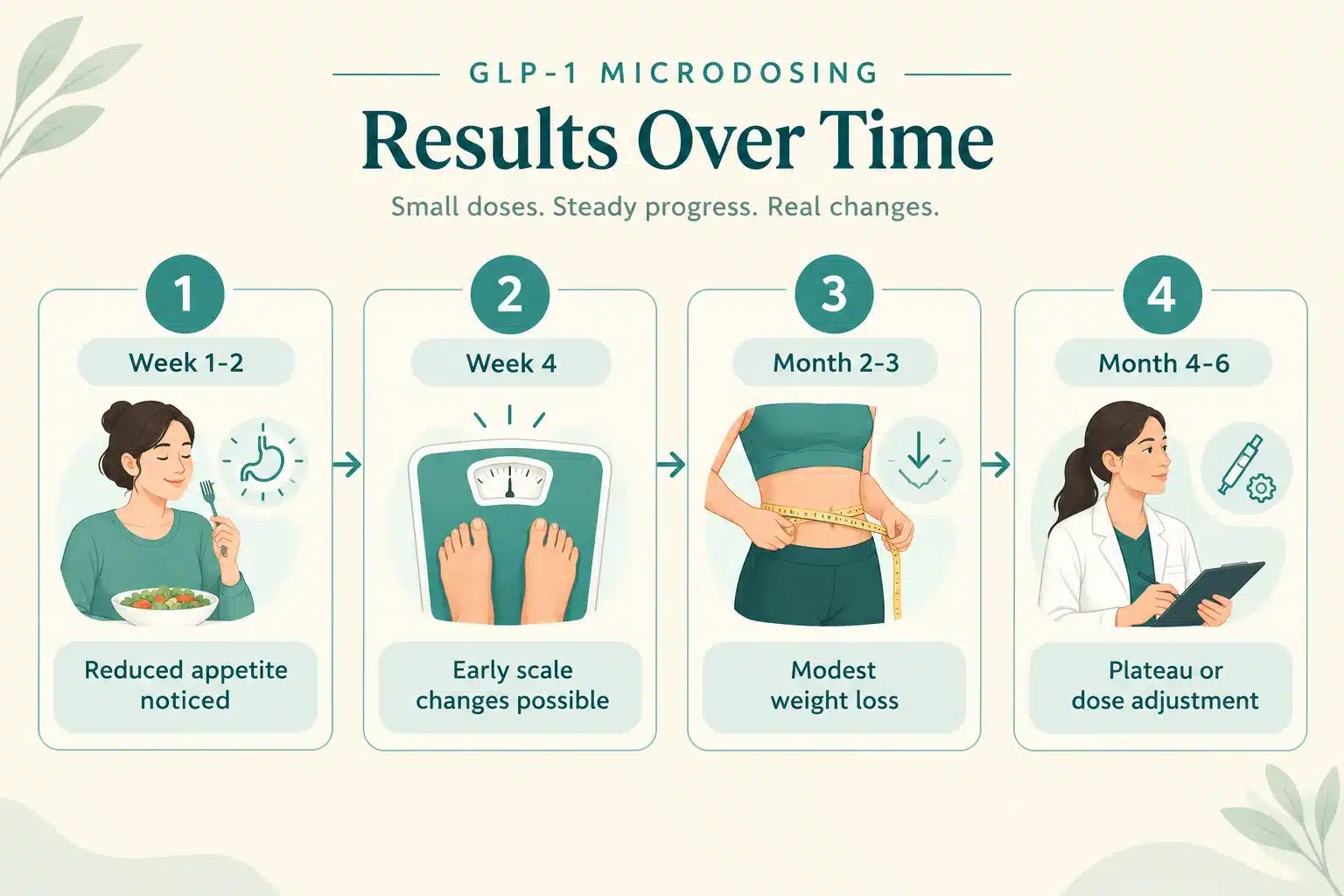
At standard doses, most patients begin noticing appetite suppression within the first one to two weeks, with measurable weight loss typically appearing by weeks four to eight. At microdoses, the timeline is likely longer and the magnitude smaller.
A realistic expectations framework for microdosing:
- Weeks 1-2: Some users report mild appetite reduction; others notice nothing
- Month 1: Modest changes in food cravings possible; scale movement unlikely to be dramatic
- Months 2-3: If any weight loss occurs, it will likely be slower than the 1-2 lbs per week sometimes seen at therapeutic doses
- Month 4-6: Without dose escalation, results may plateau; a physician review is warranted
The Los Angeles Times reported in 2026 that proponents of microdosing often describe benefits as subtle, less about dramatic weight loss and more about reduced food noise and improved metabolic energy [5]. Whether these effects are pharmacological or driven by expectation remains unclear without controlled data.
GLP-1 Microdosing for Diabetes vs. Weight Loss: An Important Distinction
For people with type 2 diabetes, GLP-1 receptor agonists are prescribed at specific doses to achieve glycemic targets. Microdosing in this context is not a recognized treatment strategy and could leave blood sugar inadequately controlled [6].
For weight loss in people without diabetes, the stakes of underdosing are different, the primary consequence is reduced efficacy, not acute metabolic risk. Still, even in this population, sub-therapeutic dosing means the cardiovascular and metabolic benefits demonstrated in clinical trials may not apply.
People managing type 2 diabetes should work with their endocrinologist or primary care physician before altering any GLP-1 dose. For more on how semaglutide is used in diabetes management, see our article on semaglutide for type 2 diabetes.
Microdosing GLP-1 and Exercise, Diet: What Else Do You Need
GLP-1 medications, at any dose, are not a standalone solution. The clinical trials that demonstrated significant weight loss combined drug treatment with dietary counseling and increased physical activity.
At a microdose, the pharmacological contribution to appetite suppression is smaller, which means lifestyle factors carry even more weight. Specifically:
- Protein intake helps preserve lean muscle mass during weight loss and supports satiety independent of GLP-1 effects
- Resistance training reduces the proportion of weight lost from muscle, which is a known concern with GLP-1-driven weight loss at any dose
- Sleep quality directly affects hunger hormones (ghrelin and leptin), which interact with GLP-1 pathways
- Stress management influences cortisol, which can counteract appetite suppression
If you’re struggling with persistent hunger regardless of medication dose, the underlying causes are worth addressing, see our guide on why you’re hungry all the time and what to do about it.
Does GLP-1 Microdosing Tolerance Build Over Time
There is no strong evidence that GLP-1 receptor tolerance develops in the same way it does with some other drug classes. However, some patients and clinicians report that the appetite-suppressing effect of GLP-1 drugs diminishes over time at a fixed dose, which is one reason standard protocols involve dose escalation.
At a microdose, if any initial appetite suppression occurs, it may fade without the option to escalate, leaving the patient with neither the benefit nor a clear path forward. This is a practical limitation that physicians at Tufts Medicine have flagged as a reason microdosing is not a sustainable long-term strategy for most people [8].
The concept of “GLP-1 tolerance” is still being studied. What is clear is that maintaining results typically requires either dose escalation or robust lifestyle adherence, and often both.
Can You Microdose GLP-1 Safely Without a Doctor
The short answer is no, not safely, by any reasonable medical standard. The longer answer is that the risks of unsupervised microdosing are not hypothetical.
Without a physician:
- There is no baseline metabolic assessment
- There is no monitoring for pancreatitis, thyroid changes, or cardiovascular events
- Dosing accuracy cannot be assured
- Drug interactions go unmanaged
- Compounded product quality is unverified
The WSJ reported in 2026 that the microdosing trend has grown substantially on social media, driven partly by influencers and longevity advocates, and that physicians are increasingly concerned about patients self-directing this practice [9]. Yale Medicine’s position is explicit: microdosing GLP-1 outside of a clinical relationship is not recommended [3].
If cost is the barrier, there are legitimate pathways to supervised, affordable GLP-1 access. Reviewing GLP-1 payment plans and affordable semaglutide telehealth options can help identify programs that provide medical oversight without the full brand-name price tag.
Alternatives to Microdosing GLP-1 Worth Considering
If the goal is appetite control and weight loss but the barriers are cost or side effect concerns, there are alternatives worth discussing with a physician.
- Standard GLP-1 at the lowest approved starting dose, the 0.25 mg/week starting dose for semaglutide is already a low, tolerability-focused entry point
- Tirzepatide, some patients tolerate it better than semaglutide; see tirzepatide patient reviews for real-world perspectives
- Oral GLP-1 formulations, Rybelsus (oral semaglutide) and newer oral tirzepatide options offer alternatives to injection; see our review of Medvi oral tirzepatide
- Structured diet programs with medical supervision
- Behavioral interventions targeting hunger cues and eating patterns
For people who have tried standard GLP-1 programs and found them unaffordable, the Measured GLP-1 review offers a detailed look at one lower-cost supervised option.
Frequently Asked Questions
What exactly counts as a “microdose” of GLP-1?
There is no official definition. In practice, people and media use the term to describe doses below the lowest approved starting dose, for semaglutide, that means anything below 0.25 mg per week. Some users report taking as little as 0.05-0.1 mg weekly.
Is microdosing GLP-1 legal?
Using a GLP-1 drug off-label at a lower dose is not illegal for patients, but it exists outside FDA-approved protocols. Prescribing or dispensing compounded GLP-1 products involves a separate regulatory framework that has been in flux since 2025.
Will microdosing GLP-1 cause muscle loss?
Any weight loss intervention carries some risk of lean mass reduction. GLP-1 drugs at standard doses have been associated with muscle loss, particularly without resistance exercise. At microdoses, the risk may be lower simply because less weight is lost overall.
Can microdosing GLP-1 help with food noise without weight loss?
Some users specifically report that low-dose GLP-1 reduces intrusive food thoughts, what many call “food noise”, without dramatic appetite suppression. This effect is plausible given the drug’s mechanism, but it has not been studied in controlled trials at sub-therapeutic doses.
Is compounded semaglutide safe for microdosing?
Compounded semaglutide quality varies significantly by pharmacy. Products from accredited 503B outsourcing facilities are held to stricter standards than 503A pharmacies. Neither is FDA-approved for the specific indication of microdosing.
How do I know if microdosing GLP-1 is working?
Without a defined therapeutic target, “working” is subjective. Tracking appetite changes, food intake, and weight over at least 8-12 weeks with consistent dosing gives the most useful signal. If nothing changes in 12 weeks, the dose is likely insufficient.
Can I microdose GLP-1 if I have prediabetes?
Possibly, but this is a clinical decision. A physician should assess your metabolic status, risk factors, and whether a full therapeutic dose or another intervention is more appropriate.
What do doctors actually think about microdosing GLP-1?
Most physicians at major medical centers, including Cedars-Sinai, Cleveland Clinic, Yale Medicine, and Tufts Medicine, are skeptical. Their consistent position is that evidence is lacking, risks are underappreciated, and supervised standard dosing is preferable [1][3][4][8].
Does microdosing GLP-1 affect cholesterol or blood pressure?
Standard GLP-1 doses have demonstrated cardiovascular benefits in large trials. Whether microdoses confer similar benefits is unknown. Assuming they do would be a significant extrapolation from the available evidence.
How do I find a doctor willing to discuss low-dose GLP-1?
Telehealth platforms specializing in GLP-1 prescribing are the most accessible entry point. Many will discuss dose customization, including lower starting doses for sensitive patients. Look for platforms with licensed prescribers and pharmacy partnerships.
7 Best GLP-1 Providers Ranked: Accreditation, Flexibility & Support Compared (2026 Update)
32,000+ Patients Can't All Be Wrong: See the Top-Rated GLP-1 Providers: Compared on accreditation, plan flexibility, and patient support — updated for 2026.
BMI MD GLP-1 Microdosing Plan
- Specialized microdosing options (sublingual drops or low-dose injections)
- Ideal for maintaining weight or tapering off higher doses safely
- Fully bundled plan with no hidden monthly platform memberships
DirectMeds Weight Loss Solutions
- Sourced from accredited, state-licensed 503A compounding pharmacies
- No-frills high-volume savings passed directly to the patient
- Includes clinical consultation and cold-chain shipping updates
MEDVi Flat-Rate Telehealth
- Flat monthly rate holds steady even at maximum maintenance doses
- No dosage upcharges or graduation fee penalties
- Offers both injectable and advanced oral thin-film delivery options
Gala GLP-1 Care Program
- All-inclusive plan with no standalone membership costs
- Continuous text-based messaging access with state-licensed clinicians
- Temperature-controlled, cold-chain medication shipping included
Measured GLP-1 Metabolic Health
- Comprehensive metabolic health screening and expert intake analysis
- Predictable long-term budgeting with stable plan pricing
- High-end responsive dashboard with integrated diagnostic support
Refills GLP-1 (TryRefills Plan)
- Flat rate holds steady as titration scales up
- Includes clinical guides for active side-effect management
- Bundles in foundational nutritional strategies alongside medication
AltRx GLP-1 Transactional Reorders
- Zero recurring auto-billing — pay entirely on a transactional basis
- Rapid text-to-order format saves time for experienced patients
- Provides both injectable forms and fast-dissolving tablet variations
Conclusion
Microdosing GLP-1 is a real and growing practice in 2026, driven by cost pressures, side effect concerns, and wellness culture. The appeal is understandable. But the evidence base is thin, the safety data are absent, and the risk of self-directed dosing, particularly with compounded products, is not trivial.
The most important takeaway is this: if cost or side effects are the barrier to standard GLP-1 therapy, there are legitimate, supervised solutions available. Self-directed microdosing is not the safest or most effective path to those goals.
Actionable next steps:
- Talk to a physician or telehealth prescriber before altering any GLP-1 dose
- If cost is the issue, explore affordable GLP-1 programs and GLP-1 payment plans before resorting to self-directed microdosing
- If side effects are the issue, ask your prescriber about a slower titration schedule rather than dropping below the approved starting dose
- If you are using compounded semaglutide, verify the pharmacy’s accreditation and ask for a certificate of analysis
- Combine any GLP-1 use, at any dose, with dietary changes and physical activity for the best outcomes
The science on GLP-1 drugs continues to evolve rapidly. Staying connected to a medical provider ensures you benefit from that progress safely.
References
[1] Can Microdosing GLP-1s Promote Health and Weight Loss – https://www.cedars-sinai.org/stories-and-insights/expert-advice/can-microdosing-glp-1s-promote-health-and-weight-loss
[2] Microdosing Ozempic – https://health.yahoo.com/your-body/weight-management/weight-loss/article/microdosing-ozempic-110700989.html
[3] Microdosing GLP-1 and Accutane: What Does It Mean and Does It Work – https://www.yalemedicine.org/news/microdosing-glp-1-and-accutane-what-does-it-meanand-does-it-work
[4] Microdosing GLP-1 – https://health.clevelandclinic.org/microdosing-glp-1
[5] GLP-1 Microdosing: Weight Loss Benefits and Risks – https://www.latimes.com/lifestyle/story/2026-06-23/glp1-microdosing-weight-loss-benefits-risks
[6] GLP-1 Microdosing – https://health.usnews.com/best-diet/medication/articles/glp-1-microdosing
[7] Is Microdosing GLP-1s Safe – https://www.hackensackmeridianhealth.org/en/healthier-you/2026/05/12/is-microdosing-glp-1s-safe
[8] Microdosing GLP-1s: Your Questions Answered – https://www.tuftsmedicine.org/about-us/news/microdosing-glp-1s-your-questions-answered
[9] Ozempic Microdosing: Weight Loss and GLP-1 – https://www.wsj.com/health/wellness/ozempic-microdosing-weight-loss-glp-1-b353af7c
[10] Microdosing GLP-1s – https://www.weightwatchers.com/us/blog/microdosing_glp1s

With over 13 years of experience in holistic health blogging, I aim to help you navigate your wellness journey with honest insights, expert-backed advice, and a sprinkle of real-world practicality.
Certified Wellness Writer | Herbal Nutrition Advocate | Wellness Research Enthusiast


