
noom microdose

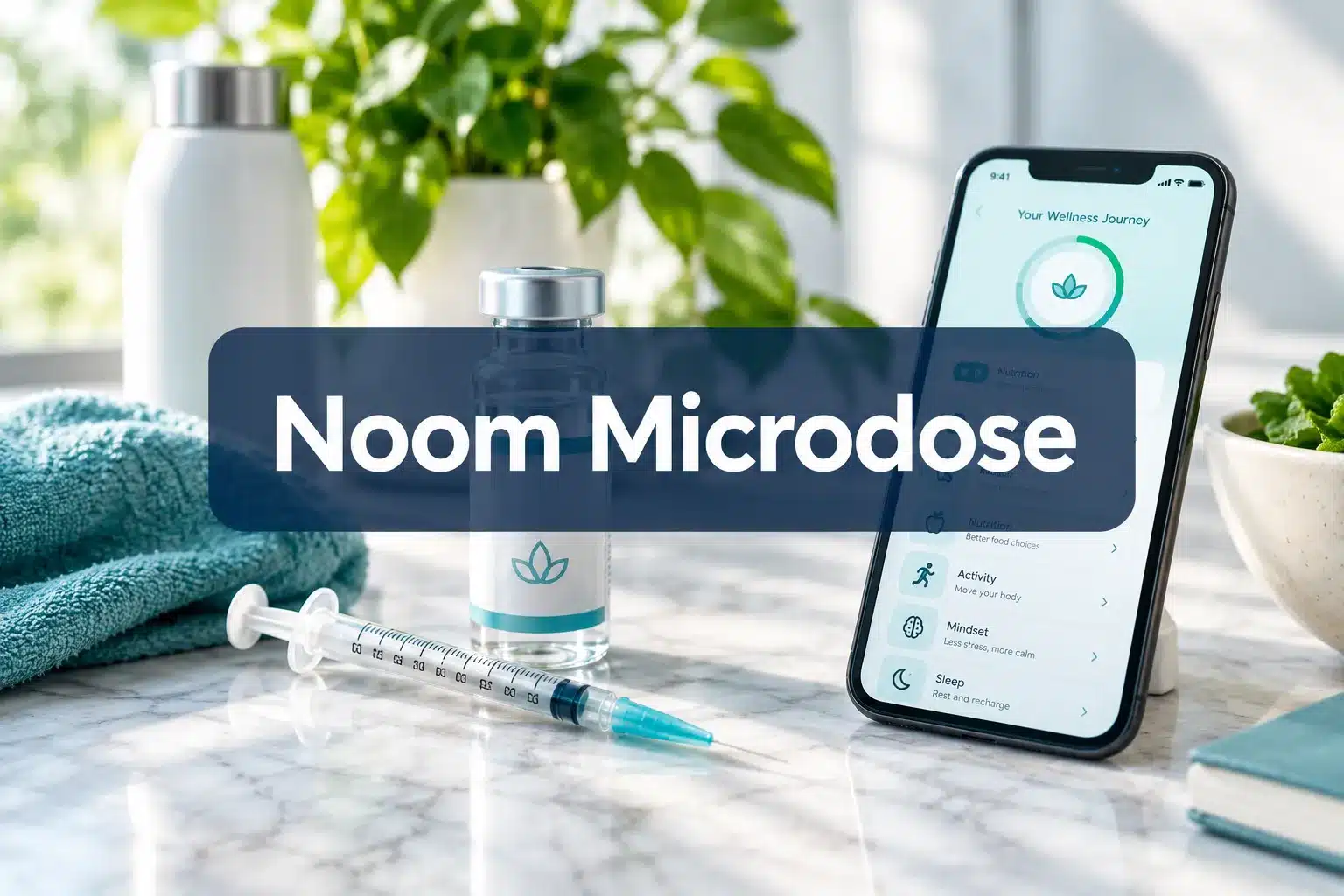
Last updated: October 3, 2026
Quick Answer
Noom Microdose is a clinically supervised GLP-1 weight-loss program that uses compounded semaglutide at doses roughly 25% or less of standard GLP-1 maintenance levels, starting at just 0.2 mg per week and capping at 0.6 mg per week. It is designed to produce meaningful weight loss while significantly reducing the nausea, fatigue, and gastrointestinal side effects that cause many people to quit standard GLP-1 programs. The program combines weekly self-injections with Noom’s full behavior-change coaching, daily lessons, and ongoing clinical oversight. [1][4]
Key Takeaways
- Noom Microdose uses compounded semaglutide at a fraction of standard GLP-1 doses, starting at 0.2 mg weekly and titrating up to a maximum of 0.6 mg weekly.
- The program requires a BMI of 25 or higher for the weight-loss version; a separate Proactive Health version is available for those with a BMI of 21 or higher.
- Noom reports members have lost up to 17 pounds in 60 days on the microdose plan, though individual results vary.
- Pricing typically starts around $79 to $119 for the first month and runs approximately $179 to $199 per month thereafter, depending on the current promotional offer.
- The program pairs medication with Noom’s coaching app, daily habit lessons, and clinician check-ins, not medication alone.
- Side effects are reported to be lower than standard GLP-1 plans because doses stay well below typical maintenance levels.
- A separate Proactive Health Microdose plan focuses on longevity and metabolic health at doses capped at 0.2 mg weekly, with at-home biomarker testing included.
- Noom Microdose is not a free app feature; it is a paid medical program that requires a prescription.
- People who have tried standard GLP-1 programs and quit due to side effects are considered strong candidates for the microdose approach.
- Evidence for long-term effectiveness of microdosed GLP-1 is still limited, and independent clinical trials specifically on this dose range are ongoing.
What Is Noom Microdose and How Does It Work
Noom Microdose is a supervised GLP-1 medication program that delivers compounded semaglutide at doses significantly lower than those used in standard weight-loss protocols. The goal is to produce steady, sustainable weight loss with fewer of the harsh side effects that often accompany higher-dose GLP-1 treatments. [4][6]
7 Best GLP-1 Providers Ranked: Accreditation, Flexibility & Support Compared (2026 Update)
32,000+ Patients Can't All Be Wrong: See the Top-Rated GLP-1 Providers. We compared the leading online GLP-1 providers based on program features, clinical support, convenience, and overall value.
BMI MD GLP-1 Microdosing Plan
- Specialized microdosing options, including sublingual drops and low-dose injections
- Designed for people interested in maintaining weight or gradually adjusting treatment
- Bundled program structure without a separate monthly platform membership
- Online access makes the process convenient from home

DirectMeds Weight Loss Solutions
- Online weight-loss program with a straightforward patient experience
- Compounded medication options through state-licensed compounding pharmacies
- Includes clinical consultation as part of the process
- Provides shipping updates to help patients track their orders
MEDVi Flat-Rate Telehealth
- Flat-rate telehealth approach designed for easier budgeting
- No dosage-based pricing increases within the advertised program structure
- Offers injectable and oral thin-film delivery options
- Includes medical screening and asynchronous provider consultations
Gala GLP-1 Care Program
- Text-based access to state-licensed clinicians
- Cold-chain medication shipping included in the program
- Month-to-month program structure
- Designed for people who value convenient ongoing support
Measured GLP-1 Metabolic Health
- Comprehensive metabolic health screening and intake analysis
- Designed around longer-term metabolic health management
- Responsive dashboard with integrated health tracking tools
- Useful option for patients who value a more data-focused experience
Refills GLP-1 (TryRefills Plan)
- Clinical guidance designed to help patients manage common treatment concerns
- Includes foundational nutritional strategies alongside medication
- Designed around predictable ongoing treatment
- No hidden startup or processing fees according to the program information provided
AltRx GLP-1 Transactional Reorders
- Transactional reorder model without recurring auto-billing
- Designed for patients who already understand their treatment routine
- Fast text-to-order process for convenient reorders
- Offers injectable and fast-dissolving tablet variations
Here is how the program works in practice:
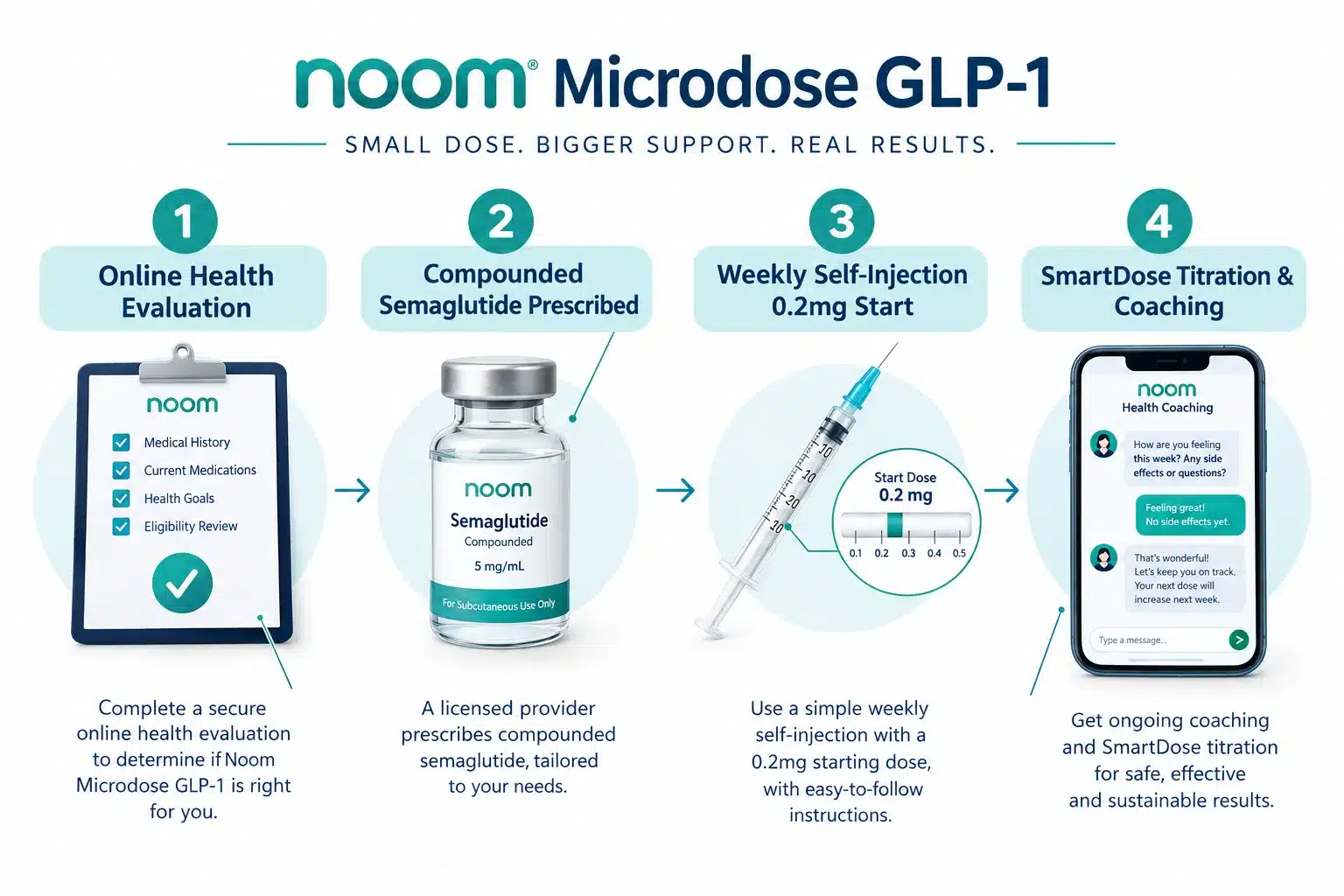
- Online evaluation: You complete a detailed health history and goals questionnaire through Noom’s platform.
- Clinician review and prescription: A licensed clinician reviews your information and, if appropriate, prescribes compounded semaglutide.
- Medication shipped to you: The vial and syringes are delivered directly to your home.
- Weekly self-injection: You draw and inject the medication once per week, starting at approximately 0.2 mg.
- SmartDose titration: Noom’s SmartDose system, guided by clinician check-ins, adjusts your dose gradually based on your response, up to a maximum of 0.6 mg per week.
- Ongoing coaching: You use Noom’s app for daily behavior-change lessons, habit tracking, and access to a GLP-1 Companion tool. [1][5][6]
Noom defines a “microdose” as any GLP-1 dose at or below 25% of its standard maintenance plan dose. This “low and slow” titration is the core philosophy behind the program. [5][6]
“Noom’s microdose approach is built on the idea that the lowest effective dose is the safest and most sustainable dose, not just a stepping stone to higher amounts.”
Noom Microdose vs Regular Noom App: What Is the Difference
Noom Microdose is a separate medical program, not a feature inside the standard Noom weight-loss app. The regular Noom app focuses entirely on behavior change, psychology-based coaching, and calorie density education without any medication component.
Here is a clear breakdown of the differences:
| Feature | Standard Noom App | Noom Microdose GLP-1 |
|---|---|---|
| Medication included | No | Yes (compounded semaglutide) |
| Prescription required | No | Yes |
| Clinician oversight | No | Yes, ongoing |
| Behavior coaching | Yes | Yes (included) |
| BMI requirement | None | BMI 25+ (weight loss) or 21+ (Proactive Health) |
| Dose range | N/A | 0.2 mg to 0.6 mg weekly |
The standard Noom app can be used alongside Noom Microdose, and in fact the microdose program includes full access to Noom’s coaching platform. If you are already a Noom subscriber and want to add medication, you would enroll in Noom Med or the Microdose program separately. [4][8]
Noom Microdose Cost and Pricing Plans
Noom Microdose pricing varies depending on the current promotional offer, but as of late 2026, the most commonly cited structures are an introductory first-month cost in the range of $79 to $119, followed by ongoing monthly costs of approximately $179 to $199. [5][8][9]
A few important pricing notes:
- Weight-loss Microdose plan: Approximately $79 to $99 to start, then around $179 to $199 per month, which includes medication, coaching, and clinical oversight.
- Proactive Health Microdose plan: Approximately $149 per month, which includes a lower dose cap (0.2 mg weekly maximum), at-home biomarker testing, and an AI longevity companion in the app.
- What is included: Medication (compounded semaglutide), syringes, shipping, clinician check-ins, SmartDose titration support, and full Noom coaching access.
- What is not included: Any additional lab work beyond what the Proactive Health plan covers, or costs associated with treating side effects.
For context on how this compares to the broader GLP-1 market, see our guide to the cheapest online GLP-1 providers compared and our breakdown of compounding pharmacy semaglutide costs in 2026.
Common mistake: Some people assume the introductory price is the ongoing price. It is not. Budget for the full monthly cost before enrolling.
Who Should Use Noom Microdose: Is It Right for You
Noom Microdose is best suited for adults who want the metabolic benefits of GLP-1 medication but have concerns about side effects, or who have previously stopped a GLP-1 program because of nausea or other reactions. It is also appropriate for people who prefer a lower-dose, slower approach from the start. [4][6]
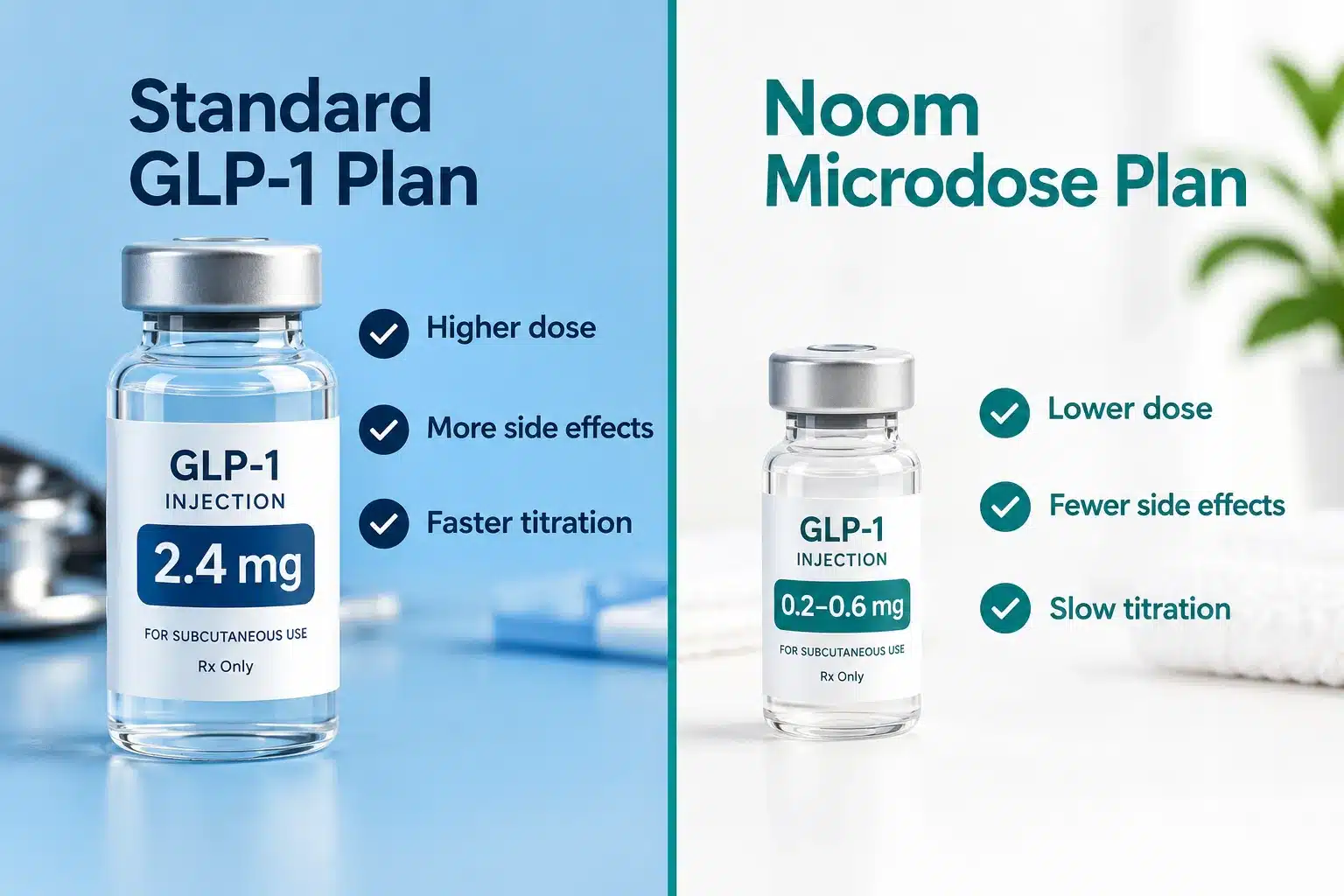
Choose Noom Microdose if you:
- Have a BMI of 25 or higher and want medical weight-loss support
- Tried a standard GLP-1 program and stopped due to nausea, fatigue, or GI issues
- Prefer a gradual, lower-dose approach over aggressive titration
- Want medication paired with structured behavioral coaching, not medication alone
- Are comfortable with weekly self-injection using a syringe and vial
Noom Microdose is likely not the right fit if you:
- Have a BMI below 25 (unless enrolling in the Proactive Health version with BMI 21+)
- Need rapid, aggressive weight loss for a medical procedure or clinical timeline
- Have a history of medullary thyroid carcinoma or multiple endocrine neoplasia syndrome type 2 (standard GLP-1 contraindications apply)
- Are pregnant or planning to become pregnant
- Prefer an oral medication rather than injections
For those who want to understand the broader landscape of GLP-1 options, our complete 2026 guide to prescription weight-loss medications covers the full range of available treatments.
Noom Microdose Side Effects: Is It Safe
Noom Microdose is designed specifically to reduce the side effects associated with standard GLP-1 medications by keeping doses at or below 25% of typical maintenance levels. That said, it is not entirely side-effect-free, and safety depends on individual health history and clinician oversight. [5][6]
Reported and expected side effects at microdose levels include:
- Mild nausea, especially in the first few weeks
- Mild fatigue or low energy early in the titration
- Injection site reactions (redness, minor bruising)
- Occasional headache or dizziness
Side effects that are less common at microdose levels compared to standard plans:
- Severe nausea or vomiting
- Significant appetite suppression leading to undereating
- Muscle mass loss (Noom specifically cites muscle preservation as a goal of the microdose approach)
Medical News Today cited experts who noted that while lower doses likely reduce side effect burden, long-term evidence for the effectiveness and safety profile of this specific dose range is still limited and evolving. [3] This is an honest caveat worth keeping in mind.
Safety rule of thumb: If you experience persistent vomiting, severe abdominal pain, or signs of pancreatitis, stop the medication and contact a healthcare provider immediately. These are standard GLP-1 warnings that apply regardless of dose.
How Long Does Noom Microdose Take to Work: Results Timeline
Most Noom Microdose members begin to notice appetite changes and early weight loss within the first two to four weeks, though meaningful results typically accumulate over 60 to 90 days. Noom reports that members have lost up to 17 pounds in 60 days on the microdose plan. [4][6]
A realistic general timeline looks like this:
- Weeks 1 to 2: Adjustment period; mild side effects possible; appetite may begin to shift
- Weeks 3 to 4: Most people notice reduced hunger and early weight changes
- Months 2 to 3: Steady weight loss becomes more consistent as the dose titrates and habits solidify
- Month 3 onward: Ongoing results depend on adherence to both medication and the behavioral coaching program
Important context: Because the microdose approach uses lower doses than standard GLP-1 plans, the rate of weight loss may be slower than what you would see on a full-dose semaglutide protocol. The trade-off is fewer side effects and, in theory, better long-term adherence. [6][9]
Noom Microdose Not Working: Troubleshooting Common Issues
If Noom Microdose is not producing results after six to eight weeks, there are several common reasons to investigate before concluding the program does not work. [6][9]
Most common reasons microdosing stalls:
- Dose is too low: At 0.2 mg, some people do not experience meaningful appetite suppression. A clinician check-in to discuss titration is the right next step.
- Behavioral component is being skipped: The medication works best when paired with the coaching and habit-change lessons. Skipping the app reduces outcomes.
- Injection technique errors: Drawing the wrong volume from the vial or injecting incorrectly can affect absorption. Review the instructions or contact Noom support.
- Caloric compensation: Some people unconsciously eat more at meals because they feel the injection “covers” it. Tracking food intake through the app helps catch this.
- Unrealistic timeline expectations: Microdosing is slower by design. Expecting standard-dose results in the same timeframe sets up disappointment.
Edge case: A small number of people are poor responders to semaglutide at any dose due to individual pharmacogenomics. If you have titrated to 0.6 mg with no response after 12 weeks, discuss alternative medications with your clinician. For a comparison of tirzepatide as an alternative, see tirzepatide reviews by patients.
Noom Microdose Alternatives and Similar Programs
Noom Microdose is not the only option for people who want low-dose or affordable GLP-1 support. Several alternatives are worth knowing about before committing. [3]
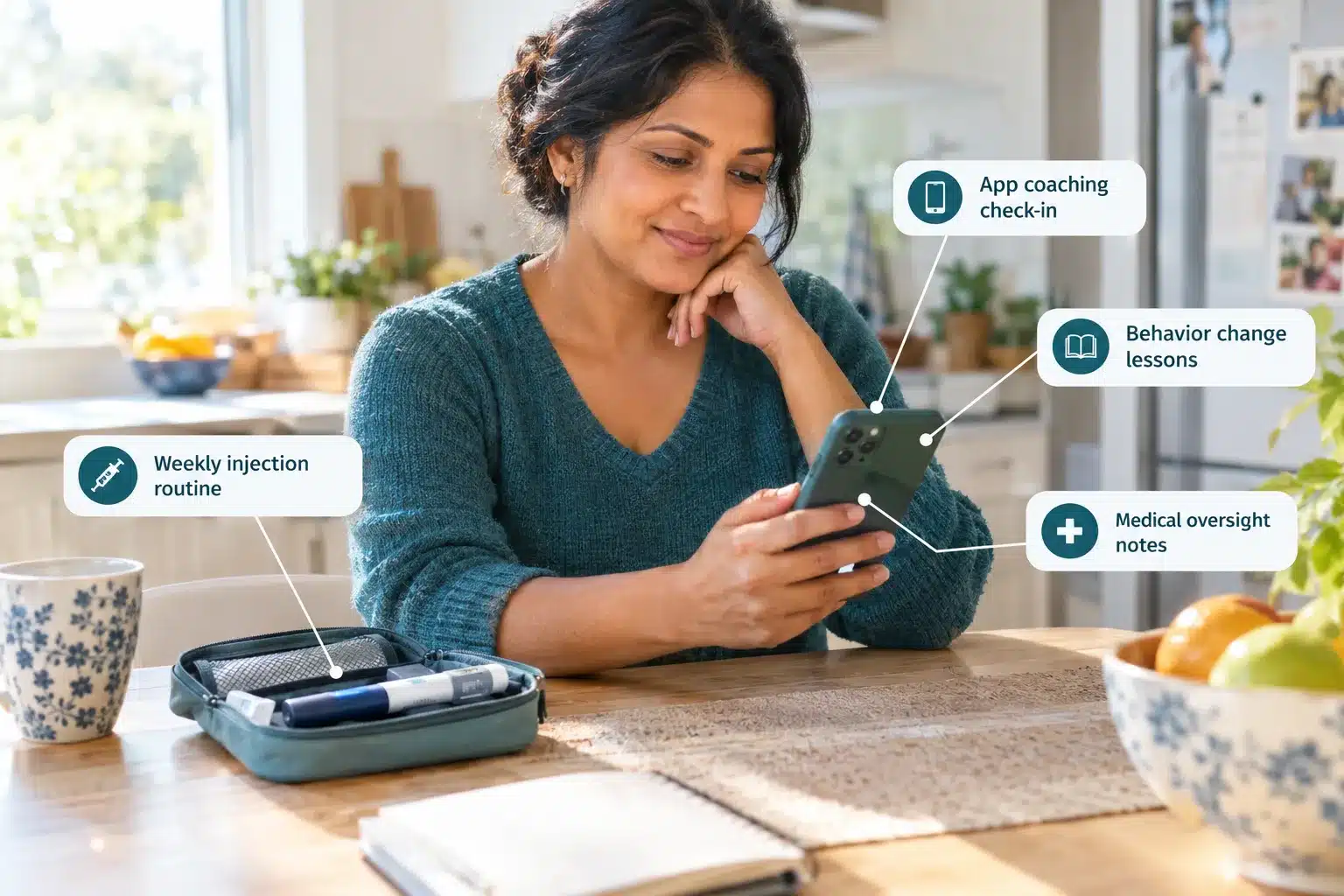
Direct alternatives to consider:
- Standard compounded semaglutide programs (Hims, Henry Meds, Medvi): These use higher doses but may still be affordable. See our Hims semaglutide review and Henry Meds monthly cost breakdown for comparisons.
- Compounded tirzepatide: A dual GIP/GLP-1 agonist with strong clinical evidence. See compounded tirzepatide: what you need to know.
- Insurance-covered GLP-1 programs: If cost is the primary concern, our guide to the most affordable GLP-1 options covered by insurance may identify a lower out-of-pocket path.
- Noom’s own higher-dose GLP-1 plans: For people who want faster results and can tolerate standard doses, Noom Med offers plans that titrate up to full maintenance doses. [8]
Choose Noom Microdose over alternatives if: You want the combination of low-dose medication, structured behavioral coaching, and clinical oversight in a single program, and you are willing to accept a slower pace of weight loss in exchange for fewer side effects.
Noom Microdose for Weight Loss: Does It Really Help
Yes, Noom Microdose can produce meaningful weight loss for many people, but it works best when the medication is combined consistently with the behavioral coaching component. The medication alone at microdose levels produces modest appetite suppression; the coaching addresses the habits and psychology that drive long-term results. [6][9]
Noom’s own data reports up to 17 pounds lost in 60 days for microdose members. [4] That is a credible outcome for a low-dose approach, though it represents a best-case figure rather than an average. Community discussions on Reddit broadly align with Noom’s official descriptions, with users describing the plan as the same GLP-1 medication as standard plans but with a different titration schedule capped around 0.6 mg, and noting that results accumulate more gradually. [2]
The honest assessment: Noom Microdose is not a shortcut. It is a lower-risk entry point into GLP-1 therapy that trades speed for tolerability. For people who have failed higher-dose programs due to side effects, that trade-off is often worth it.
Can You Use Noom Microdose With Other Diet Programs
You can use Noom Microdose alongside other dietary approaches, but there are a few practical considerations. The program includes Noom’s own coaching and habit curriculum, which is designed to be the primary behavioral framework. Adding a conflicting diet program may create confusion rather than synergy.
What generally works well alongside Noom Microdose:
- A whole-food, lower-calorie eating pattern (Mediterranean, low-glycemic)
- Consistent resistance training to preserve muscle mass
- Tracking tools that complement the Noom app
What to avoid:
- Extreme caloric restriction programs (below 1,200 calories for women or 1,500 for men) while on GLP-1 medication, as the combination can cause excessive caloric deficit and muscle loss
- Programs that conflict directly with Noom’s food-color system or coaching approach, which can create decision fatigue
If you are considering combining Noom Microdose with another structured program, discuss it with your Noom clinician during a check-in.
Noom Microdose Free Trial: How to Get Started
There is no traditional free trial for Noom Microdose. The program requires a paid enrollment that includes the online health evaluation, prescription process, and first medication supply. However, introductory pricing (typically $79 to $119 for the first month) effectively serves as a lower-cost entry point. [5][8]
Steps to get started:
- Visit Noom’s Microdose GLP-1 program page and complete the online intake form.
- A clinician reviews your health history, goals, and eligibility (BMI 25+ for weight loss, 21+ for Proactive Health).
- If approved, a prescription is issued and your medication is shipped.
- You receive access to the Noom app, GLP-1 Companion tool, and coaching curriculum.
- Your first dose is 0.2 mg; subsequent adjustments happen through clinician check-ins. [1][6]
Common mistake at sign-up: Some people skip the health history questions or underreport conditions to speed up approval. This is counterproductive. Accurate health information ensures the clinician can safely titrate your dose and catch any contraindications early.
Noom Microdose Reviews: What Real Users Are Saying
Community feedback on Noom Microdose is generally positive among people who specifically chose it to avoid the side effects of standard GLP-1 plans. Reddit discussions describe the plan as using compounded semaglutide with a slower titration schedule capped at around 0.6 mg per week, which aligns with Noom’s official program description. [2]
Common themes in user feedback:
- Fewer nausea complaints compared to standard-dose programs
- Slower but steady weight loss that feels more manageable
- Appreciation for the combination of medication and behavioral coaching
- Some frustration with the pace of results for those expecting rapid loss
- Questions about long-term pricing after the introductory period
What the experts say: Medical News Today noted that while lower GLP-1 doses likely reduce side effect burden, long-term clinical evidence for this specific dose range is still limited. Experts cited in that article acknowledged potential advantages but called for more data before drawing firm conclusions about long-term efficacy. [3]
The honest takeaway: Noom Microdose has a credible user base reporting real results, but it is not a universally proven protocol yet. It is a reasonable, lower-risk option, not a guaranteed outcome.
7 Best GLP-1 Providers Ranked: Accreditation, Flexibility & Support Compared (2026 Update)
32,000+ Patients Can't All Be Wrong: See the Top-Rated GLP-1 Providers: Compared on accreditation, plan flexibility, and patient support — updated for 2026.
BMI MD GLP-1 Microdosing Plan
- Specialized microdosing options (sublingual drops or low-dose injections)
- Ideal for maintaining weight or tapering off higher doses safely
- Fully bundled plan with no hidden monthly platform memberships
DirectMeds Weight Loss Solutions
- Sourced from accredited, state-licensed 503A compounding pharmacies
- No-frills high-volume savings passed directly to the patient
- Includes clinical consultation and cold-chain shipping updates
MEDVi Flat-Rate Telehealth
- Flat monthly rate holds steady even at maximum maintenance doses
- No dosage upcharges or graduation fee penalties
- Offers both injectable and advanced oral thin-film delivery options
Gala GLP-1 Care Program
- All-inclusive plan with no standalone membership costs
- Continuous text-based messaging access with state-licensed clinicians
- Temperature-controlled, cold-chain medication shipping included
Measured GLP-1 Metabolic Health
- Comprehensive metabolic health screening and expert intake analysis
- Predictable long-term budgeting with stable plan pricing
- High-end responsive dashboard with integrated diagnostic support
Refills GLP-1 (TryRefills Plan)
- Flat rate holds steady as titration scales up
- Includes clinical guides for active side-effect management
- Bundles in foundational nutritional strategies alongside medication
AltRx GLP-1 Transactional Reorders
- Zero recurring auto-billing — pay entirely on a transactional basis
- Rapid text-to-order format saves time for experienced patients
- Provides both injectable forms and fast-dissolving tablet variations
Conclusion: Is Noom Microdose Worth It in 2026
Noom Microdose fills a real gap in the GLP-1 market. For adults who want the metabolic and appetite benefits of semaglutide without the nausea and side effects that derail so many standard programs, the low-and-slow approach is a genuinely different option, not just a marketing reframe.
The program works best for people who commit to both the medication and the behavioral coaching, understand that results come more gradually than with higher-dose plans, and have realistic expectations about the pace of change. It is not the right choice for someone who needs rapid weight loss or who prefers oral medication.
Actionable next steps:
- Check your eligibility: BMI 25+ for the weight-loss plan, 21+ for the Proactive Health plan.
- Review the current introductory pricing and budget for the ongoing monthly cost before enrolling.
- If you have previously stopped a GLP-1 program due to side effects, Noom Microdose is worth a serious look.
- If cost is your primary concern, compare options using our guide to GLP-1 programs without insurance before deciding.
- If you want to understand how compounded semaglutide safety and legality works, read our guide on whether compounded semaglutide is safe and legal.
The noom microdose approach represents a thoughtful, lower-barrier entry into GLP-1 therapy. For the right person, it can be the starting point for lasting metabolic change.
Frequently Asked Questions
What is the starting dose for Noom Microdose?
Noom Microdose starts at approximately 0.2 mg of compounded semaglutide per week, which is roughly 25% or less of a standard GLP-1 maintenance dose. The dose is titrated gradually based on your response and clinician guidance. [6]
Is Noom Microdose the same as Ozempic or Wegovy?
No. Noom Microdose uses compounded semaglutide, which contains the same active ingredient as Ozempic and Wegovy but is produced by a compounding pharmacy and delivered at significantly lower doses than FDA-approved branded products. [6][9]
How long do I need to stay on Noom Microdose to see results?
Most members begin noticing changes within two to four weeks, with more consistent results appearing between 60 and 90 days. Noom reports up to 17 pounds lost in 60 days for microdose members. [4]
Can I switch from Noom Microdose to a higher-dose plan later?
Yes. Noom offers higher-dose GLP-1 plans through Noom Med. If you and your clinician decide a higher dose is appropriate, you can transition to a standard titration schedule. [8]
Does Noom Microdose require insurance?
No. Noom Microdose is a direct-pay program. Insurance is not required or typically used. The introductory pricing is designed to make the program accessible without insurance coverage. [5]
What is the Proactive Health Microdose plan and how is it different?
The Proactive Health Microdose GLP-1 Rx program is designed for longevity and whole-body metabolic health rather than weight loss. It caps doses at 0.2 mg weekly (lower than the weight-loss plan’s 0.6 mg maximum), includes at-home biomarker testing, and is available to people with a BMI of 21 or higher. It costs approximately $149 per month.
Is Noom Microdose safe for people with type 2 diabetes?
GLP-1 medications are commonly used in type 2 diabetes management, but you should disclose your diabetes diagnosis and any medications (especially insulin or sulfonylureas) during the health evaluation, as dose adjustments and monitoring may be needed. For more context, see our article on semaglutide for type 2 diabetes.
Why is Noom Microdose cheaper than brand-name GLP-1 drugs?
Noom Microdose uses compounded semaglutide, which is prepared by licensed compounding pharmacies and not subject to the same pricing as brand-name drugs like Ozempic or Wegovy. Compounded versions can cost significantly less while using the same active ingredient. [5][9]
Can I cancel Noom Microdose at any time?
Noom’s cancellation policies should be reviewed on their current terms page before enrolling. Generally, subscription-based medical programs allow cancellation but may have specific notice periods or non-refundable first-month costs.
What happens if I miss a weekly injection?
If you miss a dose, take it as soon as you remember, provided your next scheduled dose is not within two days. If it is close to your next dose, skip the missed one and resume your regular schedule. Do not double-dose. Contact your Noom clinician if you are unsure. [6]
References
[1] GLP-1 Microdose – https://www.noom.com/med/glp1-microdose/
[2] Noom GLP-1 Microdose (Reddit) – https://www.reddit.com/r/Noom/comments/1mjn5g5/noom_glp1_microdose/
[3] GLP-1 Microdosing For Weight Loss: Experts Weigh The Pros And Cons – https://www.medicalnewstoday.com/articles/glp-1-microdosing-for-weight-loss-experts-weigh-the-pros-and-cons
[4] Microdose GLP-1 Rx – https://www.noom.com/med/microdose-glp1-rx/
[5] Noom Launches Microdose GLP-1 Program – https://www.noom.com/in-the-news/noom-launches-microdose-glp-1-program-enabling-weight-loss-without-the-side-effects-and-priced-at-119-to-start-including-medication-and-microhabits-program/
[6] Microdosing GLP-1 For Weight Loss – https://www.noom.com/blog/weight-management/microdosing-glp-1-for-weight-loss/
[7] Noom Homepage – https://www.noom.com/
[8] Noom Med – https://www.noom.com/med/
[9] Why We Launched Noom Microdose GLP-1 Rx – https://www.noom.com/blog/weight-management/why-we-launched-noom-microdose-glp-1rx/
[10] Noom Microdose GLP-1 Rx Plus Program – https://www.noom.com/support/2026/07/noom-microdose-glp-1rx-plus-program/


