
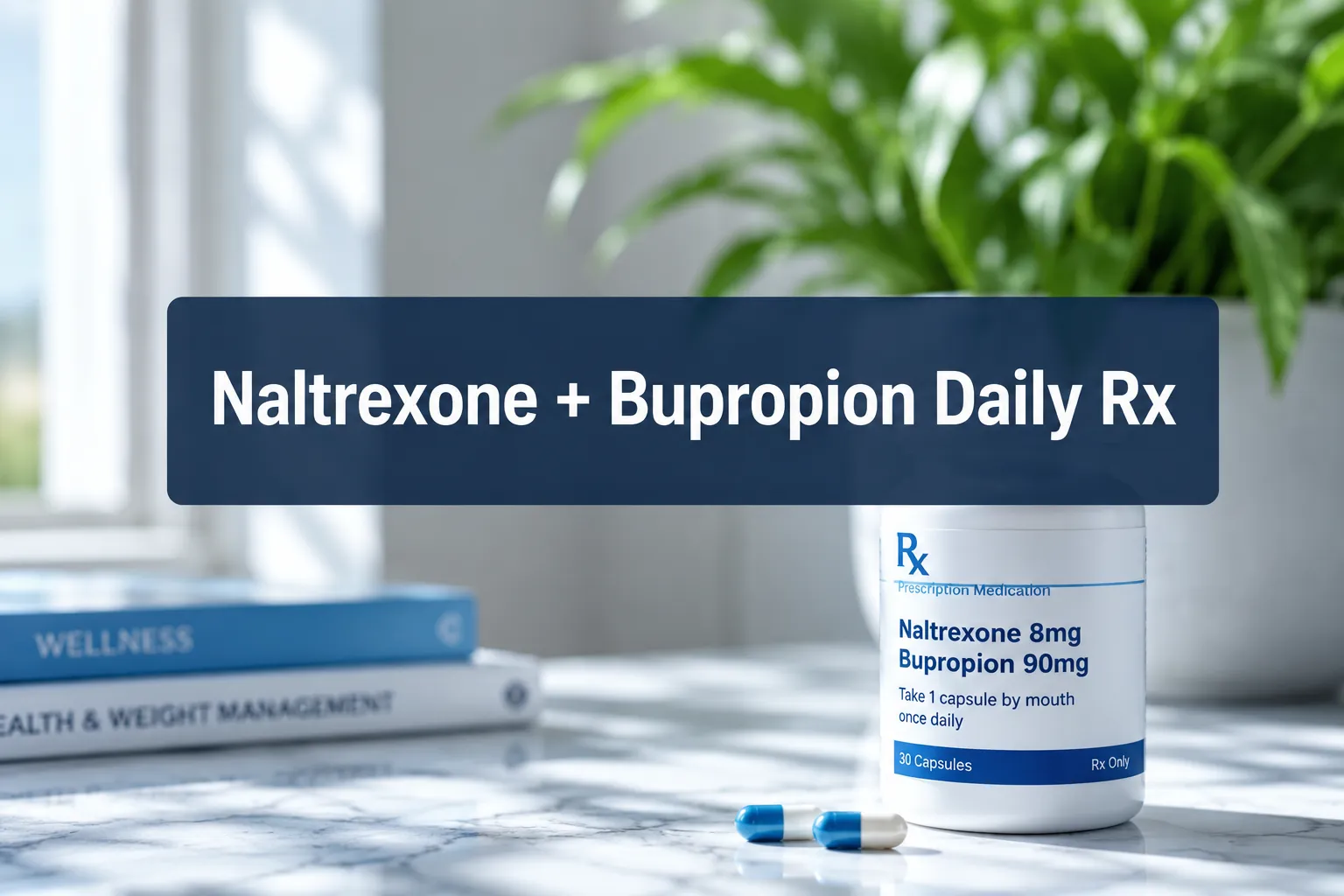
Naltrexone + Bupropion Rx Daily oral capsule · appetite & craving support
Last updated: August 10, 2026
Quick Answer: The Naltrexone + Bupropion Rx Daily oral capsule (brand name Contrave) is an FDA-approved prescription weight-loss medication that combines two drugs to reduce appetite and food cravings by acting on reward and hunger pathways in the brain. It is taken daily in escalating doses and is intended for adults with obesity or overweight who also have a weight-related health condition. Most people see meaningful results within 12 to 16 weeks when combined with diet and exercise.
Key Takeaways
- Naltrexone + Bupropion Rx Daily oral capsule (Contrave) is FDA-approved for chronic weight management in adults with a BMI of 30 or higher, or 27 or higher with a weight-related condition.
- The combination works on two separate brain pathways: bupropion activates the hunger-suppressing hypothalamus, while naltrexone blocks the reward signal that makes eating feel pleasurable.
- The standard dose is titrated over four weeks to 32 mg naltrexone / 360 mg bupropion daily, taken as two capsules in the morning and two in the evening.
- Clinical trials showed roughly 5 to 9 percent average body weight loss over one year, compared to about 1 to 2 percent with placebo, according to FDA approval data.
- Common side effects include nausea, constipation, headache, and dry mouth, most of which ease after the first few weeks.
- People with uncontrolled hypertension, a history of seizures, or current opioid use should not take this medication.
- Alcohol must be minimized or avoided entirely while taking this drug due to seizure and liver risks.
- Brand-name Contrave can cost $300 to $600 per month without insurance; generic versions and manufacturer coupons can significantly reduce that cost.
- If the medication is not producing at least 5 percent weight loss by week 12 to 16, clinicians typically reassess the treatment plan.
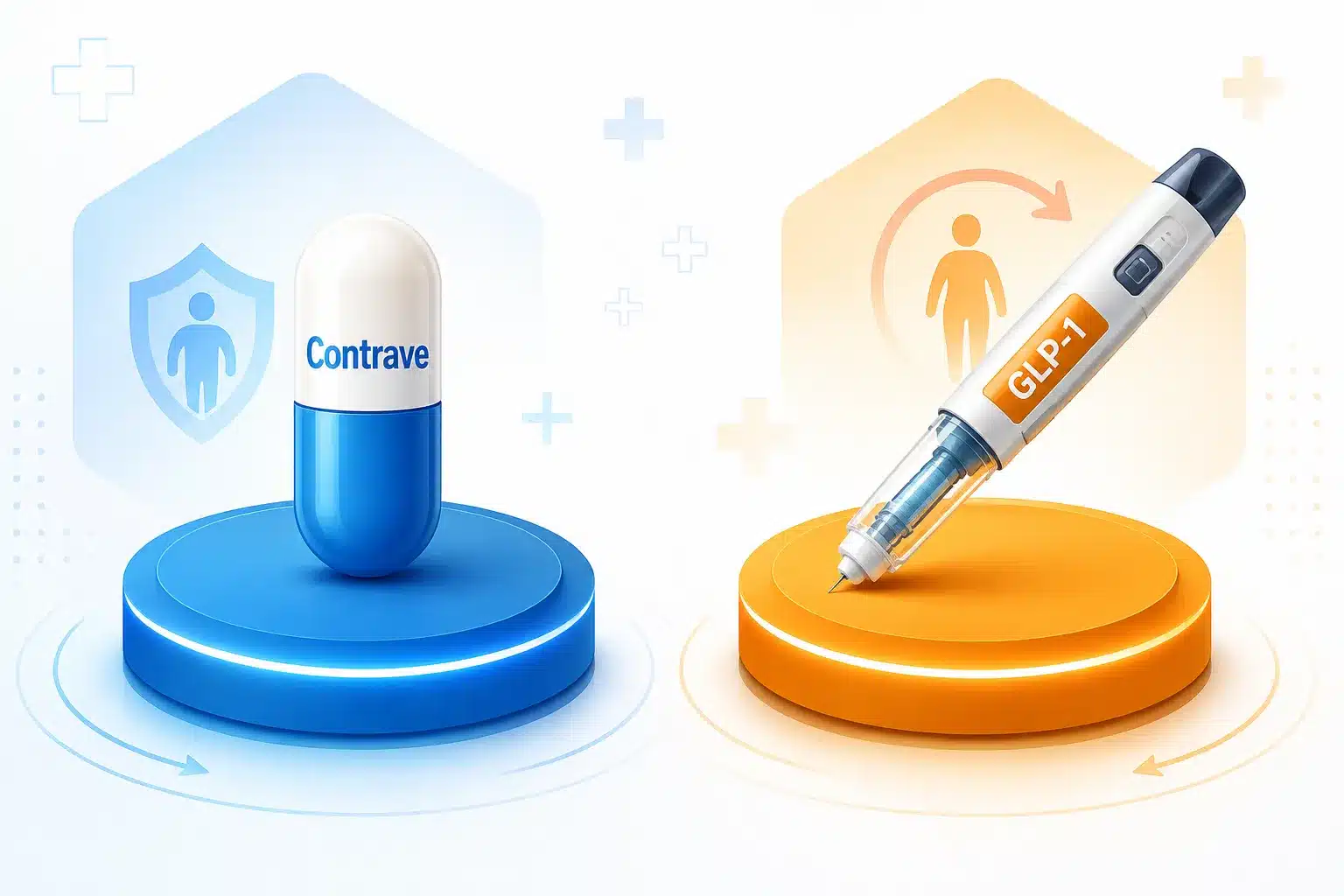
- This medication is not a GLP-1 agonist and works through a completely different mechanism than semaglutide or tirzepatide.
What Is Naltrexone + Bupropion Used For
Naltrexone + bupropion (sold under the brand name Contrave) is FDA-approved for chronic weight management in adults. Specifically, it is indicated for people with a body mass index (BMI) of 30 or above, or a BMI of 27 or above combined with at least one weight-related condition such as type 2 diabetes, high blood pressure, or high cholesterol.
Beyond weight loss, both individual components have separate approved uses. Bupropion is an antidepressant and smoking-cessation aid (sold as Wellbutrin and Zyban). Naltrexone is used at higher doses to treat opioid and alcohol use disorders. When combined at lower doses in the Naltrexone + Bupropion Rx Daily oral capsule formulation, they work together specifically to reduce appetite and food cravings.
Who this medication is designed for:
- Adults who have struggled to lose weight through diet and exercise alone
- People with obesity-related health conditions who need medical support
- Patients who experience strong food cravings, especially for high-calorie or high-sugar foods
- Those who are not candidates for or do not want injectable GLP-1 medications
This is not a short-term diet pill. It is intended as part of a long-term weight management program that includes reduced-calorie eating and increased physical activity.
How Does Naltrexone + Bupropion Work for Weight Loss
The Naltrexone + Bupropion Rx Daily oral capsule targets two distinct brain circuits simultaneously, which is what makes it different from single-ingredient weight loss drugs.
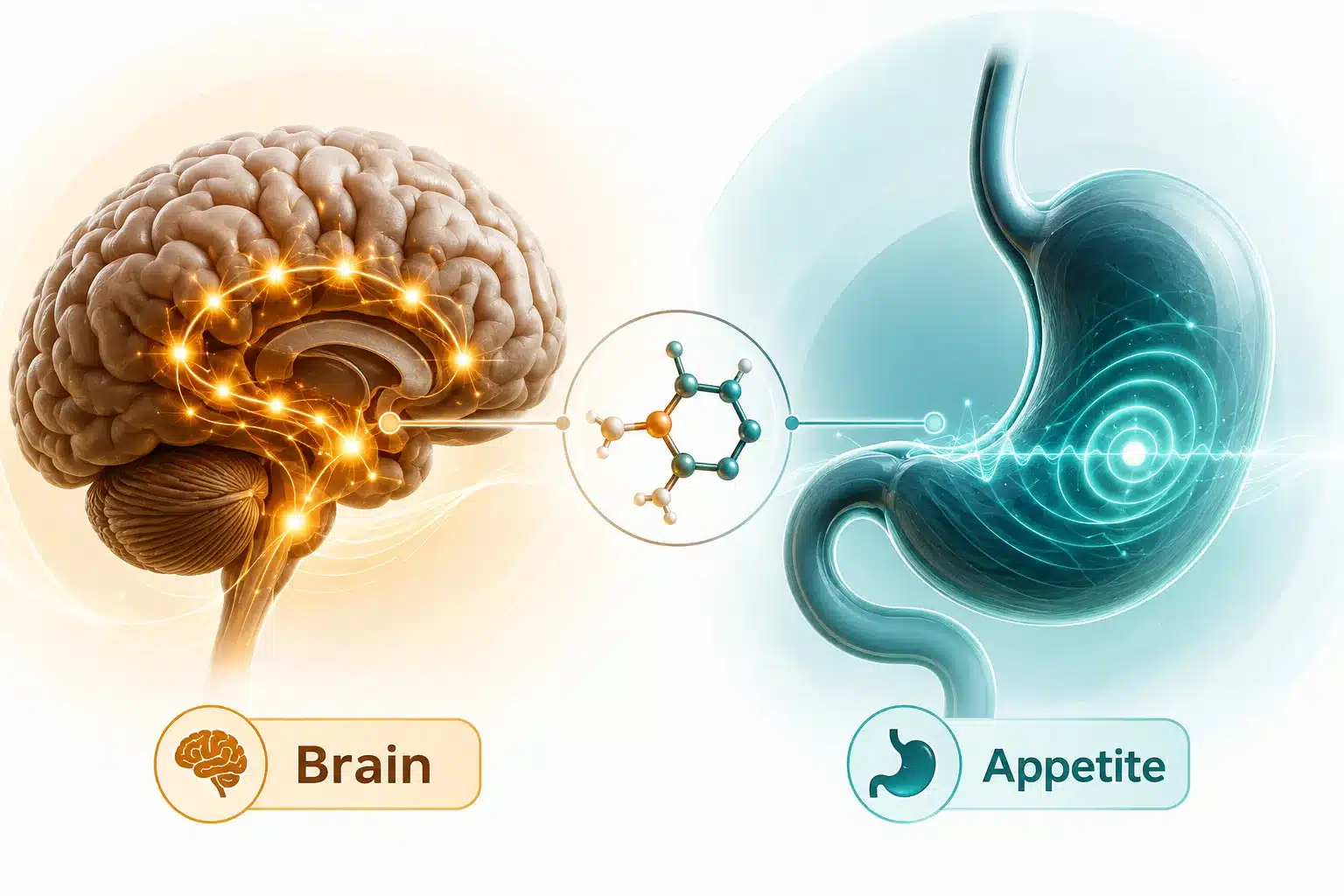
Bupropion’s role: Bupropion stimulates neurons in the hypothalamus that produce pro-opiomelanocortin (POMC), a precursor molecule that reduces appetite. It also raises dopamine and norepinephrine levels, which can reduce the emotional pull toward food.
Naltrexone’s role: When POMC neurons are activated, they also release a natural opioid signal called beta-endorphin, which acts as a feedback brake that blunts the appetite-suppressing effect. Naltrexone blocks that opioid feedback loop, allowing bupropion’s appetite-suppressing effect to continue uninterrupted.
In plain terms: bupropion tells your brain to eat less, and naltrexone stops your brain from overriding that message.
The combination also appears to reduce the reward value of food, meaning highly palatable foods like sweets and fast food become less compelling. Many patients report that cravings for specific foods decrease noticeably within the first few weeks.
For a broader look at how prescription weight loss medications compare, see our GLP-1 medications for weight loss and diabetes guide.
Naltrexone + Bupropion Side Effects: What to Expect
Most people experience some side effects, particularly during the first two to four weeks as the dose increases. The good news is that most side effects are mild to moderate and tend to improve after the titration period ends.
Most common side effects (affecting more than 5% of users in clinical trials):
- Nausea (the most reported, especially in the morning)
- Constipation
- Headache
- Vomiting
- Dizziness
- Insomnia or trouble sleeping
- Dry mouth
Less common but serious side effects to watch for:
- Elevated blood pressure or heart rate (requires monitoring)
- Seizures (rare but possible, especially at higher doses)
- Mood changes, including thoughts of self-harm (bupropion carries an FDA black-box warning for this in younger patients)
- Liver damage (rare; more likely in people with pre-existing liver conditions)
- Angle-closure glaucoma
Practical tip: Taking the capsules with food reduces nausea significantly. Avoid taking the evening dose too close to bedtime, as bupropion can interfere with sleep.
“The nausea usually peaks around week two and then fades. Most patients who push through the first month report it becomes much more manageable.”, a common pattern noted by prescribing clinicians.
How Long Does It Take to See Results from Naltrexone + Bupropion
Most people begin to notice reduced appetite and fewer cravings within the first two to four weeks. Measurable weight loss typically becomes visible by weeks eight to twelve.
The FDA-approved prescribing guidance recommends evaluating the medication’s effectiveness at the 12-week mark. If a patient has not lost at least 5 percent of their starting body weight by week 16, clinicians are advised to reassess whether continuing the medication is appropriate.
Typical timeline:
- Weeks 1 to 4: Dose titration; appetite may begin to decrease; side effects most noticeable
- Weeks 4 to 8: Cravings often reduce; early weight loss of 2 to 4 pounds common
- Weeks 8 to 16: More consistent weight loss; 5 percent body weight reduction is the clinical benchmark
- Months 4 to 12: Continued gradual loss; clinical trials show average total loss of 5 to 9 percent of body weight at one year
Results vary widely based on diet quality, physical activity, starting weight, and individual metabolism. Pairing the medication with a structured exercise plan can meaningfully improve outcomes. Our 12-week home workout plan for fat loss and muscle building is a practical complement to this treatment.
Naltrexone + Bupropion Cost and Insurance Coverage
Brand-name Contrave costs approximately $300 to $600 per month without insurance, based on current pharmacy pricing as of 2026. Generic naltrexone/bupropion extended-release is available and can reduce costs to $80 to $200 per month at major pharmacies, depending on the pharmacy and location.
Cost-reduction options:
- Manufacturer savings card: The Contrave manufacturer has historically offered a savings card that reduces out-of-pocket cost for commercially insured patients.
- GoodRx and similar discount programs: Can bring generic versions to under $100 per month at some pharmacies.
- HSA/FSA: Prescription weight-loss medications are generally HSA/FSA-eligible with a valid prescription.
- Insurance coverage: Coverage varies. Many commercial plans cover it for patients who meet BMI criteria and have a documented weight-related condition. Medicare Part D coverage has historically been limited for weight-loss drugs, though this is evolving.
For a broader comparison of prescription weight-loss medication costs in 2026, see our GLP-1 price per month comparison covering Wegovy, Zepbound, and oral options.

Who Should Not Take Naltrexone + Bupropion
This medication has several firm contraindications. Taking it when these conditions apply can cause serious harm.
Absolute contraindications (do not take if you have):
- Uncontrolled hypertension
- A seizure disorder or history of seizures
- Current or recent use of opioid medications or opioid agonist therapy (e.g., methadone, buprenorphine)
- Acute opioid withdrawal
- Bulimia nervosa or anorexia nervosa (bupropion significantly raises seizure risk in these conditions)
- Current use of monoamine oxidase inhibitors (MAOIs) or use within the past 14 days
- Pregnancy or breastfeeding
Use with caution if you have:
- Controlled hypertension (blood pressure must be monitored)
- A history of depression, bipolar disorder, or suicidal ideation
- Liver or kidney disease
- Diabetes managed with insulin or sulfonylureas (risk of hypoglycemia)
Always disclose your full medication list and medical history to your prescribing clinician before starting.
Naltrexone + Bupropion vs. Other Weight Loss Medications
The Naltrexone + Bupropion Rx Daily oral capsule occupies a specific niche among prescription weight-loss options. It is an oral daily medication with a moderate efficacy profile, sitting between older appetite suppressants and the newer injectable GLP-1 agonists.
| Medication | Type | Avg. Weight Loss (1 yr) | Route | Key Advantage |
|---|---|---|---|---|
| Naltrexone + Bupropion (Contrave) | Dual CNS agent | 5-9% | Oral daily | Craving reduction, oral convenience |
| Semaglutide (Wegovy) | GLP-1 agonist | 12-15% | Weekly injection | Highest efficacy in class |
| Tirzepatide (Zepbound) | GLP-1/GIP dual agonist | 15-21% | Weekly injection | Highest weight loss in any approved drug |
| Phentermine/topiramate (Qsymia) | Stimulant + anticonvulsant | 7-11% | Oral daily | Strong appetite suppression |
| Phentermine alone | Stimulant | 3-5% | Oral daily | Low cost, short-term use |
Choose naltrexone + bupropion if: You prefer an oral medication, you experience strong food cravings (especially emotional eating), and you cannot tolerate injections or do not qualify for GLP-1 medications.
Choose a GLP-1 option if: Maximum weight loss is the priority and you are comfortable with weekly injections. See our semaglutide weight loss injections guide for a detailed breakdown.
What Is the Difference Between Naltrexone + Bupropion and Phentermine
Naltrexone + bupropion and phentermine are both oral prescription weight-loss medications, but they work through entirely different mechanisms and carry different risk profiles.
Phentermine is a stimulant that suppresses appetite by releasing norepinephrine in the brain. It is one of the oldest weight-loss drugs, approved since the 1950s, and is typically prescribed for short-term use only (up to 12 weeks) due to its stimulant properties and potential for dependence. It raises heart rate and blood pressure more aggressively than naltrexone + bupropion.
Naltrexone + bupropion works on the reward and hunger circuits rather than acting as a general stimulant. It is approved for long-term use. It is better suited for people whose weight challenges are tied to cravings and emotional eating rather than simple overeating from hunger.
Key practical difference: Phentermine tends to suppress general appetite more aggressively in the short term. Naltrexone + bupropion is more targeted at the craving and reward response, making it a better fit for people who eat out of habit, stress, or pleasure-seeking rather than physical hunger.
Can You Drink Alcohol While Taking Naltrexone + Bupropion
No. Alcohol should be minimized or avoided entirely while taking this medication. This is not a cautionary suggestion, it is a firm clinical recommendation.
Why alcohol is dangerous with this combination:
- Bupropion lowers the seizure threshold. Alcohol also lowers the seizure threshold. Combining them meaningfully increases seizure risk.
- Naltrexone blocks opioid receptors, which can alter how alcohol affects the brain and may intensify side effects.
- Both drugs are processed by the liver. Adding alcohol increases the burden and raises the risk of liver stress.
- Alcohol can worsen psychiatric side effects associated with bupropion, including mood instability and impulsive behavior.
If you drink regularly, discuss this honestly with your prescribing clinician before starting. Some people use naltrexone specifically to reduce alcohol cravings (at higher doses), but the combination product is not indicated for that purpose and the risk profile changes when alcohol is involved.
Naltrexone + Bupropion for Appetite Suppression: How Effective Is It
The Naltrexone + Bupropion Rx Daily oral capsule is moderately effective for appetite and craving suppression, with the strongest evidence for reducing food cravings rather than simply cutting hunger volume.
In the COR (Contrave Obesity Research) clinical trial program, which included over 4,500 participants, patients taking the combination lost an average of 6.1 percent of their body weight at one year compared to 1.3 percent in the placebo group. Approximately 48 percent of patients on the medication lost at least 5 percent of their body weight, versus 16 percent on placebo.
Where it performs best:
- Reducing cravings for sweet, high-calorie, or processed foods
- Decreasing the frequency of emotional or stress-driven eating episodes
- Supporting adherence to a calorie-reduced diet by lowering the mental effort required to resist food
Where it is less effective:
- Producing the large-scale weight loss (15 to 20 percent) seen with GLP-1 agonists
- Controlling appetite in people whose overeating is primarily driven by physical hunger rather than cravings
Naltrexone + Bupropion Interactions with Other Medications
Drug interactions are a significant concern with this combination. Bupropion in particular is a strong inhibitor of a liver enzyme called CYP2D6, which affects how dozens of other medications are metabolized.
Medications that interact significantly:
- MAOIs (e.g., phenelzine, selegiline): Absolute contraindication. Risk of hypertensive crisis.
- Opioid medications (e.g., oxycodone, hydrocodone, tramadol): Naltrexone blocks opioid receptors, making these medications ineffective and potentially triggering withdrawal.
- Antidepressants (especially SSRIs, SNRIs, tricyclics): Increased risk of seizures and serotonin syndrome.
- Antipsychotics (e.g., haloperidol, risperidone): Bupropion raises their blood levels, potentially causing toxicity.
- Beta-blockers and certain heart medications: Bupropion can raise blood levels of metoprolol and similar drugs.
- Tamoxifen: Bupropion reduces conversion to the active form, potentially reducing effectiveness.
- Insulin and sulfonylureas: Increased hypoglycemia risk as weight loss progresses.
Always provide your prescribing clinician with a complete list of all medications, supplements, and herbal products before starting.
Is Naltrexone + Bupropion Safe Long Term
For most patients who tolerate the medication well, long-term use appears to be safe based on available clinical data. The COR trials followed patients for up to two years without identifying new safety signals beyond those seen in shorter-term studies.
What the evidence supports:
- Blood pressure and heart rate should be monitored regularly, especially in the first few months
- Liver function tests are recommended periodically for patients with risk factors
- No evidence of physical dependence or withdrawal syndrome with long-term use
- Weight regain is common if the medication is stopped, similar to other weight-loss drugs
What remains less certain:
- Very long-term cardiovascular outcomes (beyond two years) have not been fully established in large outcome trials
- Effects in older adults (over 75) and in people with complex psychiatric histories require individualized clinical judgment
The medication is not recommended during pregnancy. If you become pregnant while taking it, discontinue immediately and contact your clinician.
Naltrexone + Bupropion Not Working: What Should I Do
If you have been taking the Naltrexone + Bupropion Rx Daily oral capsule at the full therapeutic dose for 12 to 16 weeks and have not lost at least 5 percent of your starting body weight, the FDA guidance recommends reassessing the treatment plan.
Steps to take before concluding it is not working:
- Confirm you are taking the full prescribed dose (32 mg naltrexone / 360 mg bupropion daily). Many people stay at a lower dose due to side effects and do not reach therapeutic levels.
- Honestly evaluate your diet. The medication reduces cravings but does not override a high-calorie diet. A food diary for two weeks can reveal patterns.
- Check for drug interactions. Some medications can reduce bupropion’s effectiveness.
- Discuss with your clinician whether an underlying condition (e.g., hypothyroidism, insulin resistance) is slowing progress.
- Consider whether a different medication class might be more appropriate. GLP-1 agonists produce significantly greater weight loss for many patients.
For context on alternative prescription weight-loss options and their costs, our best GLP-1 weight loss programs guide covers current options in detail.
Common Mistakes People Make When Taking Naltrexone + Bupropion
Even patients who are motivated and consistent make avoidable errors that reduce the medication’s effectiveness or increase side effects.
Most common mistakes:
- Skipping the titration schedule. Jumping to the full dose too quickly dramatically increases nausea and side effects. Follow the four-week ramp-up exactly.
- Taking it on an empty stomach. This is the single biggest driver of nausea. Always take with food.
- Stopping abruptly when side effects appear. Most side effects peak in weeks two to three and then improve. Many people quit just before they would have turned the corner.
- Drinking alcohol. Even occasional drinking raises seizure risk and worsens side effects.
- Expecting the medication to do all the work. This is a support tool, not a replacement for dietary changes. Patients who make no dietary adjustments see minimal results.
- Not reporting mood changes to their clinician. Bupropion can affect mood. Any increase in anxiety, irritability, or depressive symptoms should be flagged immediately.
- Taking opioid pain medications without telling their doctor. Naltrexone blocks opioids completely. This can cause sudden withdrawal or leave pain undertreated.
Frequently Asked Questions
Is Contrave the same as naltrexone + bupropion?
Yes. Contrave is the brand name for the fixed-dose combination of naltrexone 8 mg and bupropion 90 mg extended-release. The full daily dose is four capsules (two in the morning, two in the evening), delivering 32 mg naltrexone and 360 mg bupropion per day. Generic versions contain the same active ingredients at the same doses.
Can I take naltrexone + bupropion if I am on antidepressants?
It depends on which antidepressant. Bupropion interacts with many antidepressants, particularly SSRIs and SNRIs, raising the risk of seizures and serotonin syndrome. Your clinician needs to review your specific medications before prescribing. Some combinations are manageable with monitoring; others are contraindicated.
Will naltrexone + bupropion affect my mood?
It can. Bupropion is itself an antidepressant, so some people notice improved mood and energy. However, the FDA requires a black-box warning about increased risk of suicidal thoughts in patients under 24 and in those with certain psychiatric conditions. Report any mood changes to your clinician promptly.
How do I get a prescription for naltrexone + bupropion?
You need a consultation with a licensed clinician, a primary care physician, obesity medicine specialist, or telehealth provider. The clinician will review your BMI, medical history, current medications, and contraindications before prescribing. Many telehealth platforms now offer this service with same-week appointments.
Can I take naltrexone + bupropion if I have type 2 diabetes?
Yes, in many cases, but with careful monitoring. As you lose weight, your blood sugar levels may improve, which means your diabetes medications may need to be adjusted to avoid hypoglycemia. Inform both your prescribing clinician and your diabetes care team.
Does naltrexone + bupropion cause hair loss?
Hair loss is not a commonly reported side effect in clinical trials. However, rapid weight loss from any cause can trigger temporary hair shedding (telogen effluvium). If you experience significant hair loss, discuss it with your clinician to rule out nutritional deficiencies.
What happens if I miss a dose?
Skip the missed dose and take your next scheduled dose at the regular time. Do not double up to compensate. Taking two doses at once increases the risk of seizures and other side effects.
Is naltrexone + bupropion covered by Medicare?
Medicare Part D has historically excluded most prescription weight-loss medications, including Contrave. Coverage policy is evolving as of 2026, so check your specific plan. Commercial insurance coverage varies; many plans cover it when BMI and comorbidity criteria are met and prior authorization is obtained.
Can I take this medication if I have high blood pressure?
Uncontrolled hypertension is a contraindication. If your blood pressure is well-controlled with medication, your clinician may still prescribe it with close monitoring, since bupropion can raise blood pressure modestly. Blood pressure should be checked before starting and regularly during treatment.
How does naltrexone + bupropion compare to semaglutide for weight loss?
Semaglutide (Wegovy) produces roughly twice the average weight loss of naltrexone + bupropion in clinical trials (12 to 15 percent vs. 5 to 9 percent of body weight). However, naltrexone + bupropion is oral, generally less expensive, and may be more accessible for patients who cannot tolerate injections. For a detailed cost comparison, see our semaglutide cost guide for 2026.
Conclusion
The Naltrexone + Bupropion Rx Daily oral capsule is a legitimate, FDA-approved option for adults who need prescription support for appetite and craving control. It is not the highest-efficacy weight-loss drug available in 2026, but it fills a real gap: an oral, daily medication that specifically targets the reward-driven cravings that make dieting so difficult for many people.
Your next steps:
- Check whether you meet the BMI criteria (30 or above, or 27 or above with a weight-related condition).
- Review the contraindications list and your current medications with a clinician.
- Schedule a consultation with a primary care provider or telehealth obesity medicine service.
- If cost is a concern, ask specifically about generic availability and manufacturer savings programs.
- Set a realistic 16-week evaluation checkpoint with your clinician from day one.
If you are comparing this medication to injectable GLP-1 options, our comparison of GLP-1 weight loss programs and Hims weight loss cost breakdown are useful next reads.

With over 13 years of experience in holistic health blogging, I aim to help you navigate your wellness journey with honest insights, expert-backed advice, and a sprinkle of real-world practicality.
Certified Wellness Writer | Herbal Nutrition Advocate | Wellness Research Enthusiast


