GLP-1 Liquid Drops Rx Daily oral drops, no needle
Last updated: August 10, 2026
Quick Answer: GLP-1 liquid drops are compounded sublingual formulations of semaglutide or tirzepatide, marketed as a needle-free daily alternative to injectable GLP-1 medications. As of 2026, no peer-reviewed human trials confirm that sublingual GLP-1 drops produce meaningful weight loss, and the FDA has not approved any liquid drop formulation for this purpose. They are available through telehealth providers under clinician supervision, but patients should understand the significant evidence gap before choosing this route over proven options.
Key Takeaways
- GLP-1 liquid drops are compounded sublingual formulations placed under the tongue daily, designed to avoid injections.
- No published human clinical trial has demonstrated that sublingual GLP-1 drops produce meaningful weight loss or blood sugar control. [3]
- The only supporting pharmacokinetic data comes from a single rat study, which explicitly states it should not guide human dosing. [3]
- The FDA has approved oral semaglutide pills (Rybelsus, oral Wegovy) and, in 2026, orforglipron (Foundayo) for obesity, all solid tablets, not liquid drops. [1]
- Telehealth companies like AgelessRx have launched GLP-1 drops commercially, positioning them as a “no needle” option for metabolic health. [9]
- Cost typically ranges from roughly $100 to $300 per month through compounding telehealth platforms, though prices vary widely.
- Insurance almost never covers compounded sublingual drops.
- People who cannot tolerate injections may find drops appealing, but the risk is paying for a product with unproven human efficacy.
- Proven oral GLP-1 alternatives (tablets, small-molecule pills) exist and carry FDA approval, these are worth comparing before choosing drops.
- Always verify the compounding pharmacy’s legitimacy before purchasing any compounded GLP-1 product.
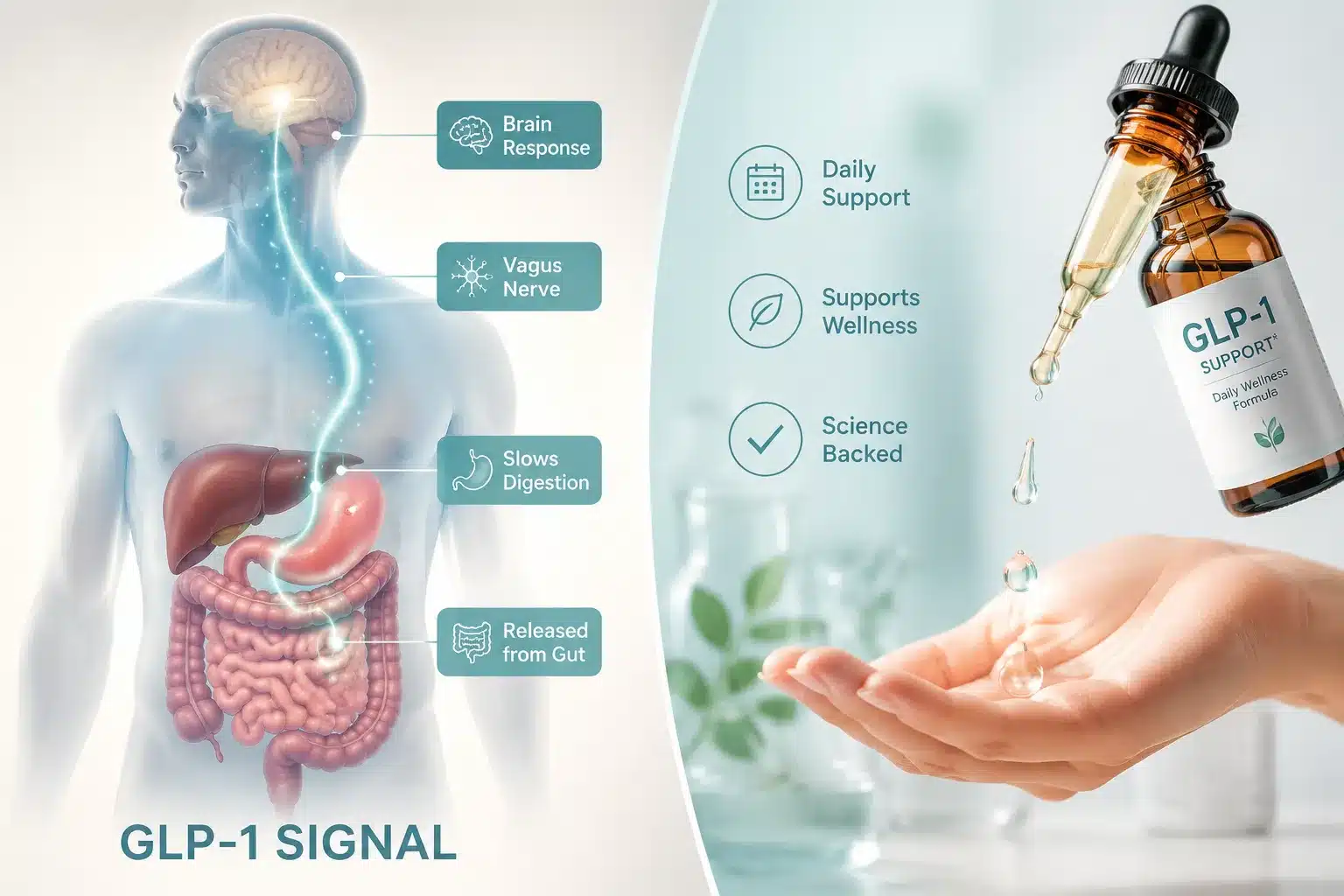
What Are GLP-1 Liquid Drops and How Do They Work?
GLP-1 liquid drops are compounded sublingual formulations of GLP-1 receptor agonists, most commonly semaglutide or tirzepatide, delivered as daily drops placed under the tongue. The idea is that the drug absorbs through the mucous membranes in the mouth (sublingual absorption) and enters the bloodstream without an injection.
GLP-1 (glucagon-like peptide-1) is a hormone your gut naturally releases after eating. It signals the brain to reduce appetite, slows how quickly the stomach empties, and prompts the pancreas to release insulin in response to blood sugar. Injectable GLP-1 drugs like Ozempic and Wegovy work by mimicking this hormone at much higher concentrations than the body produces naturally. [1]
The sublingual drop concept borrows from other medications that absorb well under the tongue, nitroglycerin for chest pain being a classic example. The theory is that semaglutide or tirzepatide could bypass the digestive system and reach the bloodstream directly through oral mucosa. However, GLP-1 peptide molecules are large and fragile, which makes sublingual absorption far less predictable than it is for smaller molecules. [3]
The critical gap: As of 2026, there is no published human study demonstrating that sublingual semaglutide drops produce meaningful weight loss. The only pharmacokinetic data supporting the concept comes from a single rat study using PCCA’s SubMagna delivery system, and that study itself states it is not intended to guide human dosing or conversion from injectable to sublingual forms. [3]
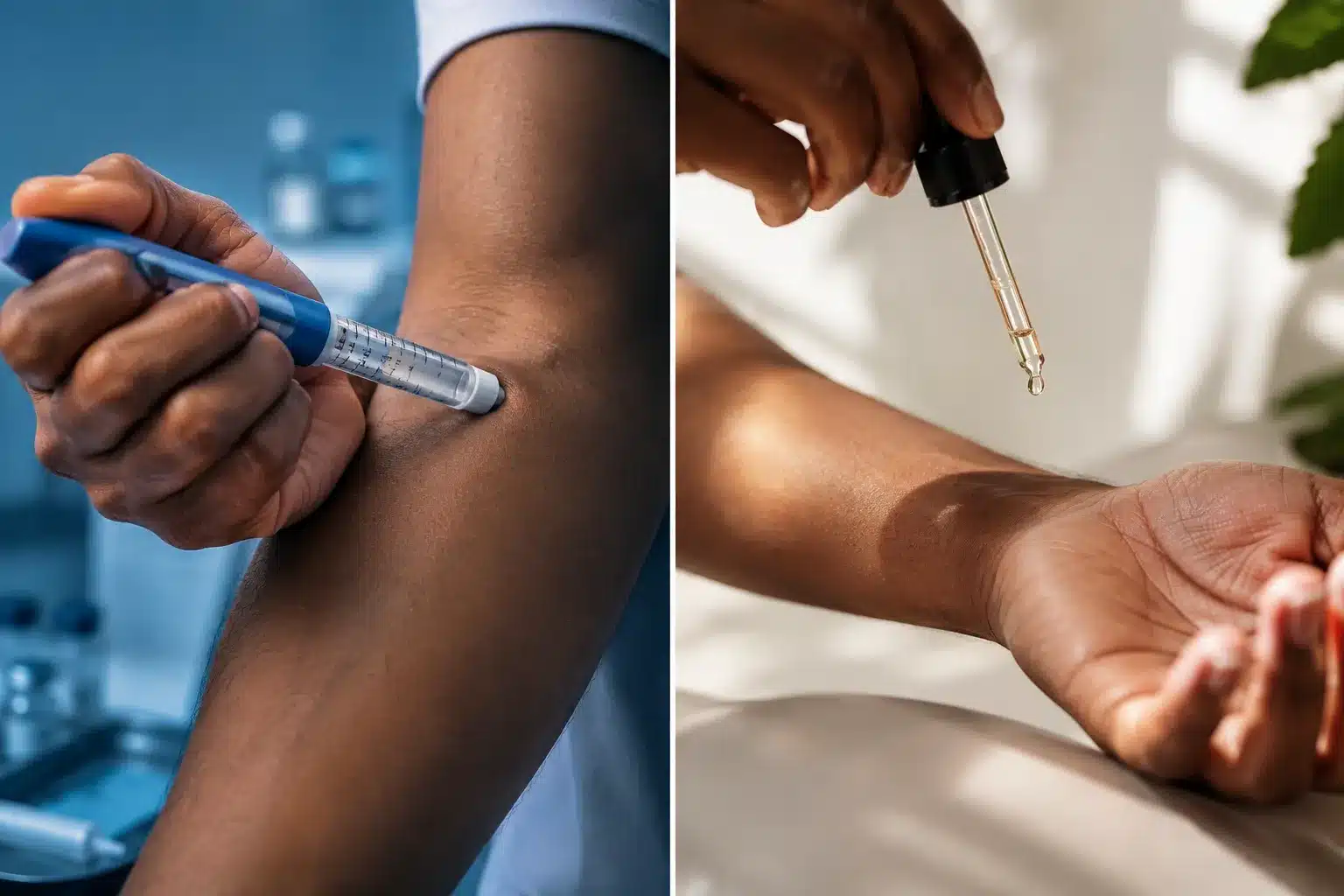
GLP-1 Liquid Drops vs Injections: Which Is Better?
For proven efficacy, injectable GLP-1 medications are currently the clear choice. Sublingual drops have no peer-reviewed human efficacy data, while injectable semaglutide (Wegovy) has demonstrated average body weight reductions of around 15% in large randomized controlled trials. [1]
Here is a direct comparison of the two delivery methods:
| Feature | Injectable GLP-1 (e.g., Wegovy, Ozempic) | GLP-1 Liquid Drops (Sublingual) |
|---|---|---|
| FDA approval | Yes (weight loss, type 2 diabetes) | No |
| Human efficacy data | Extensive (multiple Phase 3 trials) | None published as of 2026 |
| Frequency | Weekly injection | Daily drops |
| Needle required | Yes | No |
| Insurance coverage | Sometimes (with prior auth) | Rarely/never |
| Cost per month | $900,$1,400 brand; $100,$400 compounded | $100,$300 compounded |
| Absorption reliability | Well-established | Unknown in humans |
Choose injectable GLP-1 if: you want a treatment backed by robust clinical evidence and FDA approval, and you can tolerate a once-weekly subcutaneous injection.
Consider drops only if: you have a documented needle phobia or medical reason to avoid injections, you understand the evidence gap, and you are working with a licensed clinician who monitors your progress closely.
For a full breakdown of injection-based options, see our guide to GLP-1 injections for weight loss and diabetes.
Are GLP-1 Liquid Drops FDA Approved?
No. As of 2026, the FDA has not approved any GLP-1 liquid drop or sublingual formulation for weight loss, obesity, or type 2 diabetes. The FDA-approved oral GLP-1 options are all solid dosage forms, tablets or small-molecule pills. [1]
Here is what the FDA has actually approved in the oral GLP-1 space:
- Rybelsus (oral semaglutide tablet): Approved for type 2 diabetes, not weight loss. Taken once daily on an empty stomach with a small amount of water. [5]
- Oral Wegovy (high-dose semaglutide pill): Approved in January 2025 for obesity management.
- Foundayo (orforglipron): A once-daily small-molecule GLP-1 pill approved in 2026 for obesity. Unlike semaglutide-based drugs, it does not require special stomach-acid protection because it is not a peptide. [1] [6]
GLP-1 liquid drops are sold as compounded medications, which means they are prepared by compounding pharmacies under clinician prescription. Compounded drugs are not FDA-approved, though they are legal under specific circumstances. This is an important distinction, “available by prescription” does not mean “FDA-approved.” [9]
GLP-1 Liquid Drops vs Semaglutide: Which Is More Effective?
Approved semaglutide formulations (injectable Wegovy, oral Wegovy, Rybelsus) have a substantial body of human clinical evidence behind them. GLP-1 liquid drops containing compounded semaglutide have none at the human trial level. [3]
This does not mean drops are guaranteed to be ineffective, it means we genuinely do not know how well they work in humans, at what dose, or whether the sublingual route delivers enough active drug to produce a clinical effect. Ivím Health’s medical review puts it plainly: current evidence does not support sublingual semaglutide drops as an effective alternative to proven treatments, and patients may pay for a product with no demonstrated benefit. [3]
For those interested in the cost landscape of proven semaglutide options, our GLP-1 price per month comparison covering Wegovy, Zepbound, and new oral options offers a detailed breakdown.
GLP-1 Oral Drops Cost and Insurance Coverage
GLP-1 liquid drops typically cost between $100 and $300 per month through telehealth compounding platforms, though pricing varies by provider, dose, and formulation. Because they are compounded and not FDA-approved, insurance plans almost universally decline to cover them.
What affects the price:
- The active ingredient (semaglutide vs. tirzepatide, tirzepatide tends to cost more)
- The dose prescribed
- The telehealth platform’s consultation and service fees
- Whether you are paying for a monthly subscription or per-order
Payment options to explore:
- HSA/FSA accounts (check with your plan administrator, compounded prescriptions may qualify)
- Telehealth membership programs that bundle consultation fees
- Manufacturer savings programs do not apply to compounded formulations
For comparison, compounded injectable semaglutide through telehealth typically runs $150 to $400 per month. Our compounding pharmacy semaglutide cost breakdown covers that in detail.
How to Use GLP-1 Liquid Drops: Daily Dosing
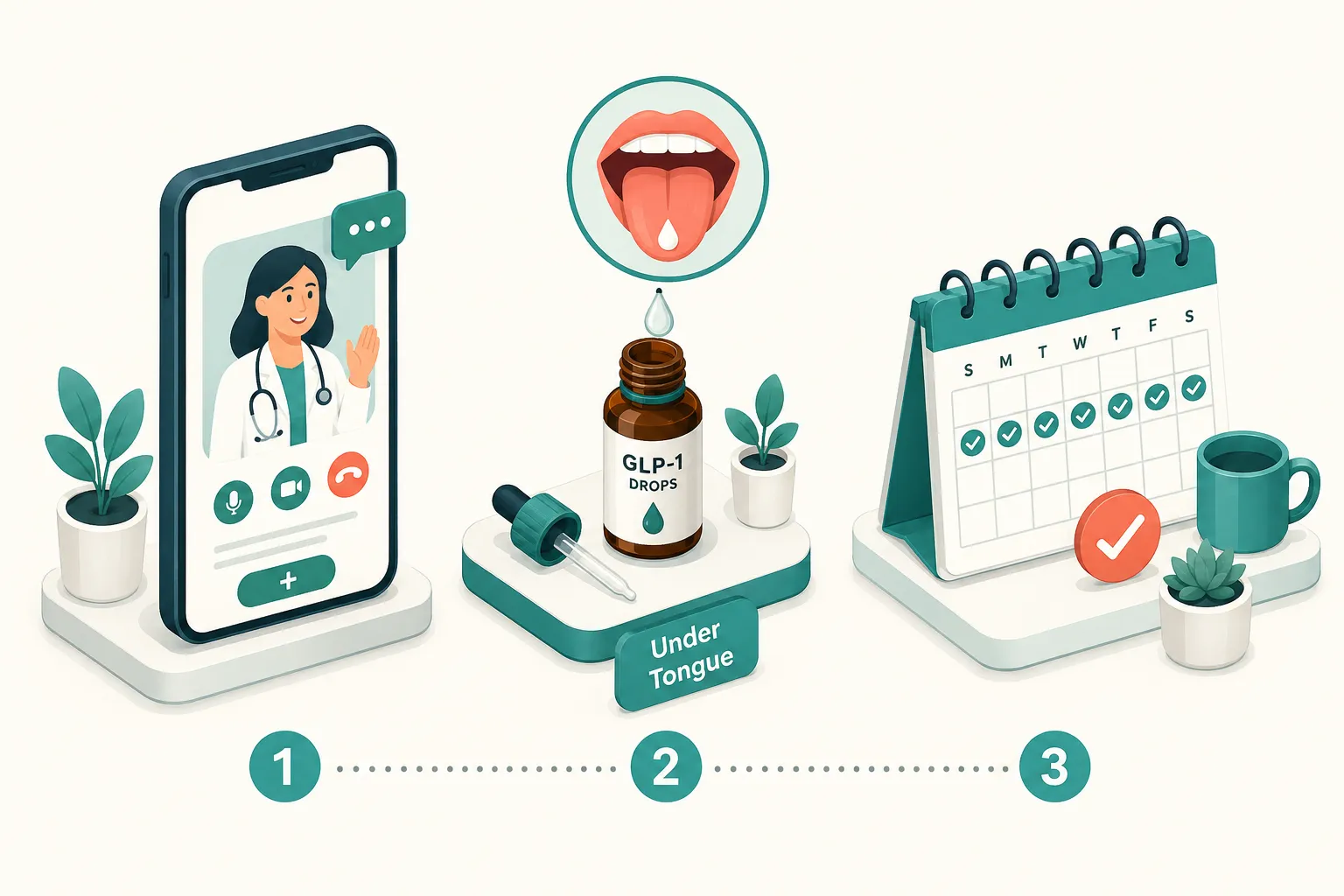
GLP-1 liquid drops are typically administered by placing a measured number of drops under the tongue and holding them there for 30 to 60 seconds before swallowing. Dosing is daily, which differs from the once-weekly schedule of most injectable GLP-1 medications.
General daily dosing process (as described by telehealth providers):
- Wash your hands before handling the dropper bottle.
- Shake the bottle gently if instructed by your prescriber.
- Draw up the prescribed dose using the dropper.
- Place drops under the tongue.
- Hold for 30 to 60 seconds without swallowing.
- Swallow any remaining liquid.
- Avoid eating or drinking for at least 15 to 30 minutes after dosing (timing instructions vary by provider).
Important: Dosing for sublingual drops cannot be directly converted from injectable doses. Because human absorption data does not exist, prescribers are working without established equivalence guidelines. [3] Always follow your prescribing clinician’s specific instructions and report any side effects promptly.
GLP-1 Liquid Drops Side Effects: What to Expect
The side effects most commonly reported with GLP-1 liquid drops mirror those seen with other GLP-1 formulations, because the active ingredient is the same. However, because human pharmacokinetic data is absent, the actual absorption and therefore the intensity of side effects may differ unpredictably from injectable or tablet forms.
Common side effects associated with GLP-1 receptor agonists generally:
- Nausea (most common, especially early in treatment)
- Vomiting
- Diarrhea or constipation
- Decreased appetite
- Fatigue
- Heartburn or acid reflux
Less common but serious effects to watch for:
- Pancreatitis (severe abdominal pain radiating to the back)
- Gallbladder problems
- Heart rate changes
- Thyroid concerns (a warning carried by semaglutide-class drugs based on animal studies)
Because the sublingual route has unknown absorption in humans, there is a real possibility that some patients absorb very little and experience minimal effects, or that absorption is inconsistent day to day. Report any unusual symptoms to your prescribing clinician immediately.
Who Qualifies for GLP-1 Liquid Drops Prescription?
Telehealth providers offering GLP-1 liquid drops generally follow eligibility criteria similar to those used for injectable GLP-1 medications, though individual platforms set their own standards.
Typical eligibility criteria:
- BMI of 30 or higher (obesity), or
- BMI of 27 or higher with at least one weight-related condition (type 2 diabetes, high blood pressure, high cholesterol)
- No personal or family history of medullary thyroid carcinoma or MEN2 syndrome
- No history of pancreatitis (in most cases)
- Not pregnant or breastfeeding
- No severe kidney or liver disease (in most protocols)
Who is typically not a candidate:
- People with a history of certain eating disorders
- Those already on injectable GLP-1 therapy (switching without medical guidance is risky)
- Minors (under 18 in most telehealth protocols)
The “no needle” framing of GLP-1 liquid drops makes them appealing specifically to people who qualify for GLP-1 therapy but have needle anxiety. That is a legitimate concern, but it should be weighed against the lack of human efficacy data. [9]
GLP-1 Liquid Drops Not Working: Why Am I Not Losing Weight?
If you have been using GLP-1 liquid drops for several weeks without noticeable appetite reduction or weight loss, the most likely explanation is inadequate absorption. Because no human pharmacokinetic studies exist for sublingual GLP-1 formulations, there is no reliable way to confirm that the drug is reaching your bloodstream at a therapeutic concentration. [3]
Other reasons drops may not be working:
- Incorrect technique: Not holding drops under the tongue long enough, or swallowing too quickly
- Dose too low: Without human equivalence data, prescribers may be under-dosing
- Formulation stability issues: Peptide drugs like semaglutide are sensitive to temperature and handling; a compromised formulation delivers less active drug
- Diet and activity not adjusted: GLP-1 drugs work best alongside reduced-calorie eating and regular movement
- Unrealistic timeline: Even proven injectable GLP-1 medications take 12 to 16 weeks to show meaningful weight loss at therapeutic doses
What to do: Contact your prescribing clinician. If drops are not producing results after 8 to 12 weeks of consistent use, switching to an FDA-approved oral or injectable option is worth a serious conversation. See our overview of RX medications for weight loss for a broader look at what is currently available.
GLP-1 Liquid Drops for Type 2 Diabetes vs Weight Loss
GLP-1 liquid drops are marketed primarily for metabolic health and weight management, not specifically for type 2 diabetes management. For diabetes, the FDA-approved standard remains injectable GLP-1 drugs or Rybelsus tablets, not compounded sublingual drops. [5]
Key distinctions:
- For weight loss only (no diabetes): Drops may be prescribed off-label through telehealth, but evidence of efficacy is absent.
- For type 2 diabetes management: Using unproven compounded drops instead of approved medications carries real clinical risk, because blood sugar control is a measurable health outcome with serious consequences if the drug does not work.
- For both conditions: The stakes are higher with diabetes. An approved medication with documented efficacy is strongly preferable.
If you have type 2 diabetes and are considering GLP-1 therapy, discuss Rybelsus, injectable semaglutide, or tirzepatide with your endocrinologist before pursuing compounded drops. Our article on GLP-1 medications for weight loss and diabetes covers the approved landscape in detail.
Common Mistakes People Make With GLP-1 Drops
Mistake 1: Assuming “prescription” means “FDA-approved.”
A compounded drug requires a prescription but has not gone through FDA’s approval process. These are different things.
Mistake 2: Converting injectable doses to drop doses without guidance.
There is no validated conversion formula. Using injectable dosing logic for drops can lead to under-dosing or, theoretically, over-dosing.
Mistake 3: Skipping the telehealth consultation to save money.
Buying GLP-1 drops from unregulated online sources without a proper medical evaluation is both legally risky and medically dangerous.
Mistake 4: Stopping too early.
Some patients quit after two to four weeks because they do not see results. Even proven GLP-1 medications take time to show meaningful effects.
Mistake 5: Not verifying the compounding pharmacy.
Not all compounding pharmacies meet the same standards. Always check that the pharmacy is PCAB-accredited or operates under 503B outsourcing facility standards. Our guide on how to verify a legitimate compounding pharmacy walks through the verification steps.
Mistake 6: Ignoring diet and lifestyle.
GLP-1 drugs are not a standalone solution. They work best when paired with a reduced-calorie diet and regular physical activity.
GLP-1 Liquid Drops Alternatives: Oral Medications and Other Options
Several proven oral and injectable alternatives exist for people who want to avoid needles or are exploring GLP-1 options. [1]
FDA-approved oral GLP-1 options (as of 2026):
- Rybelsus (oral semaglutide, 3mg/7mg/14mg tablets): Approved for type 2 diabetes. Taken once daily on an empty stomach.
- Oral Wegovy (high-dose semaglutide pill): Approved for obesity management.
- Foundayo (orforglipron): A small-molecule once-daily GLP-1 pill approved in 2026 for obesity. Does not require special handling or an empty stomach. [1] [6]
Non-GLP-1 oral weight loss options:
- Qsymia (phentermine/topiramate)
- Contrave (bupropion/naltrexone)
- Orlistat (Xenical/Alli)
For a comparison of oral semaglutide pills versus injections on cost and efficacy, see our detailed semaglutide pills vs injections cost breakdown.
Can You Take GLP-1 Drops With Other Medications?
GLP-1 receptor agonists, including those in drop form, can interact with several medication classes, and the interactions are the same regardless of delivery method.
Key interactions to discuss with your prescriber:
- Insulin and sulfonylureas: GLP-1 drugs lower blood sugar; combining them with insulin or sulfonylureas increases hypoglycemia risk. Dose adjustments are often needed.
- Oral medications with narrow absorption windows: GLP-1 drugs slow gastric emptying, which can delay the absorption of other oral medications taken at the same time.
- Warfarin and other anticoagulants: Slowed gastric emptying may affect absorption timing and INR stability.
- Thyroid medications (levothyroxine): Timing matters; your prescriber may recommend spacing doses.
Always provide your prescribing clinician with a complete medication list, including supplements and over-the-counter drugs. This is especially important with compounded formulations, where there is less standardized prescribing guidance available.
Where to Get GLP-1 Liquid Drops Rx Daily Oral Drops, No Needle: Prescription Online
GLP-1 liquid drops are available through telehealth platforms that connect patients with licensed prescribers and partner compounding pharmacies. AgelessRx is one of the more prominent platforms to have publicly launched sublingual GLP-1 drops for semaglutide and tirzepatide. [9]
General process for obtaining a prescription:
- Complete an online health intake form (medical history, current medications, weight, height).
- Attend a telehealth consultation with a licensed prescriber (video or asynchronous messaging, depending on the platform).
- If eligible, receive a prescription sent directly to a partner compounding pharmacy.
- Drops are shipped to your home, typically within a few days.
- Follow-up check-ins are usually scheduled monthly.
What to look for in a telehealth provider:
- Licensed prescribers in your state
- Partner pharmacies that are PCAB-accredited or 503B-registered
- Clear informed consent about the lack of FDA approval and human efficacy data
- Ongoing monitoring, not just a one-time prescription
For affordable telehealth GLP-1 options more broadly, our guide to affordable semaglutide telehealth and best affordable GLP-1 weight loss programs are worth reading before you commit to any single platform.
FAQ
Q: Are GLP-1 liquid drops the same as Ozempic or Wegovy?
No. Ozempic and Wegovy are FDA-approved injectable semaglutide products manufactured by Novo Nordisk. GLP-1 liquid drops are compounded formulations made by third-party pharmacies. They may contain the same active ingredient, but they have not been tested or approved for the same uses. [3]
Q: How long does it take for GLP-1 drops to work?
There is no human clinical data to answer this precisely. Based on the mechanism of GLP-1 receptor agonists generally, some appetite suppression might be expected within weeks if adequate drug absorption occurs. Meaningful weight loss with proven injectable forms typically takes 12 to 16 weeks at therapeutic doses.
Q: Can I switch from injections to GLP-1 drops?
Not without medical guidance, and even then, there is no validated dose conversion formula. Switching without clinician oversight risks losing the therapeutic benefit you have built up with an injectable regimen. [3]
Q: Do GLP-1 liquid drops require refrigeration?
Most compounded peptide formulations do require refrigeration to maintain stability. Check the storage instructions provided with your specific formulation. Improper storage can degrade the active ingredient.
Q: Is there any human study on sublingual GLP-1 drops?
As of 2026, no published peer-reviewed human trial demonstrates that sublingual GLP-1 drops produce meaningful weight loss or metabolic benefit. The only pharmacokinetic data comes from a rat study. [3]
Q: Will insurance cover GLP-1 liquid drops?
Almost certainly not. Because they are compounded and not FDA-approved, standard insurance plans and Medicare/Medicaid do not cover sublingual GLP-1 drops. HSA/FSA funds may be usable, verify with your plan administrator.
Q: What is the difference between sublingual drops and oral semaglutide tablets like Rybelsus?
Rybelsus is an FDA-approved tablet that uses a special absorption enhancer (SNAC) to help semaglutide survive stomach acid and absorb through the stomach lining. Sublingual drops aim for absorption through mouth tissues. These are completely different mechanisms, and only Rybelsus has human efficacy data. [5]
Q: Are GLP-1 drops safe for people with type 2 diabetes?
The safety profile of the active ingredient (semaglutide or tirzepatide) is well-established in injectable and tablet forms. However, using an unproven compounded formulation for diabetes management carries clinical risk because you cannot confirm the drug is working. Consult an endocrinologist before using drops for diabetes. [3]
Q: Can I get GLP-1 drops without a prescription?
No. Any legitimate GLP-1 drop product requires a valid prescription from a licensed prescriber. Products sold without a prescription are not legitimate pharmaceutical compounded drugs and should be avoided.
Q: What is orforglipron (Foundayo) and is it better than drops?
Foundayo is a once-daily small-molecule GLP-1 pill approved by the FDA in 2026 for obesity. Unlike peptide-based GLP-1 drugs, it does not require special handling or fasting before administration. It has demonstrated statistically significant weight loss in clinical trials. [1] [7] It is a far more evidence-backed needle-free option than sublingual drops.
Conclusion
GLP-1 liquid drops Rx daily oral drops, no needle, represent a genuinely appealing concept for the millions of people who want the metabolic benefits of GLP-1 therapy without weekly injections. The convenience is real. The evidence, however, is not there yet. As of 2026, no human clinical trial confirms that sublingual GLP-1 drops work, and the only supporting data comes from a single rat study that explicitly warns against using it to guide human dosing. [3]
The good news is that the needle-free GLP-1 landscape has improved dramatically. FDA-approved oral semaglutide pills and the newly approved orforglipron (Foundayo) offer proven, non-injectable options for eligible patients. [1] If you are determined to explore sublingual drops, do so only under the supervision of a licensed clinician, through a verified compounding pharmacy, with clear expectations about what is and is not known.
Your next steps:
- Compare FDA-approved oral GLP-1 options (Rybelsus, oral Wegovy, Foundayo) with your doctor before choosing compounded drops.
- If you pursue drops, verify your compounding pharmacy’s accreditation using our guide to verifying a legitimate compounding pharmacy.
- Review the full cost landscape at our GLP-1 price per month comparison before committing to any program.
References
[1] GLP-1 Weight Loss Pills What You Need To Know – https://www.yalemedicine.org/news/glp-1-weight-loss-pills-what-you-need-to-know
[3] Ivimhealth Com GLP-1 Drops Patches – https://www.ivimhealth.com/ivimhealth-com-glp1-drops-patches/
[5] Whats The Deal With Oral GLP-1s – https://www.tryshed.com/blog/post/whats-the-deal-with-oral-glp-1s
[6] 2026 Day Pill Weight Loss Phase – https://medicalxpress.com/news/2026-06-day-pill-weight-loss-phase.html
[7] Lilly’s Oral GLP-1 Orforglipron Demonstrated Statistically – https://investor.lilly.com/news-releases/news-release-details/lillys-oral-glp-1-orforglipron-demonstrated-statistically
[9] AgelessRx Launches Oral GLP-1 Drops For Metabolic Health – https://www.clinicaltrialvanguard.com/news/agelessrx-launches-oral-glp-1-drops-for-metabolic-health/

With over 13 years of experience in holistic health blogging, I aim to help you navigate your wellness journey with honest insights, expert-backed advice, and a sprinkle of real-world practicality.
Certified Wellness Writer | Herbal Nutrition Advocate | Wellness Research Enthusiast