
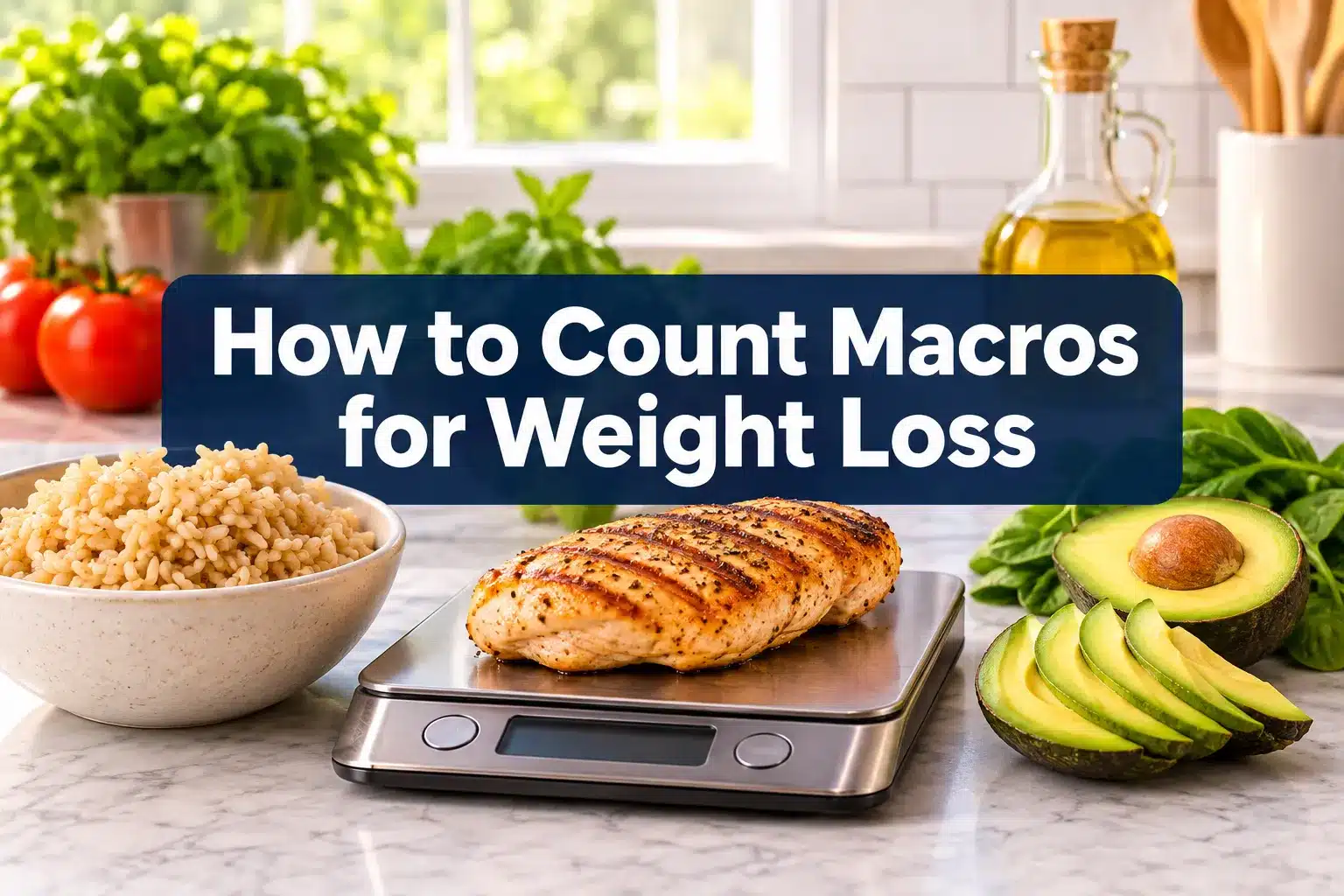
How to Count Macros for Weight Loss: A Simple Guide to Protein, Carbs, and Fat

Last updated: November 18, 2026
Quick Answer
Counting macros for weight loss means tracking grams of protein, carbohydrates, and fat instead of just total calories. You start by setting a modest calorie deficit, then split those calories into protein (roughly 1.2-2.2 g per kg of body weight), fat (about 20-35% of calories), and carbs (filling the rest). No single ratio works best for everyone, the calorie deficit is still what drives fat loss [1][2].
Key Takeaways
- Macro counting tracks protein, carbs, and fat in grams, not just total calories.
- A calorie deficit of 300-500 calories (about 10-20% below maintenance) is the real driver of weight loss [1].
- Protein should be prioritized first, generally 1.2-2.2 g/kg body weight or 25-35% of calories [2][3].
- Fat typically sits around 20-35% of calories; carbs fill whatever is left [2][3].
- No specific macro ratio has been proven superior for long-term fat loss [1][2].
- Free apps like MyFitnessPal and Cronometer can calculate and track macros automatically [4][5].
- Macro counting is optional, many people lose weight using calorie counting or portion control alone [6][7].
- Small, consistent tracking mistakes (unmeasured oils, sauces, and drinks) are the most common reason progress stalls [5][8].
What Are Macros and Why Should I Count Them to Lose Weight
Macros, short for macronutrients, are the three nutrients that provide calories: protein, carbohydrates, and fat. Counting them matters for weight loss because it shows not just how much you’re eating, but what that food is made of, which affects hunger, muscle retention, and energy levels [6][8].
7 Best GLP-1 Providers Ranked: Accreditation, Flexibility & Support Compared (2026 Update)
32,000+ Patients Can't All Be Wrong: See the Top-Rated GLP-1 Providers. We compared the leading online GLP-1 providers based on program features, clinical support, convenience, and overall value.
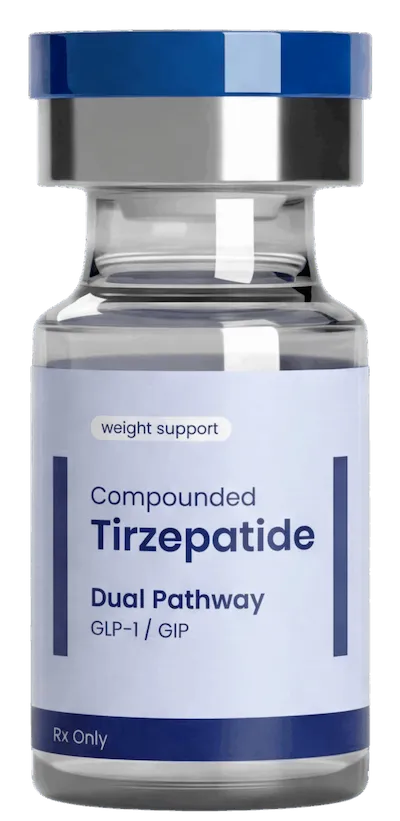
BMI MD GLP-1 Microdosing Plan
- Specialized microdosing options, including sublingual drops and low-dose injections
- Designed for people interested in maintaining weight or gradually adjusting treatment
- Bundled program structure without a separate monthly platform membership
- Online access makes the process convenient from home

DirectMeds Weight Loss Solutions
- Online weight-loss program with a straightforward patient experience
- Compounded medication options through state-licensed compounding pharmacies
- Includes clinical consultation as part of the process
- Provides shipping updates to help patients track their orders

MEDVi Flat-Rate Telehealth
- Flat-rate telehealth approach designed for easier budgeting
- No dosage-based pricing increases within the advertised program structure
- Offers injectable and oral thin-film delivery options
- Includes medical screening and asynchronous provider consultations
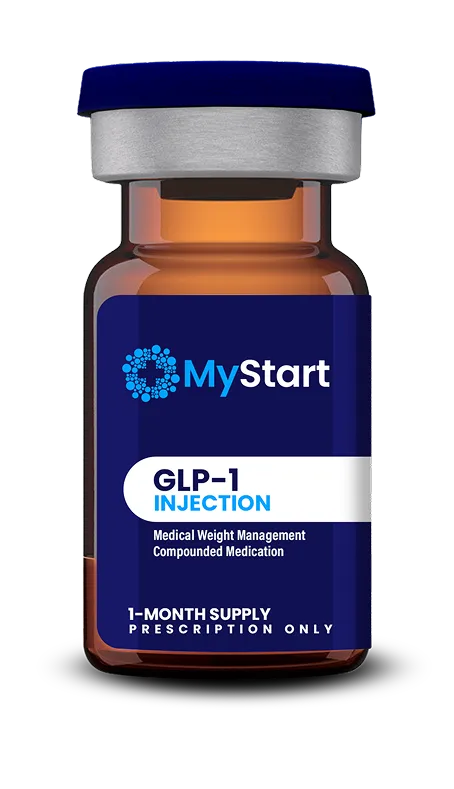
Gala GLP-1 Care Program
- Text-based access to state-licensed clinicians
- Cold-chain medication shipping included in the program
- Month-to-month program structure
- Designed for people who value convenient ongoing support
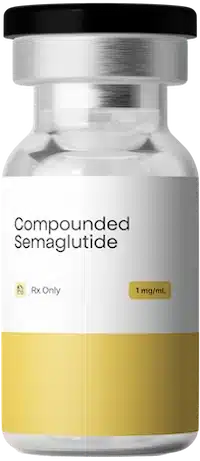
Measured GLP-1 Metabolic Health
- Comprehensive metabolic health screening and intake analysis
- Designed around longer-term metabolic health management
- Responsive dashboard with integrated health tracking tools
- Useful option for patients who value a more data-focused experience
Refills GLP-1 (TryRefills Plan)
- Clinical guidance designed to help patients manage common treatment concerns
- Includes foundational nutritional strategies alongside medication
- Designed around predictable ongoing treatment
- No hidden startup or processing fees according to the program information provided
AltRx GLP-1 Transactional Reorders
- Transactional reorder model without recurring auto-billing
- Designed for patients who already understand their treatment routine
- Fast text-to-order process for convenient reorders
- Offers injectable and fast-dissolving tablet variations
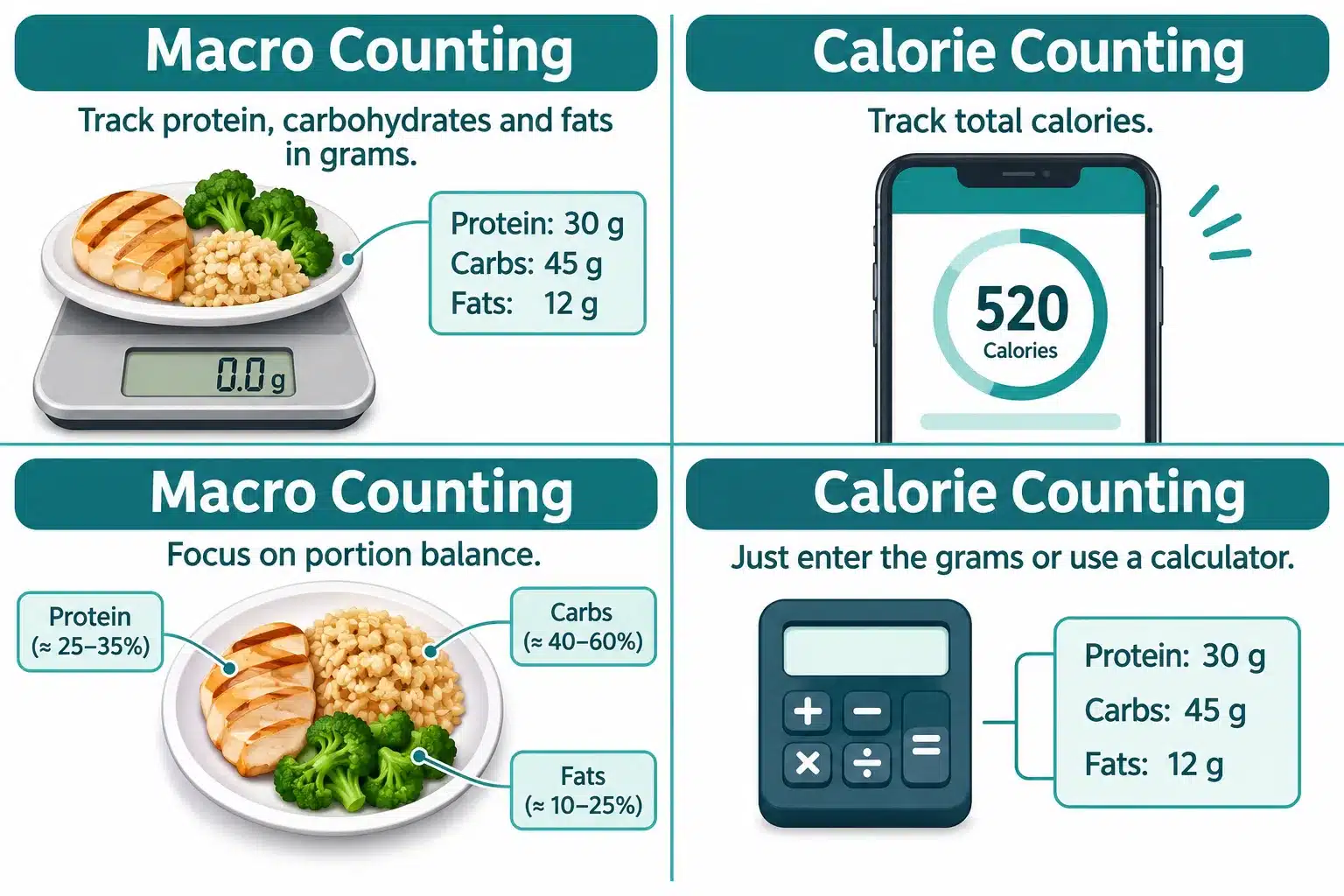
Each gram of protein and carbohydrate provides about 4 calories, while each gram of fat provides about 9 calories. Tracking macros, rather than just calories, helps you:
- Keep protein high enough to protect muscle during a deficit
- Avoid diets that are technically low-calorie but leave you hungry or tired
- Build more consistent eating habits over time
I’ve found that people who switch from vague “eating healthy” to tracking actual grams tend to notice patterns faster, like realizing their coffee creamer or salad dressing was adding hundreds of hidden calories a day.
What’s the Difference Between Counting Macros and Counting Calories
Calorie counting tracks one number: total energy intake. Macro counting breaks that number down into three categories, protein, carbs, and fat, so you know the composition of your diet, not just its size [4][6].
Both approaches can work for weight loss because both require awareness of what you eat. The difference is precision:
| Method | What it tracks | Best for |
|---|---|---|
| Calorie counting | Total daily calories only | Beginners wanting simplicity |
| Macro counting | Grams of protein, carbs, fat | People wanting muscle retention, better satiety, or structured nutrition |
Choose macro counting if you want more control over body composition, not just the scale number. Choose simple calorie counting if tracking three numbers feels overwhelming at first.
How Many Grams of Protein, Carbs, and Fat Should I Eat Per Day
Most evidence-based guides calculate macros in three steps: find your daily calorie target, assign percentages to each macro, then convert those percentages into grams [1][3][9].
A common starting framework used in 2026 nutrition guides looks like this:
- Calculate calories: Estimate maintenance calories, then subtract 300-500 for a moderate deficit [1].
- Set protein: 1.2-2.2 g per kg of body weight, or about 25-35% of total calories [2][3].
- Set fat: Roughly 20-35% of calories, or about 0.6-1 g per kg body weight [2][3].
- Fill remaining calories with carbs: Often lands around 40-55% of calories, but this is flexible [2][3].
Example: A 70 kg (154 lb) adult eating 1,800 calories a day might aim for about 140g protein (560 calories), 60g fat (540 calories), and 175g carbs (700 calories). These are starting points, not fixed rules, individual needs vary by activity level, age, and health status [3][9].
Macro Counting vs Calorie Counting: Which Is Better for Weight Loss
Neither method is universally “better.” Research consistently shows that the calorie deficit itself is what drives fat loss, not the specific macro split you choose [1][2].
Macro counting adds value when you want:
- Better appetite control through higher protein
- More predictable energy levels
- A structured way to eat around workouts
Calorie counting alone may be enough if you:
- Are new to tracking and want something simple
- Don’t have specific body composition goals
- Eat a fairly consistent, home-cooked diet already
Decision rule: If you’re losing weight but losing muscle, strength, or energy along with it, switch to macro counting and raise protein. If you’re just starting out and feel overwhelmed, begin with calories alone and add macros later.
Best Free Macro Tracking Apps for Weight Loss
Free apps can calculate your macro targets automatically and track them as you log food, which removes most of the manual math [4][5].
Commonly used free options include:
- MyFitnessPal, large food database, barcode scanning, free tier available
- Cronometer, detailed micronutrient and macro breakdowns, strong free version
- Lose It!, simple interface, good for beginners
- FatSecret, free macro tracking with a straightforward food diary
Pick an app based on how detailed you want your data. Cronometer suits people who want micronutrient detail; MyFitnessPal suits people who want the largest food database for eating out.
Can You Lose Weight Without Counting Macros
Yes. Weight loss ultimately depends on maintaining a calorie deficit, and many people achieve that through portion control, calorie counting, or structured meal plans without ever tracking grams of protein, carbs, or fat [1][6][7].
Macro counting is a tool for precision, not a requirement. It tends to help most when you:
- Are weight training and want to preserve muscle
- Have plateaued on simple calorie counting
- Want more structure around meal timing and satiety
If counting grams feels like too much, methods like the “plate method” (half vegetables, a quarter protein, a quarter carbs) can approximate good macro balance without any math [7].
Why Am I Not Losing Weight Even Though I’m Counting Macros
The most common reason is an inaccurate calorie total, even when macros look correct on paper. Underestimating portions, forgetting cooking oils, or not weighing food leads to eating more than intended [5][8].
Other frequent causes include:
- Liquid calories: Coffee drinks, alcohol, and juices often go untracked
- Weekend drift: Accurate tracking on weekdays, loose tracking on weekends
- Overestimating activity burn: Exercise apps often overstate calories burned
- Metabolic adaptation: After sustained weight loss, maintenance calories drop, requiring an adjusted target [1]
Common mistake: Hitting your macro grams exactly but still eating in a surplus because the calorie target itself was set too high to begin with.
How Do I Count Macros When Eating Out or at Restaurants
Restaurant meals can be tracked reasonably well by using published nutrition information, estimating portions conservatively, and choosing simpler preparations when possible [4][6].
Practical steps:
- Check the restaurant’s nutrition facts online before ordering, if available.
- Ask for dressings, sauces, and oils on the side.
- Estimate protein portions by comparing them to a deck of cards (about 3 ounces) or your palm.
- Log a close match in your app rather than skipping tracking entirely.
Edge case: If a restaurant provides no nutrition data, log the closest generic entry in your app (for example, “grilled chicken breast, restaurant”) and round estimates up slightly rather than down.
Common Mistakes People Make When Counting Macros
The most frequent mistakes involve inconsistent measuring, not accounting for cooking additions, and chasing perfect numbers instead of consistent averages [5][8].
Watch for these specific errors:
- Eyeballing portions instead of using a food scale, especially for oils and nuts
- Forgetting that sauces, dressings, and drinks count toward daily totals
- Changing macro targets too often based on daily scale fluctuations
- Treating one “off” day as a reason to quit tracking entirely
Quick example: Two tablespoons of olive oil add about 240 calories, enough to erase a planned deficit if left untracked for a week.
Is Macro Counting Too Complicated for Beginners
Macro counting is not inherently complicated, but it does require a short learning period to build habits like weighing food and logging consistently [6][10].
Most people adjust within two to three weeks. To make it easier:
- Start by tracking just protein for the first week
- Use an app’s built-in macro calculator instead of doing manual math
- Batch-cook a few go-to meals with known macros to reduce daily guesswork
Decision rule: Choose a simplified approach (tracking protein only, or using the plate method) if full macro tracking feels discouraging in week one. You can always add precision later.
What’s the Ideal Macro Ratio for Fat Loss
There is no single ideal ratio proven superior for fat loss; multiple macro splits produce similar results when calories and protein are controlled [1][2]. The Acceptable Macronutrient Distribution Ranges (AMDR) set broad safe boundaries, while weight-loss, specific guidance leans toward higher protein within those ranges [2][3].
A commonly cited starting range for fat loss in 2026 nutrition guides:
| Macro | Typical range | Purpose |
|---|---|---|
| Protein | 25-35% of calories | Preserve muscle, increase fullness |
| Fat | 20-35% of calories | Hormone support, satiety |
| Carbs | 40-55% of calories | Fuel for training and daily activity |
Choose higher protein, moderate carb if you lift weights regularly. Choose lower carb, moderate protein if you prefer fewer hunger swings and don’t train intensively. Both can work within these ranges [2].
How Accurate Do My Macro Counts Need to Be to See Results
Exact precision down to the gram is not necessary. Most people see consistent progress by staying within about 5-10 grams of their protein target and within roughly 100-150 calories of their total daily goal [4][8].
What matters more than perfect accuracy:
- Weekly consistency rather than daily perfection
- Weighing high-calorie-density foods (oils, nut butters, cheese) more carefully than low-calorie vegetables
- Reviewing weekly averages instead of reacting to single days
Example: Being 8 grams under your protein goal on a Tuesday is far less important than averaging close to your target across the full week.
Should I Adjust My Macros if I’m Not Seeing Progress
Yes, macros should be reassessed if weight loss stalls for two to three consecutive weeks despite consistent tracking. The most common adjustment is a modest reduction in calories or carbs, not a complete overhaul [1][10].
Suggested adjustment approach:
- Confirm tracking accuracy first (scale usage, logging all extras).
- If accurate and still stalled, reduce calories by another 5-10%.
- Keep protein the same or increase it slightly to protect muscle.
- Reassess again after two to three more weeks.
Edge case: If you’re also sleeping poorly, under high stress, or not weight training, address those factors first, they can stall progress even with correct macros [1].
Can You Count Macros on a Keto or Low-Carb Diet
Yes, keto and low-carb diets use the same macro-counting principles, just with different percentage targets. Keto typically sets carbs very low (often under 10% of calories), fat high (around 70-75%), and protein moderate [2][3].
Comparison for fat-loss-focused eating styles:
| Style | Protein | Carbs | Fat |
|---|---|---|---|
| Standard macro split | 25-35% | 40-55% | 20-35% |
| Keto / low-carb | Moderate | Under 10% | 70-75% |
Choose keto-style macros if you tolerate low-carb eating well and don’t need high carb intake for intense training. Choose a standard split if you train frequently or prefer more food variety. Evidence does not show one approach is clearly superior for long-term fat loss over the other [1][2].
Checklist: Getting Started With Macro Counting
- Calculate estimated maintenance calories
- Subtract 300-500 calories for a moderate deficit
- Set protein at 1.2-2.2 g/kg body weight
- Set fat at 20-35% of total calories
- Fill remaining calories with carbs
- Choose a free tracking app
- Weigh high-calorie foods for the first two weeks
- Review weekly averages, not daily numbers
If you’re also exploring medical weight-loss options alongside nutrition changes, it helps to understand how prescription treatments work before combining them with a macro plan. Readers comparing GLP-1 medications may want to review our semaglutide weight loss injections guide or see how GLP-1 treatment works for non-diabetic patients. For those weighing medication costs against lifestyle changes, our GLP-1 weight loss cost breakdown and comparison of leading GLP-1 options offer transparent pricing context. If you’ve started a GLP-1 medication and progress has slowed, our guide on reasons for stalled weight loss on Mounjaro covers overlapping troubleshooting steps. Anyone considering stopping medication should also read about what happens after stopping Ozempic before making changes to a nutrition or medication plan.
FAQ
Do I need to count macros every single day forever? No. Many people track closely for a few months to learn portion sizes, then switch to intuitive eating with occasional check-in weeks to stay accurate.
What’s the fastest way to calculate my macros? Use a free app’s built-in macro calculator. Enter your weight, height, activity level, and goal, and it will generate starting protein, carb, and fat targets instantly.
Is high protein always better for weight loss? Higher protein (within 1.2-2.2 g/kg) generally supports fullness and muscle retention during a deficit, but extremely high intake beyond that range hasn’t shown added benefit for most people [2][3].
Can macro counting work with intermittent fasting? Yes. You can count the same daily macro totals within a shorter eating window; the total grams and calories matter more than meal timing for weight loss [6].
Should I count net carbs or total carbs? That depends on your goal. Low-carb and keto dieters often track net carbs (total carbs minus fiber), while standard macro plans typically use total carbs [3].
What if my macros don’t add up exactly to my calorie goal? Small rounding differences are normal. Aim to stay within about 50-100 calories of your target rather than chasing an exact match every day.
Can counting macros help with muscle loss during weight loss? Yes. Prioritizing protein at 1.2-2.2 g/kg body weight is specifically shown to help preserve lean muscle mass during a calorie deficit compared to lower protein intakes [2][3].
7 Best GLP-1 Providers Ranked: Accreditation, Flexibility & Support Compared (2026 Update)
32,000+ Patients Can't All Be Wrong: See the Top-Rated GLP-1 Providers: Compared on accreditation, plan flexibility, and patient support — updated for 2026.
BMI MD GLP-1 Microdosing Plan
- Specialized microdosing options (sublingual drops or low-dose injections)
- Ideal for maintaining weight or tapering off higher doses safely
- Fully bundled plan with no hidden monthly platform memberships
DirectMeds Weight Loss Solutions
- Sourced from accredited, state-licensed 503A compounding pharmacies
- No-frills high-volume savings passed directly to the patient
- Includes clinical consultation and cold-chain shipping updates
MEDVi Flat-Rate Telehealth
- Flat monthly rate holds steady even at maximum maintenance doses
- No dosage upcharges or graduation fee penalties
- Offers both injectable and advanced oral thin-film delivery options
Gala GLP-1 Care Program
- All-inclusive plan with no standalone membership costs
- Continuous text-based messaging access with state-licensed clinicians
- Temperature-controlled, cold-chain medication shipping included
Measured GLP-1 Metabolic Health
- Comprehensive metabolic health screening and expert intake analysis
- Predictable long-term budgeting with stable plan pricing
- High-end responsive dashboard with integrated diagnostic support
Refills GLP-1 (TryRefills Plan)
- Flat rate holds steady as titration scales up
- Includes clinical guides for active side-effect management
- Bundles in foundational nutritional strategies alongside medication
AltRx GLP-1 Transactional Reorders
- Zero recurring auto-billing — pay entirely on a transactional basis
- Rapid text-to-order format saves time for experienced patients
- Provides both injectable forms and fast-dissolving tablet variations
Conclusion
Learning how to count macros for weight loss comes down to three steps: set a reasonable calorie deficit, prioritize protein, and let fat and carbs fill the rest based on a range that fits your lifestyle. No single macro ratio is magic, the deficit itself does the heavy lifting, while macros shape how you feel and how much muscle you keep along the way [1][2].
If you’re just starting out, pick a free tracking app, set protein as your first priority, and give yourself two to three weeks before judging results. Adjust calmly if progress stalls, and don’t treat imperfect days as failure. For readers also considering medical weight-loss support alongside nutrition changes, reviewing options like our Zepbound vs Ozempic comparison can provide additional context before making a decision with your healthcare provider.
References
- Obe Cpg 2025 Guideline Final 20251105. healthquality.va.gov.
- Best Macronutrient Ratio. healthline.com.
- Macros for Weight Loss Calculating Your Targets in Grams. bodyspec.com.
- How to Count Macros 11907749. verywellhealth.com.
- How to Track Macros for Weight Loss. nutrimacro.ie.
- Article. medicinenet.com.
- What Are Macros Need Count Macros Losing Weight 5793q6. ubiehealth.com.
- Macros for Weight Loss. healthychicago.us.
- Macro Calculator for Weight Loss. effortlessmath.com.
- What Are Macros Calculate Weight Loss Plan Tips 4293q6. ubiehealth.com.

With over 13 years of experience in holistic health blogging, I aim to help you navigate your wellness journey with honest insights, expert-backed advice, and a sprinkle of real-world practicality.
Certified Wellness Writer | Herbal Nutrition Advocate | Wellness Research Enthusiast