
What Is the Best Protein Powder for Weight Loss? Types, Ingredients, and Top Considerations

Last updated: November 18, 2026
Quick Answer
There is no single “best” protein powder for weight loss. Whey protein isolate has the strongest research backing for preserving muscle while cutting calories, but plant-based and blended powders work just as well if they deliver enough protein and a complete amino acid profile [1][2]. The right choice depends on your tolerance for dairy, your calorie goals, and how the powder fits into your overall diet.
Key Takeaways
- Higher-protein diets modestly improve weight loss and help people keep weight off compared with lower-protein eating patterns [2].
- Most adults trying to lose weight benefit from roughly 1 to 2 grams of protein per kilogram of body weight daily, though needs vary by activity level and starting weight [2].
- Whey protein has the most evidence for protecting lean muscle during calorie restriction, but it is not the only effective option [1].
- Plant-based and blended protein powders can match whey’s results if the total protein and amino acids are sufficient [1][2].
- Protein powder is a convenience tool, not a requirement, whole foods can meet the same protein targets.
- Added sugars, artificial sweeteners in excess, and unnecessary extra BCAAs are worth scrutinizing on a label [3].
- Contaminant testing has become a bigger buying factor since 2025 heavy-metal reports drew attention to some popular brands [4].
- Timing matters less than total daily intake, spreading protein across the day works fine for weight loss [2].
What Types of Protein Powder Work Best for Weight Loss
The types that work best for weight loss are whey, casein, soy, pea, and blended plant proteins, each can support fat loss if it provides enough protein per serving with low added sugar. What matters most is total protein intake and calorie control, not the specific source [1][3].
7 Best GLP-1 Providers Ranked: Accreditation, Flexibility & Support Compared (2026 Update)
32,000+ Patients Can't All Be Wrong: See the Top-Rated GLP-1 Providers. We compared the leading online GLP-1 providers based on program features, clinical support, convenience, and overall value.
BMI MD GLP-1 Microdosing Plan
- Specialized microdosing options, including sublingual drops and low-dose injections
- Designed for people interested in maintaining weight or gradually adjusting treatment
- Bundled program structure without a separate monthly platform membership
- Online access makes the process convenient from home

DirectMeds Weight Loss Solutions
- Online weight-loss program with a straightforward patient experience
- Compounded medication options through state-licensed compounding pharmacies
- Includes clinical consultation as part of the process
- Provides shipping updates to help patients track their orders
MEDVi Flat-Rate Telehealth
- Flat-rate telehealth approach designed for easier budgeting
- No dosage-based pricing increases within the advertised program structure
- Offers injectable and oral thin-film delivery options
- Includes medical screening and asynchronous provider consultations
Gala GLP-1 Care Program
- Text-based access to state-licensed clinicians
- Cold-chain medication shipping included in the program
- Month-to-month program structure
- Designed for people who value convenient ongoing support
Measured GLP-1 Metabolic Health
- Comprehensive metabolic health screening and intake analysis
- Designed around longer-term metabolic health management
- Responsive dashboard with integrated health tracking tools
- Useful option for patients who value a more data-focused experience
Refills GLP-1 (TryRefills Plan)
- Clinical guidance designed to help patients manage common treatment concerns
- Includes foundational nutritional strategies alongside medication
- Designed around predictable ongoing treatment
- No hidden startup or processing fees according to the program information provided
AltRx GLP-1 Transactional Reorders
- Transactional reorder model without recurring auto-billing
- Designed for patients who already understand their treatment routine
- Fast text-to-order process for convenient reorders
- Offers injectable and fast-dissolving tablet variations
- Whey protein isolate or concentrate: Fast-digesting, complete amino acid profile, well studied for muscle retention during dieting [1].
- Casein: Slow-digesting, useful before bed to support satiety overnight.
- Soy protein: A complete plant protein with a strong amino acid profile, good for those avoiding dairy.
- Pea and rice blends: Combined, they offer a complete amino acid profile similar to animal proteins.
- Collagen peptides: Not a complete protein and generally a poor stand-alone choice for weight loss goals.
Choose whey or soy if you want a well-researched, complete protein. Choose pea-rice blends if you are vegan or soy-sensitive. A common mistake is assuming any “protein” product automatically supports weight loss, some contain more sugar and fillers than usable protein.
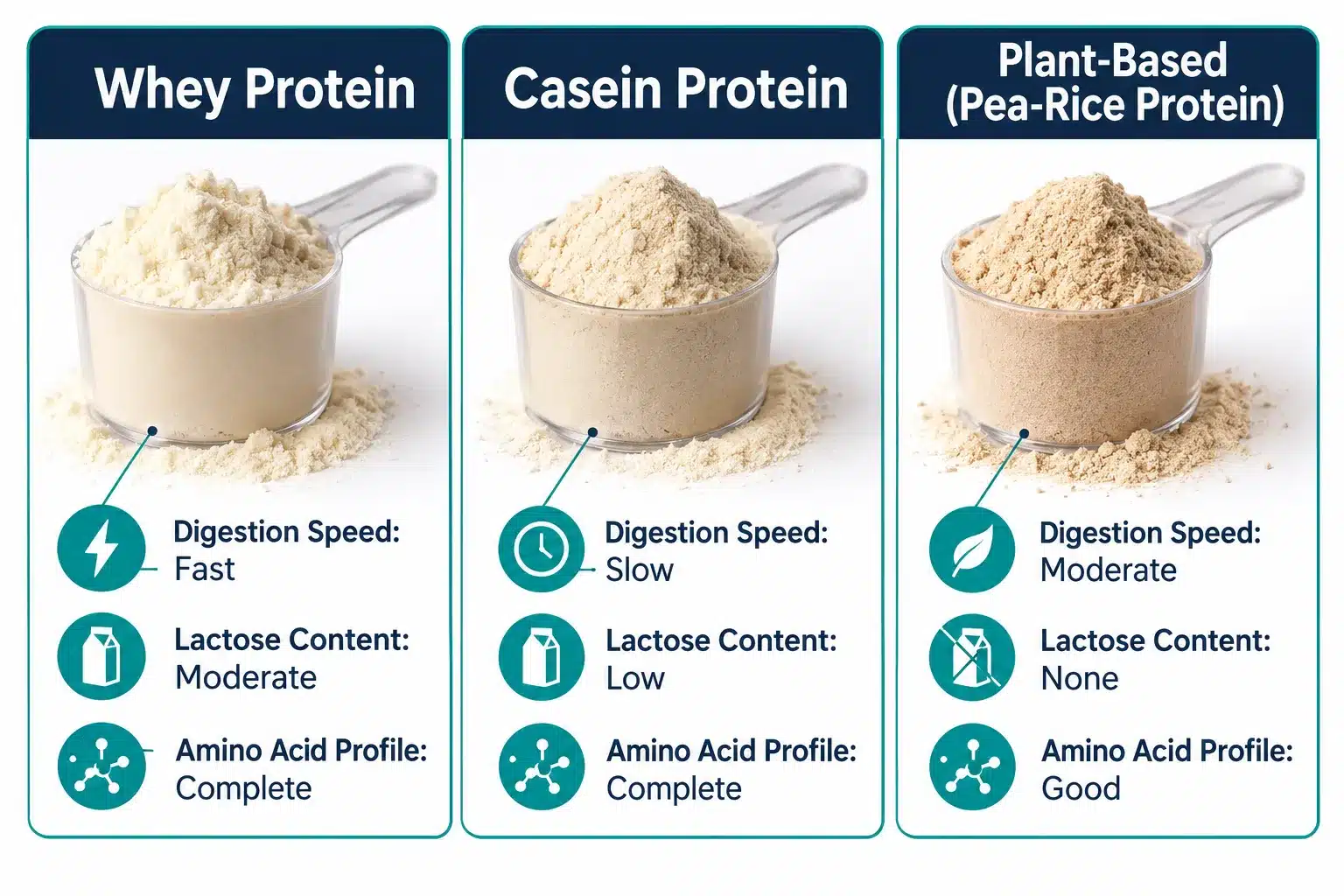
Whey vs Casein vs Plant-Based Protein: Which Is Better for Losing Weight
None of the three is definitively “better” for weight loss, whey has the most research support for lean mass retention, but casein and plant-based options perform comparably when protein and calorie targets are met [1][2]. The decision usually comes down to digestion, dietary restrictions, and personal preference.
| Type | Digestion speed | Best for | Watch out for |
|---|---|---|---|
| Whey | Fast | Post-workout, general daily use | Lactose sensitivity |
| Casein | Slow | Nighttime satiety | Thicker texture, slower mixing |
| Soy/Pea blend | Moderate | Vegan, lactose-free diets | Needs a complete amino acid blend |
If you are lactose intolerant, whey isolate (which has less lactose than concentrate) or a plant blend is the more comfortable choice.
How Much Protein Powder Should I Be Drinking Daily to Lose Weight
Most adults aiming for weight loss should target about 1 to 2 grams of protein per kilogram of body weight per day from all sources combined, not just powder [2]. For a 170-pound person (about 77 kg), that works out to roughly 77 to 154 grams of total daily protein, with powder filling in gaps from meals.
- One scoop of most powders provides 20 to 30 grams of protein.
- Many people use one or two shakes daily alongside protein-rich meals.
- There is no required number of shakes, the goal is hitting your total daily gram target, not a specific serving count.
A common mistake is adding protein shakes on top of an already protein-sufficient diet, which adds calories without extra benefit.
Cheapest Protein Powder That Actually Works for Weight Loss
Budget-friendly protein powders can work just as well as premium brands if they meet basic criteria: at least 20 grams of protein per serving, low added sugar, and third-party testing [4][5][6]. Price alone does not determine effectiveness.
Decision rule: choose a budget whey or soy concentrate tub (often sold in bulk) if cost is the main concern, and check the label for added sugar under 5 grams per serving. Avoid “proprietary blends” that hide exact protein amounts, this is a common trick on cheaper labels that can mean less usable protein than advertised [3].
Best Budget-Friendly Protein Powder Brands for Weight Loss in 2026
Several widely available whey and plant-based brands sold at major retailers and online offer strong value without sacrificing basic quality standards reviewers look for in 2026 lists, including sufficient protein per serving, reasonable sugar content, and third-party testing [4][5][6][7]. Rather than naming a single “winner,” compare any option against this checklist:
- At least 20g protein per scoop
- Under 5g added sugar
- Third-party tested for heavy metals and contaminants
- Clear ingredient list (no vague “blend” terms)
- Price per serving under roughly $1.50 to $2.00
Expert product roundups in 2026 increasingly stress personalization over naming one universal best option, since dietary needs, allergies, and budgets vary widely [5][6][7].
Can You Lose Weight Without Protein Powder, or Do You Need It
You do not need protein powder to lose weight, whole foods like eggs, poultry, fish, beans, and dairy can fully meet protein targets [3]. Protein powder is simply a convenient, portable way to hit those numbers, especially for people with busy schedules or smaller appetites.
Choose whole foods if you prefer eating over drinking shakes or want more fiber and micronutrients. Choose powder if you struggle to eat enough protein-dense food in a day or need a quick post-meal option.
Best Protein Powder for Weight Loss If You’re Lactose Intolerant
Lactose-intolerant readers generally do best with whey protein isolate (lower lactose than concentrate), egg white protein, or plant-based blends like pea-rice or soy [1][3]. These options reduce digestive discomfort while still supporting weight-loss goals.
- Whey isolate: processed further than concentrate, removing most lactose.
- Plant blends: naturally lactose-free.
- Lactose-free whey: specifically filtered for sensitive stomachs.
If you are also considering medical weight-loss support alongside diet changes, it may help to review how prescription options compare, such as this breakdown of which GLP-1 is best for weight loss.
Protein Powder Making Me Bloated, What Should I Do Instead
Bloating from protein powder is usually caused by lactose, sugar alcohols, or excessive fiber additives, not the protein itself [3]. Switching formulas often resolves the issue without giving up on protein supplementation.
- Try a lactose-free whey isolate or a simple pea protein with minimal additives.
- Avoid powders sweetened heavily with sugar alcohols like sorbitol, a known cause of gas and bloating.
- Start with a half scoop to test tolerance before using a full serving.
- Mix with water instead of milk if dairy is a possible trigger.
Why Isn’t Protein Powder Helping Me Lose Weight? Troubleshooting
Protein powder alone does not cause weight loss, it only helps if it replaces higher-calorie foods or supports a calorie deficit you are already maintaining [2]. If you are not seeing results, the shake is likely adding calories rather than controlling them.
Common reasons it isn’t working:
- Drinking shakes in addition to full meals instead of as a meal or snack replacement
- Using high-calorie mix-ins like whole milk, nut butter, or juice without accounting for those calories
- Not actually in a calorie deficit overall
- Underestimating scoop size or using multiple scoops per serving
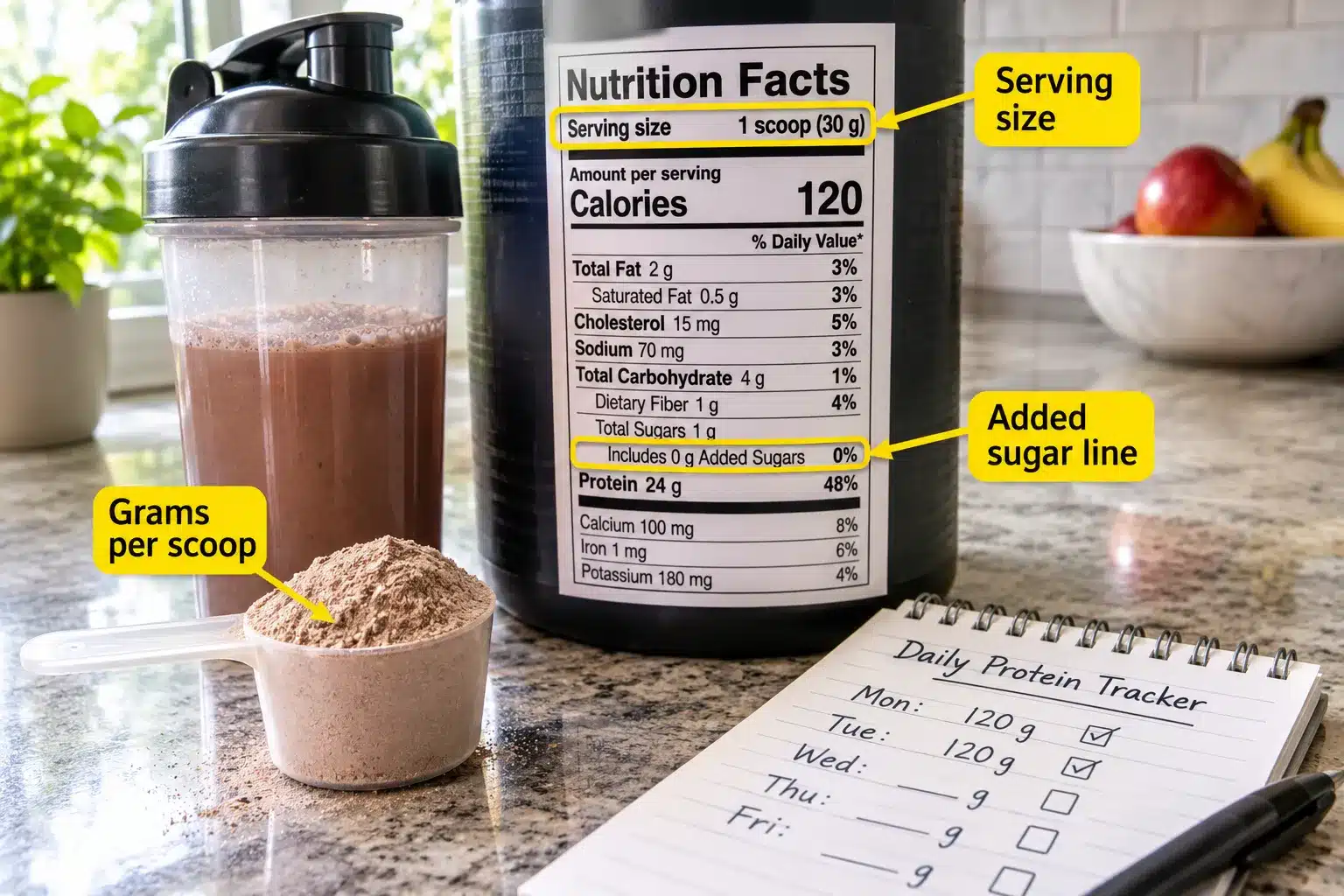
Common Mistakes People Make With Protein Powder and Weight Loss
The most common mistake is treating protein powder as a weight-loss product on its own rather than a tool that supports a calorie-controlled, balanced diet [2][3]. Other frequent errors include:
- Choosing flavor over nutrition facts
- Ignoring added sugar content
- Skipping real meals in favor of shakes long-term
- Assuming more protein automatically means more fat loss, when total calories still matter most
For readers also exploring prescription-based approaches, it can help to understand how medications work alongside, not instead of, dietary strategies, see this guide on rx weight loss medication options.
Best Protein Powder for Weight Loss and Building Muscle at the Same Time
Whey protein isolate remains the most studied option for simultaneously supporting fat loss and muscle retention during a calorie deficit, thanks to its complete amino acid profile and fast absorption [1][2]. Plant-based blends with added leucine can produce similar results if the overall protein target is met.
Choose whey if you also strength train regularly and want strong research support. Choose a leucine-fortified plant blend if you are vegan but still want muscle-preserving benefits.
Is Protein Powder Safe for Women Trying to Lose Weight
Protein powder is generally considered safe for most women pursuing weight loss, provided it fits within a balanced diet and comes from a reputable, tested brand [3]. There is no evidence that moderate protein supplementation causes unwanted muscle bulk or hormonal disruption in women at typical dosing.
Women who are pregnant, breastfeeding, or managing kidney conditions should talk with a healthcare provider before adding protein supplements, since individual protein needs and restrictions vary [3].
What Ingredients Should I Avoid in Weight-Loss Protein Powder
Ingredients worth avoiding or limiting include added sugars, excessive artificial sweeteners, unnecessary added BCAAs (if you already get enough from the protein itself), and vague “proprietary blends” that hide exact amounts [3]. Heavy-metal contamination has also become a documented concern in some tested products since 2025 [4].
- Check for third-party testing seals (NSF Certified for Sport, Informed Choice)
- Avoid products listing “amino acid blend” without gram breakdowns
- Watch sugar content, some flavored powders carry 10+ grams of added sugar per scoop
Does Protein Powder Expire, and Is It Still Safe to Use
Yes, protein powder expires, typically within 1 to 2 years of manufacture, and using it past that date risks reduced potency and spoilage, especially once opened and exposed to moisture [3]. Signs it has gone bad include clumping, an off smell, or a sour taste.
Decision rule: if the powder smells rancid, has visible clumps that don’t break up, or is more than a few months past the printed date, discard it rather than risk digestive upset.
Top Considerations When Choosing the Best Protein Powder for Weight Loss
The top considerations for choosing the best protein powder for weight loss include protein content per serving, sugar content, source type, third-party testing, and how well it fits your existing diet and budget [1][2][3][4]. No single brand fits every person, so matching the product to your specific needs matters more than chasing a “top-ranked” label.
- Protein per serving: Aim for 20 to 30 grams.
- Sugar and sweeteners: Lower is generally better for calorie control.
- Source type: Match to dietary restrictions (dairy-free, vegan, etc.).
- Third-party testing: Look for contaminant screening, especially after 2025 heavy-metal findings [4].
- Price per serving: Compare cost against protein quality, not brand name alone.
- Personal taste and mixability: A powder you won’t actually drink provides no benefit.
For readers comparing broader weight-management strategies, including medication-based options, this overview of semaglutide weight loss medication may offer useful context on how diet tools and prescription treatments can work together.
Frequently Asked Questions
Is protein powder necessary for weight loss? No. Protein powder is a convenient tool, not a requirement. Whole foods can meet the same protein targets, but powder offers a fast, portable option for people who struggle to eat enough protein daily.
What is the best protein powder for weight loss overall? There is no universal best option. Whey isolate has the strongest research for preserving muscle during calorie restriction, but plant-based and blended powders work equally well when protein totals and amino acid profiles are sufficient.
How many scoops of protein powder should I drink a day to lose weight? Most people use one to two scoops daily, but the real target is total daily protein intake (about 1 to 2 grams per kilogram of body weight), not a fixed number of scoops.
Can protein powder replace meals for weight loss? It can replace one meal occasionally if balanced with fiber and healthy fats, but relying on shakes for most meals long-term is not a sustainable or well-rounded approach.
Does protein powder cause bloating? It can, usually due to lactose, added fiber, or sugar alcohols rather than the protein itself. Switching to a lactose-free or simpler formula often resolves the issue.
Is whey or plant protein better for weight loss? Neither is definitively better. Whey has more research behind it for muscle retention, but plant-based blends perform comparably when they supply enough complete protein.
What should I avoid in a weight-loss protein powder label? Avoid added sugars over 5 grams per serving, vague “proprietary blends,” and products without third-party contaminant testing.
Does protein powder expire? Yes, typically within 1 to 2 years. Discard it if it smells off, clumps, or is well past its printed date.
7 Best GLP-1 Providers Ranked: Accreditation, Flexibility & Support Compared (2026 Update)
32,000+ Patients Can't All Be Wrong: See the Top-Rated GLP-1 Providers: Compared on accreditation, plan flexibility, and patient support — updated for 2026.
BMI MD GLP-1 Microdosing Plan
- Specialized microdosing options (sublingual drops or low-dose injections)
- Ideal for maintaining weight or tapering off higher doses safely
- Fully bundled plan with no hidden monthly platform memberships
DirectMeds Weight Loss Solutions
- Sourced from accredited, state-licensed 503A compounding pharmacies
- No-frills high-volume savings passed directly to the patient
- Includes clinical consultation and cold-chain shipping updates
MEDVi Flat-Rate Telehealth
- Flat monthly rate holds steady even at maximum maintenance doses
- No dosage upcharges or graduation fee penalties
- Offers both injectable and advanced oral thin-film delivery options
Gala GLP-1 Care Program
- All-inclusive plan with no standalone membership costs
- Continuous text-based messaging access with state-licensed clinicians
- Temperature-controlled, cold-chain medication shipping included
Measured GLP-1 Metabolic Health
- Comprehensive metabolic health screening and expert intake analysis
- Predictable long-term budgeting with stable plan pricing
- High-end responsive dashboard with integrated diagnostic support
Refills GLP-1 (TryRefills Plan)
- Flat rate holds steady as titration scales up
- Includes clinical guides for active side-effect management
- Bundles in foundational nutritional strategies alongside medication
AltRx GLP-1 Transactional Reorders
- Zero recurring auto-billing — pay entirely on a transactional basis
- Rapid text-to-order format saves time for experienced patients
- Provides both injectable forms and fast-dissolving tablet variations
Conclusion
The best protein powder for weight loss is the one that fits your dietary restrictions, delivers 20 to 30 grams of protein per serving with minimal added sugar, and comes from a brand that tests for contaminants. Whey isolate has the deepest research behind it for preserving muscle while losing fat, but casein, soy, and plant blends can work just as well if your total daily protein and calorie targets are on point [1][2]. Protein powder supports a weight-loss plan, it does not replace one.
Before buying, check the label for protein-per-scoop, added sugar, and testing certifications, and think honestly about whether you actually need the convenience or could meet your targets with whole foods. If you are also exploring medical options for weight management, talk with a licensed healthcare provider about how nutrition strategies like protein intake fit alongside treatments such as those discussed in our guide to GLP-1 options compared for 2026.
References
- Best Protein Powders for Weight Loss. healthline.com.
- Pmc12255039. pmc.ncbi.nlm.nih.gov.
- Protein Powder. health.clevelandclinic.org.
- Best Protein Powder for Weight Loss. forbes.com.
- Best Protein Powders for Weight Loss. fortune.com.
- Best Protein Powder for Weight Loss. fitandwell.com.
- Best Protein Powder. forbes.com.
protein powder, weight loss, whey protein, plant-based protein, casein protein, lactose intolerant diet, weight loss supplements, muscle retention, calorie deficit, nutrition guide, GLP-1 weight loss, healthy eating

With over 13 years of experience in holistic health blogging, I aim to help you navigate your wellness journey with honest insights, expert-backed advice, and a sprinkle of real-world practicality.
Certified Wellness Writer | Herbal Nutrition Advocate | Wellness Research Enthusiast