
Ozempic Weight Loss in 2026: How Much Weight Can You Lose?
Last updated: May 28, 2026

Quick Answer: Ozempic (semaglutide) produces clinically meaningful weight loss by suppressing appetite and slowing digestion through GLP-1 receptor activation. Most adults lose between 10% and 15% of their body weight over 12 to 16 months with consistent use, diet changes, and exercise. Ozempic is FDA-approved for type 2 diabetes but is widely prescribed off-label for weight loss — its sister drug, Wegovy, carries the official obesity indication.
Key Takeaways
7 Best GLP-1 Providers Ranked: Accreditation, Flexibility & Support Compared (2026 Update)
32,000+ Patients Can't All Be Wrong: See the Top-Rated GLP-1 Providers. We compared the leading online GLP-1 providers based on program features, clinical support, convenience, and overall value.
BMI MD GLP-1 Microdosing Plan
- Specialized microdosing options, including sublingual drops and low-dose injections
- Designed for people interested in maintaining weight or gradually adjusting treatment
- Bundled program structure without a separate monthly platform membership
- Online access makes the process convenient from home

DirectMeds Weight Loss Solutions
- Online weight-loss program with a straightforward patient experience
- Compounded medication options through state-licensed compounding pharmacies
- Includes clinical consultation as part of the process
- Provides shipping updates to help patients track their orders
MEDVi Flat-Rate Telehealth
- Flat-rate telehealth approach designed for easier budgeting
- No dosage-based pricing increases within the advertised program structure
- Offers injectable and oral thin-film delivery options
- Includes medical screening and asynchronous provider consultations
Gala GLP-1 Care Program
- Text-based access to state-licensed clinicians
- Cold-chain medication shipping included in the program
- Month-to-month program structure
- Designed for people who value convenient ongoing support
Measured GLP-1 Metabolic Health
- Comprehensive metabolic health screening and intake analysis
- Designed around longer-term metabolic health management
- Responsive dashboard with integrated health tracking tools
- Useful option for patients who value a more data-focused experience
Refills GLP-1 (TryRefills Plan)
- Clinical guidance designed to help patients manage common treatment concerns
- Includes foundational nutritional strategies alongside medication
- Designed around predictable ongoing treatment
- No hidden startup or processing fees according to the program information provided
AltRx GLP-1 Transactional Reorders
- Transactional reorder model without recurring auto-billing
- Designed for patients who already understand their treatment routine
- Fast text-to-order process for convenient reorders
- Offers injectable and fast-dissolving tablet variations
- Ozempic contains semaglutide, the same active ingredient in Wegovy, but is FDA-approved for type 2 diabetes management, not obesity.
- Clinical trials show average weight loss of 10–15% of body weight over roughly one year of treatment.
- Most people begin noticing results within 4–8 weeks, with significant changes appearing around the 12-week mark.
- Common side effects include nausea, vomiting, constipation, and diarrhea — especially during dose escalation.
- Without insurance, Ozempic costs approximately $900–$1,000 per month; insurance coverage for weight loss is inconsistent.
- Wegovy is the preferred FDA-approved option for obesity; Ozempic is often prescribed off-label when Wegovy is unavailable or unaffordable.
- Stopping Ozempic typically leads to weight regain within months unless lifestyle habits are firmly in place.
- DirectMeds GLP1 Semaglutide is currently one of the most affordable compounded semaglutide options available without insurance.
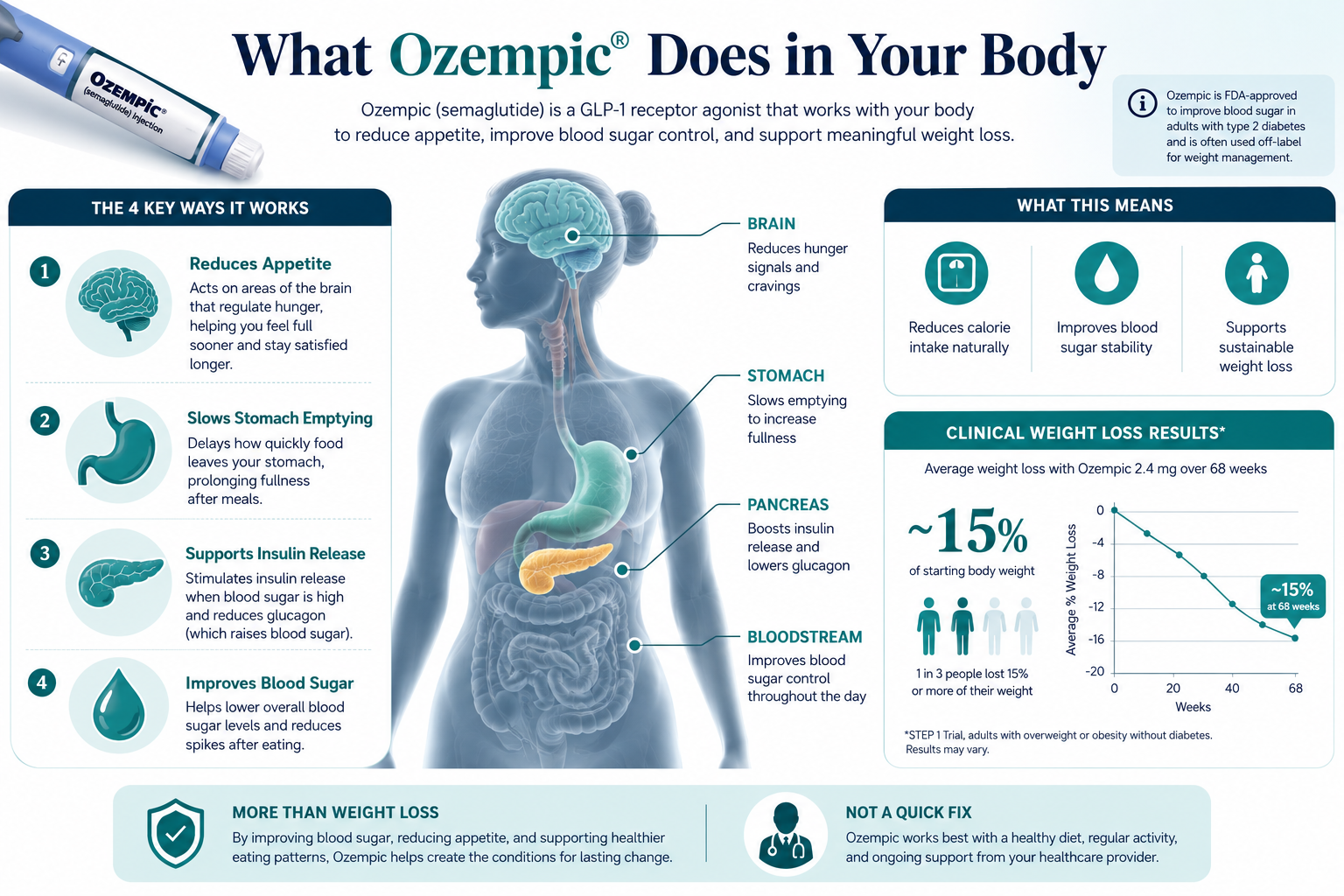
What Ozempic Weight Loss Actually Does in Your Body
Ozempic works by mimicking a natural gut hormone called GLP-1 (glucagon-like peptide-1), which signals your brain that you’re full, slows stomach emptying, and reduces food cravings. The result is a significant drop in calorie intake — not through willpower, but through biology.
Here’s what happens at the physiological level:
- Appetite suppression: GLP-1 receptors in the brain reduce hunger signals, making it easier to eat less without feeling deprived.
- Slower gastric emptying: Food stays in your stomach longer, extending feelings of fullness after meals.
- Blood sugar regulation: Ozempic reduces post-meal glucose spikes, which also helps reduce cravings for high-sugar foods.
- Reduced reward-driven eating: Early research suggests semaglutide may dampen the brain’s dopamine response to food, reducing emotional eating.
For a deeper look at how GLP-1 medications work at the cellular level, see this GLP-1 mechanism explainer.
How Much Weight Can You Actually Lose on Ozempic?
Most adults using semaglutide for weight loss lose between 10% and 15% of their starting body weight over 12 to 16 months. For someone weighing 220 pounds, that’s roughly 22 to 33 pounds.
The landmark STEP trials (published in the New England Journal of Medicine) tested semaglutide 2.4mg (Wegovy’s dose) and found average weight loss of about 14.9% over 68 weeks. Ozempic’s maximum approved dose is 2mg, which produces slightly less weight loss on average — closer to 10–12% in real-world use.
Factors that affect your results:
| Factor | Impact on Weight Loss |
|---|---|
| Starting dose vs. maintenance dose | Higher doses produce more loss |
| Diet quality during treatment | Poor diet blunts results significantly |
| Exercise habits | Resistance training preserves muscle mass |
| Duration of treatment | Results compound over 12–18 months |
| Metabolic health baseline | Insulin resistance can slow early progress |
Realistic expectation: Most people lose 1–2 pounds per week in the first 12 weeks, then the rate slows. Don’t expect dramatic results in the first month.
Is Ozempic Safe for Weight Loss If You’re Not Diabetic?
Yes, semaglutide is generally considered safe for adults without diabetes who meet the clinical criteria for obesity or overweight with a weight-related condition. However, Ozempic itself is not FDA-approved for this use — Wegovy is. Prescribing Ozempic for weight loss in non-diabetic patients is legal but off-label.
Who is typically considered a good candidate (non-diabetic):
- BMI of 30 or higher (obesity)
- BMI of 27 or higher with at least one weight-related condition (hypertension, sleep apnea, high cholesterol)
- No personal or family history of medullary thyroid carcinoma or MEN2 syndrome
- No history of pancreatitis
Who should not take Ozempic for weight loss:
- Pregnant or breastfeeding women
- People with a personal or family history of thyroid C-cell tumors
- Those with severe kidney or liver disease (use with caution, not absolute contraindication)
- Anyone with a history of pancreatitis or gallbladder disease (discuss carefully with a doctor)
What Are the Side Effects of Using Ozempic for Weight Loss?
The most common side effects are gastrointestinal and tend to peak during the first 4–8 weeks of treatment or after each dose increase. They usually improve as your body adjusts.
Common side effects (mild to moderate):
- Nausea (most frequently reported)
- Vomiting
- Diarrhea or constipation
- Stomach discomfort or bloating
- Reduced appetite (this is also the intended effect)
Less common but serious side effects to watch for:
- Pancreatitis (severe abdominal pain — stop medication and seek care immediately)
- Gallbladder problems, including gallstones
- Rapid heart rate
- Vision changes (in people with diabetic retinopathy)
- Injection site reactions
Common mistake: Jumping too quickly through the dose escalation schedule. Going from 0.25mg to 1mg too fast dramatically increases nausea risk. Follow your prescriber’s titration plan — slow and steady reduces side effects significantly.
How Quickly Do People Typically See Ozempic Weight Loss Results?
Most people notice appetite suppression within the first 1–2 weeks, but visible scale changes typically appear between weeks 4 and 8. Meaningful weight loss — 5% or more of body weight — usually happens around the 12-week mark.
Typical timeline:
- Weeks 1–4: Reduced hunger, possible nausea, minor scale movement (1–4 lbs)
- Weeks 4–12: Consistent weekly loss of 1–2 lbs; nausea often subsides
- Months 3–6: Steady progress; 10–15 lbs lost for many users
- Months 6–12: Plateau possible; dose adjustment may help
- 12+ months: Maximum weight loss typically achieved around month 16
Ozempic vs. Wegovy: What’s the Actual Difference?
Ozempic and Wegovy contain the exact same active ingredient — semaglutide — but they differ in approved dosage, FDA indication, and price. Wegovy is FDA-approved specifically for chronic weight management. Ozempic is approved for type 2 diabetes.
| Feature | Ozempic | Wegovy |
|---|---|---|
| Active ingredient | Semaglutide | Semaglutide |
| FDA indication | Type 2 diabetes | Chronic weight management |
| Max approved dose | 2mg weekly | 2.4mg weekly |
| Typical monthly cost | ~$900–$1,000 | ~$1,300–$1,600 |
| Insurance coverage | Better (diabetes) | Inconsistent |
Choose Ozempic if: Wegovy is unavailable in your area, your insurance covers Ozempic for diabetes, or your prescriber recommends it based on your health history.
Choose Wegovy if: You want the FDA-approved weight loss indication and your insurance covers it.
For a full cost breakdown, see our guide on weight loss injection costs in 2026.
How Much Does Ozempic Cost Without Insurance?
Without insurance, Ozempic costs approximately $900 to $1,000 per month at retail pharmacies in 2026. Wegovy runs even higher at $1,300–$1,600 per month. These prices put brand-name semaglutide out of reach for many people.
More affordable options:
- GoodRx coupons: Can reduce Ozempic to $800–$850/month in some cases. See our GoodRx Ozempic price guide for current rates.
- Manufacturer savings cards: Novo Nordisk offers savings programs for eligible patients, but income and insurance limits apply.
- Compounded semaglutide: Telehealth platforms like DirectMeds GLP1 Semaglutide offer compounded semaglutide at a fraction of brand-name prices — often $150–$300/month.
- Online prescription services: See what you’d actually pay through our online Ozempic prescription cost guide.
Does Insurance Cover Ozempic for Weight Loss?
Insurance coverage for Ozempic depends almost entirely on your diagnosis. If you have type 2 diabetes, most commercial insurance plans and Medicare Part D cover Ozempic. If you’re seeking it purely for weight loss without a diabetes diagnosis, coverage is far less consistent.
Coverage reality in 2026:
- With type 2 diabetes: Most major insurers cover Ozempic; copays vary ($25–$150/month with coverage)
- For weight loss only (no diabetes): Coverage is denied by many plans; Wegovy coverage has improved but remains inconsistent
- Medicare: Covers Ozempic for diabetes; Wegovy coverage expanded under the Inflation Reduction Act provisions but varies by plan
- Medicaid: Coverage varies by state
Action step: Call your insurer’s pharmacy benefits line before your appointment. Ask specifically whether semaglutide is covered for obesity (ICD-10 code E66) versus diabetes (E11).
For a comparison of the least expensive GLP-1 options, including compounded alternatives, we’ve done the research for you.
How Do I Get a Prescription for Ozempic for Weight Loss?
You can get an Ozempic or semaglutide prescription through your primary care doctor, an endocrinologist, or a telehealth platform. Telehealth has made access significantly faster and more affordable in 2026.
Steps to get a prescription:
- Check your eligibility: BMI 30+ or BMI 27+ with a weight-related condition
- Choose a provider: In-person doctor, or a telehealth platform like DirectMeds
- Complete a health intake: Medical history, current medications, weight history
- Consult with a licensed provider: Typically a 15–30 minute video or async visit
- Receive your prescription: Sent to a pharmacy or compounding pharmacy directly
- Begin dose titration: Start at 0.25mg weekly and increase per your prescriber’s schedule

Get started with DirectMeds GLP1 Semaglutide — fast online consultation, no insurance required.
Can Men and Women Both Use Ozempic for Weight Loss?
Yes, both men and women use semaglutide for weight loss, and clinical trials included both sexes. Women tend to lose a slightly lower percentage of body weight on average compared to men in some studies, but both groups achieve clinically meaningful results.
Sex-specific considerations:
- Women: Hormonal factors (menopause, PCOS) can affect baseline metabolism and response rate. Women with PCOS often see additional benefits from semaglutide due to its insulin-sensitizing effects.
- Men: Men typically lose weight faster initially due to higher baseline muscle mass and metabolic rate, but long-term outcomes are comparable.
Neither sex is excluded from treatment. Eligibility is based on BMI and health history, not gender.
Are There Natural Alternatives to Ozempic for Weight Loss?
No natural supplement replicates the clinical weight loss results of semaglutide. However, several lifestyle strategies and supplements support modest weight loss and may complement a GLP-1 program.
Evidence-supported lifestyle approaches:
- High-protein diet: Reduces hunger and preserves muscle during caloric deficit
- Resistance training: Maintains metabolic rate during weight loss
- Sleep optimization: Poor sleep increases ghrelin (hunger hormone) and undermines results
- Fiber-rich eating: Slows digestion similarly (but far less powerfully) to GLP-1 drugs
Supplements with limited but real evidence:
- Berberine (modest blood sugar and weight effects)
- Glucomannan (fiber-based appetite suppression)
- Green tea extract (minor metabolic boost)
None of these produce 10–15% body weight loss. If you’re looking for meaningful results, a personalized weight loss meal plan combined with a GLP-1 medication offers the strongest evidence-based approach.
What Happens If You Stop Taking Ozempic?
Most people regain a significant portion of lost weight within 6–12 months of stopping Ozempic. A 2022 study published in Diabetes, Obesity and Metabolism found that participants regained about two-thirds of their lost weight within one year of discontinuing semaglutide.
Why weight returns:
- GLP-1 suppression ends, so appetite returns to baseline
- Metabolic adaptations from weight loss persist (your body burns fewer calories at the new lower weight)
- Without the medication’s appetite control, caloric intake often creeps back up
To minimize regain after stopping:
- Build strong dietary habits before discontinuing
- Maintain a resistance training routine
- Work with your doctor on a tapering plan rather than abrupt discontinuation
- Consider transitioning to a lower maintenance dose rather than stopping entirely
Common Mistakes People Make When Starting Ozempic
Starting Ozempic without proper guidance leads to unnecessary side effects and slower results. Here are the most frequent errors — and how to avoid them.
- Skipping the titration schedule: Starting at a higher dose causes severe nausea. Always begin at 0.25mg for 4 weeks.
- Not adjusting diet: Ozempic suppresses appetite but doesn’t eliminate poor food choices. High-fat, greasy foods worsen nausea dramatically.
- Expecting instant results: Some people see little change in the first 2–3 weeks and quit. Give it at least 12 weeks.
- Ignoring hydration: Reduced appetite can also reduce fluid intake. Dehydration worsens side effects.
- Not tracking food intake: Even with reduced hunger, unconscious eating can stall progress.
- Stopping abruptly without a plan: Weight regain is nearly guaranteed without a transition strategy.
FAQ
Is Ozempic the same as Wegovy?
Ozempic and Wegovy contain the same active ingredient — semaglutide — but differ in FDA-approved indication and maximum dose. Ozempic (max 2mg) is approved for type 2 diabetes; Wegovy (max 2.4mg) is approved for chronic weight management in adults with obesity.
How long does it take Ozempic to work for weight loss?
Most people notice appetite reduction within 1–2 weeks. Measurable weight loss (5% or more of body weight) typically appears around the 12-week mark. Maximum results usually occur between months 12 and 16.
Can I get Ozempic online without seeing a doctor in person?
Yes. Telehealth platforms allow licensed providers to prescribe semaglutide after a virtual consultation. DirectMeds GLP1 Semaglutide offers this service with no in-person visit required.
What is the starting dose of Ozempic for weight loss?
The standard starting dose is 0.25mg injected subcutaneously once weekly for the first 4 weeks. This is a titration dose — not a therapeutic dose — designed to minimize side effects before increasing to 0.5mg, then 1mg, and potentially higher.
Does Ozempic work without diet and exercise?
Ozempic produces weight loss even without major lifestyle changes, but results are significantly better with dietary improvements and physical activity. Medication alone is not a long-term solution.
Is compounded semaglutide as effective as brand-name Ozempic?
Compounded semaglutide contains the same active molecule as Ozempic. Effectiveness depends on dosing accuracy and the quality of the compounding pharmacy. Always use an FDA-registered 503B compounding facility.
How do I compare semaglutide costs across telehealth platforms?
Our semaglutide cost comparison guide breaks down what you’ll pay at major telehealth providers in 2026, including DirectMeds, Hims, and Ro.
What’s the difference between compounded semaglutide and Ozempic?
Compounded semaglutide is a pharmacy-prepared version of the same drug, typically at lower cost and without the brand name. For a detailed breakdown, see our guide on how compounded semaglutide differs from Ozempic.
Can I use Ozempic if I have a thyroid condition?
Ozempic carries a black box warning for a risk of thyroid C-cell tumors observed in animal studies. People with a personal or family history of medullary thyroid carcinoma or MEN2 syndrome should not use semaglutide. Discuss your thyroid history with your prescriber before starting.
Is there a cheaper alternative to Ozempic for weight loss?
Yes. Compounded semaglutide through telehealth platforms like DirectMeds GLP1 Semaglutide can cost 70–80% less than brand-name Ozempic, making it the most accessible option for people without insurance coverage.
7 Best GLP-1 Providers Ranked: Accreditation, Flexibility & Support Compared (2026 Update)
32,000+ Patients Can't All Be Wrong: See the Top-Rated GLP-1 Providers: Compared on accreditation, plan flexibility, and patient support — updated for 2026.
BMI MD GLP-1 Microdosing Plan
- Specialized microdosing options (sublingual drops or low-dose injections)
- Ideal for maintaining weight or tapering off higher doses safely
- Fully bundled plan with no hidden monthly platform memberships
DirectMeds Weight Loss Solutions
- Sourced from accredited, state-licensed 503A compounding pharmacies
- No-frills high-volume savings passed directly to the patient
- Includes clinical consultation and cold-chain shipping updates
MEDVi Flat-Rate Telehealth
- Flat monthly rate holds steady even at maximum maintenance doses
- No dosage upcharges or graduation fee penalties
- Offers both injectable and advanced oral thin-film delivery options
Gala GLP-1 Care Program
- All-inclusive plan with no standalone membership costs
- Continuous text-based messaging access with state-licensed clinicians
- Temperature-controlled, cold-chain medication shipping included
Measured GLP-1 Metabolic Health
- Comprehensive metabolic health screening and expert intake analysis
- Predictable long-term budgeting with stable plan pricing
- High-end responsive dashboard with integrated diagnostic support
Refills GLP-1 (TryRefills Plan)
- Flat rate holds steady as titration scales up
- Includes clinical guides for active side-effect management
- Bundles in foundational nutritional strategies alongside medication
AltRx GLP-1 Transactional Reorders
- Zero recurring auto-billing — pay entirely on a transactional basis
- Rapid text-to-order format saves time for experienced patients
- Provides both injectable forms and fast-dissolving tablet variations
Conclusion
Ozempic weight loss is real, clinically validated, and achievable for most eligible adults — but it works best as part of a broader health strategy, not a standalone fix. You can expect to lose 10–15% of your body weight over 12–16 months, with results appearing gradually from week 4 onward. Side effects are manageable with proper dose titration, and both men and women respond well to treatment.
The biggest barriers remain cost and access. Brand-name Ozempic runs close to $1,000/month without insurance, but compounded semaglutide has changed the equation for millions of people in 2026.
Your next steps:
- Check your BMI and any weight-related conditions to confirm eligibility
- Talk to your doctor or a telehealth provider about whether semaglutide is appropriate for you
- Compare costs — brand-name vs. compounded — before committing
- Build your diet and exercise habits now, before your first dose
- Set realistic expectations: 12 weeks minimum before judging results
Medical References
The STEP 1 trial results on semaglutide and weight loss were published in the New England Journal of Medicine and remain the foundational evidence for semaglutide’s efficacy in non-diabetic adults.
The FDA prescribing information for Wegovy (semaglutide) outlines approved indications, dosing schedules, contraindications, and safety warnings for semaglutide in obesity management.
Research on weight regain after stopping semaglutide published in Diabetes, Obesity and Metabolism documents the two-thirds weight regain observed within one year of discontinuation.
The American Diabetes Association Standards of Care provide clinical guidelines on GLP-1 receptor agonist use, including semaglutide, for both diabetes and weight management.
A systematic review of GLP-1 receptor agonists for obesity published in The Lancet Diabetes & Endocrinology evaluates comparative efficacy and safety across drug classes including semaglutide and tirzepatide.

With over 13 years of experience in holistic health blogging, I aim to help you navigate your wellness journey with honest insights, expert-backed advice, and a sprinkle of real-world practicality.
Certified Wellness Writer | Herbal Nutrition Advocate | Wellness Research Enthusiast


