
GLP-1 Breakfast Ideas: 30 Healthy High-Protein Breakfasts (2026)

}
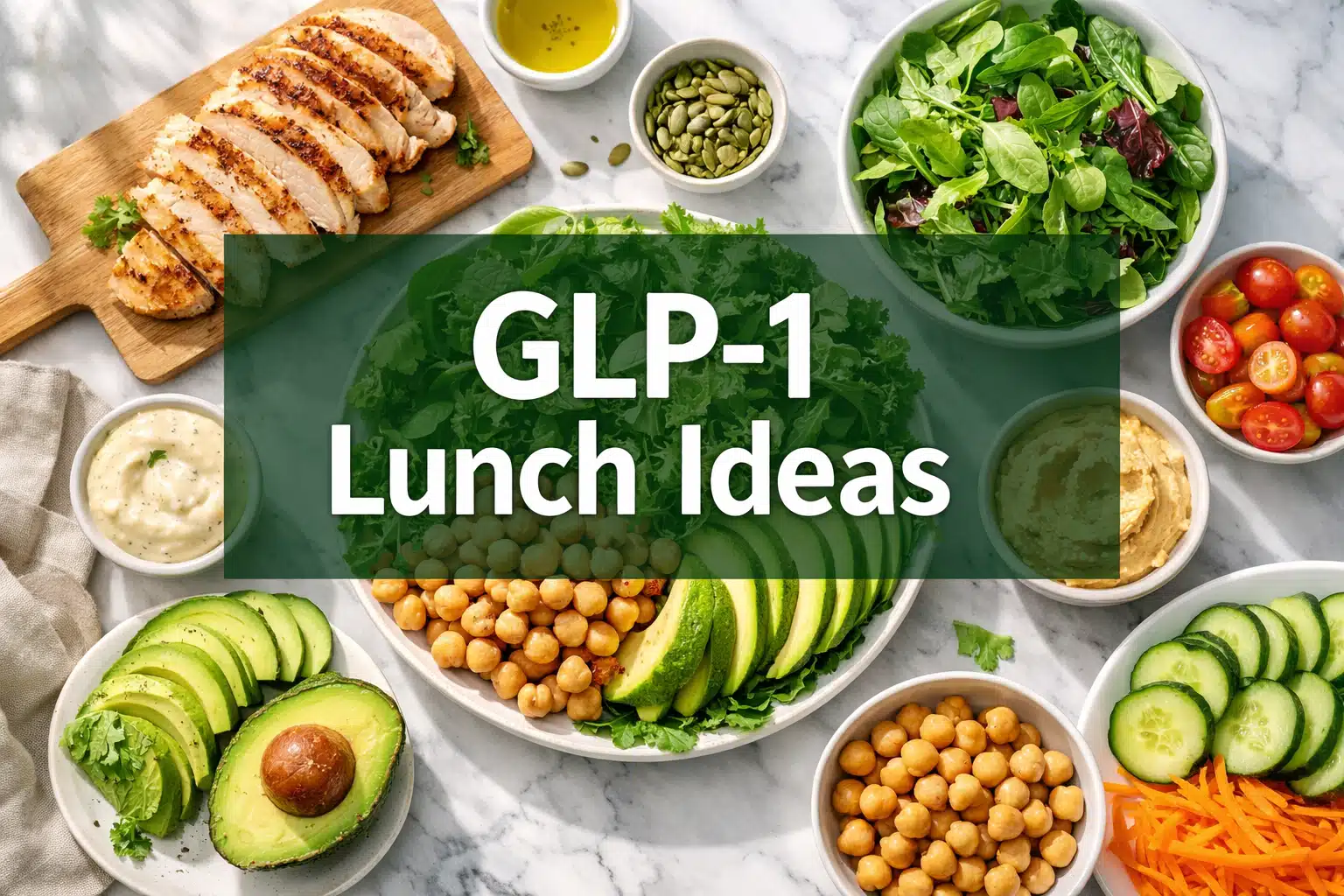
Last updated: July 26, 2026
Quick Answer
The best GLP-1 lunch ideas center on high-protein, high-fiber, low-volume meals that keep you full without triggering nausea. Aim for 20 to 30 grams of protein, plenty of non-starchy vegetables, and portions that feel satisfying rather than stuffed. Foods like grilled chicken, salmon, lentils, eggs, and leafy greens work well because they digest steadily and support the appetite-suppressing effects of GLP-1 medications like semaglutide and tirzepatide.
7 Best GLP-1 Providers Ranked: Accreditation, Flexibility & Support Compared (2026 Update)
32,000+ Patients Can't All Be Wrong: See the Top-Rated GLP-1 Providers. We compared the leading online GLP-1 providers based on program features, clinical support, convenience, and overall value.
BMI MD GLP-1 Microdosing Plan
- Specialized microdosing options, including sublingual drops and low-dose injections
- Designed for people interested in maintaining weight or gradually adjusting treatment
- Bundled program structure without a separate monthly platform membership
- Online access makes the process convenient from home

DirectMeds Weight Loss Solutions
- Online weight-loss program with a straightforward patient experience
- Compounded medication options through state-licensed compounding pharmacies
- Includes clinical consultation as part of the process
- Provides shipping updates to help patients track their orders
MEDVi Flat-Rate Telehealth
- Flat-rate telehealth approach designed for easier budgeting
- No dosage-based pricing increases within the advertised program structure
- Offers injectable and oral thin-film delivery options
- Includes medical screening and asynchronous provider consultations
Gala GLP-1 Care Program
- Text-based access to state-licensed clinicians
- Cold-chain medication shipping included in the program
- Month-to-month program structure
- Designed for people who value convenient ongoing support
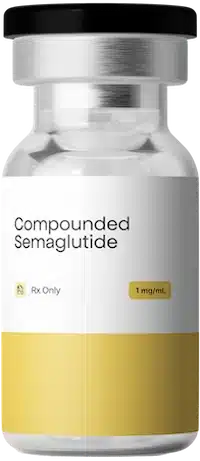
Measured GLP-1 Metabolic Health
- Comprehensive metabolic health screening and intake analysis
- Designed around longer-term metabolic health management
- Responsive dashboard with integrated health tracking tools
- Useful option for patients who value a more data-focused experience
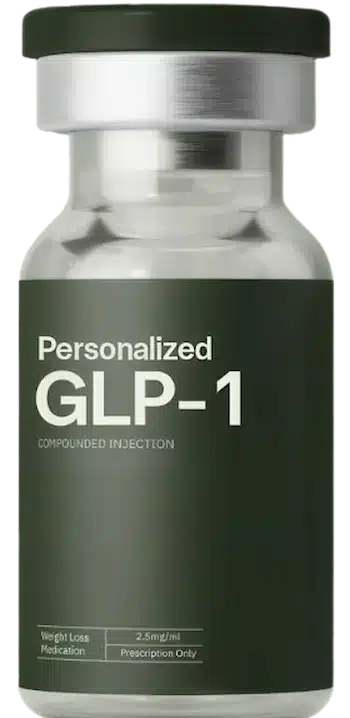
Refills GLP-1 (TryRefills Plan)
- Clinical guidance designed to help patients manage common treatment concerns
- Includes foundational nutritional strategies alongside medication
- Designed around predictable ongoing treatment
- No hidden startup or processing fees according to the program information provided
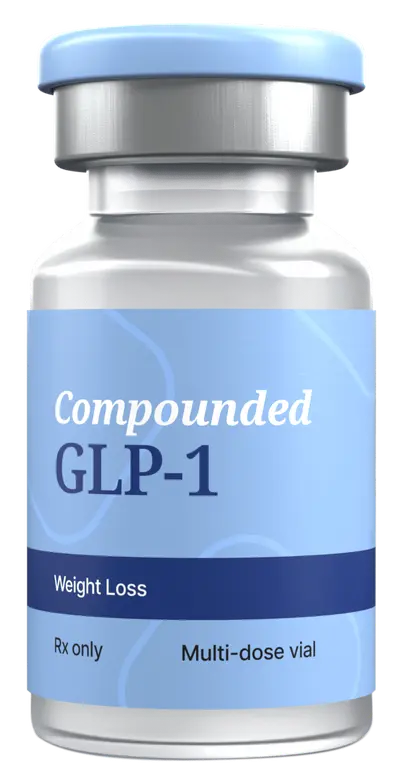
AltRx GLP-1 Transactional Reorders
- Transactional reorder model without recurring auto-billing
- Designed for patients who already understand their treatment routine
- Fast text-to-order process for convenient reorders
- Offers injectable and fast-dissolving tablet variations
Key Takeaways
- Prioritize protein at lunch: 20 to 30 grams per meal helps preserve muscle mass while losing weight on GLP-1 medications.
- Keep portions small and dense in nutrients, GLP-1 drugs slow gastric emptying, so a large meal can cause discomfort or nausea.
- Avoid greasy, fried, or heavily processed foods at lunch; they are the most common triggers for GLP-1-related nausea and reflux.
- High-fiber foods like legumes, leafy greens, and vegetables support digestion and help prevent constipation, a frequent side effect.
- You do not need special “GLP-1 meals”, real whole foods prepared simply are the most effective and affordable approach.
- Meal prepping 4 to 5 lunches on Sunday dramatically reduces decision fatigue and helps you stay on track during the week.
- Eating out is manageable: order grilled proteins, ask for dressings on the side, and skip the bread basket.
- Nausea after lunch is usually caused by eating too fast, eating too much, or choosing high-fat foods, not the food type itself.
- Vegetarian and vegan GLP-1 lunches are entirely practical with the right protein sources (eggs, legumes, tofu, Greek yogurt).
- Timing matters: most clinicians suggest waiting at least 30 to 60 minutes after your injection before eating a full meal, but this varies by individual.
What Should I Eat for Lunch on GLP-1 Medication
The core principle for GLP-1 lunch ideas is simple: eat less, but make every bite count. GLP-1 receptor agonists like semaglutide (Ozempic, Wegovy) and tirzepatide (Mounjaro, Zepbound) slow gastric emptying and reduce hunger signals, which means your stomach stays full longer. That’s a benefit, but it also means that poor food choices hit harder than they would off medication.
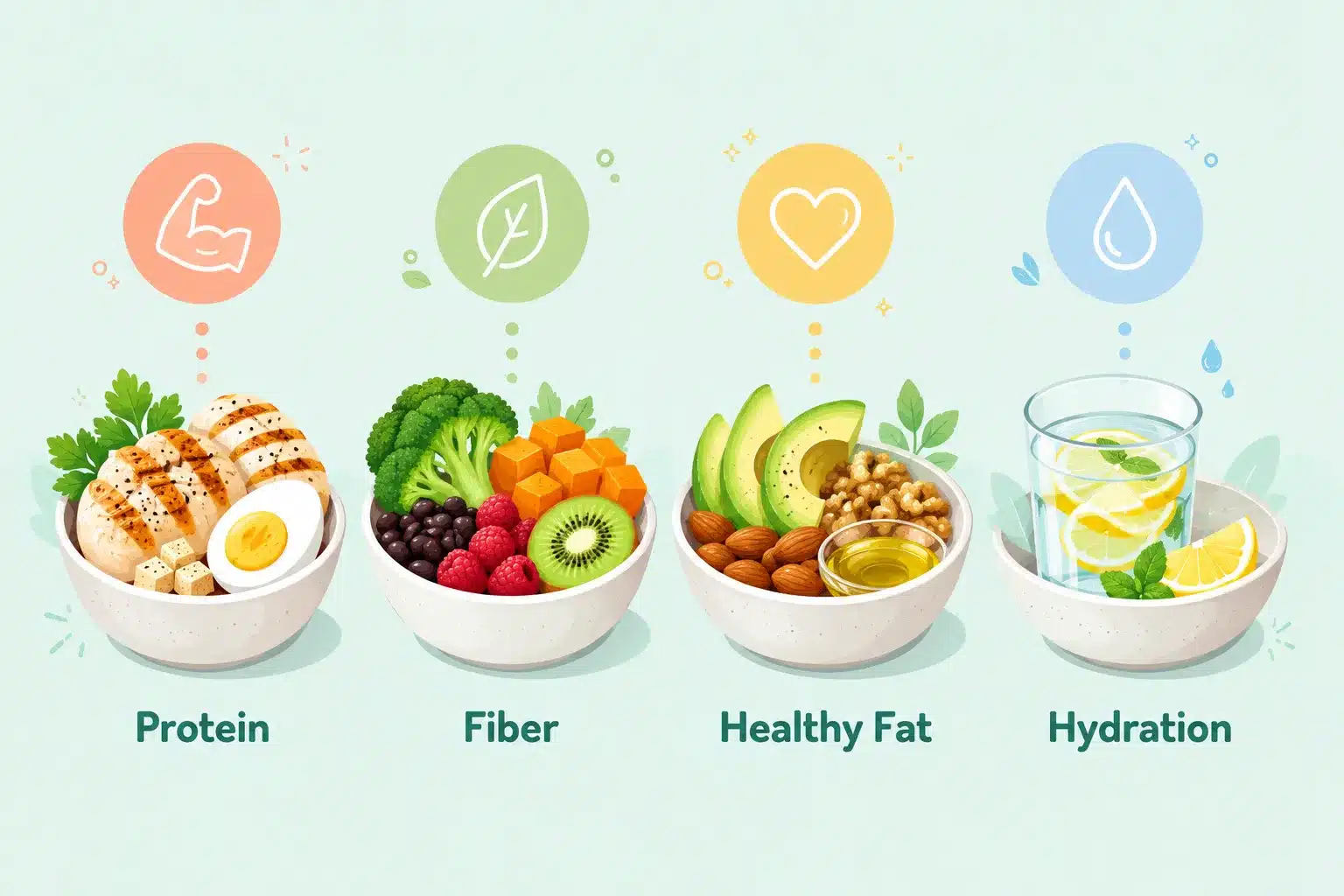
What to build your lunch around:
- Lean protein: Grilled chicken breast, canned tuna, hard-boiled eggs, salmon, shrimp, cottage cheese, or turkey.
- Non-starchy vegetables: Spinach, arugula, cucumber, broccoli, zucchini, bell peppers, and tomatoes.
- Healthy fats (small amounts): Avocado, olive oil, a small handful of nuts, or a slice of cheese.
- Complex carbohydrates (optional, small portion): Quinoa, lentils, chickpeas, or a half-cup of brown rice.
- Hydration: Water, sparkling water, or herbal tea with your meal, not sugary drinks.
What to minimize or avoid:
- Fried or heavily breaded foods
- Creamy sauces and high-fat dressings
- White bread, white rice, and sugary drinks
- Large portions of any single food
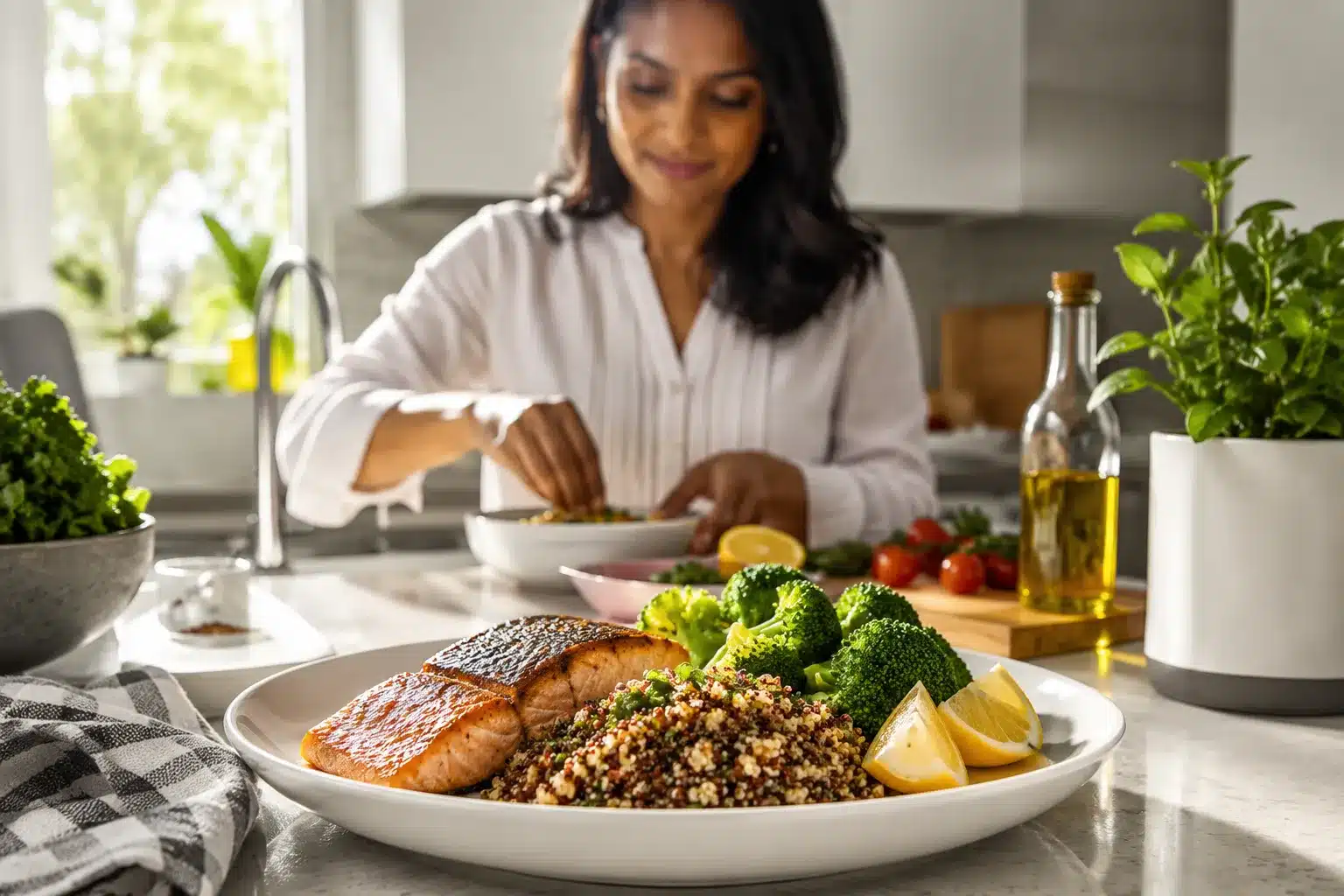
A practical example of a solid GLP-1 lunch: 4 ounces of grilled salmon on a bed of arugula with cucumber, cherry tomatoes, a quarter avocado, and a drizzle of olive oil and lemon. This meal delivers roughly 28 grams of protein, plenty of fiber, and healthy fats without overwhelming a stomach that empties more slowly than usual.
For a broader look at how GLP-1 medications affect your body and what to expect over time, the 6-week Ozempic weight loss results guide offers useful context.
Best High-Protein, Low-Carb GLP-1 Lunch Ideas
High-protein, lower-carb lunches are the most effective approach for GLP-1 users because protein is the most satiating macronutrient and helps preserve lean muscle during calorie restriction. Carbohydrates are not the enemy, but refined carbs digest quickly and can spike blood sugar, which partially counteracts the glucose-stabilizing effects of GLP-1 drugs.
Top high-protein GLP-1 lunch options:
| Lunch Idea | Approx. Protein | Key Benefit |
|---|---|---|
| Grilled chicken salad with olive oil | 30-35g | High protein, easy to prep |
| Tuna-stuffed avocado halves | 25-28g | No cooking required |
| Turkey lettuce wraps with hummus | 22-26g | Low-carb, portable |
| Egg salad on cucumber rounds | 18-22g | Budget-friendly |
| Cottage cheese bowl with veggies | 20-24g | Quick assembly |
| Lentil and spinach soup | 18-22g | High fiber + protein |
| Shrimp stir-fry with zucchini noodles | 26-30g | Low-carb, filling |
| Greek yogurt chicken wrap (small tortilla) | 28-32g | Balanced macros |
Why protein matters so much on GLP-1 medications:
GLP-1 drugs reduce overall calorie intake. When calories drop significantly, the body can break down muscle for energy, a process called muscle catabolism. Research published in journals covering obesity pharmacotherapy consistently highlights that adequate protein intake (generally 1.2 to 1.6 grams per kilogram of body weight per day) helps minimize muscle loss during GLP-1-assisted weight loss. Spreading that protein across meals, including lunch, is the most practical way to hit that target.
Choose this approach if: You are actively losing weight on GLP-1 medication and want to protect muscle mass while keeping carbohydrate intake moderate.
How Much Should I Eat for Lunch While Taking GLP-1
Most GLP-1 users find that their natural hunger signals drop significantly, especially after the first few weeks on medication. A reasonable lunch portion is roughly 300 to 450 calories for most adults, though this varies based on your total daily calorie target, activity level, and how far along you are in your dose titration.
Practical portion guidance:
- Protein: About the size of your palm (3 to 5 ounces of cooked meat or fish, or 2 to 3 eggs).
- Vegetables: Fill half your plate, this is essentially unlimited for non-starchy options.
- Healthy fat: A thumb-sized portion (about 1 tablespoon of olive oil, or a quarter avocado).
- Complex carbs (if included): No more than a quarter of your plate, roughly a half-cup cooked.
Common mistake: Skipping lunch entirely because you’re not hungry. GLP-1 medications can suppress appetite so effectively that some people forget to eat. Skipping meals leads to nutrient deficiencies, muscle loss, and often rebound overeating later in the day. Even if you’re not hungry, eating a small, protein-rich lunch keeps your metabolism supported and your nutrient intake consistent.
Edge case: If you are in the early weeks of dose escalation and feel nauseous at lunchtime, a small protein-rich snack (like cottage cheese or a hard-boiled egg) is better than skipping the meal entirely.
Can I Eat Normal Food on GLP-1 or Do I Need Special Meals
You do not need special meals, supplements, or branded “GLP-1 foods” to eat well on this medication. The fundamentals of a healthy diet, lean proteins, vegetables, whole grains, and healthy fats, apply just as well here. What changes is portion size and the importance of avoiding foods that commonly trigger side effects.
The idea that you need a specific “GLP-1 diet plan” sold by a company is largely a marketing concept. Real, whole foods prepared at home are the most cost-effective and nutritionally complete approach. That said, some people find structured meal planning helpful for staying consistent, and there are legitimate meal delivery services that can reduce the burden of cooking.
If you are exploring structured support alongside your medication, reviewing GLP-1 medication options and their costs can help you understand the full picture of what your program involves.
What “normal food” works well on GLP-1:
- Grilled or baked proteins (chicken, fish, turkey, eggs)
- Salads with a light dressing
- Soups and stews (broth-based, not cream-based)
- Grain bowls with a small portion of rice or quinoa
- Sandwiches on one slice of whole-grain bread with lean fillings
What “normal food” tends to cause problems:
- Fast food burgers and fries
- Pizza (high fat + high refined carbs)
- Creamy pasta dishes
- Fried chicken or fish
GLP-1 Lunch Ideas That Don’t Cause Nausea
Nausea is one of the most common side effects of GLP-1 medications, and lunch is a frequent trigger point, especially if eaten too quickly, in too large a portion, or with high-fat foods. The good news is that nausea is largely avoidable with the right food choices and eating habits.
Foods least likely to cause nausea on GLP-1:
- Plain grilled chicken or fish with steamed vegetables
- Broth-based soups (chicken soup, miso soup, vegetable broth)
- Scrambled or hard-boiled eggs
- Plain Greek yogurt with berries
- Rice cakes with a thin layer of nut butter
- Cucumber and hummus
- Smoothies made with protein powder, spinach, and water or almond milk (if solid food is difficult)
Eating habits that reduce nausea:
- Eat slowly and chew thoroughly, GLP-1 medications slow digestion, so rushing a meal increases the chance of discomfort.
- Stop eating before you feel full. The satiety signal on GLP-1 can be delayed, meaning you may not feel “too full” until several minutes after you’ve already overeaten.
- Avoid lying down for at least 30 to 60 minutes after eating.
- Eat in an upright position and avoid eating while distracted.
- Keep meals warm rather than very hot or very cold, as extreme temperatures can aggravate nausea.
Why do I feel sick after eating lunch on GLP-1?
The most common reasons are eating too much, eating too fast, or choosing high-fat foods. GLP-1 drugs slow gastric emptying, meaning food sits in the stomach longer than usual. A meal that would have been fine before starting medication can now cause bloating, reflux, or nausea. High-fat foods slow emptying even further, compounding the effect. If nausea is persistent or severe, speak with your prescribing clinician, dose adjustments are sometimes appropriate.
What Foods Should I Avoid for Lunch on GLP-1
Certain foods consistently worsen GLP-1 side effects or undermine the medication’s effectiveness. Avoiding them at lunch, when you’re often eating away from home and under time pressure, makes a meaningful difference in how you feel throughout the afternoon.
Foods to avoid or minimize at lunch on GLP-1:
- Fried foods: French fries, fried chicken, tempura, and anything deep-fried dramatically slow gastric emptying and are the top trigger for nausea and reflux.
- High-fat sauces and dressings: Creamy Caesar dressing, Alfredo sauce, and mayo-heavy dips add significant fat without protein or fiber.
- Sugary drinks: Soda, fruit juice, and sweetened iced tea spike blood sugar rapidly and add empty calories when your total intake is already reduced.
- Refined carbohydrates: White bread, white pasta, and white rice digest quickly and can cause blood sugar swings that leave you feeling tired or hungry sooner.
- Carbonated drinks in large amounts: Some GLP-1 users find that carbonation worsens bloating and nausea, particularly in the first few months on medication.
- Alcohol: Alcohol at lunch is particularly problematic on GLP-1 medications, it can worsen nausea, affect blood sugar, and impair judgment around portion sizes.
- Very spicy foods: Spicy food doesn’t cause harm directly, but it can aggravate reflux or stomach discomfort in people already experiencing GLP-1 side effects.
Decision rule: If a food is fried, creamy, or heavily processed, it’s worth skipping at lunch, especially during the first three months on medication when side effects are most likely.
Easy GLP-1 Friendly Lunches That Aren’t Boring
One of the most common frustrations I hear from people on GLP-1 medications is that “healthy eating” starts to feel repetitive and joyless. It doesn’t have to be. The key is building a rotation of 8 to 10 lunches you genuinely enjoy, using varied cuisines, textures, and flavor profiles.
Flavor-forward GLP-1 lunch ideas by cuisine:
Mediterranean:
- Greek chicken bowl: diced grilled chicken, cucumber, tomato, kalamata olives, feta, and tzatziki over a small portion of farro
- Tuna Nicoise salad: canned tuna, green beans, hard-boiled egg, olives, and Dijon vinaigrette
Asian-inspired:
- Miso soup with tofu, edamame, and seaweed
- Sesame ginger chicken lettuce cups with shredded cabbage and carrots
- Vietnamese-style spring rolls (fresh, not fried) with shrimp and herbs
Mexican-inspired:
- Chicken taco bowl (no shell): seasoned chicken, black beans, salsa, avocado, and shredded lettuce
- Egg and black bean scramble with salsa verde
American comfort (lightened up):
- Turkey and avocado wrap in a small whole-grain tortilla
- Chicken soup with lots of vegetables and a small portion of barley
- Egg salad (made with Greek yogurt instead of mayo) on romaine lettuce leaves
The 10-minute rule: Keep at least three GLP-1 lunch options in your rotation that take under 10 minutes to prepare. On busy days, having a fast fallback prevents you from reaching for something less suitable.
GLP-1 Lunch Meal Prep Ideas for the Week
Meal prepping lunches for the week is one of the most practical strategies for GLP-1 users. When hunger is low and decision fatigue is high, having a ready-made lunch removes the temptation to order takeout or skip the meal entirely.
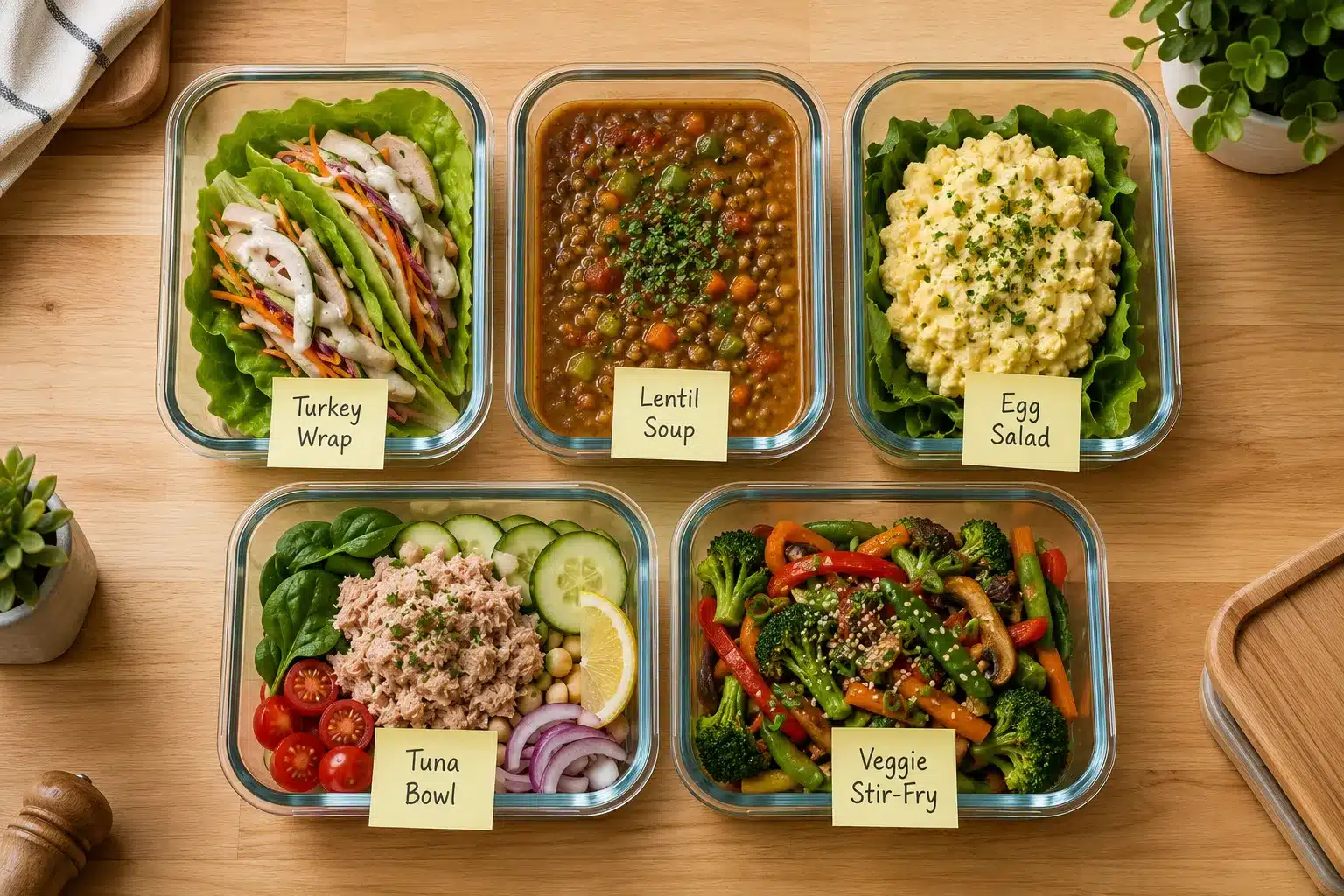
A simple 5-day GLP-1 lunch meal prep plan:
| Day | Lunch | Prep Time |
|---|---|---|
| Monday | Grilled chicken and roasted vegetable bowls | 20 min Sunday |
| Tuesday | Lentil and spinach soup (batch-cooked) | 30 min Sunday |
| Wednesday | Tuna-stuffed avocado (assemble fresh) | 5 min |
| Thursday | Turkey lettuce wraps with hummus | 10 min |
| Friday | Leftover chicken repurposed as a salad | 5 min |
Meal prep checklist for GLP-1 lunches:
- Cook one large batch of protein (grilled chicken, hard-boiled eggs, or baked salmon) on Sunday.
- Wash and chop vegetables in advance and store in airtight containers.
- Prepare one batch of a grain or legume (lentils, quinoa, or chickpeas) for the week.
- Portion lunches into individual containers so they’re grab-and-go ready.
- Keep a few “emergency” options on hand: canned tuna, cottage cheese, and pre-washed salad greens for days when prep runs out.
Storage tip: Most cooked proteins keep well in the refrigerator for 3 to 4 days. Soups and stews can be frozen in individual portions for up to 3 months.
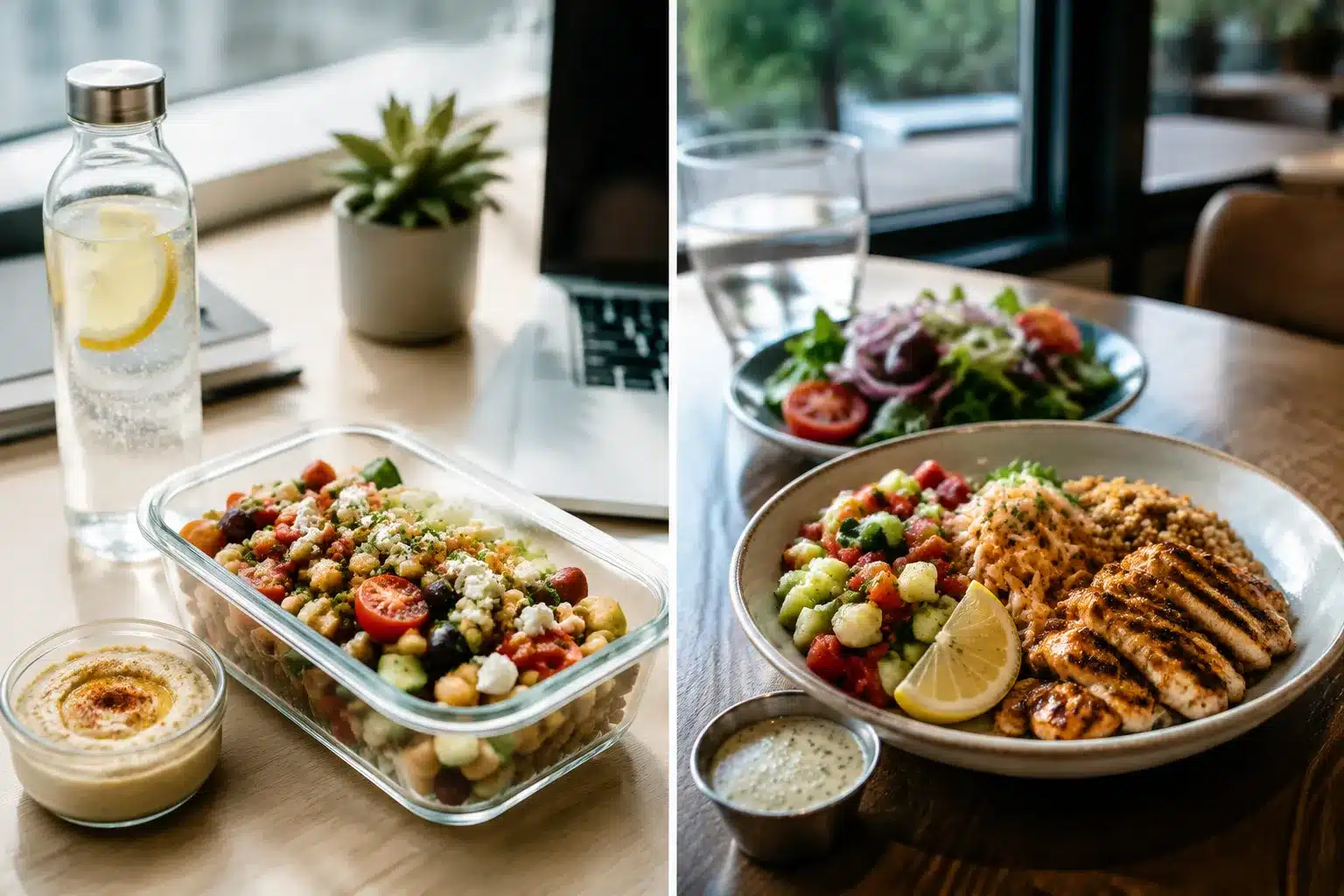
Best GLP-1 Lunches When Eating Out or at Work
Eating out on GLP-1 medication is entirely manageable with a few simple strategies. The goal is to find menu items that are high in protein, moderate in fat, and not fried, which is easier than it sounds at most restaurants.
Best restaurant orders for GLP-1 users:
- Grilled protein + salad: Most restaurants offer grilled chicken, fish, or shrimp over salad. Ask for dressing on the side and skip croutons.
- Soup and a side salad: Broth-based soups (minestrone, chicken noodle, lentil) paired with a small salad make a filling, low-volume lunch.
- Sushi (in moderation): Sashimi, edamame, and miso soup are excellent choices. Limit rice-heavy rolls.
- Grain bowls: Chipotle-style bowls with grilled protein, beans, salsa, and guacamole (skip the rice or ask for a small portion).
- Deli or sandwich shops: Order on one slice of bread or as a lettuce wrap; choose turkey, tuna, or grilled chicken.
At-work lunch strategies:
- Keep a “desk drawer kit” with shelf-stable GLP-1 friendly options: individual packets of nut butter, canned tuna, rice cakes, and protein bars (look for bars with at least 15 grams of protein and under 10 grams of sugar).
- Invest in a good insulated lunch bag so you can bring meal-prepped lunches from home.
- If your workplace has a cafeteria, identify 2 to 3 reliable options in advance rather than deciding under pressure.
GLP-1 Lunch Ideas on a Budget
Eating well on GLP-1 medication does not require expensive specialty foods or meal delivery subscriptions. The most budget-friendly GLP-1 lunches rely on whole foods that are naturally affordable: eggs, canned fish, legumes, frozen vegetables, and seasonal produce.
Most affordable high-protein GLP-1 lunch ingredients (estimated 2026 prices):
- Canned tuna or sardines: approximately $1.50 to $2.50 per can, providing 20 to 25 grams of protein
- Eggs: roughly $0.25 to $0.40 per egg depending on region
- Dried lentils: about $1.50 per pound, yielding multiple servings
- Frozen vegetables (broccoli, spinach, edamame): $1.50 to $3.00 per bag
- Cottage cheese: approximately $0.50 to $0.75 per serving
- Canned chickpeas: around $1.00 per can
Budget GLP-1 lunch ideas under $3 per serving:
- Egg salad (made with Greek yogurt) on cucumber slices: roughly $1.50
- Lentil soup with spinach and canned tomatoes: approximately $1.80 per serving
- Tuna and white bean salad with olive oil and lemon: around $2.50
- Scrambled eggs with frozen spinach and feta: approximately $1.75
- Chickpea and cucumber salad with olive oil and herbs: about $2.00
Money-saving tip: Buy proteins in bulk when on sale and freeze them in individual portions. A large bag of frozen chicken breasts, portioned and frozen at home, is consistently one of the cheapest per-gram protein sources available.
How Long After Taking GLP-1 Should I Eat Lunch
There is no universal rule about how long to wait between a GLP-1 injection and eating lunch, because injection timing varies widely. Most people take weekly GLP-1 injections (semaglutide or tirzepatide) on a set day of the week, so the injection and lunch rarely coincide directly.
What matters more than injection timing:
- Nausea management: If you inject on a day when you plan to eat a larger lunch, consider injecting in the evening to minimize overlap with peak nausea periods (which typically occur in the first 24 to 48 hours after injection for some people).
- Meal timing relative to hunger: Because GLP-1 medications suppress appetite, some users find they are genuinely not hungry at typical lunch hours. Eating a small protein-rich meal at whatever time hunger does appear (even if it’s 2 or 3 pm) is better than forcing a meal you don’t want.
- Daily GLP-1 medications (like liraglutide/Victoza): If you take a daily injection, most prescribing information does not specify a required waiting period before eating. Follow your clinician’s guidance.
Practical guidance: If you notice that nausea peaks in the hours after injection, schedule lighter, easier-to-digest lunches on injection day. Broth-based soups, plain Greek yogurt, or a small smoothie are gentler options than a full protein-and-vegetable bowl.
For those exploring their GLP-1 medication options or costs, our guide on affordable semaglutide telehealth options covers current pricing and access.
Vegetarian GLP-1 Lunch Ideas
Vegetarian GLP-1 lunches are entirely practical, but they require more attention to protein sources since the easiest high-protein options (chicken, fish, turkey) are off the table. The key is combining plant-based proteins strategically to hit the 20 to 30 gram protein target per meal.
Best vegetarian protein sources for GLP-1 lunches:
- Eggs: 6 grams of protein per egg; versatile and inexpensive
- Greek yogurt: 15 to 20 grams per cup; works as a base or dressing
- Cottage cheese: 14 grams per half-cup
- Tofu (firm or extra-firm): 10 grams per half-cup
- Tempeh: 15 to 16 grams per half-cup; higher protein than tofu
- Lentils: 9 grams per half-cup cooked
- Chickpeas: 7 to 8 grams per half-cup cooked
- Edamame: 9 grams per half-cup shelled
Vegetarian GLP-1 lunch ideas:
- Tofu scramble with spinach, bell peppers, and turmeric on a small portion of whole-grain toast
- Greek yogurt bowl with cucumber, cherry tomatoes, olives, and herbs (a savory take)
- Lentil and roasted vegetable soup with a side of cottage cheese
- Tempeh stir-fry with broccoli, snap peas, and a tamari-ginger sauce over cauliflower rice
- Caprese salad with fresh mozzarella, tomatoes, and basil, paired with a soft-boiled egg
- Chickpea and roasted red pepper salad with tahini dressing
- Egg frittata muffins (batch-baked on Sunday) with zucchini and feta
For vegan GLP-1 users: Focus on tempeh, tofu, lentils, chickpeas, and edamame as your primary protein sources. Adding a plant-based protein powder to a smoothie can help bridge the gap if solid food is unappealing on high-nausea days.
GLP-1 Lunch Portions: How Much Is Too Much
Eating too much at lunch on GLP-1 medication is one of the most common causes of afternoon nausea, bloating, and discomfort. Because gastric emptying is slowed, the stomach fills faster and stays full longer, meaning the portion that felt normal before medication can now feel overwhelming.
Signs you’ve eaten too much at lunch on GLP-1:
- Feeling uncomfortably full within the first few minutes of eating
- Nausea or reflux starting 15 to 30 minutes after finishing the meal
- Bloating or stomach tightness lasting more than an hour
- Fatigue or “food coma” feeling in the early afternoon
How to calibrate your portion:
Start with a portion that is roughly 25 to 30% smaller than what you would have eaten before starting medication. Eat slowly, pause halfway through, and assess your hunger level. If you feel satisfied (not full), stop there. You can always eat more in 20 minutes if genuine hunger returns, but you cannot undo overeating once it’s happened.
A useful benchmark: a GLP-1 lunch portion for most adults on medication is roughly the size of a standard 16-ounce meal prep container when filled to about two-thirds capacity. That’s a meaningful reduction from a pre-medication lunch plate, but it’s still enough to deliver adequate protein and nutrients.
Important note: If you are consistently unable to eat enough to meet basic protein and calorie needs, speak with your prescribing clinician. Dose adjustments, meal timing changes, or temporary use of protein shakes may be appropriate.
For those on semaglutide specifically, understanding how semaglutide works for weight loss can help you set realistic expectations around appetite changes.
Key Takeaway
The most effective GLP-1 lunch ideas share three qualities: they are high in protein (20 to 30 grams), moderate in volume, and low in fried or heavily processed ingredients. You do not need special foods or expensive programs, real whole foods, prepared simply and portioned thoughtfully, are the foundation of eating well on GLP-1 medication. Meal prepping on Sunday, keeping a few budget-friendly staples on hand, and building a rotation of 8 to 10 lunches you genuinely enjoy will carry you through the week without boredom or side effects.
7 Best GLP-1 Providers Ranked: Accreditation, Flexibility & Support Compared (2026 Update)
32,000+ Patients Can't All Be Wrong: See the Top-Rated GLP-1 Providers: Compared on accreditation, plan flexibility, and patient support — updated for 2026.
BMI MD GLP-1 Microdosing Plan
- Specialized microdosing options (sublingual drops or low-dose injections)
- Ideal for maintaining weight or tapering off higher doses safely
- Fully bundled plan with no hidden monthly platform memberships
DirectMeds Weight Loss Solutions
- Sourced from accredited, state-licensed 503A compounding pharmacies
- No-frills high-volume savings passed directly to the patient
- Includes clinical consultation and cold-chain shipping updates
MEDVi Flat-Rate Telehealth
- Flat monthly rate holds steady even at maximum maintenance doses
- No dosage upcharges or graduation fee penalties
- Offers both injectable and advanced oral thin-film delivery options
Gala GLP-1 Care Program
- All-inclusive plan with no standalone membership costs
- Continuous text-based messaging access with state-licensed clinicians
- Temperature-controlled, cold-chain medication shipping included
Measured GLP-1 Metabolic Health
- Comprehensive metabolic health screening and expert intake analysis
- Predictable long-term budgeting with stable plan pricing
- High-end responsive dashboard with integrated diagnostic support
Refills GLP-1 (TryRefills Plan)
- Flat rate holds steady as titration scales up
- Includes clinical guides for active side-effect management
- Bundles in foundational nutritional strategies alongside medication
AltRx GLP-1 Transactional Reorders
- Zero recurring auto-billing — pay entirely on a transactional basis
- Rapid text-to-order format saves time for experienced patients
- Provides both injectable forms and fast-dissolving tablet variations
Conclusion
Eating well at lunch on GLP-1 medication comes down to a few consistent principles: prioritize protein, keep portions smaller than before, choose foods that digest steadily, and avoid the high-fat and high-sugar triggers that worsen nausea. None of this requires a specialized diet plan or expensive products.
Actionable next steps:
- Choose 5 GLP-1 lunch ideas from this guide that appeal to you and write them down.
- Plan a 30-minute Sunday meal prep session to batch-cook one protein and one vegetable for the week ahead.
- Identify your top 2 “emergency” options (canned tuna, cottage cheese, hard-boiled eggs) and keep them stocked.
- If nausea has been a problem at lunch, start with the gentler options (broth soups, plain Greek yogurt, eggs) and gradually expand your variety as your body adjusts to the medication.
- Track how you feel after lunch for two weeks, this simple habit helps you identify which foods work best for your individual response to GLP-1 medication.
If you are still exploring which GLP-1 medication is right for you or want to understand the cost landscape, our GLP-1 agonists for weight loss overview and guide to how much semaglutide costs in 2026 are useful starting points. For those comparing telehealth platforms, the Measured GLP-1 review and DirectMeds GLP-1 review offer current, detailed comparisons.
Frequently Asked Questions
Can I eat salad every day for lunch on GLP-1? Yes, salads are an excellent daily GLP-1 lunch option, provided they include a substantial protein source (chicken, tuna, eggs, or legumes) and are dressed lightly. A plain vegetable salad without protein won’t meet your nutritional needs over time.
Is intermittent fasting compatible with GLP-1 medication? Some people combine GLP-1 medication with time-restricted eating, but skipping lunch entirely can lead to inadequate protein intake and muscle loss. If you practice intermittent fasting, ensure your eating window includes enough protein to meet your daily target. Discuss this with your clinician before starting.
How much protein do I actually need at lunch on GLP-1? Aim for 20 to 30 grams of protein at lunch. This supports muscle preservation during weight loss and keeps you satisfied through the afternoon. Over the full day, most GLP-1 users benefit from 1.2 to 1.6 grams of protein per kilogram of body weight.
Are protein shakes a good GLP-1 lunch option? Protein shakes can be a useful option on high-nausea days or when solid food is unappealing, but they shouldn’t replace whole-food lunches regularly. Whole foods provide fiber, micronutrients, and satiety signals that shakes don’t fully replicate.
Can I eat bread at lunch on GLP-1? A small amount of whole-grain bread is fine for most people. One slice of whole-grain bread with a protein-rich filling is a reasonable choice. White bread and large portions of refined carbohydrates are more likely to cause blood sugar swings and are less filling per calorie.
Why am I not hungry at lunchtime since starting GLP-1? This is a normal and expected effect of GLP-1 medications. They suppress appetite significantly, especially in the first few months. Even if you’re not hungry, eating a small protein-rich lunch helps prevent muscle loss and nutrient deficiencies. A 200 to 300 calorie protein-focused mini-meal is better than skipping entirely.
What is the best soup for GLP-1 lunch? Broth-based soups with lean protein and vegetables are ideal: chicken vegetable soup, lentil soup, minestrone, or miso with tofu. Avoid cream-based soups (clam chowder, bisques) as the high fat content can worsen nausea.
Can I eat leftovers from dinner as my GLP-1 lunch? Absolutely, this is one of the most efficient strategies. Cook a larger dinner portion of grilled protein and vegetables, and pack the leftovers as tomorrow’s lunch. This saves time, money, and decision-making effort.
Are there GLP-1 lunch ideas for people who hate cooking? Yes. The simplest no-cook GLP-1 lunches include: canned tuna over pre-washed salad greens with olive oil and lemon, cottage cheese with sliced cucumber and tomatoes, or Greek yogurt with berries and a handful of nuts. These require no cooking and take under 5 minutes.
Should I take vitamins or supplements at lunch on GLP-1? Some GLP-1 users benefit from a daily multivitamin because reduced food intake can lead to micronutrient gaps. Taking supplements with food (including lunch) generally improves absorption and reduces the chance of stomach upset. Discuss specific supplement needs with your healthcare provider.
Is it okay to eat the same lunch every day on GLP-1? Eating the same lunch daily is fine nutritionally if it meets your protein and fiber targets, but variety helps ensure a broader range of micronutrients. Rotating 3 to 5 different lunches through the week is a practical middle ground between convenience and nutritional diversity.
What if I feel full after just a few bites at lunch? This is common, especially at higher GLP-1 doses. Eat slowly, stop when comfortable, and try eating again in 30 to 60 minutes if hunger returns. If you consistently cannot eat enough to meet basic nutritional needs, speak with your prescribing clinician, a dose adjustment may be appropriate.
References
- Wilding JPH, Batterham RL, Calanna S, et al. “Once-Weekly Semaglutide in Adults with Overweight or Obesity.” New England Journal of Medicine. 2021. https://www.nejm.org/doi/full/10.1056/NEJMoa2032183
- Jastreboff AM, Aronne LJ, Ahmad NN, et al. “Tirzepatide Once Weekly for the Treatment of Obesity.” New England Journal of Medicine. 2022. https://www.nejm.org/doi/full/10.1056/NEJMoa2206038
- Leidy HJ, Clifton PM, Astrup A, et al. “The role of protein in weight loss and maintenance.” American Journal of Clinical Nutrition. 2015. https://academic.oup.com/ajcn/article/101/6/1320S/4564492
- Drucker DJ. “The biology of incretin hormones.” Cell Metabolism. 2006. https://www.cell.com/cell-metabolism/fulltext/S1550-4131(06)00001-8
- Academy of Nutrition and Dietetics. “Eat Right: Protein and the Athlete.” 2022. https://www.eatright.org/
Tags: GLP-1 lunch ideas, semaglutide diet, GLP-1 meal plan, high protein lunch, GLP-1 foods to eat, weight loss lunch ideas, GLP-1 nausea tips, meal prep GLP-1, tirzepatide diet, low carb lunch, GLP-1 nutrition, vegetarian GLP-1 meals

With over 13 years of experience in holistic health blogging, I aim to help you navigate your wellness journey with honest insights, expert-backed advice, and a sprinkle of real-world practicality.
Certified Wellness Writer | Herbal Nutrition Advocate | Wellness Research Enthusiast