
Tirzepatide Weight Loss in 2026: Results, Pricing & Side Effects
Last updated: May 28, 2026
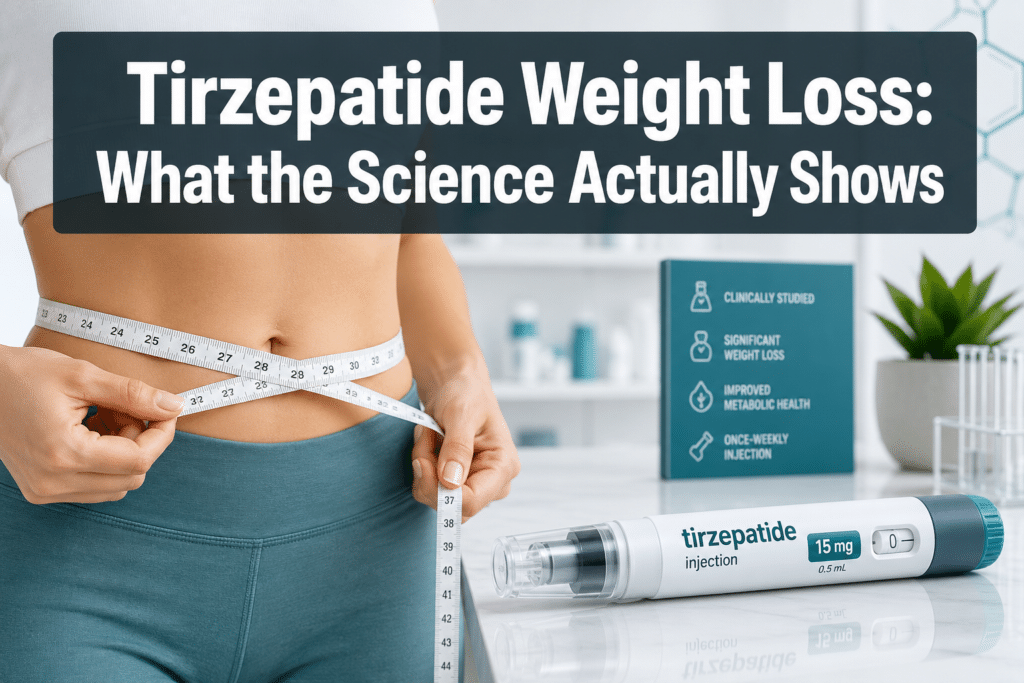
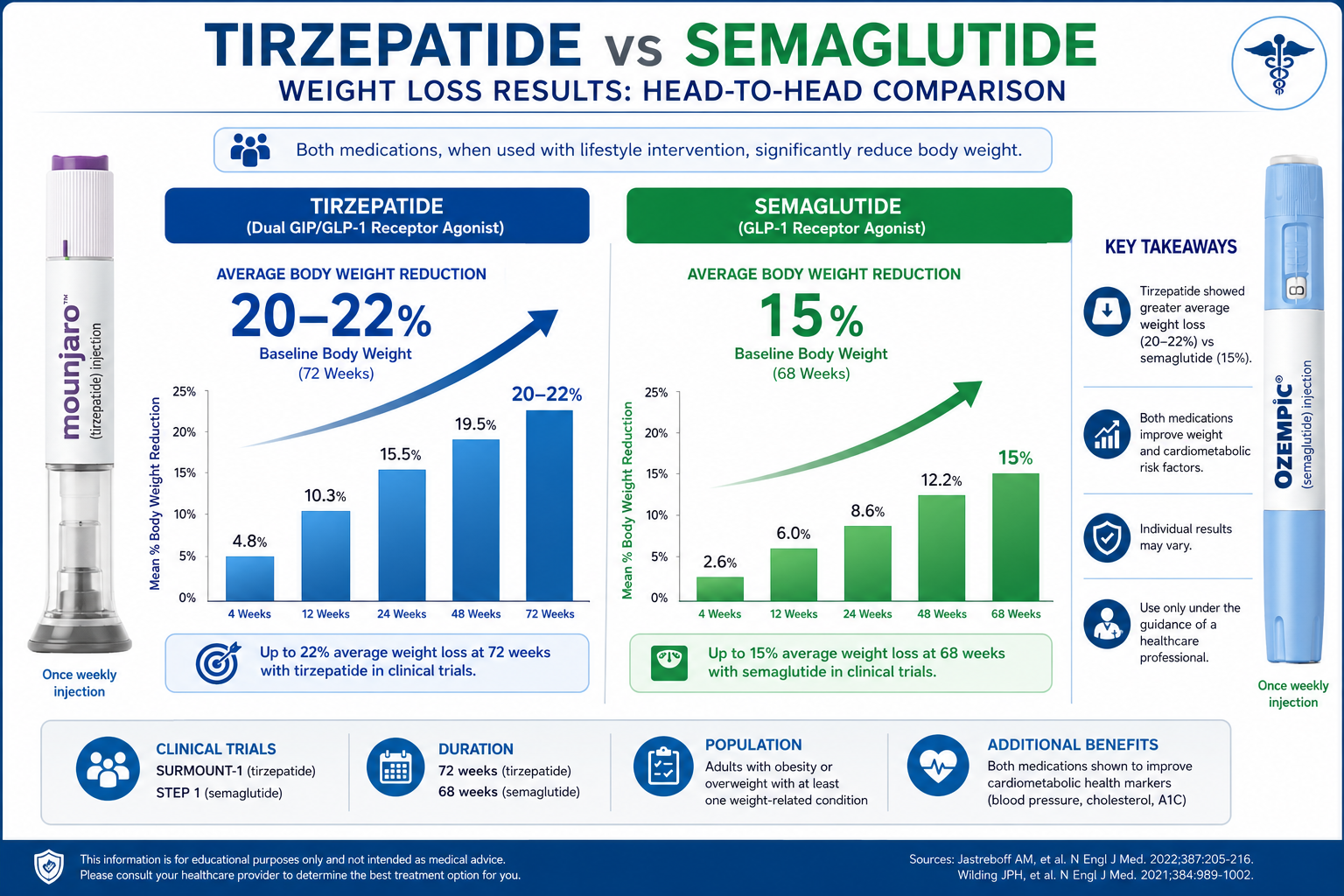
Quick Answer: Tirzepatide weight loss results are among the strongest ever recorded for a prescription medication, with clinical trials showing average body weight reductions of 20–22% over 72 weeks.
It works by targeting two gut hormones simultaneously (GIP and GLP-1), which suppresses appetite more aggressively than single-hormone drugs like semaglutide. Most people start seeing measurable results within 4–8 weeks, though full results take 12–18 months.
7 Best GLP-1 Providers Ranked: Accreditation, Flexibility & Support Compared (2026 Update)
32,000+ Patients Can't All Be Wrong: See the Top-Rated GLP-1 Providers. We compared the leading online GLP-1 providers based on program features, clinical support, convenience, and overall value.
BMI MD GLP-1 Microdosing Plan
- Specialized microdosing options, including sublingual drops and low-dose injections
- Designed for people interested in maintaining weight or gradually adjusting treatment
- Bundled program structure without a separate monthly platform membership
- Online access makes the process convenient from home

DirectMeds Weight Loss Solutions
- Online weight-loss program with a straightforward patient experience
- Compounded medication options through state-licensed compounding pharmacies
- Includes clinical consultation as part of the process
- Provides shipping updates to help patients track their orders
MEDVi Flat-Rate Telehealth
- Flat-rate telehealth approach designed for easier budgeting
- No dosage-based pricing increases within the advertised program structure
- Offers injectable and oral thin-film delivery options
- Includes medical screening and asynchronous provider consultations
Gala GLP-1 Care Program
- Text-based access to state-licensed clinicians
- Cold-chain medication shipping included in the program
- Month-to-month program structure
- Designed for people who value convenient ongoing support
Measured GLP-1 Metabolic Health
- Comprehensive metabolic health screening and intake analysis
- Designed around longer-term metabolic health management
- Responsive dashboard with integrated health tracking tools
- Useful option for patients who value a more data-focused experience
Refills GLP-1 (TryRefills Plan)
- Clinical guidance designed to help patients manage common treatment concerns
- Includes foundational nutritional strategies alongside medication
- Designed around predictable ongoing treatment
- No hidden startup or processing fees according to the program information provided
AltRx GLP-1 Transactional Reorders
- Transactional reorder model without recurring auto-billing
- Designed for patients who already understand their treatment routine
- Fast text-to-order process for convenient reorders
- Offers injectable and fast-dissolving tablet variations
Key Takeaways
- Tirzepatide (brand names Mounjaro and Zepbound) is a dual GIP/GLP-1 receptor agonist approved for chronic weight management.
- Clinical trials show average weight loss of 20–22% of body weight — roughly 50+ lbs for many patients.
- It outperforms semaglutide (Ozempic/Wegovy) in head-to-head data for weight loss outcomes.
- Most people pay $500–$1,000+ per month without insurance; compounded versions can cost significantly less.
- Side effects are mostly GI-related (nausea, diarrhea) and tend to ease after the first few weeks.
- You can get tirzepatide prescribed online through telehealth platforms without an in-person visit.
- Weight often returns after stopping — maintenance planning matters.
- Diet and exercise amplify results; the medication alone won’t do all the work.
- Not everyone qualifies; people with certain thyroid or pancreatic conditions should avoid it.
How Much Weight Can You Lose With Tirzepatide?
Tirzepatide weight loss results are the most impressive of any approved obesity medication to date. In the SURMOUNT-1 clinical trial, participants lost an average of 20.9% of their body weight at the highest dose (15 mg) over 72 weeks — that’s roughly 52 lbs for someone starting at 250 lbs.
Key results from the SURMOUNT-1 trial (published in the New England Journal of Medicine, 2022):
- 5 mg dose: ~15% average body weight loss
- 10 mg dose: ~19.5% average body weight loss
- 15 mg dose: ~20.9% average body weight loss
- Placebo group: ~3.1% average body weight loss
These numbers are for people who also followed a reduced-calorie diet and increased physical activity. Real-world results vary, but many patients report losing 30–60+ lbs over a full treatment course.
Choose tirzepatide if you’ve tried lower-intensity interventions and need clinically meaningful weight loss (more than 15% of body weight). It consistently outperforms lifestyle changes alone.
Is Tirzepatide Better Than Ozempic for Weight Loss?
Yes, based on available clinical data, tirzepatide produces greater weight loss than semaglutide (the active ingredient in Ozempic and Wegovy). The SURMOUNT-5 trial (2024) directly compared the two drugs and found tirzepatide led to approximately 47% more weight loss than semaglutide over 72 weeks.
| Drug | Mechanism | Average Weight Loss |
|---|---|---|
| Tirzepatide (Zepbound) | Dual GIP + GLP-1 agonist | ~20–22% |
| Semaglutide (Wegovy) | GLP-1 agonist only | ~15–17% |
| Semaglutide (Ozempic) | GLP-1 agonist (diabetes dose) | ~10–12% |
The reason tirzepatide wins: it activates two hormone pathways instead of one, creating a stronger appetite-suppressing effect and better blood sugar regulation. That said, semaglutide is still highly effective, and some people respond better to it individually. For a full breakdown of GLP-1 medications and how they work, our guide covers both options in detail.
Common mistake: Assuming Ozempic and Wegovy are the same drug at the same dose. Ozempic is approved for type 2 diabetes (up to 2 mg), while Wegovy is the weight-loss formulation (up to 2.4 mg). Neither reaches tirzepatide’s weight-loss ceiling.
What’s the Difference Between Mounjaro and Tirzepatide?
Tirzepatide is the active drug; Mounjaro and Zepbound are brand names for the same molecule. Mounjaro was FDA-approved first for type 2 diabetes management. Zepbound was approved specifically for chronic weight management in adults with obesity or overweight with a weight-related condition.
- Mounjaro = tirzepatide, prescribed for type 2 diabetes
- Zepbound = tirzepatide, prescribed for weight loss/obesity
- Same drug, same doses, different FDA indications and insurance billing codes
This distinction matters for insurance coverage. If your doctor prescribes Mounjaro off-label for weight loss, your insurer may deny the claim. Zepbound is the correct prescription for weight management purposes.
How Long Do You Have to Take Tirzepatide to See Results?
Most people notice appetite suppression within the first 1–2 weeks, but visible scale changes typically appear by weeks 4–8. Significant weight loss (10%+ of body weight) generally takes 3–6 months at therapeutic doses.
Here’s a rough timeline:
- Weeks 1–4: Appetite decreases, portion sizes naturally shrink; 2–5 lbs lost
- Weeks 4–12: Consistent weekly losses of 0.5–1.5 lbs; GI side effects usually peak and fade
- Months 3–6: Most patients hit the 10–15% weight loss mark
- Months 6–18: Continued loss toward maximum effect; plateau is common around month 12
The dose escalation schedule (starting at 2.5 mg and increasing every 4 weeks) is designed to minimize side effects, not maximize speed. Rushing the dose ramp-up is one of the most common mistakes people make.
What Side Effects Happen With Tirzepatide Weight Loss?
The most common side effects of tirzepatide are gastrointestinal and are usually temporary. They’re most intense during dose increases and typically improve within a few weeks.
Most common (affecting 10–40% of users):
- Nausea
- Diarrhea
- Constipation
- Vomiting
- Stomach discomfort or bloating
Less common but worth knowing:
- Fatigue (especially early on)
- Decreased appetite (this is also the mechanism — it’s expected)
- Injection site reactions (redness, itching)
- Heartburn or acid reflux
Rare but serious:
- Pancreatitis (stop use and seek care if you have severe abdominal pain)
- Gallbladder problems
- Increased heart rate
- Hypoglycemia (especially if combined with other diabetes medications)
The FDA also requires a boxed warning about thyroid C-cell tumors based on animal studies, though this has not been confirmed in humans.
Who Should Not Take Tirzepatide for Weight Loss?
Tirzepatide is not appropriate for everyone. Your prescribing provider will screen for contraindications before starting you on it.
Do not take tirzepatide if you have:
- A personal or family history of medullary thyroid carcinoma (MTC)
- Multiple Endocrine Neoplasia syndrome type 2 (MEN 2)
- A history of pancreatitis
- Severe gastroparesis or other serious GI motility disorders
- Type 1 diabetes (not indicated for this population)
- Pregnancy or plans to become pregnant (stop at least 2 months before trying to conceive)
Use with caution if you have:
- Kidney disease (dose adjustments may be needed)
- A history of gallbladder disease
- Diabetic retinopathy (rapid glucose changes can temporarily worsen it)
Always disclose your full medication list. Tirzepatide can interact with oral contraceptives and other medications that depend on GI absorption timing.
How Much Does Tirzepatide Cost Without Insurance?
Without insurance, brand-name tirzepatide (Zepbound) costs approximately $550–$1,050 per month depending on dose and pharmacy. Manufacturer savings cards (Eli Lilly’s Zepbound Savings Card) can reduce this for eligible commercially insured patients, but they don’t apply to Medicare or Medicaid.
Cost breakdown by source (2026 estimates):
| Source | Estimated Monthly Cost |
|---|---|
| Brand-name Zepbound (retail) | $550–$1,050 |
| Compounded tirzepatide (telehealth) | $150–$400 |
| DirectMeds GLP1 Semaglutide | Among the most affordable available |
| GoodRx / discount cards | Variable; may not apply to GLP-1s |
For a detailed breakdown, see our guide on tirzepatide monthly cost and cheapest tirzepatide online sources.
Looking for the most affordable GLP-1 option right now? DirectMeds GLP1 Semaglutide is one of the most competitively priced programs available in 2026, with online prescribing and home delivery included. Check your eligibility here →
Does Insurance Cover Tirzepatide for Weight Loss?
Coverage depends heavily on your plan and the indication. Tirzepatide prescribed as Zepbound for obesity is covered by some commercial insurance plans but is excluded by Medicare Part D for weight loss (as of 2026, pending potential legislative changes). Medicaid coverage varies by state.
General rules:
- If prescribed for type 2 diabetes (as Mounjaro): more likely to be covered
- If prescribed for weight loss only (as Zepbound): coverage is inconsistent
- Medicare Part D: Currently does not cover weight-loss drugs, including Zepbound
- Employer health plans: Some cover it; check your formulary
If your insurance denies coverage, a prior authorization appeal or a letter of medical necessity from your doctor can sometimes reverse the decision. Alternatively, compounded tirzepatide through a telehealth platform is a common workaround. Our guide to least expensive GLP-1 options covers how to navigate this.
Can You Get Tirzepatide Prescribed Online?
Yes. Telehealth platforms can prescribe tirzepatide after an online consultation, and many ship the medication directly to your door. This is legal in most U.S. states as long as the prescribing provider conducts a proper medical evaluation.
How the process works:
- Complete an online health intake form (medical history, weight, medications)
- Consult with a licensed provider via video or asynchronous messaging
- Receive a prescription if you qualify
- Medication ships to your home (brand-name or compounded)
What to look for in a telehealth provider:
- Licensed physicians or NPs in your state
- Transparent pricing with no hidden fees
- Access to compounded tirzepatide if brand-name is cost-prohibitive
- Ongoing monitoring and dose adjustment support
For those comparing platforms, our Hims vs Henry Meds comparison and best cheap GLP-1 programs guide are good starting points.
Ready to get started? DirectMeds GLP1 Semaglutide offers one of the most streamlined online prescription processes with pricing that won’t break your budget. Start your consultation today →
What Diet and Exercise Work Best With Tirzepatide?
Tirzepatide weight loss results improve significantly when paired with the right lifestyle habits. The drug reduces appetite and slows gastric emptying, which makes it easier to eat less — but what you eat still matters.
Diet principles that work best:
- High protein intake (0.7–1g per pound of goal body weight) to preserve muscle mass during rapid weight loss
- Whole foods over processed — tirzepatide reduces cravings for ultra-processed foods for many users
- Smaller, more frequent meals to minimize nausea during dose escalation
- Adequate hydration — dehydration worsens GI side effects
Exercise approach:
- Resistance training 2–3x per week is the single most important exercise habit on tirzepatide, because rapid weight loss can cause muscle loss alongside fat loss
- Cardio 3–5x per week supports cardiovascular health and accelerates fat loss
- Walking 7,000–10,000 steps daily is a low-barrier habit that compounds over time
For a structured approach, our healthy eating and weight loss meal plan is a practical companion resource.
Edge case: Some tirzepatide users experience such strong appetite suppression that they under-eat protein. This leads to muscle loss and a slower metabolism — making weight maintenance harder after stopping.
Common Mistakes People Make When Starting Tirzepatide
Starting tirzepatide incorrectly can mean more side effects, slower results, or early dropout. Here are the most frequent errors:
- Rushing the dose escalation. Going from 2.5 mg to 5 mg too quickly causes severe nausea. Follow the 4-week escalation schedule.
- Not eating enough protein. Appetite suppression makes it easy to under-eat. Track protein actively for the first 3 months.
- Stopping the medication when weight loss slows. Plateaus are normal around months 6–9. Stopping early leads to weight regain.
- Ignoring GI side effects instead of managing them. Eating smaller meals, avoiding fatty foods, and staying hydrated can dramatically reduce nausea.
- Not having a maintenance plan. Tirzepatide is a long-term treatment. Stopping without a plan almost always results in weight regain.
- Buying from unverified sources. Counterfeit or improperly compounded tirzepatide is a real risk. Always use a licensed pharmacy or verified telehealth provider.
How Quickly Does Weight Come Back After Stopping Tirzepatide?
Weight regain after stopping tirzepatide is common and can be significant. Studies show that patients regain approximately two-thirds of lost weight within one year of stopping the medication without additional intervention.
This happens because tirzepatide addresses the hormonal and neurological drivers of obesity — when the drug is removed, those drivers return. It’s not a willpower failure; it’s biology.
What helps slow or prevent regain:
- Transitioning to a lower maintenance dose rather than stopping abruptly
- Maintaining the dietary and exercise habits built during treatment
- Working with a provider on a structured tapering plan
- Considering a different long-term GLP-1 option if cost is the barrier
This is why finding an affordable, sustainable option matters so much. DirectMeds GLP1 Semaglutide is designed with long-term affordability in mind, so you’re not forced to stop because of cost. See current pricing →
Are There Any Natural Alternatives to Tirzepatide?
No natural supplement replicates tirzepatide’s mechanism or clinical results. However, some evidence-based lifestyle interventions and supplements can support modest weight loss for people who don’t qualify for or can’t afford GLP-1 medications.
Evidence-supported natural options:
- Berberine: Sometimes called “nature’s metformin,” it has modest effects on blood sugar and modest weight-loss data — but nothing close to tirzepatide
- High-fiber diets: Slow gastric emptying naturally, which mimics (weakly) one of tirzepatide’s effects
- Protein-focused meal plans: Reduce appetite through satiety hormones
- Resistance training: Improves insulin sensitivity and metabolic rate
What doesn’t work: Most weight-loss supplements marketed online (gummies, drops, “ice hacks”) have no credible clinical evidence behind them. Be skeptical of any product claiming to work like a GLP-1 without a prescription.
If cost is the main barrier to tirzepatide, explore compounded semaglutide as a more affordable GLP-1 alternative. Our least expensive GLP-1 guide compares real options side by side.

FAQ
What is tirzepatide and how does it cause weight loss?
Tirzepatide is a dual GIP and GLP-1 receptor agonist that suppresses appetite, slows gastric emptying, and improves insulin sensitivity. These combined effects reduce calorie intake and promote fat loss. It’s sold under the brand names Mounjaro (for diabetes) and Zepbound (for weight management).
How is tirzepatide different from semaglutide?
Tirzepatide activates two hormone receptors (GIP and GLP-1), while semaglutide activates only one (GLP-1). This dual action produces greater average weight loss — roughly 20–22% vs. 15–17% of body weight in clinical trials.
Can I take tirzepatide if I don’t have diabetes?
Yes. Zepbound is FDA-approved specifically for adults with obesity (BMI ≥30) or overweight (BMI ≥27) with at least one weight-related health condition, regardless of diabetes status.
How do I inject tirzepatide?
Tirzepatide comes as a prefilled auto-injector pen. It’s injected subcutaneously (under the skin) once weekly in the abdomen, thigh, or upper arm. Your provider will walk you through the technique at your first prescription.
What dose of tirzepatide is most effective for weight loss?
The 15 mg dose produced the greatest average weight loss in clinical trials (~20.9%). However, many people achieve significant results at 10 mg, and individual response varies. Dose is titrated based on tolerance and response.
Is compounded tirzepatide safe?
Compounded tirzepatide from a licensed 503A or 503B compounding pharmacy can be safe when properly prepared. Quality varies by pharmacy, so always verify the compounding pharmacy’s credentials. See our guide on how to verify a legitimate compounding pharmacy.
How long does it take for tirzepatide to start working?
Appetite suppression often begins within 1–2 weeks. Measurable weight loss typically appears by weeks 4–8. Clinically significant results (10%+ body weight) generally take 3–6 months.
Can tirzepatide be used long-term?
Yes. Tirzepatide is intended as a long-term treatment for chronic weight management. Stopping the medication typically leads to weight regain, so ongoing use is often recommended for sustained results.
What happens if I miss a tirzepatide injection?
If you miss a dose and it’s been fewer than 4 days since your scheduled injection, take it as soon as you remember. If it’s been more than 4 days, skip the missed dose and resume your regular weekly schedule. Never double-dose.
Is tirzepatide covered by Medicare?
As of 2026, Medicare Part D does not cover tirzepatide (Zepbound) for weight loss. It may be covered if prescribed for type 2 diabetes (as Mounjaro) depending on your plan.
What’s the most affordable way to get tirzepatide?
Compounded tirzepatide through a telehealth provider is typically the most affordable route, often ranging from $150–$400/month. DirectMeds GLP1 Semaglutide is one of the most competitively priced GLP-1 programs available in 2026.
Can tirzepatide cause hair loss?
Temporary hair shedding (telogen effluvium) has been reported by some tirzepatide users, likely due to rapid weight loss rather than the drug itself. It typically resolves within 3–6 months and is minimized by maintaining adequate protein intake.
7 Best GLP-1 Providers Ranked: Accreditation, Flexibility & Support Compared (2026 Update)
32,000+ Patients Can't All Be Wrong: See the Top-Rated GLP-1 Providers: Compared on accreditation, plan flexibility, and patient support — updated for 2026.
BMI MD GLP-1 Microdosing Plan
- Specialized microdosing options (sublingual drops or low-dose injections)
- Ideal for maintaining weight or tapering off higher doses safely
- Fully bundled plan with no hidden monthly platform memberships
DirectMeds Weight Loss Solutions
- Sourced from accredited, state-licensed 503A compounding pharmacies
- No-frills high-volume savings passed directly to the patient
- Includes clinical consultation and cold-chain shipping updates
MEDVi Flat-Rate Telehealth
- Flat monthly rate holds steady even at maximum maintenance doses
- No dosage upcharges or graduation fee penalties
- Offers both injectable and advanced oral thin-film delivery options
Gala GLP-1 Care Program
- All-inclusive plan with no standalone membership costs
- Continuous text-based messaging access with state-licensed clinicians
- Temperature-controlled, cold-chain medication shipping included
Measured GLP-1 Metabolic Health
- Comprehensive metabolic health screening and expert intake analysis
- Predictable long-term budgeting with stable plan pricing
- High-end responsive dashboard with integrated diagnostic support
Refills GLP-1 (TryRefills Plan)
- Flat rate holds steady as titration scales up
- Includes clinical guides for active side-effect management
- Bundles in foundational nutritional strategies alongside medication
AltRx GLP-1 Transactional Reorders
- Zero recurring auto-billing — pay entirely on a transactional basis
- Rapid text-to-order format saves time for experienced patients
- Provides both injectable forms and fast-dissolving tablet variations
Conclusion
Tirzepatide weight loss results are genuinely impressive — the strongest of any approved obesity medication in history. If you’re an adult with a BMI over 27 and at least one weight-related health condition, it’s worth a serious conversation with a licensed provider.
The key things to act on:
- Confirm you qualify — talk to a telehealth provider or your doctor about your BMI, health history, and any contraindications.
- Compare costs before committing — brand-name Zepbound can exceed $1,000/month without insurance; compounded options through telehealth are far more accessible.
- Plan your diet and exercise from day one — especially prioritize protein and resistance training to protect muscle mass.
- Think long-term — tirzepatide works best as a sustained treatment, not a short-term fix.
- Use a verified source — whether brand-name or compounded, always use a licensed pharmacy.
If cost has been the barrier stopping you from starting, DirectMeds GLP1 Semaglutide offers one of the most affordable GLP-1 programs available in 2026, with online prescribing and home delivery built in.
Get started with DirectMeds GLP1 today →
References
- The SURMOUNT-1 trial results on tirzepatide for weight management were published in the New England Journal of Medicine (2022).
- The FDA’s prescribing information and approval details for Zepbound (tirzepatide) are available through the U.S. Food and Drug Administration official database.
- The SURMOUNT-5 head-to-head comparison of tirzepatide vs. semaglutide was published in Nature Medicine (2025).
- Comprehensive obesity treatment guidelines are maintained by the Obesity Society and American Association of Clinical Endocrinology.
- Background on GLP-1 and GIP receptor agonist mechanisms is covered in the Journal of Clinical Endocrinology & Metabolism (2023).

With over 13 years of experience in holistic health blogging, I aim to help you navigate your wellness journey with honest insights, expert-backed advice, and a sprinkle of real-world practicality.
Certified Wellness Writer | Herbal Nutrition Advocate | Wellness Research Enthusiast


