
What Is Zepbound? Uses, How It Works & Who Qualifies

Last updated: November 11, 2026
Quick Answer
Zepbound is tirzepatide, an FDA-approved injectable medicine that activates two gut hormone receptors (GIP and GLP-1) to reduce appetite and support weight loss. It’s approved for adults with obesity, or adults who are overweight with at least one weight-related health problem, and also for adults with obesity who have moderate-to-severe obstructive sleep apnea[1][2]. It works alongside diet and exercise, not as a replacement for them[1][3].
Key Takeaways
- Zepbound (tirzepatide) is the first dual GIP/GLP-1 receptor agonist approved for chronic weight management[1][4][5].
- It’s approved for adults with a BMI of 30+ (obesity) or 27+ with a weight-related condition like high blood pressure or type 2 diabetes[1][2].
- It also treats moderate-to-severe obstructive sleep apnea in adults with obesity[1].
- It’s injected once weekly, usually in the stomach, thigh, or upper arm.
- Most people need diet and lifestyle changes alongside the drug for it to work well[1][3].
- Weight regain is common if you stop taking it without a maintenance plan.
- Insurance coverage varies widely; some plans now cover it through expanded programs[6].
- Common side effects include nausea, diarrhea, and constipation.
What Is Zepbound and How Does It Work?
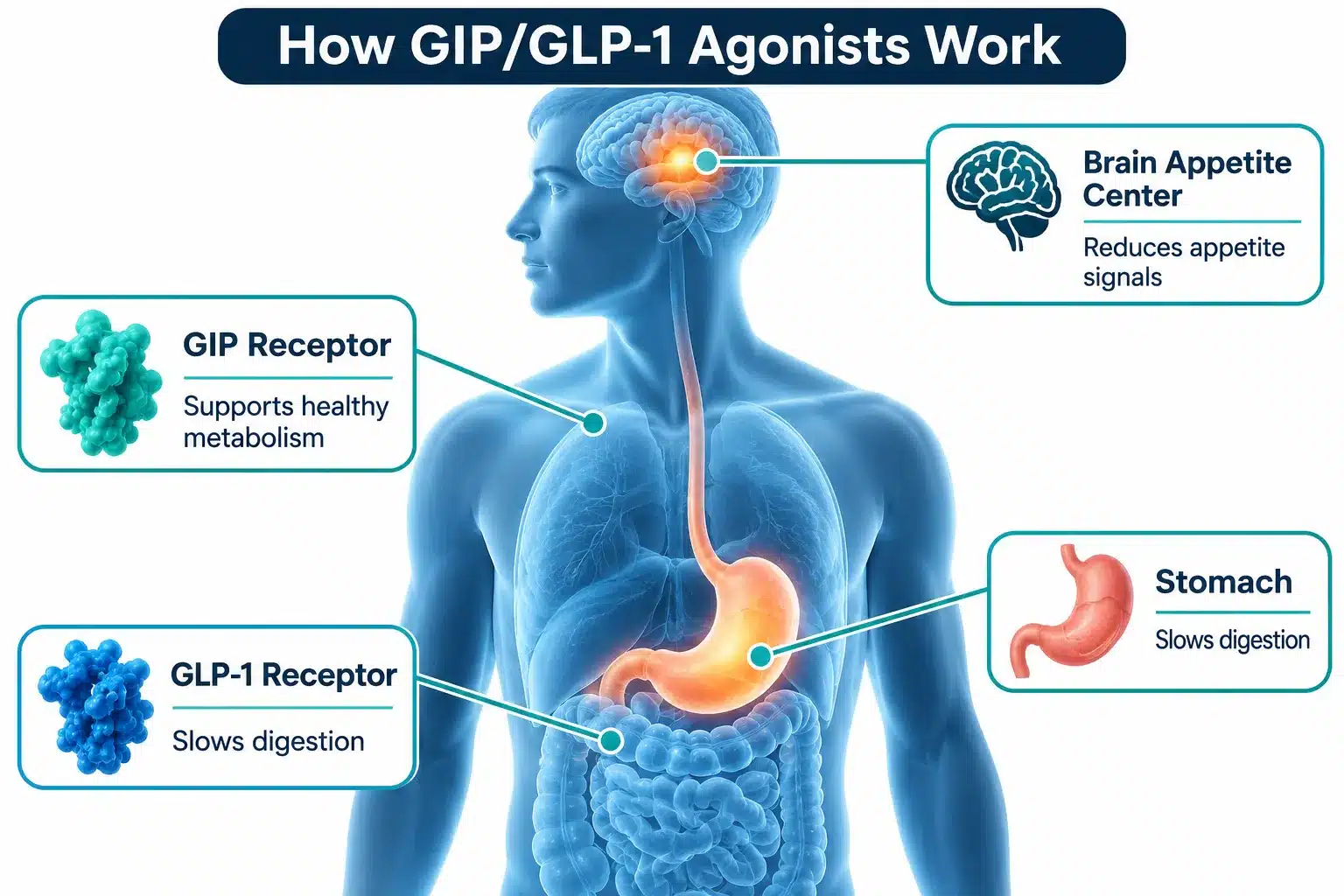
Zepbound is the brand name for tirzepatide, a once-weekly injectable drug made by Eli Lilly. It’s the first and only medicine approved that activates both GIP and GLP-1 receptors at the same time, which sets it apart from single-hormone drugs like semaglutide[1][4][5].
7 Best GLP-1 Providers Ranked: Accreditation, Flexibility & Support Compared (2026 Update)
32,000+ Patients Can't All Be Wrong: See the Top-Rated GLP-1 Providers. We compared the leading online GLP-1 providers based on program features, clinical support, convenience, and overall value.
BMI MD GLP-1 Microdosing Plan
- Specialized microdosing options, including sublingual drops and low-dose injections
- Designed for people interested in maintaining weight or gradually adjusting treatment
- Bundled program structure without a separate monthly platform membership
- Online access makes the process convenient from home

DirectMeds Weight Loss Solutions
- Online weight-loss program with a straightforward patient experience
- Compounded medication options through state-licensed compounding pharmacies
- Includes clinical consultation as part of the process
- Provides shipping updates to help patients track their orders
MEDVi Flat-Rate Telehealth
- Flat-rate telehealth approach designed for easier budgeting
- No dosage-based pricing increases within the advertised program structure
- Offers injectable and oral thin-film delivery options
- Includes medical screening and asynchronous provider consultations
Gala GLP-1 Care Program
- Text-based access to state-licensed clinicians
- Cold-chain medication shipping included in the program
- Month-to-month program structure
- Designed for people who value convenient ongoing support
Measured GLP-1 Metabolic Health
- Comprehensive metabolic health screening and intake analysis
- Designed around longer-term metabolic health management
- Responsive dashboard with integrated health tracking tools
- Useful option for patients who value a more data-focused experience
Refills GLP-1 (TryRefills Plan)
- Clinical guidance designed to help patients manage common treatment concerns
- Includes foundational nutritional strategies alongside medication
- Designed around predictable ongoing treatment
- No hidden startup or processing fees according to the program information provided
AltRx GLP-1 Transactional Reorders
- Transactional reorder model without recurring auto-billing
- Designed for patients who already understand their treatment routine
- Fast text-to-order process for convenient reorders
- Offers injectable and fast-dissolving tablet variations
These two hormone pathways work together in the gut and brain to slow digestion, lower blood sugar spikes, and send stronger “fullness” signals to the brain. The result is that people naturally eat less without feeling as deprived[3][4][5]. Lilly describes this dual action as targeting “an underlying cause of excess weight” rather than just suppressing hunger temporarily[3][4][5].
Doctors prescribe Zepbound alongside a reduced-calorie diet and regular physical activity. This isn’t optional in the label, the FDA prescribing information lists diet and exercise as part of the intended use, not a side suggestion[1][2][3]. If you’re asking what is Zepbound and how it works in practical terms: it’s a tool that makes calorie reduction easier to sustain, not a substitute for behavior change.
Who Qualifies for Zepbound?
You generally qualify for Zepbound if you have a BMI of 30 or higher (classified as obesity), or a BMI of 27 or higher plus a weight-related condition such as type 2 diabetes, high blood pressure, or high cholesterol[1][2]. You may also qualify if you have obesity and moderate-to-severe obstructive sleep apnea, even without another comorbidity[1].
Who typically qualifies:
- Adults with BMI ≥30
- Adults with BMI ≥27 plus a weight-related condition (diabetes, hypertension, high cholesterol, etc.)
- Adults with obesity and diagnosed moderate-to-severe obstructive sleep apnea[1]
Choose Zepbound if your doctor confirms you meet these BMI and health criteria and you’re ready to commit to dietary changes alongside the medication. A single BMI number without a doctor’s evaluation isn’t enough, your prescriber will also review your medical history and current medications.
Who Shouldn’t Take Zepbound?
Zepbound isn’t recommended for people with a personal or family history of medullary thyroid carcinoma or Multiple Endocrine Neoplasia syndrome type 2, and it carries a boxed warning about thyroid C-cell tumor risk seen in animal studies[1][2]. It’s also not appropriate for anyone with a known hypersensitivity to tirzepatide or its ingredients.
Other groups who should talk carefully with a doctor before starting include:
- People with a history of pancreatitis
- People with severe gastrointestinal disease (since the drug slows digestion)
- Pregnant or breastfeeding individuals
- Anyone under 18 (approval is for adults)
Edge case: if you have gallbladder disease or a history of diabetic retinopathy, your doctor may still prescribe Zepbound but will monitor you more closely, since GLP-1 therapies have been linked to gallbladder issues and rapid blood sugar changes in some patients.
Do You Need a Prescription for Zepbound?
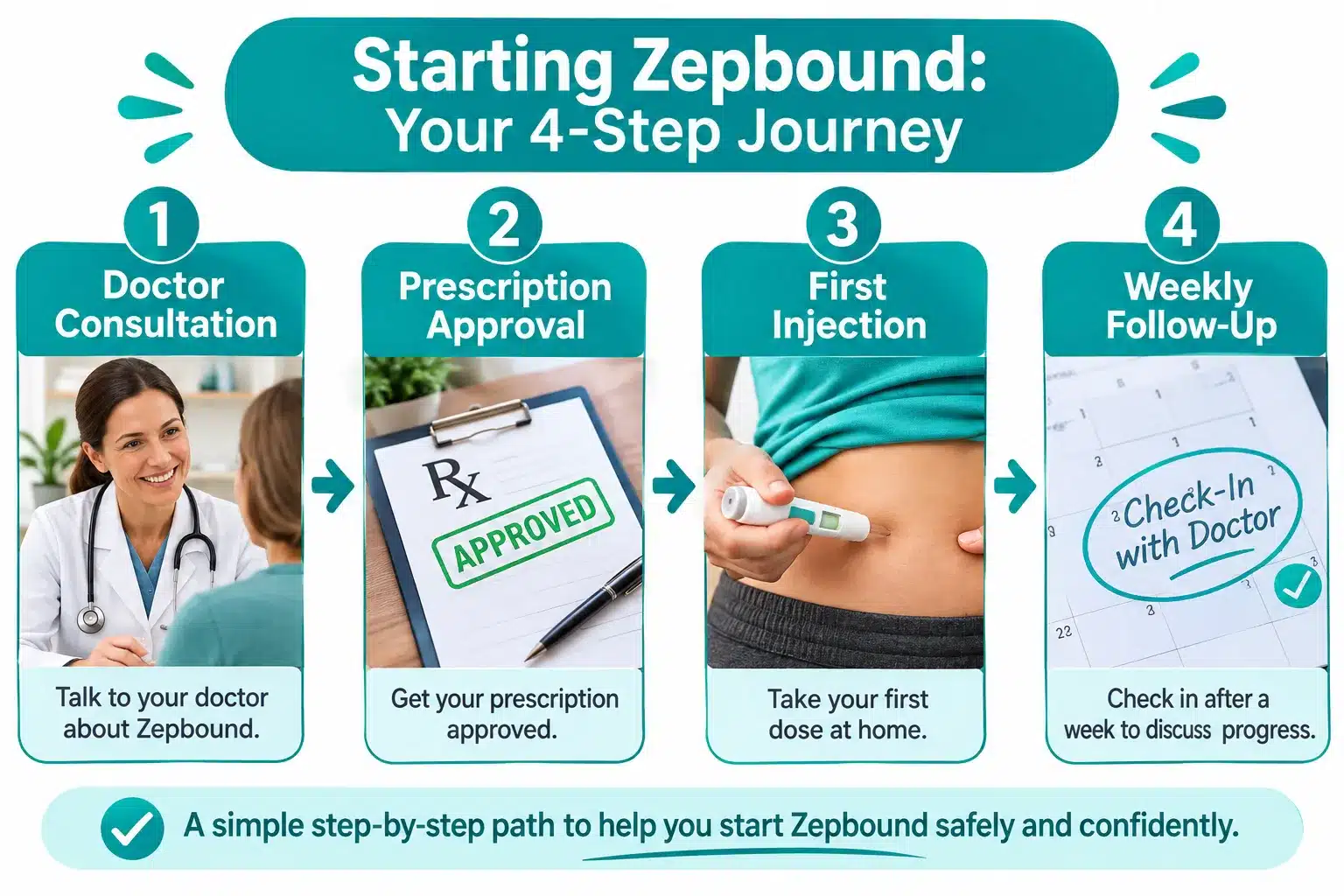
Yes. Zepbound is a prescription-only medication in the United States; it is not available over the counter[1][2]. You need an evaluation from a licensed healthcare provider who confirms your BMI and health history meet the approved criteria.
Prescriptions can come from a primary care doctor, an endocrinologist, an obesity medicine specialist, or increasingly through telehealth platforms. In November 2026, Lilly announced a partnership with Hims & Hers to widen access to FDA-approved Lilly medicines, including Zepbound, through telehealth and digital channels. This kind of partnership makes it easier for qualifying adults to get evaluated without an in-person specialist visit, though you’ll still need lab work or a documented BMI and medical history. For more on getting evaluated and starting treatment, see this guide on getting Zepbound online.
Common mistake: buying compounded tirzepatide from an unverified online pharmacy to skip the prescription process. In October 2026, a GLP-1 compounder recalled 22 lots of compounded tirzepatide after notifying the FDA, highlighting real safety risks with unapproved versions. Stick with the FDA-approved product and a verified prescriber.
How Much Does Zepbound Cost Without Insurance?
Without insurance, Zepbound typically costs several hundred to over a thousand dollars per month, though exact self-pay pricing varies by dose, pharmacy, and any manufacturer savings programs. In March 2026, Lilly made the Zepbound KwikPen available at self-pay prices, giving uninsured patients a more predictable option for weekly injections.
Cost depends on:
- Dose strength (higher doses often cost more)
- Whether you use the single-dose vial program or the KwikPen
- Pharmacy and location
- Any manufacturer coupons or savings cards
If cost without insurance is a barrier, ask your prescriber about Lilly’s self-pay savings programs and compare pricing across pharmacies before committing to a long-term plan.
Will My Insurance Cover Zepbound for Weight Loss?
Coverage for Zepbound varies by insurer and plan, but access has been expanding. In May 2026, Lilly reported that Zepbound became covered for millions of Americans through new arrangements, including coverage through Foundayo, which lowered out-of-pocket costs for many eligible patients[6].
Still, many employer and government plans exclude weight-loss drugs specifically, even when they’ll cover the same drug for diabetes or sleep apnea. Before starting treatment:
- Call your insurer and ask specifically about “Zepbound for chronic weight management” coverage
- Ask if a prior authorization or documented BMI is required
- Check if your plan covers it for OSA even if weight-loss coverage is excluded
- Ask your prescriber’s office about manufacturer savings cards if you’re denied
Decision rule: if your plan excludes weight-loss medications but you have obesity and sleep apnea, ask specifically about coverage under the OSA indication, some plans draw that distinction.
Is Zepbound the Same as Ozempic? What’s the Difference Between Zepbound and Wegovy?
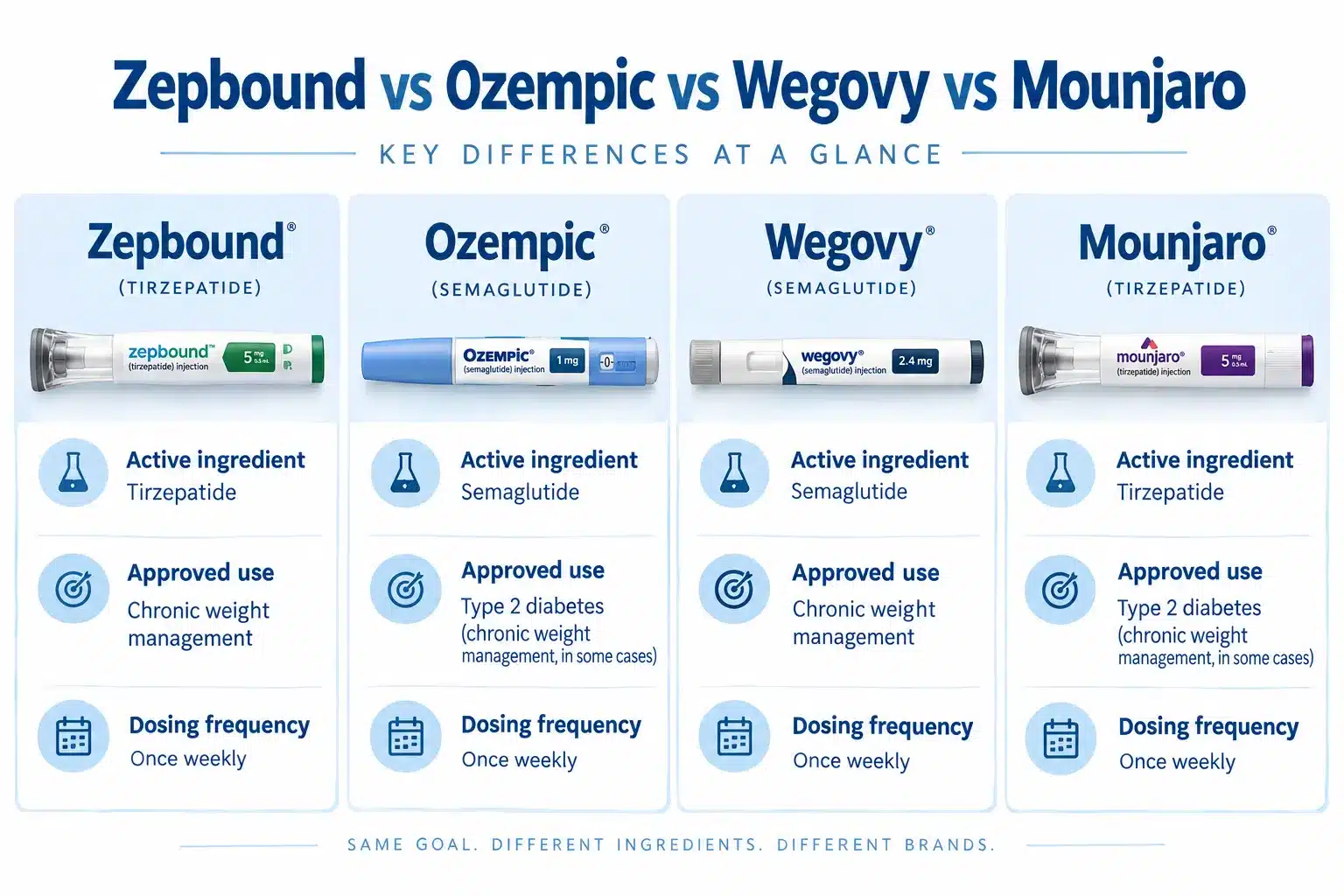
No, Zepbound is not the same as Ozempic or Wegovy. Zepbound (tirzepatide) activates two hormone receptors, GIP and GLP-1, while Ozempic and Wegovy (both semaglutide) activate only the GLP-1 receptor[1][4][5].
| Drug | Active ingredient | Receptors targeted | Primary approved use |
|---|---|---|---|
| Zepbound | Tirzepatide | GIP + GLP-1 | Chronic weight management, OSA in adults with obesity |
| Wegovy | Semaglutide | GLP-1 only | Chronic weight management |
| Ozempic | Semaglutide | GLP-1 only | Type 2 diabetes (used off-label for weight loss) |
Because Zepbound targets two pathways instead of one, some clinical data suggests it’s associated with greater average weight loss, though individual results vary widely[4][5]. If you’re weighing options, it helps to read real patient experiences, our Zepbound reviews roundup and Ozempic reviews from real users cover firsthand accounts side by side.
Can You Use Zepbound If You Have Diabetes?
Tirzepatide (the same active ingredient in Zepbound) is also marketed as Mounjaro specifically for type 2 diabetes, so the molecule is well-studied in diabetic patients. Zepbound itself is approved for weight management and OSA, and many people with type 2 diabetes and obesity qualify under the weight-related comorbidity criterion[1][2].
If you have diabetes and obesity, your doctor may choose between prescribing Mounjaro (for blood sugar control) or Zepbound (for weight management), depending on your primary treatment goal and insurance coverage. Either way, blood sugar should be monitored closely when starting, since appetite and calorie changes can affect glucose levels. If you’re managing blood sugar concerns more broadly, this resource on what to do with high blood sugar may help.
How Long Does It Take Zepbound to Work, and How Often Do You Inject It?
Most people start noticing reduced appetite within the first few weeks, but meaningful weight loss typically builds gradually over three to six months as the dose is increased. Zepbound is injected once weekly, on the same day each week, in the stomach, thigh, or upper arm.
Doctors usually start patients on a low dose and increase it every four weeks to reduce side effects like nausea. This slow titration schedule means the full effect of a given dose isn’t felt immediately, patience during the first two months matters. For a broader look at how GLP-1-based drugs build effects over time, see how long it takes GLP-1 to work and the week-by-week Ozempic timeline, which follow a similar pattern.
How Much Weight Do You Lose on Zepbound?
Weight loss results vary by dose, duration, and individual factors like starting weight and adherence to diet changes. Clinical trial data from Lilly has shown tirzepatide at 10 mg and 15 mg doses associated with greater average weight loss compared to some other GLP-1 therapies in head-to-head analysis[5].
Results aren’t uniform. Some people lose weight quickly in the first three months; others see slower, steadier loss over a year. Your actual results depend heavily on dose level reached, how consistently you follow the diet and exercise plan, and your starting BMI.
What Are the Side Effects of Zepbound? Can It Cause Hair Loss?
The most common side effects of Zepbound are gastrointestinal: nausea, diarrhea, constipation, and vomiting, especially during dose increases. These effects are listed in the FDA prescribing information and tend to lessen over time as the body adjusts[1][2].
Hair loss (telogen effluvium) has been reported anecdotally by some patients on GLP-1 and dual-agonist drugs, though it’s generally linked to rapid weight loss itself rather than a direct drug effect. Significant, fast weight loss can trigger temporary shedding regardless of the method used to lose it. For more detail on this pattern with a related drug class, see why Ozempic may cause hair loss and how to fix it.
Quick example: a patient who loses 20+ pounds in two months is more likely to notice temporary shedding than someone losing weight gradually over six months, simply because of how abrupt the metabolic shift is.
If you’re also dealing with digestive side effects, this guide on Ozempic-related diarrhea and constipation offers relief tips that apply to tirzepatide users too.
What Happens If You Stop Taking Zepbound? Is It Permanent?
Weight regain is common after stopping Zepbound without a long-term maintenance plan, because the appetite-suppressing effect fades once the drug clears your system. Zepbound is not a cure for obesity; it manages it the way blood pressure medication manages hypertension, ongoing use is usually needed to maintain results.
“The medication doesn’t fix the underlying biology permanently. It helps manage it while you’re on it.”
This is why Lilly’s own guidance frames Zepbound as part of a long-term plan involving diet and physical activity, not a short course of treatment[1][3]. Some patients transition to a lower maintenance dose once they reach their goal weight, under medical supervision, rather than stopping outright.
Decision rule: if you’re planning to stop Zepbound, do it with your doctor’s guidance and a structured nutrition and activity plan already in place, stopping cold turkey without a plan is the most common cause of rapid regain.
FAQ
Is Zepbound the same drug as Mounjaro? Yes, both contain tirzepatide, but Mounjaro is approved for type 2 diabetes and Zepbound is approved for weight management and sleep apnea[1][2].
Can I take Zepbound without a BMI test? No. Your prescriber needs a documented BMI and health history to confirm you qualify under FDA criteria[1][2].
Does Zepbound help with sleep apnea even without major weight loss? Zepbound’s OSA approval is tied to its weight-loss effect in adults with obesity; it’s not approved as a standalone sleep apnea treatment outside that population[1].
Is Zepbound better than Wegovy? Some data suggests tirzepatide is associated with greater average weight loss than semaglutide, but individual response varies and both are legitimate options your doctor can help you choose between[4][5].
Can I buy Zepbound without a prescription online? No. Any source selling it without a prescription or offering unapproved compounded versions carries real safety risk, as shown by the 2026 compounded tirzepatide recall.
Will newer drugs replace Zepbound? Possibly in the future. Lilly’s experimental combination drug including eloralintide showed greater weight loss than Zepbound in a September 2026 trial, but Zepbound remains a current benchmark therapy.
Does Zepbound help with conditions beyond weight, like psoriasis? Early Phase 3b data from October 2026 examined Zepbound in adults with psoriasis and obesity, suggesting broader metabolic benefits, though it’s not approved specifically to treat psoriasis[7].
7 Best GLP-1 Providers Ranked: Accreditation, Flexibility & Support Compared (2026 Update)
32,000+ Patients Can't All Be Wrong: See the Top-Rated GLP-1 Providers: Compared on accreditation, plan flexibility, and patient support — updated for 2026.
BMI MD GLP-1 Microdosing Plan
- Specialized microdosing options (sublingual drops or low-dose injections)
- Ideal for maintaining weight or tapering off higher doses safely
- Fully bundled plan with no hidden monthly platform memberships
DirectMeds Weight Loss Solutions
- Sourced from accredited, state-licensed 503A compounding pharmacies
- No-frills high-volume savings passed directly to the patient
- Includes clinical consultation and cold-chain shipping updates
MEDVi Flat-Rate Telehealth
- Flat monthly rate holds steady even at maximum maintenance doses
- No dosage upcharges or graduation fee penalties
- Offers both injectable and advanced oral thin-film delivery options
Gala GLP-1 Care Program
- All-inclusive plan with no standalone membership costs
- Continuous text-based messaging access with state-licensed clinicians
- Temperature-controlled, cold-chain medication shipping included
Measured GLP-1 Metabolic Health
- Comprehensive metabolic health screening and expert intake analysis
- Predictable long-term budgeting with stable plan pricing
- High-end responsive dashboard with integrated diagnostic support
Refills GLP-1 (TryRefills Plan)
- Flat rate holds steady as titration scales up
- Includes clinical guides for active side-effect management
- Bundles in foundational nutritional strategies alongside medication
AltRx GLP-1 Transactional Reorders
- Zero recurring auto-billing — pay entirely on a transactional basis
- Rapid text-to-order format saves time for experienced patients
- Provides both injectable forms and fast-dissolving tablet variations
Conclusion
Zepbound is a dual-hormone prescription medicine approved for adults with obesity, or overweight plus a weight-related condition, and for obesity-related moderate-to-severe sleep apnea. It works by activating GIP and GLP-1 receptors to reduce appetite, and it requires a prescription, a documented BMI, and ongoing lifestyle changes to work well and to keep results after stopping.
If you think you might qualify, start by talking to a doctor about your BMI and health history, ask your insurer directly about coverage for weight management versus sleep apnea indications, and avoid unverified compounded versions sold without a prescription. Bring a realistic plan for diet and activity to your first appointment, it’s the part of the treatment that determines whether results last.
References
- 217806orig1s020lbl. accessdata.fda.gov.
- 217806s002lbl. accessdata.fda.gov.
- FAQ. zepbound.lilly.com.
- Lilly Showcase New Retatrutide Taltz Ixekizumab and Zepbound. investor.lilly.com.
- Lillys Zepbound Tirzepatide 10 Mg and 15 Mg Was Associated More. investor.lilly.com.
- Foundayo and Zepbound Now Covered Millions Americans. investor.lilly.com.
- New Phase 3b Data Lillys Taltz Ixekizumab And Zepbound 0. investor.lilly.com.

With over 13 years of experience in holistic health blogging, I aim to help you navigate your wellness journey with honest insights, expert-backed advice, and a sprinkle of real-world practicality.
Certified Wellness Writer | Herbal Nutrition Advocate | Wellness Research Enthusiast