Does Creatine Help With Weight Loss? What It Does to Body Weight and Fat

Last updated: November 18, 2026
Quick Answer
Creatine does not cause meaningful fat loss on its own. Research shows it slightly increases body weight by adding lean muscle and water, while body fat percentage drops only modestly, usually because muscle mass goes up, not because fat mass disappears. If you’re asking does creatine help with weight loss and what it does to body weight and fat, the honest answer is: it supports muscle and strength during a fat-loss plan, but it isn’t a fat-burning supplement.
Key Takeaways
- Creatine typically adds about 0.86 kg to body weight on average, mostly from lean mass and water, not fat [1][2].
- Fat mass reductions from creatine alone are small and often not statistically significant.
- Combined with resistance training, creatine can modestly improve body composition, more muscle, slightly less fat percentage [3].
- Creatine does not appear to raise resting metabolism or directly burn calories [4].
- Water retention is common in the first one to two weeks and is usually temporary [1].
- Creatine works for both men and women, with no evidence that sex changes its effect on fat loss [5].
- People coming off creatine may lose a little scale weight from reduced water retention, not fat.
- Creatine is not a substitute for a calorie deficit, medication, or structured training when the goal is real fat loss.
Does Creatine Actually Help You Lose Weight or Just Build Muscle
Creatine mainly supports muscle building and exercise performance, not direct weight loss. It does not burn fat, and most of the research shows its biggest effect is on lean mass and strength during resistance training [4][5].
7 Best GLP-1 Providers Ranked: Accreditation, Flexibility & Support Compared (2026 Update)
32,000+ Patients Can't All Be Wrong: See the Top-Rated GLP-1 Providers. We compared the leading online GLP-1 providers based on program features, clinical support, convenience, and overall value.

BMI MD GLP-1 Microdosing Plan
- Specialized microdosing options, including sublingual drops and low-dose injections
- Designed for people interested in maintaining weight or gradually adjusting treatment
- Bundled program structure without a separate monthly platform membership
- Online access makes the process convenient from home

DirectMeds Weight Loss Solutions
- Online weight-loss program with a straightforward patient experience
- Compounded medication options through state-licensed compounding pharmacies
- Includes clinical consultation as part of the process
- Provides shipping updates to help patients track their orders

MEDVi Flat-Rate Telehealth
- Flat-rate telehealth approach designed for easier budgeting
- No dosage-based pricing increases within the advertised program structure
- Offers injectable and oral thin-film delivery options
- Includes medical screening and asynchronous provider consultations

Gala GLP-1 Care Program
- Text-based access to state-licensed clinicians
- Cold-chain medication shipping included in the program
- Month-to-month program structure
- Designed for people who value convenient ongoing support

Measured GLP-1 Metabolic Health
- Comprehensive metabolic health screening and intake analysis
- Designed around longer-term metabolic health management
- Responsive dashboard with integrated health tracking tools
- Useful option for patients who value a more data-focused experience

Refills GLP-1 (TryRefills Plan)
- Clinical guidance designed to help patients manage common treatment concerns
- Includes foundational nutritional strategies alongside medication
- Designed around predictable ongoing treatment
- No hidden startup or processing fees according to the program information provided

AltRx GLP-1 Transactional Reorders
- Transactional reorder model without recurring auto-billing
- Designed for patients who already understand their treatment routine
- Fast text-to-order process for convenient reorders
- Offers injectable and fast-dissolving tablet variations
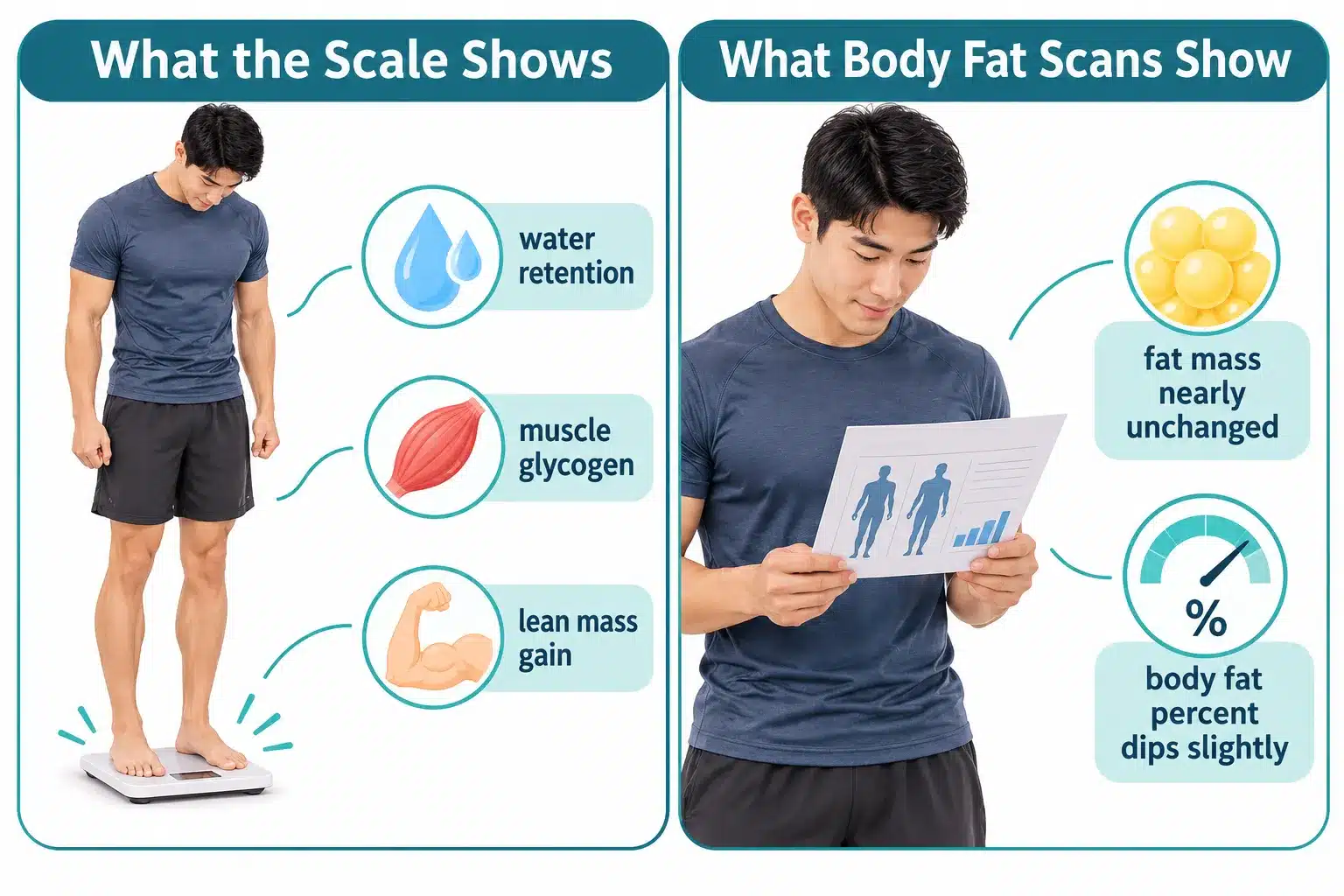
A 2024 dose-response meta-analysis of 143 randomized trials found creatine supplementation increased total body mass by about 0.86 kg and fat-free mass by 0.82 kg, while body fat percentage dropped by only 0.28 percentage points [1][2]. That’s a tiny change. In plain terms: creatine mostly makes muscles bigger and stronger, and any small drop in body fat percentage is a side effect of added muscle, not fat actually melting away.
Choose creatine if your main goal is building strength and muscle while in a calorie deficit. Skip it if you expect a noticeable drop in fat mass without changing your diet or workout routine.
Why Does Creatine Make You Gain Weight on the Scale
Creatine pulls water into muscle cells, which shows up on the scale as a quick weight gain, usually within the first one to two weeks of starting supplementation. This is separate from fat gain.
Muscle cells store creatine as phosphocreatine, and water follows that stored creatine into the cell. This process, called cell volumization, can add a pound or two of water weight fast. Over longer periods, continued resistance training adds real lean mass on top of that initial water shift, which is why total body weight tends to stay a little higher than baseline [1].
Common mistake: assuming scale weight gain means fat gain. If you’ve just started creatine and the scale jumps 1 to 3 pounds in a week, that’s very likely water and glycogen-bound weight, not new fat tissue.
Creatine Water Retention: How Much Weight Gain Is Normal
Most people see a 1 to 4 pound increase in body weight during the first one to two weeks of creatine use, mainly from water retention inside muscle tissue. This typically levels off as the body adjusts.
Researchers have pointed out that many creatine trials don’t directly measure body water, so some of the reported “lean mass” gains in long-term studies may still include a water component that’s hard to separate from true muscle growth [1]. That means even after the initial adjustment period, a portion of scale weight tied to creatine use could still be fluid rather than muscle tissue.
Edge case: if you notice swelling, puffiness in the face or hands, or weight gain beyond 5 pounds in the first month, that’s worth discussing with a doctor, since it could point to something other than typical creatine-related water retention.
Can You Take Creatine While Cutting and Losing Fat
Yes, creatine can be used safely during a cutting phase, and it does not appear to block or slow down fat loss. Research in bariatric surgery patients and resistance-training cutters shows creatine neither helps nor hurts the rate of fat loss [6].
A 2024 pilot study followed women after bariatric surgery who took creatine before strength training. The creatine group lost about 9.5 kg of body weight and roughly 8.6 kg of fat mass, essentially matching the placebo group [6]. This tells us creatine doesn’t interfere with a calorie deficit, and it may help preserve strength and muscle while fat comes off, even if it doesn’t speed up the process.
Choose creatine during a cut if you want to protect muscle and strength while losing fat through diet and exercise. For readers also exploring prescription options alongside lifestyle changes, our guide to semaglutide weight loss injections covers a very different, medically supervised approach to fat loss.
Does Creatine Speed Up Metabolism
No, creatine does not meaningfully raise resting metabolic rate or increase fat burning directly. Its primary role is improving exercise performance, which can indirectly support better workouts and, over time, modest body composition changes [4].
A 2023 systematic review on creatine and metabolic performance concluded creatine’s main benefit is ergogenic, it helps with high-intensity performance and strength output, rather than directly boosting resting energy expenditure or fat oxidation [4]. Any fat-related benefit tends to come from training harder or longer because creatine helps you push through more reps or sets, not from a direct metabolic effect.
Quick example: someone doing four sets of squats might manage an extra rep or two with creatine on board, which adds up over months of training, but the calorie burn from that extra rep is tiny compared to diet changes.
Creatine vs Other Supplements for Weight Loss: Which Is Better
Creatine is not designed as a weight-loss supplement, and when compared directly, most dedicated fat-loss supplements (caffeine, green tea extract, protein powders) target appetite or calorie burning in ways creatine does not.
| Supplement | Primary effect | Fat loss evidence | Best for |
|---|---|---|---|
| Creatine | Muscle strength, lean mass | Minimal, indirect | Strength training, muscle preservation during cuts |
| Protein powder | Satiety, muscle repair | Supports fat loss via appetite control | Meeting daily protein goals |
| Caffeine | Mild metabolic boost | Modest, short-term | Pre-workout energy, mild appetite suppression |
| Green tea extract | Mild thermogenic effect | Small, inconsistent | Add-on to diet changes |
Choose creatine if your priority is strength and muscle retention. Choose a thermogenic or appetite-focused supplement if your priority is appetite control, but understand that none of these options replace a calorie deficit or medical treatment. For readers considering prescription-grade options, see our comparison of which GLP-1 is best for weight loss.
How Long Does It Take to See Weight Loss Results From Creatine
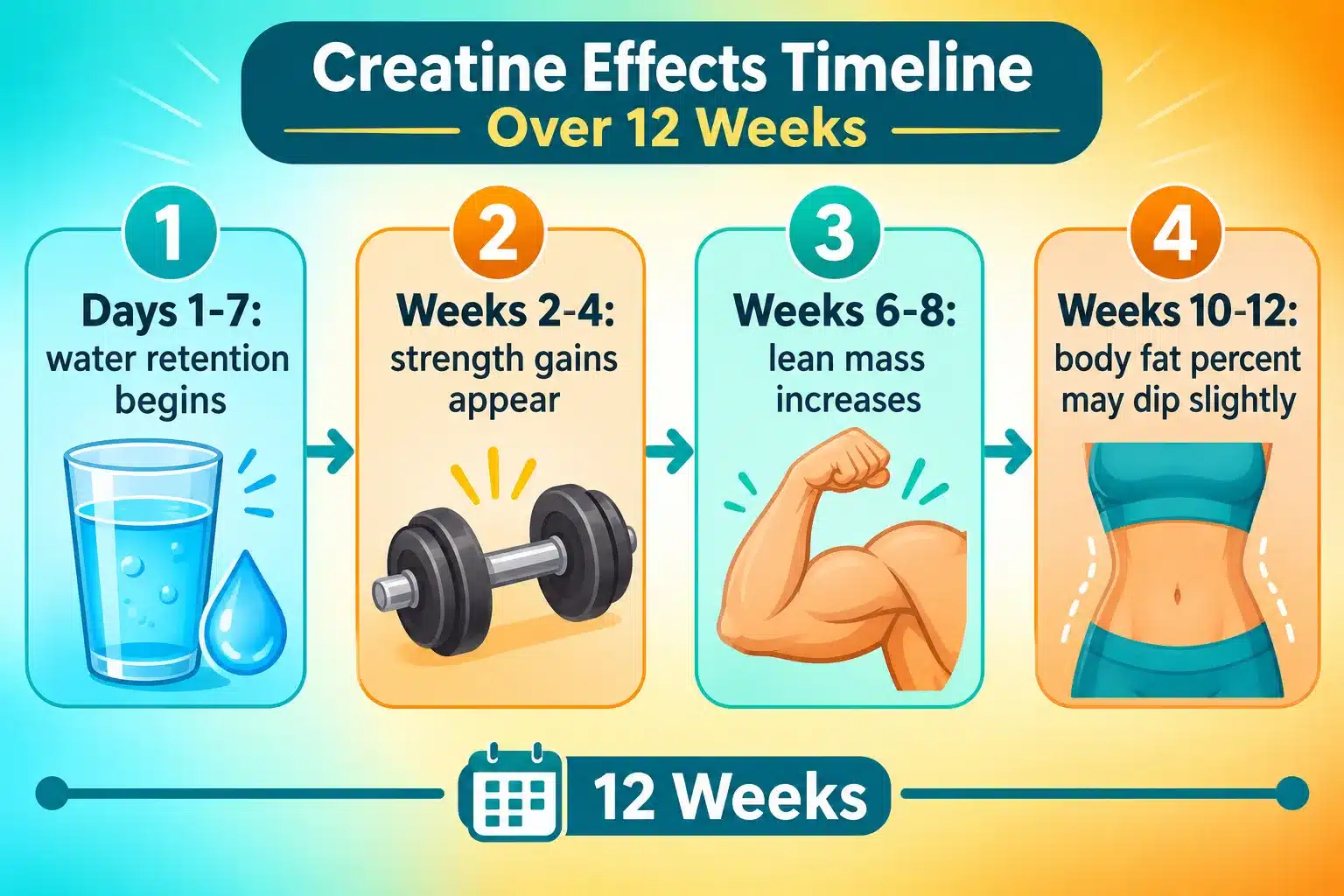
Creatine does not produce fat-loss “results” in the traditional sense; what changes over 8 to 12 weeks is strength, lean mass, and sometimes a small dip in body fat percentage when paired with resistance training.
A 2024 meta-analysis focused on resistance-training trials found creatine increased lean body mass by 1.14 kg and reduced body fat percentage by about 0.88% compared with training alone, over study periods generally lasting 8 to 12 weeks [3]. A newer 2026 three-level meta-analysis found the direct effect on fat mass was so small it wasn’t statistically significant (effect size g = -0.10, p = 0.14).
Decision rule: if you’re tracking progress, use strength numbers and a tape measure, not just the scale, since meaningful change typically shows up in performance before it shows up as a fat loss number.
Does Creatine Work for Fat Loss Without Exercise
No, creatine without exercise shows little to no effect on fat mass. Nearly all the body composition benefits tied to creatine come from pairing it with resistance training [3][5].
Studies isolating creatine without a training stimulus generally report flat or negligible changes in fat mass. The muscle-protective and strength benefits require a training signal, since creatine works by replenishing phosphocreatine stores used during intense effort. Without that demand, there’s little reason for the body to respond [4].
Common mistake: taking creatine and expecting fat loss while skipping workouts. That approach wastes the supplement’s main benefit and may only add water weight.
Is Creatine Safe for Weight Loss: Side Effects and Concerns
Creatine monohydrate is one of the most studied sports supplements and is generally considered safe for most healthy adults at standard doses, though it is not a weight-loss drug and carries its own set of mild side effects.
Reported side effects include:
- Temporary water retention and bloating, especially in the first two weeks [1]
- Mild stomach discomfort if taken on an empty stomach or in large single doses
- Rare reports of muscle cramping, though evidence linking creatine to cramps is weak
People with kidney disease, those on certain medications, or anyone pregnant or breastfeeding should talk with a doctor before starting creatine. It’s also worth noting that creatine is a dietary supplement, not an FDA-approved medication for weight loss, so it is regulated differently than prescription options like semaglutide or tirzepatide. Readers comparing medically supervised approaches may want to review GLP-1 weight loss injections online for a sense of how prescription treatments differ from supplements.
Can Women Use Creatine for Weight Loss
Yes, women can use creatine safely, and the available research does not show a different fat-loss response between men and women. The main benefits, muscle preservation and strength support during a cut, apply across sexes [5].
A systematic review of adults under 50 examining resistance training with creatine found consistent strength and lean mass benefits across study populations, with fat mass changes generally small and often not statistically significant regardless of sex [5]. Some women avoid creatine due to concerns about bloating or water weight, which is a reasonable short-term tradeoff to weigh, but it isn’t a sex-specific safety issue.
Choose creatine if you’re a woman doing regular resistance training and want to protect muscle during a calorie deficit. If water retention is a concern around a specific event or deadline, consider pausing creatine two to three weeks beforehand.
Best Creatine Brands for Cutting and Fat Loss
There is no single “best” creatine brand for fat loss because creatine monohydrate, the most researched form, works the same regardless of brand, as long as it’s third-party tested for purity.
When comparing products, look for:
- Creatine monohydrate as the only active ingredient (avoid proprietary blends with unproven additions)
- Third-party testing seals (NSF Certified for Sport or Informed Choice)
- Micronized formulas, which may dissolve more easily but don’t change effectiveness
- No added stimulants or sugar if you’re also managing calorie intake during a cut
Decision rule: pick plain, tested creatine monohydrate over flavored or “fat-burning” blends, since added ingredients in blended products are rarely dosed at effective levels and only add calories or cost.
Do You Lose Weight After Stopping Creatine
Yes, many people see a small drop in scale weight within one to two weeks of stopping creatine, but this is mostly water loss, not fat loss.
Because creatine draws water into muscle tissue, stopping supplementation reverses that process somewhat, which can show up as a 1 to 3 pound drop on the scale. This does not reflect any actual fat loss and shouldn’t be mistaken for progress or setback in a cutting plan [1].
Edge case: if you stop creatine while also reducing training volume, you may lose a bit of muscle mass over several weeks, which is a separate issue from the initial water-related drop.
Creatine Makes You Bloated: How to Prevent Water Retention
Bloating from creatine is usually temporary and tied to the loading phase or high single doses; spreading out intake and staying hydrated can reduce discomfort.
Practical steps to reduce bloating:
- Skip the loading phase (20g/day for a week) and instead take a steady 3 to 5g daily dose, which produces similar saturation over about three to four weeks with less water retention.
- Take creatine with food rather than on an empty stomach.
- Stay well hydrated, since paradoxically, adequate water intake supports the body’s normal fluid balance.
- Split larger doses (above 5g) into two smaller servings if stomach discomfort occurs.
Common mistake: stopping creatine altogether because of early bloating, when a simple dosing adjustment usually resolves the issue within a week or two.
Does Creatine Burn Calories or Just Help With Workouts
Creatine does not burn calories directly. It supports harder, longer, or more intense workouts, and any calorie burn increase comes from the extra training work, not from creatine itself [4].
This distinction matters because people sometimes expect a direct metabolic boost similar to caffeine or certain stimulants. Expert synthesis reviews through 2026 describe creatine as “neutral-to-slightly-beneficial” for body composition during dieting, useful for preserving muscle, but not a dedicated fat-burning compound.
If your main interest is calorie-burning support alongside diet changes, it’s worth exploring rx weight loss medication options, which work through different, medically regulated mechanisms than any supplement.
Creatine and Older Adults: A Special Case
In older adults, creatine combined with exercise shows benefits for function and lean mass, but fat-loss effects remain uncertain after closer statistical review.
A 2025 systematic review and meta-analysis of creatine plus exercise training in older adults found improvements in functional performance and lean body mass. However, after sensitivity analyses, the initially observed reduction in body fat percentage was no longer statistically robust [7]. This means older adults can expect muscle and function benefits from creatine, but shouldn’t count on fat loss as a reliable outcome.
7 Best GLP-1 Providers Ranked: Accreditation, Flexibility & Support Compared (2026 Update)
32,000+ Patients Can't All Be Wrong: See the Top-Rated GLP-1 Providers: Compared on accreditation, plan flexibility, and patient support — updated for 2026.
BMI MD GLP-1 Microdosing Plan
- Specialized microdosing options (sublingual drops or low-dose injections)
- Ideal for maintaining weight or tapering off higher doses safely
- Fully bundled plan with no hidden monthly platform memberships
DirectMeds Weight Loss Solutions
- Sourced from accredited, state-licensed 503A compounding pharmacies
- No-frills high-volume savings passed directly to the patient
- Includes clinical consultation and cold-chain shipping updates
MEDVi Flat-Rate Telehealth
- Flat monthly rate holds steady even at maximum maintenance doses
- No dosage upcharges or graduation fee penalties
- Offers both injectable and advanced oral thin-film delivery options
Gala GLP-1 Care Program
- All-inclusive plan with no standalone membership costs
- Continuous text-based messaging access with state-licensed clinicians
- Temperature-controlled, cold-chain medication shipping included
Measured GLP-1 Metabolic Health
- Comprehensive metabolic health screening and expert intake analysis
- Predictable long-term budgeting with stable plan pricing
- High-end responsive dashboard with integrated diagnostic support
Refills GLP-1 (TryRefills Plan)
- Flat rate holds steady as titration scales up
- Includes clinical guides for active side-effect management
- Bundles in foundational nutritional strategies alongside medication
AltRx GLP-1 Transactional Reorders
- Zero recurring auto-billing — pay entirely on a transactional basis
- Rapid text-to-order format saves time for experienced patients
- Provides both injectable forms and fast-dissolving tablet variations
Conclusion
So, does creatine help with weight loss and what does it do to body weight and fat? The research is consistent: creatine is a muscle and performance supplement first, and any effect on body weight comes mainly from added lean mass and water, not fat loss. Body fat percentage may drop slightly when creatine is paired with regular resistance training, but the change is modest and sometimes not statistically meaningful at all [1][3].
If your goal is genuine fat loss, creatine can be a reasonable addition to protect muscle and strength while you’re in a calorie deficit, but it should never replace the basics: consistent training, a sustainable eating pattern, and, where appropriate, medical guidance. For readers weighing supplement-based strategies against prescription treatment options, comparing approaches like those covered in our semaglutide weight loss medication guide can help clarify which path fits your situation and goals. Talk to a healthcare provider before starting any new supplement or weight-loss plan, especially if you have kidney concerns or take other medications.
FAQ
Does creatine cause fat gain?
No. Creatine does not add fat tissue. Early weight gain is mostly water retention in muscle cells, and longer-term weight increases come from lean muscle mass, not fat [1].
Will creatine ruin my cut?
No. Studies show creatine doesn’t slow fat loss during a calorie deficit and may help preserve muscle and strength while you cut [6].
How much water weight does creatine cause?
Most people gain 1 to 4 pounds of water weight in the first one to two weeks of creatine use, which often levels off as the body adjusts [1].
Can I take creatine without working out and still lose fat?
Unlikely. Creatine’s body composition benefits are tied to resistance training; without exercise, there’s little evidence it affects fat mass [4][5].
Is creatine better than protein powder for fat loss?
They serve different purposes. Protein powder supports satiety and muscle repair, which can aid fat loss indirectly, while creatine mainly supports strength and lean mass, not direct fat burning.
Does creatine affect women differently than men for weight loss?
No clear sex-based difference has been shown in fat-loss outcomes. Both men and women see similar modest changes in body fat percentage when creatine is paired with training [5].
Should I stop creatine before a weigh-in or event?
If scale weight matters for a specific date, stopping creatine 2 to 3 weeks ahead can reduce water-related weight, though this won’t reflect actual fat loss.
Is creatine FDA-approved for weight loss?
No. Creatine is a dietary supplement, not an FDA-approved medication, and it is not approved or marketed as a weight-loss treatment.
References
- Pmc11268231. pmc.ncbi.nlm.nih.gov.
- W211058. mdpi.com.
- pubmed.ncbi.nlm.nih.gov.
- pubmed.ncbi.nlm.nih.gov.
- Nutrients 15 04343. pmc.ncbi.nlm.nih.gov.
- S11695 024 07451 7. link.springer.com.
- S11556 025 00384 9. link.springer.com.
creatine, weight loss, body composition, fat loss, water retention, creatine monohydrate, resistance training, muscle mass, supplement safety, cutting phase, metabolism, GLP-1 alternatives

With over 13 years of experience in holistic health blogging, I aim to help you navigate your wellness journey with honest insights, expert-backed advice, and a sprinkle of real-world practicality.
Certified Wellness Writer | Herbal Nutrition Advocate | Wellness Research Enthusiast