Is Oatmeal Good for Weight Loss? Calories, Benefits, and the Best Ways to Eat It

Last updated: November 18, 2026
Quick Answer
Oatmeal can support weight loss because it’s low in calories for its volume, high in fiber, and filling enough to reduce snacking later in the day. A half-cup serving of dry rolled oats runs about 150 calories with roughly 4 grams of fiber and 5 grams of protein [1][2]. But oatmeal alone won’t cause weight loss, toppings, portion size, and your overall calorie intake decide the outcome.
Key Takeaways
- A typical half-cup dry serving of oatmeal has about 150 calories, 27 grams of carbs, 4 grams of fiber, and 5 grams of protein [1][2].
- Oatmeal’s soluble fiber (beta-glucan) slows digestion and helps you feel full longer, which can reduce total daily calorie intake [3][4].
- Steel-cut and rolled oats are generally better for weight loss than sugary instant packets because they digest more slowly [5][6].
- Adding protein (Greek yogurt, eggs, protein powder) and healthy fats (nuts, seeds) makes oatmeal more filling and balanced [3][7].
- Eating oatmeal every day can fit a weight-loss plan, but it won’t work if portions are oversized or toppings add hundreds of extra calories [4][5].
- Oatmeal is not a magic food, it works best alongside a calorie-appropriate diet, regular movement, and consistent eating habits.
- People using GLP-1 medications or other prescription weight-loss treatments can still benefit from oatmeal as a high-fiber, low-cost breakfast option.
How Does Oatmeal Actually Help With Weight Loss?
Oatmeal helps with weight loss mainly through its fiber content, not through any special fat-burning property. The soluble fiber in oats, called beta-glucan, forms a gel-like substance in your gut that slows stomach emptying and blunts blood sugar spikes [3][4].
7 Best GLP-1 Providers Ranked: Accreditation, Flexibility & Support Compared (2026 Update)
32,000+ Patients Can't All Be Wrong: See the Top-Rated GLP-1 Providers. We compared the leading online GLP-1 providers based on program features, clinical support, convenience, and overall value.

BMI MD GLP-1 Microdosing Plan
- Specialized microdosing options, including sublingual drops and low-dose injections
- Designed for people interested in maintaining weight or gradually adjusting treatment
- Bundled program structure without a separate monthly platform membership
- Online access makes the process convenient from home

DirectMeds Weight Loss Solutions
- Online weight-loss program with a straightforward patient experience
- Compounded medication options through state-licensed compounding pharmacies
- Includes clinical consultation as part of the process
- Provides shipping updates to help patients track their orders

MEDVi Flat-Rate Telehealth
- Flat-rate telehealth approach designed for easier budgeting
- No dosage-based pricing increases within the advertised program structure
- Offers injectable and oral thin-film delivery options
- Includes medical screening and asynchronous provider consultations

Gala GLP-1 Care Program
- Text-based access to state-licensed clinicians
- Cold-chain medication shipping included in the program
- Month-to-month program structure
- Designed for people who value convenient ongoing support

Measured GLP-1 Metabolic Health
- Comprehensive metabolic health screening and intake analysis
- Designed around longer-term metabolic health management
- Responsive dashboard with integrated health tracking tools
- Useful option for patients who value a more data-focused experience

Refills GLP-1 (TryRefills Plan)
- Clinical guidance designed to help patients manage common treatment concerns
- Includes foundational nutritional strategies alongside medication
- Designed around predictable ongoing treatment
- No hidden startup or processing fees according to the program information provided

AltRx GLP-1 Transactional Reorders
- Transactional reorder model without recurring auto-billing
- Designed for patients who already understand their treatment routine
- Fast text-to-order process for convenient reorders
- Offers injectable and fast-dissolving tablet variations
This matters because slower digestion means you stay full longer after eating. Research on oats and appetite suggests this fiber effect can reduce hunger hormones and help people eat less at their next meal [4]. Oatmeal is also naturally low in calories per cup when prepared with water, and swapping it in for higher-calorie breakfast foods like pastries or sugary cereal can create the calorie deficit needed for weight loss.
Decision rule: Choose oatmeal as a weight-loss breakfast if you currently eat low-fiber, high-sugar breakfast foods. If your current breakfast is already high-protein and filling (like eggs with vegetables), oatmeal may not add much benefit.
How Many Calories Are in a Typical Bowl of Oatmeal?
A half-cup serving of dry rolled oats, cooked with water, contains approximately 150 calories, 27 grams of carbohydrates, 4 grams of fiber, and 5 grams of protein [1][2]. Preparing oats with milk instead of water adds roughly 40 to 90 extra calories, depending on the type of milk used.
Here’s a general breakdown based on common serving sizes and public nutrition data [1][2][8]:
| Oatmeal type (cooked, 1 cup) | Approx. calories | Fiber | Protein |
|---|---|---|---|
| Plain oatmeal (water) | 150-160 | 4g | 5-6g |
| Plain oatmeal (whole milk) | 220-240 | 4g | 9-10g |
| Instant flavored packet | 130-160 | 2-3g | 3-4g |
| Steel-cut oats (water) | 150-170 | 4g | 5-6g |
These numbers vary by brand, so checking the nutrition label is the most reliable way to know exactly what you’re eating [1][2].
How Much Oatmeal Should I Eat Per Day for Weight Loss?
For most adults trying to lose weight, one serving of oatmeal per day, about a half-cup dry (one cup cooked), fits comfortably into a reduced-calorie diet. This amount provides meaningful fiber without taking up too much of your daily calorie budget.
Eating oatmeal more than once a day is not harmful, but it can get repetitive and may crowd out other important food groups like lean protein, vegetables, and healthy fats. A registered dietitian or your prescribing provider can help you figure out the right portion based on your total daily calorie target [6].
Common mistake: Eating a double or triple portion because oatmeal “feels healthy.” Three cups of cooked oatmeal with toppings can easily exceed 600-700 calories, which defeats the purpose for someone counting calories.
Does Oatmeal Have Enough Fiber and Protein to Keep You Full?
Oatmeal has substantial fiber but relatively modest protein on its own, so it works best for satiety when protein is added. A single serving provides about 4 grams of fiber, which is meaningful, but only around 5 grams of protein, which is lower than what many nutrition experts recommend for a filling breakfast [1][7].
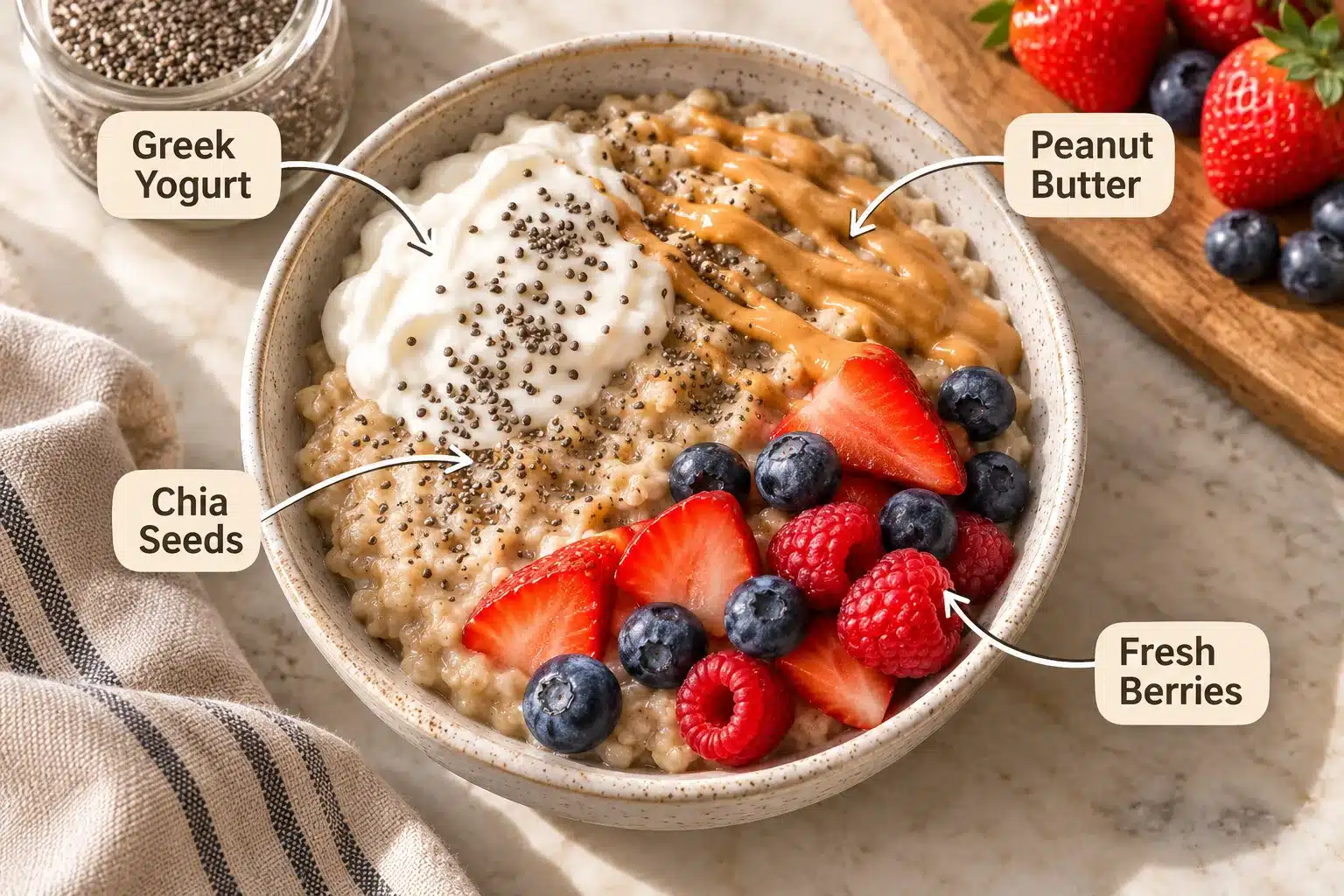
Comparing oatmeal to Greek yogurt shows a clear pattern: yogurt tends to deliver more protein per calorie, which can support fullness and muscle maintenance during weight loss, while oatmeal delivers more fiber [7]. Combining the two, oatmeal topped with plain Greek yogurt, gives you both benefits in one bowl.
Quick example: A bowl of plain oatmeal with a scoop of Greek yogurt and a tablespoon of chia seeds can deliver 15-20 grams of protein and 8-10 grams of fiber, a combination that tends to hold off hunger longer than oatmeal alone.
Is Instant Oatmeal as Good as Steel-Cut Oats for Weight Loss?
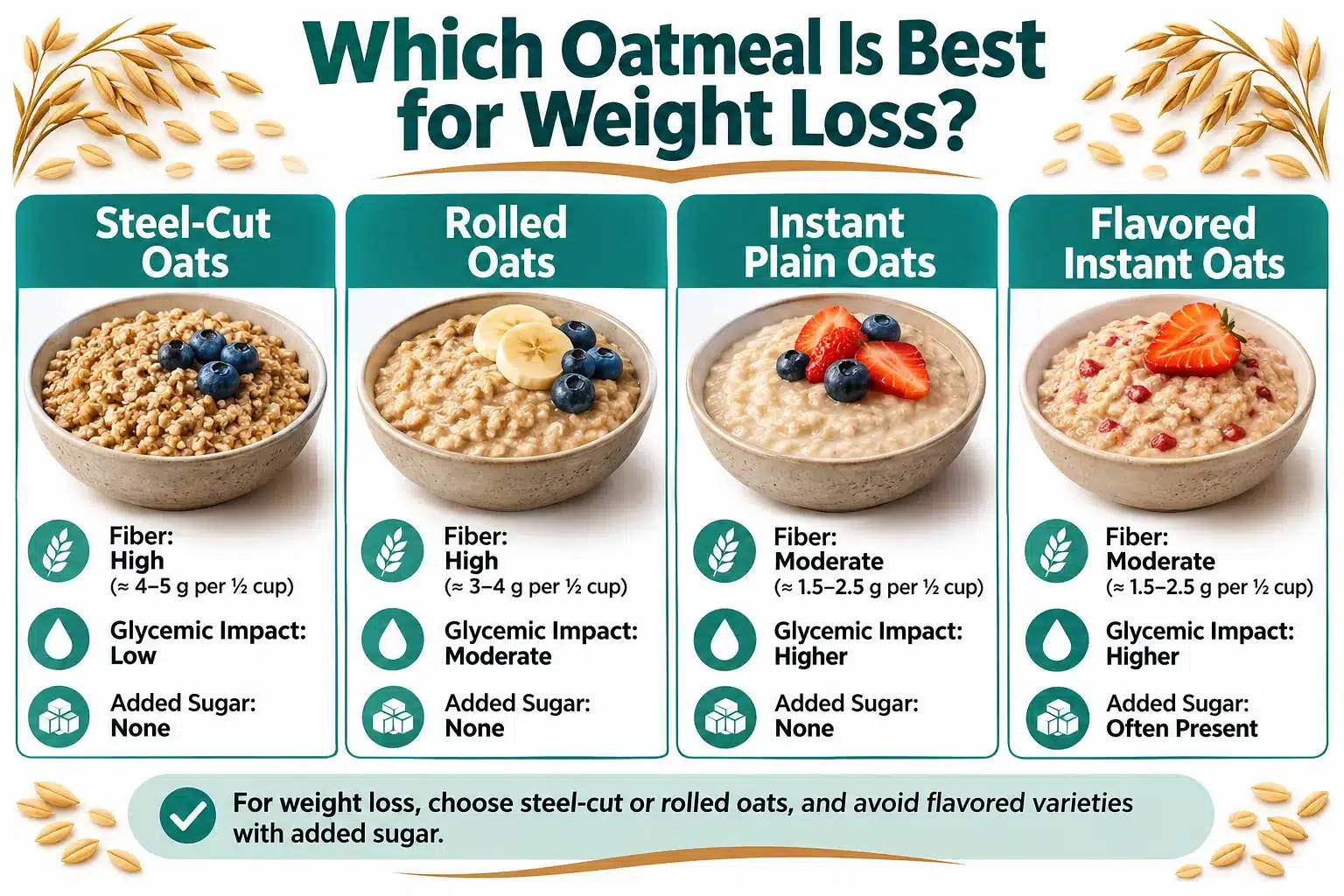
Plain instant oatmeal and steel-cut oats are nutritionally similar, but flavored instant packets are usually worse for weight loss because of added sugar. Steel-cut oats are less processed and digest more slowly, which may extend fullness slightly longer than instant oats [5][6].
- Plain instant oats: Fine, but check labels, some brands add sugar even to “plain” versions.
- Flavored instant packets: Often contain 8-12 grams of added sugar per packet, which adds calories without adding fullness.
- Steel-cut oats: Chewier texture, slower digestion, longer cooking time.
- Rolled oats: A good middle ground, moderate cooking time, similar nutrition to steel-cut.
Choose steel-cut or plain rolled oats if you want the slowest digestion and most stable blood sugar. Choose plain instant oats if you’re short on time, as long as you check the label for added sugar.
What Toppings Should I Avoid When Eating Oatmeal for Weight Loss?
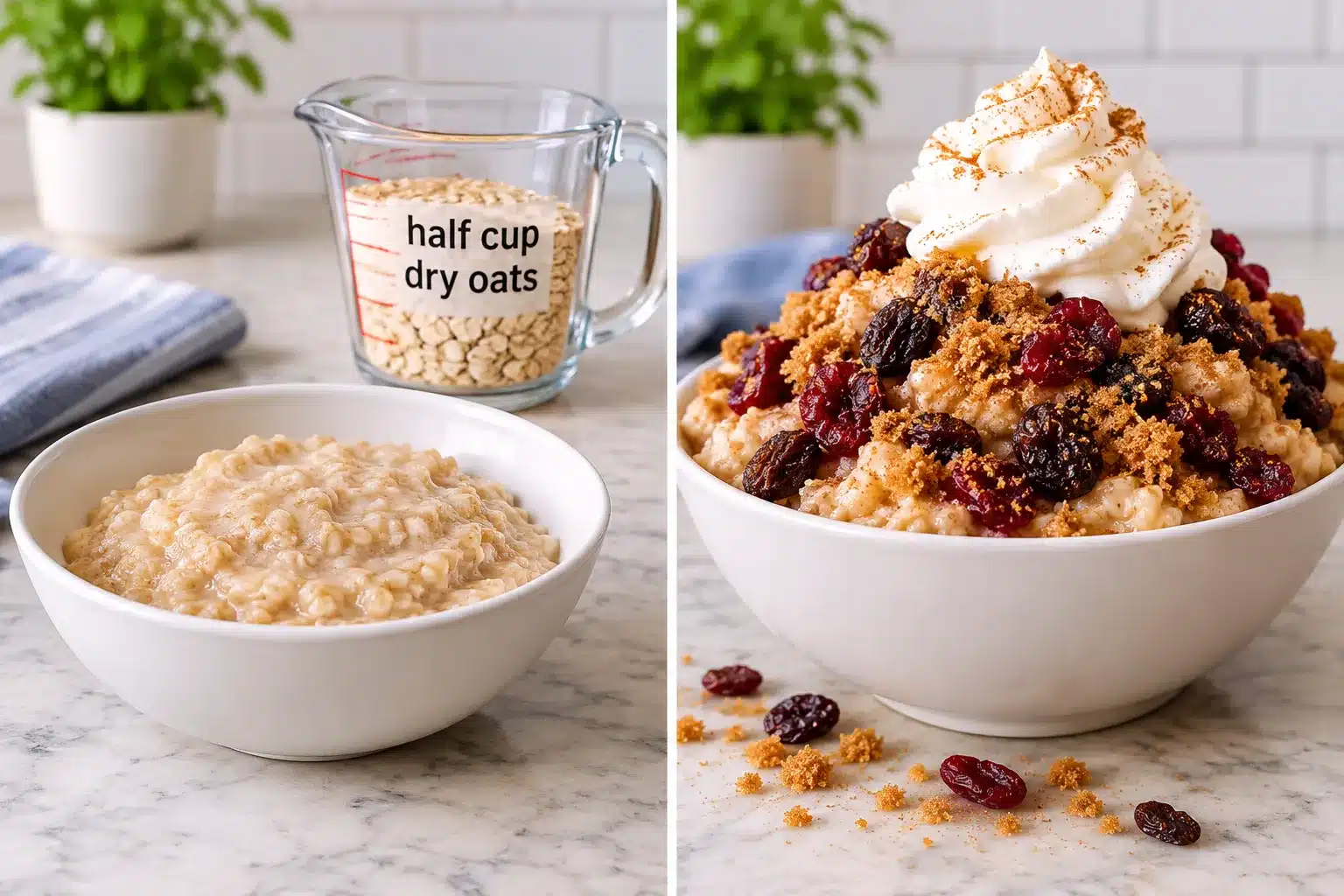
The toppings you add to oatmeal often matter more for weight loss than the oats themselves. Brown sugar, honey, maple syrup, dried fruit, and whipped cream can quietly add 150-300 extra calories to a single bowl [4][5].
Toppings to use sparingly:
- Brown sugar or white sugar (about 50 calories per tablespoon)
- Honey or maple syrup (about 60 calories per tablespoon)
- Dried fruit, which is calorie-dense compared to fresh fruit
- Full-fat whipped cream or flavored creamers
- Granola, which often contains added oils and sugar
Better options include fresh berries, a small amount of nut butter, cinnamon, unsweetened cocoa powder, or a scoop of protein powder. These add flavor and nutrients without the calorie spike.
Why Am I Not Losing Weight Even Though I Eat Oatmeal for Breakfast?
If you’re eating oatmeal but not losing weight, the most likely explanations are portion size, high-calorie toppings, or eating too many calories at other meals. Oatmeal can only help with weight loss if it fits inside your overall daily calorie needs [4][5].
Common reasons oatmeal breakfasts don’t lead to weight loss:
- Oversized portions (more than one cup cooked)
- Sugary toppings that double the calorie count
- Making up for “feeling virtuous” by eating more later
- Not enough protein, leading to hunger and snacking before lunch
- Underlying factors like sleep, stress, or medication side effects
If you’ve been consistent with portion control and toppings for several weeks without progress, it may be worth discussing other factors with a healthcare provider, including whether a prescription option such as those compared in our GLP-1 weight loss guide might be appropriate for your situation.
Can You Lose Weight Eating Oatmeal Every Single Day?
Yes, eating oatmeal every day can support weight loss, as long as your total daily calorie intake stays below what your body burns. There’s nothing inherently fattening or magical about eating the same breakfast daily, what matters is the complete picture of your diet [5].
That said, variety has practical benefits. Rotating toppings and occasionally swapping in eggs or a protein smoothie can prevent boredom, which is one of the most common reasons people abandon a diet plan altogether.
Edge case: People with certain digestive conditions or oat sensitivities may experience bloating from daily oatmeal. If you notice persistent digestive discomfort, consider alternating with other high-fiber breakfasts.
Oatmeal vs Eggs: Which Is Better for Weight Loss?
Neither oatmeal nor eggs is universally “better” for weight loss, they offer different strengths, and combining them often works best. Oatmeal provides more fiber, while eggs provide significantly more protein per calorie [3][7].
| Factor | Oatmeal (1 cup cooked) | Eggs (2 large) |
|---|---|---|
| Calories | ~150 | ~140 |
| Protein | ~5-6g | ~12g |
| Fiber | ~4g | 0g |
| Fullness factor | High (fiber-driven) | High (protein-driven) |
Choose oatmeal if you want more fiber and a budget-friendly, plant-based option. Choose eggs if your priority is maximizing protein per calorie. Choose both if you want a balanced breakfast that covers fiber and protein in one meal.
What’s the Best Time of Day to Eat Oatmeal to Lose Weight?
There is no single “best” time to eat oatmeal for weight loss, what matters most is total daily calorie intake, not meal timing. Oatmeal is traditionally eaten at breakfast, and this can work well because its fiber may help reduce hunger earlier in the day [4].
Some people also eat oatmeal before or after exercise because the carbohydrates provide accessible energy. If you’re managing a prescription weight-loss plan or GLP-1 medication schedule, timing your meals around your best time to take a GLP-1 shot may matter more than the specific hour you eat oatmeal.
Can Overnight Oats Help You Lose Weight, or Do They Have Too Much Sugar?
Overnight oats can absolutely support weight loss, but many popular recipes add sweeteners, chocolate chips, or sugary syrups that push calories higher than a basic cooked oatmeal bowl. The oats themselves are not the problem, the add-ins often are.
To keep overnight oats weight-loss friendly:
- Use unsweetened milk or a milk alternative
- Sweeten with fresh fruit instead of sugar or syrup
- Add a protein source like Greek yogurt or protein powder
- Measure the dry oats rather than eyeballing a large portion
- Skip toppings like granola clusters, chocolate chips, or candy pieces
Quick example: A basic overnight oats recipe with half a cup of dry oats, unsweetened almond milk, chia seeds, and sliced strawberries lands around 220-250 calories with solid fiber and some protein.
Is Oatmeal Good for Weight Loss If You Don’t Exercise?
Oatmeal can still support weight loss without exercise, because weight loss depends primarily on calorie balance, and oatmeal’s fiber can help you eat fewer calories overall [3][4]. Exercise offers many health benefits, but it’s not required for oatmeal’s fullness effect to work.
That said, pairing a high-fiber diet with regular movement generally produces better long-term results for weight maintenance and metabolic health. If you’re not currently exercising, starting with short walks after meals is a low-effort way to add activity without overhauling your routine.
Common Mistakes People Make When Eating Oatmeal for Dieting
The most frequent mistakes involve portion sizes, high-calorie toppings, and treating oatmeal as a free food that can be eaten without limits. Even a healthy food becomes a problem when portions and toppings aren’t tracked [5][6].
Checklist to avoid common oatmeal diet mistakes:
- Measure dry oats instead of guessing portion size
- Count topping calories, especially sugar, syrup, and dried fruit
- Add a protein source to avoid mid-morning hunger
- Avoid flavored instant packets loaded with added sugar
- Don’t skip other meals just because breakfast “felt healthy”
- Watch liquid calories like sweetened plant milk or flavored creamer
Best Low-Calorie Oatmeal Recipes for Weight Loss
Simple, protein-balanced recipes tend to work best for weight loss because they keep calories in check while improving fullness. Here are three practical options:
1. Protein-Boosted Oatmeal (about 280-300 calories)
Half a cup dry oats cooked in water, topped with a scoop of unflavored or vanilla protein powder stirred in, plus a half cup of fresh berries.
2. Greek Yogurt Overnight Oats (about 250-270 calories)
Half a cup dry oats, half a cup plain nonfat Greek yogurt, unsweetened almond milk, and cinnamon, refrigerated overnight.
3. Nut Butter and Banana Oatmeal (about 320 calories)
Half a cup dry oats cooked in water, topped with half a sliced banana and one tablespoon of natural peanut butter.
Each of these recipes balances fiber, protein, and modest healthy fats, which together support the fullness that makes oatmeal useful for weight management [3][4][7].
Oatmeal and Weight Loss: A Balanced Perspective
Oatmeal is a genuinely useful food for weight loss when eaten in reasonable portions with balanced toppings, but it is not a standalone solution. For some people, especially those managing more significant weight-loss goals, dietary changes alone may not be enough, and it’s worth discussing medical options like those outlined in our semaglutide weight loss medication guide or rx weight loss medication overview with a healthcare provider.
For readers comparing the cost of prescription options alongside everyday dietary strategies, resources like our GLP-1 weight loss cost breakdown can help with budgeting decisions.
FAQ
Is oatmeal good for weight loss?
Yes, oatmeal can support weight loss because it’s filling, relatively low in calories, and high in fiber. It works best when portions are controlled and toppings don’t add excess sugar or calories [3][4].
How many calories are in a bowl of oatmeal?
A half-cup dry serving (about one cup cooked) of plain oatmeal has roughly 150 calories, 4 grams of fiber, and 5 grams of protein when made with water [1][2].
Does oatmeal make you gain weight?
Oatmeal itself rarely causes weight gain, but large portions and high-calorie toppings like sugar, syrup, or dried fruit can add enough calories to contribute to weight gain over time [5].
Is oatmeal better than eggs for weight loss?
Oatmeal offers more fiber, while eggs offer more protein per calorie. Combining both in one meal often provides better fullness than either food alone [3][7].
Can I eat oatmeal every day and still lose weight?
Yes, as long as your total daily calorie intake stays within your target range. Daily oatmeal consumption is not harmful for most people when portions are controlled [5].
Are flavored instant oatmeal packets bad for weight loss?
Flavored instant oatmeal often contains added sugar, which increases calories without boosting fullness. Plain oats, sweetened naturally with fruit, are generally a better choice [5][6].
What should I add to oatmeal to make it more filling?
Adding protein, such as Greek yogurt, eggs on the side, or protein powder, along with healthy fats like nuts or seeds, tends to make oatmeal more filling and balanced [3][7].
7 Best GLP-1 Providers Ranked: Accreditation, Flexibility & Support Compared (2026 Update)
32,000+ Patients Can't All Be Wrong: See the Top-Rated GLP-1 Providers: Compared on accreditation, plan flexibility, and patient support — updated for 2026.
BMI MD GLP-1 Microdosing Plan
- Specialized microdosing options (sublingual drops or low-dose injections)
- Ideal for maintaining weight or tapering off higher doses safely
- Fully bundled plan with no hidden monthly platform memberships
DirectMeds Weight Loss Solutions
- Sourced from accredited, state-licensed 503A compounding pharmacies
- No-frills high-volume savings passed directly to the patient
- Includes clinical consultation and cold-chain shipping updates
MEDVi Flat-Rate Telehealth
- Flat monthly rate holds steady even at maximum maintenance doses
- No dosage upcharges or graduation fee penalties
- Offers both injectable and advanced oral thin-film delivery options
Gala GLP-1 Care Program
- All-inclusive plan with no standalone membership costs
- Continuous text-based messaging access with state-licensed clinicians
- Temperature-controlled, cold-chain medication shipping included
Measured GLP-1 Metabolic Health
- Comprehensive metabolic health screening and expert intake analysis
- Predictable long-term budgeting with stable plan pricing
- High-end responsive dashboard with integrated diagnostic support
Refills GLP-1 (TryRefills Plan)
- Flat rate holds steady as titration scales up
- Includes clinical guides for active side-effect management
- Bundles in foundational nutritional strategies alongside medication
AltRx GLP-1 Transactional Reorders
- Zero recurring auto-billing — pay entirely on a transactional basis
- Rapid text-to-order format saves time for experienced patients
- Provides both injectable forms and fast-dissolving tablet variations
Conclusion
Is oatmeal good for weight loss? The honest answer is yes, within limits. Oatmeal offers meaningful fiber, reasonable calories, and a filling texture that can help reduce overall food intake when it replaces less nutritious breakfast options. But the calories, benefits, and best ways to eat oatmeal all depend on how you prepare it. Oversized portions, sugary toppings, or skipping protein can quietly undo its benefits.
If you want to use oatmeal as part of a weight-loss plan, start by measuring your portions, adding a protein source, and keeping toppings simple. If diet and lifestyle changes alone aren’t producing the results you need, talk with a healthcare provider about additional options, including prescription treatments covered in our broader weight loss medication guides. A balanced approach, not a single food, is what drives lasting weight management.
References
- Label. nutrition.umd.edu.
- Label. nutrition.umd.edu.
- Oatmeal for Weight Loss. verywellhealth.com.
- Are Oats Good for Supporting Weight Loss. gqmiddleeast.com.
- Is Oatmeal Good for Weight Loss. prevention.com.
- Is Oatmeal Good For Weight Loss: A Dietitian-Backed Guide. fittr.com.
- Oatmeal vs. Greek Yogurt for Digestion. verywellhealth.com.
- Single Serving Oatmeal. extension.umd.edu.

With over 13 years of experience in holistic health blogging, I aim to help you navigate your wellness journey with honest insights, expert-backed advice, and a sprinkle of real-world practicality.
Certified Wellness Writer | Herbal Nutrition Advocate | Wellness Research Enthusiast