
glp1 microdose

Last updated: October 3, 2026
Quick Answer
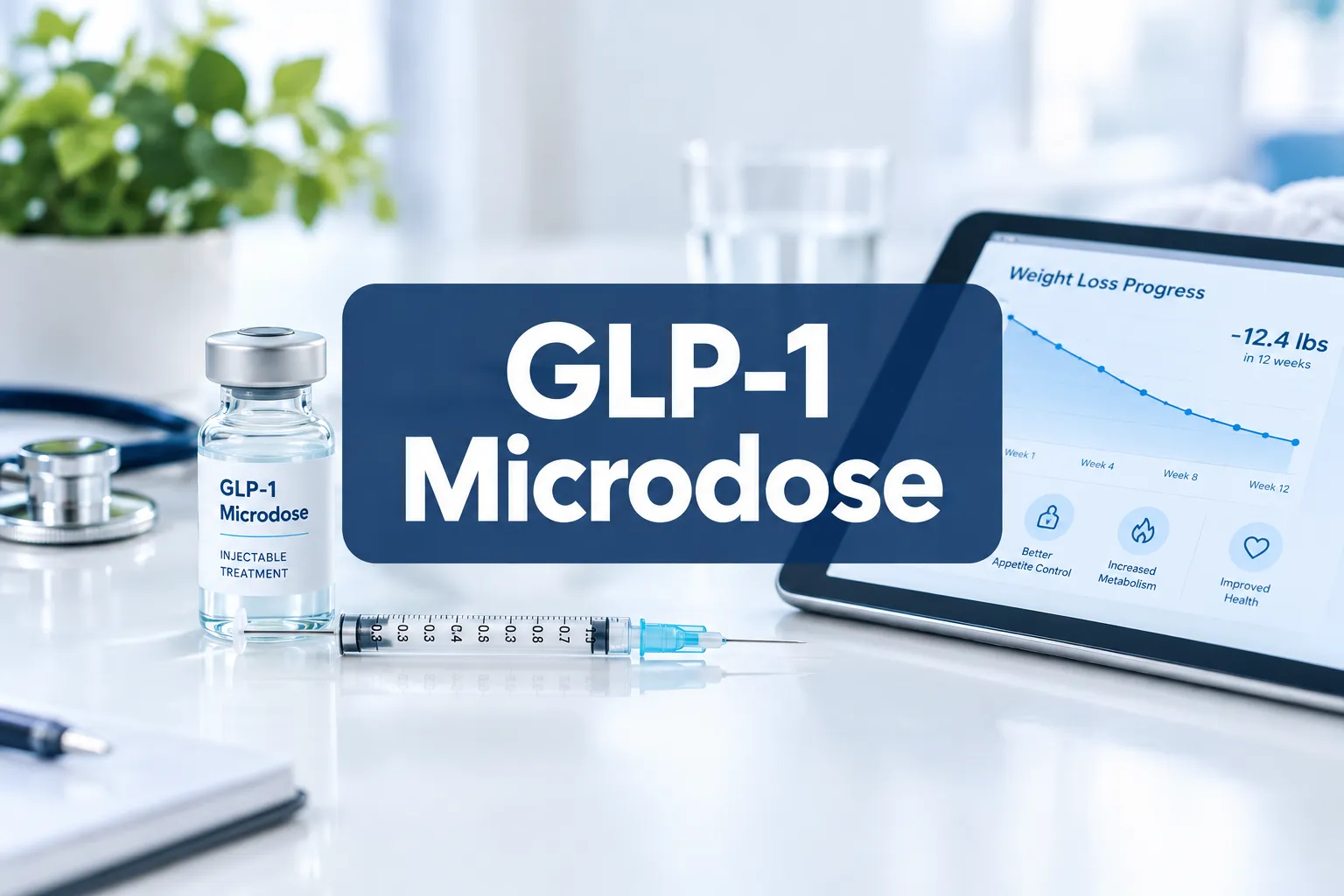
A GLP-1 microdose refers to taking a GLP-1 receptor agonist medication, such as semaglutide or tirzepatide, at a dose significantly lower than the FDA-approved therapeutic amount or at a less frequent interval than the labeled weekly schedule. This practice is not a recognized medical standard, is not endorsed by the American Diabetes Association, and has not been tested in dedicated clinical trials for weight loss [2][3]. While some patients report modest appetite suppression at lower doses, there is currently no robust evidence that a GLP-1 microdose produces clinically meaningful or lasting weight loss compared to full therapeutic dosing [1][9].
Key Takeaways
- A GLP-1 microdose is not an official medical term and is considered off-label use, not an evidence-based treatment protocol [3][9].
- Standard GLP-1 titration schedules already start at low doses, but these are temporary steps toward a full therapeutic dose, not intentional microdosing [2].
- Weight loss with GLP-1 medications is strongly dose-dependent; the most significant results occur at full maintenance doses, not sub-therapeutic ones [1][9].
- A 2026 Reuters analysis found that even the lowest approved starter doses of tirzepatide and semaglutide produced some weight loss (about 5.5% and 2.2% of body weight, respectively), but these are still approved doses, not informal microdoses [5].
- Major health systems, including Cleveland Clinic, NewYork-Presbyterian, and Tufts Medicine, advise against self-directed microdosing without medical supervision [2][3][9].
- The microdosing trend was largely popularized by social media influencers, not clinical research [8][10].
- Some patients turn to microdosing because of cost or side effects, but reducing doses without guidance risks both poor outcomes and wasted money [2][10].
- Anyone considering lower-dose GLP-1 use should work with a licensed prescriber who can adjust doses based on clinical goals, not social media advice [1][2][9].
What Is GLP-1 Microdosing and How Does It Work
GLP-1 microdosing means taking a GLP-1 receptor agonist, such as semaglutide (the active ingredient in Ozempic and Wegovy) or tirzepatide (Mounjaro, Zepbound), at a fraction of the standard prescribed dose or at longer intervals than the weekly schedule used in clinical trials. The goal, as promoted on social media, is to gain some appetite-suppressing benefit while reducing side effects or stretching a prescription further [2][8].
7 Best GLP-1 Providers Ranked: Accreditation, Flexibility & Support Compared (2026 Update)
32,000+ Patients Can't All Be Wrong: See the Top-Rated GLP-1 Providers. We compared the leading online GLP-1 providers based on program features, clinical support, convenience, and overall value.
BMI MD GLP-1 Microdosing Plan
- Specialized microdosing options, including sublingual drops and low-dose injections
- Designed for people interested in maintaining weight or gradually adjusting treatment
- Bundled program structure without a separate monthly platform membership
- Online access makes the process convenient from home

DirectMeds Weight Loss Solutions
- Online weight-loss program with a straightforward patient experience
- Compounded medication options through state-licensed compounding pharmacies
- Includes clinical consultation as part of the process
- Provides shipping updates to help patients track their orders
MEDVi Flat-Rate Telehealth
- Flat-rate telehealth approach designed for easier budgeting
- No dosage-based pricing increases within the advertised program structure
- Offers injectable and oral thin-film delivery options
- Includes medical screening and asynchronous provider consultations
Gala GLP-1 Care Program
- Text-based access to state-licensed clinicians
- Cold-chain medication shipping included in the program
- Month-to-month program structure
- Designed for people who value convenient ongoing support
Measured GLP-1 Metabolic Health
- Comprehensive metabolic health screening and intake analysis
- Designed around longer-term metabolic health management
- Responsive dashboard with integrated health tracking tools
- Useful option for patients who value a more data-focused experience
Refills GLP-1 (TryRefills Plan)
- Clinical guidance designed to help patients manage common treatment concerns
- Includes foundational nutritional strategies alongside medication
- Designed around predictable ongoing treatment
- No hidden startup or processing fees according to the program information provided
AltRx GLP-1 Transactional Reorders
- Transactional reorder model without recurring auto-billing
- Designed for patients who already understand their treatment routine
- Fast text-to-order process for convenient reorders
- Offers injectable and fast-dissolving tablet variations
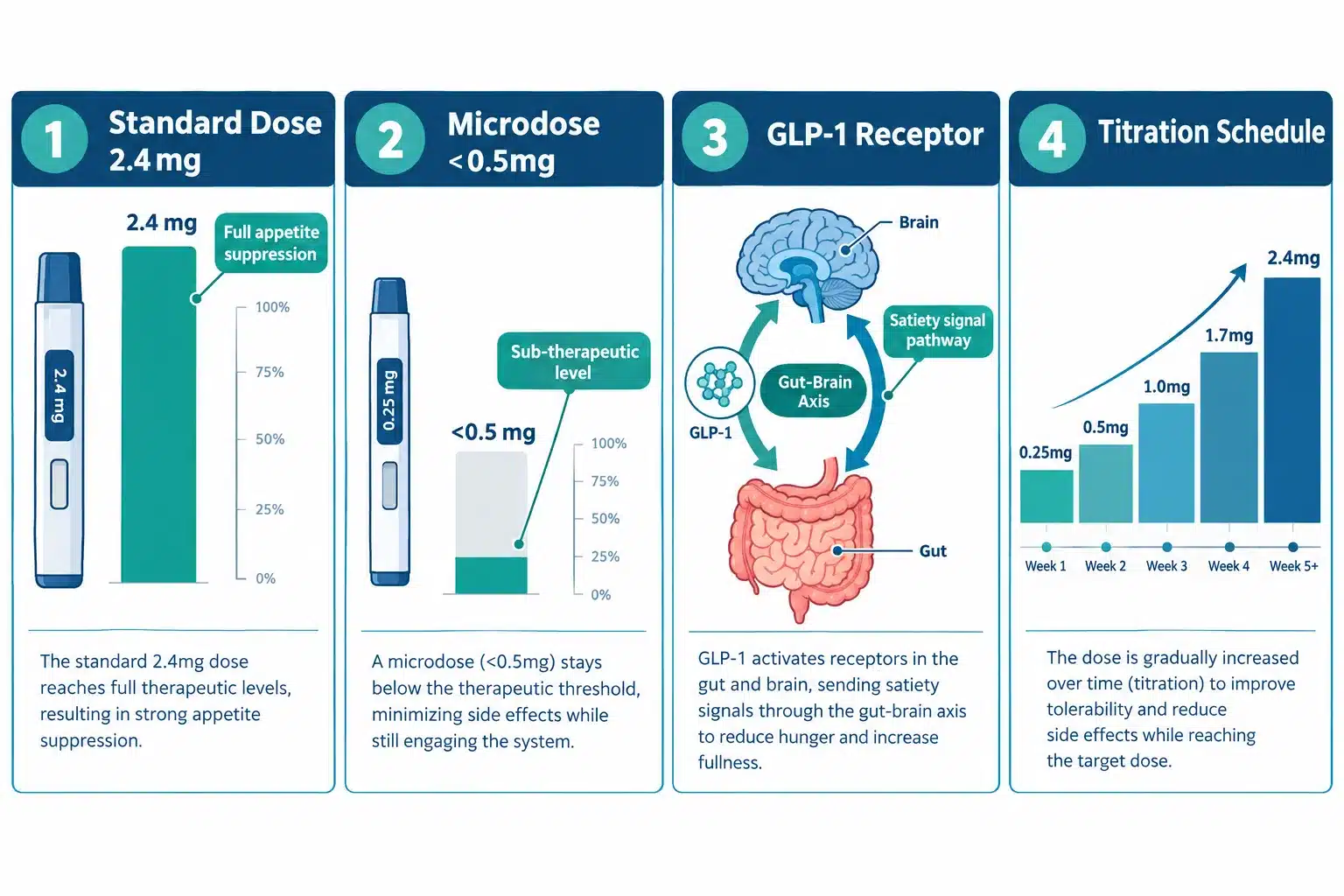
Here is how GLP-1 medications work at any dose: they bind to GLP-1 receptors in the gut and brain, slowing gastric emptying, increasing feelings of fullness, and reducing appetite. At full therapeutic doses, these effects are strong enough to produce the weight loss seen in clinical trials. At very low doses, the receptor activation is weaker, which means the appetite-suppressing signal is also weaker [1][4].
Key distinction: Standard titration schedules for semaglutide already begin at 0.25 mg weekly for the first four weeks, then escalate every four weeks toward a 2.4 mg maintenance dose. This starting dose is not a “microdose” in the social media sense. It is a temporary step to reduce nausea and other gastrointestinal side effects before reaching the dose that actually drives meaningful weight loss [2][9].
“Microdosing,” as used informally, typically means one of three things:
- Taking a fraction of even the starting dose (for example, 0.1 mg instead of 0.25 mg)
- Spacing injections to every 10 to 14 days instead of every 7
- Cycling “on” and “off” weeks to reduce cumulative side effects
None of these patterns match the dosing schedules used in clinical trials, so their effects on weight and safety have not been rigorously studied [6][9].
For a deeper look at how GLP-1 agonists work in the body, see this overview of GLP-1 agonists for weight loss.
GLP-1 Microdose vs Regular Dose: What Is the Difference
The core difference between a GLP-1 microdose and a regular therapeutic dose is the level of receptor activation and, as a result, the degree of appetite suppression and weight loss. Regular doses used in FDA-approved trials are calibrated to achieve a specific pharmacological effect. Microdoses fall below that threshold [1][2].
| Feature | Standard Therapeutic Dose | GLP-1 Microdose (Informal) |
|---|---|---|
| Dose level | FDA-approved maintenance dose (e.g., 2.4 mg semaglutide weekly) | Below starting dose or extended intervals |
| Clinical evidence | Tested in large randomized controlled trials | No dedicated clinical trials |
| Average weight loss | 15-20% of body weight over ~1 year | Unknown; likely modest at best |
| Medical endorsement | ADA guidelines, FDA approval | Not endorsed by ADA or major health systems |
| Side effect profile | Well-documented; managed through titration | Potentially fewer GI effects; risks not well studied |
| Supervision | Prescribed and monitored by a clinician | Often self-directed, sometimes using compounded products |
A critical point: weight loss with GLP-1 drugs is strongly dose-dependent. Yale Medicine and Cedars-Sinai both summarize trial data showing that full therapeutic doses typically yield 15 to 20% body weight reduction over roughly a year, while lower doses produce progressively smaller effects [1][4]. Staying at a sub-therapeutic dose is not a shortcut. It is, in most cases, a less effective version of the same treatment.
How Much Weight Can You Lose With GLP-1 Microdosing
There is no clinical trial data specifically measuring weight loss from informal GLP-1 microdosing, so any number you see online should be treated with skepticism. What we do know comes from data on the lowest approved doses, not true microdoses.
A 2026 Reuters report on a new analysis found that even the lowest approved starter doses of tirzepatide and semaglutide produced weight loss over one year: approximately 5.5% of body weight with tirzepatide and 2.2% with semaglutide at those low doses [5]. These are still FDA-approved doses used in the titration process, not the sub-therapeutic amounts that social media influencers describe as microdosing.
What this means in practice:
- At full maintenance doses, a person weighing 220 pounds might expect to lose 33 to 44 pounds over a year, based on trial averages.
- At the lowest approved starter doses, that same person might lose 5 to 12 pounds, based on the 2026 analysis [5].
- At informal microdoses below even the starter level, the weight loss would likely be smaller still, and no study has measured it directly [1][9][10].
Obesity specialists quoted by AARP and Everyday Health are consistent on this point: some people may see modest changes at lower doses, but there is no guarantee of clinically significant or lasting weight loss when doses fall below those tested in trials [10]. Anecdotal reports and social media testimonials are not a substitute for clinical evidence [2][8].
GLP-1 Microdose Cost and Insurance Coverage
GLP-1 microdosing is typically not covered by insurance because it is off-label and not a recognized standard of care. Insurance plans, including Medicare and most commercial plans, cover GLP-1 medications only when prescribed at approved doses for approved indications, such as type 2 diabetes or obesity management [2][10].
Patients who pursue microdosing often do so through:
- Compounded semaglutide or tirzepatide, sourced from compounding pharmacies, which can be significantly cheaper than brand-name products but carry quality and consistency concerns.
- Self-directed dose stretching, where a patient takes a smaller portion of a standard prescription to make it last longer, which is not medically advised.
For context on realistic costs, see our guides on GLP-1 without insurance and the cost of GLP-1 semaglutide and compounded tirzepatide. If budget is the primary concern, there are legitimate cheap GLP-1 programs worth exploring before resorting to unguided microdosing.
Common mistake: Patients sometimes assume that taking half the dose means paying half the price while still getting half the benefit. In practice, the dose-response curve for GLP-1 medications is not linear, and sub-therapeutic doses may produce far less than proportional benefit while still costing a meaningful amount [1][9].
Where Can I Get a GLP-1 Microdose Prescribed
No licensed physician will write a prescription specifically labeled as a “microdose” because it is not a recognized dosing protocol. However, some telehealth platforms and compounding pharmacies do offer lower starting doses or flexible titration schedules that allow patients to adjust their dose with physician oversight [3][6].
If you want to start at a lower dose for tolerability reasons, the right approach is:
- Work with a licensed prescriber, either in person or through a reputable telehealth platform.
- Ask specifically about a slower titration schedule if you are concerned about side effects.
- Use an FDA-registered compounding pharmacy if cost is a barrier, and verify its legitimacy before ordering.
For guidance on finding trustworthy compounding sources, see our article on how to verify a legitimate compounding pharmacy and our review of compounded semaglutide from real patient stories.
Choose this path if: You want the flexibility of lower doses without abandoning medical oversight. A prescriber can customize your titration schedule while still monitoring your progress and safety.
GLP-1 Microdose Side Effects and Risks
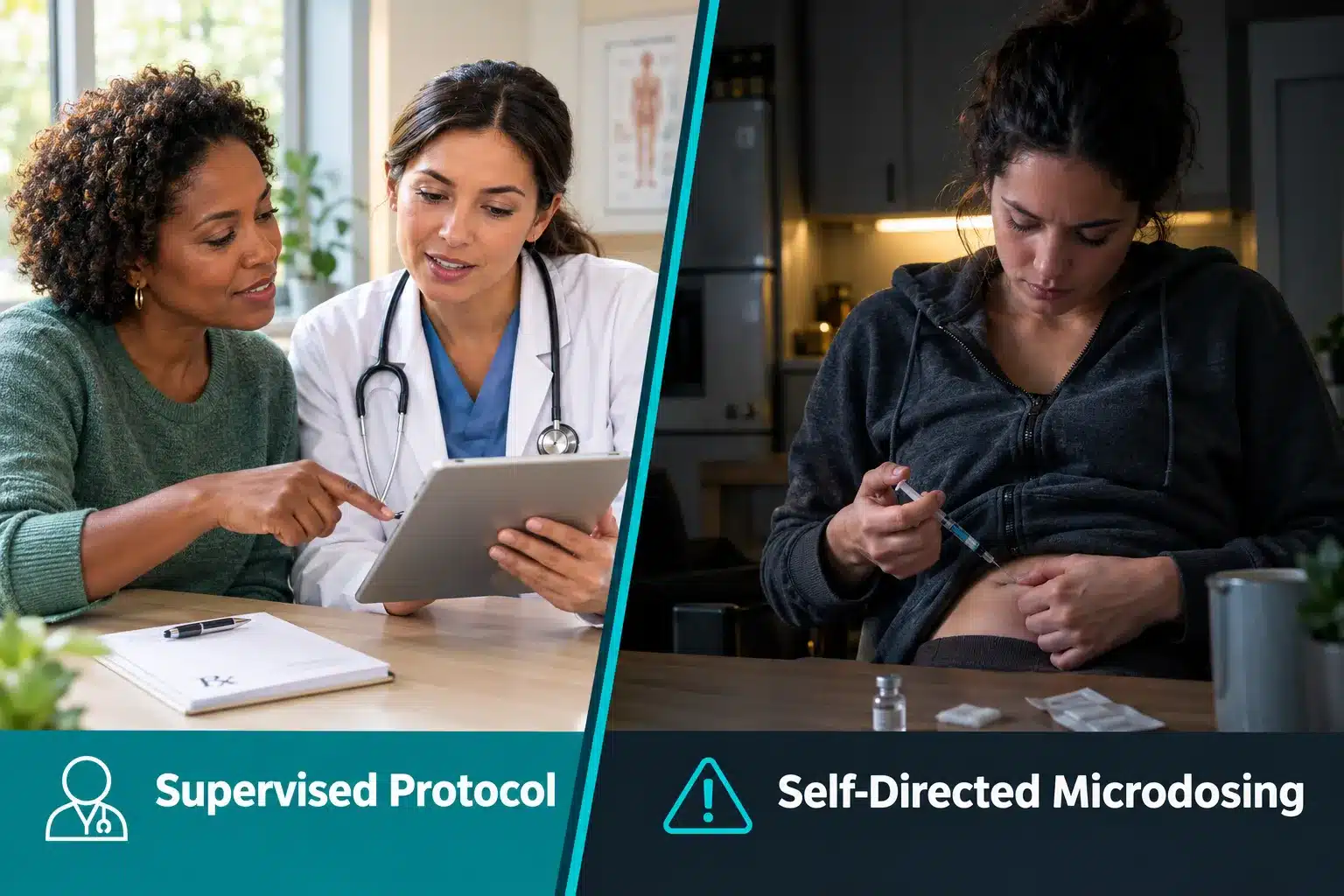
GLP-1 microdosing carries both the standard side effects of GLP-1 medications and additional risks specific to unguided, off-label use. The standard side effects at any dose include nausea, vomiting, diarrhea, constipation, and fatigue. These tend to be milder at lower doses, which is one reason some patients prefer staying at sub-therapeutic levels [1][4].
The additional risks of self-directed microdosing include:
- Compounded product quality issues. Many microdosing patients use compounded semaglutide or tirzepatide, which may vary in concentration, sterility, and purity compared to brand-name products [2][6]. See our guide on why sterile compounding pharmacy quality matters for GLP-1.
- Inconsistent dosing. Self-administered dose adjustments can lead to unpredictable peaks and troughs in drug levels, altering both efficacy and side-effect profiles [6][9].
- Lack of monitoring. Without regular check-ins with a prescriber, side effects, contraindications, and underlying conditions may go undetected [2][10].
- Masking of underlying conditions. For people with diabetes, sub-therapeutic GLP-1 dosing may produce inconsistent glycemic control without the patient or their doctor realizing it [2][6].
- Delayed effective treatment. Spending months at a sub-therapeutic dose means months without the full metabolic benefit, potentially allowing weight-related complications to progress [9].
Is GLP-1 Microdosing Safe Long Term
There is no long-term safety data specifically for GLP-1 microdosing because no clinical trial has studied it as a deliberate strategy. The long-term safety data that does exist applies to FDA-approved doses used in supervised clinical settings [3][9].
Major health systems, including NewYork-Presbyterian and the University of Rochester Medical Center, state clearly that GLP-1 microdosing is not a recognized standard of care and that current dosing recommendations are based on trials conducted at approved doses [3][6]. Tufts Medicine adds that the most significant and durable weight loss occurs at full maintenance doses, not at the low end of the dosing spectrum [9].
The honest answer: We do not know whether long-term microdosing is safe because it has not been studied. What we do know is that self-directed dose manipulation without medical oversight introduces risks that supervised clinical care is designed to prevent [2][6][9].
Who Should Not Take a GLP-1 Microdose
Anyone who falls into the following categories should not pursue GLP-1 microdosing, and in many cases should not take GLP-1 medications at all without careful medical evaluation:
- People with a personal or family history of medullary thyroid carcinoma or multiple endocrine neoplasia syndrome type 2. This is a contraindication for all GLP-1 receptor agonists at any dose [4].
- People with a history of pancreatitis. GLP-1 medications carry a risk of pancreatitis, and self-directed dosing without monitoring increases that risk [2][9].
- People managing type 2 diabetes with other medications. Inconsistent GLP-1 dosing can complicate glycemic management and interact with insulin or sulfonylureas [2][6].
- Pregnant or breastfeeding individuals. GLP-1 medications are not approved for use during pregnancy [4].
- People sourcing medications from unverified online pharmacies. The product quality and safety cannot be guaranteed [6][10].
If you are unsure whether you qualify for GLP-1 therapy at any dose, a prescriber evaluation is the right first step, not a self-directed experiment with a compounded product.
GLP-1 Microdose for Weight Loss vs Diabetes: Key Differences
GLP-1 medications were originally developed for type 2 diabetes management and later approved at higher doses specifically for obesity treatment. The distinction matters for microdosing because the goals, monitoring requirements, and risks differ between these two uses.
For weight loss (non-diabetic patients): The FDA-approved doses for obesity (e.g., 2.4 mg semaglutide weekly as Wegovy) are higher than those approved for diabetes. A microdose in this context is likely to fall well below the threshold needed for meaningful weight loss, and there is no clinical evidence that it produces lasting results [1][9][10].
For type 2 diabetes: GLP-1 medications improve blood sugar control through a different mechanism than their weight-loss effect. Even lower doses can have some glycemic benefit, but inconsistent or sub-therapeutic dosing risks poor glucose control, which carries its own serious health consequences [2][6].
Can you microdose GLP-1 if you do not have diabetes? Yes, in the sense that nothing physically prevents it. But without a diabetes diagnosis, you are using the medication entirely off-label at a dose that has not been validated for weight loss. The Cleveland Clinic notes that taking smaller doses than prescribed “isn’t a good idea” and is not backed by official guidelines [2]. A better approach is to work with a prescriber to find the lowest dose that still produces a clinical benefit for your specific situation.
For more on how semaglutide dosing works across indications, see our semaglutide dosage guide for weight loss.
GLP-1 Microdose vs Ozempic: Which Is Better
This is a comparison that conflates two different things. Ozempic is a brand-name semaglutide product approved for type 2 diabetes at doses of 0.5 mg, 1 mg, and 2 mg weekly. A GLP-1 microdose is a dosing strategy, not a specific product. You could theoretically microdose Ozempic, Wegovy, or a compounded semaglutide equivalent.
The more useful comparison is between a supervised, evidence-based dosing protocol and an informal microdosing approach:
- Ozempic at approved doses has extensive clinical trial data supporting its safety and efficacy for blood sugar control and cardiovascular risk reduction.
- A GLP-1 microdose has no dedicated trial data and is considered off-label by every major medical institution [2][3][9].
If cost is the reason you are considering microdosing instead of a standard Ozempic prescription, there are better options. See our comparison of GLP-1 programs under $300 and explore GLP-1 payment plans that make full-dose therapy more accessible.
Common Mistakes People Make With GLP-1 Microdosing
The biggest mistakes tend to cluster around three themes: sourcing, expectations, and oversight.
Sourcing mistakes:
- Buying compounded GLP-1 products from unverified online pharmacies without checking for PCAB accreditation or state pharmacy board registration.
- Assuming that a lower price means a comparable product.
Expectation mistakes:
- Expecting the same weight loss as full-dose therapy at a fraction of the dose.
- Interpreting reduced nausea at a low dose as a sign that the dose is “working” for weight loss.
- Treating social media testimonials as clinical evidence [8][10].
Oversight mistakes:
- Adjusting doses without telling a prescriber, which can complicate ongoing care.
- Skipping follow-up appointments because the dose feels manageable.
- Not tracking weight, blood sugar, or other relevant metrics, making it impossible to know whether the approach is actually working [2][6][9].
How Long Does It Take to See Results From a GLP-1 Microdose
At full therapeutic doses, most patients begin to notice appetite suppression within the first few weeks, with measurable weight loss typically appearing within 4 to 8 weeks and continuing over 12 to 18 months. At sub-therapeutic microdoses, the timeline for any noticeable effect is less predictable and likely longer, if results appear at all [1][9].
The 2026 Reuters analysis of the lowest approved starter doses found weight loss of roughly 2.2% with semaglutide and 5.5% with tirzepatide over one year [5]. Informal microdoses below even these starter levels would be expected to produce smaller effects over the same period, though no study has measured this directly.
Practical guidance: If you are at a low dose for tolerability reasons and have not seen any meaningful change in appetite or weight after 8 to 12 weeks, that is a strong signal to discuss a dose increase with your prescriber rather than continuing at a sub-therapeutic level [2][9].
GLP-1 Microdose Not Working: What to Do
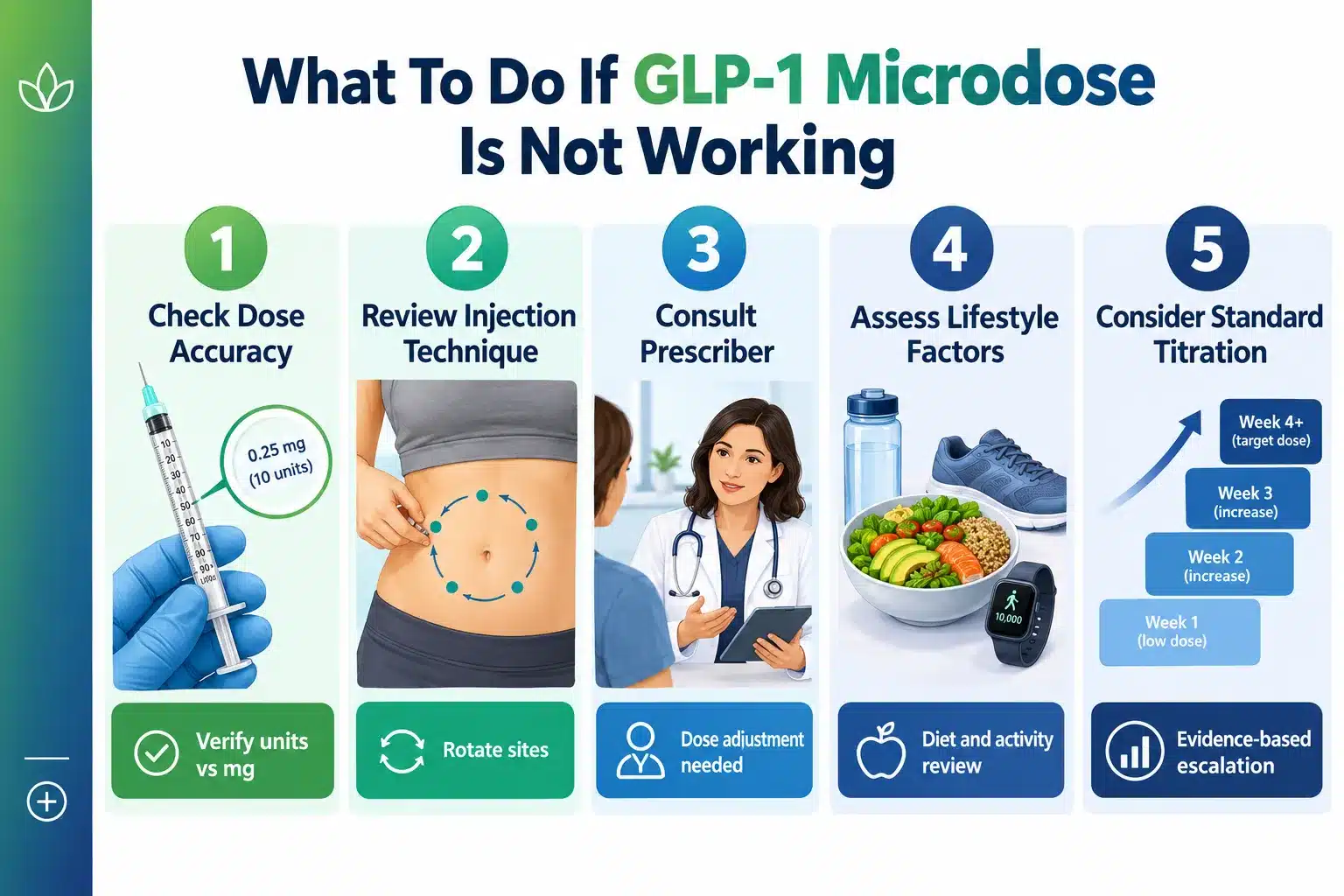
If a GLP-1 microdose is not producing results, the most likely explanation is that the dose is simply too low to activate GLP-1 receptors sufficiently for meaningful appetite suppression or weight loss. This is not a failure of the medication. It is a predictable consequence of using a sub-therapeutic dose [1][2][9].
Here are the steps to take:
- Verify your dose and injection technique. Confirm that you are measuring the dose correctly, especially if using a compounded vial where concentration can vary.
- Contact your prescriber. Share your lack of progress and ask about moving to the next step on the standard titration schedule.
- Review lifestyle factors. GLP-1 medications work best alongside dietary changes and physical activity. A sub-therapeutic dose combined with a high-calorie diet is unlikely to produce results regardless of the medication.
- Consider switching to a supervised full-dose protocol. The evidence strongly supports that meaningful weight loss requires reaching maintenance doses [1][4][9].
- Evaluate your product source. If using a compounded product, consider whether the formulation is consistent and from a verified pharmacy.
Frequently Asked Questions
Is GLP-1 microdosing the same as the standard titration schedule?
No. Standard titration starts at a low dose (0.25 mg semaglutide weekly) as a temporary step toward the full 2.4 mg maintenance dose. GLP-1 microdosing means intentionally staying at a very low dose indefinitely, which is a different and unsupported strategy [2][9].
Can I microdose GLP-1 to avoid side effects?
Lower doses do tend to produce fewer gastrointestinal side effects, but staying at a sub-therapeutic dose to avoid side effects also means staying below the dose that produces meaningful weight loss. A prescriber can help you find a slower titration schedule that balances tolerability and efficacy [1][4].
Is compounded semaglutide safe for microdosing?
Compounded semaglutide from an accredited pharmacy can be a legitimate lower-cost option, but quality varies significantly between providers. Self-directed microdosing with compounded products, without prescriber oversight, adds additional risk [6][10].
Will insurance cover a GLP-1 microdose?
Almost certainly not. Insurance coverage for GLP-1 medications is tied to approved indications and dosing protocols. Off-label microdosing is unlikely to be covered [2][10].
Does microdosing GLP-1 work for appetite control even without weight loss?
Some patients report reduced appetite at lower doses, but this has not been systematically studied. Appetite suppression without meaningful weight loss may not provide the metabolic benefits associated with full-dose GLP-1 therapy [1][9].
How do I find a doctor who will prescribe a lower GLP-1 dose?
Any licensed prescriber can adjust your GLP-1 dose based on your clinical needs. Ask specifically about a slower titration schedule if tolerability is your concern. Telehealth platforms that specialize in GLP-1 prescribing often offer flexible protocols.
Is GLP-1 microdosing the same as what is being tested in Novo Nordisk’s OASIS-5 trial?
No. The OASIS-5 trial, launched in August 2026, is testing lower daily maintenance doses of oral semaglutide in a controlled clinical setting to find the lowest effective approved dose. This is fundamentally different from the informal, self-directed microdosing discussed on social media.
What is the lowest dose of semaglutide that has shown weight loss in a study?
The lowest approved starter dose (0.25 mg weekly) has shown approximately 2.2% body weight loss over one year in a 2026 analysis, but this is an approved dose, not a true microdose [5].
Can microdosing GLP-1 help maintain weight after stopping full-dose therapy?
There is no clinical evidence supporting this use. Some patients try this approach to avoid regaining weight after stopping full doses, but it has not been studied and is not recommended by major health systems [3][9][10].
Is GLP-1 microdosing legal?
Using a prescription medication at a dose different from what is prescribed is off-label, not illegal for the patient. However, prescribers are bound by standard-of-care guidelines, and sourcing medications from unregulated online pharmacies may carry legal and safety risks [6][10].
7 Best GLP-1 Providers Ranked: Accreditation, Flexibility & Support Compared (2026 Update)
32,000+ Patients Can't All Be Wrong: See the Top-Rated GLP-1 Providers: Compared on accreditation, plan flexibility, and patient support — updated for 2026.
BMI MD GLP-1 Microdosing Plan
- Specialized microdosing options (sublingual drops or low-dose injections)
- Ideal for maintaining weight or tapering off higher doses safely
- Fully bundled plan with no hidden monthly platform memberships
DirectMeds Weight Loss Solutions
- Sourced from accredited, state-licensed 503A compounding pharmacies
- No-frills high-volume savings passed directly to the patient
- Includes clinical consultation and cold-chain shipping updates
MEDVi Flat-Rate Telehealth
- Flat monthly rate holds steady even at maximum maintenance doses
- No dosage upcharges or graduation fee penalties
- Offers both injectable and advanced oral thin-film delivery options
Gala GLP-1 Care Program
- All-inclusive plan with no standalone membership costs
- Continuous text-based messaging access with state-licensed clinicians
- Temperature-controlled, cold-chain medication shipping included
Measured GLP-1 Metabolic Health
- Comprehensive metabolic health screening and expert intake analysis
- Predictable long-term budgeting with stable plan pricing
- High-end responsive dashboard with integrated diagnostic support
Refills GLP-1 (TryRefills Plan)
- Flat rate holds steady as titration scales up
- Includes clinical guides for active side-effect management
- Bundles in foundational nutritional strategies alongside medication
AltRx GLP-1 Transactional Reorders
- Zero recurring auto-billing — pay entirely on a transactional basis
- Rapid text-to-order format saves time for experienced patients
- Provides both injectable forms and fast-dissolving tablet variations
Conclusion
The appeal of a GLP-1 microdose is understandable. Full-dose GLP-1 therapy can be expensive, side effects can be uncomfortable, and the idea of getting some benefit at a lower dose sounds practical. But the evidence does not support it as a reliable strategy for meaningful weight loss, and every major health system that has addressed the topic has reached the same conclusion: GLP-1 microdosing is not a recognized standard of care, is not endorsed by the American Diabetes Association, and has not been validated in clinical trials [2][3][9].
What you should do instead:
- If cost is the barrier, explore GLP-1 programs under $300 or GLP-1 payment plans that make full-dose therapy more accessible.
- If side effects are the concern, ask your prescriber about a slower titration schedule, which keeps you on an evidence-based path while giving your body more time to adjust.
- If you are unsure whether GLP-1 therapy is right for you, start with a foundational overview of GLP-1 agonists for weight loss and consult a licensed prescriber.
- If you are already using a compounded product, verify your pharmacy’s legitimacy using our guide to verifying a legitimate compounding pharmacy.
The bottom line: lower doses of GLP-1 medications produce lower results. If you want the benefits that clinical trials have demonstrated, work with a prescriber to reach and maintain a therapeutic dose safely. That is the approach backed by evidence, and it is the one most likely to produce the results you are looking for.
References
[1] Can Microdosing GLP-1s Promote Health and Weight Loss – https://www.cedars-sinai.org/stories-and-insights/expert-advice/can-microdosing-glp-1s-promote-health-and-weight-loss
[2] Microdosing GLP-1 – https://health.clevelandclinic.org/microdosing-glp-1
[3] What Is GLP-1 Microdosing – https://www.nyp.org/healthmatters/what-is-glp-1-microdosing
[4] Microdosing GLP-1 and Accutane: What Does It Mean and Does It Work – https://www.yalemedicine.org/news/microdosing-glp-1-and-accutane-what-does-it-meanand-does-it-work
[5] GLP-1 Weight Loss Drugs Effective Even at Low Starter Doses – https://www.reuters.com/business/healthcare-pharmaceuticals/glp-1-weight-loss-drugs-effective-even-low-starter-doses-2026-08-31/
[6] What Is GLP-1 Microdosing – https://www.urmc.rochester.edu/news./publications/health-matters/what-is-glp-1-microdosing
[7] Microdosing GLP-1s – https://www.weightwatchers.com/us/blog/microdosing_glp1s
[8] GLP-1 Microdosing Weight Loss – https://www.today.com/health/diet-fitness/glp-1-microdosing-weight-loss-rcna237337
[9] Microdosing GLP-1s: Your Questions Answered – https://www.tuftsmedicine.org/about-us/news/microdosing-glp-1s-your-questions-answered
[10] Microdosing GLP-1 Drugs for Weight Loss – https://www.aarp.org/health/drugs-supplements/microdosing-glp1-drugs-for-weight-loss/


