
GLP 1 Microdosing: The Low-Dose Weight Loss Method Explained

Last updated: October 3, 2026
Quick Answer: GLP-1 microdosing means taking a much smaller-than-standard dose of a GLP-1 receptor agonist medication (such as semaglutide or tirzepatide) to reduce side effects while still getting some appetite-suppressing and metabolic benefits. It is not an FDA-approved protocol, and the clinical evidence is still limited, but it is gaining real attention from patients and physicians alike. Anyone considering it should work with a licensed prescriber rather than self-adjusting their dose.
Key Takeaways
- GLP-1 microdosing involves using doses significantly below the standard approved titration schedule, often to minimize nausea and other gastrointestinal side effects.
- The FDA has not approved any microdosing protocol for GLP-1 medications; it is not a recognized standard of care.
- Most interest in GLP-1 microdosing has been driven by social media trends and patient-led experimentation, not clinical guidelines.
- Early anecdotal reports suggest some people experience meaningful appetite reduction at low doses, but controlled trial data remains sparse.
- Compounded semaglutide and tirzepatide make microdosing more accessible and affordable, though quality and safety vary by pharmacy.
- Side effects at microdoses are generally milder, but effectiveness for weight loss may also be reduced compared to standard dosing.
- Anyone using GLP-1 medications at any dose should do so under medical supervision, with regular check-ins to assess progress.
- People with type 2 diabetes should be especially cautious about self-directed dose reductions, since glycemic control depends on adequate dosing.
What Is GLP-1 Microdosing and How Does It Work
GLP-1 microdosing refers to taking a fraction of the standard starting dose of a GLP-1 receptor agonist, typically far below even the initial titration dose recommended in prescribing guidelines. The goal is to activate GLP-1 receptors enough to reduce appetite and slow gastric emptying while keeping side effects, especially nausea and vomiting, to a minimum.
7 Best GLP-1 Providers Ranked: Accreditation, Flexibility & Support Compared (2026 Update)
32,000+ Patients Can't All Be Wrong: See the Top-Rated GLP-1 Providers. We compared the leading online GLP-1 providers based on program features, clinical support, convenience, and overall value.
BMI MD GLP-1 Microdosing Plan
- Specialized microdosing options, including sublingual drops and low-dose injections
- Designed for people interested in maintaining weight or gradually adjusting treatment
- Bundled program structure without a separate monthly platform membership
- Online access makes the process convenient from home

DirectMeds Weight Loss Solutions
- Online weight-loss program with a straightforward patient experience
- Compounded medication options through state-licensed compounding pharmacies
- Includes clinical consultation as part of the process
- Provides shipping updates to help patients track their orders
MEDVi Flat-Rate Telehealth
- Flat-rate telehealth approach designed for easier budgeting
- No dosage-based pricing increases within the advertised program structure
- Offers injectable and oral thin-film delivery options
- Includes medical screening and asynchronous provider consultations
Gala GLP-1 Care Program
- Text-based access to state-licensed clinicians
- Cold-chain medication shipping included in the program
- Month-to-month program structure
- Designed for people who value convenient ongoing support
Measured GLP-1 Metabolic Health
- Comprehensive metabolic health screening and intake analysis
- Designed around longer-term metabolic health management
- Responsive dashboard with integrated health tracking tools
- Useful option for patients who value a more data-focused experience
Refills GLP-1 (TryRefills Plan)
- Clinical guidance designed to help patients manage common treatment concerns
- Includes foundational nutritional strategies alongside medication
- Designed around predictable ongoing treatment
- No hidden startup or processing fees according to the program information provided
AltRx GLP-1 Transactional Reorders
- Transactional reorder model without recurring auto-billing
- Designed for patients who already understand their treatment routine
- Fast text-to-order process for convenient reorders
- Offers injectable and fast-dissolving tablet variations
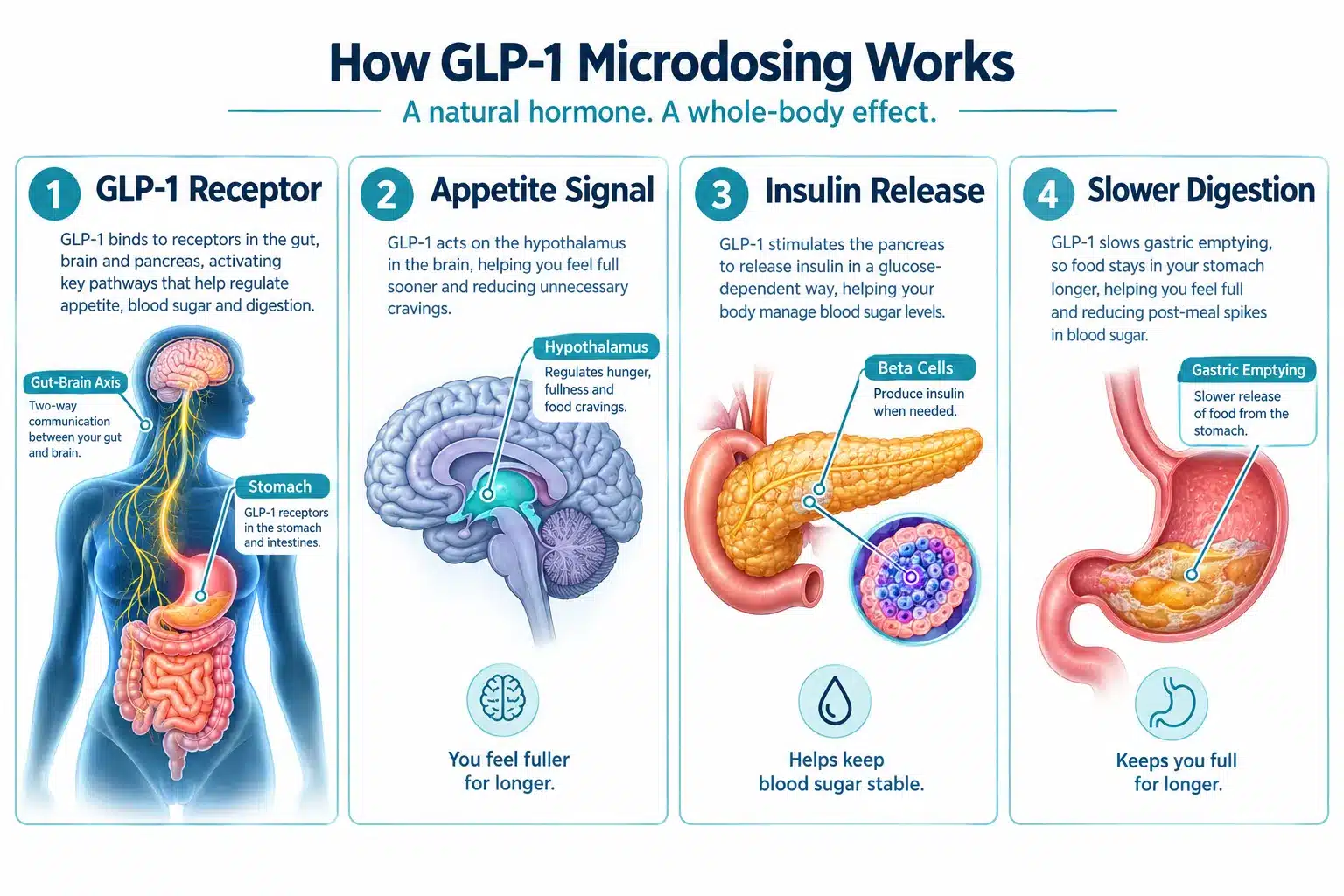
GLP-1 (glucagon-like peptide-1) is a hormone your gut releases after you eat. It signals your brain to feel full, prompts your pancreas to release insulin, and slows how quickly food moves through your stomach. Medications like semaglutide (Ozempic, Wegovy) and tirzepatide (Mounjaro, Zepbound) mimic this hormone at much higher concentrations than your body produces naturally. Standard approved doses start at 0.25 mg weekly for semaglutide and ramp up over months.
Microdosing, in this context, means using doses like 0.05 mg or 0.1 mg weekly, well below the 0.25 mg starting point. Some patients and prescribers have explored this approach when the standard titration causes intolerable side effects or when cost is a barrier to full-dose therapy [4].
How it works in practice: At low doses, the medication still binds to GLP-1 receptors in the gut and brain. The appetite-suppressing signal is present, just weaker. For some people, that gentler signal is enough to reduce food cravings and caloric intake without the intense nausea that can accompany standard doses [5].
“Microdosing GLP-1 medications is not an officially recognized medical protocol. It emerged largely from patient communities online and has since drawn the attention of clinicians curious about whether lower doses can offer a better tolerability profile.”, Cleveland Clinic Health [4]
GLP-1 Microdosing vs Regular Dosing: What’s the Difference
Standard GLP-1 dosing follows a structured titration schedule approved by the FDA, while GLP-1 microdosing uses doses that fall below that schedule entirely. The key differences come down to dose size, expected outcomes, and the evidence behind each approach.
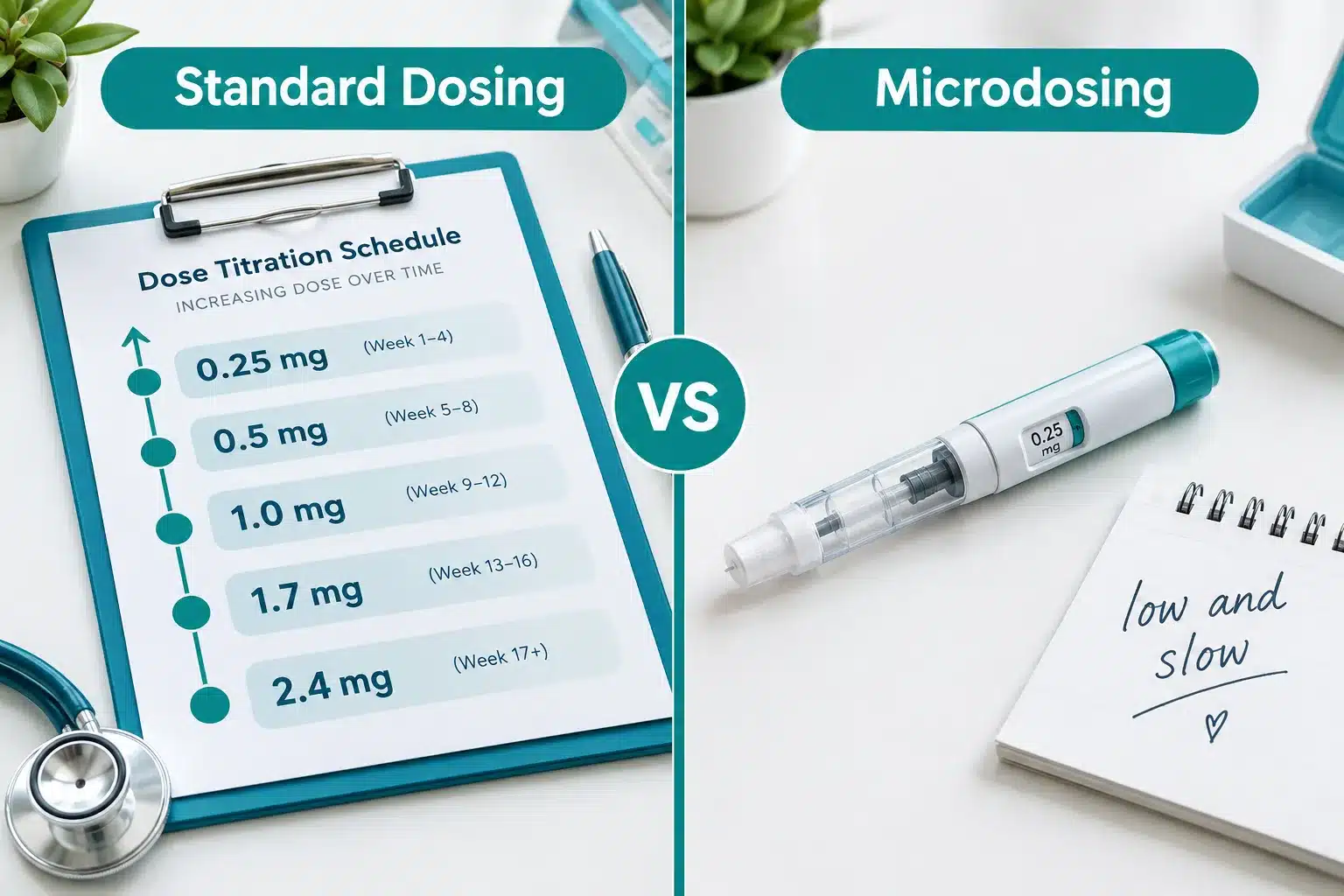
Here is a side-by-side look at the two approaches:
| Feature | Standard Dosing | Microdosing |
|---|---|---|
| Starting dose (semaglutide) | 0.25 mg/week | 0.05-0.1 mg/week (estimated) |
| FDA approval status | Approved | Not approved |
| Side effect profile | More nausea, especially early on | Generally milder |
| Weight loss evidence | Strong clinical trial data | Very limited; mostly anecdotal |
| Cost | Higher (brand-name drugs) | Potentially lower via compounding |
| Medical supervision needed | Yes | Yes, arguably more so |
Standard dosing is backed by large randomized controlled trials. Microdosing lacks that evidence base, which is the central concern raised by major medical centers including NewYork-Presbyterian and the University of Rochester Medical Center [5][6].
Choose standard dosing if: you need clinically proven weight loss results and your insurance or budget supports it.
Consider discussing microdosing with your doctor if: you’ve had to stop GLP-1 therapy due to severe side effects, or you’re looking for a lower-cost entry point under medical supervision.
Is GLP-1 Microdosing Safe and Effective
GLP-1 microdosing appears to be relatively safe for most healthy adults when supervised by a physician, but its effectiveness for meaningful weight loss has not been established in clinical trials. The safety profile at lower doses is generally better than at standard doses, since most adverse effects are dose-dependent.
Experts at Cedars-Sinai note that while lower doses may reduce nausea and vomiting, there is no guarantee that a sub-therapeutic dose will produce the same metabolic benefits seen in approved trials [7]. The University of Rochester Medical Center cautions that people should not self-adjust doses without physician guidance, since even small changes in GLP-1 medications can have significant physiological effects [6].
What the evidence actually shows:
- Anecdotal reports from patients describe reduced appetite and modest weight loss at microdoses [8].
- One early-stage clinical trial (NCT07092605) registered on ClinicalTrials.gov is exploring lower-dose semaglutide regimens, though results are not yet published [3].
- No large randomized controlled trial has specifically tested a microdosing protocol against standard dosing for weight loss outcomes.
- HealthyWomen and MU Health both note that the trend is largely driven by social media, not peer-reviewed research [1][2].
Bottom line: Microdosing is not unsafe by definition, but calling it “effective” requires more evidence than currently exists. It may be a reasonable harm-reduction strategy for people who cannot tolerate standard doses, but it should not be marketed or self-administered as a proven weight loss method.
GLP-1 Microdosing Side Effects
Side effects from GLP-1 microdosing are typically milder than those seen at standard doses, because most GLP-1 side effects are dose-dependent. That said, they do not disappear entirely.
Common side effects even at low doses:
- Mild nausea, especially in the first few weeks
- Decreased appetite (this is also the intended effect)
- Occasional fatigue or headache
- Mild constipation or loose stools
Side effects that are less common at microdoses:
- Severe vomiting
- Significant gastroparesis (delayed gastric emptying)
- Pancreatitis (rare but reported at standard doses)
GoodRx notes that the tolerability advantage of lower doses is one of the primary reasons patients and some clinicians explore microdosing, particularly for those who previously stopped treatment due to nausea [10]. However, AARP’s coverage of the trend points out that reducing the dose also reduces the pharmacological signal, so patients may not get the full benefit either [8].
Edge case: Some people report that even very small doses cause noticeable nausea. If that happens, it is a sign to discuss dose adjustment or an alternative medication with your prescriber, not to push through without guidance.
Who Should Use GLP-1 Microdosing
GLP-1 microdosing may be worth discussing with a doctor for adults who have tried standard GLP-1 therapy and experienced intolerable side effects, or for those who want to start at the lowest possible dose for personal or financial reasons. It is not appropriate as a self-directed experiment.
Potentially good candidates:
- Adults who stopped semaglutide or tirzepatide due to severe nausea or vomiting
- People with a lower body weight who may be more sensitive to standard doses
- Patients who want a gradual, conservative introduction to GLP-1 therapy
- Those using compounded GLP-1 medications where custom dosing is easier to arrange
Not appropriate for:
- People with type 2 diabetes who need adequate glycemic control (dose reductions can compromise blood sugar management)
- Anyone self-adjusting without a prescriber’s knowledge
- People expecting the same weight loss results as the clinical trials without the clinical doses
WeightWatchers’ coverage of the microdosing trend emphasizes that it should be seen as a personalized medicine conversation, not a DIY workaround [9]. If you’re managing diabetes alongside weight concerns, see our overview of semaglutide for type 2 diabetes for context on why dosing precision matters even more in that setting.
GLP-1 Microdosing for Weight Loss Results
The weight loss results from GLP-1 microdosing are likely to be more modest than those from standard dosing, though some patients report meaningful reductions in appetite and gradual weight loss. No clinical trial has quantified average weight loss specifically from a microdosing protocol.
In the landmark STEP trials for semaglutide at 2.4 mg weekly, participants lost an average of around 15% of body weight over 68 weeks. At a fraction of that dose, it is reasonable to expect a fraction of that result, though individual responses vary considerably.
What patients and clinicians have observed anecdotally [4][7][8]:
- Some people lose 5-8% of body weight over several months at low doses
- Others experience primarily appetite reduction without significant scale movement
- A subset find that microdosing serves as a “bridge” dose before titrating up to a standard therapeutic range
Realistic expectations matter. If your goal is 15-20% body weight reduction, microdosing alone is unlikely to get you there based on current understanding. If your goal is appetite control, reduced food noise, and a tolerable entry point into GLP-1 therapy, microdosing may offer value.
For a broader look at how tirzepatide compares for weight loss, see our guide on weight loss with Mounjaro and real tirzepatide reviews by patients.
Can You Microdose Ozempic or Wegovy
Yes, it is technically possible to administer a lower-than-labeled dose of Ozempic or Wegovy, but doing so is off-label and not recommended without physician guidance. Ozempic pens are pre-set to deliver 0.25 mg, 0.5 mg, 1 mg, or 2 mg per injection, which limits how precisely you can reduce the dose using a standard pen.
Some patients have attempted to deliver partial doses by counting “clicks” on the Ozempic pen dial, but this method is not validated and the accuracy is uncertain [4]. Cleveland Clinic explicitly cautions against this approach, noting that the pens are not designed for partial dosing and that the actual amount delivered may not match what the dial suggests [4].
Compounded semaglutide offers more flexibility here. Compounding pharmacies can prepare semaglutide in custom concentrations that allow for smaller, more precise doses. This is one reason why compounded products have become closely associated with the microdosing trend. For more on how compounded GLP-1 products compare to brand-name versions, see our analysis of whether compounded GLP-1 is as effective as brand name.
Common mistake: Assuming that halving the dose by counting clicks on a brand-name pen is medically equivalent to a compounded microdose. The delivery mechanism and concentration are different, and the actual dose delivered can vary.
GLP-1 Microdosing Protocol: How to Start
There is no single standardized GLP-1 microdosing protocol, because it has not been validated in clinical trials. What exists are physician-guided approaches that start below the approved titration schedule and adjust based on patient response.
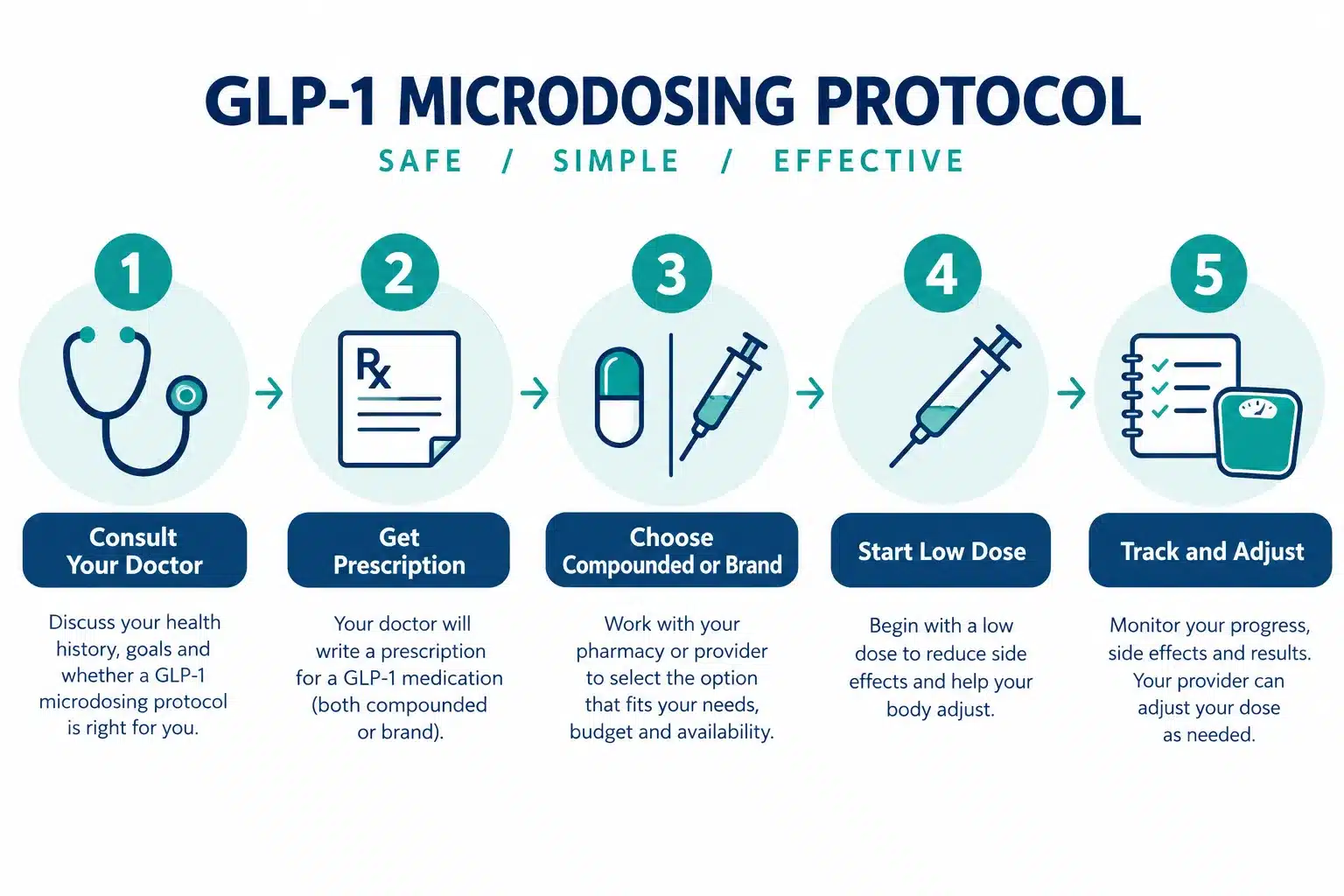
Here is a general framework based on how clinicians have approached it [5][6][7]:
- Consult a licensed prescriber. Do not start or adjust GLP-1 dosing on your own. A physician or nurse practitioner needs to evaluate your health history, current medications, and goals.
- Discuss your reasons for microdosing. Whether it’s side effect history, cost, or sensitivity concerns, your prescriber needs that context to tailor the approach.
- Get a prescription for a compounded product if needed. Brand-name pens do not allow precise sub-threshold dosing. A compounding pharmacy can prepare a lower concentration. See our guide on compounding pharmacy semaglutide costs to understand pricing.
- Start at the agreed low dose and hold for 4-6 weeks. Give your body time to respond before adjusting.
- Track appetite, weight, and side effects weekly. Use a simple journal or app. Share this data with your prescriber at follow-up visits.
- Titrate up if tolerated and needed. The goal for most patients is to eventually reach a therapeutic dose, not to stay at a microdose indefinitely.
Decision rule: If you’ve been on a microdose for 8-12 weeks with no meaningful appetite change or weight loss, it’s time to discuss titrating up or reconsidering the approach with your doctor.
GLP-1 Microdosing Cost and Price
GLP-1 microdosing is often pursued partly because it can be more affordable than standard-dose brand-name therapy. Brand-name Ozempic and Wegovy can cost over $900 per month without insurance. Compounded semaglutide, which is the primary vehicle for microdosing, typically costs significantly less.
Compounded semaglutide from a licensed 503A or 503B pharmacy generally ranges from roughly $150 to $400 per month depending on the dose and provider, though prices vary widely. At a microdose, the monthly medication cost may be lower still, since you’re using less active ingredient per month.
For current pricing comparisons, our breakdown of compounding pharmacy semaglutide costs in 2026 covers what to expect from different provider types. If you’re paying out of pocket, also see our guide on GLP-1 medications without insurance.
Important caveat: Lower cost should not come at the expense of safety. Always verify that a compounding pharmacy is properly licensed and accredited. Our guide on how to verify a legitimate compounding pharmacy walks through exactly what to check.
GLP-1 Microdosing Not Working: What to Do
If GLP-1 microdosing is not producing results after 8-12 weeks, the most likely explanation is that the dose is simply too low to produce a meaningful pharmacological effect. This is the core trade-off of the approach.
Steps to take if it’s not working:
- Rule out adherence issues first. Are you injecting consistently, on the same day each week, using proper technique?
- Review your diet and activity. GLP-1 medications work best alongside behavioral changes. They are not a replacement for a calorie-aware eating pattern.
- Talk to your prescriber about titrating up. Moving from a microdose toward the standard starting dose (0.25 mg for semaglutide) is the logical next step if tolerability has been established.
- Consider switching medications. If semaglutide at any dose isn’t working well for you, tirzepatide (which targets both GLP-1 and GIP receptors) may produce a different response. See our Mounjaro shot for weight loss overview for comparison.
- Evaluate whether microdosing was the right fit. For some people, the dose needed for meaningful weight loss is simply higher than a microdose can provide.
Common mistake: Staying at an ineffective microdose for months because the side effects are tolerable. Tolerability is a good sign, but it’s not the same as efficacy. The goal is a dose that is both tolerable and effective.
Alternatives to GLP-1 Microdosing
If GLP-1 microdosing doesn’t seem like the right fit, there are several alternatives worth discussing with a healthcare provider.
Within GLP-1 therapy:
- Standard titration with anti-nausea support (ginger, ondansetron) to manage early side effects
- Switching from weekly to bi-weekly injections at a physician’s direction
- Trying a different GLP-1 agent (tirzepatide vs semaglutide) since tolerability profiles differ
Outside GLP-1 therapy:
- Older weight loss medications (phentermine, topiramate combinations) for patients who can’t access or tolerate GLP-1 drugs
- Structured dietary programs with medical supervision
- Behavioral interventions focused on appetite regulation
For those concerned about constant hunger driving overeating, our article on why you’re hungry all the time covers the physiological causes that GLP-1 therapy addresses.
Where to Get a GLP-1 Microdosing Prescription
You cannot get a GLP-1 microdosing prescription from a pharmacy directly. You need a licensed prescriber, such as a physician, nurse practitioner, or physician assistant, to write a prescription that specifies a custom dose.
Options for getting a prescription:
- Your primary care physician or endocrinologist (best option for continuity of care)
- A telehealth platform that specializes in GLP-1 prescriptions (faster access, often lower cost for the consultation)
- A weight loss clinic or metabolic health practice
Once you have a prescription for a custom dose, a compounding pharmacy can prepare the medication. Make sure the pharmacy is accredited by the Pharmacy Compounding Accreditation Board (PCAB) or operates under FDA oversight as a 503B outsourcing facility. Our guide on sterile compounding pharmacies and why it matters for GLP-1 explains the difference and why it affects safety.
Do not: purchase GLP-1 medications from unverified online sources, social media sellers, or any provider that does not require a prescription. Counterfeit and contaminated products have been reported in the market.
GLP-1 Microdosing for Diabetes vs Weight Loss
For people with type 2 diabetes, GLP-1 microdosing carries additional risks that do not apply to those using these medications purely for weight management. Adequate GLP-1 receptor agonist dosing is directly tied to blood sugar control in diabetic patients, and reducing the dose below therapeutic levels can compromise glycemic outcomes.
For weight loss in non-diabetic patients, the stakes of a sub-therapeutic dose are lower in terms of acute health risk, though the trade-off is reduced efficacy. For diabetic patients, an inadequate dose could mean elevated HbA1c, increased cardiovascular risk, and the need for additional diabetes medications [6].
The key distinction:
- Weight loss use: A microdose may produce partial benefit with fewer side effects; the main downside is reduced weight loss.
- Diabetes use: A microdose may be insufficient to control blood glucose; the downside includes real metabolic risk.
If you have type 2 diabetes and are interested in lower-dose GLP-1 therapy, this conversation must happen with your endocrinologist or diabetes care team, not based on a social media trend.
Common Mistakes With GLP-1 Microdosing
The biggest mistakes people make with GLP-1 microdosing are self-directing the process and having unrealistic expectations about outcomes.
Mistakes to avoid:
- Self-adjusting dose without a prescriber. This is the most dangerous mistake. GLP-1 medications interact with other drugs and conditions in ways that require medical oversight.
- Counting pen clicks to estimate dose. Ozempic pens are not designed for partial dosing. The dose delivered per click is not validated for microdosing purposes [4].
- Expecting standard-dose results at a fraction of the dose. The dose-response relationship in GLP-1 therapy is real. Less medication generally means less effect.
- Buying from unverified compounding pharmacies. Not all compounding pharmacies meet the same safety standards. Contamination and inaccurate dosing are documented risks.
- Treating microdosing as a permanent solution. For most patients, the goal should be to titrate toward a therapeutic dose over time, using microdosing as a starting point, not a destination.
- Ignoring diet and lifestyle. GLP-1 medications reduce appetite, but they do not eliminate the need for a reasonable dietary approach. Patients who make no dietary changes see significantly smaller results [7].
Frequently Asked Questions
What exactly counts as a “microdose” for GLP-1 medications?
There is no official definition. In practice, it refers to doses below the FDA-approved starting dose, typically under 0.25 mg weekly for semaglutide. Some patients use doses as low as 0.05 mg weekly.
Is GLP-1 microdosing FDA-approved?
No. The FDA has not approved any microdosing protocol for GLP-1 medications. Any use below the labeled starting dose is off-label [4][5].
Can I microdose Wegovy or Ozempic using the standard pen?
Standard brand-name pens are not designed for sub-threshold dosing and cannot reliably deliver doses below the labeled minimum. Compounded semaglutide in a vial with a separate syringe allows more precise low-dose administration [4].
Will microdosing GLP-1 still reduce my appetite?
Some people report reduced appetite at low doses. However, the effect is generally weaker than at standard doses, and not everyone responds at sub-therapeutic levels [7][10].
How long does it take to see results with GLP-1 microdosing?
Most patients who respond will notice some appetite change within 2-4 weeks. Meaningful weight loss, if it occurs, typically takes 8-12 weeks or longer at low doses [8].
Is compounded semaglutide the same as brand-name Ozempic or Wegovy?
The active ingredient is the same, but compounded products are not FDA-approved and quality can vary by pharmacy. See our full breakdown of whether compounded GLP-1 is as effective as brand name.
Can I microdose tirzepatide (Mounjaro/Zepbound)?
Yes, the same general principles apply. Tirzepatide can be compounded at lower concentrations for microdosing purposes, but the same caveats about medical supervision and limited evidence apply.
Who should absolutely not try GLP-1 microdosing?
People with type 2 diabetes who need reliable glycemic control, anyone with a personal or family history of medullary thyroid carcinoma or MEN2 syndrome, and anyone planning to self-direct dosing without a prescriber.
Does microdosing reduce the risk of muscle loss associated with GLP-1 medications?
Lower doses may reduce the rate of overall weight loss, which could theoretically preserve more lean mass. However, the primary strategy for preserving muscle during GLP-1 therapy is adequate protein intake and resistance exercise, not dose reduction alone.
Is there any clinical trial evidence for GLP-1 microdosing?
One clinical trial (NCT07092605) is currently registered on ClinicalTrials.gov exploring lower-dose semaglutide regimens, but results have not been published as of 2026 [3].
How does microdosing compare to just stopping GLP-1 therapy entirely?
Stopping entirely means losing all pharmacological benefit. Microdosing, even if sub-therapeutic, may maintain some appetite suppression and metabolic signaling. For patients who cannot tolerate standard doses, a supervised microdose is generally preferable to discontinuation [6].
Where can I find a doctor who understands GLP-1 microdosing?
Look for physicians who specialize in obesity medicine, endocrinology, or metabolic health. Telehealth platforms focused on GLP-1 prescriptions are also increasingly familiar with this approach.
7 Best GLP-1 Providers Ranked: Accreditation, Flexibility & Support Compared (2026 Update)
32,000+ Patients Can't All Be Wrong: See the Top-Rated GLP-1 Providers: Compared on accreditation, plan flexibility, and patient support — updated for 2026.
BMI MD GLP-1 Microdosing Plan
- Specialized microdosing options (sublingual drops or low-dose injections)
- Ideal for maintaining weight or tapering off higher doses safely
- Fully bundled plan with no hidden monthly platform memberships
DirectMeds Weight Loss Solutions
- Sourced from accredited, state-licensed 503A compounding pharmacies
- No-frills high-volume savings passed directly to the patient
- Includes clinical consultation and cold-chain shipping updates
MEDVi Flat-Rate Telehealth
- Flat monthly rate holds steady even at maximum maintenance doses
- No dosage upcharges or graduation fee penalties
- Offers both injectable and advanced oral thin-film delivery options
Gala GLP-1 Care Program
- All-inclusive plan with no standalone membership costs
- Continuous text-based messaging access with state-licensed clinicians
- Temperature-controlled, cold-chain medication shipping included
Measured GLP-1 Metabolic Health
- Comprehensive metabolic health screening and expert intake analysis
- Predictable long-term budgeting with stable plan pricing
- High-end responsive dashboard with integrated diagnostic support
Refills GLP-1 (TryRefills Plan)
- Flat rate holds steady as titration scales up
- Includes clinical guides for active side-effect management
- Bundles in foundational nutritional strategies alongside medication
AltRx GLP-1 Transactional Reorders
- Zero recurring auto-billing — pay entirely on a transactional basis
- Rapid text-to-order format saves time for experienced patients
- Provides both injectable forms and fast-dissolving tablet variations
Conclusion
GLP-1 microdosing is a real phenomenon, but it is not a shortcut or a proven protocol. It is a patient-driven adaptation of approved GLP-1 therapy, driven largely by the desire to avoid side effects and reduce costs. The evidence base is thin, the FDA has not approved it, and major medical centers consistently advise against self-directed dose adjustments.
That said, it is not without merit as a supervised, individualized strategy. For adults who have tried and stopped GLP-1 therapy due to intolerable nausea, or who need a gentler on-ramp to medication, a physician-guided microdosing approach may offer a reasonable path forward.
Your actionable next steps:
- Do not adjust your GLP-1 dose on your own. Book an appointment with your prescriber to discuss your tolerability concerns or cost barriers.
- If cost is the issue, ask specifically about compounded semaglutide or tirzepatide options and verify the pharmacy’s accreditation before proceeding.
- Set realistic expectations. Microdosing may reduce appetite and support gradual weight loss, but it is unlikely to replicate the outcomes from full-dose clinical trials.
- Track your response carefully and share that data with your doctor at every follow-up.
- View microdosing as a starting point, not a destination. The goal for most patients is a tolerable, effective therapeutic dose, not the lowest possible one indefinitely.
GLP-1 therapy, at any dose, works best as part of a broader approach that includes thoughtful eating habits, regular physical activity, and consistent medical oversight.
References
[1] Microdosing GLP-1 Drugs – https://www.healthywomen.org/condition/microdosing-glp-1-drugs
[2] Thinking About Microdosing GLP-1? 5 Myths Debunked – https://livehealthy.muhealth.org/stories/thinking-about-microdosing-glp-1-5-myths-debunked
[3] NCT07092605 – https://clinicaltrials.gov/study/NCT07092605
[4] Microdosing GLP-1 – https://health.clevelandclinic.org/microdosing-glp-1
[5] What Is GLP-1 Microdosing – https://www.nyp.org/healthmatters/what-is-glp-1-microdosing
[6] What Is GLP-1 Microdosing – https://www.urmc.rochester.edu/news./publications/health-matters/what-is-glp-1-microdosing
[7] Can Microdosing GLP-1s Promote Health and Weight Loss – https://www.cedars-sinai.org/stories-and-insights/expert-advice/can-microdosing-glp-1s-promote-health-and-weight-loss
[8] Microdosing GLP-1 Drugs for Weight Loss – https://www.aarp.org/health/drugs-supplements/microdosing-glp1-drugs-for-weight-loss/
[9] Microdosing GLP-1s – https://www.weightwatchers.com/us/blog/microdosing_glp1s
[10] Microdosing GLP-1 – https://www.goodrx.com/conditions/weight-loss/microdosing-glp-1

With over 13 years of experience in holistic health blogging, I aim to help you navigate your wellness journey with honest insights, expert-backed advice, and a sprinkle of real-world practicality.
Certified Wellness Writer | Herbal Nutrition Advocate | Wellness Research Enthusiast


