What Is the Best Injection for Weight Loss at Home? Options, Safety, and What to Know

Last updated: November 18, 2026
Quick Answer
The best injection for weight loss at home for most adults with obesity is a once-weekly GLP-1 receptor agonist like semaglutide, or a dual GIP/GLP-1 agonist like tirzepatide, prescribed by a licensed provider and self-administered with a prefilled pen.[1][2] There’s no single “best” drug for everyone, the right choice depends on your health history, side effect tolerance, and what a doctor confirms is safe for you.
Key Takeaways
- Semaglutide and tirzepatide are the two main injectable medications used for long-term obesity treatment, both delivered through once-weekly subcutaneous pens.[1][2]
- The World Health Organization’s December 2025 guideline supports GLP-1 medicines for adults with a BMI of 30 or higher, alongside diet and activity changes, not as a standalone fix.[2][3]
- Self-injecting at home is generally considered safe when patients follow pen instructions, rotate injection sites, and watch for infection signs.[4][5]
- Both drug classes carry a boxed warning about thyroid C-cell tumor risk and are not for people with a personal or family history of medullary thyroid cancer.[1][6]
- Without insurance, these medications are expensive monthly expenses, and costs vary widely by provider, dose, and brand.
- Oral GLP-1 pills are emerging but injections currently have more real-world use for this drug class.
- Pregnant women should not use these medications, per WHO guidance.[2][3]
What types of weight loss injections can you do at home
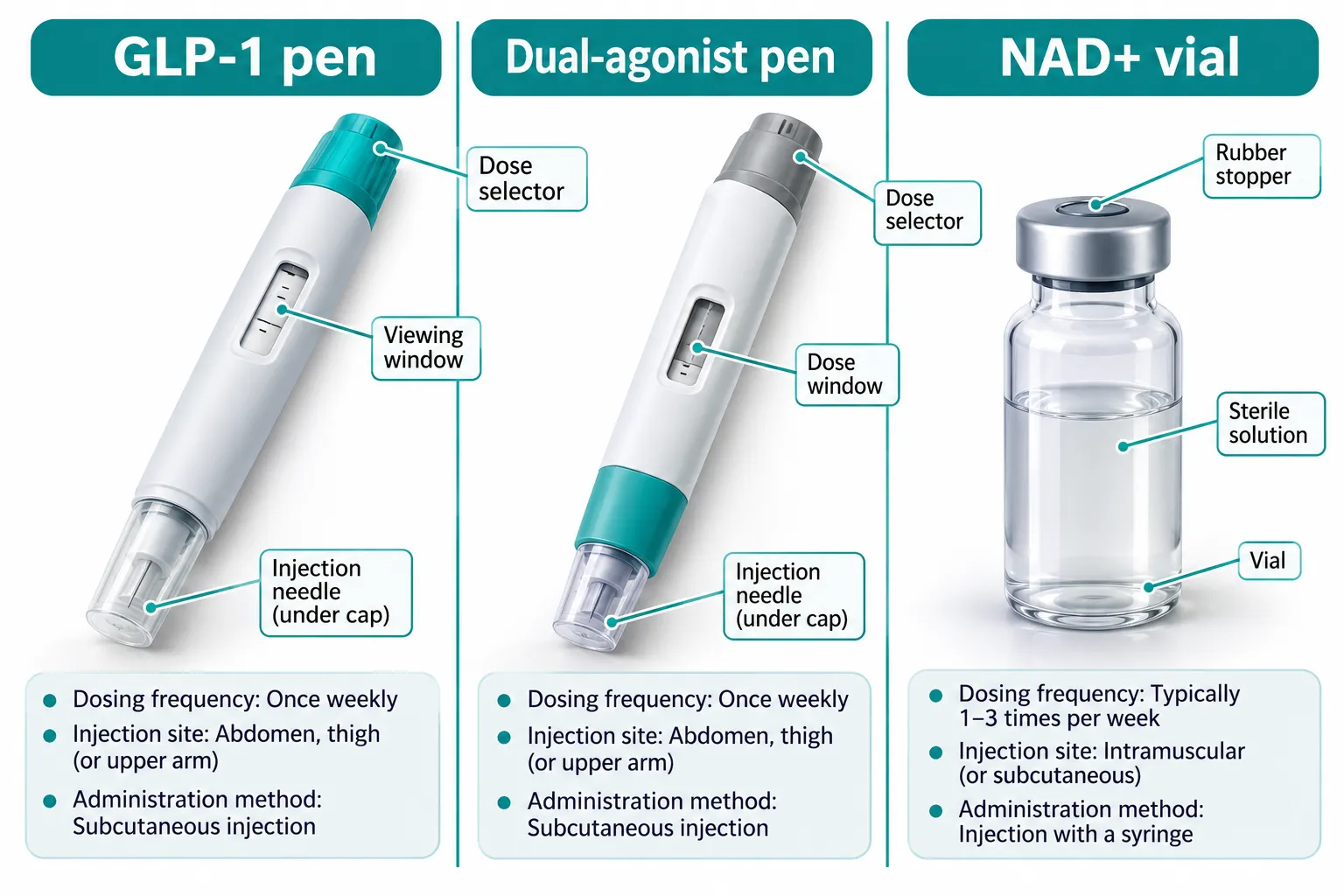
The main injectable options approved for home use are GLP-1 receptor agonists (semaglutide, sold as Wegovy or Ozempic) and dual GIP/GLP-1 agonists (tirzepatide, sold as Zepbound or Mounjaro).[1][2] Both come in prefilled pens designed for patient self-injection once training is complete.
7 Best GLP-1 Providers Ranked: Accreditation, Flexibility & Support Compared (2026 Update)
32,000+ Patients Can't All Be Wrong: See the Top-Rated GLP-1 Providers. We compared the leading online GLP-1 providers based on program features, clinical support, convenience, and overall value.

BMI MD GLP-1 Microdosing Plan
- Specialized microdosing options, including sublingual drops and low-dose injections
- Designed for people interested in maintaining weight or gradually adjusting treatment
- Bundled program structure without a separate monthly platform membership
- Online access makes the process convenient from home

DirectMeds Weight Loss Solutions
- Online weight-loss program with a straightforward patient experience
- Compounded medication options through state-licensed compounding pharmacies
- Includes clinical consultation as part of the process
- Provides shipping updates to help patients track their orders

MEDVi Flat-Rate Telehealth
- Flat-rate telehealth approach designed for easier budgeting
- No dosage-based pricing increases within the advertised program structure
- Offers injectable and oral thin-film delivery options
- Includes medical screening and asynchronous provider consultations

Gala GLP-1 Care Program
- Text-based access to state-licensed clinicians
- Cold-chain medication shipping included in the program
- Month-to-month program structure
- Designed for people who value convenient ongoing support

Measured GLP-1 Metabolic Health
- Comprehensive metabolic health screening and intake analysis
- Designed around longer-term metabolic health management
- Responsive dashboard with integrated health tracking tools
- Useful option for patients who value a more data-focused experience

Refills GLP-1 (TryRefills Plan)
- Clinical guidance designed to help patients manage common treatment concerns
- Includes foundational nutritional strategies alongside medication
- Designed around predictable ongoing treatment
- No hidden startup or processing fees according to the program information provided

AltRx GLP-1 Transactional Reorders
- Transactional reorder model without recurring auto-billing
- Designed for patients who already understand their treatment routine
- Fast text-to-order process for convenient reorders
- Offers injectable and fast-dissolving tablet variations
Other injectables sometimes marketed for “weight loss” include NAD+ injections, though evidence for weight loss specifically is limited and these are not approved obesity treatments. If you’re weighing medication classes against each other, our guide on which GLP-1 is best for weight loss breaks down seven current options.
Choose a GLP-1 medicine if your doctor confirms you meet BMI criteria and have no contraindications. Choose to skip injections, at least for now, if you’re pregnant, have a thyroid tumor history, or haven’t yet tried lifestyle changes with medical supervision.
Is it safe to self-inject semaglutide or tirzepatide at home
Yes, self-injection is considered safe for most patients when done correctly, using a single-patient pen, proper site rotation, and basic hygiene steps taught during onboarding.[4][5] The medication is designed specifically for at-home use after a short training session with a pharmacist or provider.
Key safety steps include:
- Wash hands before handling the pen.
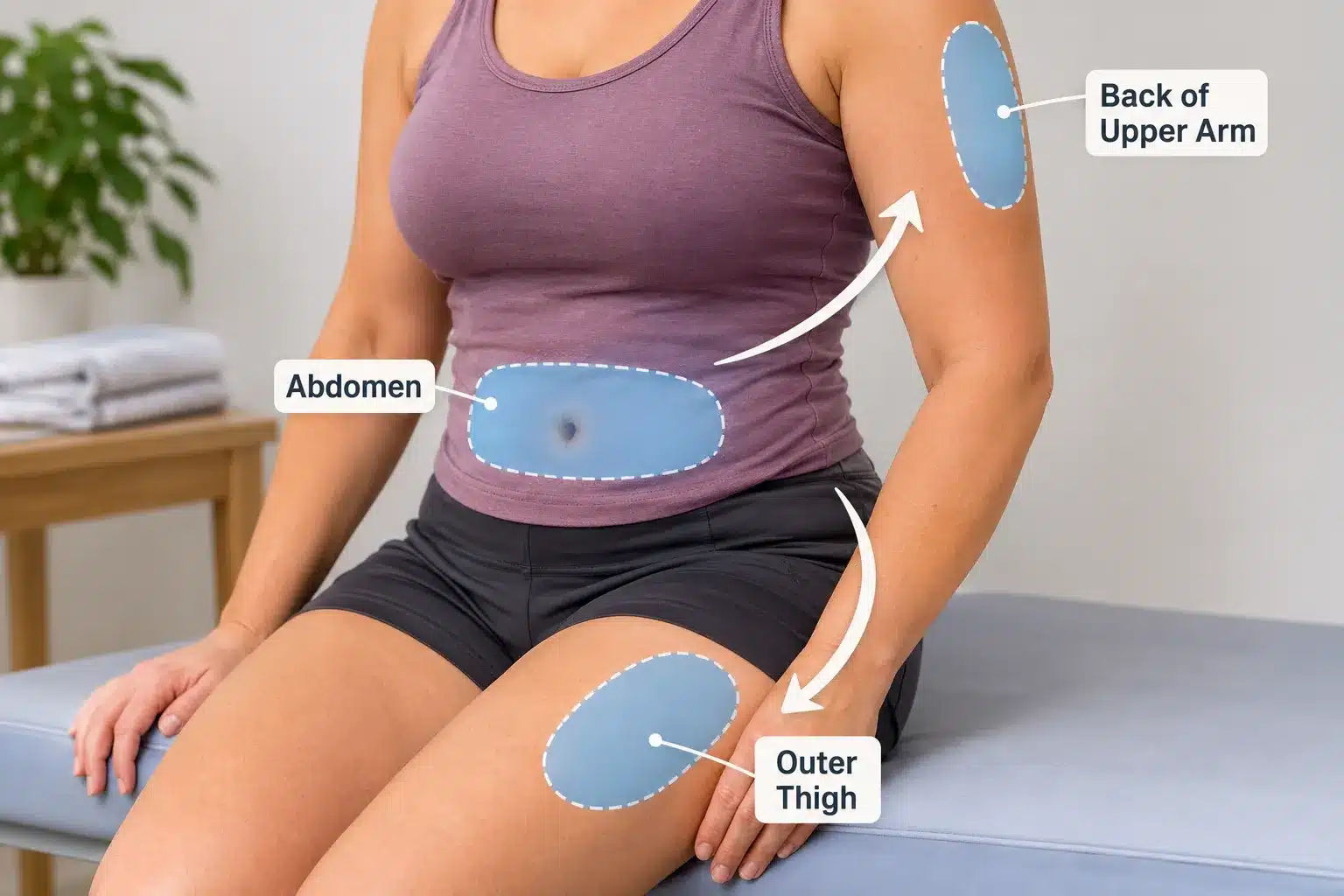
- Inject into the abdomen, thigh, or upper arm, rotating sites each week.[4][5][7]
- Never share a pen with another person, even if the needle is changed.
- Store the pen according to label instructions (usually refrigerated until first use).
A common mistake is injecting into the same exact spot every week, which can cause lumps or uneven absorption under the skin. For specific site guidance, see where to inject Ozempic for a step-by-step walkthrough.
How much do weight loss injections cost without insurance
Without insurance, GLP-1 and dual-agonist injections typically run several hundred dollars or more per month, with exact pricing depending on the brand, dose, and whether you use a telehealth provider or retail pharmacy. Compounded versions from online clinics are often cheaper than brand-name pens but are not FDA-approved products, so quality and sourcing can vary.
Factors that change your total cost:
- Brand-name versus compounded formulation
- Starting dose versus maintenance dose
- Telehealth membership or consultation fees
- Whether a manufacturer savings card applies
For a detailed cost breakdown, check our GLP-1 weight loss cost guide and the Ro GLP-1 cost overview for one popular provider’s current pricing structure.
Semaglutide vs Ozempic vs tirzepatide: which is best for weight loss
Semaglutide (Wegovy, Ozempic) and tirzepatide (Zepbound, Mounjaro) are both effective injectable options, but tirzepatide acts on two gut hormone pathways (GIP and GLP-1) instead of one, which some clinical comparisons associate with greater average weight loss.[1] Ozempic itself is semaglutide approved for type 2 diabetes, while Wegovy is the same molecule approved specifically for weight management.
Choose semaglutide if you prefer a longer track record of use or your doctor recommends it based on your health profile. Choose tirzepatide if your provider determines it’s appropriate and you’re comfortable with a newer but rapidly growing body of use data. See our direct comparison in Zepbound vs Ozempic and Wegovy vs Mounjaro for head-to-head detail.
What are the main side effects of weight loss injections
The most common side effects are gastrointestinal: nausea, vomiting, diarrhea, and constipation, especially during the first few weeks or after a dose increase.[1][6] Less common but more serious risks include pancreatitis, gallbladder disease, and kidney injury.
Both drug classes also carry a boxed warning for possible thyroid C-cell tumor risk based on animal studies, and they’re not recommended for anyone with a personal or family history of medullary thyroid carcinoma or multiple endocrine neoplasia type 2.[1][6]
Edge case: if you have a sensitive stomach or history of gastroparesis, tell your prescriber before starting, nausea can be more severe for you. For a deeper look at long-term patterns, read long-term side effects of Ozempic.
Can you get weight loss injections prescribed online
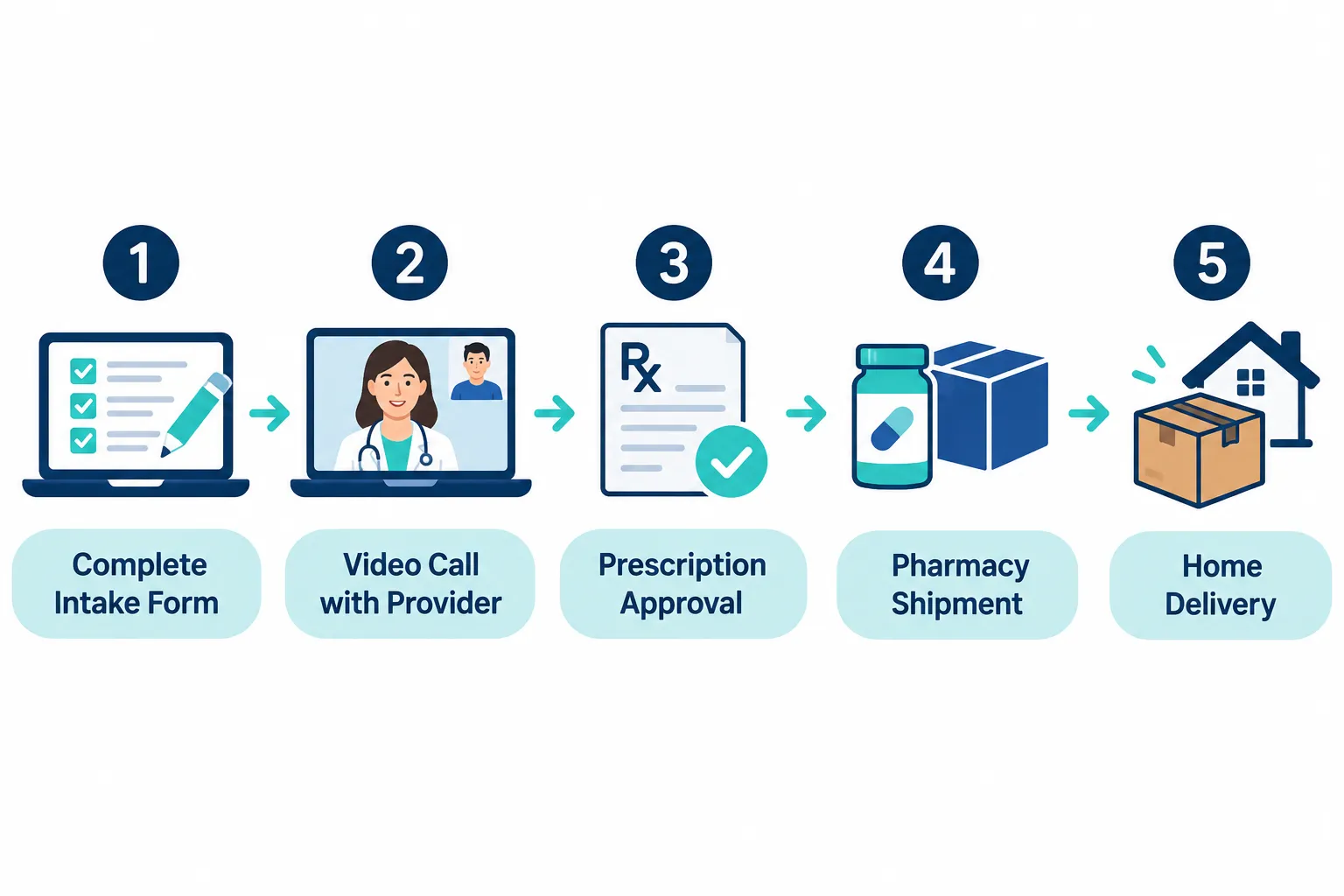
Yes, many licensed telehealth providers can prescribe GLP-1 or tirzepatide injections after a video or written consultation, as long as you meet clinical criteria. Online prescribing has made these medications more accessible, but it does not remove the need for an honest medical history review.
A good candidate for online prescribing has a documented BMI that qualifies, no major red-flag conditions, and access to follow-up care if side effects appear. See our reviews of Hims GLP-1, Ro weight loss, and Sequence GLP-1 for how different platforms handle this process.
How often do you need to inject for weight loss
Most GLP-1 and dual-agonist medications are dosed once weekly, on the same day each week, regardless of mealtimes.[1] Your provider will usually start you on a low dose and increase it gradually over several weeks to reduce side effects.
Common mistake: skipping a dose and then doubling up the next week. Follow your specific product’s instructions for missed doses instead of guessing. Our semaglutide dosage chart shows typical titration schedules used in practice.
Who is a good candidate for weight loss injections
A good candidate is an adult with a BMI of 30 or higher, or 27 and higher with a weight-related condition like high blood pressure or type 2 diabetes, who has discussed options with a healthcare provider.[2][3] The WHO’s December 2025 global guideline frames these medicines as part of a broader obesity care plan that includes diet, physical activity, and behavioral support, not a replacement for them.[2][3][8]
Poor candidates include pregnant women, people with a personal or family history of medullary thyroid cancer, and anyone who hasn’t had a basic medical evaluation. If you’re not sure whether you qualify without a diabetes diagnosis, our guide on GLP-1 for weight loss if you’re not diabetic explains eligibility in plain terms.
What mistakes do people make when injecting at home
The most frequent mistakes are reusing the same injection site every week, injecting through clothing, and not checking the pen for air bubbles or expiration before use.[4][5] These errors don’t usually cause serious harm but can lead to bruising, uneven absorption, or inconsistent results.
Other common errors:
- Storing the pen at the wrong temperature
- Forgetting to rotate between abdomen, thigh, and upper arm
- Ignoring pain, redness, or swelling that lasts more than a day or two
If you notice painful swelling, warmth, pus, or bleeding that won’t stop after several minutes of pressure, contact your prescriber promptly instead of waiting for your next scheduled dose.[4][5]
How much weight can you realistically lose with injections
Weight loss results vary by person, dose, medication type, and how closely lifestyle changes are followed, so no provider can honestly guarantee a specific number. Clinical data generally shows meaningful average weight loss for both semaglutide and tirzepatide when combined with diet and activity changes, but individual results differ.[1][2]
I’ve talked with readers who saw changes within the first month and others who needed several months at a higher dose before noticing a real shift, both experiences are common. For a realistic early-weeks expectation, see Ozempic weight loss results: 6-week plan.
Do weight loss injections work if you have diabetes or thyroid issues
GLP-1 medications were originally developed for type 2 diabetes and can still help manage blood sugar while supporting weight loss, but anyone with thyroid concerns needs individual screening first.[1][6] If you have a personal or family history of medullary thyroid carcinoma or multiple endocrine neoplasia type 2, these drugs are not recommended due to the boxed thyroid tumor warning.[1][6]
Decision rule: if you have type 2 diabetes without thyroid cancer history, these medications may offer dual benefit for blood sugar and weight, but your doctor should confirm dosing since some brands are diabetes-specific (Ozempic, Mounjaro) versus weight-specific (Wegovy, Zepbound).
What should you do if you experience severe side effects
Stop the medication and contact your prescriber or seek emergency care right away if you experience severe abdominal pain, persistent vomiting, signs of a severe allergic reaction, or symptoms of pancreatitis.[1][6] Don’t wait for your next scheduled appointment if symptoms feel serious.
For milder but concerning side effects, such as ongoing nausea that affects eating or hydration, call your provider’s office for dose adjustment guidance rather than stopping cold turkey on your own.
Are oral weight loss medications better than injections
Oral GLP-1 medications are a newer alternative but are not automatically “better” than injections, they trade a daily pill for a weekly needle, with their own side effect profile and absorption considerations. Some patients prefer avoiding injections altogether, while others find a weekly pen more convenient than a daily pill routine.
Choose an oral option if needle aversion is a major barrier for you and your doctor confirms it’s appropriate; choose an injection if you want proven dosing consistency. Our explainer on what is orforglipron, an oral GLP-1 pill in development, covers how this newer category compares.
How long do you need to use weight loss injections to see results
Most people need at least 8 to 12 weeks on a stable, effective dose before seeing substantial change, since doses are typically increased gradually over the first one to two months to limit side effects.[1] Long-term use, often a year or more, is generally needed to reach and maintain significant weight loss.
What happens if you stop early matters too, many people regain weight after discontinuing without a maintenance plan. Our guide on what happens when you stop taking Ozempic covers this in detail, and tirzepatide maintenance dose after weight loss explains long-term dosing strategy.
Comparison: GLP-1 vs dual-agonist injections at a glance
| Feature | Semaglutide (Wegovy/Ozempic) | Tirzepatide (Zepbound/Mounjaro) |
|---|---|---|
| Hormone targets | GLP-1 only | GLP-1 and GIP |
| Dosing frequency | Once weekly | Once weekly |
| Delivery | Prefilled pen, home injection | Prefilled pen, home injection |
| Boxed warning | Thyroid C-cell tumor risk | Thyroid C-cell tumor risk |
| Common side effects | Nausea, vomiting, diarrhea | Nausea, vomiting, diarrhea |
| Best known for | Longer track record | Dual-hormone mechanism |
FAQ
Can I self-inject weight loss medication without any training?
No. Even though pens are designed for home use, you should receive instruction from a pharmacist or provider first to learn correct technique, storage, and site rotation.[4][5]
Is tirzepatide stronger than semaglutide?
Tirzepatide works on two hormone pathways instead of one, and some comparisons associate it with greater average weight loss, but individual response varies and only a provider can say what’s right for you.[1]
Do I need insurance to get these injections?
No, but without insurance you’ll pay out of pocket, and costs vary significantly by brand, dose, and provider.
Can I buy weight loss injections without a prescription?
No. These are prescription-only medications in the United States and require a licensed provider’s evaluation, whether in person or via telehealth.
What happens if I miss a weekly dose?
Follow the specific instructions for your product’s label regarding missed doses rather than doubling up, and check with your pharmacist if you’re unsure.
Are compounded versions as safe as brand-name pens?
Compounded versions are not FDA-approved products, and quality can vary by compounding pharmacy, so discuss sourcing carefully with your provider.
Can pregnant women use these injections?
No. WHO guidance and prescribing information both exclude pregnant women from GLP-1 and dual-agonist treatment.[2][3]
How do I know if I’m a good candidate?
A provider will typically check your BMI, medical history, and any thyroid or pancreatic conditions before approving treatment.[2][3]
7 Best GLP-1 Providers Ranked: Accreditation, Flexibility & Support Compared (2026 Update)
32,000+ Patients Can't All Be Wrong: See the Top-Rated GLP-1 Providers: Compared on accreditation, plan flexibility, and patient support — updated for 2026.
BMI MD GLP-1 Microdosing Plan
- Specialized microdosing options (sublingual drops or low-dose injections)
- Ideal for maintaining weight or tapering off higher doses safely
- Fully bundled plan with no hidden monthly platform memberships
DirectMeds Weight Loss Solutions
- Sourced from accredited, state-licensed 503A compounding pharmacies
- No-frills high-volume savings passed directly to the patient
- Includes clinical consultation and cold-chain shipping updates
MEDVi Flat-Rate Telehealth
- Flat monthly rate holds steady even at maximum maintenance doses
- No dosage upcharges or graduation fee penalties
- Offers both injectable and advanced oral thin-film delivery options
Gala GLP-1 Care Program
- All-inclusive plan with no standalone membership costs
- Continuous text-based messaging access with state-licensed clinicians
- Temperature-controlled, cold-chain medication shipping included
Measured GLP-1 Metabolic Health
- Comprehensive metabolic health screening and expert intake analysis
- Predictable long-term budgeting with stable plan pricing
- High-end responsive dashboard with integrated diagnostic support
Refills GLP-1 (TryRefills Plan)
- Flat rate holds steady as titration scales up
- Includes clinical guides for active side-effect management
- Bundles in foundational nutritional strategies alongside medication
AltRx GLP-1 Transactional Reorders
- Zero recurring auto-billing — pay entirely on a transactional basis
- Rapid text-to-order format saves time for experienced patients
- Provides both injectable forms and fast-dissolving tablet variations
Conclusion
There isn’t one single “best” injection for weight loss at home, the right answer depends on your BMI, health history, and how your body responds to treatment. Semaglutide and tirzepatide remain the two leading evidence-based options, both delivered as once-weekly pens you can learn to use safely at home with proper training.[1][2] Before starting any injection, talk with a licensed provider about your full medical history, review the specific side effect profile of the medication you’re considering, and make sure you have a plan for follow-up care. If you’re still comparing options, our rundown of GLP-1 choices is a reasonable next stop before booking a consultation.
References
- Tirzepatide Semaglutide How Compare 3576410. drugs.com.
- 01 12 2025 Who Issues Global Guideline on the Use of Glp 1 Medicines in Treating Obesity. who.int.
- Egt 4370.v1 Download. assets.ctfassets.net.
- Glp 1 Injections Dos and Donts. everydayhealth.com.
- What to Expect When Starting Glp 1 for Obesity. everydayhealth.com.
- Tirzepatide. drugs.com.
- A.14 Glp 1 Obesity. cdn.who.int.
- Obesity Glp 1 Therapies. who.int.

With over 13 years of experience in holistic health blogging, I aim to help you navigate your wellness journey with honest insights, expert-backed advice, and a sprinkle of real-world practicality.
Certified Wellness Writer | Herbal Nutrition Advocate | Wellness Research Enthusiast