Zepbound Coupons: Every Way to Pay Less (2026) Explained

Last updated: November 11, 2026
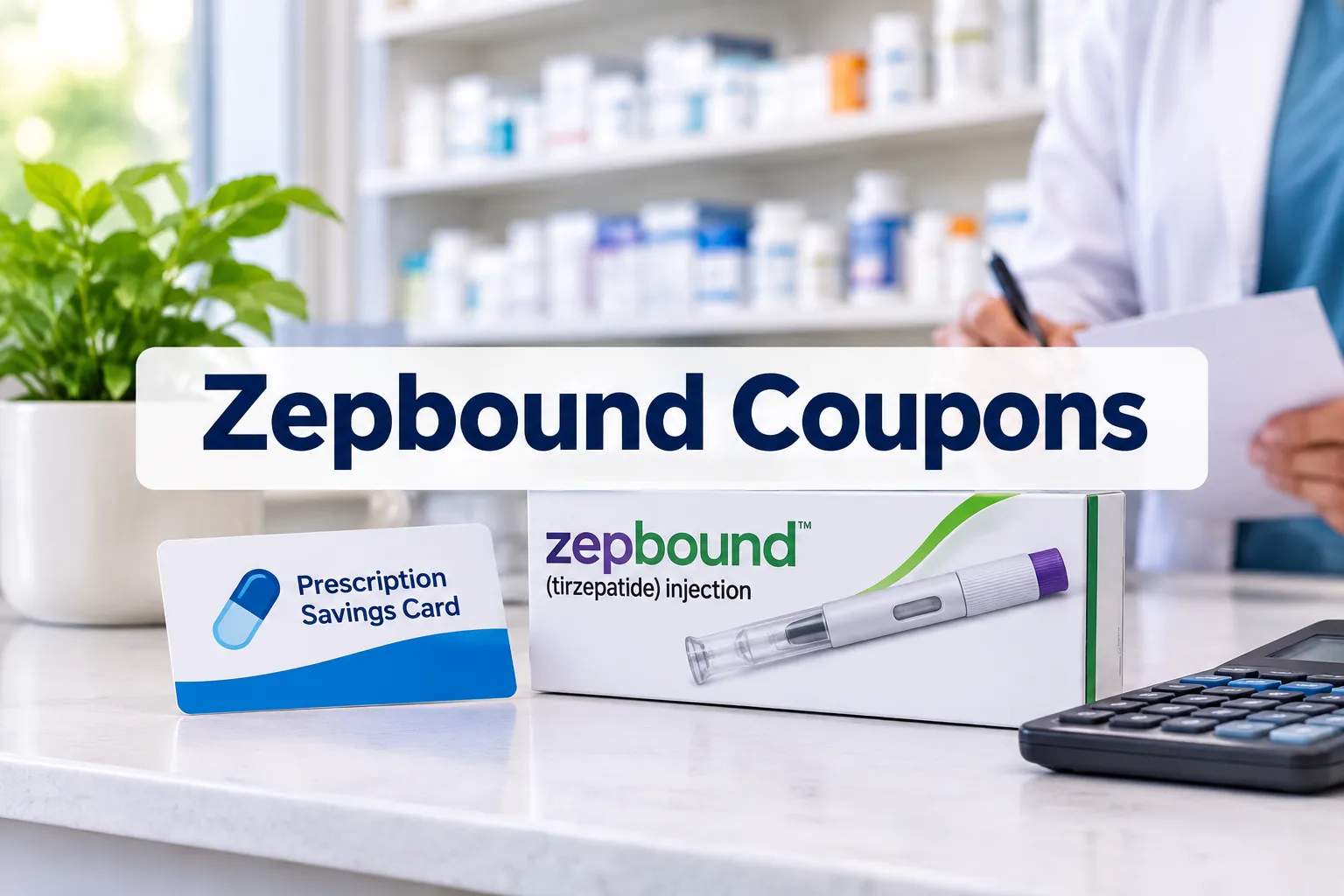
Most people searching for a “Zepbound coupon” expect a simple discount code. There isn’t one. What actually exists is a set of manufacturer savings cards, pharmacy discount programs, and self-pay price tiers, and knowing which one applies to your situation can mean the difference between paying $25 and paying $1,300 a month.
Quick Answer
Zepbound Coupons: Every Way to Pay Less (2026) really comes down to four paths: Eli Lilly’s commercial insurance savings card (as low as $25/month), the non-covered benefit card (as low as $499/month), the KwikPen self-pay savings card (roughly $299-$449/month depending on dose), and third-party pharmacy discount cards like SingleCare. All current Lilly savings card offers are set to expire December 31, 2026.[1][2]
7 Best GLP-1 Providers Ranked: Accreditation, Flexibility & Support Compared (2026 Update)
32,000+ Patients Can't All Be Wrong: See the Top-Rated GLP-1 Providers. We compared the leading online GLP-1 providers based on program features, clinical support, convenience, and overall value.
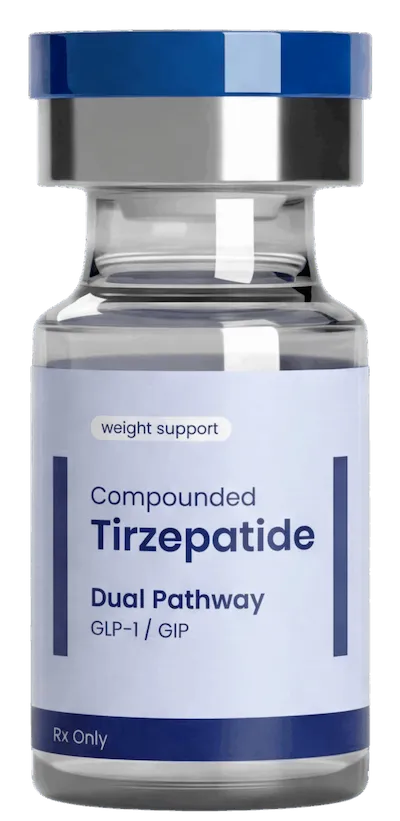
BMI MD GLP-1 Microdosing Plan
- Specialized microdosing options, including sublingual drops and low-dose injections
- Designed for people interested in maintaining weight or gradually adjusting treatment
- Bundled program structure without a separate monthly platform membership
- Online access makes the process convenient from home

DirectMeds Weight Loss Solutions
- Online weight-loss program with a straightforward patient experience
- Compounded medication options through state-licensed compounding pharmacies
- Includes clinical consultation as part of the process
- Provides shipping updates to help patients track their orders
MEDVi Flat-Rate Telehealth
- Flat-rate telehealth approach designed for easier budgeting
- No dosage-based pricing increases within the advertised program structure
- Offers injectable and oral thin-film delivery options
- Includes medical screening and asynchronous provider consultations
Gala GLP-1 Care Program
- Text-based access to state-licensed clinicians
- Cold-chain medication shipping included in the program
- Month-to-month program structure
- Designed for people who value convenient ongoing support
Measured GLP-1 Metabolic Health
- Comprehensive metabolic health screening and intake analysis
- Designed around longer-term metabolic health management
- Responsive dashboard with integrated health tracking tools
- Useful option for patients who value a more data-focused experience
Refills GLP-1 (TryRefills Plan)
- Clinical guidance designed to help patients manage common treatment concerns
- Includes foundational nutritional strategies alongside medication
- Designed around predictable ongoing treatment
- No hidden startup or processing fees according to the program information provided
AltRx GLP-1 Transactional Reorders
- Transactional reorder model without recurring auto-billing
- Designed for patients who already understand their treatment routine
- Fast text-to-order process for convenient reorders
- Offers injectable and fast-dissolving tablet variations
Key Takeaways
- Lilly’s main Zepbound Savings Card can bring costs to as little as $25 for a 1-3 month supply, but it caps savings at about $100/month and $1,300/year, and requires commercial insurance.[2][3]
- Government insurance holders (Medicare, Medicaid, TRICARE, VA) cannot use Lilly’s commercial savings cards.[1][4]
- Uninsured patients can use the KwikPen Self-Pay Savings Card, with dose-based cash prices around $299-$449 per month.[1][5]
- A Medicare GLP-1 Bridge program is expected to begin July 1, 2026, offering a new coverage pathway for older adults.[6]
- Pharmacy discount cards like SingleCare can cut retail prices by up to roughly 80% at participating pharmacies.[7]
- All current Lilly savings programs end December 31, 2026, expect updated terms in 2027.[1][2]
- You generally cannot stack a manufacturer savings card with a pharmacy discount card on the same fill.
What Is Zepbound and How Does It Work
Zepbound is the brand name for tirzepatide, a once-weekly injectable medication approved for chronic weight management and obstructive sleep apnea in adults with obesity. It works by mimicking two gut hormones, GIP and GLP-1, which slow digestion and reduce appetite.
Zepbound comes in single-dose pens, vials, and a newer KwikPen device, with doses ranging from 2.5 mg to 15 mg. Patients typically start low and increase the dose every four weeks based on tolerance and results. For a deeper look at how the drug is dosed and administered, see our guide to the Zepbound weekly injection pen and tirzepatide.
Who it’s for: adults with a BMI of 30+ (or 27+ with a weight-related condition) or those diagnosed with moderate-to-severe obstructive sleep apnea and obesity.
Who shouldn’t take it: people with a personal or family history of medullary thyroid carcinoma, those with Multiple Endocrine Neoplasia syndrome type 2, and anyone with a known serious allergy to tirzepatide.
How Much Does Zepbound Cost Without Insurance
Without insurance, Zepbound typically costs between roughly $299 and $449 per month through Lilly’s self-pay channels, depending on dose strength, rather than the full list price charged at a retail pharmacy.[2][3]
Lilly’s direct-to-consumer self-pay pricing applies mainly to the KwikPen format. Retail pharmacy cash prices without any discount can run significantly higher. This is why most uninsured patients lean on one of the savings mechanisms below instead of paying sticker price.
- KwikPen self-pay tiers: roughly $299-$449/month by dose[2][3]
- Retail cash price at a pharmacy without a card: generally higher than Lilly’s direct self-pay price
- Pharmacy discount cards (SingleCare, GoodRx-style programs): can reduce retail cash price by up to about 80% at participating locations[7]
Does Zepbound Have Manufacturer Coupons
Yes, but they function as savings cards rather than traditional coupon codes. Eli Lilly offers at least three distinct card programs depending on your insurance status, and all are scheduled to expire on December 31, 2026.[1][2]
Here’s how the main Zepbound Coupons: Every Way to Pay Less (2026) options compare:
| Program | Who qualifies | Approximate cost | Key limits |
|---|---|---|---|
| Commercial Insurance Savings Card | Covered benefit, commercial insurance | As low as $25/month | Max $100/month, $1,300/year, ~13 fills |
| Non-Covered Benefit Savings Card | Commercial insurance, Zepbound not covered | As low as $499/month | WAC minus $499, ~13 fills/year |
| KwikPen Self-Pay Savings Card | Any adult with valid Rx, insured or not | ~$299-$449/month by dose | KwikPen only, ~11 fills/year |
Choose the commercial insurance card if: your plan lists Zepbound as a covered benefit and you have a valid on-label prescription. Choose the non-covered benefit card if: you have commercial insurance but your plan denies or excludes Zepbound. Choose the KwikPen self-pay card if: you have no insurance, government insurance, or simply want a predictable cash price.
Is Zepbound Covered by Medicare or Medicaid
Currently, Medicare and Medicaid generally do not cover Zepbound for weight loss, and patients on these programs are explicitly excluded from Lilly’s commercial savings cards.[1][4]
A notable change is coming: a Medicare GLP-1 Bridge program is expected to launch July 1, 2026, opening a coverage pathway for certain Medicare beneficiaries to access Zepbound KwikPen for single-patient use.[6] This doesn’t apply retroactively and details on eligibility criteria are still being finalized, so check with your Part D or Medicare Advantage plan directly before assuming coverage.
Common mistake: assuming Medicaid or Medicare recipients can still use the $25 savings card. They cannot, government insurance of any kind (Medicaid, Medicare, VA, TRICARE/CHAMPUS, state assistance) disqualifies you from Lilly’s commercial cards.[1][3][4]
Zepbound Patient Assistance Program: How to Apply
Lilly doesn’t run a traditional income-based patient assistance program for Zepbound the way some older drugs have; instead, eligible patients apply online for the relevant savings card through Lilly’s official savings portal.[1]
Steps to apply:
- Visit Lilly’s official Zepbound savings page and select the card matching your insurance status.
- Enter basic information: name, date of birth, insurance status, and prescription details.
- Confirm you don’t have government insurance (if applying for the commercial or non-covered benefit card).
- Receive your activated card digitally or to a mobile wallet.
- Present the card at the pharmacy counter when filling your prescription.
There’s no lengthy income-verification process like you’d see with some oncology drug assistance programs. The main gatekeeper is insurance type, not income.
GoodRx Zepbound Coupon Discount
GoodRx-style and SingleCare pharmacy discount cards can lower the retail cash price of Zepbound by up to roughly 80% at participating pharmacies, and these discounts are separate from anything Lilly offers directly.[7]
These cards work differently than manufacturer savings cards:
- They apply at the pharmacy counter as a cash-price discount, not an insurance copay reduction.
- They don’t require insurance at all.
- Prices vary by pharmacy, so it pays to compare a few locations before filling.
- SingleCare’s Zepbound pricing was last updated November 11, 2026, reflecting current market rates.[7]
Edge case: if your insurance copay (even without the Lilly card) is already lower than the discount card price, use insurance instead. Always ask the pharmacist to run both and compare.
Zepbound vs Ozempic: Which Is Cheaper
Ozempic is generally cheaper out-of-pocket for many patients because its manufacturer savings card structure and self-pay pricing tend to land lower than Zepbound’s comparable tiers, though actual costs depend heavily on your specific plan and pharmacy.
Both drugs belong to the GLP-1 class, but they’re not identical. Zepbound (tirzepatide) targets two hormone receptors, while Ozempic (semaglutide) targets one, and Ozempic is FDA-approved for diabetes first, weight loss as an off-label or separate-brand use. If you’re weighing options, our breakdown of Ozempic cost without insurance and ways to pay less and the Ozempic $25 savings card eligibility guide are useful side-by-side comparisons.
Decision rule: choose Zepbound if your doctor recommends tirzepatide specifically for weight-related conditions or sleep apnea and your insurance already covers it well; choose Ozempic if cost is the deciding factor and your plan has a clearer path to a low copay.
Why Isn’t My Zepbound Coupon Code Working
The most common reason a Zepbound savings card fails at the pharmacy is a mismatch between your insurance type and the card you’re using, for example, trying to use the commercial savings card while enrolled in Medicare or Medicaid.[1][4]
Other frequent causes:
- The card has reached its annual cap ($1,300 for the main commercial card, or the fill limit of roughly 13 per year).[2][3]
- Your prescription is off-label (not for weight management or sleep apnea), which disqualifies it from the card.
- The pharmacy entered the wrong BIN/PCN/group numbers from the card.
- You’re trying to use the card alongside a government-funded plan.
- The card itself has expired, remember, current cards are valid only through December 31, 2026.[1][2]
Common mistake: waiting until late December to renew or reapply for a savings card, only to find the program terms have changed for the new year. Apply early and recheck terms each January.
Can You Use Multiple Coupons on Zepbound
No. You generally cannot stack a Lilly manufacturer savings card with a separate pharmacy discount card (like SingleCare) on the same fill, pharmacies process one price adjustment per transaction.
What you can do is compare which single option gives the lowest price for your specific situation and use that one. For example:
- If insured and covered: use the $25 commercial card.
- If insured but denied coverage: use the $499 non-covered benefit card, or compare it against a pharmacy discount card.
- If uninsured: compare the KwikPen self-pay card against SingleCare pricing at a few local pharmacies, since discount card prices vary by location.
What Are Cheaper Alternatives to Zepbound for Weight Loss
Cheaper alternatives include older GLP-1 drugs, generic weight-loss medications, and compounded tirzepatide or semaglutide from licensed pharmacies, though each comes with tradeoffs in effectiveness, safety oversight, or FDA approval status.
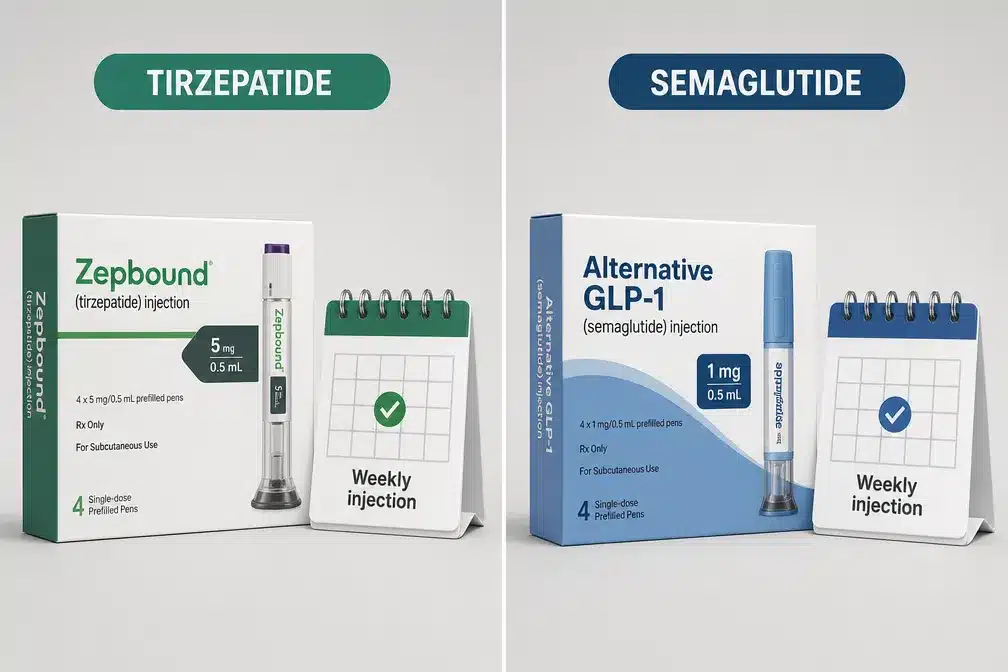
A few realistic options:
- Ozempic or Wegovy (semaglutide): often has more established savings infrastructure; see our GLP-1 weight loss comparison of 7 options.
- Compounded tirzepatide or semaglutide: can be less expensive, but quality and sourcing vary; review FDA-approved and compounded GLP-1 brands before choosing a pharmacy.
- Older generic weight-loss drugs (phentermine, metformin for some cases): much cheaper, but generally less effective for significant weight loss than GLP-1 medications.
- Lifestyle-based programs: no drug cost at all, but slower and less predictable results for many patients with obesity.
Choose a compounded option only if you’re working with a licensed telehealth provider and verified pharmacy, since quality control for compounded GLP-1s varies widely.
Who Is Zepbound Prescribed For and Who Shouldn’t Take It
Zepbound is prescribed for adults with obesity or overweight with a weight-related condition, and separately for adults with obstructive sleep apnea and obesity. It is not appropriate for people with a personal or family history of medullary thyroid carcinoma or MEN 2 syndrome.
Other situations where a doctor may avoid prescribing it:
- Pregnancy or planning pregnancy
- Severe gastrointestinal disease (it can worsen gastroparesis)
- History of pancreatitis, in some cases
- Known hypersensitivity to tirzepatide
Real patient experiences, including side effects and results timelines, are covered in depth in our Zepbound reviews roundup.
My Insurance Denied Zepbound Coverage, What Now
If your insurance denies Zepbound, your first move should be requesting a formal denial letter and asking your doctor’s office to file a prior authorization appeal, while also checking whether Lilly’s non-covered benefit savings card applies to your situation.
Steps to take:
- Get the denial reason in writing, formulary exclusion, lack of medical necessity documentation, or missing prior steps (like trying another drug first).
- Ask your prescriber to submit a prior authorization appeal with supporting documentation (BMI, comorbidities, sleep apnea diagnosis if relevant).
- Apply for Lilly’s non-covered benefit savings card, which can bring the cost to around $499/month.[8][9]
- Compare that price against the KwikPen self-pay card and pharmacy discount cards before committing.
- If you’re on Medicare, watch for updates on the GLP-1 Bridge program launching mid-2026.[6]
Edge case: some employer plans exclude all weight-loss drugs by policy, regardless of medical necessity. In that case, appeals rarely succeed, and self-pay or discount card routes become your main options.
Zepbound Price in 2026 and Ways to Save
In 2026, Zepbound’s price depends entirely on which payment path you use, commercial insurance with the savings card, no coverage with the non-covered benefit card, self-pay through the KwikPen card, or a pharmacy discount card, rather than a single fixed retail price.[1][3][8]
Quick reference for Zepbound Coupons: Every Way to Pay Less (2026):
- Commercially insured, covered benefit: as low as $25/month (cap $1,300/year)[2]
- Commercially insured, non-covered benefit: as low as $499/month[8][9]
- Uninsured, KwikPen self-pay: roughly $299-$449/month by dose[1][5]
- Pharmacy discount card: up to about 80% off retail cash price[7]
- Government insurance: no current manufacturer card access; watch for the Medicare GLP-1 Bridge starting July 1, 2026[6]
For a broader view of how federal drug pricing policy might affect GLP-1 costs going forward, see our coverage of Trump Rx Prices and GLP-1 drug cost changes. If you’re considering ordering through a telehealth or online pharmacy channel, our guide to getting Zepbound online and the broader comparison of GLP-1 online providers walk through what to expect.
Common Mistakes People Make Saving on Zepbound
The biggest mistake is assuming all savings cards work the same way, when eligibility, caps, and fill limits differ significantly between the three Lilly programs and third-party discount cards.
Other mistakes worth avoiding:
- Not checking the annual fill cap before refilling, hitting the ~13-fill limit on the commercial card mid-year leaves you paying full price for the rest of the year.[2][3]
- Forgetting that savings cards expire December 31, 2026, and not watching for 2027 program updates.[1][2]
- Assuming a pharmacy discount card stacks with a manufacturer card (it doesn’t).
- Skipping the step of comparing self-pay KwikPen pricing against discount card pricing, one is often cheaper depending on your dose and location.
- Not appealing an insurance denial before resigning to full self-pay pricing.
FAQ
Is there a real Zepbound coupon code I can type in online? No. Zepbound’s discounts come from enrollment-based savings cards and pharmacy discount programs, not a typed coupon code.
What’s the cheapest way to get Zepbound without insurance? Compare Lilly’s KwikPen self-pay card (roughly $299-$449/month) against a pharmacy discount card like SingleCare at a few local pharmacies, since prices vary by location.[1][7]
Can I use the $25 Zepbound savings card with Medicare? No. Medicare, Medicaid, VA, TRICARE, and other government-funded insurance programs are excluded from Lilly’s commercial savings cards.[1][4]
Does the Zepbound savings card cover vials as well as pens? The main savings cards apply to the single-dose pen; the KwikPen Self-Pay Savings Card applies specifically to the KwikPen device, not vials.[1][5]
When do current Zepbound savings programs expire? All current Lilly Zepbound savings card offers are scheduled to expire on December 31, 2026.[1][2]
What if my insurance denies Zepbound coverage? File a prior authorization appeal through your doctor, and in the meantime check eligibility for the non-covered benefit savings card or self-pay options.[8][9]
Is Zepbound cheaper than Ozempic? It depends on your plan and pharmacy, but Ozempic’s savings infrastructure often results in lower out-of-pocket costs for comparable coverage situations.
7 Best GLP-1 Providers Ranked: Accreditation, Flexibility & Support Compared (2026 Update)
32,000+ Patients Can't All Be Wrong: See the Top-Rated GLP-1 Providers: Compared on accreditation, plan flexibility, and patient support — updated for 2026.
BMI MD GLP-1 Microdosing Plan
- Specialized microdosing options (sublingual drops or low-dose injections)
- Ideal for maintaining weight or tapering off higher doses safely
- Fully bundled plan with no hidden monthly platform memberships
DirectMeds Weight Loss Solutions
- Sourced from accredited, state-licensed 503A compounding pharmacies
- No-frills high-volume savings passed directly to the patient
- Includes clinical consultation and cold-chain shipping updates
MEDVi Flat-Rate Telehealth
- Flat monthly rate holds steady even at maximum maintenance doses
- No dosage upcharges or graduation fee penalties
- Offers both injectable and advanced oral thin-film delivery options
Gala GLP-1 Care Program
- All-inclusive plan with no standalone membership costs
- Continuous text-based messaging access with state-licensed clinicians
- Temperature-controlled, cold-chain medication shipping included
Measured GLP-1 Metabolic Health
- Comprehensive metabolic health screening and expert intake analysis
- Predictable long-term budgeting with stable plan pricing
- High-end responsive dashboard with integrated diagnostic support
Refills GLP-1 (TryRefills Plan)
- Flat rate holds steady as titration scales up
- Includes clinical guides for active side-effect management
- Bundles in foundational nutritional strategies alongside medication
AltRx GLP-1 Transactional Reorders
- Zero recurring auto-billing — pay entirely on a transactional basis
- Rapid text-to-order format saves time for experienced patients
- Provides both injectable forms and fast-dissolving tablet variations
Conclusion
Paying less for Zepbound in 2026 comes down to matching your insurance status to the right program: the $25 commercial card if you’re covered, the $499 non-covered benefit card if you’re denied, the KwikPen self-pay card if you’re uninsured, and pharmacy discount cards as a backup comparison. None of these are a quick coupon code, but used correctly, they can cut your monthly cost by hundreds of dollars.
My advice: start by confirming your insurance status and prescription label match, apply for the matching Lilly card before your next refill, and always price-check a discount card at your local pharmacy before paying full retail. With savings programs set to expire December 31, 2026, mark your calendar to recheck terms early in the new year.
References
- Savings. zepbound.lilly.com.
- Financial Assistance. prescriberpoint.com.
- Zepbound Covered Insurance 3577162. drugs.com.
- FAQ. zepbound.lilly.com.
- Pdf. investor.lilly.com.
- Medicare. zepbound.lilly.com.
- Zepbound. singlecare.com.
- Zepbound. drugs.com.
- Zepbound Savings Card Non Covered Benefit. prescriberpoint.com.

With over 13 years of experience in holistic health blogging, I aim to help you navigate your wellness journey with honest insights, expert-backed advice, and a sprinkle of real-world practicality.
Certified Wellness Writer | Herbal Nutrition Advocate | Wellness Research Enthusiast