Mochi Health Lawsuit: What Happened & What It Means for Patients

Last updated: October 29, 2026
Three separate legal actions are now tangled up with one telehealth weight-loss company, and most of its patients have no idea. The Mochi Health lawsuit: what happened & what it means for patients is actually a story about three different fights happening at once: a drug-maker’s unfair-competition case, a workers’ rights class action, and a federal privacy lawsuit over health data. If you use Mochi Health for GLP-1 prescriptions or are thinking about signing up, here’s what’s actually going on and what you should do about it.
Quick Answer
The Mochi Health lawsuit is not one single case. It’s a cluster of legal actions: Eli Lilly’s unfair-competition suit over compounded tirzepatide marketing [1][2], a California class action from telehealth clinicians over worker misclassification [3], and a federal privacy lawsuit alleging improper health-data tracking [4][5]. None of these has produced a refund program or shutdown order as of this writing, but patients should review their prescriptions, their data settings, and their backup options now.
7 Best GLP-1 Providers Ranked: Accreditation, Flexibility & Support Compared (2026 Update)
32,000+ Patients Can't All Be Wrong: See the Top-Rated GLP-1 Providers. We compared the leading online GLP-1 providers based on program features, clinical support, convenience, and overall value.

BMI MD GLP-1 Microdosing Plan
- Specialized microdosing options, including sublingual drops and low-dose injections
- Designed for people interested in maintaining weight or gradually adjusting treatment
- Bundled program structure without a separate monthly platform membership
- Online access makes the process convenient from home

DirectMeds Weight Loss Solutions
- Online weight-loss program with a straightforward patient experience
- Compounded medication options through state-licensed compounding pharmacies
- Includes clinical consultation as part of the process
- Provides shipping updates to help patients track their orders

MEDVi Flat-Rate Telehealth
- Flat-rate telehealth approach designed for easier budgeting
- No dosage-based pricing increases within the advertised program structure
- Offers injectable and oral thin-film delivery options
- Includes medical screening and asynchronous provider consultations

Gala GLP-1 Care Program
- Text-based access to state-licensed clinicians
- Cold-chain medication shipping included in the program
- Month-to-month program structure
- Designed for people who value convenient ongoing support

Measured GLP-1 Metabolic Health
- Comprehensive metabolic health screening and intake analysis
- Designed around longer-term metabolic health management
- Responsive dashboard with integrated health tracking tools
- Useful option for patients who value a more data-focused experience

Refills GLP-1 (TryRefills Plan)
- Clinical guidance designed to help patients manage common treatment concerns
- Includes foundational nutritional strategies alongside medication
- Designed around predictable ongoing treatment
- No hidden startup or processing fees according to the program information provided

AltRx GLP-1 Transactional Reorders
- Transactional reorder model without recurring auto-billing
- Designed for patients who already understand their treatment routine
- Fast text-to-order process for convenient reorders
- Offers injectable and fast-dissolving tablet variations
Key Takeaways
- Eli Lilly’s lawsuit against Mochi Health targets how the company markets and sources compounded tirzepatide, not patients directly [1][2].
- A separate class action alleges Mochi misclassified telehealth clinicians as independent contractors to avoid paying benefits [3].
- A federal privacy complaint claims Mochi used tracking pixels that may have captured sensitive health information [4][5].
- Patient reports and a news investigation describe shipping problems, delays, and in some cases serious harm linked to compounded weight-loss drugs tied to Mochi’s supply chain [6].
- No public refund program has been announced for patients as of this writing [VERIFY: check Mochi Health’s official statements for updates].
- Mochi Health’s online complaint record shows a rising pattern of concerns, not just a handful of isolated reviews [7][8].
- Regulators have not filed a major public enforcement case against Mochi Health directly, but the broader telehealth compounding industry is under increasing scrutiny [9].
What Exactly Happened With the Mochi Health Lawsuit
The core legal fight is Eli Lilly’s case accusing Mochi Health of unfair competition tied to how it markets and sells compounded tirzepatide, the active ingredient in Lilly’s Zepbound and Mounjaro [1][2]. Lilly argues that Mochi’s marketing and pharmacy relationships cross lines around how compounded versions of its patented drug are promoted to consumers.
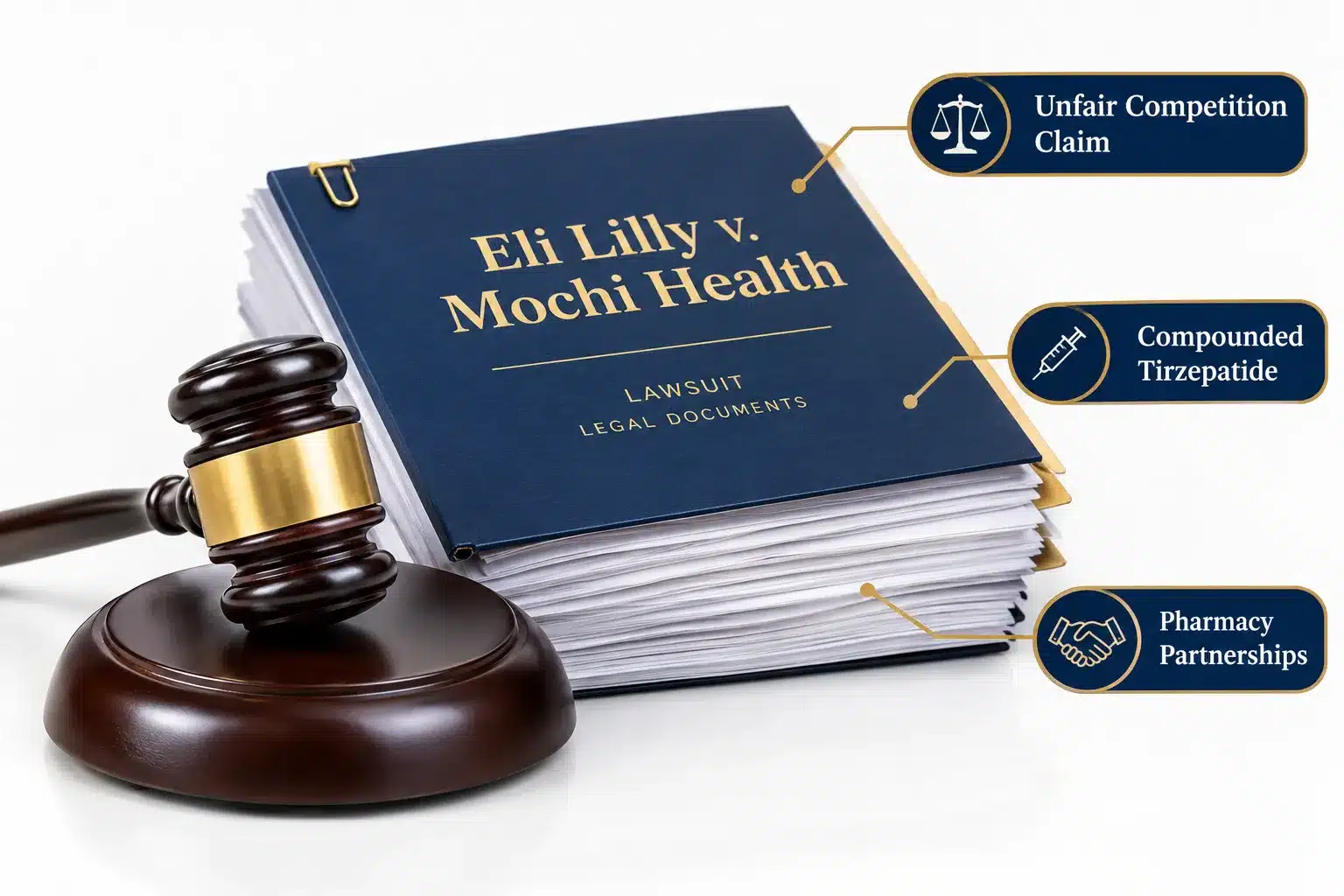
A federal court has trimmed some of Lilly’s claims but allowed the case to move forward, meaning parts of the lawsuit survived early motions to dismiss [1][2]. This is a company-versus-company dispute at its heart. Patients aren’t named defendants and aren’t being sued, but the outcome could reshape what Mochi is allowed to say about its compounded products and how it sources them going forward.
Layered on top of that, a King 5 investigation reported that patients taking compounded weight-loss drugs connected to Mochi’s pharmacy network experienced serious health complications, and that shipments continued despite known risks [6]. That reporting is separate from the Lilly case but feeds into the same larger picture: questions about drug quality and oversight in Mochi’s supply chain.
If you’re comparing Mochi against brand-name options, our Mochi Health GLP-1 reviews breakdown covers how patients rate the actual medication experience separate from the legal issues.
When Did the Mochi Health Lawsuit Start and Why
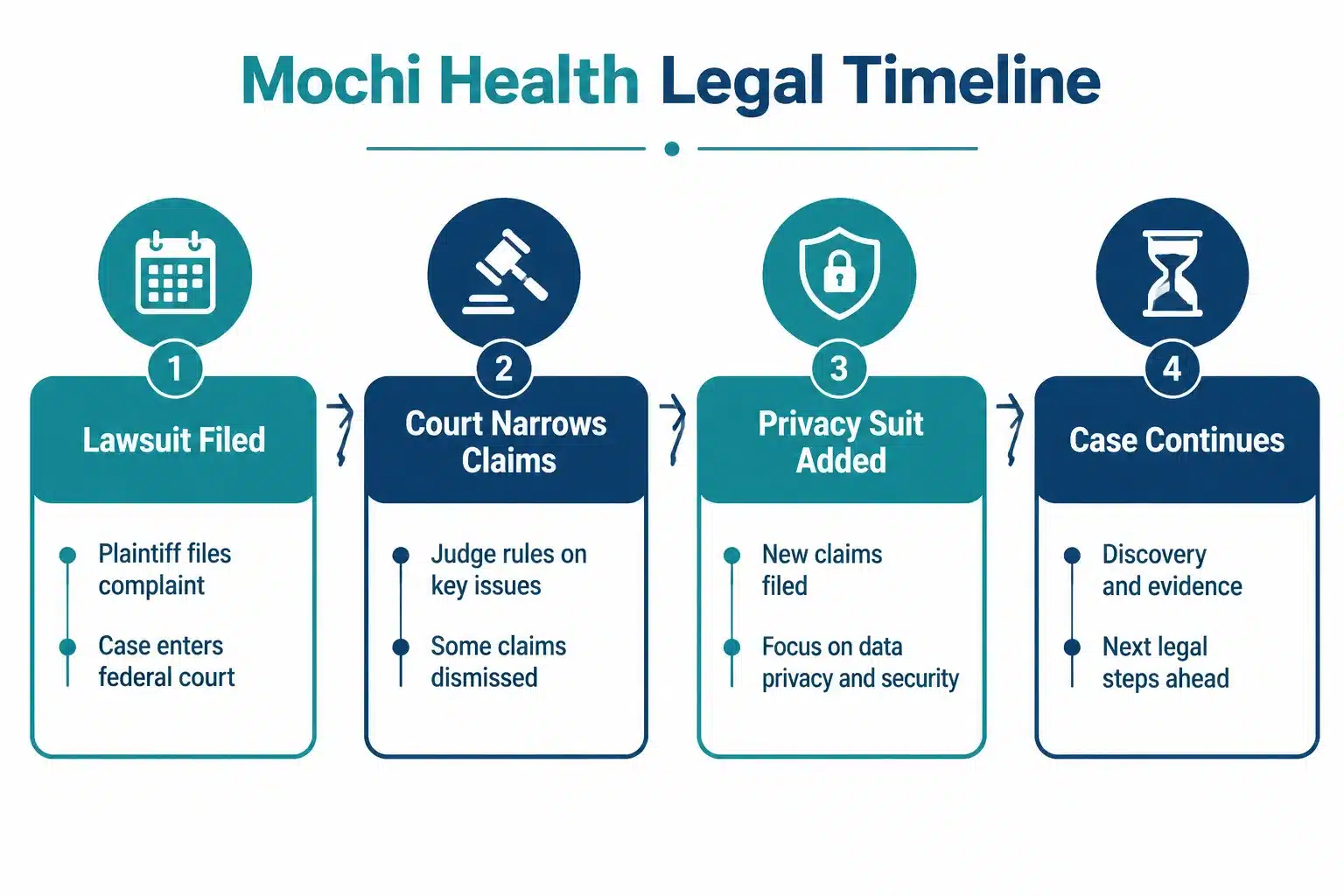
Eli Lilly filed its unfair-competition case against Mochi in 2025, and the litigation has continued through multiple rulings into 2026, with courts narrowing but not dismissing the claims [1][2]. Lilly’s motivation is protecting its patent position on tirzepatide while compounded alternatives expand through telehealth channels.
The worker misclassification class action followed a similar pattern: clinicians filed suit in California alleging Mochi treated them as 1099 contractors rather than employees, denying them wage and benefit protections [3]. The federal privacy lawsuit, filed in the Northern District of California, centers on allegations that Mochi’s website used third-party tracking pixels capable of capturing sensitive health data without adequate consent [4][5].
Each case started independently, but together they paint a picture of a fast-growing telehealth company facing scrutiny on multiple fronts at the same time: drug marketing, labor practices, and data privacy.
Am I Affected by the Mochi Health Lawsuit as a Patient
You are most directly affected if you currently receive compounded GLP-1 medication through Mochi Health, since the Lilly case and the safety reporting both involve that specific product line [1][6]. You’re also potentially affected if you created a Mochi account or browsed its site, because the privacy lawsuit concerns data collection practices that may apply broadly to site visitors, not just paying patients [4][5].
- Choose heightened caution if: you’re currently taking compounded tirzepatide sourced through Mochi’s partner pharmacies.
- Choose a wait-and-see approach if: you use Mochi only for brand-name prescriptions filled at standard retail pharmacies.
- A common mistake is assuming the lawsuits mean your personal prescription is invalid or unsafe. That’s not confirmed; the legal claims are about marketing practices and data handling, not a blanket recall.
Will Mochi Health Refund Customers Money
There is no confirmed, company-wide refund program tied to these lawsuits as of this writing [VERIFY: check current Mochi Health communications and BBB filings]. Individual complaint resolutions do appear in Mochi’s Better Business Bureau profile, where some patients report billing disputes being addressed case by case [7][8].
If you believe you were overcharged, billed for undelivered medication, or shipped a damaged product, your most reliable path right now is a direct complaint through Mochi’s customer service, followed by a BBB complaint if unresolved [7]. Keep records: order confirmations, shipping tracking, photos of damaged packaging, and all email correspondence. These same records would matter if you later wanted to join a class action.
Is My Personal Health Data Safe After the Mochi Health Lawsuit
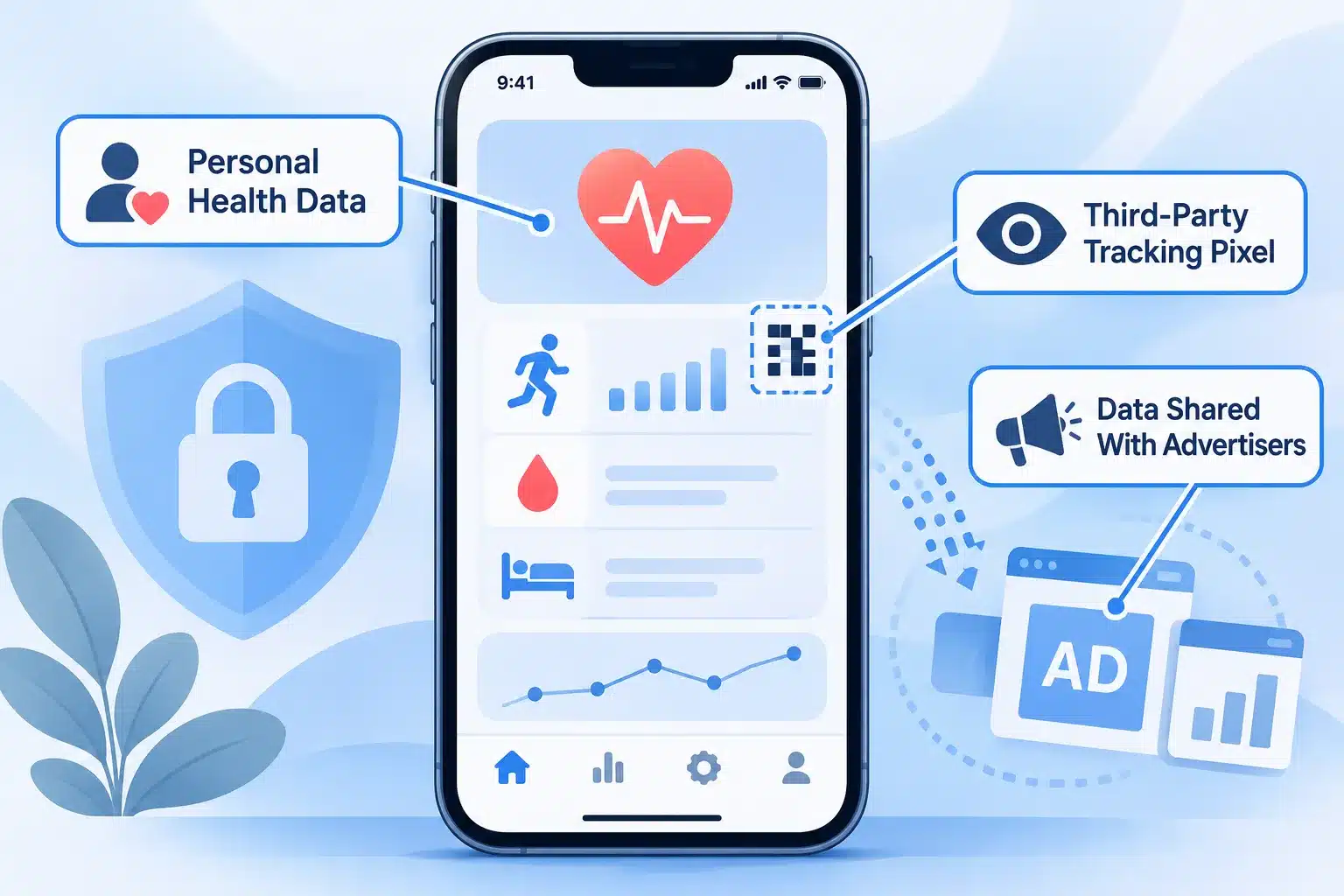
The federal privacy lawsuit alleges Mochi used tracking pixels from third-party advertising or analytics companies that may have captured health-related browsing data and shared it without clear consent [4][5]. This is a serious allegation because health data is sensitive and typically protected under stricter rules than general browsing activity.
Practical steps you can take right now:
- Review your Mochi account privacy settings and opt out of marketing or analytics tracking where that option exists.
- Check whether you consented to data sharing during sign-up and reconsider renewing or sharing your account if you’re uneasy.
- Avoid logging into Mochi through shared devices or browsers with ad trackers enabled.
- Monitor your email and any notices from Mochi about data breach disclosures.
The edge case here: even if you never filed a claim or complaint, simply visiting Mochi’s website while logged into other tracked accounts (like Google or Facebook) could be relevant to the lawsuit’s scope [4][5].
What Are Good Alternatives to Mochi Health
Good alternatives exist among both branded GLP-1 providers and other telehealth platforms, and the right choice depends on whether you want brand-name medication, lower cost through compounding, or a different care model entirely. Choose a brand-focused telehealth path if you want FDA-approved semaglutide or tirzepatide with manufacturer-backed savings programs; our guide to getting Ozempic online safely walks through legitimate options.
| Option type | Best for | Watch out for |
|---|---|---|
| Brand-name GLP-1 via telehealth | Patients wanting FDA-approved drugs with insurance support | Higher out-of-pocket cost without coverage |
| Other compounding pharmacies | Patients priced out of brand-name options | Verify pharmacy accreditation independently |
| Local endocrinologist or weight clinic | Patients wanting in-person monitoring | Longer wait times, may cost more upfront |
If you’re weighing newer drug options too, our comparison on retatrutide versus Ozempic trial data is a useful next read, and our Ozempic reviews roundup covers real patient experiences with the brand-name route.
Should I Stop Using Mochi Health Right Now
You don’t need to stop using Mochi Health immediately based on the lawsuits alone, but you should pause and reassess if you’re experiencing any unexplained side effects, shipment problems, or discomfort with how your data is being handled. The lawsuits don’t equal a confirmed recall or an order to cease operations.

Decision rule: stop and talk to a local doctor right away if you’ve had any adverse reaction to a compounded medication shipped through Mochi’s network, consistent with the safety concerns raised in investigative reporting [6]. Continue cautiously, with documentation, if your experience has been stable and uneventful so far.
What Mistakes Did Mochi Health Make That Led to This Lawsuit
Based on the public record, the alleged mistakes cluster around three areas: aggressive marketing of compounded drugs that may overstate equivalence to brand-name products [1][2], labor practices that treated clinicians as contractors rather than employees [3], and data collection practices that didn’t give patients clear, informed control over their health information [4][5].
A separate but related mistake pattern involves supply chain oversight: the King 5 investigation found instances where shipments continued despite known patient harm reports, suggesting gaps in how quickly safety concerns were acted on [6]. None of these allegations have been fully adjudicated, but together they describe a company that scaled quickly and is now facing the legal consequences of that pace.
How Long Will the Mochi Health Lawsuit Take to Resolve
Litigation like the Lilly case typically takes one to three years to reach resolution through trial or settlement, and courts have already issued multiple rulings narrowing claims without ending the case [1][2]. The privacy lawsuit and the worker misclassification class action are both newer filings and likely to follow similarly extended timelines given standard class-action and federal court procedures [3][4][5].
A realistic expectation: don’t expect a final resolution before late 2027 at the earliest, and settlements (if they happen) are more common than full trials in cases like these [VERIFY: monitor court dockets for updates].
Can I Join the Class Action Lawsuit Against Mochi Health
You may be eligible to join if you’re a telehealth clinician who worked for Mochi under a contractor arrangement and believe you were misclassified, since that class action is specifically built around worker status, not patient status [3]. Patients currently don’t have a parallel certified class action specifically covering their consumer experience, though the privacy lawsuit could expand to cover affected site visitors depending on how the court defines the class [4][5].
If you believe you have standing, consult an employment or consumer-rights attorney directly rather than relying on online forum advice, since class membership and opt-in procedures are legally specific.
Will Mochi Health Shut Down or Go Out of Business
There’s no indication Mochi Health is shutting down, and none of the current lawsuits include a request to force the company out of business. Companies regularly continue operating through multi-year litigation, especially when claims involve marketing practices or labor classification rather than core business legality.
That said, a sustained pattern of complaints, as reflected in Mochi’s BBB profile [7][8], combined with ongoing legal costs, is a reasonable factor for patients to weigh when deciding how much to rely on the platform long-term.
How Is This Lawsuit Different From Other Health App Lawsuits
This case stands out because it combines three distinct legal theories at once: drug-marketing competition law, employment classification law, and health-data privacy law, rather than a single-issue complaint [1][3][4]. Most health app lawsuits focus on just one of these areas.
It’s also notable because it sits inside a broader legal debate over the corporate practice of medicine, where drug manufacturers are using litigation to question how telehealth companies structure their relationships with affiliated medical groups [9]. That makes the Mochi Health lawsuit: what happened & what it means for patients a useful case study for how telehealth regulation is evolving industry-wide, not just a Mochi-specific problem.
What Should I Do With My Medical Records on Mochi Health
Download or request a copy of your prescription history, lab results, and visit notes from Mochi before making any decision about leaving the platform, since you’ll want a complete record for whichever provider you use next. Most telehealth platforms, including Mochi, typically offer a data export or records request option within account settings.
Steps to take:
- Log in and locate the medical records or data export section of your account.
- Save copies of prescription history, dosage changes, and any lab work.
- Request written confirmation of your current prescription status if you plan to transfer care.
- Ask a new provider to review your GLP-1 history, including dosage titration, before continuing treatment.
If you’re managing related health issues like blood sugar alongside GLP-1 treatment, our guide on what to do with high blood sugar and GLP-1 explained in plain terms are good companion reads while you sort out next steps.
FAQ
Is Mochi Health legal to use right now?
Yes. Mochi Health continues operating, and no court has ordered it to stop serving patients. The lawsuits involve marketing practices, labor classification, and data privacy, not a ban on operations.
Did Eli Lilly win its lawsuit against Mochi Health?
Not yet. Courts have narrowed some of Lilly’s claims but allowed the case to proceed, meaning it’s still active and unresolved [1][2].
Can I sue Mochi Health myself?
If you have a specific grievance, such as billing disputes or data misuse, you can file a complaint or consult an attorney, but individual lawsuits are separate from the existing class actions.
Does the lawsuit affect my current prescription?
Not directly. Your prescription remains valid unless your prescribing clinician or pharmacy specifically notifies you of a change.
Where can I check for lawsuit updates?
Court dockets through sources like Law360 and government court filing systems are the most reliable places to track developments [4][5][10].
Should I switch to a brand-name GLP-1 instead of compounded tirzepatide?
That depends on your budget, insurance coverage, and doctor’s recommendation. Brand-name drugs have FDA approval for the specific formulation you receive; compounded versions involve more variability.
Is Mochi Health the only telehealth company facing lawsuits like this?
No. The broader telehealth and compounding industry faces similar scrutiny, reflecting a tightening regulatory and legal climate across the sector [9].
7 Best GLP-1 Providers Ranked: Accreditation, Flexibility & Support Compared (2026 Update)
32,000+ Patients Can't All Be Wrong: See the Top-Rated GLP-1 Providers: Compared on accreditation, plan flexibility, and patient support — updated for 2026.
BMI MD GLP-1 Microdosing Plan
- Specialized microdosing options (sublingual drops or low-dose injections)
- Ideal for maintaining weight or tapering off higher doses safely
- Fully bundled plan with no hidden monthly platform memberships
DirectMeds Weight Loss Solutions
- Sourced from accredited, state-licensed 503A compounding pharmacies
- No-frills high-volume savings passed directly to the patient
- Includes clinical consultation and cold-chain shipping updates
MEDVi Flat-Rate Telehealth
- Flat monthly rate holds steady even at maximum maintenance doses
- No dosage upcharges or graduation fee penalties
- Offers both injectable and advanced oral thin-film delivery options
Gala GLP-1 Care Program
- All-inclusive plan with no standalone membership costs
- Continuous text-based messaging access with state-licensed clinicians
- Temperature-controlled, cold-chain medication shipping included
Measured GLP-1 Metabolic Health
- Comprehensive metabolic health screening and expert intake analysis
- Predictable long-term budgeting with stable plan pricing
- High-end responsive dashboard with integrated diagnostic support
Refills GLP-1 (TryRefills Plan)
- Flat rate holds steady as titration scales up
- Includes clinical guides for active side-effect management
- Bundles in foundational nutritional strategies alongside medication
AltRx GLP-1 Transactional Reorders
- Zero recurring auto-billing — pay entirely on a transactional basis
- Rapid text-to-order format saves time for experienced patients
- Provides both injectable forms and fast-dissolving tablet variations
Conclusion
The Mochi Health lawsuit: what happened & what it means for patients ultimately boils down to this: three separate legal fights over drug marketing, labor practices, and data privacy are unfolding at once, and none of them has resulted in a recall, refund program, or shutdown so far. If you’re a current patient, the smart move is to download your medical records, review your privacy settings, and keep documentation of any issues with shipping or side effects. If you’re considering Mochi for the first time, weigh the ongoing litigation against your other options, including brand-name telehealth providers. Talk to a licensed healthcare provider before starting, stopping, or switching any GLP-1 medication, and check back on court dockets periodically since this situation is still developing.
This article is for informational purposes only and is not medical advice. Talk to a licensed healthcare provider before starting or changing any medication.
References
- Eli Lilly Lawsuit Against Weight Loss Drug Seller Gets Another Shave. courthousenews.com.
- Eli Lilly Can Proceed with Lawsuit Against Telehealth Seller of Weight Loss Drugs. courthousenews.com.
- Worker Misclassification in Telehealth New California Class Action Signals Litigation Risk for Contractor Arrangements. reedsmith.com.
- Uscourts Cand 3 25 Cv 03534 1. govinfo.gov.
- Uscourts Cand 3 26 Cv 01393 2. govinfo.gov.
- King 5 Investigation: How Weight Loss Startup Kept Shipping Risky Diet Drugs While Patients Landed In The Hospital. king5.com.
- Complaints. bbb.org.
- Customer Reviews. bbb.org.
- As State Legislatures Debate Strengthening the Corporate Practice of Medicine Limitations a Drug Manufacturers Lawsuits Shine a Light on the Relationship Between Telehealth Companies and Affiliated Medical Groups. ebglaw.com.
- Law360 Healthcare Authority Articles. law360.com.

With over 13 years of experience in holistic health blogging, I aim to help you navigate your wellness journey with honest insights, expert-backed advice, and a sprinkle of real-world practicality.
Certified Wellness Writer | Herbal Nutrition Advocate | Wellness Research Enthusiast