Zepbound for Weight Loss: How It Works & How Much You Can Lose

Last updated: November 11, 2026
Quick Answer
Zepbound is a once-weekly injectable medicine containing tirzepatide, a dual GIP/GLP-1 receptor agonist that reduces appetite and slows digestion. In clinical trials, people on the highest dose lost an average of 20.9% to 22.5% of body weight over about 72 weeks, compared with roughly 3% on placebo. Actual results vary by dose, adherence, and starting weight.
Key Takeaways
- Zepbound works by mimicking two gut hormones, GIP and GLP-1, to curb hunger and slow stomach emptying.
- Average weight loss in trials ranged from about 35.5 lb to 52 lb depending on dose.
- Most trial participants, 69% to 84%, lost at least 10% of body weight; some lost 20% or more.
- Zepbound and Ozempic use different active drugs: tirzepatide versus semaglutide, with tirzepatide showing greater average loss in comparative data.
- Without insurance, Zepbound costs are substantial, though savings programs can reduce out-of-pocket price.
- Nausea, diarrhea, and constipation are the most common side effects.
- Stopping Zepbound often leads to some weight regain unless lifestyle habits are maintained.
- A new FDA-cleared KwikPen now delivers a full month of doses in a single device.
What Is Zepbound and How Does It Actually Work
Zepbound is a brand-name, once-weekly injectable prescription medicine approved for adults with obesity, or overweight plus a weight-related health condition, to help them lose excess body weight and keep it off [1]. Its active ingredient, tirzepatide, is the same compound sold as Mounjaro for type 2 diabetes, but Zepbound is specifically labeled for weight management.
7 Best GLP-1 Providers Ranked: Accreditation, Flexibility & Support Compared (2026 Update)
32,000+ Patients Can't All Be Wrong: See the Top-Rated GLP-1 Providers. We compared the leading online GLP-1 providers based on program features, clinical support, convenience, and overall value.

BMI MD GLP-1 Microdosing Plan
- Specialized microdosing options, including sublingual drops and low-dose injections
- Designed for people interested in maintaining weight or gradually adjusting treatment
- Bundled program structure without a separate monthly platform membership
- Online access makes the process convenient from home

DirectMeds Weight Loss Solutions
- Online weight-loss program with a straightforward patient experience
- Compounded medication options through state-licensed compounding pharmacies
- Includes clinical consultation as part of the process
- Provides shipping updates to help patients track their orders

MEDVi Flat-Rate Telehealth
- Flat-rate telehealth approach designed for easier budgeting
- No dosage-based pricing increases within the advertised program structure
- Offers injectable and oral thin-film delivery options
- Includes medical screening and asynchronous provider consultations

Gala GLP-1 Care Program
- Text-based access to state-licensed clinicians
- Cold-chain medication shipping included in the program
- Month-to-month program structure
- Designed for people who value convenient ongoing support

Measured GLP-1 Metabolic Health
- Comprehensive metabolic health screening and intake analysis
- Designed around longer-term metabolic health management
- Responsive dashboard with integrated health tracking tools
- Useful option for patients who value a more data-focused experience

Refills GLP-1 (TryRefills Plan)
- Clinical guidance designed to help patients manage common treatment concerns
- Includes foundational nutritional strategies alongside medication
- Designed around predictable ongoing treatment
- No hidden startup or processing fees according to the program information provided

AltRx GLP-1 Transactional Reorders
- Transactional reorder model without recurring auto-billing
- Designed for patients who already understand their treatment routine
- Fast text-to-order process for convenient reorders
- Offers injectable and fast-dissolving tablet variations
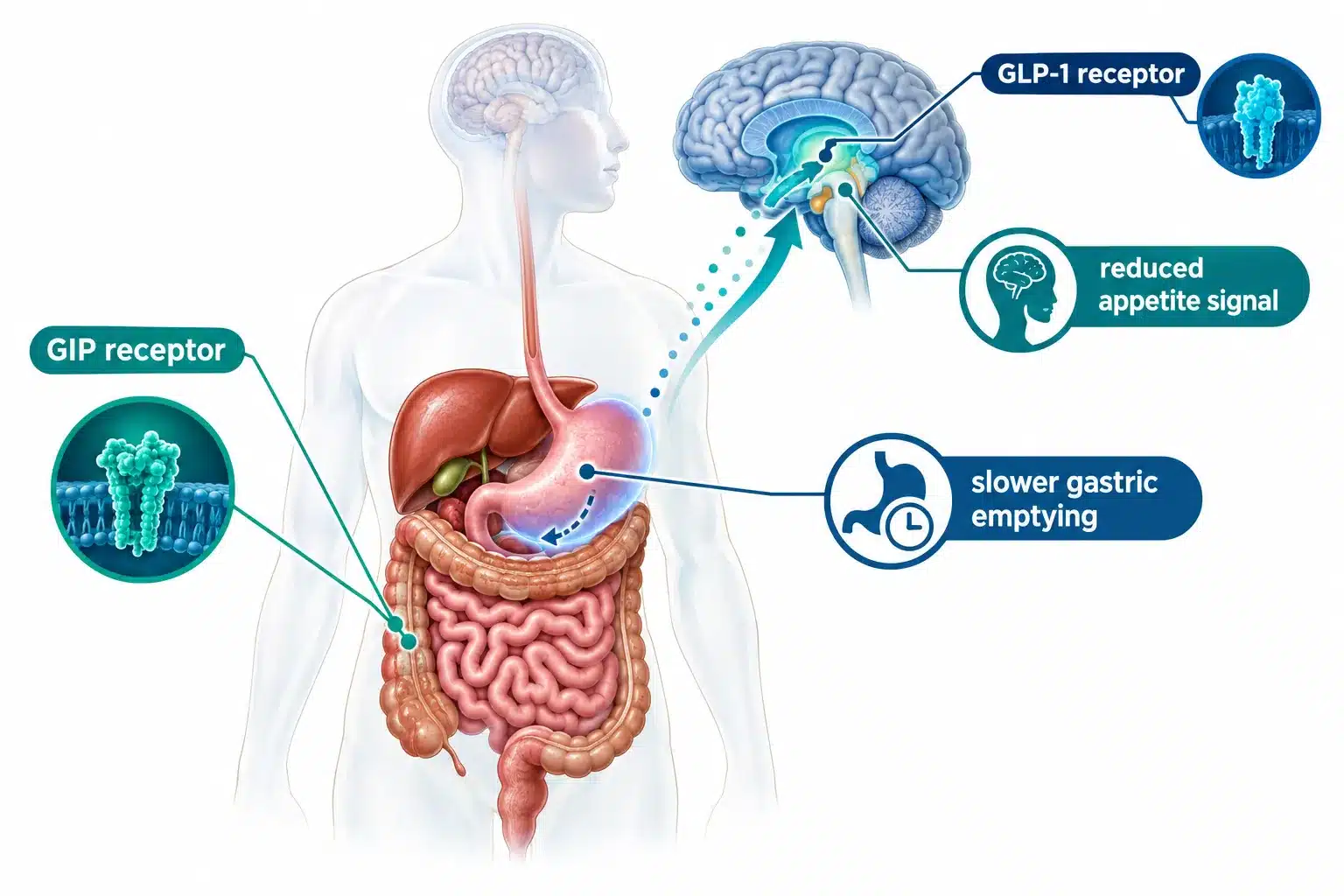
Tirzepatide is a dual GIP and GLP-1 receptor agonist. That means it mimics two gut hormones at once instead of just one [2][3]. In practical terms, this combination:
- Reduces appetite and food cravings
- Slows how quickly food leaves the stomach, extending fullness
- Improves the body’s insulin sensitivity
- Lowers overall daily calorie intake without constant willpower battles
I’ve talked to patients who describe the effect less as “appetite suppression” and more as “food noise going quiet.” That matches what the hormone science predicts: the drug changes signals between the gut and brain, not just willpower. For readers comparing GLP-1 options generally, our guide comparing which GLP-1 is best for weight loss breaks down how tirzepatide stacks up against other agents.
How Much Weight Can You Realistically Lose With Zepbound
Clinical trial data show average weight loss between 15% and 22.5% of starting body weight, depending on dose, with higher doses producing greater loss [1][4][5]. These are trial averages, not guarantees, and individual results depend heavily on adherence and lifestyle changes.
In the pivotal SURMOUNT-1 trial, participants on the top 15 mg weekly dose lost an average of 22.5% of baseline weight, about 52 lb, while those on lower doses still lost meaningful amounts, often in the 35.5 lb to 45 lb range [5]. Here’s a simplified breakdown:
| Dose | Average weight loss (trial data) |
|---|---|
| 5 mg weekly | Lower end of range, still clinically meaningful |
| 10 mg weekly | Roughly 16-20% of body weight |
| 15 mg weekly | 20.9% to 22.5% of body weight (about 52 lb) |
| Placebo | About 3% to 3.1% |
A September 2026 overview reports that 69% to 84% of people on Zepbound in obesity studies reached at least 10% weight loss, versus only 19% on placebo, and 30% to 57% achieved at least 20% loss versus 3% on placebo [2]. Choose the 15 mg maintenance dose only if your prescriber confirms you’ve tolerated lower doses well during titration; jumping straight to a high dose is a common mistake that increases side effects.
Zepbound vs Ozempic: What’s the Difference
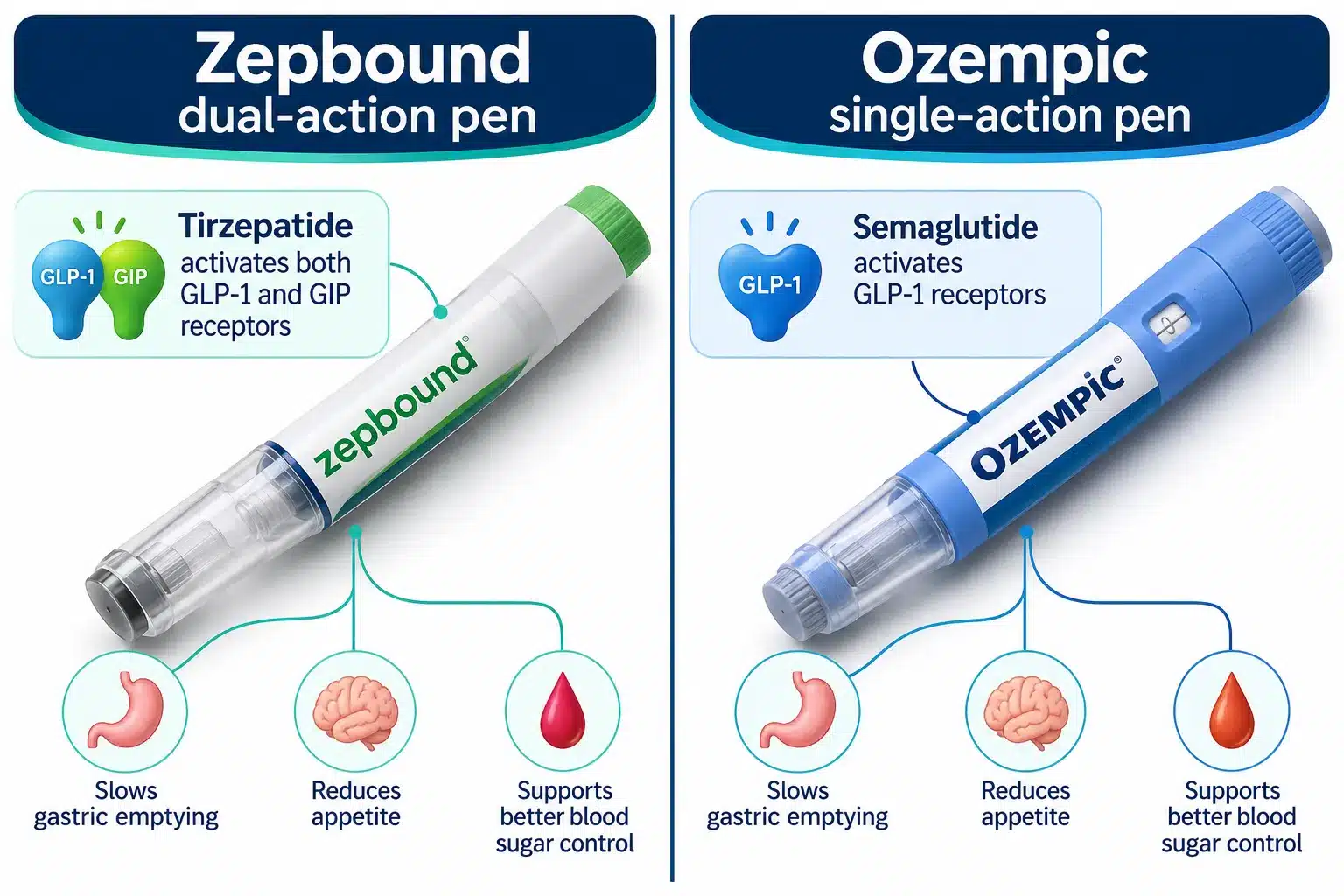
Zepbound contains tirzepatide, a dual GIP/GLP-1 agonist, while Ozempic contains semaglutide, which targets only the GLP-1 receptor. This structural difference is why Zepbound tends to produce greater average weight loss in comparative analyses [6].
An indirect treatment comparison released in September 2026 found that Zepbound’s 10 mg and 15 mg doses were associated with greater weight loss than Wegovy HD (semaglutide 7.2 mg), though this was based on separate trials rather than a true head-to-head study [6]. Ozempic itself is FDA-approved primarily for type 2 diabetes, with Wegovy as its weight-loss-specific counterpart, similar to how Zepbound relates to Mounjaro.
Choose Zepbound if your doctor determines tirzepatide’s dual mechanism fits your metabolic profile and you have no contraindications. Choose a semaglutide-based option if you’ve had side effects with GIP-targeting drugs, or if your insurance plan only covers one class. For a deeper look at how semaglutide achieves its effects, see our breakdown of how Ozempic helps you lose weight.
How Much Does Zepbound Cost Without Insurance
Without insurance, Zepbound carries a high list price, commonly cited in the range of $1,000 or more per month, though exact pricing varies by pharmacy and dose. Lilly has introduced savings cards and direct-purchase programs that can lower this cost for eligible patients.
Because list prices change and vary by region, I won’t quote a fixed dollar figure here. What’s verified is that demand has been extremely strong: Lilly’s Q3 2026 financial report showed U.S. Zepbound revenue rose 48% to $5.3 billion, reflecting rapid real-world uptake even amid pricing pressure. For a broader cost comparison across GLP-1 medications, check our GLP-1 weight loss cost guide.
Does Insurance Cover Zepbound for Weight Loss
Coverage for Zepbound depends entirely on your specific insurance plan, employer benefits, and whether your diagnosis meets the plan’s criteria for obesity treatment. Many commercial plans require prior authorization, documented BMI thresholds, or evidence of prior diet and exercise attempts.
Common mistakes patients make include assuming coverage without checking formulary status first, or not appealing a denial when they actually meet clinical criteria. If your plan specifically excludes weight-loss drugs, some employers still carve out exceptions for metabolic conditions. For a related example of how coverage policies vary, see our breakdown on whether Kaiser covers GLP-1 for weight loss.
Zepbound Side Effects: What Should You Expect
The most common Zepbound side effects are gastrointestinal: nausea, diarrhea, constipation, and vomiting, especially during dose increases. These effects tend to be strongest in the first few weeks after starting or raising a dose and often ease with time.
Practical ways to manage them include:
- Eating smaller, slower meals instead of large portions
- Avoiding greasy or very rich foods right after dosing
- Staying well hydrated, especially if diarrhea occurs
- Discussing dose timing with your prescriber if nausea peaks at certain times
A common mistake is skipping doses to “reset” side effects, which can actually worsen tolerance when restarting. If side effects are severe or include signs of pancreatitis (severe abdominal pain) or gallbladder issues, contact your prescriber immediately.
Who Shouldn’t Take Zepbound
Zepbound isn’t appropriate for people with a personal or family history of medullary thyroid carcinoma, those with Multiple Endocrine Neoplasia syndrome type 2, or anyone with a known serious allergy to tirzepatide. Pregnant or breastfeeding individuals should also avoid it.
People with a history of pancreatitis, severe gastrointestinal disease, or planned pregnancy within the near future should discuss alternatives with their doctor. Edge case: if you’re already on another GLP-1 or GIP-based medication, combining therapies without medical guidance is not recommended and increases side effect risk.
Zepbound Alternatives and Cheaper Options
Alternatives to Zepbound include other GLP-1 receptor agonists like Wegovy and Ozempic (semaglutide), older prescription weight-loss medications, and in some cases compounded tirzepatide, though compounded versions carry real safety concerns. A voluntary recall in October 2026 involved a compounding pharmacy’s tirzepatide-analogue product that couldn’t guarantee safety, reinforcing that FDA-approved Zepbound from Lilly is the safer choice over unregulated copies [7].
Cheaper routes some patients explore include:
- Semaglutide injections through verified telehealth providers
- Generic-style prescription weight-loss medications with longer market history
- Lifestyle-based programs combined with lower-dose GLP-1 therapy
For a direct cost-and-option comparison, see our guides on GLP-1 weight loss injections online and prescription weight loss medications. Choose a cheaper alternative only after confirming it’s dispensed by a licensed, FDA-regulated pharmacy, never an unverified compounder.
How Long Before You See Results With Zepbound
Most people notice reduced appetite within the first one to two weeks, while measurable weight loss typically becomes visible on the scale by week four to eight. Significant, clinically meaningful loss builds over months, with trial data measured at 72 weeks [5].
Mistake to avoid: judging the medicine’s effectiveness after only two or three weeks, especially during the lower starting doses used for tolerance-building. Weight loss accelerates as the dose titrates upward over the following months. For context on timelines across GLP-1 drugs generally, see how long GLP-1 takes to work.
What Happens When You Stop Taking Zepbound
Stopping Zepbound commonly leads to a gradual return of appetite and, for many people, some regain of lost weight over the following months. This happens because the underlying hormone signaling effects fade once the drug clears the body.
Lilly’s own May 2026 research suggests that switching from a high-dose injectable to a lower maintenance dose, rather than stopping completely, can help people hold onto prior weight loss. This points to Zepbound functioning best as part of a long-term, adjustable treatment plan rather than a short course. Building sustainable eating and activity habits during treatment reduces, but doesn’t eliminate, regain risk after stopping.
Is Zepbound Safe for Long-Term Use
Zepbound has been studied through 72-week clinical trials with ongoing real-world monitoring, and current labeling supports its use as a long-term chronic weight-management therapy for appropriate patients [1]. As with any chronic medication, periodic check-ins with your prescriber are part of safe long-term use.
Lilly’s February 2026 announcement that Zepbound became the most-prescribed weight-management medicine in the U.S. also came with a new KwikPen delivery device, simplifying the long-term administration experience [8]. Long-term safety monitoring continues, and patients with new symptoms, especially abdominal pain or gallbladder issues, should report them promptly.
Zepbound Common Mistakes to Avoid
The biggest mistakes patients make with Zepbound involve dosing, nutrition, and expectations rather than the drug itself. Avoiding these errors improves both results and tolerability.
- Skipping protein intake while eating less overall, which can accelerate muscle loss
- Rushing dose increases faster than prescribed to “speed up” results
- Not drinking enough water, worsening constipation
- Expecting trial-level averages without adjusting diet or activity at all
- Buying from unverified online sellers instead of licensed pharmacies
Our Zepbound reviews roundup covers real patient experiences with these pitfalls in more detail.
Does Zepbound Work for Everyone
No. While most trial participants lost significant weight, individual response varies, and a small percentage of people see minimal benefit even at the highest tolerated dose. Genetics, adherence, starting weight, and lifestyle factors all influence outcomes.
Placebo-adjusted data shows the gap is large (20%+ average loss versus about 3% on placebo), but “average” still means some people respond less dramatically [2][4]. If you’ve been on a stable, maximum-tolerated dose for several months with little change, that’s a signal to discuss alternative therapies with your prescriber rather than assuming you’re doing something wrong.
How to Get a Zepbound Prescription
Getting a Zepbound prescription starts with a consultation, either in person or via telehealth, where a licensed provider evaluates your BMI, medical history, and weight-related conditions. If you qualify under current labeling criteria, the provider can prescribe and help coordinate pharmacy fulfillment or insurance prior authorization [1].
Steps typically include:
- Initial consultation and health history review
- BMI and comorbidity assessment against labeling criteria
- Insurance verification or cash-pay pricing discussion
- Prescription sent to pharmacy, often starting at a low titration dose
- Follow-up visits to monitor side effects and adjust dose
For telehealth-based prescription routes, see our overview of getting Zepbound online and the weekly injection pen details.
FAQ
Does Zepbound work the same for men and women? Response patterns are broadly similar between sexes in trial data, though individual results vary based on metabolism, starting weight, and adherence rather than gender alone.
Can I take Zepbound without being diabetic? Yes. Zepbound is approved for weight management in people with obesity or overweight plus a weight-related condition, independent of diabetes status [1].
Is Zepbound the same as Mounjaro? Both contain tirzepatide, but Mounjaro is approved for type 2 diabetes while Zepbound is approved specifically for weight management.
How often do I inject Zepbound? Zepbound is injected once weekly, and a newer KwikPen device can deliver a full month’s doses in a single pen [8].
Will I regain weight after stopping Zepbound? Many people experience some weight regain after stopping, which is why maintenance dosing or continued lifestyle changes are often recommended.
Is compounded tirzepatide a safe alternative to Zepbound? No. Compounded versions aren’t FDA-approved and have faced recalls over safety concerns, so licensed, brand-name Zepbound is the safer option [7].
How long does it take to reach maximum dose? Dose titration schedules typically span several months, gradually increasing to the target maintenance dose to reduce side effects.
Is Zepbound better than Ozempic for weight loss? Comparative data suggests Zepbound’s tirzepatide produces greater average weight loss than semaglutide-based drugs like Ozempic or Wegovy, though individual response varies [6].
7 Best GLP-1 Providers Ranked: Accreditation, Flexibility & Support Compared (2026 Update)
32,000+ Patients Can't All Be Wrong: See the Top-Rated GLP-1 Providers: Compared on accreditation, plan flexibility, and patient support — updated for 2026.
BMI MD GLP-1 Microdosing Plan
- Specialized microdosing options (sublingual drops or low-dose injections)
- Ideal for maintaining weight or tapering off higher doses safely
- Fully bundled plan with no hidden monthly platform memberships
DirectMeds Weight Loss Solutions
- Sourced from accredited, state-licensed 503A compounding pharmacies
- No-frills high-volume savings passed directly to the patient
- Includes clinical consultation and cold-chain shipping updates
MEDVi Flat-Rate Telehealth
- Flat monthly rate holds steady even at maximum maintenance doses
- No dosage upcharges or graduation fee penalties
- Offers both injectable and advanced oral thin-film delivery options
Gala GLP-1 Care Program
- All-inclusive plan with no standalone membership costs
- Continuous text-based messaging access with state-licensed clinicians
- Temperature-controlled, cold-chain medication shipping included
Measured GLP-1 Metabolic Health
- Comprehensive metabolic health screening and expert intake analysis
- Predictable long-term budgeting with stable plan pricing
- High-end responsive dashboard with integrated diagnostic support
Refills GLP-1 (TryRefills Plan)
- Flat rate holds steady as titration scales up
- Includes clinical guides for active side-effect management
- Bundles in foundational nutritional strategies alongside medication
AltRx GLP-1 Transactional Reorders
- Zero recurring auto-billing — pay entirely on a transactional basis
- Rapid text-to-order format saves time for experienced patients
- Provides both injectable forms and fast-dissolving tablet variations
Conclusion
Zepbound’s dual-hormone mechanism explains why it produces some of the largest average weight-loss numbers seen in GLP-1-class trials, with many patients losing well over 15% of body weight within about a year and a half of treatment. That said, trial averages aren’t promises, and your results will depend on dose, consistency, and what you do with your diet and activity alongside the medication.
If you’re considering Zepbound, start with a real conversation with a licensed provider about your health history, insurance coverage, and realistic expectations. Ask about titration schedules, side effect management, and a long-term maintenance plan before you start, not after. And if cost or access is a barrier, explore verified alternatives rather than unregulated compounded products.
References
- 217806s002lbl. accessdata.fda.gov.
- Zepbound Weight Loss. webmd.com.
- Clinical Data Weight. zepbound.lilly.com.
- Understanding Zepbound. zepbound.lilly.com.
- How Weight Lose Zepbound 3575539. drugs.com.
- Lillys Zepbound Tirzepatide 10 Mg and 15 Mg Was Associated More. lilly.gcs-web.com.
- Glp1 Obesity Drug Recall Apothecary Tirzepatide Zepbound. biopharmadive.com.
- Zepbound Tirzepatide Most Prescribed Weight Management. investor.lilly.com.

With over 13 years of experience in holistic health blogging, I aim to help you navigate your wellness journey with honest insights, expert-backed advice, and a sprinkle of real-world practicality.
Certified Wellness Writer | Herbal Nutrition Advocate | Wellness Research Enthusiast