Does Metformin Help With Weight Loss? How It Works and What to Expect

Last updated: November 18, 2026
Quick Answer
Metformin can help some people lose a modest amount of weight, typically in the range of a few pounds over several months, but it is not an FDA-approved weight-loss medication [1]. It works mainly by improving insulin sensitivity and slightly reducing appetite, not by directly burning fat. If you want meaningful weight loss, metformin alone usually is not enough, and most people see far larger results from GLP-1 medications like semaglutide or tirzepatide.
Key Takeaways
- Metformin is FDA-approved for type 2 diabetes, not weight loss, so any weight-loss effect is considered a secondary benefit [1][2].
- Average weight loss on metformin is modest, often around 2 to 7 pounds over 6 to 12 months, according to research reviews [3][4].
- Metformin works through better insulin sensitivity, reduced liver glucose output, and mild appetite suppression [5][6].
- A 2026 update of a Cochrane-style systematic review continues to confirm the effect is real but small compared to GLP-1 drugs [4].
- Doctors sometimes prescribe metformin off-label for weight management, especially in people with insulin resistance or PCOS [2][7].
- Metformin is often combined with GLP-1 medications like semaglutide or tirzepatide for added metabolic benefit [8].
- Common side effects include nausea, diarrhea, and stomach upset, which usually improve after a few weeks [1][9].
- People with severe kidney disease, certain liver conditions, or heavy alcohol use should not take metformin without close medical supervision [1].
How Does Metformin Help With Weight Loss?
Metformin helps with weight loss mainly by improving how the body uses insulin and by slightly reducing appetite, not by directly burning calories or fat. For most people, the weight change is a side effect of better blood sugar control rather than a primary fat-loss mechanism.
7 Best GLP-1 Providers Ranked: Accreditation, Flexibility & Support Compared (2026 Update)
32,000+ Patients Can't All Be Wrong: See the Top-Rated GLP-1 Providers. We compared the leading online GLP-1 providers based on program features, clinical support, convenience, and overall value.

BMI MD GLP-1 Microdosing Plan
- Specialized microdosing options, including sublingual drops and low-dose injections
- Designed for people interested in maintaining weight or gradually adjusting treatment
- Bundled program structure without a separate monthly platform membership
- Online access makes the process convenient from home

DirectMeds Weight Loss Solutions
- Online weight-loss program with a straightforward patient experience
- Compounded medication options through state-licensed compounding pharmacies
- Includes clinical consultation as part of the process
- Provides shipping updates to help patients track their orders

MEDVi Flat-Rate Telehealth
- Flat-rate telehealth approach designed for easier budgeting
- No dosage-based pricing increases within the advertised program structure
- Offers injectable and oral thin-film delivery options
- Includes medical screening and asynchronous provider consultations

Gala GLP-1 Care Program
- Text-based access to state-licensed clinicians
- Cold-chain medication shipping included in the program
- Month-to-month program structure
- Designed for people who value convenient ongoing support

Measured GLP-1 Metabolic Health
- Comprehensive metabolic health screening and intake analysis
- Designed around longer-term metabolic health management
- Responsive dashboard with integrated health tracking tools
- Useful option for patients who value a more data-focused experience

Refills GLP-1 (TryRefills Plan)
- Clinical guidance designed to help patients manage common treatment concerns
- Includes foundational nutritional strategies alongside medication
- Designed around predictable ongoing treatment
- No hidden startup or processing fees according to the program information provided

AltRx GLP-1 Transactional Reorders
- Transactional reorder model without recurring auto-billing
- Designed for patients who already understand their treatment routine
- Fast text-to-order process for convenient reorders
- Offers injectable and fast-dissolving tablet variations
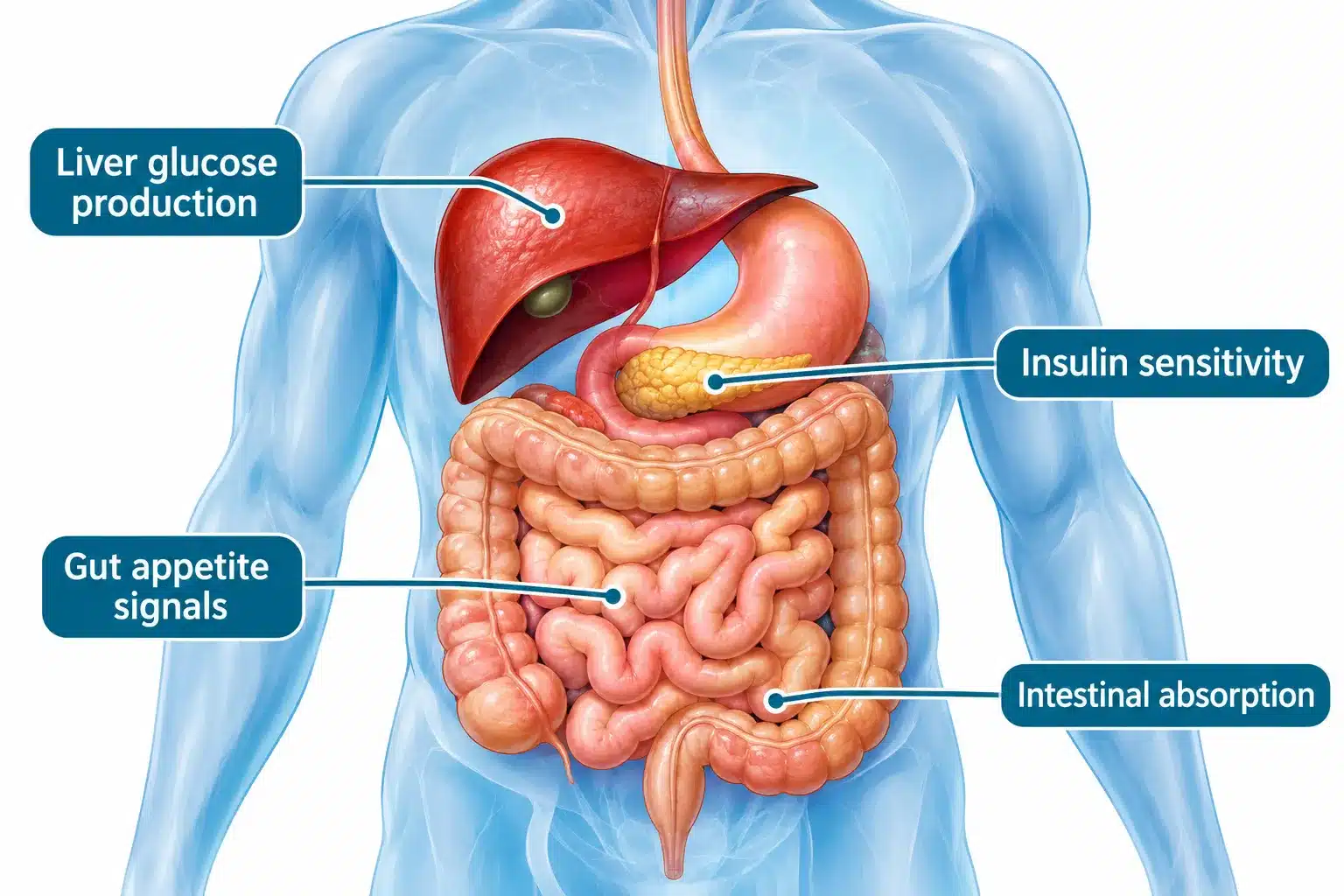
Research from 2026 describes three main pathways:
- Lower liver glucose output. Metformin reduces how much sugar the liver releases into the blood, which lowers circulating insulin levels over time [5][6].
- Improved insulin sensitivity. When cells respond better to insulin, the body stores less fat as a reaction to high insulin spikes [6].
- Appetite and gut effects. Some studies suggest metformin may affect gut hormones and the brain’s appetite centers, leading to mildly reduced food intake [5].
I think of metformin less like an appetite switch and more like a metabolic tune-up. It does not create a dramatic calorie deficit on its own. Compare this to how semaglutide helps with weight loss, which works directly on appetite-regulating brain pathways and tends to produce much larger results.
Does Metformin Actually Help You Lose Weight?
Yes, metformin can produce real but modest weight loss for some people, particularly those with insulin resistance, prediabetes, or type 2 diabetes. It is not a strong weight-loss drug on its own.
A 2024 analysis published on PubMed found that metformin use was associated with small but statistically meaningful weight reductions compared to placebo in adults with excess weight [4]. Other reviews note that results vary widely: some people lose noticeable weight, others see almost no change, and a small number may even gain weight depending on diet and lifestyle factors [3][9].
Decision rule: Choose metformin as a weight-loss aid if you already have insulin resistance, prediabetes, type 2 diabetes, or PCOS and your doctor thinks it fits your treatment plan. Skip it if you are looking for a standalone weight-loss solution with fast or dramatic results.
How Much Weight Can You Lose on Metformin?
Most people lose somewhere between 2 and 7 pounds over 6 to 12 months while taking metformin, though individual results vary a lot. This is far less than what GLP-1 medications typically produce.
According to Drugs.com and WebMD summaries of available research, weight loss on metformin is generally described as “modest” rather than substantial [3][9]. Forbes Health’s review of the evidence similarly frames metformin as a secondary option rather than a primary weight-loss treatment [7]. For context on what larger results look like with other medications, see our breakdown of Ozempic weight loss results over a 6-week plan.
Example: A person with prediabetes and a BMI of 32 might lose around 4 to 5 pounds over six months on metformin alone, mostly from reduced appetite and better blood sugar control, not from an intense calorie deficit.
How Long Does It Take to See Weight Loss on Metformin?
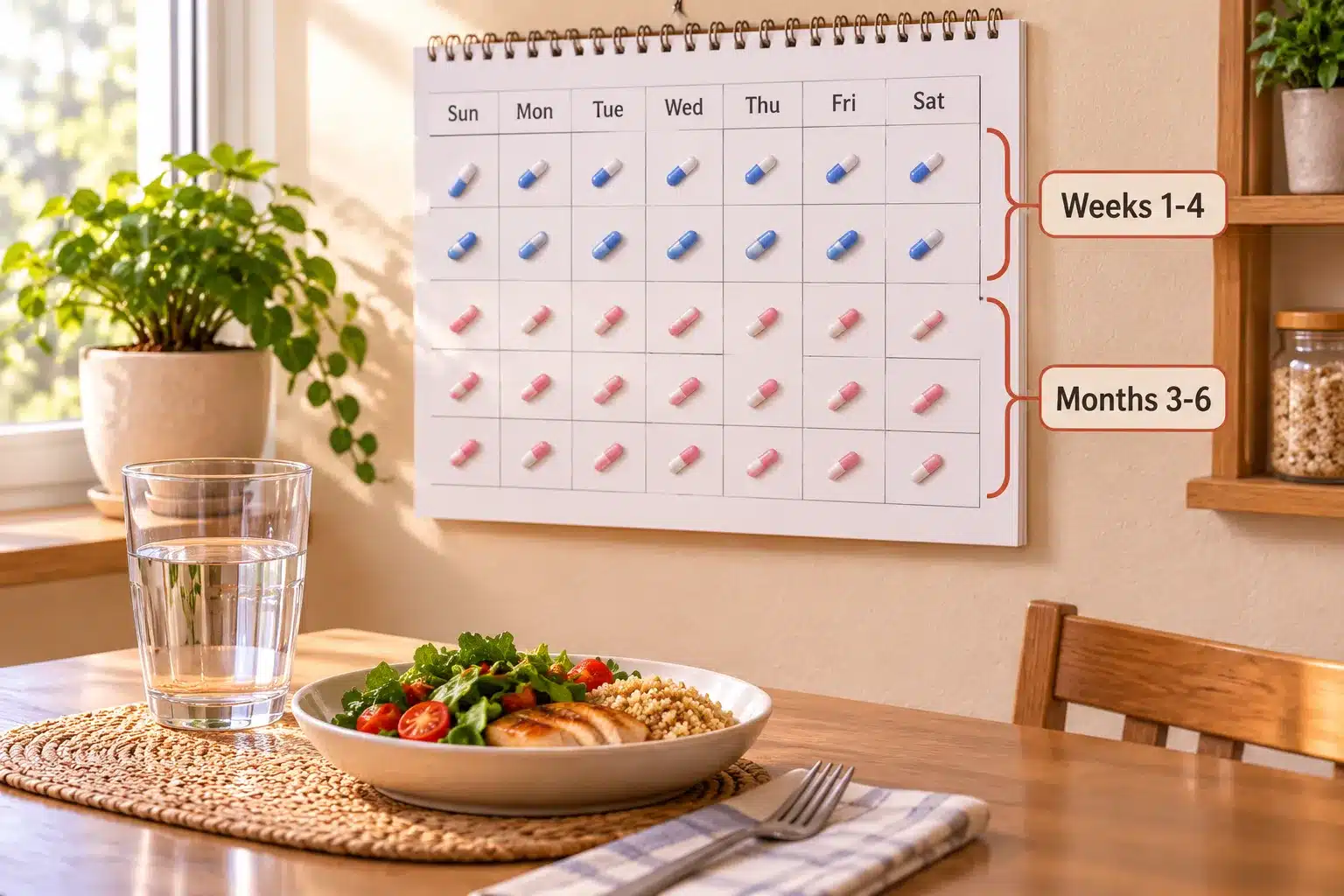
Most people who notice weight loss on metformin start seeing small changes within 6 to 12 weeks, with more consistent results appearing after 3 to 6 months. Weight loss on metformin is gradual, not immediate.
Typical timeline based on available research and clinical experience [3][8]:
- Weeks 1 to 4: The body adjusts to the medication. Digestive side effects like nausea or diarrhea are most common here. Weight is usually stable.
- Weeks 4 to 12: Appetite may decrease slightly. Some people notice they feel full faster or crave less sugar.
- Months 3 to 6: Gradual weight loss becomes more apparent for those who respond, often in the low single digits of total body weight.
- Months 6 to 12: Weight loss tends to plateau unless combined with diet, exercise, or additional medication.
Common mistake: Expecting fast results and stopping the medication after a few weeks because “nothing is happening.” Metformin’s weight effect builds slowly and depends on consistent use alongside lifestyle habits.
Can You Take Metformin Just for Weight Loss Without Diabetes?
Metformin is not FDA-approved as a standalone weight-loss drug, so taking it purely for weight loss without diabetes is considered off-label use and requires a doctor’s prescription and supervision [1][2]. It is not something you should try to obtain or use without medical guidance.
Doctors sometimes prescribe metformin off-label for people without diabetes who have:
- Insulin resistance confirmed by blood tests.
- Polycystic ovary syndrome (PCOS), where metformin can help with both metabolic symptoms and modest weight management [2][7].
- Prediabetes, where metformin may slow progression to type 2 diabetes while offering a small weight benefit.
- Weight gain linked to certain antipsychotic medications, a use supported by clinical protocols for psychiatric patients managing medication-related weight gain [8].
Edge case: If you do not have insulin resistance, PCOS, or another underlying metabolic issue, metformin is unlikely to produce meaningful weight loss and a doctor may recommend other options instead, including GLP-1 medications. Our guide to GLP-1 treatment for non-diabetic adults covers eligibility in more detail.
Metformin Side Effects and Weight Loss
The most common side effects of metformin are digestive, including nausea, diarrhea, gas, and stomach discomfort, and these often fade after the first few weeks [1][9]. These side effects can sometimes contribute to short-term weight changes that are not true fat loss.
Key side effects to know:
| Side effect | How common | Usually improves by |
|---|---|---|
| Nausea or upset stomach | Common, especially early on | 2 to 4 weeks |
| Diarrhea | Common | 2 to 4 weeks |
| Metallic taste | Less common | Varies |
| Vitamin B12 deficiency | Possible with long-term use | Monitored with blood tests |
| Lactic acidosis (rare, serious) | Rare | Requires immediate medical attention |
Important distinction: Early weight loss in the first few weeks on metformin is sometimes due to reduced food intake from nausea, not fat loss. This is why doctors recommend judging results after at least 8 to 12 weeks rather than the first month [1][3].
Metformin vs Ozempic for Weight Loss
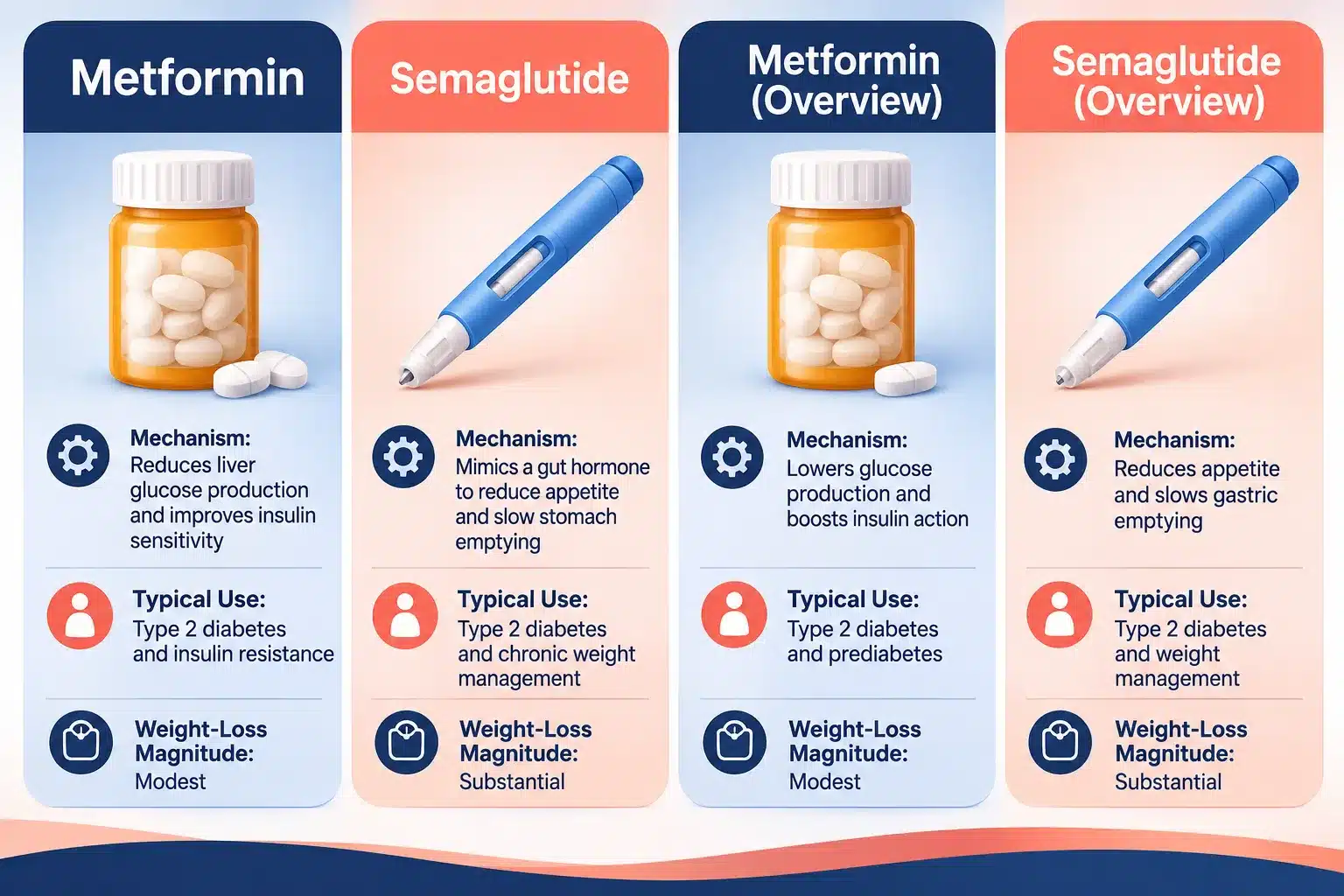
Metformin and Ozempic (semaglutide) work very differently and produce very different amounts of weight loss. Metformin offers modest results through metabolic improvement, while Ozempic and similar GLP-1 medications produce substantially greater weight loss by directly reducing appetite and slowing digestion.
| Factor | Metformin | Ozempic (semaglutide) |
|---|---|---|
| FDA approval for weight loss | No | Wegovy (same drug) is approved; Ozempic approved for diabetes |
| Typical weight loss | Modest, a few pounds | Substantially higher over the same period |
| How it works | Improves insulin sensitivity, lowers liver glucose output | Mimics GLP-1 hormone, reduces appetite, slows stomach emptying |
| Form | Oral pill | Weekly injection |
| Common side effects | GI upset, rare lactic acidosis | Nausea, vomiting, GI upset |
| Cost without insurance | Generally low-cost generic | Higher, often requiring a program or provider |
For a deeper look at how GLP-1 drugs compare across options, see which GLP-1 is best for weight loss and our semaglutide weight loss medication guide.
Who Should Not Take Metformin for Weight Loss?
Metformin is not appropriate for everyone, and certain health conditions make it unsafe or require extra caution. People with significant kidney impairment, certain liver diseases, or heavy alcohol use generally should not take metformin without close medical supervision [1].
Groups who should talk with a doctor before considering metformin:
- People with severe or moderate-to-severe kidney disease (reduced kidney function affects how the drug is cleared) [1].
- People with liver disease, since the liver plays a role in processing metformin safely.
- People who drink alcohol heavily, due to an increased risk of lactic acidosis, a rare but serious complication [1].
- People scheduled for certain imaging procedures that use contrast dye, since metformin is sometimes paused around these procedures.
- Pregnant or breastfeeding individuals, who should only use metformin under direct medical guidance.
Common mistake: Self-prescribing metformin obtained outside a legitimate medical evaluation. Because metformin interacts with kidney function and other conditions, it should only be used after bloodwork and a doctor’s review.
Does Metformin Work for Weight Loss Without Diabetes the Same Way It Does With Diabetes?
Metformin’s weight effect tends to be similar in mechanism whether or not someone has diabetes, but the size of the effect may be smaller in people without insulin resistance. The drug depends on improving how the body handles insulin and glucose, so people without underlying insulin problems may see little to no weight change [4][6].
This is an important nuance that gets overlooked. Metformin is not a universal appetite suppressant. It tends to help most in people whose weight gain is tied to insulin resistance, PCOS, or prediabetes, and tends to help less in people who do not have these underlying issues.
What’s the Difference Between Metformin and Other Weight Loss Medications?
Metformin differs from other weight-loss medications mainly in how strong and direct its effect is, and in what it was originally designed to treat. Metformin targets blood sugar metabolism, while medications like semaglutide and tirzepatide directly target appetite-regulating hormones in the brain and gut.
Quick comparison of approach:
- Metformin: Indirect, metabolic approach. Originally a diabetes drug. Modest weight effect.
- GLP-1 medications (semaglutide, tirzepatide): Direct appetite and digestion effect. Much larger average weight loss. See our comparison of Zepbound vs Ozempic for more detail.
- Combination therapy: Some clinicians now prescribe metformin alongside GLP-1 medications to support metabolic health and help with weight maintenance after initial loss [8].
Common Mistakes People Make With Metformin for Weight Loss
The biggest mistake is expecting metformin to work like a dedicated weight-loss drug when it is primarily a diabetes medication with a secondary, modest weight effect. Setting unrealistic expectations leads many people to quit early or feel discouraged.
Other frequent mistakes:
- Stopping the medication after a few weeks due to side effects instead of giving the body time to adjust.
- Not pairing metformin with diet and activity changes, which limits how much benefit shows up on the scale.
- Assuming metformin alone can replace proven weight-loss treatments when someone has significant excess weight to lose.
- Skipping bloodwork that monitors kidney function and B12 levels during long-term use [1].
Can Diet and Exercise Replace Metformin for Weight Loss?
For many people, especially those without diabetes or strong insulin resistance, diet and exercise changes can produce weight loss similar to or greater than what metformin alone provides. Metformin works best as a supporting tool, not a replacement for lifestyle changes.
A 2025 study published in Scientific Reports examined metabolic weight-loss strategies and reinforced that behavioral changes remain a core part of effective weight management, with medication playing a supporting role rather than a substitute [5]. If you are weighing medication-free options, our guide on foods to avoid with high cholesterol offers practical dietary guidance that also supports metabolic health.
What to Expect When You Start Taking Metformin for Weight Loss
When starting metformin, expect a gradual adjustment period with possible digestive side effects in the first few weeks, followed by slow and modest weight changes over several months if your body responds to the medication. Not everyone will see weight loss.
What a realistic first few months might look like:
- Week 1 to 2: Possible nausea, loose stools, or stomach discomfort. Doctors often start with a low dose and increase gradually to reduce this.
- Week 3 to 6: Side effects typically ease. Appetite may feel slightly more controlled.
- Month 2 to 3: Blood sugar markers often improve first, before any noticeable weight change.
- Month 3 to 6: Some people notice slow, modest weight loss; others see little change.
A 2026 clinical commentary on expectations and counseling emphasizes that doctors should set realistic goals with patients from the start, since overpromising results on metformin can lead to frustration and early discontinuation [10]. This mirrors broader obesity treatment guidelines from the VA’s 2025 obesity care pocket guide, which positions metformin as an adjunct option rather than a first-line weight-loss therapy [10].
Frequently Asked Questions
Does metformin help with weight loss if I don’t have insulin resistance?
Metformin is less likely to produce meaningful weight loss if you don’t have insulin resistance, prediabetes, or a related metabolic condition. Its main mechanism depends on improving insulin sensitivity, so people without that issue tend to see smaller or no weight changes [4][6].
How much weight can you realistically lose on metformin in 3 months?
Most people see modest changes in the first three months, often just a few pounds or none at all. Noticeable, consistent weight loss usually takes longer, closer to the 6-month mark, and varies significantly by individual [3][8].
Is metformin safer than GLP-1 medications for weight loss?
Metformin has a long safety track record and is generally well-tolerated, but it produces much smaller weight-loss results than GLP-1 medications. Safety depends on individual health factors, so the “safer” option depends on your specific medical history and goals [1].
Can metformin cause weight gain instead of weight loss?
Weight gain on metformin is uncommon but possible in some individuals, especially if diet and activity levels increase alongside appetite changes. Most research points to neutral or modest weight-loss effects rather than weight gain [3][9].
Do I need a prescription to use metformin for weight loss?
Yes, metformin is a prescription medication in the United States, and it should only be used under a doctor’s supervision, especially when prescribed off-label for weight management rather than diabetes [1][2].
Can metformin be combined with semaglutide or tirzepatide?
Some doctors prescribe metformin alongside GLP-1 medications to support metabolic health, particularly during weight maintenance phases. This combination should only be done under medical supervision [8].
7 Best GLP-1 Providers Ranked: Accreditation, Flexibility & Support Compared (2026 Update)
32,000+ Patients Can't All Be Wrong: See the Top-Rated GLP-1 Providers: Compared on accreditation, plan flexibility, and patient support — updated for 2026.
BMI MD GLP-1 Microdosing Plan
- Specialized microdosing options (sublingual drops or low-dose injections)
- Ideal for maintaining weight or tapering off higher doses safely
- Fully bundled plan with no hidden monthly platform memberships
DirectMeds Weight Loss Solutions
- Sourced from accredited, state-licensed 503A compounding pharmacies
- No-frills high-volume savings passed directly to the patient
- Includes clinical consultation and cold-chain shipping updates
MEDVi Flat-Rate Telehealth
- Flat monthly rate holds steady even at maximum maintenance doses
- No dosage upcharges or graduation fee penalties
- Offers both injectable and advanced oral thin-film delivery options
Gala GLP-1 Care Program
- All-inclusive plan with no standalone membership costs
- Continuous text-based messaging access with state-licensed clinicians
- Temperature-controlled, cold-chain medication shipping included
Measured GLP-1 Metabolic Health
- Comprehensive metabolic health screening and expert intake analysis
- Predictable long-term budgeting with stable plan pricing
- High-end responsive dashboard with integrated diagnostic support
Refills GLP-1 (TryRefills Plan)
- Flat rate holds steady as titration scales up
- Includes clinical guides for active side-effect management
- Bundles in foundational nutritional strategies alongside medication
AltRx GLP-1 Transactional Reorders
- Zero recurring auto-billing — pay entirely on a transactional basis
- Rapid text-to-order format saves time for experienced patients
- Provides both injectable forms and fast-dissolving tablet variations
Conclusion
Does metformin help with weight loss? The honest answer is: sometimes, modestly, and mainly for people with insulin resistance, prediabetes, type 2 diabetes, or PCOS. It is not an FDA-approved weight-loss drug, and it will not produce the dramatic results associated with GLP-1 medications like semaglutide or tirzepatide [1][2]. For the right person, under medical supervision, it can be a reasonable piece of a broader weight-management plan, especially when combined with diet, exercise, and consistent follow-up with a doctor.
If you are considering metformin for weight loss, the most useful next step is a conversation with a healthcare provider who can check your kidney function, review your metabolic health, and help you set realistic expectations. If you have already tried lifestyle changes without the results you hoped for, it may also be worth exploring GLP-1 options or combination approaches with a qualified provider.
References
- Metformin. drugs.com.
- Metformin Weight Loss. healthline.com.
- Metformin Weight Loss 3572671. drugs.com.
- pubmed.ncbi.nlm.nih.gov.
- S41598 025 09393 1. nature.com.
- S13410 026 01752 6. link.springer.com.
- Metformin for Weight Loss. forbes.com.
- Metformin Protocol 5 27 26jarskog. med.unc.edu.
- Metformin Cause Weight Loss. webmd.com.
- Obe Cpg 2025 Pocket Card Final 20251105. healthquality.va.gov.

With over 13 years of experience in holistic health blogging, I aim to help you navigate your wellness journey with honest insights, expert-backed advice, and a sprinkle of real-world practicality.
Certified Wellness Writer | Herbal Nutrition Advocate | Wellness Research Enthusiast